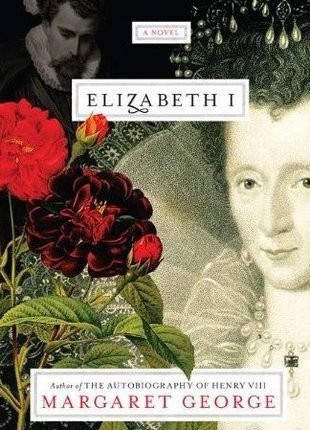
Elizabeth I by Margaret George

Elizabeth I by Margaret George

Margaret George writes about Queen Elizabeth I of England and the last years of her reign.

I think most people are aware that Elizabeth’s father was Henry VIII and the tumultuous going’s on that preceded and then ushered in her reign. But fewer are aware of what happened during the later years of her life.

The last years were still exciting and dangerous, filled with invading Spanish armadas (more than one) and power hungry lords. That’s what this book is all about.

I confess: I am a major fan of both Elizabeth I and Margaret George.

“I know I have the body but of a weak and feeble women, but I have the heart and stomach of a king and of a king of England, too- and think it foul scorn that Parma or any prince of Europe should dare to invade the borders of my realm.” pg 41.
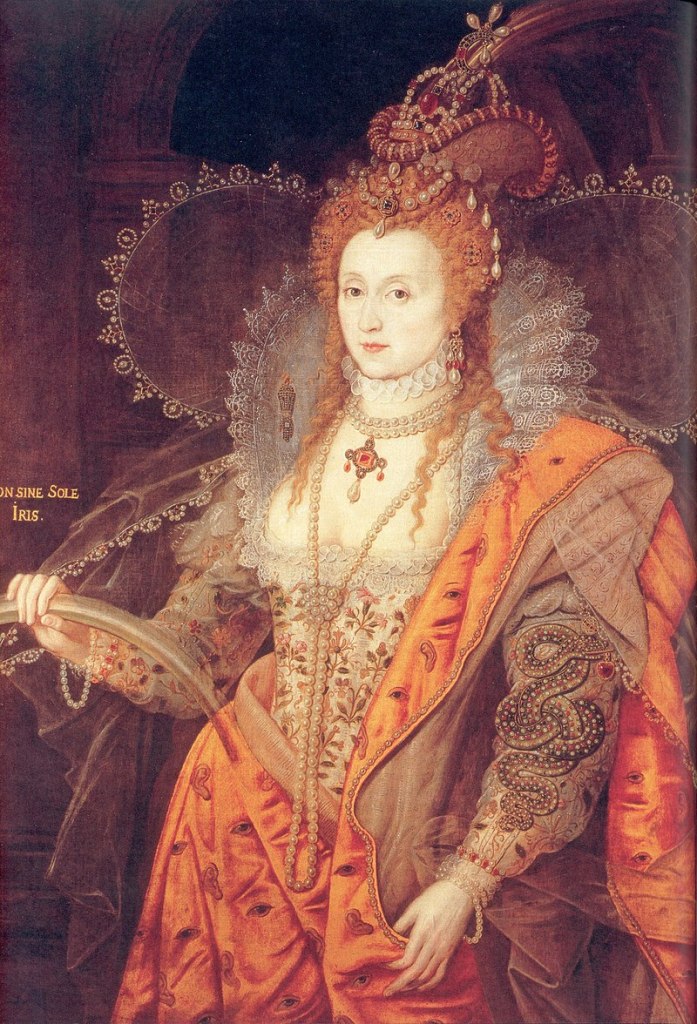
A few years ago, I had the privilege of visiting Westminster Abbey and seeing the tomb of Elizabeth I. The crowds were such that I couldn’t linger by the effigy but was forced into constant motion, rushed past.

I burst into tears as I exited the area of the church that contained her tomb and I was completely overcome with emotion. My husband led me through the throng again, just so I could spend a moment more near one of my favorite historical figures.

What do I love about Elizabeth I? Let me count the ways!

First of all, she insisted that she was a ruler in her own right, not because she was married to a royal. Elizabeth used the game of courtship to increase her power. That’s hard core.

“Francois had been my last, and in many ways my only, serious marriage possibility. I had been wooed by twenty-five foreign suitors over the years. I never intended to marry any of them, but it was my best tool of diplomacy.” pg 72.
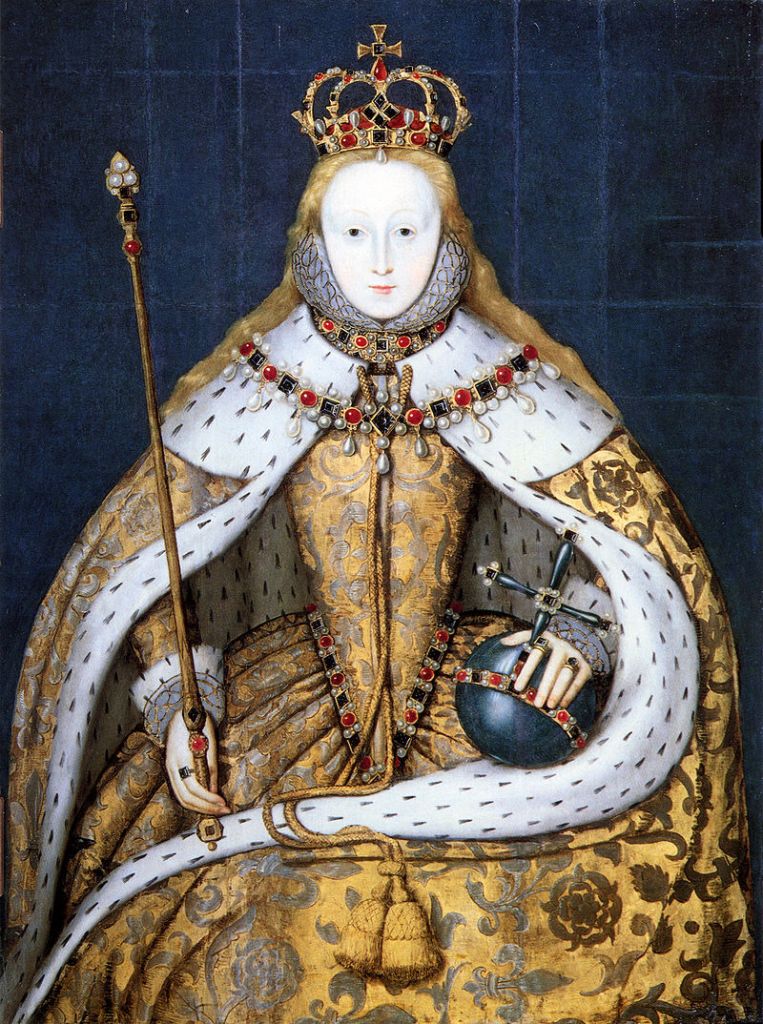
Second, she smart with her power rather than greedy. She navigated a world in which she had few allies because of her religion. And she never accepted defeat. “For my own part, I swear that my heart has never known what fear is. In ambition of glory I never sought to enlarge the territories of my land. If I have used my forces to keep the enemy from you, I have thereby done it for your safety, and to keep dangers at bay.” pg 145.

She was well-learned, charismatic and always knew what to say in public situations.

“It is not possible to see a woman of so fine and vigorous a disposition both in mind and in body. One cay say nothing to her on which she will not make an apt comment. She is a great princess who knows everything.” pg 363.

And finally, she was honest and true to the end of her life to the responsibility of leading her country. Elizabeth I loved her people.

“There will never queen sit in my seat with more zeal to my country, care to my subjects, and that will sooner with willingness venture her life for your good and safety, than myself. … And though you have had and may have many princes more mighty and wise sitting in this seat, yet you never had or shall have any that will love you better.” pg 608.

Photo by Pixabay on Pexels.com

My quibble with this book was not with the research or the story, which were both fine in my opinion. It was the fact that George split the narrative- most of the chapters are told from Elizabeth’s point of view, but some are from Lettice’s point of view, the mother of Robert Devereux.

I understand Lettice’s narrative was used to explain Devereux’s motivations and unexplained behavior, but I felt as if it slowed the story down. Coming in at 662 pages, this was a book that needed to stay at a fast clip. I didn’t feel as if it achieved that.

That being said, George provides an amazing escape from the world and unparalleled historical fiction, with this story.

The weekend I started this book, my mother had an unexpected heart attack and nearly died. She was in good health and relatively young. It was quite a shock.

Some people spend hours worrying, others in conversation or watching TV to wile away stressful hours.

Photo by Photography Maghradze PH on Pexels.com

I picked up Elizabeth I by Margaret George and transported myself to Elizabethan England. There was worry, danger, intrigue… and when I needed to put down the book and attend to family concerns, I could. By the time the weekend was over, I had completed this book and my mother was discharged from the hospital.

It looks as if she will make a full recovery. And I learned quite a bit more about Elizabeth I.

If you are looking for distraction from every day life, this epic tale could fit the bill. Recommended for historical fiction lovers, of course, but also for anyone who desperately needs a way to pass the time.

Thank you, Margaret George, for providing that for me, just when I needed it most.

Thanks for reading!

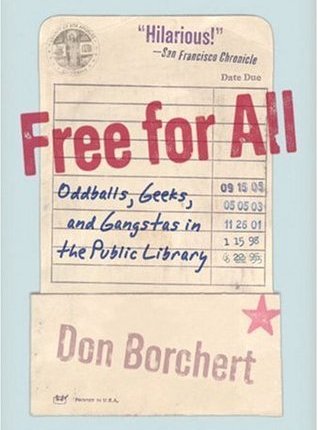
Free for All: Oddballs, Geeks, and Gangstas in the Public Library by Don Borchert

Free for All: Oddballs, Geeks, and Gangstas in the Public Library by Don Borchert

Free for All is an accurate depiction of life as a librarian in a public library.

Sometimes, the job is funny. Other times, it’s incredibly sad. If you’ve never worked in a library system, this book will reveal some of the secrets of a librarian’s day-to-day life.

Photo by Pixabay on Pexels.com

Before I worked at a public library, I thought it was a quiet, organized mecca for students and bookworms. Now, that I’ve spent some time on the librarian-side of the desk, I know better. My idea of a library was far too simple.

It is a study hall, archive, playroom, home for the homeless, kitchen, bank, movie theater, video game store, newspaper kiosk and so much more. I guess the appropriate question is: what doesn’t a library do?

And a public librarian is so much more than just a librarian. She is a counselor, a computer wizard, a curator of excellent and free entertainment.

She talks to the lonely, uplifts the lost and helps the public navigate the dangerous waters of the internet.

Librarians are my heroes.

Photo by Element5 Digital on Pexels.com

If I ever cease writing for a living, look for me at the library. Odds are, I’ll end up back there.

Perhaps some of the policies at Don Borchert’s library have changed, but at the time that he wrote this book, they charged 50 cents to put a hold in for a patron. This policy shocked me, as my library always offered that service for free.

Borchert cheerfully documents the difficulties with summer reading people vs the school year regulars. It’s a real problem.

If Borchert’s book is too edgy for you- he uses rough language and doesn’t hold back on some of his opinions- read Gina Sheridan’s I Work at a Public Library: A Collection of Crazy Stories from the Stacks.

Both are excellent and realistic non-fiction books about the trials, tribulations, and, sometimes, life-enhancing satisfaction of working at the library.

Thanks for reading!

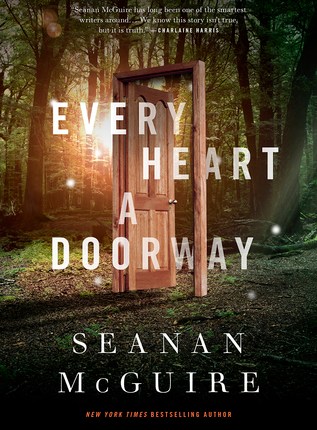
Every Heart a Doorway (Wayward Children #1) by Seanan McGuire

Every Heart a Doorway (Wayward Children #1) by Seanan McGuire

everyheartWhat if children actually fell into other worlds, like Alice in Wonderland or the Pevensies into Narnia, far more often than anyone realized? What if those worlds were superior in every way to the normal, mundane world- not in that they were in heaven, but the child felt finally at home?


And what if those worlds cast the children out, to live in the “real world” again? It might not be a pretty picture.

That is why Eleanor West started a home for children who went away, came back and didn’t belong anymore. All of those reasons, but also, because she went away once too.

“Eleanor West spent her days giving them what she had never had, and hoped that someday, it would be enough to pay her passage back to the place where she belonged.” pg 13.

I loved the basic premise of this story. All of the worlds the children went to were so different, but the fact that the worlds were “other,” tied them altogether.

“‘Real’ is a four-letter world, and I’ll thank you to use it as little as possible while you live under my roof.” pg 20

This story has the drama of a bunch of misfit children all trying to get along, but also the mystery of these other worlds. There’s also a deeper mystery that develops when one of the children seems determined to find a way home- at any cost.

“You will not all find your doors again. Some doors really do appear only once, the consequence of some strange convergence that we can’t predict or re-create. They’re drawn by need and by sympathy. Not the emotion- the resonance of one thing to another. There’s a reason you were all pulled into the worlds that suited you so well.” pg 97

I was concerned when I started this book that it would be too much like Miss Peregrine’s Home for Peculiar Children. That was a needless concern.

They are similar in that both contain orphanages for extraordinary children and fantasy has a large part in the story. But that was where I felt the similarities ended.

I also found myself wishing that Every Heart a Doorway was written for adults rather than young adults. This was a fairytale that could have used some darker twists to it.

Seanan McGuire didn’t make this story all rainbows and gumdrops, but I would have liked it to be edgier.

I loved the “longing to belong” feeling McGuire wove into the book. It seems to me to be a quintessential teenage feeling, but I suppose everyone wants to feel completely at home- whatever that might mean.

For some people, that longing is attached to a place, another person, or to the drug addict, it’s the next hit. Other people crave a moment in time, or a particular period in their life.

I would say, on second consideration, “longing to belong” is perhaps the human condition itself.

Recommended for fans of Miss Peregrine’s Home for Peculiar Children. If you’re looking for a darker, more adult fairytale, I’d recommend The Magicians by Lev Grossman.

Thanks for reading!

The Book of Speculation by Erika Swyler

The Book of Speculation by Erika Swyler

Simon works in the reference section at a struggling library in Maine, whose biggest draw is a whaling archive. He’s hard up for money and his historic home on the coast is in such disrepair that it’s about to fall into the ocean.

One day, Simon receives a very old book in the mail. Strangely, it has some of his family member’s names in it.

Photo by Suzy Hazelwood on Pexels.com

The text describes a circus, a boy who can’t speak, and a girl who can hold her breath so long that they call her a mermaid.

But, what does this have to do with his family? And why do so many of the people in the book die on the same day?

In addition to the mystery, The Book of Speculation includes one or two love stories: “Redheaded and pretty, Alice has her father’s smile and a way with kids. She’s better with people than I am, which is why she handles programming and I’m in reference.”pg 9, ebook.

Photo by Maycon Marmo on Pexels.com

I did not like how the reference section was stereotypically depicted as the “bad with people” part of the library. I have a soft spot in my heart for those reference types, having been one myself in my previous job. 🙂

Also, for being a librarian, Simon doesn’t act very librarian-y.

Take this part when he receives the mysterious book: “The box contains a good-sized book, carefully wrapped. .. A small shock runs through me. It’s very old, not a book to be handled with naked fingers, but seeing as it’s already ruined, I give in to the quiet thrill of touching something with history.” pg 15.

Photo by cottonbro on Pexels.com

No self-respecting archivist would do that. “Already ruined” so who cares? I don’t think so.

The fantasy/magic portions of this book are subtle and written so that one could almost believe that it was real.

Take Amos’ (one of the characters from the old book) ability to disappear: “People may live for a century without discovering the secret of vanishing. The boy found it because he was free to listen to the ground humming, the subtle moving of soil, and the breathing of water- a whisper barely discernible over the sound of a heartbeat. Water was the key.” pg 18 ebook.

Photo by Jess Vide on Pexels.com

The history recorded in the old book is revealed to the reader through a series of flashbacks. That bothered some of my friends on Goodreads but the circus folk stories are my favorite parts of this book.

The characterizations are ok, nothing extraordinary.

My favorite minor character, Benno, could have used more fleshing out: “After a time Benno climbed down from the wagon. “You are my friend and you are kind,” he said quietly. “More than is good. I was taught to watch for gentle souls, as they’ve not the wit to look after themselves.” pg 124, ebook.

Some similar reads (perhaps a bit more magical than this): The Golem and the Jinni, Magonia or The Mermaid’s Sister.

Thanks for reading!

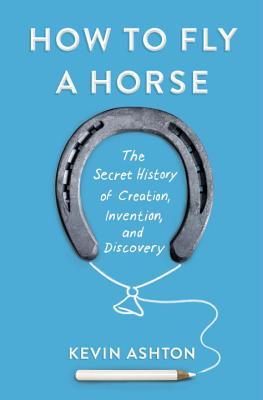
How to Fly a Horse: The Secret History of Creation, Invention, and Discovery by Kevin Ashton

How to Fly a Horse: The Secret History of Creation, Invention, and Discovery by Kevin Ashton

How to Fly a Horse takes many of the myths that I believed about creativity or the creative process and methodically takes them apart. Any perceived blocks are revealed for the fallacies that they are.

It is one of those great non-fiction books that educates the reader while simultaneously encouraging her to improve herself.

From the creation of a South Park episode to Coca-Cola, Kevin Ashton covers all sorts of ways the average person can, does, and should contribute to mankind through her own, innate creativity.

My biggest take-aways from this are Ashton’s descriptions and appropriateness of creativity (or lack of) within organizations. He writes about humanity’s need for the new while simultaneously pushing against it.

Here’s a quote about organizations that could be applied to any work place: “Organizations are made of rituals- millions of small, moments-long transactions between individuals within groups- and it is these rituals that determine how much an organization creates.” pg 225

Photo by Marc Mueller on Pexels.com

Be aware of these rituals and harness them to be more creative.

And, on humanity’s propensity to reject innovation, Ashton explains this is not unusual but is actually the normal response to expect when introducing new ideas into your work environment.

Don’t be discouraged; be prepared. Create anyway.

Photo by Pixabay on Pexels.com

I liked that he encouraged creation while also illuminating the many pitfalls, both internal and external, that one may encounter along the creative path.

Folks who enjoy How to Fly a Horse may also like Leonardo’s Brain: Understanding da Vinci’s Creative Genius or any of Malcolm Gladwell’s books. If you’re looking for another book about how to be more productive or creative in the workplace, I suggest Linchpin: Are You Indispensable?.

I received a free copy of this book through Goodreads First Reads. FTC guidelines: check!

Thanks for reading.