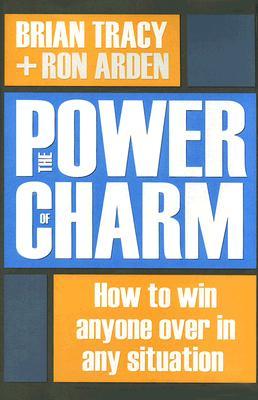
The Power of Charm: How to Win Anyone Over in Any Situation by Brian Tracy and Ron Arden

The Power of Charm: How to Win Anyone Over in Any Situation by Brian Tracy and Ron Arden

The Power of Charm is a book written for business professionals, who want to give themselves a bit of a leg up, by increasing their charm potential.

I found the book to be interesting, but it also flirts with the line between charming and manipulating. I suppose we could ask ourselves if, at the end of the day, there is any difference between the two.

Personally, I think there is.

Photo by Kat Smith on Pexels.com

In my mind, charm is unrehearsed, natural and springs from a genuine interest in others. Manipulation is ego-driven scheming. But, both can get you what you want.

I’m torn as to how this book actually fell on that scale. Some of the exercises feel like charm practices- others, like manipulation strategies.

Essentially, Brian Tracy and Ron Arden give listening and speaking tips to better understand whoever it is you’re interacting with. There’s nothing all that manipulative about polishing your communication skills.

On the other hand, in the chapter entitled: “Do Your Homework” in which the authors say, “Anytime you are getting together with someone, socially or professionally, whom you particularly want to impress, do your homework. Learn what you can about that person before you actually meet. It’s the best way to be charming and interesting to others.” pg 107. It didn’t sit so well with me.

Photo by Eduardo Dutra on Pexels.com

Here’s why- Tracy gives the following story as an example: “I learned of a successful business owner with a crack sales team who was discontented with the company he was representing. … In asking around, I discovered that he was heavily into numerology and made all his decisions based on the numbers of the birth dates of potential business partners… One of his first questions of me was my birthday. I was prepared. I told him that it was a certain day, month, and year that added up to a ‘lucky number’ for business relationships. … The preparation was the key.” pg 108.

That smacks to me of manipulation rather than charm. What do you think?

On the other hand, I seriously appreciated the tips on how to become a better conversationalist. I’ve got some work to do there.

Generally, I let my fast-talking husband take the lead in social conversations because he always has something to say. I see now how that may be a disservice to others who may want to get to know me better.

“The Secret of Charm: The deepest craving of human nature is the need to feel valued and valuable. The secret of charm is therefore simple: make others feel important.” pg 12.

It is as simple and powerful as that. I’d also recommend being kind. The world could use more charm and kindness.

Recommended for readers who understand the difference between charm and manipulation. I’m not sure that includes me, but I’ve already read it so… sorry.

And thanks for reading!

Grendel by John Gardner

Grendel by John Gardner

Grendel is the ill-fated monster from the ancient story, Beowulf. This is his tale.

There are very few details shared about Grendel in Beowulf. I thought that this story would be an opportunity for the reader to get to know him.

Unfortunately, we spend most of the time in Grendel’s mind, circling endlessly around the ideas of time, brutality, nature and the meaninglessness of existence.

I wanted to know more about Grendel’s mother, but there was very little about her.

John Gardner wrote her as some kind of void-filled slug monster: “Behind my back, at the world’s end, my pale slightly glowing fat mother sleeps on, old, sick at heart, in our dingy underground room. Life-bloated, baffled, long-suffering hag. Guilty, she imagines, of some unremembered, perhaps ancestral crime. (She must have some human in her.) Not that she thinks. Not that she dissects and ponders the dusty mechanical bits of her miserable life’s curse.” pg 10, ebook.

Not like Grendel does, endlessly.

Photo by Laker on Pexels.com

“I understood that the world was nothing: a mechanical chaos of casual, brute enmity on which we stupidly impose our hopes and fears. I understood that, finally and absolutely, I alone exist.” pg 17, ebook.

I think that was the biggest reason I didn’t enjoy this read. I believe every moment in life is, or can be, filled with purpose, meaning and happiness. Grendel falls on the exact opposite end of the scale.

In that way, Grendel is one of the biggest downers you could ever read. He believes that life means nothing. He acts and kills from this empty center.

Out of this morass, the one part I kind of enjoyed was Grendel’s conversation with a dragon in its hoard.

The dragon lives for millennia and sees the world from a view so wide that it is almost outside of time. Again, there’s a nihilist bent to his view, but the dragon brought a weird bit of humor to an otherwise bleak story.

Photo by Suraphat Nuea-on on Pexels.com

“Don’t look so bored,” he (the dragon) said. He scowled, black as midnight. “Think how I must feel,” he said.” pg 43, ebook.

Yeah, think how I must feel. All I wanted was the story of Beowulf from a unique perspective and what I received was a vague feeling of depression about the meaninglessness of it all.

Thanks for reading.

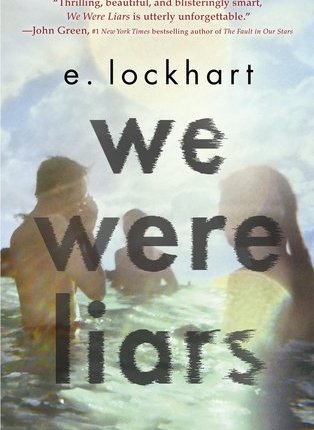
We Were Liars by E. Lockhart

We Were Liars by E. Lockhart

The Sinclair family is blonde, beautiful and wealthy. They gather together in the summer on a private island owned by the patriarch of the family.

Cadence Sinclair Eastman is ill. A terrible accident a few summers ago left her with debilitating migraines and a faulty memory.

Can she put together the pieces of what happened before she has to leave for the summer?

We were Liars is a fantastic coming-of-age book with an unreliable narrator, forbidden love and an excellent twist that I’ll bet you won’t see coming. (I know I didn’t.)

“We are Sinclairs. No one is needy. No one is wrong. We live, at least in the summertime, on a private island off the coast of Massachusetts. Perhaps that is all you need to know.” pg 26, ebook.

This is not a family who wears their hearts on their sleeve: “We believe in outdoor exercise. We believe that time heals. We believe, although we will not say so explicitly, in prescription drugs and the cocktail hour. We do not discuss our problems in restaurants. We do not believe in displays of distress. Our upper lips are stiff, and it is possible people are curious about us because we do not show them our hearts.” pg 55, ebook.

Photo by Matt Hardy on Pexels.com

Cadence, her cousins and Gat, the nephew of one of the boyfriends of a Sinclair daughter, call themselves, ‘The Liars’. Why they do so is one of the biggest mysteries in the story and I won’t ruin it for you.

I loved this book. I loved the tone, the mystery and the slow reveal.

I also loved how the reader gets to know Cadence so completely. This is not a story that leaves you wondering about character motivations.

Highly recommended for fans of young adult books, coming-of-age tales and stories with unreliable narrators. We were Liars may just be one of my favorite reads of 2017.

Thanks for reading!

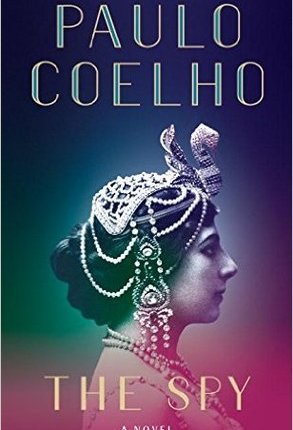
The Spy by Paulo Coelho

The Spy by Paulo Coelho

The Spy is the story of Mata Hari, told first in her voice and then from the point of view of one of her male admirers.

Paulo Coelho isn’t at his best in this novel.

Photo by Faisal Rahman on Pexels.com

He prefers and excels at metaphorical stories. For example, in this tale, Coelho has Mata Hari comparing herself to the nightingale that impaled itself on a thorn to grow a bright red rose for a young man in love.

I get what he was reaching for- but I think this tale would have been told better through details rather than metaphors.

Also, it’s so short. The audiobook was only a couple hours long.

It wasn’t nearly long enough to do Mata Hari’s life justice.

I first learned about the fascinating life of Mata Hari in Inspired!: True Stories Behind Famous Art, Literature, Music, and Film by Maria Bukhoninia. There were enough unbelievable things that happened in Mata Hari’s life to make a compelling historical fiction.

Photo by Pixabay on Pexels.com

Sadly, this didn’t quite fit the bill for me.

If you’re going to read a Coelho novel, may I recommend The Alchemist. (Which is also a novel people love or hate. I fell on the side of love.)

Thanks for reading!

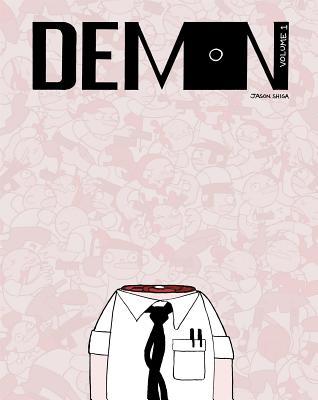
Demon, Volume 1 by Jason Shiga

Demon, Volume 1 by Jason Shiga

demonAn edgy, simply-drawn comic about a man who tries to commit suicide, but keeps waking up alive. There’s an unexpected twist and lots of blood.

In the author’s own words: “From the suicide depicted on the first page of the story to the climactic bloodbath three volumes later, Demon is my gleeful homage to the lurid and pulpy entertainment rags that make up the detritus of our childhoods.” From the foreword.

I see what he was trying to do. It just wasn’t for me.

For Jason Shiga, this was a very personal work: “Ultimately, Jimmy is me. When he leaps in front of a semi-trailer, it’s really me who secretly wants to do that. When he acts in a deliberately amoral and antisocial manner, that’s me, too.” From the foreword.

Shiga warns readers from the start that Demon is crass and graphically violent. And, it is.

Oh well. Next book!

Thanks for reading.