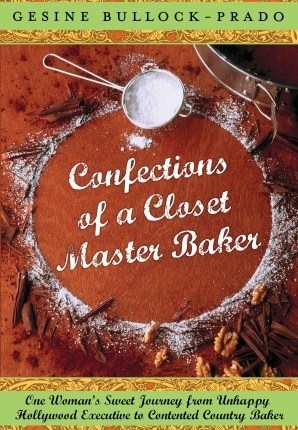
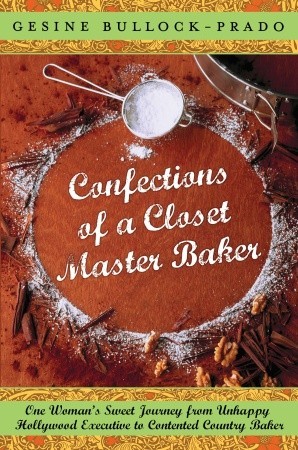
Confections of a Closet Master Baker: One Woman’s Sweet Journey from Unhappy Hollywood Executive to Contented Country Baker by Gesine Bullock-Prado

Confections of a Closet Master Baker: One Woman’s Sweet Journey from Unhappy Hollywood Executive to Contented Country Baker by Gesine Bullock-Prado
confections

Confections of a Closet Master Baker can be an abrasive, no-holds-barred memoir about the dark and impersonal underbelly of Hollywood, at times. At others, it is a poignant reminiscence and heartfelt cookbook by a woman who still mourns her mother.

I wouldn’t call it “hilarious.” This memoir is sarcastic and unapologetic about it.

“As a matter of fact, I have only two truisms that I apply to humanity. Never trust anyone who drives an Astro van. And never trust anyone who doesn’t drink beer or coffee unless they have a doctor’s note.” pg 17, ebook.

All the same, I felt privileged to be allowed a glimpse into the highly-introverted life of a woman who described herself as so socially adverse that she believes she’s “pathologically shy with severe misanthropic tendencies.” pg 24, ebook.

I saw the title of this ebook and checked it out of the online library without noticing the name of the author. She kept mentioning, “my famous sister” and “Sandy.” I thought, did Sandy Duncan have a sister? and then felt like an idiot when I enlarged the cover and saw the hyphenated last name. Duh, Heidi.

“Each year, I wrestled with the knowledge that no matter how well I did my job, no one looked at me as anything but “her sister” with nothing to offer but a fancy job title born of nepotism and access to a movie star.” pg 100, ebook.

Photo by Lisa Fotios on Pexels.com

Gesine carries some serious angst about her Hollywood experience. She needed a life change, so she moved to Vermont and opened a bakery.

“No road rage, no cell phones, no fake tits or tans, no prestige handbags, no billboards, no stoplights, no braking, no traffic, no nothing. Welcome to Vermont. Just heaven.” pg 13, ebook.

Serious bakers may find a lot to love as Gesine includes many of her customer favorite recipes after each chapter.

Personally, I loved learning about what it’s like to have an A-list sibling. Gesine’s story about baking Sandra’s wedding cake was my favorite.

Photo by Brent Keane on Pexels.com

She also includes personal details about her childhood and relationship with her mother. “I saw the devil at age three and he gave me chocolate. It changed my life forever.” pg 5, ebook.

A large part of the complicated relationship Gesine had with her mother was about food. Her mother was a German opera singer and a strict vegan. She adhered to a restrictive diet and ate foods that Gesine thought were disgusting.

Sadly, she died of colon cancer. Gesine is still devastated by that. Her mother did everything she could to exercise and eat right, and it didn’t seem to matter.

Gesine seemed to swing the other direction and celebrate sugar, butter and all manner of naughty baked goods. Part of that is because she was raised on such a strict diet as a child. The other part is, baking is what she loves to do and how she shows love to others.

Confections of a Closet Master Baker is not for the faint of heart. Don’t read it if you’re easily offended because she doesn’t hold back. I think Gesine would approve of this sentiment: if you can’t stand the heat, then get out of the kitchen.

Thanks for reading!

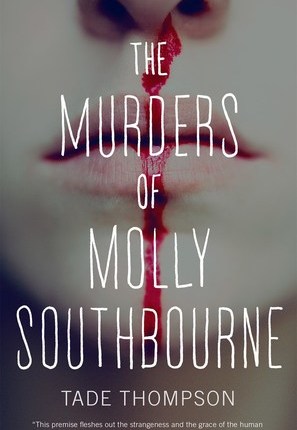
The Murders of Molly Southbourne by Tade Thompson

The Murders of Molly Southbourne by Tade Thompson

The Murders of Molly Southbourne is a short story about a girl who is born with a horrifying condition. Whenever she bleeds, the blood changes into a homicidal version of herself that won’t stop until it, or Molly, is dead.

“The rules are simple. If you see a girl who looks like you, run and fight. Don’t bleed. If you bleed, blot, burn, and bleach. If you find a hole, find your parents. Molly recites the lines to herself many times.” pg 24.

I’m not sure I understood what the author was going for with this short story.

Yes, what happens to Molly is horrific. I guess I didn’t make the connection between what was happening to her and the broader meaning the story was reaching towards.

Photo by Badulescu Badulescu on Pexels.com

Because it was certainly reaching: “She cannot stand children. They remind her of the mollys, with their innocence and their half-formed personalities, and she expects them to burst into violence any minute. They never do, but they might.” pgs 63-64

Or, beyond the death-through-your-children angle, I could use this story to consider the futility of life itself. “How is it that humans bleed so much? Or maybe Molly herself bleeds more than the average human. The rule are useless, an attenuation at best. Lifeblood escapes all the time, minor hemorrhages, a little a day. Maybe that is how we age. Maybe that is how we die.” pg 91

It is creepy and could fit the bill if you’re looking for one more short and spooky pre-Halloween read. I just didn’t connect with it.

Thanks for reading!

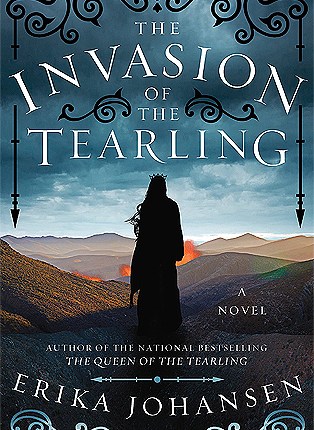
The Invasion of the Tearling (The Queen of the Tearling, #2) by Erika Johansen

The Invasion of the Tearling (The Queen of the Tearling, #2) by Erika Johansen

The Invasion of the Tearling picked up where the last book left off. The Mort army is invading the Tear because of the actions of Kelsea, their new queen.

I won’t say what exactly those actions were, in case you didn’t read the last book. Let’s just say: she’s breaking with tradition in more ways than one.

Kelsea has started to embrace her power in this book. It suits her.

The girl who had been raised by Carlin Glynn would never have trusted in visions, but Kelsea’s world had broadened well beyond the width of Carlin’s library. The Mort would come, and the Tear army wouldn’t be able to stop them. All they could hope to do was slow them down.” pg 33, ebook.

I remember being rather unimpressed by the first book in this series. It felt cliched to me and predictable, except for the shadow creature and the introduction of the magic of the gems.

Photo by Magda Ehlers on Pexels.com

This book has more of both of those things. I approved.

Trigger warning in The Invasion of the Tearling for anyone who has had issues with cutting.

“Just the skin,” Kelsea whispered, staring at her arm, focusing all of her will on a tiny inch of flesh. She had borne worse; surely she could handle this. “Just a scratch.” A shallow line of red appeared on her forearm. Kelsea bore down, watching the line deepen, her breath hissing through her teeth as the skin parted with a sting, allowing a thin line of blood to well up and hold.” pg 117, ebook.

There’s also domestic violence, rape, non-graphic torture and some hints of sexual abuse. I suppose a young adult could read this, depending on their maturity level. 16+ may be appropriate. I would hesitate to go any younger.

Queen Kelsea has a lot on her plate: “My people are starving and uneducated. We have no true medicine. On the eastern border is an army that will crush us into dust. These are real problems, and so for a time I’ve let the others lie.” pg 208, ebook.

Photo by Carolina Basi on Pexels.com

Will she be able to save everybody?

“And Kelsea wondered suddenly whether humanity ever actually changed. Did people grow and learn at all as the centuries passed? Or was humanity merely like the tide, enlightenment advancing and then retreating as circumstances shifted?” pg 381, ebook.

I wonder that sometimes too.

Recommended for readers who enjoy their fantasies on the gritty side. I don’t feel like it ever veers into the truly “dark” but there are some disturbing elements to The Invasion of the Tearling.

Thanks for reading!

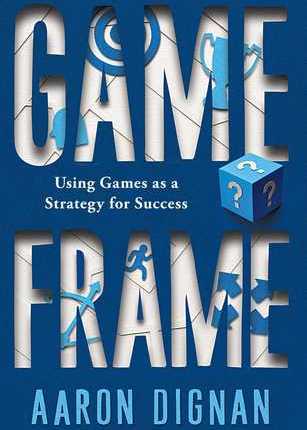
Game Frame: Using Games as a Strategy for Success by Aaron Dignan

Game Frame: Using Games as a Strategy for Success by Aaron Dignan

In Game Frame, Aaron Dignan outlines what games are, their components and how to create behavioral games to change your own and others behavior.

He clearly states his goals for the book in the introduction: “The truth is, we are born knowing how to play, and how to invent games where none exist. I’m convinced that there is a role for games and play in reshaping the world around us.” introduction, xiii.

Photo by lilartsy on Pexels.com

Dignan goes on to do just that. His detailed breakdown of the components of games and why we think they’re fun was particularly good.

I also agreed with his assertion that “play is a state of mind”: “…when a chef cooks something new, it feels like play. When I cook something new, it feels like work. Both of us are making a meal, but we’re not experiencing the same thing. Play is a state of mind.” pg 26.

Photo by Malidate Van on Pexels.com

My quibble with this book is that he didn’t convince me that games are the best way to change behavior. In Level 5 (Chapter 5), Dignan describes a speech given by Professor Jesse Schell at the D.I.C.E. conference in 2010 that scared the crap out of me.

Essentially, Professor Schell outlines how businesses and the government could use behavioral games to create a dystopian world in which our every action is analyzed and nudged towards consumerism.

“You’ll get up in the morning to brush your teeth and the toothbrush can sense that you’re brushing your teeth. So hey, good job for you, 10 points for brushing your teeth. And it can measure how long, and you’re supposed to brush your teeth for 3 minutes. You did! Good job! … And who cares? The toothpaste company. The toothbrush company. The more you brush, the more toothpaste you use. They have a vested financial interest.” pg 58

Photo by Karolina Grabowska on Pexels.com

After that chapter, I couldn’t shake the feeling that Dignan is inviting us to open a Pandora’s box.

“My challenge to you is simple: I believe that a million behavioral games could change everything, but they must be imagined and realized soon.” pg 169.

Hypothetically, say I design a game with the best intentions, but then, at some point, it’s taken over by the government and forced on people. Suddenly, it stops becoming a game and ruins the world.

Who wants to take the risk to potentially be the person who destroys society because of an ill-conceived behavioral game? Not me.

Recommended only for the truly brave gamers.

Thanks for reading!

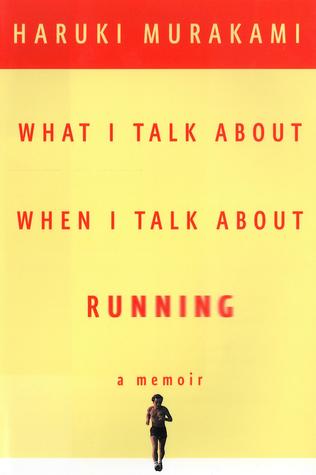
What I Talk About When I Talk About Running by Haruki Murakami, Philip Gabriel (Translator)

What I Talk About When I Talk About Running by Haruki Murakami, Philip Gabriel (Translator)
whatitalkabout

In What I Talk About When I Talk About Running, Haruki Murakami doesn’t try to convince others that we should all become long distance runners/triathletes like him. He does talk about why he took up running, how it has helped him with his creativity and why he will continue to run as long as he feels the need to do so.

I’ve never read a book by Murakami, other than this one. But, the interesting way in which he views the world makes me think that I’d probably enjoy his stuff.

I listened to this, rather short, audiobook on my daily commute. Murakami shares a lot of intimate details about his life that fans of his writing may really enjoy.

Before he took up running, Murakami said he was overweight and smoked around 60 cigarettes a day. 60 per day!

He wasn’t just looking for a way to become fit. He wanted a exercise where he was left alone with his thoughts and challenged to focus for long periods of time.

Murakami says that, when he writes a novel, it is a matter of focus and endurance. He finds it difficult to “drill down through the rock of the mind to hit veins of creativity.” (Quoting from memory, please forgive the inaccuracies.)

Photo by Pixabay on Pexels.com

The focus that runners use to finish a long race is similar, he believes, to the focus needed to write page after page until the end of a novel. I think that type of mental ability is something that could be used in any creative endeavor, not just writing. For Murakami, writing is how he makes his art.

I liked that, even though Murakami loves running and extols its virtues, he says that he never tells other people that they should take it up. He thinks that our life paths reveal themselves to us in a unique way that only we know.

He runs because he loves it. If you love it too, run. If you don’t, do what you love- walk, skip, jump, swim, whatever.

I can get behind that philosophy. Do what makes you happy because that happiness is a clue to what you were born to do.

Recommended for writers, runners, Murakami’s fans and anyone who enjoys memoirs. What I Talk About When I Talk About Running made me wish that I loved running more. Because I don’t.

Thanks for reading!

The Kingdom of Little Wounds by Susann Cokal

The Kingdom of Little Wounds by Susann Cokal

The Kingdom of Little Wounds is about a seamstress, a nursemaid and a royal family haunted by illness. It is a, sometimes very, adult tale about secrets, sex and power.

Confession: I picked this one out at the library for the cover.

I saw it and thought, “This must be a young adult fantasy of some kind about a princess who works magic with needles.” Sometimes it’s nice to indulge in a pleasant escape from the world.

So, this book is nothing like that.

In the afterword, Susann Cokal describes her work as “a syphilitic fairy tale.” There’s nothing wrong with that. It just really wasn’t what I expected and wanted it to be.

This tale has rape and madness to it. There’s also some torture, severing of body parts and other pretty gross stuff that goes on.

It is definitely geared towards an adult audience. Librarians, please put it in the proper collection. It is not young adult.

The main characters, Ava and Midi, are likeable but powerless. “I truly would like to think I’m in the middle of a fairy tale, facing the period of hardship that precedes a triumph. But I am not a likely heroine.” pg 9, ebook.

The king, Christian, is ridiculous and controlled by his courtiers. “Have you found any… any culprits?” Sir Georg hesitates, and the favorites tense. Who will be blamed? A Lutheran? … Or perhaps some cousin with a tenuous but plausible claim to succession – someone who should be removed for the health of the court anyway?” pg 77, ebook. Notice how they are unconcerned with justice.

Alliances and power shift quickly in this story like the tide. The characters never know who they can trust. “We are all, of course, in service of the Crown and King. Who is known for being liberal with his gratitude, no matter what the rank of the creditor.” I recall something my mother used to say: Be wary of a promise without a clear price.” pg 131, ebook.

Photo by Mike on Pexels.com

Also, in the afterword, Cokal shared that a piece of this story, the appearance of a star, actually happened in Europe in the late 1500’s, early 1600’s. “The new star has put all of us off balance. We’ve always expected things to change down below, in the canals, the streets, and so on, but the heavens have been constant in our memory. This star shines even in the daylight, as if to drive away the sun. It is so bright that it seems heavier than the rest; we have the impression that if we were to stand on tiptoes, we might touch it.” pg 192, ebook.

Recommended for readers who aren’t bothered by dark themes and are in the mood for a “syphilitic fairy tale.”

Thanks for reading!

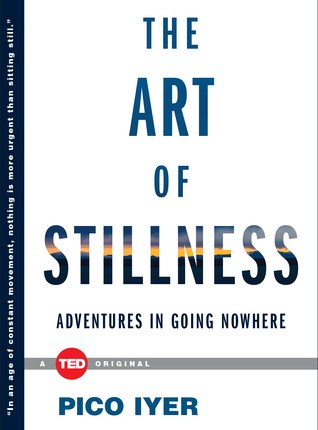
The Art of Stillness: Adventures in Going Nowhere by Pico Iyer

The Art of Stillness: Adventures in Going Nowhere by Pico Iyer
artofstillness.jpg

Pico Iyer approaches stillness from a Buddhist perspective in “The Art of Stillness.”

“And it’s only by going nowhere- by sitting still or letting my mind relax- that I find that the thoughts that come to me unbidden are far fresher and more imaginative than the ones I consciously seek out.” pg 62.

It’s not a world that most people are accustomed to experiencing, a space of being rather than an active doing. But, as Iyer so succinctly illustrates, it’s a realm that our fast-paced and technology addicted world desperately needs.

To venture into this emptiness is a restful and required experience for the health of the mind as much as inspired action is necessary for the experience of a fulfilling life.

I think that our culture has forgotten the power of stillness and the beauty of balancing our male and female energies. This book is an excellent reminder to appreciate both.

For those folks out there who haven’t heard Pico Iyer’s TED talk on this topic, I would recommend that you watch it first, then read this.

I read this and then I listened to the talk. Almost all 18 minutes of it were taken verbatim from The Art of Stillness. So, you’ll enjoy it more, I believe, if you do the opposite of what I did.

My big takeaway from this was the idea of air travel as “a retreat in the sky” pg 56. I dislike flying to the point where I tend to reach my destination exhausted and ready to return home the moment I land.

I think if I could successfully adopt the process that Iyer describes of treating the flight as a “meditative retreat” that I could change my experience of air travel from a nightmare into a restful pause.

There are many large ideas like that contained within this small book.

For the right person at the right time, The Art of Stillness could change her life. As Iyer says, The Art of Stillness doesn’t contain any “new” ideas but they are powerful and much needed ones.

Readers who are short on time, but big on stress may really love this book.

I received a free copy of this book through Goodreads First Reads. FTC guidelines: check!

Thanks for reading!

When Bad Things Happen to Good People by Harold S. Kushner

When Bad Things Happen to Good People by Harold S. Kushner
badthingshappen

When Bad Things Happen to Good People is Rabbi Harold Kushner’s examination of life, why things happen and the role of God in all of it.

Kushner wrote the book because his son was born with progeria, a disease where his body aged much faster than it should, and he died young. It shook Kushner to his core. “Tragedies like this were supposed to happen to selfish, dishonest people whom I, as a rabbi, would then try to comfort by assuring them of God’s forgiving love. How could it be happening to me, to my son, if what I believed about the world was true?” pg 3.

Kushner methodically picks apart traditional explanations for why tragedy strikes. When he’s through, none of them hold water.

“I would find it easier to believe that I experience tragedy and suffering in order to ‘repair’ that which is faulty in my personality if there were some clear connection between the fault and the punishment. A parent who disciplines a child for doing something wrong, but never tells him what he is being punished for, is hardly a model of responsible parenthood. Yet, those who explain suffering as God’s way of teaching us to change are at a loss to specify just what it is about us we are supposed to change.” pg 23.

Photo by Pixabay on Pexels.com

It’s no secret that earlier this year, I changed jobs – from a reference librarian to a writer in a newsroom. I picked up this book because I was going through a spiritual crisis of sorts.

It’s not that I’m overly-religious, but I am spiritual. I believe in things we can’t see or explain. I believe in the goodness of people and the universe.

In my job, every day, I read and hear about terrible things that happen for no reason at all. Sometimes, I write about families who lost a child to a rare disease or I read a story about someone dying in a car or motorcycle accident, and I think, “Why do things like this happen?”

I just didn’t see how a universe that was inherently good, as I believed, could have things like this happen, all the time, every day.

Photo by Snapwire on Pexels.com

Kushner says, don’t look for God or goodness in the bad things, look for the good in the response or what comes after. “For me, the earthquake is not an ‘act of God.’ The act of God is the courage of people to rebuild their lives after the earthquake and the rush of others to help them in whatever way they can.”pg 60

In the final analysis, the question why bad things happen to good people translates itself into some very different questions, no longer asking why something happened, but asking how we will respond, what we intend to do now that it has happened.” pg 147

That was a philosophy that I needed.

I now try to look for the good in the response to tragedy and, wouldn’t you know, I find it. Every day, there’s someone who’s kind or generous or brave. The goodness was always there. I just had to change where and how I was looking for it.

Thanks for reading!

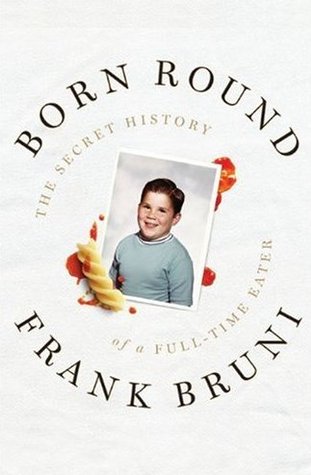
Born Round: The Secret History of a Full-time Eater by Frank Bruni

Born Round: The Secret History of a Full-time Eater by Frank Bruni
frankbruni

Born Round by Frank Bruni is satisfying memoir about a life-long struggle with food, a loving family and a journalist’s journey to find the beat he was born to eat… I mean, write.

I enjoyed all of Frank Bruni’s wandering memories. Like him, I grew up in a family where most of our gatherings center around food, eating, drinking and holidays. They still do.

Unlike Frank, I never tried “Mexican speed” or bulimia to try to manage my weight. Learning about some of the behaviors he used to maintain a weight he found acceptable was scary.

I can’t help but think that if we didn’t expect so much of each other, what a happier world this would be. Idolizing impossible body standards in the mass media does no one any favors.

When Frank goes on to become the food critic for the New York Times, I loved hearing about the subterfuges he used to hide his identity. I didn’t even know he was a food critic when I picked this book out of the digital audiobook pile.

Photo by Pixabay on Pexels.com

But, of course, that is what the boy, who loved to eat, became. Isn’t it funny how our life’s paths find us?

There are some extraordinarily vulnerable moments in Born Round. Frank is honest and doesn’t sugarcoat some of his tougher times, especially with his mother.

This memoir could potentially be a trigger for someone who suffers from an eating disorder, but, it is mainly a story about overcoming all that and adopting healthier behaviors.

Recommended for people who enjoy honest and open memoirs about families, food and how one man became the food critic he was literally born to be.

Thanks for reading!