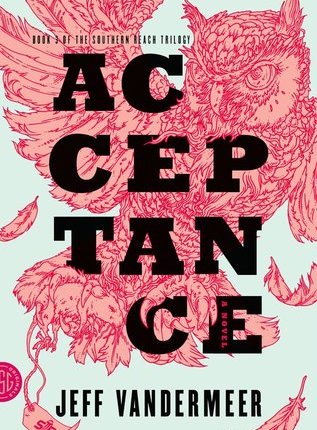
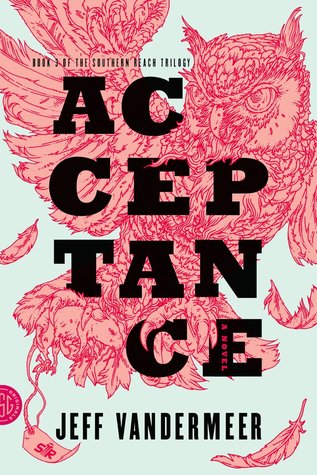
Acceptance (Southern Reach, #3) by Jeff VanderMeer

Acceptance (Southern Reach, #3) by Jeff VanderMeer
acceptance

Acceptance answers any lingering questions that the reader may have concerning Area X. I found it much more satisfying than the second entry. But, I don’t think that either the second or third book approached the brilliance of the first.

Beyond the revelations about Area X, this book also explains some of the relationships between characters. “Sometimes.. other people gave you their light, and could seem to flicker, to be hardly visible at all, if no one took care of them. Because they’d given you too much and had nothing left for themselves.” pg 60.

The reader discovers some major surprises. I won’t say anything else because… no spoilers!

Jeff VanderMeer’s descriptive passages are beautiful, something that all three books shared: “Soon after the storm, the trail they followed wound back to the sea along a slope of staggered hills running parallel to the water. The wet ground, the memory of those dark rivulets, made the newly seeded soil seem almost mirthful. Ahead lay the green outline of the island, illumined by the dark gold light of late afternoon.” pg 108.

And Area X is as mysterious as ever: “In the lengthening silence and solitude, Area X sometimes would reveal itself in unexpected ways.” pg 178. And also: “Never has a setting been so able to live without the souls traversing it.” pg 241.

I am glad that I took the time to read all three books. I think that VanderMeer’s entire concept of Area X is brilliant.

The series as a whole is strange but wonderful. Admittedly, the second book is the weakest and I barely made it through it. But, in hindsight, it fills in some blanks that contribute to the bigger picture.

Recommended for readers who like their science fiction with a large side of horror/suspense.

Thanks for reading!

Video guest post: The Beast of Gévaudan by The History Guy

Here’s another entry in the collaboration between the Help Desk and, my friend, The History Guy.

He has a degree in history. He likes history. And if you like history too, this is the video for you!

It killed over 100 people. What was it? Enjoy the curious history of The Beast of Gévaudan.

As always, thanks for reading.

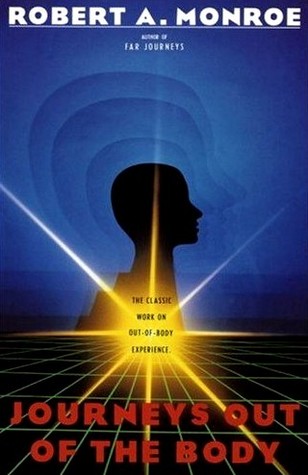
Journeys Out of the Body: The Classic Work on Out-of-Body Experience by Robert A. Monroe

Journeys Out of the Body: The Classic Work on Out-of-Body Experience by Robert A. Monroe
journeys out of the body

A ground breaking work into the mystery that is the out-of-body experience by a leading researcher in the field.

Ultimately, Journeys Out of the Body left me with more questions than answers, but, for the most part, I enjoyed the ride.

Charles Tart’s introduction is excellent: “… OOBE’s are a universal human experience, not in the sense that they happen to large numbers of people, but in that they have happened all through recorded history, and there are marked similarities in the experience among people who are otherwise extremely different in terms of cultural background. One can find reports of OOBEs by housewives in Kansas which closely resemble accounts of OOBEs from ancient Egyptian or oriental sources.” pg 8.

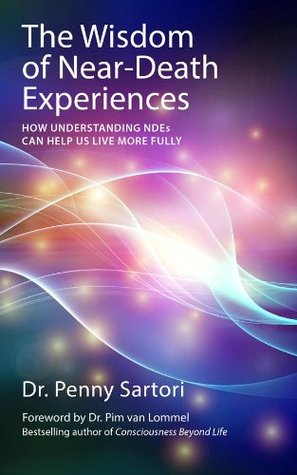
That statement reminded me of the near death experiences described in Wisdom of Near-Death Experiences: How Understanding NDEs Can Help Us Live More Fully by Penny Sartori. OOBEs like NDEs are a human experience rather than a cultural one.

Munroe points out a curious habit of society that I’ve noticed:“Many (in spiritual and occult circles) have deep professional jealousy for each other, and often are inclined to be suspicious of techniques and theories propounded outside their particular activity. They may even subtly deride or look with tolerant, superior amusement at results unrelated to their specialty. pg 37.

Why can’t we all just get along? I bet we’d learn more that way.

Photo by Min An on Pexels.com

Munroe’s thoughts on the “natural” home for what he calls the “second body”, astral body, or body of light: “The Second Body is basically not of this physical world. To apply it to visits to George’s house or other physical destinations is like asking a diver to swim down to the ocean bed without scuba gear or pressure suit. He can do it, but not for long, and not too many times.” pg 75-76.

That was why Munroe believes that out of body experiences are so hard to substantiate. When explorers are looking for evidence from the physical world, it isn’t the natural place for that consciousness to be.

Munroe talks about going to an alternate dimension in his explorations. He quotes a college professor about the possibility of this: “Dr. Leon M. Lederman, professor of physics at Columbia University, has stated: “Basic physics is completely consistent with the cosmological conception of a literal antiworld of stars and planets composed of atoms of antimatter, which is to say negative nuclei surrounded by positive electrons. We can now entertain the intriguing idea that these antiworlds are populated by antipeople, who antiscientists are perhaps even now excited by the discovery of matter.” pg 100

I think that would make a great science fiction novel. Has anybody written anything like that?

Photo by Yan Krukov on Pexels.com

I had imagined that learning about out of body experiences would be empowering and uplifting but parts of Munroe’s account didn’t really leave me feeling that way.

Take this journal entry in which he describes aliens and the loss of his belief system: “Then they seemed to soar up into the sky, while I called after them, pleading… By this time, it was getting light, and I sat down and cried, great deep sobs as I have never cried before, because then I knew without any qualification or future hope of change that the God of my childhood, of the churches, of religion throughout the world was not as we worshiped him to be- that for the rest of my life, I would “suffer” the loss of this illusion. Are we, then, just leftover laboratory animals? Or perhaps the experiment is still “in process.” pg 262.

Very, very bleak and, it just didn’t feel right to me. However, Munroe believes this is true and I felt very sad for him.

If you are interested in more information about OBEs, you may want to read Soul Traveler: A Guide to Out-of-Body Experiences and the Wonders Beyond by Albert Taylor or Multidimensional Man by Jurgen Ziewe.

If you want more one-on-one experiences with aliens, try The Key: A True Encounter by Whitley Shrieber.

Thanks for reading!

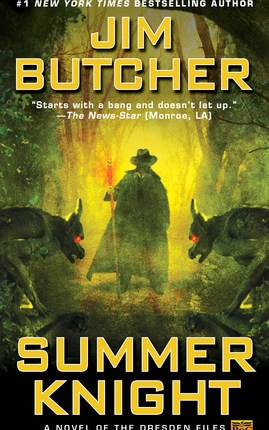
Summer Knight (The Dresden Files #4) by Jim Butcher

Summer Knight (The Dresden Files #4) by Jim Butcher

“Harry Dresden has been down and out in Chicago. He can’t pay his rent. He’s alienating his friends. He can’t even recall the last time he took a shower. The only professional wizard in the phone book has become a desperate man.”

-Goodreads

“Summer Knight” is the fourth entry in the delightful “Dresden Files.” If you’re looking for a fantasy soap opera starring a male lead and a cast of colorful, non-human characters, look no further.

Photo by RODNAE Productions on Pexels.com

Harry Dresden, a wizard-for-hire, is in the thick of it. He’s started a war between the vampires and wizards and the White Council is not happy about it. And, there’s the small matter of his former girlfriend, Susan, who’s been infected with vampire blood.

Can he save her from a terrible fate? Can he save himself?

Photo by RODNAE Productions on Pexels.com

Then, there’s Karrin Murphy, the head of the supernatural department at the Chicago PD. She’s suffering from nightmares caused by the last adventure that Harry brought to her doorstep. Will she be able to pull herself together long enough to help the wizard save the world?

Add to these troubles vengeful fairies, a handful of changelings, pizza-loving pixies, werewolves and, of all things, Dungeons and Dragons! The Summer Knight is a rollicking entry in The Dresden Files.

My one complaint: more Bob. That is all.

Photo by Ahmed Adly on Pexels.com

Recommended for urban fantasy readers, MMORPG players and people who believe or want to believe in fairies.

Thanks for reading!

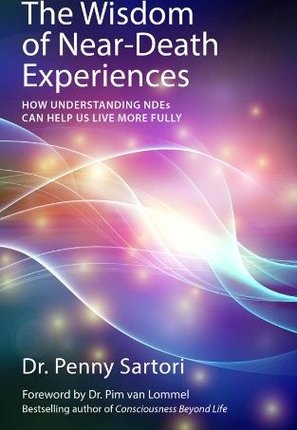
Wisdom of Near-Death Experiences: How Understanding NDEs Can Help Us Live More Fully by Penny Sartori

Wisdom of Near-Death Experiences: How Understanding NDEs Can Help Us Live More Fully by Penny Sartori
wisdomofneardeath

An extraordinary book by Penny Sartori who was a nurse, now doctor, and worked for years in the NHS.

She realized that with end life issues, there are many categories of experiences that are not discussed in medical educations but that happen often enough to be tacitly understood by practicing medical staff. Dr. Sartori compiled this book with the aim of helping other medical professionals understand near-death experiences and their potential effects on recovering patients.

Refreshingly, Dr. Sartori writes simply enough for a lay-person (like me) to completely understand the text and I found first-hand account after account fascinating, uplifting, and educational.

I’ve read about many near-death experiences and I’ve always gotten the feeling that there was something more there. As if, in reading the account, I was viewing a light behind a veil. Dr. Sartori calls this, “Ineffability.” “Ineffability: When people try to make sense of the (near-death) experience or try to verbalize it they find that words fail them. They have experienced something with which they have nothing to compare, and to try to find words to describe it is impossible.” pg 9

It’s nice to be able to put a word to that feeling.

At the end of the chapter about international near-death experiences, she has this to say: “It is evident that NDEs are worldwide phenomena and it has therefore been suggested that they are merely the effects of a dying brain. However, some cultures report components that are not present in other cultures, which would rule out materialist explanations. As some components are interpreted according to culture then it is reasonable to construe that the components may be interpreted symbolically through each individual’s cultural filter. This could suggest an underlying collective consciousness, as discussed by Carl Jung.” pg 83.

Photo by Timo A. on Pexels.com

Most of the books I’ve read on this topic have had little to say about the commonality of NDEs among the world’s population. This is a good introduction to it.

About the power of love: “Hospice and palliative-care consultant Dr. John Lerma has reported that 70 to 80 percent of his patients waited for loved ones to leave the room before dying. He also remarked that he had witnessed patients who had been certified dead return to life as the pain of their loved ones had pulled them back from a place of peace and love.” pg 103 Mind blown.

Love literally brought people back from the dead.

About the science of spirituality and how that relates to religious texts: “Texts such as the Books of the Dead have many similarities to NDEs. For many thousands of years these have been reduced to myths but now they appear to be ‘maps of the inner territories of the psyche encountered in profound non-ordinary states of consciousness’. Maybe this is what is needed to reintegrate our spiritual roots with our huge advances in technology.“pg 191 I think that this may be true too.

And finally: “One thing I’ve come to realize over the past few years is that heaven is not a location – it is a state of mind and is within us all. We just have to go within and find it.” pg 191 Absolutely, Dr. Sartori.

If you enjoyed The Wisdom of Near-Death Experiences, I would suggest reading, The Map of Heaven by Eben Alexander. You may also enjoy Journey of Souls: Case Studies of Life Between Lives by Michael Newton- a hypnotherapist explores between life/past life consciousness with his patients to heal current issues.

Also, if you want to explore the idea that heaven is inside of us, you may want to check out What if This is Heaven by Anita Moorjani.

Thanks for reading!

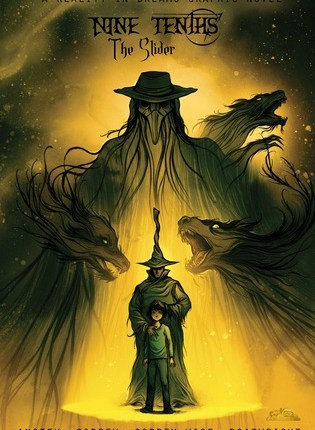
Nine Tenths: The Slider by Alex Anstey. Illustrated by Cory Godbey, Courtney Godbey Wise, Thomas Boatwright

Nine Tenths: The Slider  by Alex Anstey. Illustrated by Cory Godbey, Courtney Godbey Wise, Thomas Boatwright

nine tenthsNine Tenths: The Slider is a gorgeous graphic novel that introduces a world of archetypes and fantasy, where some of the forces that underlie nature have become unbalanced.

The panels are done primarily in greys, blues, and red. The overall effect is ethereal and dreamlike. I loved the artwork in this, especially the scenes of Lundon, the city of the dead and the gods in the introduction.

The characters are drawn beautifully as well. My favorites are the Dreads, hell hound creatures with elongated teeth, that sever the threads of life within souls. Excellent and very creepy.

Because this graphic novel is the first in a series, I felt like I didn’t get to enjoy all that much of the story before it was over. But, that’s nothing new. I seem to feel that way at the start of every series.

The world and main characters get their introductions then there isn’t time for much else. And this literally starts at the beginning of existence: “At the very beginning of time, long before there was an Earth or people to live upon it, there was only chaos… from chaos came life, and by consequence, death. Two natural forces through which all could be observed.” pgs 1-2

I’m always on the look out for age appropriate graphic novels for reluctant readers. Nine Tenths: The Slider has some violence in it so it may most appropriate for the 12-18 year old set.

The mythological setup and scope of the story are truly epic. It’s a shame that there haven’t been future entries in this series. Anyone who appreciates the intrinsic beauty of graphic novels will certainly find much to enjoy in this.

I received a free copy of this book through Goodreads First Reads.

Thanks for reading!

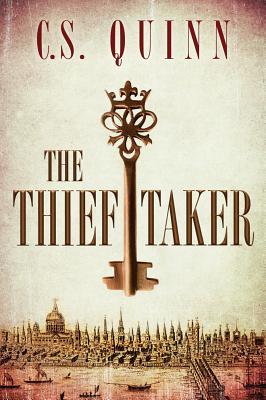
The Thief Taker (The Thief Taker #1) by C.S. Quinn

The Thief Taker (The Thief Taker #1) by C.S. Quinn

In the 1660s, thief takers solved the cases that were beneath the dignity of the typical London watchmen.

The poorer sort of people, who had experienced a crime or theft, would come to men like the title character in this story for justice. He would attempt to track down the perpetrator by finding the property that they took and fenced.

Photo by Wallace Chuck on Pexels.com

Usually, the thief taker could either get the property back for his client or turn the thief in to the higher authorities. But, the punishments back then were so barbaric- chopping off a hand, splitting noses- that the thief taker would usually just let the criminal go with a warning to not steal again or advise him to find a different clientele.

Charlie Tuesday is a thief taker in London. One day, a beautiful young woman comes to him for help in solving her sister’s murder. Normally, he doesn’t work on any cases larger than theft but the money that is offered is more than he can refuse.

From the strange mutilation of the body, he determines that there’s more to this crime than meets the eye. As the plague descends on London, he and Anna-Maria race to stop the murderer from striking again and, perhaps, even threatening the throne of England itself.

Photo by Yoss Cinematic on Pexels.com

The Thief Taker‘s scenery is lush. The customs, clothing, and food from 1665 are so different from what we have now. The reader is whisked away to a world that is the same in some ways (human behavior and emotions) and so different in other ways (social structures and occupations). I didn’t even know what a thief taker was until I read this book.

The story is an intricate mystery with the murders, possible witchcraft, and treason. I didn’t see the ending coming at all. It could be that I don’t read that many mysteries, but I thought that it was really well done.

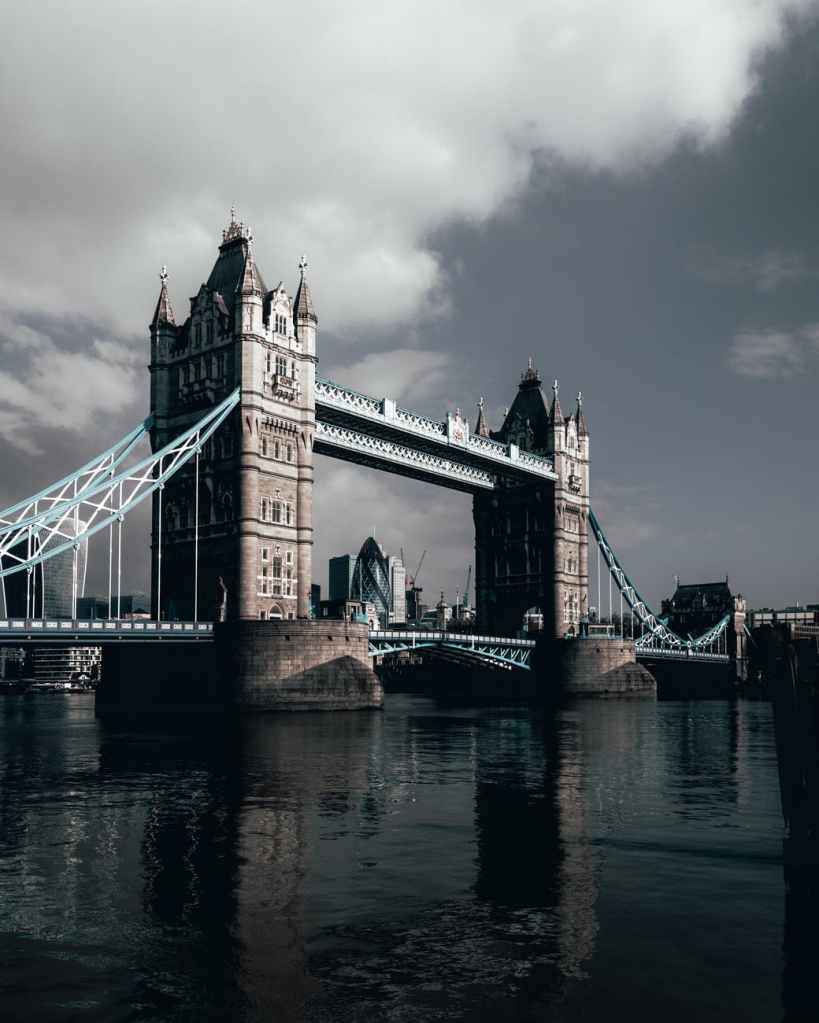
Another fascinating piece to this story are the plague victims. The horrific conditions that the author describes, like bodies rotting in the streets and the Thames becoming clogged with corpses around London Bridge, actually took place.

Photo by Yoss Cinematic on Pexels.com

Because of these icky details, The Thief Taker occasionally veers towards the horror genre but never really crosses that line.

I kept picturing the rotting plague victims as zombies. In some ways, they’re similar. Contact with a plague victim could bring infection. Sometimes, the main character would come across a body that would appear dead, but wasn’t dead.

At one point in the story, a character describes the plague victims who are wandering the streets in search of mercy as the “walking dead.” It was very creepy.

Photo by Renato Danyi on Pexels.com

Also, the societal breakdown that accompanied the plague was so quick. Every moment the characters were in the London streets was filled with tension. The reader didn’t know if a plague victim was going to pop out of a quarantined house or if a thug was going to try to commit a robbery in a dark alley.

Readers who like the historical fiction of Philippa Gregory, Judith Merkle Riley, and Sarah Dunant may enjoy this.

I received a free copy of this book through Goodreads First Reads program.

Thanks for reading!

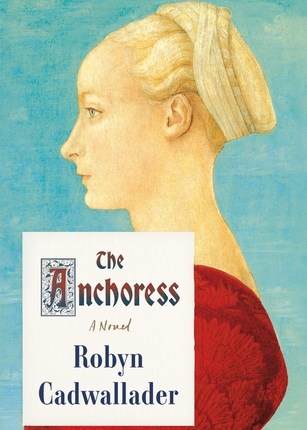
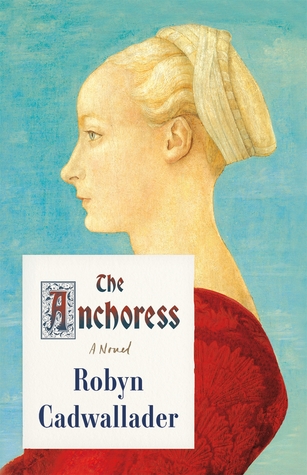
The Anchoress by Robyn Cadwallader

The Anchoress by Robyn Cadwallader

England, 1255. What could drive a girl on the cusp of womanhood to lock herself away from the world forever? -from Goodreads

anchoress

The 1200’s was an exciting time in many ways. But, not if you were a woman.

In The Anchoress, I learned about yet another way in which women were treated poorly by the male dominated church. Apparently, the anchoress was an actual calling where the woman chose to be walled up near or in a church in order to move closer to God.

The people who walled up the woman left a small window for food and waste to pass through. That was the extent of her interaction with the outside world. How messed up was that.

Sarah, the anchoress in this story, chooses the position for a variety of reasons, but they’re not all that mysterious. The description of the book plays it up as a mystery which the reader will figure out in probably five pages or so.

I enjoyed this book more for the historical details of the period.

The interesting part is when Sarah starts to go bonkers (no big surprise there) and her confessor tries to keep her straight. That particular drama was gripping even though most of the action took place in one room.

If you enjoyed The Anchoress, you may want to read A Triple Knot by Emma Campion or Pope Joan by Donna Woolfolk Cross.

Thanks for reading!

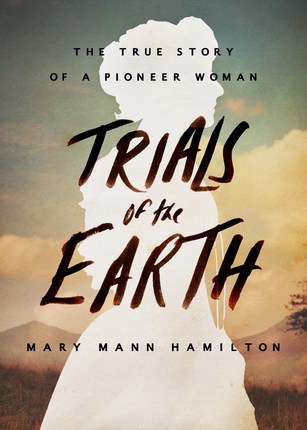
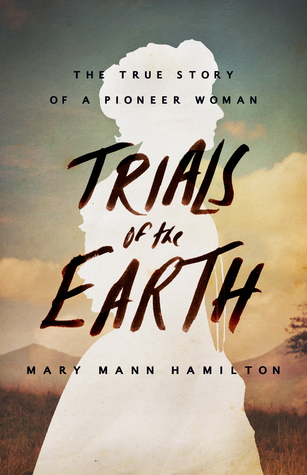
Trials of the Earth: The True Story of a Pioneer Woman by Mary Mann Hamilton

Trials of the Earth: The True Story of a Pioneer Woman by Mary Mann Hamilton
trials of the earth

Trials of the Earth is Mary Mann Hamilton’s memoir about her hardscrabble life in America during the late 1800’s.

She uses period speech to illuminate a life of struggle and hard work. If certain anachronistic and racially insensitive terms bother you, especially the casual use of the N-word, you may want to chose another memoir. It was shocking but I kept reminding myself that Mary was a product of her times.

On top of the constant struggle of putting food on the table and keeping a roof over her head, it seems like she was perpetually pregnant and her husband was an alcoholic.

But Mary lived up to the challenges, raised and buried children, nursed her husband through his hangovers and illnesses- she was a survivor. That is mainly what Trials of the Earth was to me- a survival story.

“Nevertheless, this is not a book of repining; it is a tale simply told of what one woman has lived through in the Mississippi Delta. I say ‘lived through’ because at times this history reads like a record of the extreme limits of human endurance.” loc 75, introduction

So many of the modern conveniences that we take for granted didn’t exist. Mary moved around a lot and notes with relief every time her husband manages to install a pump in her new house so that she didn’t have to haul water from the river.

Mary’s relationship with her husband, Frank, isn’t a fair deal. She is a very young woman when she gets married and from the start he’s controlling- telling her what they will eat and what friends they will have. He even tells her what books she can read.

Photo by Gaspar Zaldo on Pexels.com

That would have been the last straw for me. But again, she was a woman of her times.

“To me he seemed like a man that had taken a silly child to raise rather than a wife. … As time went on I found there were plenty other things I didn’t know, too. The first thing I found out was that he drank.” loc 226, ebook.

In addition to the inequality in their relationship, Frank is from England and has a secret past. He won’t tell Mary, his own wife, his real name or talk about his circumstances or the family he left behind. But, Mary doesn’t let it bother her too much. I suppose she was too busy with everything else they had going on. That lack of trust would have driven me bonkers.

Not that she felt like anything was wrong with their relationship. “Women can stand more work, more trouble, and more religion than men.” loc 528, ebook. She accepted the hardships because she knew that she could. I admire her gumption but I also felt sad for her too. I felt sad because she didn’t have the option to live any other sort of life.

Frank is always talking about the sin of Eve and all the baggage that comes with it to Mary. There is a lot of mansplaining that goes on too. Parts of this book were infuriating to me.

Recommended for readers who enjoy memoirs that read like historical fiction. Ability to tolerate the bleak role that women occupied in society in the late 1800’s is a must.

Thank you to NetGalley and Little, Brown and Company for a free advance reader’s copy of this book. Reminder: some of the quotations in this review may change in the final printed copy.

Thanks for reading!