Life After Life by Kate Atkinson

Life After Life by Kate Atkinson

lifeafterlifeA lovely and unusual book about reincarnation, free will and destiny.

Ursula Todd was born on a snowy day in February with the umbilical cord wrapped around her neck. That was the first time she died…

I loved how Kate Atkinson built this story through seemingly insignificant details. As the reincarnations progress, layers are added upon layers, so that by the end of this tale, it is a rich tapestry of events, emotions and possibilities.

I was surprised by the open-endedness of this story. I feel like Atkinson wrote a tale that reads like real life- it has the meanings that we assign it. Nothing more, nothing less.

I listened to the audiobook of Life After Life and it was very good. A few times, I wished that I had the physical book in front of me so that I could double check a date or detail. Other than that, the narration was excellent.

This story has me wondering about life, reincarnation and all of it. If, as so many world religions say, there are parts of us that are immortal, wouldn’t we all go a bit bonkers after millennia of existence? Would we get bored of it? Would we ever choose to not come back? What’s the bigger picture?

Anyway, this book will make you wonder, question and dream about existence. Which, in my mind, is one of the highest functions of a book.

Recommended for fans of historical fiction, spirituality and life itself. I think Atkinson has written a masterpiece.

Thanks for reading!

The Annotated Sandman, Vol. 1 by Neil Gaiman

The Annotated Sandman, Vol. 1  by Neil Gaiman

sandmanIn Sandman, a powerful group of mortals is trying to trap Death itself. Instead, they catch another important figure, the Lord of Dream. This volume details the Lord of Dream’s struggle to reassert his power after being locked away for so many years.

He’s lost his symbols of authority, which are literally pieces of his power. So, he needs to get those back.

Also, the denizens of the realm of Dream have gone off the rails since their lord has been missing. Some of these are nightmare creatures- fatal to humankind. This isn’t going to be simple.

Sandman, Vol. 1 was very dark. Neil Gaiman is known for his dark fantasy, but there are usually moments of light. In Neverwhere or The Ocean at the End of the Lane, there is darkness, but nothing like this.

Within these pages, there’s serial killers, child abusers, psychotic mental ward escapees, kidnapping rapists- one after another in a seemingly endless parade. It’s a lot to take.

I found I wasn’t a fan of the Lord of Dream himself. His immortal nature has made him unable to understand emotions or even desire to. I suspect that subsequent volumes deal with this exact issue. But, he’s rather unlikeable in Vol. 1.

I really disliked the way he treated women- in multiple relationships. The worst being Nada. Again, I’m guessing that this is a story of redemption. But in that one moment, no spoilers but readers know what I’m talking about… his behavior was unforgivable.

Honestly, I liked Watchmen more. So far. The characters in that tale weren’t necessarily likeable either. I suppose we’ll have to see how the story develops in the next volume.

Recommended for graphic novel readers who like their stories gothic, mythical and with a sprawling storyline.

Thanks for reading!

Gather the Daughters by Jennie Melamed

Gather the Daughters by Jennie Melamed

Gather the Daughters is about a small community that lives with no electricity or modern conveniences on an island. They have a church made of stone that sinks into the ground and a holy book written by “the ancestors.” These ancestors are saint-like founders who, according to tradition, fled the wider world to preserve the human race during an apocalypse.

Traditions are dark and strange on the island, but not questioned because they were written by the ancestors.

Photo by Ingo Joseph on Pexels.com

The tale is told from the viewpoint of four girls: Vanessa, Caitlin, Janey and Amanda.

From the fires of wickedness we grew forth, like a green branch from a rotten tree,” he reads. “From the wastelands of want came the hardworking men of industry and promise. From the war-stricken terror came our forefathers to keep us safe from harm.” Like everyone else, Vanessa mouths the words along with him. loc 122, ebook.

Because of the small number of people on the island, everyone has an assigned job- that they keep for life. Reproduction, meetings and courtships are also controlled by tradition.

Sometimes the way things are done seem irrational or cruel, but the community does not change. Take the perpetually sinking church: “Every ten years or so, when the roof is almost level with the ground, all the men on the island gather to build stone walls on top of it, and the roof becomes the new floor. Vanessa asked Mother why they couldn’t just use wood, but Mother said it was tradition, and it would be disrespectful to the ancestors to change it.” loc 229, ebook.

Photo by Zac Frith on Pexels.com

Similar to The Handmaiden’s Tale, Gather the Daughters is ultimately about what happens when society dictates and controls relationships, sexuality and education through religious doctrine. It is also examines the male/female balance of power.

Gather the Daughters is a gripping read. But not mysterious. It was fairly clear in my mind from the start where this story was headed, but I cared about the main characters. They have heart and I couldn’t help but want them to live in a better world than the one they were born into.

I could see this being a great choice for book clubs. There’s plenty to talk about, especially with character motivations and the structure of society.

Photo by David Bartus on Pexels.com

Reader warnings: survivors of childhood sexual abuse could be triggered by this read. There are also some domestic violence scenes.

Thank you to NetGalley and Little, Brown and Company for a free advance reader’s copy of this book. Reminder: the short quotations that I pulled for this review may vary in the final printed version.

Thanks for reading!

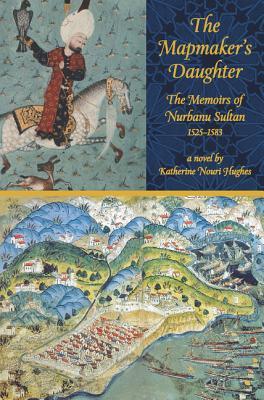
The Mapmaker’s Daughter by Katherine Nouri Hughes

The Mapmaker’s Daughter by Katherine Nouri Hughes
mapmaker's daughter

A fascinating peek into the 16th century world of the Ottoman Empire. The story is told through the memories of a woman who is dying and recalling the circumstances that brought her to where she is now. Her extraordinary life included being kidnapped by pirates, educated with a prince and joining the royal family of Suleiman “the Magnificent.”

All of this as a female in the 1500s! Katherine Nouri Hughes, the author, admits that there are so few records of her life that Cecilia Baffo Veniero, called Nurbanu, was a blank slate.

But, Nurbanu actually existed. Hughes gives her a life of mystery, dizzying highs, lows, and riches beyond imagining. I loved it.

And, I learned so much from this story. Admittedly, my historical fiction preferences seem to run towards the Roman Empire or Tudor England. Perhaps it was time I branched out.

For example, did you know that there was a law for when the heir to the Sultan took the throne, that all of his brothers were killed? This was to protect the dynasty from civil war. “And to whomsoever of my sons the Sultanate shall pass, it is fitting that for the order of the world he shall kill his brothers. That law has held us together; secured our Empire; made us who we are…” loc 127, ebook.

Beyond the obvious reasons, this was particularly awful because the Sultan tended to have scores of kids. There were the usual threats of illness and the plague to consider.

Suleiman himself was a legend in his own time. “A man like no other. His titles alone told the story. … Sultan of the Two Continents, Servitor of the Two Sanctuaries, Warden of the Horizons. Suleiman the Magnificent- man and legend combined. … Imperial, mirthless, deadly pale.” loc 463, ebook.

He ruled an empire and his children. According to Hughes, he was heavily influenced by his favorite wife, Hurrem, who is a colorful character in this story.

Nurbanu is fortunate because, when she is captured, she was already well-educated. “I’d been assigned to the Head Scribe herself without question because I was educated. That was what Barbarossa had said at the presentation. ‘She can read.'” loc 482. That saves her from more gruesome fates within the harem.

But it doesn’t make her life easy. After all, she’s still a slave in the palace of Suleiman.

“I know how awful the end of fantasy is- for it steals into parts of the heart and mind where nothing should be able to go. It is driven by the heat of what we long for, and it melts all that is in its path until it comes out into the open and is exposed for what it is: something that was never true.” locs 3250-3268.

Recommended for readers who like historical fiction with a large cast of character, an exotic locale and a heroine with a quick mind.

Thank you to NetGalley and Open Road Integrated Media for a free advance reader copy of this book. Reminder- the short quotations that I used in this review may differ in the final printed version.

Thanks for reading!

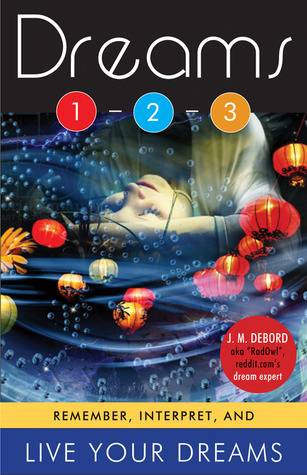
Dreams 1-2-3: Remember, Interpret, and Live Your Dreams by J.M. DeBord

dreams

J.M. DeBord starts his book about dreams with the idea that dream interpretation used to be the job of a wise man or woman in the community. Dreams were an integral part of living a fully conscious and realized life.

Now, dream interpretation experts charge for their services and not everyone has access to their skills.

This clever little book opens the doors of dream interpretation so that average people can again know the meaning of their dreams. It doesn’t stop there- J.M. DeBord also provides suggestions for integrating the dreams into your daily life.

Finally, in Dreams 1-2-3, DeBord empowers readers by reminding us that no matter how expert the dream interpreter, the final meaning for any dream really rests in the hands of the dreamer herself. Only she can feel the “ringing of truth” in the interpretation.

This is by far the best book that I have ever read on dream symbolism. DeBord doesn’t provide lists of animals/colors/scenarios and their most common meanings. He ties whatever shows up in the dream to the rest of its contents and the dreamer’s own internal and external world.

Photo by Ylanite Koppens on Pexels.com

In this way, each dream can be understood and applied in as unique a way as the dream itself.

My one critique of Dreams 1-2-3 is that DeBord made the process seem so simple. I’d read the dream example and think, I have absolutely no clue what that one means, and then DeBord would go on to provide a crystal clear interpretation.

See how simple it is?… he seems to say. Perhaps not.

DeBord may have a gift for it, honed by practice, and he doesn’t realize that what he is doing is rather amazing. I suppose he gives me a goal to strive towards.

I have had a few dreams since completing this book and, with DeBord’s method, have been able to wring some meaning from what I otherwise would have assumed to be nonsense. Dreams 1-2-3 has already changed my life. Read it if you want to change yours too.

Thanks for reading!

Linchpin: Are You Indispensable? by Seth Godin

Linchpin: Are You Indispensable? by Seth Godin
linchpin

Seth Godin draws on his experiences in business and life to convince the reader to be a linchpin rather than a cog in the machine of work.

He says it better than I did: “This book is about love and art and change and fear. It’s about overcoming a multigenerational conspiracy designed to sap your creativity and restlessness. It’s about leading and making a difference and it’s about succeeding.” pg 2

You have our attention, Godin. What do we do?

Through a series of blog-like sections, Godin explains that there is no road map or simple answer. “Our world no longer fairly compensates people who are cogs in a giant machine. … Leaders don’t get a map or a set of rules. Living life without a map requires a different attitude. It requires you to be a linchpin.” pg 19

Essentially, you have to embrace the uniqueness and drive that is inside of you. You have to create a platform of work rather than a resume. You have to decide to discard mediocrity.

“The very system that produced standardized tests and the command-and-control model that chokes us also invented the resume. … Great jobs, world-class jobs, jobs people kill for- these jobs don’t get filled by people e-mailing in resumes.” pg 72

That’s so outside the usual paradigm of work, for most of us, that it can sound scary.

Photo by Andrea Piacquadio on Pexels.com

“Often, when people hear about my radical ideas for how you should train for a career, as well as the best way to present yourself, they object. They point out that not fitting in is certainly going to be an ineffective way of getting one of these average jobs. … If you need to conceal your true nature to get in the door, understand that you’ll probably have to conceal your true nature to keep that job. … The linchpin says, “I don’t want a job that a non-linchpin could get.” pgs 78-79

It seems like he’s asking a lot, but the alternative is to give up and conform. Godin says that this mindset isn’t impossible: “My fundamental argument here is simple: In everything you do, it’s possible to be an artist, at least a little bit.” pg 94. We can do that, right?

I didn’t agree with everything in Linchpin. I thought that Godin was far too hard on journalists… it is easy to look at an industry, or any situation really, from the outside and criticize the people in the thick of it.

News agencies know that they have to embrace the future or die. Just how to do that is up for grabs and adding Godin’s toolbox of how to excel at work couldn’t hurt. I don’t think that reinvention or evolution is an impossible task. It’s just tricky because, as Godin noted, “there is no roadmap.”

Recommended for people who may be bored with where they are and can see a glimmer of where they want to be- but aren’t sure how to get there. Also recommended for those who work in the newspaper business because we clearly need more linchpins.

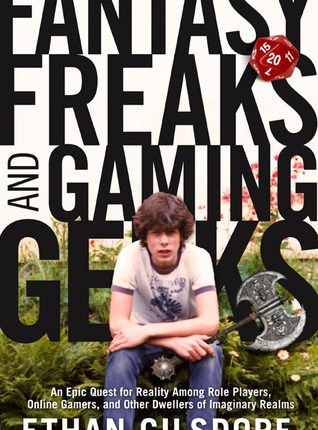
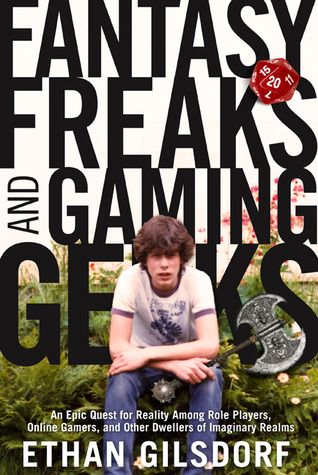
Fantasy Freaks and Gaming Geeks: An Epic Quest for Reality Among Role Players, Online Gamers, and Other Dwellers of Imaginary Realms by Ethan Gilsdorf

Fantasy Freaks and Gaming Geeks: An Epic Quest for Reality Among Role Players, Online Gamers, and Other Dwellers of Imaginary Realms  by Ethan Gilsdorf
fantasyfreaks

Ethan Gilsdorf carried angst about his gaming habits for various reasons for years. This book could have been a healing for him, but he doesn’t seem to take that leap.

It made me sad. Yes, perhaps the start of his DnD experience coincided with his mother’s illness, but I think that was not the only reason why he entered the world of fantasy.

Some people are born wanting to see worlds beyond this one. Why that is, I don’t know. I just know that it is so. Ethan suggests, in Fantasy Freaks and Gaming Geeks, that it takes trauma to send a person in that direction, I disagree. I think some of us were born that way. 🙂

The content of the book is excellent. He travels from the UK to New Zealand and everywhere inbetween to find people who are engaging in LARPS, SCA, Tolkien, gamer conventions, Worlds of Warcraft, EverQuest, and more.

I loved his interviews with the man/woman on the street. He’d ask why they were doing whatever it was they were doing and they’d answer with conviction. There’s something very satisfying in reading personal statements by passionate people.

The enthusiasm nearly drips from the pages. I loved that.

I was hoping that Ethan would learn from all of these people who absolutely loved what they were doing with no regrets. But, he seemed to go to his default mode of judging and self-pity rather than expansion.

Ethan made some steps towards self realization at the end of the book, but I wish he had gone further.

If you enjoy this book or topic, may I suggest Of Dice and Men: The Story of Dungeons & Dragons and the People Who Play It. It’s a non-fiction read about Dungeons and Dragons. It lacks the comprehensive nature of Fantasy Freaks and Gaming Geeks, but David Ewalt carries none of the emotional baggage of Ethan Gilsdorf so it feels more light-hearted.

Thanks for reading!

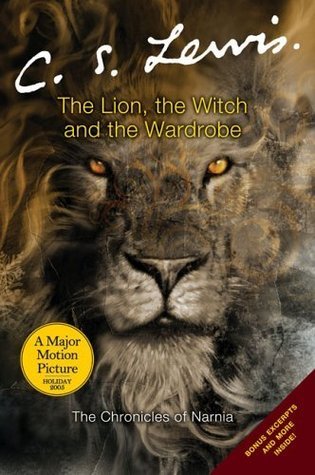
The Lion, the Witch, and the Wardrobe (Chronicles of Narnia, #1) by C.S. Lewis

The Lion, the Witch, and the Wardrobe (Chronicles of Narnia, #1) by C.S. Lewis
lionwitch

This is the story of four siblings who stumble through a wardrobe into a different world. They discover magic, monsters and their destiny.

One Christmas, when I was 11 or 12, my mother gave me The Chronicles of Narnia. It ignited a lifelong love of fantasy fiction and reading.

“Peter! Susan! It’s all true. Edmund has seen it too. There is country you can get to through the wardrobe. Edmund and I both got in. We met one another in there, in the wood.” pg 40.

I get the criticisms of this series- that it is heavy handed with its symbolism.

But, when I read it as a child, all of that slipped right over my head. All I knew, was that this was an adventure and I loved it.

The White Witch is one of the best villains in children’s literature: “As for you,” said the Witch, giving Edmund a stunning blow on the face as she re-mounted the sledge, “let that teach you to ask favour for spies and traitors. Drive on!” And Edmund for the first time in this story felt sorry for someone besides himself.” pg 113.

She opposes Aslan, a great golden lion and the ruler of Narnia, who hasn’t been seen for an age: “And now,” said Aslan presently, “to business. I feel I m going to roar. You had better put your fingers in your ears.” And they did. And Aslan stood up and when he opened his mouth to roar his face became so terrible that they did not dare to look at it.” pg 161.

The film did a solid job capturing the magic of this story, but nothing compares to the book.

“Once a King in Narnia, always a King in Narnia.” pg 186.

In fact, just writing up this review makes me want to read them all again.

I’ll see you on the other side of the wardrobe…

Thanks for reading!

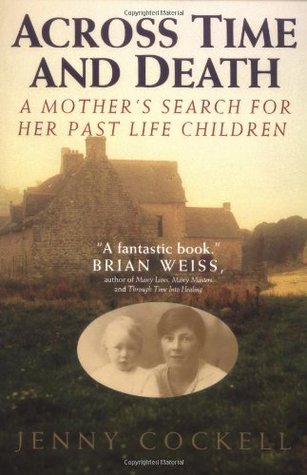
Across Time And Death: A Mother’s Search For Her Past Life Children by Jenny Cockell

Across Time And Death: A Mother’s Search For Her Past Life Children by Jenny Cockell
acrosstime

Jenny Cockell retained memories of a former life. In these memories, she died young and left children behind. Across Time and Death documents her acceptance of the memories and her search to find her previous family.

In childhood, my dreams were swamped by memories of Mary’s death. … All this, however, seemed inconsequential beside my fear for the children I was leaving behind.” pg 1.

In the religion of my childhood, reincarnation was neither taught nor accepted. But, as I’ve read different books, I’ve come to believe that it’s true.

I was so curious about it, in fact, that I participated in a past-life regression therapy session. The recording of it is mildly interesting, but mainly traumatic. I saw abuse, a lifetime of servitude and then a death that was penniless and alone in the dark.

The therapist can be heard on the recording, murmuring niceties about being “safe and secure.” There was a lot of, “let it go into the light” and “breathe in and out, slowly.”

Still, I walked out of that session and haven’t gone to another one since. I most likely never will.

If we do indeed live again and again, perhaps there’s a reason that we retain no memory of it. That’s my two cents. Back to Across Time and Death.

Photo by Pixabay on Pexels.com

As a child, Jenny understood her past life memories more clearly than when she was an adult. “I had no cause to doubt that these memories were real. I assumed that memories of this kind were normal, and I expected everyone else to have them too.”pg 12.

Culture has such power to shape our worldview. Isn’t it true that part of the process for choosing the next Dalai Lama is that the candidate has to recognize the previous Lama’s belongings?

Jenny’s experience with regression through hypnosis seemed to echo mine. “Hypnosis is a strange experience even without the element of regression. All sorts of memories which have been hidden deep within the subconscious and cannot ordinarily be reached can be brought to the surface. This is double edged – both a wonderful and a disturbing experience at the same time.” pg 34. Yes.

When Jenny is finally able to overcome all of her doubts and fears, she then has to consider what the, now grown, children are going to think of her. “I needed to ask for help because I was beginning to panic. I wondered if I had any right to disturb Mary’s children or, conversely, if I had the right to keep my story from them.” pg 107. Which is a legitimate concern.

I’d recommend this book for people who are on the fence or just curious about reincarnation. If your mind is completely made up one way or another, I don’t know that Jenny’s testimony will mean as much to you.

Thanks for reading!