Epic by Conor Kostick

Epic by Conor Kostick

Perfect for fans of Ready Player One or anyone who has ever enjoyed playing an MMORPG. Erik, a young boy in a futuristic society, tires of scrabbling for his day-to-day existence in real life and in a virtual world, where all wealth and legal issues are decided by combat in a game called Epic. Almost everyone in Erik’s society kills kobalds and other low level monsters every day, to gather pennies to improve their online characters and, therefore, their society. After dying, yet again, and crushing his family’s hopes for his advancement in Epic, Erik creates a ridiculously attractive female character and puts all of his points into beauty, a skill that no one else ever considers because it is a useless stat from a fighter’s standpoint. What happens next is an exciting adventure through virtual worlds with magic, monsters, swords, and sorcery… who will triumph? Erik and his friends or the all-powerful Central Allocations team or the game, itself?

Erik’s creation of Cindella (his avatar): “Serious gamers, and the whole world consisted of serious gamers, never wasted a point on beauty that could be spent on more practical attributes, or combat skills, craft skills, weapons, magic items and spells. As a result, Epic’s population of players consisted entirely of dull, gray-looking humanoids. His friends were in for a shock; it would be impossible to explain his choices to them, as there was no rational argument in favor of throwing away every practical advantage in favor of beauty.” pg 15

The power of beauty: “While they made their way through the flapping canvas and rope of the market stalls, Bjorn noticed something unusual. The NPCs were not stationary; their heads were turning towards the two players. “Erik, look at the merchants.” “Hmmm. That’s odd.” Erik’s character made the actions that arose from the wave+smile command. A nearby seller of herbs smiled and waved back. “You try.” Bjorn had his big warrior wave. Nothing. “They like me!” pg 27

Librarians play a huge part in this story, which of course I LOVED: “Son, your story of Cindella and the pirate treasure is exciting. But you need to obtain more information.” “I know.” “Hope has a library. Where all the information ever learned about Epic has been stored. It is our right to be able to consult that information. So we are going to pay the librarian a visit.” pg 36

The villain in this book is just awful: “… the illicit thrill of being a player-killer was something that could not be understood with logic. Nor could logic explain the pattern of his killings. Curiously it was not the stronger looking players that attracted his attention- and if there was any justification for the deaths of players it was to eliminate possible threats to the Central Allocations team. No, it was the slightly heartrending players, with their one weapon and tiny pieces of armor, which drew his attention. There was something bewitchingly naive and tender about them, spending their spare time killing kobolds and orcs for pennies, saving assiduously and slowly. And so he rode them down, bringing their struggle up the ladder of Epic to an abrupt end.” pg 60 Haters gonna hate.

Doing the impossible… dragon slaying! : “I agree with Bjorn,” Sigrid interjected. “Farmers’ children just don’t kill dragons. Nobody kills dragons these days. But if they did, it would be the people in Mikelgard, with all their magic and expensive gear.” “But nobody even thinks about fighting dragons anymore.” Injeborg spoke up. Erik had known that he could count on her. “Only our Erik. That’s why he has seen something that they have missed.” She turned to her brother, “Come on, Bjorn. Let’s try it.” “No, it’s hopeless.” Injeborg stamped her foot in frustration. “You are always waiting for something to happen to you. But that’s not how life is.” pg 85

Big dreams: “Tell me,” said Injeborg. “Everyone, what is it that you would like from life?” She turned to look at Sigrid. “I would like to be allocated a small farm, somewhere near here.” “Bjorn?” “I would like the same.” “B.E.?” Slightly embarrassed, B.E. laughed, and then said, “I would like to be a successful Epic player, like Svein Redbeard.” “Erik?” “I would like nothing better than to be a librarian.” pg 89 🙂

A new way to play the game: “Wouldn’t it be wonderful if the game didn’t matter, other than to play it? We could explore snowy mountains, spectacular caverns, and remote desert civilizations. To journey just for the pleasure of the adventures would be something…” She paused. “Only now do I understand why this game was invented.” pg 192 A good metaphor for life, I think.

Thanks for reading!

Railsea by China Miéville

Railsea by China Miéville

“This is the story of a bloodstained boy.” That’s the first line of this strange and fantastical tale of giant creatures that “swim” in the earth’s soil and the brave and flawed “molers” who chase them for profit and life purpose. Miéville has created a dystopian world covered in railway ties with skies poisoned by chemicals and filled with monstrous, alien creatures who feast on those who get too close. But, there may just be something beyond the rails, if the characters in this story are determined and lucky enough to see their way through to the end of the world… Though based off of the tale of Moby Dick, Railsea is an engaging adventure and coming of age story that reads like nothing else I’ve ever experienced. Miéville has blended together steampunk, dytopian, and fantasy elements to create something completely different.

Sham is a boy on the cusp of manhood who can’t quite figure out what he wants to do with his adulthood: “Sham felt sure there was something he fervently wanted to do & to which he was excellently suited. Which made the more frustrating that he could not say what it was. Too vague about his interests for further study; too cautious in company, perhaps a little bruised by less-than-stellar school days, to thrive in sales or service; too young & sluggish to excel at heavy work: Sham’s tryings-out of various candidate activities left him het up.” pg 36, ebook. Anyone who has ever been lost about what path to follow in life will be able to empathize with Sham.

Miéville’s story, like Moby Dick has layers of meaning built into it: “Edging such places is the railseaside, called the littoral zone. Those are the shorelands. Port towns, from where transport, freight & hunting trains set out. Where lighthouses light ways past rubbish reefs breaking earth. “Give me the inland or give me the open rails,” say both the railsailor & the landlubber, “only spare me the littoral-minded.” pg 51 ebook. Clever, no? A warning, if you don’t enjoy reads where the author makes up words to tell the story, you may want to skip Railsea. There’s a bunch of creative adjectives and nouns mixed up in this one.

The religions of this world were a fascinating too. I wish Miéville had explored them more: “He muttered in his head to That Apt Ohm, the great rotund boss-god, one of the few deities worshipped across the railsea, whatever the peculiarities of local pantheons. Bollons was ecumenical, granted church-licences to any deities whose worshippers could pay the fees. But the disrespectful worship of That Apt Ohm was taken more seriously there, pursued with more verve, than at most stops on the railsea. Sham had no idea quite what, if anything, he believed, but there seemed little harm in a quick silent word with one of the few gods whose name he remembered.” pg 100, ebook.

Part of the homage to Moby Dick, finding a captain’s “philosophy”: “How many of these philosophies were out there? Not every captain of the Stereggeye Lands had one, but a fair proportion grew into a close antipathy-cum-connection with one particular animal, which they came to realise or decide-to decidalise-embodied meanings, potentialities, ways of looking at the world. At a certain point, & it was hard to be exact but you knew it when you saw it, the usual cunning thinking about professional prey switched onto a new rail & became something else- a faithfulness to an animal that was now a world-view.” pg 130 ebook. What’s your white mole?

I enjoyed Railsea but I can see how this writer might not be for everyone. He uses fragmented sentences and ampersands (&) to move the story along. The chapters are incredibly short which also kept the pace rolling but it could also be viewed as making the novel choppy. Sometimes, Miéville breaks through the fourth wall and addresses the reader directly. I thought that device was charming, conjuring up images in my mind of storytellers sitting in front of the fire or at a pub. But, again, this may not work for everyone.

Some read-alikes for Railsea: Chaos Walking series by Patrick Ness or Under the Empyrean Sky by Chuck Wendig.  Thanks for reading!

Tin Star by Cecil Castellucci

Tin Star by Cecil Castellucci

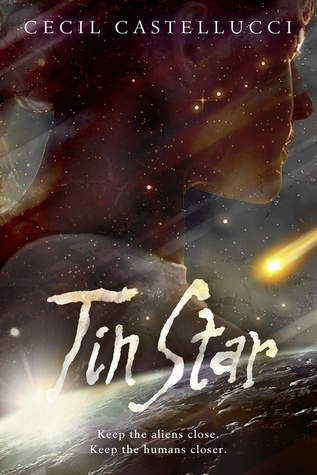
tinstarTin Star is the story of Tula Bane, a teenager who joined a space colonizing cult from Earth. She is abandoned on a way station near the edge of the known universe on the way to her new home.
How will Tula Bane survive among aliens who think human beings are the worst? Will she ever be able to go home to Earth or the colony’s planet? How will she manage to put bread on the table?

I love a good space opera and I thought that I would enjoy Tin Star more than I did.

The promise of books set in space, in my opinion, is the opportunity for unique interstellar exploration and worlds created entirely from the author’s imagination. Because of Tula’s unique plight- being stuck in what is essentially a space gas station- the author left herself very little room to write a creative story.

Mainly, Tin Star deals with character development and social struggles, not adventuring in new places.

The villain of the tale was charismatic and creepy. Take this description: “He had his hand on my shoulder in a way that he had a million times before. Only before it was comforting, encouraging, affectionate. Now it was menacing. He was looking at me and his face was smiling. To anyone looking from afar, he seemed to be pleased with me, but it was just a mask. His attitude shifted from concerned leader to unknowable monster.” pg 4

Tula manages to befriend a shady, insect-like alien named Heckleck. He’s my favorite character.

In this passage, Heckleck explains the problems Tula will face in trying to leave the station: “I know about you,” Heckleck said. “Everyone does. And you will never get off this station. You are nobody. And worse, you’re a Human. Even if you did not get on a ship that would take one of your kind, you’d have nowhere to go but to roam like the others of your kind do.” pg 35.

Keeping it real: with Heckleck.

I thought Cecil Castellucci could have done more with the cultural differences between Tula and the others on the station.

One of the most interesting exchanges in the book was between Tula and Tournour, the head of the outpost. She’s trying to figure out how old he is and, because they’re from different planets/species, it’s a surreal conversation. More of that would have been nice.

But Castellucci wrote cultural and language barriers out of the story by introducing nanites into Tula’s bloodstream to translate alien languages for her.

Something that Castellucci did well was writing profound silences between characters into her story. For much of this story, Tula finds herself standing around with Heckleck and Tournour and having nothing to say. But, somehow, it works.

I liked how Castellucci wrote the thoughts spinning through Tula’s mind at these moments. It reminded me of myself when I can’t think of anything to say: “It was a silent agreement between us that if we spoke too much then we would have to talk about the practical things. … If we ever spoke of the things that truly pressed up against us, our very real worries, our seemingly impossibly plans for escape, our divergent hopes for the future, our bubble would blow apart.” pg 184

This book in three lines: “In the end, good must win over evil. The trouble is trying to figure out which is which. Sometimes they look so much alike.” pg 204

Read this book if you enjoy light, young adult drama in space. If you’re looking for a meaty, space adventure, you’ll need to find another title.

Some read-alikes are: The Knife of Never Letting Go (teen trying to survive on an alien planet) or Gated (teen trying to leave a cult).

Thank you to Roaring Brook Press for sending an advance reader copy of this book. And, thank you for reading!

Conjured by Sarah Beth Durst

Conjured by Sarah Beth Durst

Eve can’t remember who she is or where she’s from, but there are government agents with her, protecting her. They say that her mind holds the key to solving the case(s) of a serial killer, but she can’t even remember her own parents. How is she going to help save others when she can’t even recall what happened last week? And, why is she able to make birds fly out of wallpaper? That’s not normal… is it?

Conjured is a fluffy, young adult fantasy that tip-toes around the horror genre but, mainly, remains safely in the real world of amnesia and teenage angst. This book suffers from a glacial pacing but the mystery part of the story really took me by surprise. As I mentioned, the horror elements in this story are minimal but there are some brief and not terribly graphic descriptions of blood, mental anguish, bondage, imprisonment, physical violence, and creepy circus folk.

My favorite parts of this book happened during Eve’s blackout moments or visions. They read like scary fairy tales: “It always begins with ‘once upon a time,’ my dear. That is how it is, even if ‘once upon a time’ is now.” Gnarled hands separate the strands of my hair and wind them around knuckles. “A witch…for of course there was a witch. There always is, isn’t there? She had stars in her eyes and dust in her hair. She heard the sounds of the forest when she moved and the ocean when she spoke.” pg 14 ebook. The visions set the tone of this story. They’re like nightmares for Eve- profoundly disturbing, but not real. Or are they?

I loved that Eve took a job as a library assistant. The craziest things happen at the library but it was also a place of safety for her when she couldn’t remember anything else: “Libraries… they’re the places with stories,” Eve said. Closing her eyes, she tried to summon up a memory of a library. Shelves of books. Sunlight falling across a table. She saw spiral stairs. It could have been a real place, or Malcolm could have shown her a picture at some point. It felt like a real place.”pg 17, ebook

The extraordinarily slow unfolding of Eve’s background was frustrating:“You can’t do any magic here. There is no magic in this world- that’s why this place is safe for you.” She held her face still. Another hint about her past. He had told her so much in those few sentences, more than he’d ever told her before. There is no magic in this world, she thought. I’m from another world? pg 21, ebook. I don’t know… you tell me!

The teenage love story in Conjured is cute and very John Green-esque:“Because when I’m with you, I feel whole,” he said. “Because with you, life doesn’t feel brutish and short. It feels beautiful… and short.” pg 176 ebook.

So, if you can tolerate an extremely slow reveal, pick up Conjured. Some read-alikes: The Night Circus by Erin Morgenstern (circus themes, slow story) or Archivist Wasp by Nicole Kornher-Stace (a girl is asked by a ghost to help him find someone he’s lost).

Thanks for reading!

Shutter by Courtney Alameda

Shutter by Courtney Alameda

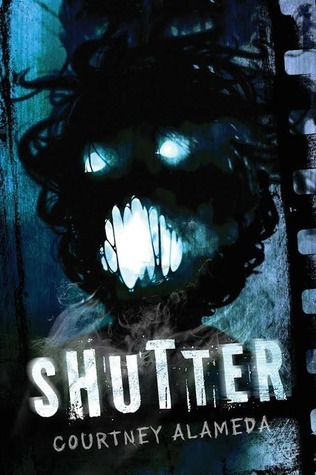
shutterMicheline Helsing is the last of the line of Van Helsings, of monster slaying fame. In this version of the tale, Micheline slays ghosts and otherworldly beings by capturing their visages on film, thereby taking away their power and banishing back to the realms where they belong.
One night, Micheline and her team has a mission go awry and now, because of a curse, they are going to die. Unless, they can find the ghost that caused the sickness, rid the world of it, and save themselves. The clock is ticking…

Shutter was a Brom Stoker award nominee for Best First Novel. That’s what drew me to this creepy tale.

Horror isn’t my usual genre and the scary parts of this tale really scared the heck out of me. If horror is your thing, this one might not be scary enough. Reading is such a personal experience, you know? It’s hard to predict.

Alameda was at her best during the truly terrifying moments, which, in my opinion, were the undead creatures and anything scenario involving a mirror. Everybody has mirrors in their homes. What if, hypothetically, these were portals into other worlds and *things* could come crawling out of them into this one- eeeeeek!

I didn’t enjoy the so-so character building, teen angst or abusive relationship with the father. That could be a potential trigger too.

Micheline is the type of teen heroine that I met in the Divergent trilogy and wasn’t impressed with then: not trusting anyone in authority with her problems even though they could potentially help her, throwing herself into life threatening situations without proper planning and, therefore, putting her friends in danger too, and pining for the lantern-jawed guy with the ridiculously pumped up fighting skills.

If it wasn’t for the insanely entertaining parts with the ghosts, mirrors, strong friendships with her team and tragic back story, this would be a two-star book instead of a four. But, I believe that its positive attributes outweighed the negatives. Again, reading is such a personal trip. You may disagree. And that’s ok.

For a debut book, Shutter is really very good. I read the last couple chapters of this in a rush because I was terrified for the well-being of the main characters.

If you love young adult horror tales, you should give this one a read. Some read-alikes: Jackaby or 13 Days of Midnight. Shutter is scarier than either of those, but they have similar themes.

Thanks for reading!

Magonia by Maria Dahvana Headley

Magonia by Maria Dahvana Headley

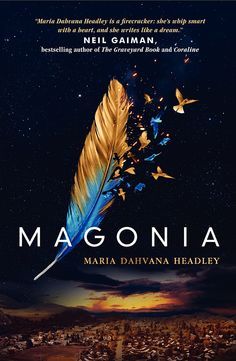
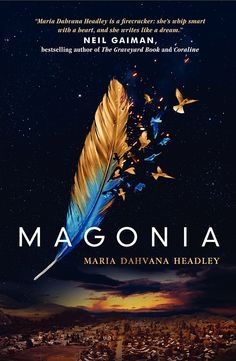
magoniaAza Ray Boyle can’t breathe. It seems like she has always been sick- inexplicably short of breath and weak.

This continuous illness has made her always feel different from the people around her. But, perhaps, there are stranger and more exotic reasons why she is different. Ones that Aza can’t even imagine…

Jason is Aza’s dearest friend. They are so close that they almost speak their own language.

He realizes there is more to Aza than meets the eye. How will Jason handle it when he discovers the shocking truth?

This young adult fantasy is weird, but I enjoyed it.

That’s probably because I read a lot of weird, non-fiction. The story of Magonia, a world in the sky above the every day world which we know, has shown up in some of those books.

One of those books, Passport to Magonia: On UFOs, Folklore, and Parallel Worlds, captured my imagination.

That book recounts an incident where a bunch of villagers were holding church service and they heard a crash outside. They went to investigate the noise and discovered what appeared to be a ship anchor attached to the roof of their church. It was connected to, this just blows my mind, a ship in the sky. This supposedly happened in 1211 AD.

The astonishing thing about Passport to Magonia is it has pages and pages of stories like that, eyewitness accounts of bizarre ships, people, and incidents concerning people from the sky. And they all actually happened, reportedly.

I remember thinking that an author needed to get her hands on these stories and turn it into something fantastic. Maria Dahvana Headley used a different source material than the book that I read, but does a good job bringing a mysterious blip in history to life.

She has the ability to interweave actual events with fantasy fiction story lines so that the two begin to blur in the reader’s mind.

I read Headley’s first book Queen of Kings years ago and I remember being struck by its originality.

Headley took Cleopatra’s life and turned it into a vampire story. It sounds sort of silly described that way, (oh, ANOTHER vampire story) but it is actually rather fun.

I had read Margaret George’s The Memoirs of Cleopatra shortly before Queen of Kings so I had a pretty good idea of the actual story of the Egyptian queen.

Back to this book, Magonia isn’t going to appeal to everyone.

I was, at first, rather turned off by the uber-intellectual back and forth conversations of the main characters- Jason and Aza.

I think, since the mega success of John Green’s The Fault in Our Stars, authors make their teenage protagonists so brainy and well-spoken, it is just unbelievable.

I mean, it’s been awhile, but I remember high school. My peers and I were lucky if we could string two cogent sentences together, let alone present verbal dissertations on the meaning of pi.

Anyway, once I was able to look past their flowery repartee, I got really into the story.

Headley paints a magical and dangerous world.

If you enjoyed Magonia, you may also enjoy The Mermaid’s Sister or Under the Empyrean Sky. Both are young adult novels and take place in fantasy worlds that are so close to the world we know, but different in surprising ways.

Check out my review of Aerie, the sequel to this book.

Thanks for reading!

More Than This by Patrick Ness

More Than This by Patrick Ness

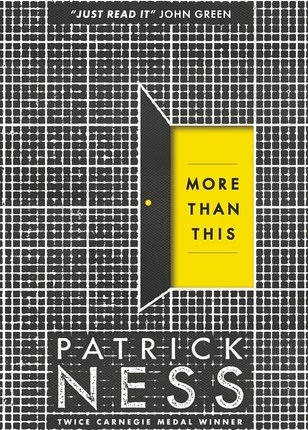
I picked up More Than This because I recently enjoyed A Monster Calls. This book, like Monster, is about a young man learning how to handle life’s major hurdles. That, though, is where their similarities end.  More than This opens with Seth drowning in the ocean and the story really begins when he opens his eyes after death…

Photo by Amber Janssens on Pexels.com

More Than This is darker than A Monster Calls in many ways. For readers who are concerned about the maturity level of themes in this book: there are some (short) scenes of physical abuse, non-graphic GLBT teen sex, teen suicide, brief moments of bullying, extremely brief nudity (both male and female), and a short masturbation bit. On the other hand, there’s a lot of empowering elements in here too. There’s a very strong, young, black female heroine, a plucky, brainy, Polish sidekick, and some really trippy depictions of reality itself. The GLBT relationship is healthy and non-abusive. The friendships that develop between the main characters are real and beautiful.

Depending on the young adult reading the book, I’d say 14+ might be a good age for this one.

I loved the ambiguity of Seth’s situation in the afterlife. No spoilers here, but that was my favorite part, the “what the heck is going on here” moments that Ness kept handing to me. Read it and you’ll see what I mean in mere pages.

Photo by Jonathan Andrew on Pexels.com

Patrick Ness is at his strongest when he’s writing his way around painful emotions, which there are piles of in this book. He’s at his lowest during the first part of More Than This because of the pacing. This starts out seriously slowly, but if you can make it through the first section, things pick up considerably afterwards.

Some of my favorite moments: “Is this a dream? he thinks, the words coming to him slowly, thickly, as if from a great distance. The last dream before death?” pg 13 ebook

“He looks out toward the darkened sitting room and wonders what he’s supposed to do here. Is there a goal? Something to solve? Or is he just supposed to stay here forever? Is that what hell is? Trapped forever, alone, in your worst memory? It makes a kind of sense.” pg 31 ebook

Seth’s relationship with his parents is pretty messed up, which is very sad, really: “His mother made a sign with her hands of sarcastic surrender, then stared firmly at the ceiling. His father turned to look at him, and Seth realized with a shock how rare it was for his father to look him straight in the eye. It was like having a statue suddenly ask you for directions. pg 97 ebook

Photo by Denise Duplinski on Pexels.com

My favorite character was Tomasz. He has wisdom far beyond his age:“Tomasz shrugs. “People ask for what they need in different ways. Sometimes by not even asking for it at all.” pg 149 ebook

The heroine: “People see stories everywhere,” Regine says. “That’s what my father used to say. We take random events and we put them together in a pattern so we can comfort ourselves with a story, no matter how much it obviously isn’t true.” She glances back at Seth. “We have to lie to ourselves to live. Otherwise, we’d go crazy.” pg 159 ebook. Very true.

One last passage, for my husband, who argues with people on the internet far too much and who came to mind here: “And that’s what the Internet age has done for us,” his mother says, sitting down. “Anything you don’t like is automatically disgusting and anyone who may like it themselves is an idiot. So much for a world full of different viewpoints, huh?” pg 319 ebook.

If you enjoyed More Than This, you may like A Monster Calls even more (I know I did) or try The Last One by Alexandra Oliva (a book written for adults, but a mature young adult would probably enjoy it too).  Thank you for reading!

Girl in the Blue Coat by Monica Hesse

Girl in the Blue Coat by Monica Hesse

Girl in the Blue Coat is a beautifully written, young adult book about a terrible moment in history- the German occupation of the Netherlands. Hanneke is a young woman who runs black market goods to people in her town not only so that her family can eat, but also to thumb her nose at the Nazis who have taken so much from her and her people. The mystery portion of the book begins when one of Hanneke’s clients asks her to find a Jewish girl who disappeared from the safe house where she had been hiding.

I found myself drawn into this story for many reasons. First, Hanneke is a strong, female protagonist who doesn’t wait for other people to solve her problems- I liked that. Also, Girl in the Blue Coat does an excellent job of keeping the reader guessing. Just when I thought I had things figured out, Hesse changed it up. In addition, I cared about the characters in the story and I wanted them to succeed. It reminded me a lot of The Book Thief by Markus Zusak- same time period, different country.

The strength of Hanneke: “I can feel myself getting sucked into this mystery… Maybe because it’s another way to flout the rules. But maybe because, in a country that has come to make no sense, in a world I cannot solve, this is a small piece that I can. pg 45-46

The complexity of Hanneke’s emotions in a world divided by war: “Here is the thing about my grief: It’s like a very messy room in a house where the electricity has gone out. My grief over Bas (young man she lost to the war) is the darkness. It’s the thing that’s most immediately wrong in the house. It’s the thing that you notice straight off. It covers everything else up. But if you could turn the lights back on, you would see there are lots of other things still wrong in the room. The dishes are dirty. There is mold in the sink. The rug is askew. Elsbeth (former best friend) is my askew rug. Elsbeth is my messy room. Elsbeth is the grief I would allow myself to feel, if my emotions weren’t so covered in darkness.” pg 104

Hanneke’s growing self awareness because of her struggles: “I watched a whole afternoon unfold under my nose, and I misread everything that was happening, from start to finish. All the clues were in front of me, but I still didn’t see them.” pg 125

How Hanneke’s country has changed because of the occupation: “The prisoners follow, carrying suitcases, disheveled and tired like they haven’t slept in days. The crowd is big, maybe seventy people, and the soldiers march them down the middle of the street. It’s a lovely winter day in Amsterdam, and though there are other people on the street, couples like me and Willem, nobody acts like the forced parade of people is out of the ordinary. Our sense of ordinary has become horrifying.” pg 212

If you enjoyed Girl in the Blue Coat, you may want to pick up The Book Thief by Markus Zusak or The Bishop’s Wife (Linda Wallheim Mystery, #1) by Mette Ivie Harrison.  Thanks to Little, Brown Books for Young Readers for the advance reader copy of this book.  And, thank you for reading!

Tiger Lily by Jodi Lynn Anderson

Tiger Lily by Jodi Lynn Anderson

tigerlilyThis book is an absolutely magical re-telling of the story of Tiger Lily from Peter Pan. The narrator is the fairy, Tinker Bell.

I’ve always had a soft place in my heart for J. M.Barrie’s masterwork. Who among us hasn’t wanted to go to a place where you could remain young forever and never grow up?

Jodi Lynn Anderson writes that “never aging” magic of Neverland quite well: “Englanders had come to Neverland before. … The Englanders had the aging disease. As time went on they turned gray, and shrank, and, inexplicably, they died. It wasn’t that Neverlanders didn’t know anything about death, but not as a slow giving in, and certainly not an inevitability.” pg 13 (ebook)

Tiger Lily’s tribe may age, but how old they appear is contingent on something other than time. It’s curious and magical.

The lost boys come alive in this book with a wildness and unpredictability that I loved: “There was a joyfulness and- at the same time- a fragility about each of them. They were sloppy and uncared for and wildly alert and full of energy.” pg 61, ebook.

Despite their untamed natures, they are still children: “Straw beds had been separated haphazardly into different areas of the burrow, as if the boys hadn’t counted on wanting to live separately when they’d first built it, and only recently pushed themselves as far apart from each other as possible. Still, on one of the beds there was a worn home-sewn toy in the shape of a rabbit, and lying on a pillow, as if it had just been played with, a model of a ship.” pg 61, ebook.

Peter is the boy who has emotions but doesn’t understand them- perpetually young yet always on the verge of growing up.

He’s fiercely admired by his lost boys and, eventually, Tiger Lily: “Peter picked at his hangnail again. “Actually, I never get sad. It’s a waste of time, don’t you think?” Tiger Lily didn’t answer. She was impressed by the idea of deciding not to be sad. His words made him seem very strong. Impervious.” pg 67, ebook

Peter is still Peter in this tale. As far as girls go, he can be charming but also rude and aloof: “I think we could be good friends,” he said, falling into step with her. “It’s perfect because I wouldn’t fall in love with you, like I do with the mermaids. Girls always seem so exotic. But it would be okay with you, because you’re more like… you know. Not like a girl.” pg 77, ebook.

Tinker Bell was a sympathetic character in this book, rather than the spoiled, jealous creature that she is portrayed as in Peter Pan“A faerie heart is different from a human heart. Human hearts are elastic. They have room for all sorts of passions, and they can break and heal and love again and again. Faerie hearts are evolutionarily less sophisticated…. Our hearts are too small to love more than one person in a lifetime. … I tried to talk sense into my hard little heart. But it had landed on Peter, a creature two hundred times my size and barely aware of me, and there was no prying it loose.” pg 77-78, ebook.

Hook is extra creepy and villainous: “Neverland had called to him out of legends. A green place. A wild place. And most of all, a place where he’d never grow old. Most people in London hadn’t believed it existed, but some still insisted it did, and Hook had cast his lot with them. To get to the island, he’d begged, stolen, and eventually murdered.” pg 89-90, ebook.

And so is Mr. Smee. But, I’ll let Anderson tell you his story. She does a wonderful job of it.

The relationship between Tiger Lily, Peter, and Wendy makes a lot more sense in this story. It is less about any potential failings by the girls. The main source of conflict seems to be Peter’s emotional immaturity: “As you may have guessed already, Peter had a soul that was always telling itself lies. When he was frightened, his soul told itself, “I’m not frightened.” And when something mattered that he couldn’t control, Peter’s soul told itself, “It doesn’t matter.” pg 169, ebook.

The ending of this book was totally satisfying as well for all of the characters, even little Tinker Bell. I can’t say enough good things about it.

It’s easy to see why fairy tell retellings are so popular with books like Tiger Lily out there, waiting to be discovered.

Thanks for reading!