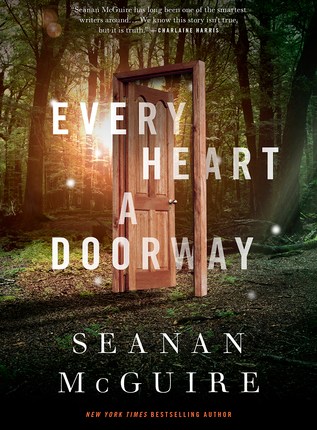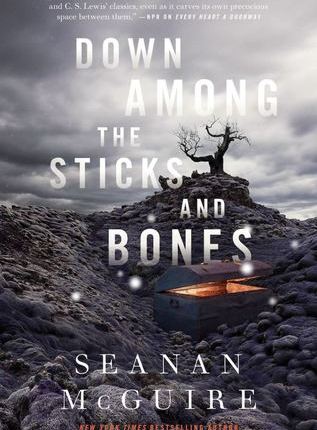
Down Among the Sticks and Bones (Wayward Children, #2) by Seanan McGuire

Down Among the Sticks and Bones (Wayward Children, #2) by Seanan McGuire

Down Among the Sticks and Bones is the back story of the twins, Jack and Jill, and the dark world they wandered through.

It takes place before the events of the first book in the series, Every Heart A Doorway.

The reader learns why the twins are so different and how their strange and disturbing other world opened its door to them in the first place.

The majority of the problem was Jack and Jill’s parents. They had children for reasons other than love.

The father wanted to children to move up in his career. The mother wanted to improve her status with her group of female friends: “A person may look at someone else’s child and see only the surface, the shiny shoes or the perfect curls. They do not see the tears and the tantrums, the late nights, the sleepless hours, the worry. They do not even see the love, not really.” pg 13.
Photo by RODNAE Productions on Pexels.com

So, instead of loving Jack and Jill for themselves, their parents instead seek to mold them into a perfect of ideal of what they thought their children should be.

The one bright spot in the twin’s childhood is their grandmother, Louise Wolcott. Chester and Serena, Jack and Jill’s parents, call her in desperation after the birth of the children because they have no idea what they’re doing or how to balance their careers while raising children.

Louise steps in without complaint. She is quite easily my favorite character in the book: “There’s nothing tiring about caring for children you love like your own,” said Louise… pg 34.

Despite Grandmother Louise’s best efforts, Jack and Jill end up fairly emotionally stunted from their parents’ dysfunction. The twin’s discovery of another world leads to some hard lessons about love, belonging and consequences.

“The Moors were beautiful in their own way, and if their beauty was the quiet sort that required time and introspection to be seen, well, there was nothing wrong with that. The best beauty was the sort that took some seeking.” pg 171.
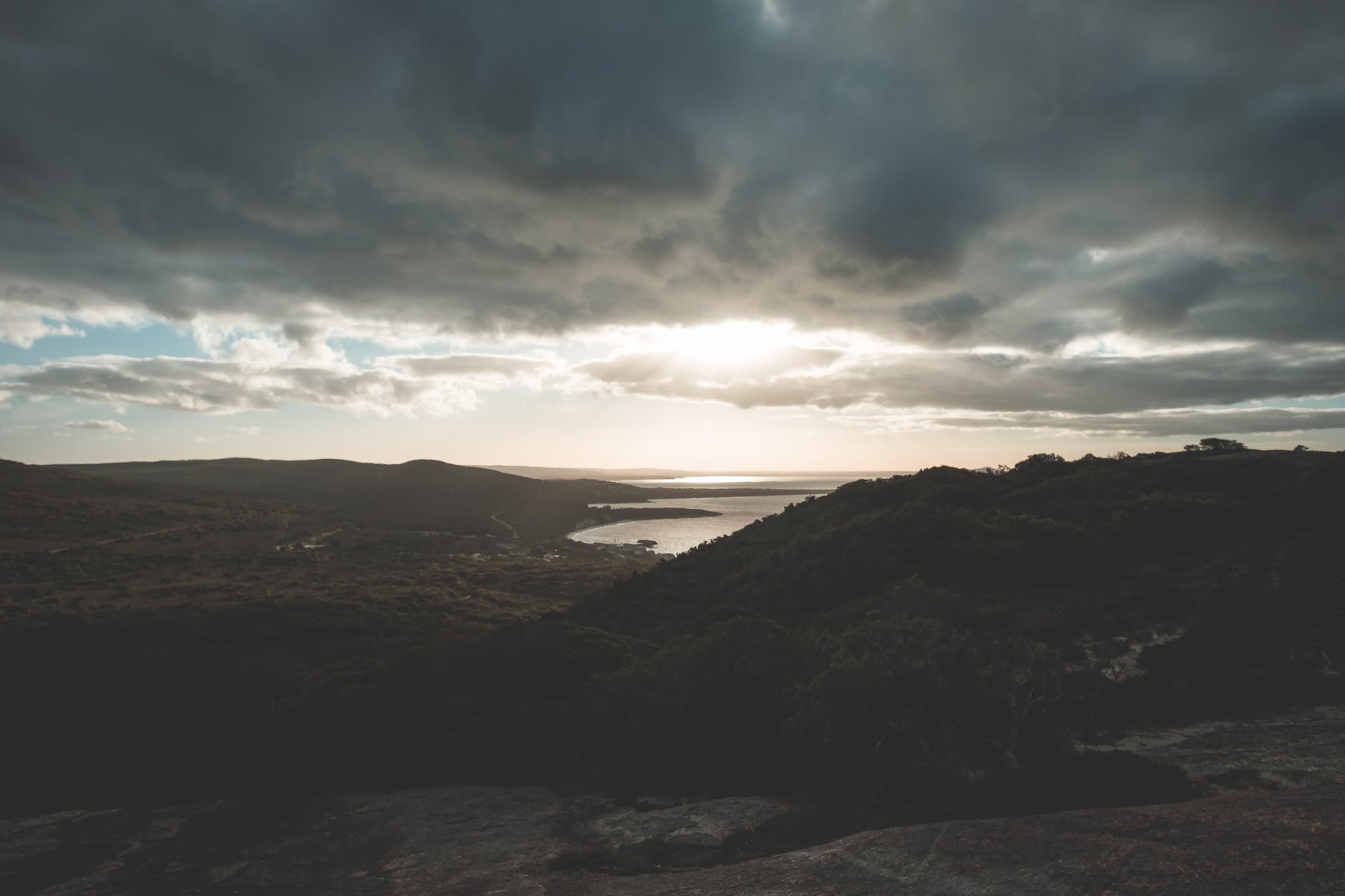
Photo by Lachlan Ross on Pexels.com

I enjoyed this story. But, I think it should have been combined with Every Heart A Doorway.

I felt like so much of the plot of this book was given away in the first, by what happens. It would have been more enjoyable to learn about Jack and Jill’s Moors in flashbacks rather than a separate story.

That being said, it is a good enough young adult tale for what it is. The fairy tale quality to it is undeniable.

Recommended for readers who like a dark undercurrent of emotion, coming-of-age and self knowledge in their fairy tales. If you liked this book, you may also enjoy A Monster Calls.

One may be better served reading this book before Every Heart A Doorway. I think, if I had read this first, I may have enjoyed it more.

Thanks for reading!

Where the Rock Splits the Sky by Philip Webb

Where the Rock Splits the Sky by Philip Webb

Where the Rock Splits the Sky is the story of Megan, a girl who has lost both her father and mother and who lives on the edge of a strange, haunted area called “The Zone.” In this part of the world, people are driven mad by unknown forces and the world doesn’t follow the normal rules of physics.

The Earth itself has stopped spinning because it was invaded by an alien species that the surviving humans call “Visitors.” One day, Megan is told that her father is still alive and that he is in the Zone.

Photo by Pixabay on Pexels.com

She has no choice but to go find him. And the adventure begins.

This story was a surreal, heart-pounding adventure from start to finish.

I loved the dystopian aspect of it- the aliens are truly terrifying because the reader isn’t sure what they can or can’t do. It’s not even clear from the start who is or isn’t an alien.

The guessing game makes for some exciting tension. That same unknown quality is extended to the “Zone” itself so that the story at any moment could pass from normal to totally bonkers.

Photo by Darius Krause on Pexels.com

That uncertainty makes this a great read, in my mind.

I did have some complaints- I wanted more to happen during the final, climatic scene. It felt like after such a great build up that things ended too quickly and neatly. But I suppose one can’t have it all.

Also, this book required a great deal of suspension of belief. I mean, for goodness sake, the world has stopped spinning. That’s some fairly serious physics law breaking. And that is assumed from the start.

Photo by Harry Cooke on Pexels.com

This novel reminded me of The Gunslinger in that both have western themes and some horror elements to it. This is definitely a more young adult version while Stephen King’s novel was written for adults. It’s also a lot shorter

With those caveats in mind, fans of that series may enjoy this one. Also, anyone who likes to read young adult, dystopian books might enjoy Where the Rock Splits the Sky. It’s an interesting addition to the genre.

I received a free copy of this book through Goodreads First Reads.

Thanks for reading!

Every Heart a Doorway (Wayward Children #1) by Seanan McGuire

Every Heart a Doorway (Wayward Children #1) by Seanan McGuire

everyheartWhat if children actually fell into other worlds, like Alice in Wonderland or the Pevensies into Narnia, far more often than anyone realized? What if those worlds were superior in every way to the normal, mundane world- not in that they were in heaven, but the child felt finally at home?
And what if those worlds cast the children out, to live in the “real world” again? It might not be a pretty picture.

That is why Eleanor West started a home for children who went away, came back and didn’t belong anymore. All of those reasons, but also, because she went away once too.

“Eleanor West spent her days giving them what she had never had, and hoped that someday, it would be enough to pay her passage back to the place where she belonged.” pg 13.

I loved the basic premise of this story. All of the worlds the children went to were so different, but the fact that the worlds were “other,” tied them altogether.

“‘Real’ is a four-letter world, and I’ll thank you to use it as little as possible while you live under my roof.” pg 20

This story has the drama of a bunch of misfit children all trying to get along, but also the mystery of these other worlds. There’s also a deeper mystery that develops when one of the children seems determined to find a way home- at any cost.

“You will not all find your doors again. Some doors really do appear only once, the consequence of some strange convergence that we can’t predict or re-create. They’re drawn by need and by sympathy. Not the emotion- the resonance of one thing to another. There’s a reason you were all pulled into the worlds that suited you so well.” pg 97

I was concerned when I started this book that it would be too much like Miss Peregrine’s Home for Peculiar Children. That was a needless concern.

They are similar in that both contain orphanages for extraordinary children and fantasy has a large part in the story. But that was where I felt the similarities ended.

I also found myself wishing that Every Heart a Doorway was written for adults rather than young adults. This was a fairytale that could have used some darker twists to it.

Seanan McGuire didn’t make this story all rainbows and gumdrops, but I would have liked it to be edgier.

I loved the “longing to belong” feeling McGuire wove into the book. It seems to me to be a quintessential teenage feeling, but I suppose everyone wants to feel completely at home- whatever that might mean.

For some people, that longing is attached to a place, another person, or to the drug addict, it’s the next hit. Other people crave a moment in time, or a particular period in their life.

I would say, on second consideration, “longing to belong” is perhaps the human condition itself.

Recommended for fans of Miss Peregrine’s Home for Peculiar Children. If you’re looking for a darker, more adult fairytale, I’d recommend The Magicians by Lev Grossman.

Thanks for reading!

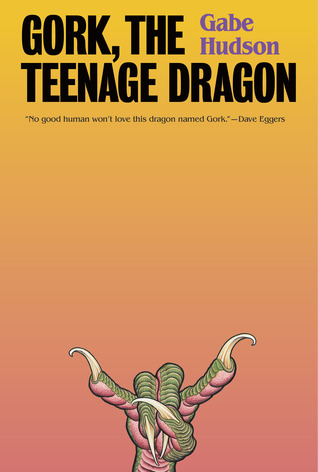
Gork, the Teenage Dragon by Gabe Hudson

Gork, the Teenage Dragon by Gabe Hudson
gork

Gork needs to crown his queen today and leave to take over a distant planet or suffer terrible consequences. He has a few major problems: he’s in love with one of the most popular females at the military academy, his heart is far too big, his horns are far too small, his class rating is too low and his grandfather, Doctor Terrible, has gone missing.

Nothing a teenage dragon can’t handle, right?

Gork, the Teenage Dragon is one of the most unique books I’ve read in a long time. It is a story about dragons, yes, but not just that. Gabe Hudson has created an entire dragon culture.

WarWings graduates continue to conquer the universe one planet at a time. We are the proud preservers of the EggHarvest tradition. Victory will always be ours! pg 30.

In some ways, WarWings reminded me of the military academy from Ender’s Game. It is dog eat dog, or dragon eat dragon.

My favorite part of the dragon culture is its use of poetry: “I don’t know why it is, but singing a poem out loud will always make you appear more repulsive and psychotic to those who you intend to enslave.” pg 56.

I also enjoyed the nudging of journalists: “The vibe in the room was definitely fiendish, and you should know that dragon journalists on Blegwethia are notoriously ruthless. Because on my home planet Blegwethia if a journalist shows up to report a story and they don’t like the situation they’re seeing, they’re not afraid to wade right in and get their claws and beak bloody. That’s dragon journalism for you.” pg 88.

If anything, Gork, the Teenage Dragon suffered from too many lovingly crafted details about dragon culture to the detriment of the story. It dragged as a result. And some of the gags didn’t quite work.

On the other hand, I was laughing out loud quite a lot at Gork’s antics: “… I study my scaly green reflection and see five nasty-looking slashes in my forehead from where that demon Torp has swiped me with his claws. ‘Not bad, Professor,’ I say, looking at the slashes. ‘This could make some nice scars.’ Now in case you don’t know, teenage dragons love scars.”

I was also not fond of the ending.

Recommended for readers with patience and the willingness to overlook some repetitious dialogue.

Gork, the Teenage Dragon won’t appeal to everyone, but I could see some die-hard dragon fans absolutely devouring this book.

Kith (The Good Neighbors, #2) by Holly Black

Kith (The Good Neighbors, #2) by Holly Black
kith

Rue’s world is getting darker. In the last volume of The Good Neighbors, she discovered that faeries are real and not harmless, glitter-sparkled fantasies like fairy tales have described them.

In this installment, Rue learns about the perils of faerie enchantments and intricate faerie plans. Mixing magic with the every day world, human and faerie, is downright dangerous.

Rue also discovers more about her mother’s (Nia’s) family and not everything she learns is comforting.

“You can’t keep mom here against her will.” “Oh, can’t I?” “Give me a test then. A test like you gave my dad. I’ll win her from you.” “Don’t be silly. Nia, do you want to leave my hill? Does the moral world hold anymore allure for you?” pg 49. Yeah, does it?

Rue’s parents didn’t have a traditional first date. It’s awfully sad just how their two worlds came together.

Rue spends much of this volume trying to walk the line between the faerie and human worlds and feeling guilty about loving and belonging to both.

“Let me propose a toast. To love. In what we love best, our worst selves are revealed.” pg 52.

Love and jealousy play a large part in this story as does control and betrayal.

Sometimes, we ruin the relationships that mean the most to us because we’re careless or confused or bored. Other times, we may not be completely honest with ourselves about whether two people, or in this case human and faerie, even belonged together in the first place.

Rue stumbles her way through these questions in a teenage, angsty sort of way. She’s a flawed heroine, but I rather like her.

I’m looking forward to the last entry in the series.

See my review of the first book in the series: HERE.

Thanks for reading!

Kin (The Good Neighbors, #1) by Holly Black

Kin (The Good Neighbors, #1) by Holly Black
goodneighbors

Rue’s mother has always been a little different. She talks to plants, hangs out naked in the yard and seems ageless. Rue knows her mother is not like other parents. But then, one day when her mom disappears, Rue begins to see strange things- creatures with horns in the coffee shop, a winged girl hanging out in the high school hallway- and she realizes that she’s different too.

Where has her mother gone and is Rue going crazy?

“You know how sometimes, when you glance at something out of the corner of your eye, it looks different for a moment? Well, sometimes when I look straight at a thing, it looks weird too. And those moments are stretching wider and wider.” pg 5.

I enjoyed the faerie lore in this graphic novel: “If an older mortal is beautiful or good at riddles, we might take them, but we always leave something behind in exchange. Sometimes we glamour wood to take on their appearance or we abandon a faerie in their place.” pg 36.

This book deals with surprisingly dark themes so I wouldn’t let my tween read it. The story contains (non-explicit) drug use, rape and kidnapping. It should be ok for most mature teens.

The artwork is pretty. The people aren’t depicted like normal every day people (especially the faeries) but, for the most part, I don’t think the artist over-sexualized the women. That’s one of my pet peeves with graphic novels: when they depict females as ridiculously proportioned pin ups. But, like I said, this one isn’t over-the-top.

Photo by Anthony on Pexels.com

The faeries are quite creepy too: “Let me tell you a story. … Long ago, mortals called us the fair folk, the people of peace, the good neighbors. They called us these things not because we were fair or peaceful or good, but because they feared us. As they should. As they will again.” pg 77

Recommended for readers who like dark fairy tales and fans of Holly Black.

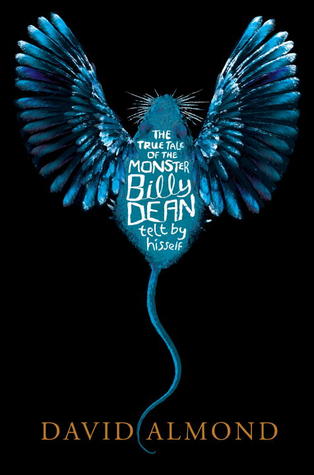
The True Tale of the Monster Billy Dean Telt by Hisself by David Almond

The True Tale of the Monster Billy Dean Telt by Hisself by David Almond
billydean

A strange story about a boy who grows up in a room by himself. Through his extreme isolation, he discovers he has powers beyond that of a normal boy. There is a mystery surrounding his parentage and also about the world outside the only room he has ever known. The boy’s name is Billy Dean and this is his tale.

This pseudo-memoir is written mostly phonetically and with intentional misspellings, which was incredibly annoying at first, but you find yourself getting used to it. “This tale is told by 1 that died at birth by 1 that came into the world in the days of endles war & at a moment of disaster. He grew in isolayshon wile the enjins of destruchshon flew & smoke rose over the sitys & wile wilderness & waste crept all acros the world.” pg 1, ebook.

David Almond was attempting to capture Billy Dean’s innocent but uneducated voice through the misshaping of the words. I get what he was going for, but felt it did a disservice to the story.

Which wasn’t that good. It could have been though and that was disappointing.

Take this intense moment when Billy Dean’s father tells him that he should have killed his son the moment he was born: “Wilfred O bliddy Wilfred shud hav killd the monster in the woom. …. He grabbd me by the throte. Shudnt he? he yelld at me. Anser me you cretin! Tel me I shud have ended it befor it had bluddy begun. Tel me yes you shud hav Daddy!” pg 32, ebook.

It just doesn’t have the impact it could have, does it.

Or this moment, when Billy Dean is comforting his mother: “Im so sory” she wispers. “It was all supposed to be so different.” … “Its lovely Mam” he grones at her. “Its byutiful.” And all this nite he wil not slepe for the aykin of his mussels & the stingin of his bones & the thumpin of his hart & the byuty & the wunder of this world. pg 87

Photo by fabio.tsu on Pexels.com

Beyond my issues with how the author chose to present his story, I felt that the magical part of the story was misshandled, especially when it comes to the child Billy Dean.

It made the timing of events feel strange. Nothing would happen, this this huge unexplained thing would roll out and the reader would be expected to accept that as the new normal and go on.

Perhaps Almond was trying to express the inexplicable nature of existence?

This book left me with a lot of unanswered questions, but not in a good way. I can’t recommend it.

Thanks for reading.

The Invasion of the Tearling (The Queen of the Tearling, #2) by Erika Johansen

The Invasion of the Tearling (The Queen of the Tearling, #2) by Erika Johansen

The Invasion of the Tearling picked up where the last book left off. The Mort army is invading the Tear because of the actions of Kelsea, their new queen.

I won’t say what exactly those actions were, in case you didn’t read the last book. Let’s just say: she’s breaking with tradition in more ways than one.

Kelsea has started to embrace her power in this book. It suits her.

The girl who had been raised by Carlin Glynn would never have trusted in visions, but Kelsea’s world had broadened well beyond the width of Carlin’s library. The Mort would come, and the Tear army wouldn’t be able to stop them. All they could hope to do was slow them down.” pg 33, ebook.

I remember being rather unimpressed by the first book in this series. It felt cliched to me and predictable, except for the shadow creature and the introduction of the magic of the gems.

Photo by Magda Ehlers on Pexels.com

This book has more of both of those things. I approved.

Trigger warning in The Invasion of the Tearling for anyone who has had issues with cutting.

“Just the skin,” Kelsea whispered, staring at her arm, focusing all of her will on a tiny inch of flesh. She had borne worse; surely she could handle this. “Just a scratch.” A shallow line of red appeared on her forearm. Kelsea bore down, watching the line deepen, her breath hissing through her teeth as the skin parted with a sting, allowing a thin line of blood to well up and hold.” pg 117, ebook.

There’s also domestic violence, rape, non-graphic torture and some hints of sexual abuse. I suppose a young adult could read this, depending on their maturity level. 16+ may be appropriate. I would hesitate to go any younger.

Queen Kelsea has a lot on her plate: “My people are starving and uneducated. We have no true medicine. On the eastern border is an army that will crush us into dust. These are real problems, and so for a time I’ve let the others lie.” pg 208, ebook.

Photo by Carolina Basi on Pexels.com

Will she be able to save everybody?

“And Kelsea wondered suddenly whether humanity ever actually changed. Did people grow and learn at all as the centuries passed? Or was humanity merely like the tide, enlightenment advancing and then retreating as circumstances shifted?” pg 381, ebook.

I wonder that sometimes too.

Recommended for readers who enjoy their fantasies on the gritty side. I don’t feel like it ever veers into the truly “dark” but there are some disturbing elements to The Invasion of the Tearling.

Thanks for reading!

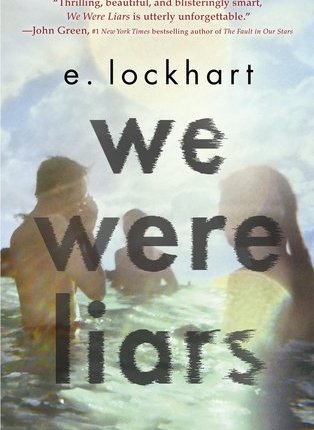
We Were Liars by E. Lockhart

We Were Liars by E. Lockhart

The Sinclair family is blonde, beautiful and wealthy. They gather together in the summer on a private island owned by the patriarch of the family.

Cadence Sinclair Eastman is ill. A terrible accident a few summers ago left her with debilitating migraines and a faulty memory.

Can she put together the pieces of what happened before she has to leave for the summer?

We were Liars is a fantastic coming-of-age book with an unreliable narrator, forbidden love and an excellent twist that I’ll bet you won’t see coming. (I know I didn’t.)

“We are Sinclairs. No one is needy. No one is wrong. We live, at least in the summertime, on a private island off the coast of Massachusetts. Perhaps that is all you need to know.” pg 26, ebook.

This is not a family who wears their hearts on their sleeve: “We believe in outdoor exercise. We believe that time heals. We believe, although we will not say so explicitly, in prescription drugs and the cocktail hour. We do not discuss our problems in restaurants. We do not believe in displays of distress. Our upper lips are stiff, and it is possible people are curious about us because we do not show them our hearts.” pg 55, ebook.

Photo by Matt Hardy on Pexels.com

Cadence, her cousins and Gat, the nephew of one of the boyfriends of a Sinclair daughter, call themselves, ‘The Liars’. Why they do so is one of the biggest mysteries in the story and I won’t ruin it for you.

I loved this book. I loved the tone, the mystery and the slow reveal.

I also loved how the reader gets to know Cadence so completely. This is not a story that leaves you wondering about character motivations.

Highly recommended for fans of young adult books, coming-of-age tales and stories with unreliable narrators. We were Liars may just be one of my favorite reads of 2017.

Thanks for reading!