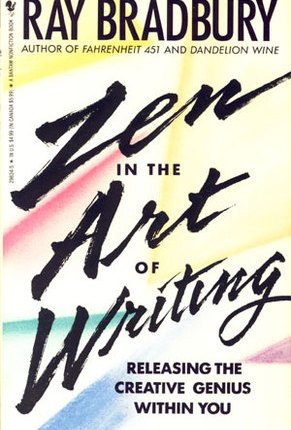
Zen in the Art of Writing by Ray Bradbury

Zen in the Art of Writing by Ray Bradbury

Ray Bradbury, a titanic author of American science fiction, shares remembrances and anecdotes from his lifetime. Within the essays, Bradbury shares both his passion for writing and the methods with which he accomplished it.

“And what, you ask, does writing teach us? First and foremost, it reminds us that we are alive and that it is a gift and a privilege, not a right. … Secondly, writing is survival.” pg 12, ebook

From his childhood days in Waukegan, Illinois, to penning screen plays in Ireland, Bradbury mined his life experiences with his subconscious mind and unearthed, so to speak, the stories that he wrote.

Ray Bradbury

“And when a man talks from his heart, in his moment of truth, he speaks poetry.” pg 32, ebook

Bradbury also highlights the importance of writing at least a little bit every day. Through his habit of writing an essay a week, Bradbury cranked out hundreds during his lifetime. Though he admits not all of them were brilliant, each one brought something to his experience, whether that was honing his craft or creating avenues towards other brighter stories.

Recommended for aspiring authors or any reader who is a fan of Bradbury. This book shines a spotlight on both the man and his creations.

Thanks for reading!

Nobody Wants to Read Your Sh*t: Why That Is And What You Can Do About It by Steven Pressfield

Nobody Wants to Read Your Sh*t: Why That Is And What You Can Do About It by Steven Pressfield

Steven Pressfield shares the applicable lessons he’s learned from a lifetime of different writing jobs. The most important one is the title of this non-fiction, self help book.

Photo by Suzy Hazelwood on Pexels.com

“Sometimes young writers acquire the idea from their years in school that the world is waiting to read what they’ve written. They get this idea because their teachers had to read their essays or term papers or dissertations. In the real world, no one is waiting to read what you’ve written. pg 16, ebook

Along the way, Pressfield discovered the importance of writing for yourself rather than as a ghost writer, the necessity of structuring each piece whether it is a screen play or a novel, the enduring popularity of the hero’s journey and more.

Photo by Kun Fotografi on Pexels.com

He also addresses the inner demons that may prevent fledging writers from finishing what they begin, a topic that Pressfield also discusses at length in his other book, The War of Art: Break Through the Blocks & Win Your Inner Creative Battles

“I did not know that there existed inside my head an invisible, insidious, intractable, indefatigable force whose sole object was to keep me from doing my work, i.e., finishing the book I had been trying to write for seven years- and ultimately to destroy me, physically, psychologically, and spiritually. All I knew was that I couldn’t finish anything.” pg 49

Photo by bongkarn thanyakij on Pexels.com

I found all of his advice helpful, and the manner in which Pressfield delivers it as both approachable and entertaining.

“The writer must know what genre he is working in and the conventions of that genre, just as the bridge builder must understand the science of foundational integrity and the means of mitigating stress on strung steel.” pg 66, ebook

He closes the book with a humorous anecdote about writing for a pornographic film. Even in that tale, Pressfield managed to teach me something about story construction and storytelling. I only mention it in case any potential reader finds such things offensive. Here’s your warning.

Highly recommended for writers at any level. Pressfield knows his stuff.

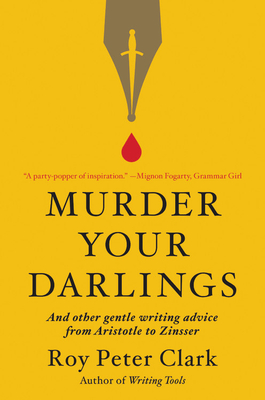
Murder Your Darlings: And Other Gentle Writing Advice from Aristotle to Zinsser by Roy Peter Clark

Murder Your Darlings: And Other Gentle Writing Advice from Aristotle to Zinsser by Roy Peter Clark

Murder Your Darlings is not just another book about writing. It shares the wisdom and creative insights of fifty or so authors, some famous, some not, and some who wrote their own books about the craft.

In his own unique manner, Roy Peter Clark distills the main lessons from each writer and presents them in curated chapters. The chapters are organized into six parts: language and craft, voice and style, confidence and identity, storytelling and character, rhetoric and audience, mission and purpose.

Photo by Andrea Piacquadio on Pexels.com

Aspiring or struggling writers can go directly to the issue she may be facing at the moment or read the whole thing to find tips and techniques that fit her emerging efforts best.

Though this may be most useful to writers who have a particular problem in mind, I believe any writer who wants to elevate their work could find something illuminating in these pages.

At the very least, Clark saves writers days of research time into locating appropriate writing resources. If you like the brief outline he gives of a writing guide, you could go invest the time to read the whole thing.

Photo by Ricardo Esquivel on Pexels.com

Highly recommended for everyone who strings words together or dreams about doing so.

Thank you to NetGalley and the publisher for a free digital copy of this book.

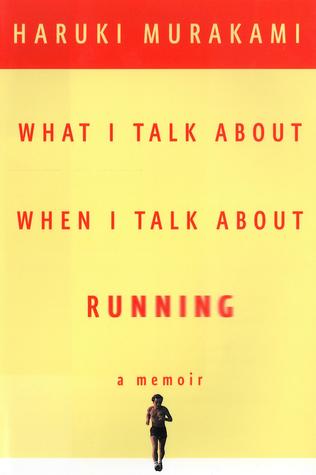
What I Talk About When I Talk About Running by Haruki Murakami, Philip Gabriel (Translator)

What I Talk About When I Talk About Running by Haruki Murakami, Philip Gabriel (Translator)
whatitalkabout

In What I Talk About When I Talk About Running, Haruki Murakami doesn’t try to convince others that we should all become long distance runners/triathletes like him. He does talk about why he took up running, how it has helped him with his creativity and why he will continue to run as long as he feels the need to do so.

I’ve never read a book by Murakami, other than this one. But, the interesting way in which he views the world makes me think that I’d probably enjoy his stuff.

I listened to this, rather short, audiobook on my daily commute. Murakami shares a lot of intimate details about his life that fans of his writing may really enjoy.

Before he took up running, Murakami said he was overweight and smoked around 60 cigarettes a day. 60 per day!

He wasn’t just looking for a way to become fit. He wanted a exercise where he was left alone with his thoughts and challenged to focus for long periods of time.

Murakami says that, when he writes a novel, it is a matter of focus and endurance. He finds it difficult to “drill down through the rock of the mind to hit veins of creativity.” (Quoting from memory, please forgive the inaccuracies.)

Photo by Pixabay on Pexels.com

The focus that runners use to finish a long race is similar, he believes, to the focus needed to write page after page until the end of a novel. I think that type of mental ability is something that could be used in any creative endeavor, not just writing. For Murakami, writing is how he makes his art.

I liked that, even though Murakami loves running and extols its virtues, he says that he never tells other people that they should take it up. He thinks that our life paths reveal themselves to us in a unique way that only we know.

He runs because he loves it. If you love it too, run. If you don’t, do what you love- walk, skip, jump, swim, whatever.

I can get behind that philosophy. Do what makes you happy because that happiness is a clue to what you were born to do.

Recommended for writers, runners, Murakami’s fans and anyone who enjoys memoirs. What I Talk About When I Talk About Running made me wish that I loved running more. Because I don’t.

Thanks for reading!