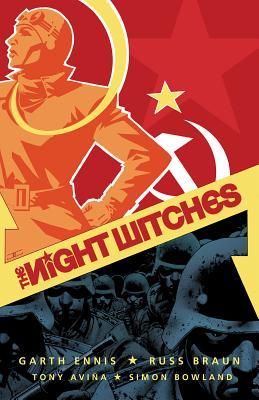
The Night Witches by Garth Ennis

The Night Witches by Garth Ennis

Though the main characters in The Night Witches are a work of fiction, Garth Ennis based them on real-life women, the female-Russian aviators who flew for their country during WWII. Their older airplane engines were too loud and alerted the Germans before their aerial night attacks, so the aviators developed a technique of cutting the engines and gliding over their targets before dropping their bombs.

“You know what it’s like when a P.O.-2 comes along, if you’re on the ground you can hear it for miles, that pop-pop-popping the engine makes… Two more missions like that and we’ll all be done with, unless we can magically stop them from hearing us coming.”

Photo by Pixabay on Pexels.com

Their method of attack was unique and terrifyingly effective at robbing the invading troops of sleep and peace of mind. The Germans called these pilots, because they were women and attacked at night, “Nacht Hexen” or the “Night Witches”.

This graphic novel is filled with violent warfare, rape, loss, heartache and other dangers the women faced during their service, including male counterparts who didn’t want their help. But Russians were so hard-pressed in their fight against the Nazis, that they had no choice.

“I think the notion of women aircrew is a joke; I think women combat fliers are a worse joke; I think women assigned to this base alongside my fighter squadron are the worst joke of all.”

It is a sad but true chapter of history. The Russians lost more troops than any other country in the conflict, a staggering twenty seven million dead.

Photo by Gladson Xavier on Pexels.com

They didn’t have time to properly train or equip the people they were throwing at the Germans. It was a bloodbath. But the women flew and fought all the same. They were the most decorated female combat unit of WWII and their service is worth being remembered.

Recommended for adult readers who enjoy military history and aviation. 

Thank you to the publisher for a free copy of this book for review purposes.

If you’re interested in more non-fiction information about the Night Witches, check out The History Guy’s video “The Night Witches and World War II”:

The History Guy remembers the service and courage of the Night Witches.

And thanks for reading!

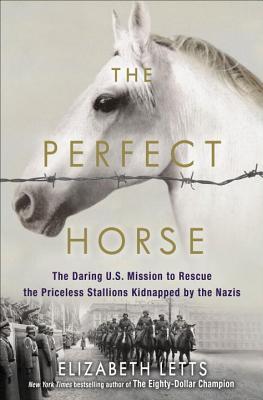
The Perfect Horse: the Daring U.S. Mission to Rescue the Priceless Stallions Kidnapped by the Nazis by Elizabeth Letts

The Perfect Horse: the Daring U.S. Mission to Rescue the Priceless Stallions Kidnapped by the Nazis by Elizabeth Letts

Author Elizabeth Letts‘ non-fiction book is about Operation Cowboy, the American protection of the Spanish Riding School and the plight of the Lipizzaner horses during World War II.

As priceless as any of the masterpieces that hung in Vienna’s museum, from their snow-white coats to their large aristocratic heads and deep brown eyes, the horses were unlike any others in the world.” prologue xvii

There was a precedent for saving irreplaceable works of art during the war, but Colonel Hank Reed‘s effort to save horses was something different. Reed, the most decorated American cavalry officer during WWII, recognized that there was something special about the horses at the Nazi stud farm at Hostau.

Photo by Helena Lopes on Pexels.com

Gustave Rau, the Nazi’s master of horse, was attempting to apply eugenics to his horse breeding program to create “the best warhorse”. He focused on gathering Lipizzaners from all over Europe.

Rau, in his next official report to Berlin, would declare, “There are no high-legged Lipizzaner, there are no flat-ribbed Lipizzaner, there are no bad-tempered Lipizzaner…” Clearly, he was impressed with what he had witnessed in Vienna. pg 87

But it wasn’t just about the breeding program, the Germans needed horses to feed the engines of war.

“The Germans were churning through horses at an astonishing rate — the army demanded six thousand fresh ones per month to replace those killed or lost to disease.” pg 37

I didn’t realize horses had such a large role in WWII. I assumed machines had taken over most of the vital functions horses used to perform like transportation and moving men into battle. I was wrong.

The Perfect Horse doesn’t cover the technical aspects of WWII or talk about the American defense of Hostau. It focuses on the horses though Letts does provide some context and information about the backgrounds of the men involved on both sides of the conflict.

Photo by Dids on Pexels.com

“Politics, prejudice, avarice, and intolerance had riven a brutal divide between the countries of these men; the grace of these horses had already started to knit them back together. The former enemies parted as friends.” pg 149

She follows the horses from their eventual relocation from the war front to the United States and what happened next.

The Perfect Horse is a difficult book to read in that it contains a lot of information and not as much “story,” but for readers interested in history, it may be a good fit.

Thanks for reading!

Here’s the History Guy episode I wrote about Operation Cowboy:

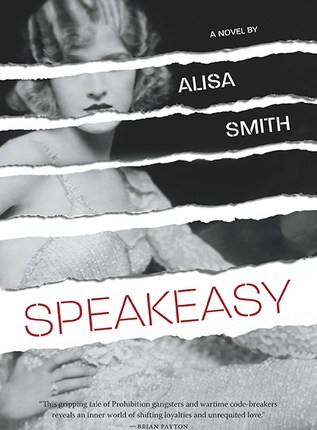
Speakeasy by Alisa Smith

Speakeasy by Alisa Smith

Lena Stillman is a codebreaker during World War II. But she hasn’t always been a hero.

During the depression, she robbed banks with Bill Bagley and the Clockwork Gang.

What is she going to do now that the past seems to have caught up with her?

Photo by Karolina Grabowska on Pexels.com

Speakeasy had some interesting elements, but the story suffered from a back and forth narrative and flat characters.

“I spread my papers out in front of me, and at first they all looked the same: a random mix of roman letters divided always into five characters with a space between each set, so no word lengths were revealed. I was searching for any repetitions.” loc 15, ebook.

The story is told from Lena’s perspective and diary entries of one of the members of her old gang.

“Bill Bagley was being punished because he had failed at something for which he possessed genius.” loc 80, ebook.

Photo by Deepak Verma on Pexels.com

The back-and-forth storytelling was jarring. I liked the stories separately, but together, it didn’t really work.

They interrupted the flow of each other. I think it might have fit together more smoothly in a Part I/Part II presentation rather than interspersed.

I think Bill Bagley, one of the central characters, didn’t have the depth required to pull off this story.

He’s supposed to be this charismatic, brilliant criminal who inspires the men to risk their lives again and again, and also captures Lena’s heart.

Bagley has some failings, but, initially, there must have been something to him to draw the gang together.

Instead, from the start, he comes off as a volatile jerk.

We meet Bagley as he’s denying the parentage of a child who looks just like him: “This un ain’t mine and don’t tell me again that it is,” he said, thrusting the baby back to a lady with burning red cheeks.” loc 80, ebook.

He doesn’t improve from there.

Photo by John-Mark Smith on Pexels.com

“I returned from a visit with Bill, received a threatening note from him, and now this. He must have a copy of it and wanted to hold it over my head.” loc 741, ebook.

I guess I just never understood what Lena saw in him.

Also, for a genius code breaker, she doesn’t seem to be able to puzzle out the people around her very well.

“My morals were just not like other people’s, because unlike the somnolent majority I saw society’s problems. In my youth I had been misguided, and picked the wrong way of lashing out against an unfair system. But I had left the gang behind, and found a greater ease in my soul.” loc 1781, ebook.

Photo by RODNAE Productions on Pexels.com

There’s a twist that occurs during Lena’s code breaking era that I saw coming from miles away. And I’m not particularly good at calling plot twists.

My favorite part of this book were the gang-era years. My heart was in my throat during most of those chapters.

Unfortunately, it couldn’t carry the rest of this novel.

Thank you to NetGalley and the publisher for a free digital copy of this book.

Thanks for reading!

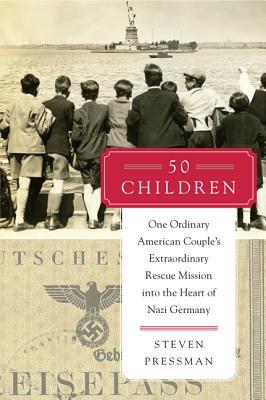
50 Children: One Ordinary American Couple’s Extraordinary Rescue Mission into the Heart of Nazi Germany by Steven Pressman

50 Children: One Ordinary American Couple’s Extraordinary Rescue Mission into the Heart of Nazi Germany by Steven Pressman
50children

Extraordinary and true story about how Gil and Eleanor Kraus saved fifty Jewish children from the Nazi Holocaust.

I watched the HBO documentary after I read this and, though similar and emotionally powerful, I enjoyed the book more because it provides a detailed history for each child (that Pressman was able to locate).

My only complaint about the book is that, though the story is gripping, it moves very slowly. My book club had a fascinating and educational discussion about 50 Children and, all said, I am very glad that it was the final club pick of 2016.

Did you know about this episode from US history?: “The fifty boys and girls whose lives were saved by Gil and Eleanor Kraus comprised the largest single known group of children, traveling without their parents, who were legally admitted into the United States during the Holocaust.” pg 9, ebook.

I didn’t realize that in the late 1930’s, that Jewish people were allowed, and even violently encouraged, to leave the Third Reich. The trouble was that, like other large displaced populations more recently, no country on earth was prepared to let that many people in or provide the social services required.

Fortunately, Gil Kraus was a well-connected lawyer who was willing and able to work within existing immigration and labor laws to find a way to bring the children into the US.

Photo by Mortandos on Pexels.com

I knew that the situation was awful for Jewish people in Europe before and during World War II, but, until I read this book, I didn’t realize the complete hopelessness that was experienced even before concentration camps became the ‘final solution’: “Within the first ten days of the Anschluss, the Viennese police reported nearly one hundred suicides throughout the city, virtually all of them Jews. By the end of April, the number of suicides had jumped to at least two thousand. Among the victims was Henny Wenkart’s pediatrician, who took his life by jumping out a window.” pg 42, ebook.

The American diplomats in Austria and Berlin had a front row seat to the horrors that the Jewish population were experiencing, but their hands were tied by national policy and immigration caps.

George Messersmith and Raymond Geist helped the Krauses as much as they could, within the law: “The Jews in Germany are being condemned to death. Their sentence will be slowly carried out, but probably too fast for the world to save them,” Geist (US foreign service officer in the Third Reich) wrote in a private letter to Messersmith (State Department secretary, stationed in Washington D.C.) in December 1938, less than a month after Kristallnacht.” pg 61, ebook.

Why was the American publication so anti-immigration?: “The United States still bore the scars of the Great Depression, and restricting immigration was seen as a way to protect jobs for Americans, who for years had been plagued with staggering unemployment rates. But challenging economic considerations were not the only factors at play in the immigration debate. The American public simply was not moved by the dire situation in Europe.” pg 68, ebook.

Photo by Pixabay on Pexels.com

And, antisemitism was far more prevalent than it is today. All of these things made it difficult if not impossible for the Jewish people who were trying to escape the Nazis.

Even after the Krauses were able to get the children to the United States, they faced harsh criticism from other Jewish charity groups for their actions. I was absolutely blown away by that.

You’d think that people would have banded together and said, “Look what’s possible!”, but instead, they fractured and accused the Krauses of breaking immigration laws. “Was it envy that prompted others to criticize what had clearly been a stunningly unique and successful rescue? Whatever their motivation, some of these same people now wondered if they might simply duplicate Gil’s strategy. pg 201, ebook.

But, since this was the largest group to get out, clearly the others didn’t succeed.

At book club, we talked about how the 1939 situation is similar to what the world is facing today with the Syrian refugee crisis and, though we all thought that immigration policy needs to be re-examined, that the real tragedy is that the world still hasn’t found a way to respond to the wars and conflicts that cause such displacement in the first place.

Is humanity ever going to figure out a way to either co-exist peacefully or provide sanctuary for those displaced by the fighting? I don’t know, but it’s a question that we should think about.

Recommended for anyone interested in the Holocaust, immigration, or testimonies from World War II- as uplifting as it is unsettling, 50 Childrenis a timeless lesson for everyone about the evils that happen when those able to help choose not to or look away.

Thanks for reading!

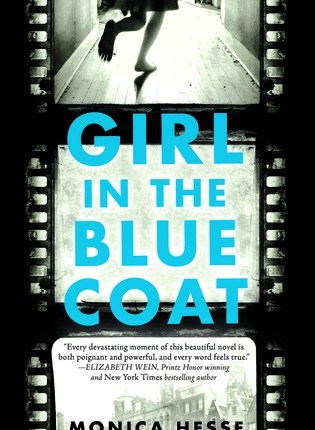
Girl in the Blue Coat by Monica Hesse

Girl in the Blue Coat by Monica Hesse

Girl in the Blue Coat is a beautifully written, young adult book about a terrible moment in history- the German occupation of the Netherlands. Hanneke is a young woman who runs black market goods to people in her town not only so that her family can eat, but also to thumb her nose at the Nazis who have taken so much from her and her people. The mystery portion of the book begins when one of Hanneke’s clients asks her to find a Jewish girl who disappeared from the safe house where she had been hiding.

I found myself drawn into this story for many reasons. First, Hanneke is a strong, female protagonist who doesn’t wait for other people to solve her problems- I liked that. Also, Girl in the Blue Coat does an excellent job of keeping the reader guessing. Just when I thought I had things figured out, Hesse changed it up. In addition, I cared about the characters in the story and I wanted them to succeed. It reminded me a lot of The Book Thief by Markus Zusak- same time period, different country.

The strength of Hanneke: “I can feel myself getting sucked into this mystery… Maybe because it’s another way to flout the rules. But maybe because, in a country that has come to make no sense, in a world I cannot solve, this is a small piece that I can. pg 45-46

The complexity of Hanneke’s emotions in a world divided by war: “Here is the thing about my grief: It’s like a very messy room in a house where the electricity has gone out. My grief over Bas (young man she lost to the war) is the darkness. It’s the thing that’s most immediately wrong in the house. It’s the thing that you notice straight off. It covers everything else up. But if you could turn the lights back on, you would see there are lots of other things still wrong in the room. The dishes are dirty. There is mold in the sink. The rug is askew. Elsbeth (former best friend) is my askew rug. Elsbeth is my messy room. Elsbeth is the grief I would allow myself to feel, if my emotions weren’t so covered in darkness.” pg 104

Hanneke’s growing self awareness because of her struggles: “I watched a whole afternoon unfold under my nose, and I misread everything that was happening, from start to finish. All the clues were in front of me, but I still didn’t see them.” pg 125

How Hanneke’s country has changed because of the occupation: “The prisoners follow, carrying suitcases, disheveled and tired like they haven’t slept in days. The crowd is big, maybe seventy people, and the soldiers march them down the middle of the street. It’s a lovely winter day in Amsterdam, and though there are other people on the street, couples like me and Willem, nobody acts like the forced parade of people is out of the ordinary. Our sense of ordinary has become horrifying.” pg 212

If you enjoyed Girl in the Blue Coat, you may want to pick up The Book Thief by Markus Zusak or The Bishop’s Wife (Linda Wallheim Mystery, #1) by Mette Ivie Harrison.  Thanks to Little, Brown Books for Young Readers for the advance reader copy of this book.  And, thank you for reading!