All Quiet on the Western Front by Wayne Vansant (adapter), Erich Maria Remarque

All Quiet on the Western Front  by Wayne Vansant (adapter), Erich Maria Remarque

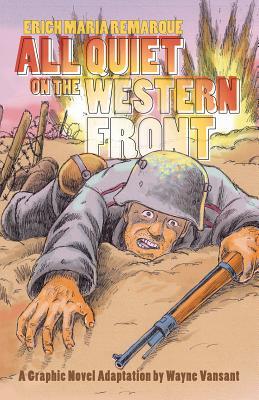
This is a graphic novel remake of the classic All Quiet on the Western Front and it packs as much punch as the original.

Paul Bäumer and his classmates are encouraged to join the German army in WWI by an enthusiastic professor. What they find is not the heroic battlefields of the classical texts they’ve studied, but one nightmare after another.

“We plunge again into the horror, powerless, madly savage, and raging; we will kill, for they are still our mortal enemies, their rifles and bombs are aimed against us, and if we don’t destroy them they will destroy us.” pg 68

Photo by Kirsten Bu00fchne on Pexels.com

As his friends slowly die and he takes an uncomfortable leave home, Paul comes to realize that there will be no end to this war for him.

“He fell in October 1918, on a day that was so quiet and still on the whole front, that the army report confined itself to the single sentence: All quiet on the western front.” pg 170

This book is an interpretation of war that was banned and burned in Erich Maria Remarque’s home country of Germany. To go to war, it seems that the world has to sanitize it and completely demonize the other side, otherwise, we would never do it.

All Quiet on the Western Front refuses to look away from the humanity on both sides of the conflict. It is tough to read, and kicks you in the feels. But, in my mind, that’s what makes it so great.
Photo by Jan Tancar on Pexels.com

Though it is fictional, it is the story of a generation of young men who were shipped off to war and never came home again. And, if by some miracle they did, they’re forever haunted by the sound of a train car because it reminded them of the sound of falling bombs. When they picked up a book that they used to love, it didn’t ignite their souls in the same way, because they’d seen the worst that life can offer. War kills more than the ones who end up dead on the battlefield.

This graphic novel version of All Quiet on the Western Front should appeal to reluctant readers. Though it is about a very serious and triggering topic, the artwork is done tastefully. I read the original All Quiet on the Western Front as a seventh grader, age 13. I think this book would be appropriate for children of that age and up.

I received a free advance reader copy of this book from the publisher. This quotations I cited in this review may vary in the final printed version.

Thanks for reading.

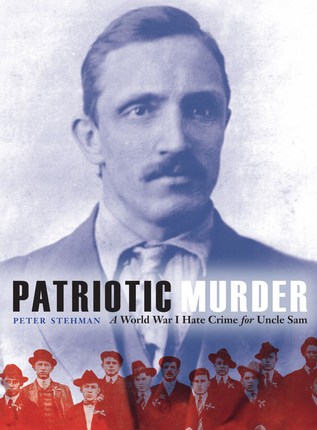
Patriotic Murder: A World War I Hate Crime for Uncle Sam by Peter Stehman

Patriotic Murder: A World War I Hate Crime for Uncle Sam by Peter Stehman

A well-researched and shocking account of the only (according to the author) German immigrant lynched on U.S. soil during World War I.

This non-fiction work is important for a number of reasons. First, it reminds readers of the time period of the Great War. Very few, unless they were just born, are even alive from that period.

Photo by Pixabay on Pexels.com

We’ve forgotten the Committee of Public Information, a federal committee created by President Woodrow Wilson, and its purpose to educate but also manipulate the public in support of an unpopular war. We’ve forgotten the Liberty Bond drives, a nation-wide push that raised billions of dollars to support the war effort. And we’ve also forgotten how a nation built largely of immigrants, of which Germans were the largest group at that time, were able to demonize an entire country and population to convince ourselves that the war was not only acceptable but just.

After Congress approved war legislation, the task remained of how to convince a splintered nation that entering the conflict was necessary. More than a third of the population was either immigrant or had at least one parent who was. Germans had been the predominant immigrant group for decades, and they had mixed feelings at best about waging war against the Fatherland.pg 17

The propaganda posters, some of which Peter Stehman has included for readers, are chilling. In some, “the hun” is shown as a bloody-thirsty creature, covered in the blood of Americans. Prior to this period, the German immigrant was seen as hard working and industrious. It took image manipulation to make the public believe otherwise.

Their patriotic themes promoted such things as buying war bonds, conserving food, or fuel or vilified Germany’s leaders or its army.pg 43

Robert Paul Prager was a patriotic German immigrant who wanted to work in the mines of Southern Illinois. The miners union not only rejected him for his lack of experience, but also because of who he was, German. He spoke up against their rejection and posted notices on the mines and saloons all around town. A drunken mob formed, took umbrage to his objection, and killed him.

They untied the line and let the body fall three times before jerking the rope to try to break his neck. “One for the red, one for the white, and one for the blue,” someone said, proclaiming their patriotic work done for now. pg 9

Photo by Rachel Claire on Pexels.com

Scholars talk a big line about remembering the past so we don’t repeat it in the future, but sometimes I feel like humanity has learned very little. We are still formed of nations and large tribes, seeking the benefit of our members and creating rules to keep others out. We still create an “us vs. them” mentality, think violence is an acceptable solution to disagreements and occasionally bow to the terrible mindless vengeance of the mob.

This book is a timely reminder, and also warning. It is a reminder of the dangers of nationalism and the mob. And, ultimately, the biggest danger of all, of convincing ourselves that others are not people like us, but something else and less valuable and sacred because of that.

I interviewed the author, Peter Stehman, for my former job at the Belleville News-Democrat. Here’s a link to the article I wrote from that hour and a half long interview, if you’re interested: https://www.bnd.com/news/local/articl…

The publisher kindly sent me a free copy of Stehman’s book. I am not being paid for this review.

He was, at least he was then, the president of the Collinsville Historical Museum and this book was a labor of love for him. Stehman was both fascinated and horrified by the fact that this event took place in his home town. For decades, no one wanted to talk about what happened on that April night. It was a matter of embarrassment and shame.

But now, that so much time has passed, people are more willing to talk about it and examine its causes as well as its cost. The tree where they hanged Prager is gone, but the memory remains. Do we learn from it or run from it? The choice is ours.

I’ll end with a quotation by Stehman from his acknowledgments section which comes at the beginning of the book: “Like so much forgotten history, the story of Robert Prager’s demise merits telling for the lessons it offers to today’s world. Patriotism is a wonderful thing, but propaganda, nationalism, and xenophobia have no place in great societies. Sadly, a reminder of that message is as relevant today as it was in 1918.”

Sadly, indeed.

Thank you for reading!

Here’s the History Guy episode I wrote about Robert Prager: