Lean In: Women, Work, and the Will to Lead by Sheryl Sandberg

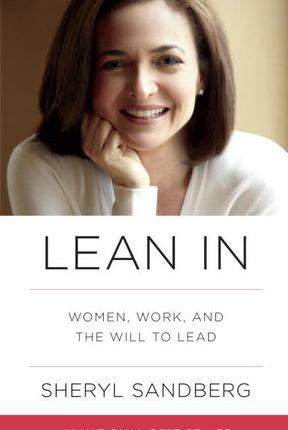
Lean In: Women, Work, and the Will to Lead by Sheryl Sandberg

Sheryl Sandberg stresses the need for collaborative approaches and teamwork because both strategies lead to greater success and gender equality in business. She then takes that idea a step further and ventures to say that if this collaborative model could be applied both on the job, in relationships, and at home that this could change the world.

It probably could. I’m certainly willing to give it a try.

Photo by RF._.studio on Pexels.com

The part of Lean In that I was most receptive to was the discussion about the Queen Bee syndrome of females in upper management and how, sometimes, women keep other women down because of the attitude that “there can only be one”.

Probably because of my background, I’ve always approached friendships with other women with the mind set of a “world family” and do my best to help others with their needs in whatever capacity I can. I have rarely found a friend or business associate who responds with the same level of support. I suspect that this tendency in life to look out for number one is caused by the lack of unconditional love that a supportive family unit provides first developmentally as a child and then into adulthood.

It is no wonder that women, if made to feel inferior to other family members at home, react in an aggressive way when “competing” with other females on the job rather than reaching out a hand in welcome.

Photo by Tima Miroshnichenko on Pexels.com

I was fortunate to grow up in an all female household (plus Dad) so gender equality wasn’t an issue that I ever had to consider until I had a child of my own and had to make decisions about work and childcare. My sisters and I weren’t compared to brothers or ever told that we couldn’t have something that we wanted or be successful simply because we were female.

In fact, my mother’s father was on the forefront of the integration of females into the Air Force. He gave his daughter a male name (Allyn) because his thinking was that gender equality was going to shift to a more equal stance during her lifetime. But, it was going to take some time for attitudes to change. In the meantime, he wanted her resume and career to be judged and advanced on its merits, which, he figured, would be smoother and avoid all the pitfalls of sexism if recruiters thought she was a man.

Photo by Maryia Plashchynskaya on Pexels.com

Clever Grandpa and hooray for me that my mother had a positive, feminist role model for a father.

I’m also lucky in that, because of my many female siblings, I have a ready-made “sisterhood” of support. Many of the issues that Sandberg discusses in Lean In, I’ve encountered, but I was lucky enough to have solutions for in the embodiment of my family. I know that not everyone has that type of support in their career and personal life, and I fully appreciate that I’m spoiled in my lifestyle.

If you enjoyed Lean In, I’d suggest Spinster: Making a Life of One’s Own (a discussion of feminist issues in relationships and marriage) and Artemis: The Indomitable Spirit in Everywoman (a feminist dissection of a few mythological archetypes to empower women through the exploration of the subconscious mind).

Thanks for reading!

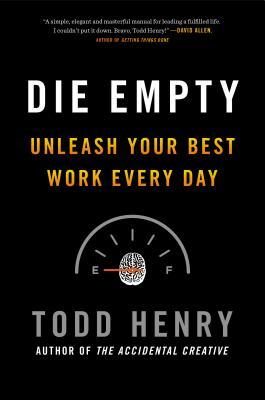
Die Empty: Unleash Your Best Work Every Day by Todd Henry

Die Empty: Unleash Your Best Work Every Day by Todd Henry

Your days are finite. One day, they will run out. As a friend of mine likes to say, “You know, the death rate is hovering right around one hundred percent.” pg 3

Todd Henry has given the world a call-to-action with Die Empty. The book is one big reminder that one day you (yes, you!) will die and he imparts some useful tools to help you discover what you’re meant to do and then to do it to the best of your ability.

Photo by Ketut Subiyanto on Pexels.com

“If there is one overriding goal of this book it is this: to bring a new found clarity and sense of urgency to how you approach your work on a daily basis, and over your lifetime.” pgs 5-6

Henry is into catchy acronyms and veers very close to empty motivational jargon. But, I feel, he pulls himself back in time.

“No one charts a course for mediocrity, yet it’s still a destination of choice. It’s chosen in small ways over time, and those tiny, seemingly inconsequential decisions accumulate until they result in a state of crisis. pg 35

I learned a great deal from his abc’s of mediocrity that include “comfort zone” as the letter C. If I am guilty of anything, it is finding my comfort zone boundaries and then staying carefully inside of them. Henry believes you do the world a disservice when you don’t push yourself. Who knows how much you can do if you don’t try?

Photo by Ketut Subiyanto on Pexels.com

“Growth is about daily, measured, and disciplined action. It’s about embracing purposeful skill development and pursuing new opportunities that stretch you a step beyond your comfort zone, even when it means venturing boldly into the unknown.” pg 89

You escape your comfort zone, Henry says, by creating goals in steps, sprints and stretches. Steps are goals that can be accomplished in one day. Sprints are completed in one or two weeks. Stretches are a big goal that takes longer than that.

Throughout much of the book, the lesson seems to be act, observe, and act again. It touches on everything from fear of failure and delusions to inflated egos and effective communication. Die Empty could be described as a one-stop-shop for almost anything that holds you back from “unleashing your best work every day”.

Photo by Prateek Katyal on Pexels.com

Henry even addresses the fact that no self help book is the complete answer for anyone. The final ingredient in any lasting change or improvement in your life is you.

You can have the map, and there can be gas in the tank, but unless you’re willing to fire up the engine and put your foot on the gas, you’ll never get anywhere. Intention and theory don’t change the world; decisive action does.” pg 201

Recommended for readers who are unwilling to settle for less than their very best work every day.

Thanks for reading!

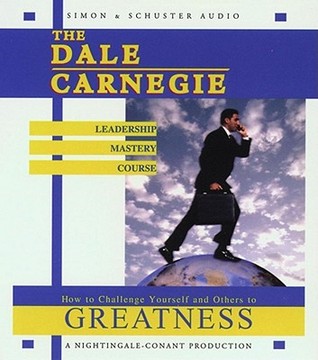
The Dale Carnegie Leadership Mastery Course: How To Challenge Yourself and Others To Greatness by Dale Carnegie

The Dale Carnegie Leadership Mastery Course: How To Challenge Yourself and Others To Greatness by Dale Carnegie

The version I listened to of The Dale Carnegie Leadership Mastery Course, published in 2001, has not necessarily aged well, but still had some applicable lessons for business leaders.

On the positive side, this audio program encouraged me to examine my own leadership style, something I’d never considered before. Are you a innovative or organizational leader? Do you bring people together or drive them apart, intentionally or unintentionally? What is your risk tolerance and why?

Photo by RODNAE Productions on Pexels.com

In addition to introspection, this program asks you to plan for the future based on your strengths and take steps towards those dreams. What are your goals, personally, professionally and for your current company? What would you like to see happen to your company after you die?

It also examines a leader’s entire life with the idea of success isn’t success if you lose your family and important relationships while building your career or vice versa. Are you capable of taking time off? Do you devote time to those who are most important to you at home and at work?

Those are just a few of the positive aspects of this program. On the other end of the spectrum, the music between sections is hilariously dated, almost like motivational elevator music. And there seemed to be what amounted to hero-worship of Dale Carnegie slipped in between the lessons or at the end of sections.

For example, in the lesson on handling disasters and poor decisions as a leader, the program was discussing a CEO’s almost universally hated idea of putting a thermometer on soda dispensers and having the price of a drink go up as the temperatures rose. The narrator closed the section with a statement like: “If Dale Carnegie had been at that meeting, he would have suggested the price of a drink go down as the temperatures went up.” (Cue motivational elevator music.)

Photo by Karolina Grabowska on Pexels.com

I don’t want to dismiss Carnegie’s extensive contributions to the realm of business and leadership skills, but he was human too. To assume he would have been able to turn around some spectacularly bad corporate decisions with just his mere presence struck me as a bit ridiculous.

In that same vein, some of the fable-like stories put into the lessons for emphasis felt heavy-handed, particularly one where a father expected too much of his son. It was a lesson about empathy but it was over the top.

As I said, I did learn some valuable skills from this audiobook and continue to ponder some of the lessons it presented. At the same time, I did have a few giggles at material that, I don’t believe, was ever intended to be satirical. Recommended for those interested in building their leadership acumen, but prepare yourself for a few misses in the presentation.

If you’re interested in non-fiction, business and self improvement books, here are a few I’ve recently reviewed:

Eat That Frog!: 21 Great Ways to Stop Procrastinating and Get More Done in Less Time by Brian Tracy

The Lost Prosperity Secrets of Napoleon Hill by Napoleon Hill

The Art of Exceptional Living by Jim Rohn

Thanks for reading!