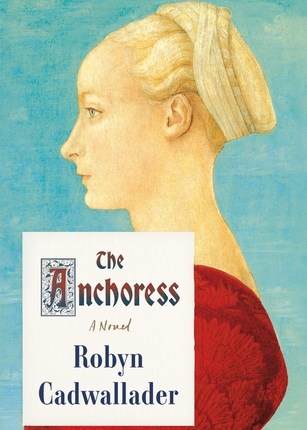
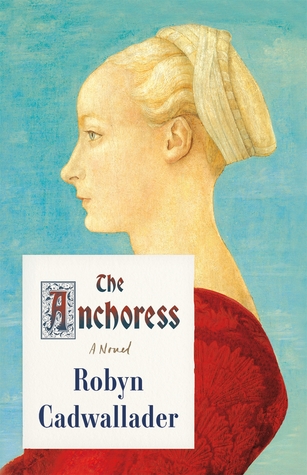
England, 1255. What could drive a girl on the cusp of womanhood to lock herself away from the world forever? -from Goodreads
The 1200’s was an exciting time in many ways. But, not if you were a woman.
In The Anchoress, I learned about yet another way in which women were treated poorly by the male dominated church. Apparently, the anchoress was an actual calling where the woman chose to be walled up near or in a church in order to move closer to God.
The people who walled up the woman left a small window for food and waste to pass through. That was the extent of her interaction with the outside world. How messed up was that.
Sarah, the anchoress in this story, chooses the position for a variety of reasons, but they’re not all that mysterious. The description of the book plays it up as a mystery which the reader will figure out in probably five pages or so.
I enjoyed this book more for the historical details of the period.
The interesting part is when Sarah starts to go bonkers (no big surprise there) and her confessor tries to keep her straight. That particular drama was gripping even though most of the action took place in one room.
If you enjoyed The Anchoress, you may want to read A Triple Knot by Emma Campion or Pope Joan by Donna Woolfolk Cross.
Part art appreciation and part homage to the female reader, Women Who Read Are Dangerous is probably the the most aptly titled book that I’ve ever read.
In addition to the beautiful images (my favorites pages 73 & 89), this book educates the reader about the politics, historical trends, and gender inequality tied to reading. Who knew that simply picking up a book could be such a subversive act?
Women Who Read are Dangerous sums up years of strange thinking about women and books with a dose of humor that I appreciated.
Take these historical opinions for example: “Women are too literal-minded for reading. Women are too sentimental, too empathetic, too distractable for reading. Women are passive, practically somnolent, consumers of popular culture, never realizing how, with the very books they choose, they participate in their own subordination.” pg 16
Or this: “The lack of all physical movement while reading, combined with the forcible alternation of imagination and emotion,” said the teacher Karl G. Bauer in 1791, would lead to “slackness, mucous congestion, flatulence, and constipation of the inner organs, which, as is well known, particularly in the female sex, actually affects the sexual parts”- so anyone who read a great deal and whose powers of imagination were stimulated by reading would also be inclined to masturbation, as indeed we can already observe in Baudouin’s painting. But such moralizing could not hold up the triumphal march of reading, including- and specifically- female reading.” pg 23
Can’t hold us back, right readers? I’m actually feeling pretty well for all the reading that I do.
Reading is power, I’ve always known that: “With the ability to read, however, there developed new patterns of private behavior that were to threaten the legitimacy of both the Church and secular authorities on a permanent basis. Women who learned to read at that time were considered dangerous. For the woman who reads acquires a space to which she and no one else has access, and together with this she develops an independent sense of self-esteem; furthermore, she creates her own view of the world that does not necessarily correspond with that conveyed by tradition, or with that of men.” pg 26
An introvert’s paradise, the keys to your freedom, the way to stick it to the “man”… as if I needed more reasons to read.
I also liked this description of reading: “Reading is an act of friendly isolation. When we are reading, we make ourselves unapproachable in a tactful way.” pg 34 I never really considered it that way before, but it is a method in which you remove yourself from the world for a time, even from those sitting in the same room.
Seems obvious, when I consider it, but I had never taken the time to do so.
Finally, I learned about how “silent reading” is a recent trend. Did you know?: “An illiterate today is not only someone who cannot read (or write), but also anyone who cannot understand a text unless he or she reads it aloud. Yet there must have been a time when the opposite was the case- when reading aloud was the norm, as silent reading is today. … Until well into the Middle Ages and in some cases well into modern times, reading consisted of both thinking and speaking, and was above all an act that took place not in separation from the outside world, but at its center, within the social group and under its surveillance.” pg 25
Ugh. “Under its surveillance”?
That brings to mind the quotation, “Let others praise ancient times; I am glad I was born in these.” -Ovid.
Highly recommended for art enthusiasts and anyone who loves to read, Women Who Read are Dangerous is a lot of fun and a walk on the wild side… if one believes in such things.
If you’re looking for more non-fiction information about reading, try “Wild Things! Acts of Mischief in Children’s Literature” by Betsy Bird. It doesn’t have the beautiful artwork of this book, but it does contain a lot of information about the history and, sometimes scandalous, back story of children’s books and authors.
A big thank you to the Goodreads First Reads Program for a finished copy of this book for review purposes. And, thank you for reading!





 The Help Desk Book Blog