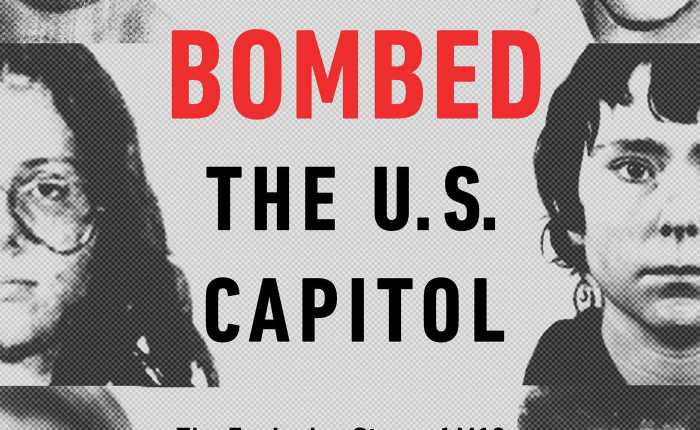
Tonight We Bombed the U.S. Capitol: The Explosive Story of M19, America’s First Female Terrorist Group by William Rosenau

Tonight We Bombed the U.S. Capitol: The Explosive Story of M19, America’s First Female Terrorist Group by William Rosenau

It is simple to pretend that people who perform shocking acts of violence are different than everyone else. It’s got to be something in their childhoods, we think, or maybe it’s a mental illness.

The most disturbing part of this book, and it admittedly has many, was that these women seemed so normal, just like you or me.

Photo by Andrea Piacquadio on Pexels.com

William Rosenau has combed through court files, newspaper articles and more to write Tonight We Bombed the U.S. Capitol, a non-fiction account of a radical leftist terrorist group. They planted multiple homemade bombs, robbed and killed people, all in the name of freeing the world from imperialism.

The majority of the group were highly educated, white women.

“They’d spent their entire adult lives embroiled in political struggles: protesting against the Vietnam War, fighting for black, Puerto Rican, and Native American liberation, and fighting against what they called U.S. ‘imperialism’ – that is, U.S. military aggression, political domination, and economic exploitation, particularly in the Third World.”

Photo by cottonbro on Pexels.com

Rosenau paints a careful picture to reveal how, step-by-step, the people involved in the group felt more and more marginalized and victimized to the point where they felt any and all actions were justified.

“Their vision of what this heaven on earth would look like was hazy, but one thing was certain: creating it would require nothing less than violent revolution. This vagueness about ultimate objectives is typical among terrorists.”

Photo by Pixabay on Pexels.com

There is so much information about a number of different people in this book that it can be overwhelming. But I think, ultimately, it is better to know what has gone on in the past because it affects the future in such a profound way.

“I discovered that during the 1970s and 1980s, the United States had waged an earlier ‘war on terror’ against violent domestic extremists, and it was during that period that the government created many of the counter-terrorism tools and approaches that continue to be used today.”

Photo by Rahul on Pexels.com

The privilege of living in a free society is that all manner of ideas can be discussed and embraced or dismissed depending upon their merits. I want equality, freedom from tyranny and opportunities for all people – no matter what you’re from, what you look like, or what your background is.

However, I won’t use violence to try and bring those ideals about. That seems to be the line in the sand for many. The people in this book didn’t have that line but they seemed to espouse higher ideals.

And what a tragedy that is. If only their brilliant minds had been directed towards methods of bringing about change that worked within society rather than against a nameless enemy, our country might have been better for all of them.

Thank you to NetGalley and the publisher for a free advance reader copy of this book. The brief quotations cited in this review may change or be omitted entirely from the final print version.

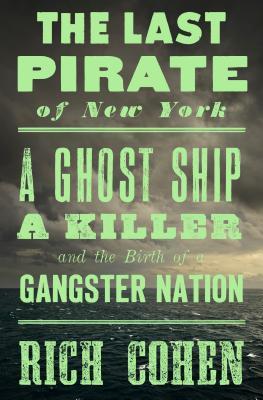
The Last Pirate of New York: A Ghost Ship, a Killer, and the Birth of a Gangster Nation by Rich Cohen

The Last Pirate of New York: A Ghost Ship, a Killer, and the Birth of a Gangster Nation by Rich Cohen

A fantastic and non-fiction account of Albert Hicks, the last man to be publicly executed in New York City and also one of the last to be tried and convicted for piracy. For fans of history, this is a must-read.

“Albert Hicks is the closest thing the New York underworld has to a Cain, the first killer and the first banished man, carrying that dread mark: MURDER. He operated so long ago, in a city so similar to and yet so different from our own, the word gangster had not yet been coined. He was called a pirate.”

Photo by Pixabay on Pexels.com

Beyond the fascinating true crime story about Hicks, Rich Cohen, the author, has brought New York City, mere years before the Civil War, to life. You get to learn about the streets, the notable people, the attitudes, the newspapers and more. It is a fun and, occasionally serious, romp through the past.

“New York Harbor is a network of islands and coves, seabirds and arsenical green marshland, the sort that looks solid until you step on it. … In the old days, every road on the island ended at the water, the sun rose at the foot of every street. Even now, when the fog rolls in, the waterfront is a sailor’s dream.”

Cohen doesn’t tell his story through the dry recitation of facts and figures. He has a storyteller’s way of weaving the details into the larger narrative. This is history as it was meant to be told.

“An 1850 police report estimated the presence of between four hundred and five hundred pirates in New York City. To the police, a pirate was any criminal who made his living on the water, attacking and robbing ships beyond the jurisdiction of the landlocked coppers…”

Photo by Chris Schippers on Pexels.com

Four and five hundred pirates! In New York City! This book changed my view of “The City So Nice They Named It Twice.” I suppose everybody and everything comes from somewhere. The early years of the city had more story to it than I imagined it could.

“Why had he killed everyone on the ship if money was his object? Because, he later explained, “Dead men tell no tales.”

Part of the reason why Albert Hicks may have been so forgotten is because of the extraordinary events that occurred just a short time later, the Civil War. It overshadowed everything that came before it, and, also, time moves on. I think about what was in the news last week and how our attention will already have moved on by next week.

As much as Cohen was able to discover about Hicks, his trial and what came next, I wish more had existed in the historical record about Hicks’ wife. I get that, beyond a few details, she basically disappeared from the record and that’s such a shame.

It made me wonder if Hicks has any descendants out there and if they know the story of one of their most notorious ancestors… I have relatives a few generations back who were adopted in New York City. Hicks’ history could belong to any of us who have question marks in our family tree.

As Cohen points out in his book, Hicks’ history, as shocking as it is, is also the early history of our country. Any shining point of light casts a shadow. This is one of those stories that took place in the shadows — a nightmarish memory from early New York City.

Photo by TheUknownPhotographer on Pexels.com

Recommended for readers of history and true crime. The Last Pirate of New York is brilliant.

Thank you to NetGalley and the publisher for a free digital, advance reader copy of this book. Please note that the brief quotations I cited in this review may change in the final printed version. The estimated date for publication is June 2019.

Thanks for reading! #TheLastPirateOfNewYork #NetGalley

Update June 21, 2019: The Last Pirate of New York is on sale now. The History Guy made an episode about Albert Hicks, the subject of this book. You can see the short documentary-style YouTube video here:

Who Put the Rainbow in The Wizard of Oz?: Yip Harburg, Lyricist by Harold Meyerson

Who Put the Rainbow in The Wizard of Oz?: Yip Harburg, Lyricist by Harold Meyerson

An informative non-fiction biography about Yip Harburg, the little-remembered lyricist, who is responsible for, among other notable works, writing the lyrics to “Somewhere Over the Rainbow”.

Similar to Malcolm Gladwell’s “successful hockey players who were born in January” thesis, Yip was among an extraordinary group of lyricists, all born within a short time of each other, who wrote for Broadway and Hollywood. It wasn’t just talent, of which Yip had a great deal, it was also opportunity.

Photo by Pixabay on Pexels.com

A myriad of different factors came into play in just the right way at the perfect time to create musical theater and a chance for lyricists to make a huge impact on the national consciousness. Prior to this time period, that type of entertainment, musical theater, didn’t even exist.

Yip grew up in poverty but claimed that didn’t affect him all that much. Children are surprisingly resilient.

“You lived from month to month. But youngsters didn’t feel the sting of it because everyone else was poor, too. We knew no other way of life, and it didn’t mean much to a kid who turned the street into an exciting playground.” pg 9

The Great Depression hit Yip hard and he lost everything. He decided, when the chips were down, to try his hand at a new career. And so, he began writing lyrics for composers. It’s a curiously difficult profession.

Photo by Joshua Woroniecki on Pexels.com

“The challenge of becoming a lyricist involves not only perfecting individual writing skills but also learning to be an effective collaborator, one of the most demanding of human relationships. … The theater lyricist must also be collaborating with the book writer of a musical, as well as directors, actors, designers, and producers who impact the lyric-writing process.” pg 32

Beyond the life of Yip Harburg, this book gives the ins-and-outs of the lyric writing business. It is a tricky art, limited by not only the written music but also the demands of the show or song in which the words are appearing.

“The word rainbow never appears in L. Frank Baum’s book, “The Wizard of Oz”. It was lyricist Yip Harburg who put it in the film.”From the introduction.

“Somewhere Over the Rainbow” is arguably one of the most recognizable Hollywood songs of all time and most people don’t remember the man who made it possible. Yip was also responsible for the almost “operatic” flow of the music during Dorothy’s time in Oz. In fact, Judy Garland wanted Yip to write the lyrics for her turn in “A Star is Born” but her husband, the producer, was unable to get Yip under contract because of his blacklisting during the McCarthy-era.

Photo by Evgeny Tchebotarev on Pexels.com

But Yip didn’t let it get him down. He kept writing even though some of his friends completely fell apart when they couldn’t get a contract.

I enjoyed learning about not just the difficulties of lyric writing, including the plot lines and back stories of some of Yip Harburg’s most popular works, but also learning about the life of this man who affected so many people by putting thoughts into words. He encapsulated dreams. And that’s not an easy thing.

“I think everybody, not only every artist, but every person who thinks, is confronted with… — his drive to be related to the universe, but that’s a hard thing because there are so many stars and it’s very hard to grasp that relationship. … But, if he can identify himself, and relate really with one other person, he will relate with all of humanity and he will relate with all the universe.” pg 69

Thank you, Yip, for giving Dorothy rainbows. The world would have been a darker place without you.

Recommended for fans of Broadway shows and musicals, but also for readers who enjoy learning forgotten history about people who deserve to be remembered.

Thanks for reading!

Here’s The History Guy episode about Yip Harburg:

Cadillac, Knight Errant of the Wilderness by Agnes C. Laut

Cadillac, Knight Errant of the Wilderness by Agnes C. Laut

A highly detailed, but dated, biography of Antoine de la Mothe Cadillac, the founder of Detroit.

“Antoine had so many Spanish characteristics, the laughing irony, the quenchless ardor, the chivalry; he was so much the fierce fighter, the devout Catholic yet independent of priestly control, that we suspect he must have had Spanish blood of the Pyrenees from his mother’s side of the house.” pg 45

Photo by Chris Smith on Pexels.com

You would not believe how difficult it was to find information about this man. So many sources I examined contradicted each other or cast him as a villain or hero to the point where the actual history was obscured behind opinion.

Agnes Laut falls more into the hero-worship category, but I found her citations of historical documents to be more of use than most of the online articles I could find, which didn’t cite any.

That being said, like every other human in history, Cadillac was a complicated figure and I don’t think Laut does readers any favors by painting him as an unassailable hero. He would engage in illegal trade because everyone else was doing it. He believed Europeans were superior to the Native American population.

He was a man of his times and yet, he was the visionary and founder of Detroit and, for a time, the governor of the Louisiana Territory. He did great things and not-so-great things.

“The stockades of the new fort at Detroit enclosed sixty square yards. The post lay about forty steps back from the water-front. Such was the germ of a city that in little more than two centuries was to number with its suburbs nearly a million and a half in population. pg 140

Photo by Anon on Pexels.com

Goodness of the man aside, I had much to learn about Cadillac.

“Cadillac would never tolerate a man in his company not dressed spick and span as a naval man in spotless white. He, himself, set the example in costume faultless from hat to high boots.” pg 63

The history of Cadillac also shows a curious side of the court of Louis XIV of France, otherwise known as the Sun King. The politics of the court caused Cadillac to be imprisoned for a time, but the king kept releasing him and giving him more authority. He was thrown in the Bastille for six months and then given the Order of St. Louis.

“(Louis XIV) would grant favors only with the condescending generosity and pomp of a Grand Monarch; so the Court was duly assembled to witness the presentation of the commission at a morning audience. Cadillac had to kiss His Majesty’s hand and back away as from the presence of a god.” pg 121

Photo by Pixabay on Pexels.com

As an outsider looking in, it’s confusing how quickly a man’s stars can change. But at the same time, the shifting sands of court favor and intrigue emerge in the ups and downs of Cadillac’s life as well. All in all, it makes for a fascinating history.

“Let his (Cadillac’s) name stand and take its place as time goes on.” pg 286

Recommended for history readers with some reservations. Keep in mind this was published in 1931.

Thanks for reading!

Here’s the History Guy episode I wrote about Antoine de la Mothe Cadillac:

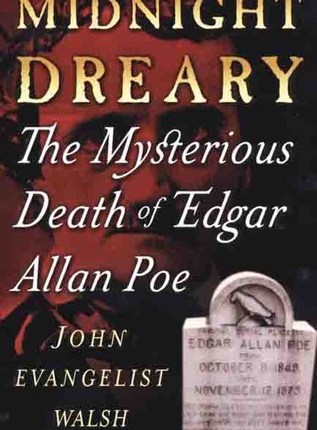
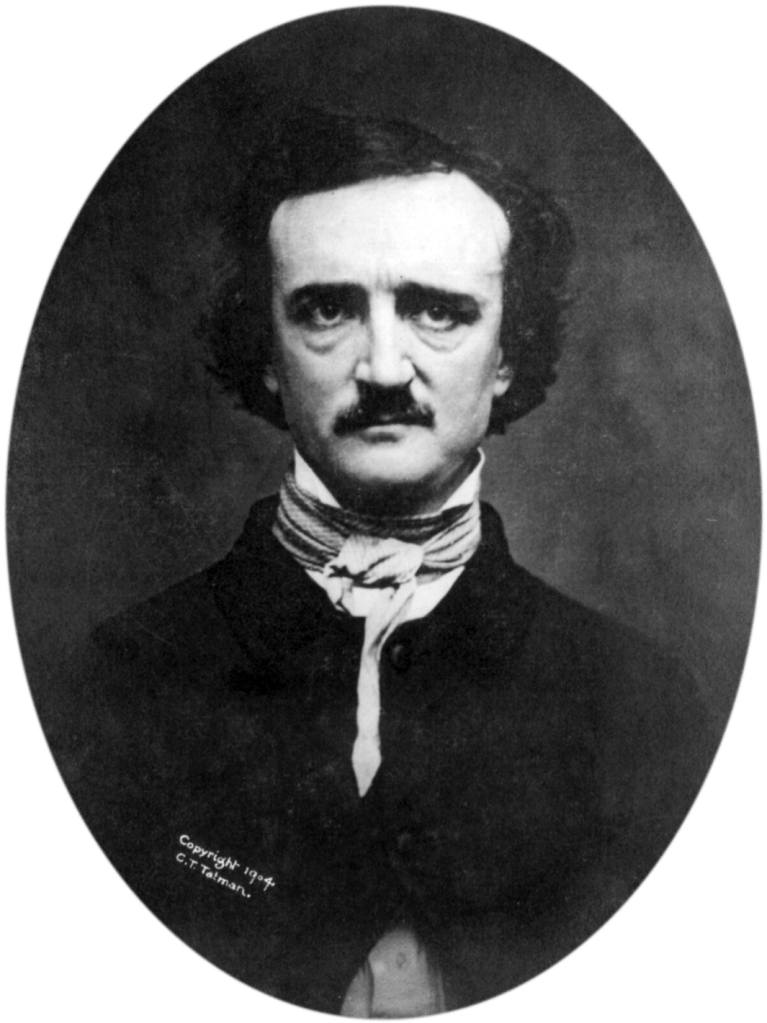
Midnight Dreary: The Mysterious Death of Edgar Allan Poe by John Evangelist Walsh

Midnight Dreary: The Mysterious Death of Edgar Allan Poe by John Evangelist Walsh

John Evangelist Walsh examines the last months of the life of Edgar Allan Poe and puts forth the hypothesis that he did not die of alcohol withdrawal, but something more sinister.

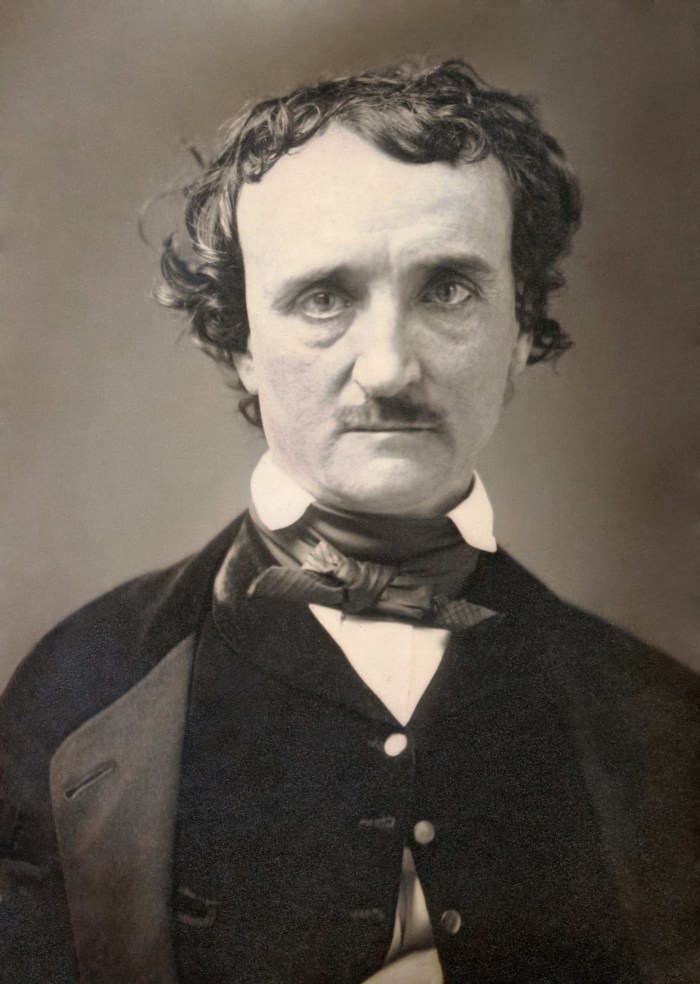
Poe, one of the most celebrated American authors, had a rough life. He was orphaned and adopted at an early age. He spent his life in poverty, scraping enough money from writing and editing jobs to keep himself fed, only to die mysteriously at age 40.

“We regret to learn that Edgar Allan Poe Esq. the distinguished American poet, scholar and critic died yesterday morning after an illness of four or five days. This announcement, coming so sudden and unexpected, will cause poignant regret among all who admire genius and have sympathy for the frailties so often attending it.”pg 34

Photo by Poppy Thomas Hill on Pexels.com

Walsh packs this book with details about Poe’s life and heartbreaks — that can be verified by historical documentation. After Poe’s untimely death, an author, perhaps more than one, who had been vilified by in Poe’s literary reviews, wrote angry and unflattering obituaries and biographies. It was an effort to black Poe’s name after his death which ultimately failed.

However, this “name blackening campaign” makes it difficult to separate fact from fiction.

Walter Colton, who was one of those who was kind to Poe after his death wrote: “I knew something of Poe. Something of the unfathomed gulfs of darkness out of which the lightning of his genius sent its scorching flashes.” pg 28

Perhaps that’s the lesson to take from Poe’s life, besides his astonishing literary achievements. Genius often seems to walk hand in hand with madness or emotional upheaval. I wonder why this is. Maybe, to touch the heights and depths required to write beautiful poetry, you have to go there? I don’t know.

“As always with this type of alcoholism, the unsettling fact was its combined certainty and unpredictability. After long periods of perfect sobriety, he seemed almost bound to fall again, and those who cared about him had to live with that relentless expectation.”introduction, pg xiv

Walsh’s hypothesis about the manner of Poe’s death was not convincing to me, but it gave me another angle to consider.

I had heard Poe may have died from “cooping” which was a practice where a man was kidnapped by a political party, kept drunk and imprisoned until election day, when he would let him free to vote as they directed. This idea holds water because he was found inebriated and ill outside a polling place and in clothing that didn’t seem to belong to him. I had also heard he was a victim of alcohol withdrawal.

Dear Sir, There is a gentleman, rather the worse for wear, at Ryan’s Fourth ward polls, who goes under the cognomen of Edgar A. Poe, and who appears in great distress, and he says he is acquainted with you, and I assure you, he is in need of immediately assistance.” pg 46

Walsh believes some relatives of one of the women Poe was involved with may have led to his untimely end.

Whatever happened, I can’t help but feel sad for the rest of us. Imagine what he could have accomplished with another 40 years on this earth.

It was many and many a year ago, 
In a kingdom by the sea, 
That a maiden there lived whom you may know 
By the name of Annabel Lee; 
And this maiden she lived with no other thought 
Than to love and be loved by me.

Recommended for fans of Edgar Allan Poe or readers who enjoy true crime.

Thanks for reading!

Here’s The History Guy episode I wrote about Edgar Allan Poe:

Titanic Thompson: The Man Who Bet on Everything by Kevin Cook

Titanic Thompson: The Man Who Bet on Everything by Kevin Cook

“Are you a gambling man?” he’d ask. “Because I am.” Prologue.

A non-fiction biography that reads like fiction, this is the life story of Titanic Thompson. According to author Kevin Cook, Titanic’s life was the model for the gambler Sky Masterson in the musical “Guys and Dolls.” This poker and golf-playing phenomenon bet and propositioned his way across the country. In addition to all of the fun anecdotes about bets he made, Titanic was a star witness in the trial for the murder of the man accused of “fixing” the World Series.

Seriously folks, history doesn’t get much more interesting than this.

As Alvin collected his winnings, someone asked Snow Clark the stranger’s name. “I don’t rightly know but it ought to be ‘Titanic,'” Clark said. “He sinks everybody.” pg 3

Photo by Pixabay on Pexels.com

Alvin Clarence Thomas was born in 1893 in rural Missouri near the small town of Monett. The last name, Thompson, that he would adopt for most of his adult life, came from a later newspaper misprint that he embraced as his own.

Later in life, Thompson said he couldn’t read, but numbers and odds always made sense to him. He spent hours sitting alone in his room, teaching himself to adeptly shuffle cards, practicing dealing from the bottom of the deck more quickly than the eye could follow. Thompson developed a method of marking cards that some still use today, like putting dots on the back or notching the edges to be able to tell a face cards from the lower ones.

He was quite popular with the ladies and married 5 times to women significantly younger than him. Scandalous!

Photo by Irina Iriser on Pexels.com

“He was fun,” said a woman who knew him. “He took his hat off when he spoke to you. Alvin was slim like a willow, and he didn’t walk, he sauntered.” pg 21

When he was drafted into the army, he was made a sergeant and taught the men under him how to gamble.

“Sergeant Thomas spent hours dealing demonstration stud hands, providing a running commentary on each hand, training his men to calculate the odds of an opponent’s having an ace or king or deuce in the hole, telling them when to bet harder and when to fold their tents, so they could beat all the poor dumb soldiers who trusted to luck.” pg 53

Photo by Anna Shvets on Pexels.com

There are so many interesting stories in this book. My favorite was when he swindled Al Capone. Yes, THE Al Capone.

Highly recommended for fans of history or historical fiction. As I said, this guy’s life reads like a story.

Thanks for reading!

Here’s the History Guy episode I wrote about Titanic Thompson:

Mrs. Sherlock Holmes by Brad Ricca

Mrs. Sherlock Holmes by Brad Ricca

In the era before women could vote, an extraordinary detective and lawyer was solving crimes the police couldn’t and defending those who couldn’t afford it. Her name was Grace Humiston and this is her story.

Grace was admitted to the bar in the state of New York in 1905, becoming one of only a thousand female lawyers in the whole United States. pg 29

Photo by Taryn Elliott on Pexels.com

Readers, this lady was incredible. Though she fell out of public favor later in her career, Grace accomplished so much. She was the first woman to become a consulting detective for the New York Police Department. They formed a missing persons bureau because of her work to reform how they searched for victims of crimes.

Grace was even the first woman to serve as a Special Assistant U.S. District Attorney. She brought down businesses that were abusing immigrants through peonage practices. I’m telling you, this lady was hardcore.

The case that catapulted her into the limelight was the disappearance of Ruth Cruger, a teenager who went to get her ice skates sharpened in New York City and never returned. Her family insisted Ruth wouldn’t have run away, as the authorities suggested when they reported her disappearance.

“My girl has been kidnapped,” Henry said to the reporters. “This talk about her having gone away voluntarily is an unwarranted insult to her and to us. It is nothing more than a screen for police shirking.” pg 47

So who did he call? Grace Humiston.

Photo by Wallace Chuck on Pexels.com

When a reporter asked about how she had solved the case so quickly after the police had given up, Grace did not couch her words. “To begin with, the police are no good,” Grace told the reporter. “They had all the facts to start on that I had and did nothing.” pg 71

Savage.

The facts of this story merit a five-star rating but how they are organized brought down my rating of this book. Brad Ricca opens with the Ruth Cruger case and puts chapters inbetween detailing Grace’s history. It disturbs the flow of the story. I think if he had gone from an opening, gripping chapter about Ruth into a chronologically organized history, I may have enjoyed it more.

Another gripe some readers had with Mrs. Sherlock Holmes is that it had an unsatisfying conclusion. I’m not of that opinion. Often, life doesn’t end stories with a bowtie or an ending worthy of their beginning. In non-fiction, especially when careers rise and then fall as in this book, there isn’t a satisfying ending to be had.

I enjoyed learning about this extraordinary lady and I appreciate the level of research Ricca put into these pages. One can feel, especially in the conclusion, how this was a labor of love for him. Not just to bring Grace back into the public’s mind and heart, but also to remind readers about how people still go missing today and, sometimes, they’re never found.

Photo by Ylanite Koppens on Pexels.com

I wanted to reprint all the people gone missing in the last year here, at the end, but it would not have been ‘cost effective’, they told me, even in the smallest type. So think of one name for me. Maybe it is someone you know. Or someone you saw on a show or a flier once. Or maybe it is your name, or a name you once had. Whoever it is, write that name here…. pgs 362-363

We are solving more and more cold cases with the advent of DNA databases. Perhaps some day this issue will be a thing of the past. Until then, we’ll rely on the Graces of today to lead us, clue by clue, to wherever the trail ends.

Thanks for reading!

Here’s the History Guy episode I wrote about Grace Humiston:

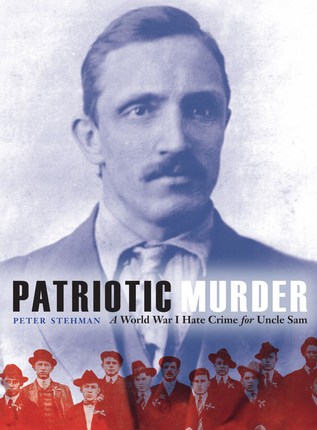
Patriotic Murder: A World War I Hate Crime for Uncle Sam by Peter Stehman

Patriotic Murder: A World War I Hate Crime for Uncle Sam by Peter Stehman

A well-researched and shocking account of the only (according to the author) German immigrant lynched on U.S. soil during World War I.

This non-fiction work is important for a number of reasons. First, it reminds readers of the time period of the Great War. Very few, unless they were just born, are even alive from that period.

Photo by Pixabay on Pexels.com

We’ve forgotten the Committee of Public Information, a federal committee created by President Woodrow Wilson, and its purpose to educate but also manipulate the public in support of an unpopular war. We’ve forgotten the Liberty Bond drives, a nation-wide push that raised billions of dollars to support the war effort. And we’ve also forgotten how a nation built largely of immigrants, of which Germans were the largest group at that time, were able to demonize an entire country and population to convince ourselves that the war was not only acceptable but just.

After Congress approved war legislation, the task remained of how to convince a splintered nation that entering the conflict was necessary. More than a third of the population was either immigrant or had at least one parent who was. Germans had been the predominant immigrant group for decades, and they had mixed feelings at best about waging war against the Fatherland.pg 17

The propaganda posters, some of which Peter Stehman has included for readers, are chilling. In some, “the hun” is shown as a bloody-thirsty creature, covered in the blood of Americans. Prior to this period, the German immigrant was seen as hard working and industrious. It took image manipulation to make the public believe otherwise.

Their patriotic themes promoted such things as buying war bonds, conserving food, or fuel or vilified Germany’s leaders or its army.pg 43

Robert Paul Prager was a patriotic German immigrant who wanted to work in the mines of Southern Illinois. The miners union not only rejected him for his lack of experience, but also because of who he was, German. He spoke up against their rejection and posted notices on the mines and saloons all around town. A drunken mob formed, took umbrage to his objection, and killed him.

They untied the line and let the body fall three times before jerking the rope to try to break his neck. “One for the red, one for the white, and one for the blue,” someone said, proclaiming their patriotic work done for now. pg 9

Photo by Rachel Claire on Pexels.com

Scholars talk a big line about remembering the past so we don’t repeat it in the future, but sometimes I feel like humanity has learned very little. We are still formed of nations and large tribes, seeking the benefit of our members and creating rules to keep others out. We still create an “us vs. them” mentality, think violence is an acceptable solution to disagreements and occasionally bow to the terrible mindless vengeance of the mob.

This book is a timely reminder, and also warning. It is a reminder of the dangers of nationalism and the mob. And, ultimately, the biggest danger of all, of convincing ourselves that others are not people like us, but something else and less valuable and sacred because of that.

I interviewed the author, Peter Stehman, for my former job at the Belleville News-Democrat. Here’s a link to the article I wrote from that hour and a half long interview, if you’re interested: https://www.bnd.com/news/local/articl…

The publisher kindly sent me a free copy of Stehman’s book. I am not being paid for this review.

He was, at least he was then, the president of the Collinsville Historical Museum and this book was a labor of love for him. Stehman was both fascinated and horrified by the fact that this event took place in his home town. For decades, no one wanted to talk about what happened on that April night. It was a matter of embarrassment and shame.

But now, that so much time has passed, people are more willing to talk about it and examine its causes as well as its cost. The tree where they hanged Prager is gone, but the memory remains. Do we learn from it or run from it? The choice is ours.

I’ll end with a quotation by Stehman from his acknowledgments section which comes at the beginning of the book: “Like so much forgotten history, the story of Robert Prager’s demise merits telling for the lessons it offers to today’s world. Patriotism is a wonderful thing, but propaganda, nationalism, and xenophobia have no place in great societies. Sadly, a reminder of that message is as relevant today as it was in 1918.”

Sadly, indeed.

Thank you for reading!

Here’s the History Guy episode I wrote about Robert Prager:

The Black Hand: The Epic War Between a Brilliant Detective and the Deadliest Secret Society in American History by Stephan Talty

The Black Hand: The Epic War Between a Brilliant Detective and the Deadliest Secret Society in American History by Stephan Talty

A non-fiction read about an extraordinary man who became the first Italian-American detective in the New York Police Department and his battle against The Black Hand.

Petrosino was “the greatest Italian detective in the world,” declared the New York Times, the “Italian Sherlock Holmes,” according to popular legend back in the old country. introduction, xiv.

Photo by Arthur Brognoli on Pexels.com

Joseph Petrosino was a scrappy boy who grew into a determined man. He dropped out of school after sixth grade and began to work as a shoe shiner on the streets. Then he worked his way up to street cleaner, where he was noticed by a member of the NYPD and recruited to be a member of the police.

He was an excellent recruit, being one of only a handful who could speak multiple dialects of Italian. This was particularly useful in the heavily Irish police force. Petrosino also had a photographic memory and he would arrest suspects off the streets based on a remembered mug shot.

It’s telling that the most famous Italian American in the country in the late 1800s was the one deputized by the powerful to track down and imprison his fellow countrymen. … It was Petrosino, the “hunter of men,” who fascinated the old American stock of Knickerbockers and WASPs, and they embraced him like no other Italian American of his time. pg 19

Photo by Charles Parker on Pexels.com

There was an influx of Italian immigrants into the United States in the late 1800s and they were treated poorly. As a result, they didn’t trust American authorities and didn’t report crimes being committed against them. The Black Hand, a group of unorganized criminals, extorted unknown numbers of Italian immigrants through threats of violence, kidnapping and bombings. That was where Petrosino came into the picture.

He was determined to stop them. Petrosino obtained permission to create the Italian Squad, a special task force designed to stop the Black Hand.

“When murder and blackmail are in the air,” declared the Times, “and the menfolk are white-faced and the womenfolk are saying litanies to the Blessed Mother… all Little Italy looks to the Italian detective to protect it and guard it.” pgs 40-41

I read The Black Hand to discuss with my book club and found it gripping. I was enthralled by Petrosino and the dangers he faced. However, other members of the club thought the book became repetitive. “Another bombing?” one of them said. It was as if they were inured to the horrors of the situation because so many bad things were happening again and again. I thought that just added to the tension of the narrative.

Photo by William Fortunato on Pexels.com

A few years ago, we read Stephan Talty’s Agent Garbo: The Brilliant, Eccentric Secret Agent Who Tricked Hitler and Saved D-Day for book club and I found it equally brilliant. But, again, others found it slow and bogged down with too many details. I guess it just depends on what sort of non-fiction you enjoy.

Highly recommended for non-fiction readers or anybody interested in New York City or U.S. history.

This book is slated to become a film starring Leonardo Dicaprio, but the project doesn’t seem to have gone anywhere since 2017. I wonder if it will ever be made.

Thanks for reading!

Here’s The History Guy episode I wrote about Petrosino and the Black Hand: