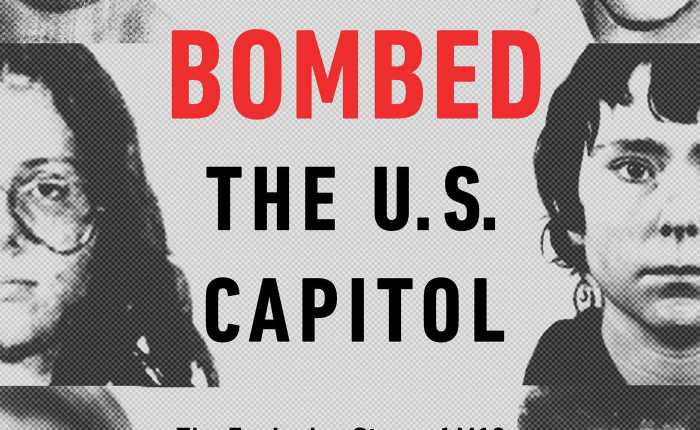
Tonight We Bombed the U.S. Capitol: The Explosive Story of M19, America’s First Female Terrorist Group by William Rosenau

Tonight We Bombed the U.S. Capitol: The Explosive Story of M19, America’s First Female Terrorist Group by William Rosenau

It is simple to pretend that people who perform shocking acts of violence are different than everyone else. It’s got to be something in their childhoods, we think, or maybe it’s a mental illness.

The most disturbing part of this book, and it admittedly has many, was that these women seemed so normal, just like you or me.

Photo by Andrea Piacquadio on Pexels.com

William Rosenau has combed through court files, newspaper articles and more to write Tonight We Bombed the U.S. Capitol, a non-fiction account of a radical leftist terrorist group. They planted multiple homemade bombs, robbed and killed people, all in the name of freeing the world from imperialism.

The majority of the group were highly educated, white women.

“They’d spent their entire adult lives embroiled in political struggles: protesting against the Vietnam War, fighting for black, Puerto Rican, and Native American liberation, and fighting against what they called U.S. ‘imperialism’ – that is, U.S. military aggression, political domination, and economic exploitation, particularly in the Third World.”

Photo by cottonbro on Pexels.com

Rosenau paints a careful picture to reveal how, step-by-step, the people involved in the group felt more and more marginalized and victimized to the point where they felt any and all actions were justified.

“Their vision of what this heaven on earth would look like was hazy, but one thing was certain: creating it would require nothing less than violent revolution. This vagueness about ultimate objectives is typical among terrorists.”

Photo by Pixabay on Pexels.com

There is so much information about a number of different people in this book that it can be overwhelming. But I think, ultimately, it is better to know what has gone on in the past because it affects the future in such a profound way.

“I discovered that during the 1970s and 1980s, the United States had waged an earlier ‘war on terror’ against violent domestic extremists, and it was during that period that the government created many of the counter-terrorism tools and approaches that continue to be used today.”

Photo by Rahul on Pexels.com

The privilege of living in a free society is that all manner of ideas can be discussed and embraced or dismissed depending upon their merits. I want equality, freedom from tyranny and opportunities for all people – no matter what you’re from, what you look like, or what your background is.

However, I won’t use violence to try and bring those ideals about. That seems to be the line in the sand for many. The people in this book didn’t have that line but they seemed to espouse higher ideals.

And what a tragedy that is. If only their brilliant minds had been directed towards methods of bringing about change that worked within society rather than against a nameless enemy, our country might have been better for all of them.

Thank you to NetGalley and the publisher for a free advance reader copy of this book. The brief quotations cited in this review may change or be omitted entirely from the final print version.

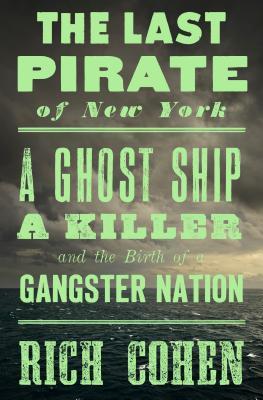
The Last Pirate of New York: A Ghost Ship, a Killer, and the Birth of a Gangster Nation by Rich Cohen

The Last Pirate of New York: A Ghost Ship, a Killer, and the Birth of a Gangster Nation by Rich Cohen

A fantastic and non-fiction account of Albert Hicks, the last man to be publicly executed in New York City and also one of the last to be tried and convicted for piracy. For fans of history, this is a must-read.

“Albert Hicks is the closest thing the New York underworld has to a Cain, the first killer and the first banished man, carrying that dread mark: MURDER. He operated so long ago, in a city so similar to and yet so different from our own, the word gangster had not yet been coined. He was called a pirate.”

Photo by Pixabay on Pexels.com

Beyond the fascinating true crime story about Hicks, Rich Cohen, the author, has brought New York City, mere years before the Civil War, to life. You get to learn about the streets, the notable people, the attitudes, the newspapers and more. It is a fun and, occasionally serious, romp through the past.

“New York Harbor is a network of islands and coves, seabirds and arsenical green marshland, the sort that looks solid until you step on it. … In the old days, every road on the island ended at the water, the sun rose at the foot of every street. Even now, when the fog rolls in, the waterfront is a sailor’s dream.”

Cohen doesn’t tell his story through the dry recitation of facts and figures. He has a storyteller’s way of weaving the details into the larger narrative. This is history as it was meant to be told.

“An 1850 police report estimated the presence of between four hundred and five hundred pirates in New York City. To the police, a pirate was any criminal who made his living on the water, attacking and robbing ships beyond the jurisdiction of the landlocked coppers…”

Photo by Chris Schippers on Pexels.com

Four and five hundred pirates! In New York City! This book changed my view of “The City So Nice They Named It Twice.” I suppose everybody and everything comes from somewhere. The early years of the city had more story to it than I imagined it could.

“Why had he killed everyone on the ship if money was his object? Because, he later explained, “Dead men tell no tales.”

Part of the reason why Albert Hicks may have been so forgotten is because of the extraordinary events that occurred just a short time later, the Civil War. It overshadowed everything that came before it, and, also, time moves on. I think about what was in the news last week and how our attention will already have moved on by next week.

As much as Cohen was able to discover about Hicks, his trial and what came next, I wish more had existed in the historical record about Hicks’ wife. I get that, beyond a few details, she basically disappeared from the record and that’s such a shame.

It made me wonder if Hicks has any descendants out there and if they know the story of one of their most notorious ancestors… I have relatives a few generations back who were adopted in New York City. Hicks’ history could belong to any of us who have question marks in our family tree.

As Cohen points out in his book, Hicks’ history, as shocking as it is, is also the early history of our country. Any shining point of light casts a shadow. This is one of those stories that took place in the shadows — a nightmarish memory from early New York City.

Photo by TheUknownPhotographer on Pexels.com

Recommended for readers of history and true crime. The Last Pirate of New York is brilliant.

Thank you to NetGalley and the publisher for a free digital, advance reader copy of this book. Please note that the brief quotations I cited in this review may change in the final printed version. The estimated date for publication is June 2019.

Thanks for reading! #TheLastPirateOfNewYork #NetGalley

Update June 21, 2019: The Last Pirate of New York is on sale now. The History Guy made an episode about Albert Hicks, the subject of this book. You can see the short documentary-style YouTube video here:

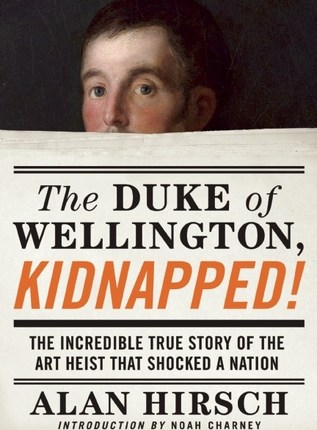
The Duke of Wellington, Kidnapped!: The Incredible True Story of the Art Heist That Shocked a Nation by Alan Hirsch

The Duke of Wellington, Kidnapped!: The Incredible True Story of the Art Heist That Shocked a Nation by Alan Hirsch

“The only successful theft from London’s National Gallery took place on August 21, 1961, when a brazen thief stole Goya’s Portrait of the Duke of Wellington.” Introduction

Alan Hirsch discusses an extraordinary art heist that took place in the 1960s, how it affected criminal law thereafter and even made an appearance in a James Bond movie. The thief sent authorities a series of ransom notes, demanding money for the return of the painting. This went on for years.

Photo by Pixabay on Pexels.com

“All the publicity led to a spike in visitors (from the usual August average of five thousand daily to more than seven thousand in the weeks following the theft), and reportedly even more people came to see the empty space where The Duke had hung than had come to see the painting itself.” pg 19

This potentially fascinating story becomes bogged down during the chapters discussing the trial and minutiae of the law. But, Hirsch is thorough, I’ll give him that.

“Where necessary, lawyers argued in the alternative: “My client did not take the painting, and if he did take it he intended to return it.”pg 125

I loved the information about the thief himself, which the world may not have seen before this book. Hirsch was given the man’s unpublished memoirs to add details to his side of the story.

“I understand you have information to give to police respecting the theft of the Goya portrait from the National Gallery in London.” “You don’t have to look any further, I am the man who took it,” the man calmly replied.” pg 107

Photo by Steve Johnson on Pexels.com

I also enjoyed the information about the ransom notes sent after the heist. That part of this book read almost like a movie. Who does that!

“In handwritten block letters, it began: “Query not that I have the Goya,” and it sought to prove the point by identifying marks and labels on the back of the canvas.” pg 52

Admittedly, I know very little about art history and had never heard of this event before reading The Duke of Wellington, Kidnapped!. But I think this would be a great read for anyone interested in history, especially art history. It may appeal even more if you’re interested in the development of criminal law in Great Britain.

Thanks for reading!

Here’s the History Guy episode I wrote about the theft of the Wellington portrait:

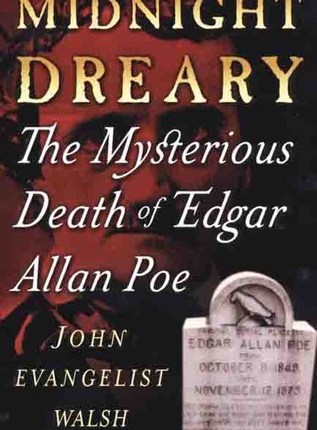
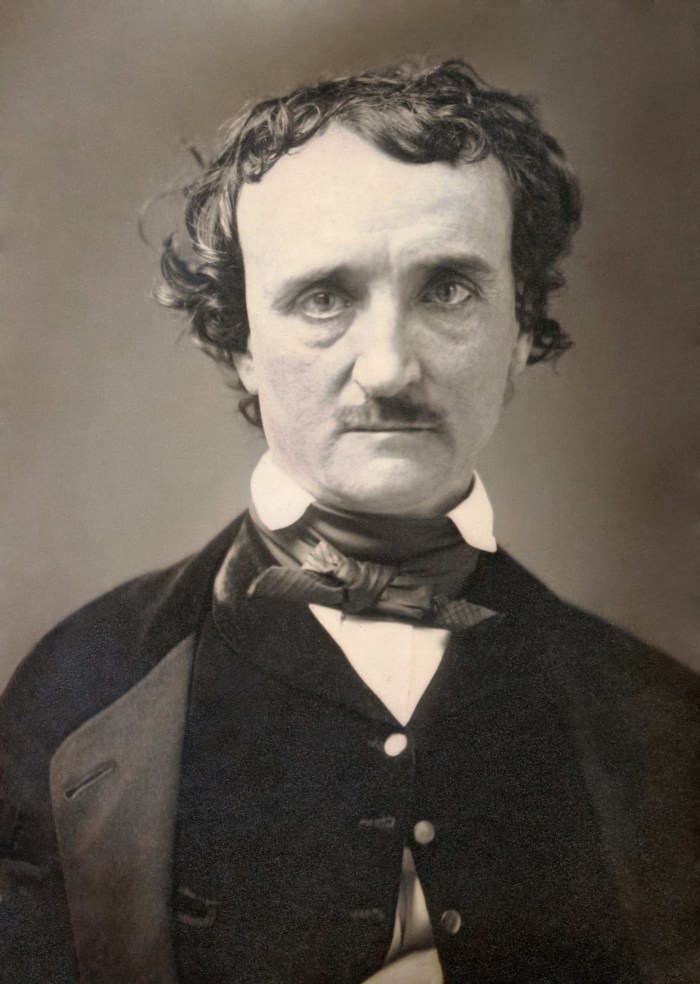
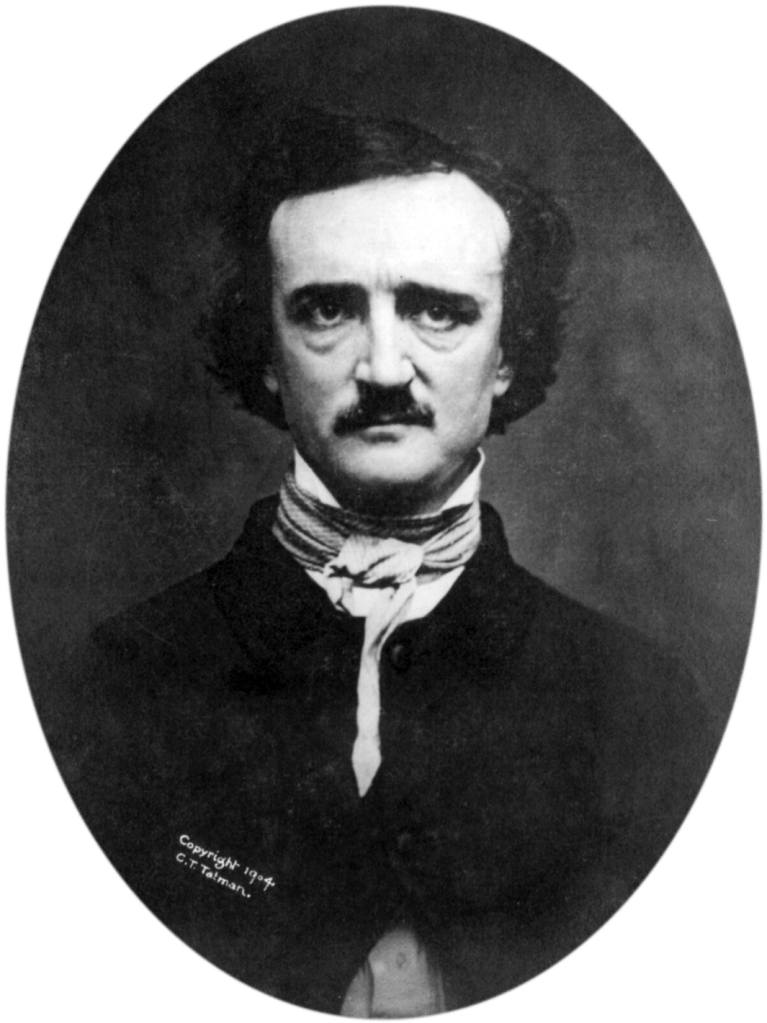
Midnight Dreary: The Mysterious Death of Edgar Allan Poe by John Evangelist Walsh

Midnight Dreary: The Mysterious Death of Edgar Allan Poe by John Evangelist Walsh

John Evangelist Walsh examines the last months of the life of Edgar Allan Poe and puts forth the hypothesis that he did not die of alcohol withdrawal, but something more sinister.

Poe, one of the most celebrated American authors, had a rough life. He was orphaned and adopted at an early age. He spent his life in poverty, scraping enough money from writing and editing jobs to keep himself fed, only to die mysteriously at age 40.

“We regret to learn that Edgar Allan Poe Esq. the distinguished American poet, scholar and critic died yesterday morning after an illness of four or five days. This announcement, coming so sudden and unexpected, will cause poignant regret among all who admire genius and have sympathy for the frailties so often attending it.”pg 34

Photo by Poppy Thomas Hill on Pexels.com

Walsh packs this book with details about Poe’s life and heartbreaks — that can be verified by historical documentation. After Poe’s untimely death, an author, perhaps more than one, who had been vilified by in Poe’s literary reviews, wrote angry and unflattering obituaries and biographies. It was an effort to black Poe’s name after his death which ultimately failed.

However, this “name blackening campaign” makes it difficult to separate fact from fiction.

Walter Colton, who was one of those who was kind to Poe after his death wrote: “I knew something of Poe. Something of the unfathomed gulfs of darkness out of which the lightning of his genius sent its scorching flashes.” pg 28

Perhaps that’s the lesson to take from Poe’s life, besides his astonishing literary achievements. Genius often seems to walk hand in hand with madness or emotional upheaval. I wonder why this is. Maybe, to touch the heights and depths required to write beautiful poetry, you have to go there? I don’t know.

“As always with this type of alcoholism, the unsettling fact was its combined certainty and unpredictability. After long periods of perfect sobriety, he seemed almost bound to fall again, and those who cared about him had to live with that relentless expectation.”introduction, pg xiv

Walsh’s hypothesis about the manner of Poe’s death was not convincing to me, but it gave me another angle to consider.

I had heard Poe may have died from “cooping” which was a practice where a man was kidnapped by a political party, kept drunk and imprisoned until election day, when he would let him free to vote as they directed. This idea holds water because he was found inebriated and ill outside a polling place and in clothing that didn’t seem to belong to him. I had also heard he was a victim of alcohol withdrawal.

Dear Sir, There is a gentleman, rather the worse for wear, at Ryan’s Fourth ward polls, who goes under the cognomen of Edgar A. Poe, and who appears in great distress, and he says he is acquainted with you, and I assure you, he is in need of immediately assistance.” pg 46

Walsh believes some relatives of one of the women Poe was involved with may have led to his untimely end.

Whatever happened, I can’t help but feel sad for the rest of us. Imagine what he could have accomplished with another 40 years on this earth.

It was many and many a year ago, 
In a kingdom by the sea, 
That a maiden there lived whom you may know 
By the name of Annabel Lee; 
And this maiden she lived with no other thought 
Than to love and be loved by me.

Recommended for fans of Edgar Allan Poe or readers who enjoy true crime.

Thanks for reading!

Here’s The History Guy episode I wrote about Edgar Allan Poe:

The Midnight Assassin: Panic, Scandal, and the Hunt for America’s First Serial Killer by Skip Hollandsworth

The Midnight Assassin: Panic, Scandal, and the Hunt for America’s First Serial Killer by Skip Hollandsworth

A fascinating, non-fiction examination of what may have been the first serial killer in the United States. “The Midnight Assassin” or “Servant Girl Annihilator” terrorized Austin, Texas, for about a year before disappearing. Then, when Jack the Ripper began running around London, some in Texas theorized that their killer had crossed the ocean.

The scariest part, like Jack the Ripper, is that this person was never caught or identified.

“Several journalists proclaimed in their articles that the murders were nothing less than an Edgar Allan Poe tale of terror come to life. One reporter nicknamed the killer “the Midnight Assassin… who strides at will over Austin’s sacred soil.” pg 4

Photo by Yigithan Bal on Pexels.com

Skip Hollandsworth uses newspaper articles and period pictures to make these historical events come to life. It is a story that you almost can’t believe. You can feel the citizen’s terror as the murders increase and no one is found.

“A woman has been chopped to pieces!” Wilkie yelled. “It’s Mrs. Hancock! On Water Street!” pg 139

This was before investigations were conducting using forensic evidence or even finger prints. It is interesting to see how authorities looked for the killer.

“… the idea that Jack the Ripper was a Texan made for sensational copy, and soon the newspapers in England were in on the frenzy. “A Texas Parallel!” cried the Woodford Times of Essex. “The monster has quitted Texas and come to London!” trumpeted the London Daily News…” pg 234

It is also a glimpse into the shadowy part of the human soul.

“I do not believe any man figures into the world’s history with such a terrible and horrifying distinction from the rest of humanity,” the reporter declared. “He may well give to history a new story of crime — the first instance of a man who killed in order to gratify his passion.” pg 173

Photo by Matthew T Rader on Pexels.com

The Midnight Assassin is a story of forgotten history that most of the world no longer remembers. The murderer’s name has now become a fairy tale to scare children…

“But people in Austin hadn’t forgotten about him — not completely. Children had devised their own nickname for the Midnight Assassin: they called him the “Axe Man.” They raced for their homes as the sun was setting, shouting to one another that the Axe Man was hiding in the shadows just beyond the light of the moonlight towers, waiting for them to come close so he could grab them.” pg 255

Recommended for readers of true crime and thrilling history.

Thanks for reading!

Here’s The History Guy episode I wrote about the ‘Midnight Assassin’ also known as ‘The Servant Girl Annihilator’:

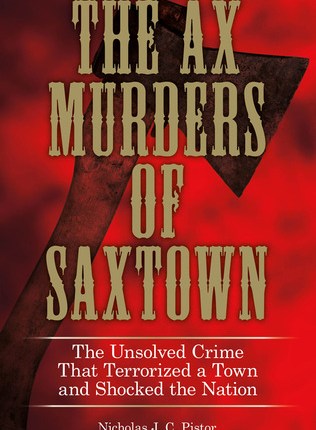
The Ax Murders of Saxtown by Nicholas Pistor

The Ax Murders of Saxtown by Nicholas Pistor

Full title: The Ax Murders of Saxtown: The Unsolved Crime That Terrorized a Town and Shocked the Nation

Imagine you’re a farmer in 1874. You live out in the middle of nowhere. There are no cars, electric lights… each night brings a blanket of silence to the world. Then, one fateful night, there’s a knock on the door. You answer it… and it’s an axe-swinging maniac!

Photo by Pixabay on Pexels.com

Sound like a cheesy horror film? For one farming family in Southern Illinois, that nightmarish scenario actually happened. A family of five, including two children, one a baby in her mother’s arms, were slaughtered in their home. It was called the most shocking crime since the murder of Abraham Lincoln and garnered national attention.

Nicholas Pistor examines original sources to share the story of the ax murders of Saxtown.

The grounds of the Stelzriede farm glowed with the orange light of oil lamps and handheld torches. A few hours had passed since the Stelzriede bodies had been discovered. The tough Saxtown farmers arrived one by one, and then in groups. … Many showed up on the property with their families. They were too afraid to leave them home alone. pg 44, ebook.

I would have been the same way. There had been extensive rains around the time of the murders and the roads in and out of town were nearly impassable. The residents of Saxtown believed the killer could still be among them. Eek.

Saxtown was a farming community where people primarily spoke German. Everybody knew everybody else and their business. The closest city, sheriff and bank were located in Belleville, almost nine miles north of Saxtown. At the time, they believed the motive for the killings was money. The Stelzriedes were known to loan out cash and it was thought that they kept a stash in their home.

Photo by Pixabay on Pexels.com

They also left a fairly large inheritance behind.

Pistor goes into how authorities conducted investigations during the late 1800’s. It made me wonder that they ever managed to solve anything. There were no forensics or sophisticated evidence gathering protocols.

Public awareness was important in solving crimes. An eyewitness could crack the case open before it began. Detective work relied heavily on what other people saw, a distinct challenge in the remote and lonely woods of Saxtown, where farms were spaced by miles and miles. pg 44, ebook

The saddest part of this non-fiction tale is, in my mind, how terribly this crime affected Saxtown. For decades, residents accused each other of the murders. There were lawsuits and whispers of restless ghosts on the Stelzriede property…

Photo by Skitterphoto on Pexels.com

If you’re looking for a true crime read, this is an interesting pick, plus you get to learn about a few other shocking crimes that took place in Southern Illinois and history.

And if someone knocks on my door tonight, I don’t think I’m going to answer it.

Thanks for reading!

Here’s an episode I wrote for The History Guy about the murders:

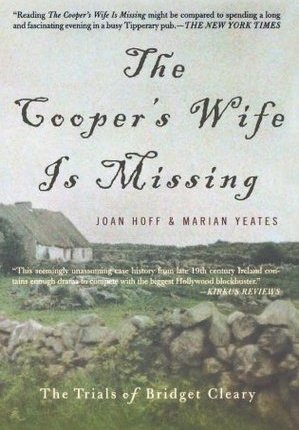
The Cooper’s Wife Is Missing: The Trials of Bridget Cleary by Joan Hoff, Marian Yeates

The Cooper’s Wife Is Missing: The Trials of Bridget Cleary by Joan Hoff, Marian Yeates

“Are you a witch, are you a fairy, are you the wife of Michael Cleary?”

In March 1895, after walking the fabled “fairy fort” of Kylnagranagh Hill in Tipperary County Ireland, Michael Cleary’s wife, Bridget Boland Cleary, returned home ill with a fever and headache. Michael Cleary thought she was exhibiting signs of fairy abduction. And he was determined to get her back.

What happened next highlighted the clash of paganism and Catholicism, and the ushering out of old superstitions to make way for the modern era. After days of abuse, he eventually burned Bridget until she died because he believed she had been replaced by a fairy.

Photo by Steven Hylands on Pexels.com

“… they continued to feed her herbs and to shake, slap, and swing her while she ‘screamed horrible’ and they shouted: ‘Away with you. Come back, Bridget Boland, in the name of God.'” pg 191

The Cooper’s Wife is Missing gives nearly complete context of Ireland in this era and the political and social pressures during the time period.

The crime was shocking in its brutality but also the stated motive. The press had a field day. It was 1895, the world was on the brink was technological, social and political change. And yet, they wrote, these rural Irish peasants still believed in fairies or practiced witchcraft. (Depending on which publication you chose to read.)

And it wasn’t just perpetrated by Michael Cleary. Bridget’s own family and neighbors participated in the “fairy trial” that led to her death. Nine people were found guilty at varying levels of culpability for the crime.

“As the police led him away, he shouted, ‘I am innocent.’ Cleary maintained it was not his wife he burned but a fairy.” pg 361

Photo by Gantas Vaiu010diulu0117nas on Pexels.com

The Cooper’s Wife is Missing jumps back and forth, giving the reader the history of Ireland, fairy lore and what historians believe happened to Bridget Cleary. That was my only complaint with this read, some of the story repeats itself, especially during the testimony at the trials.

But, overall, highly recommended for fans of true crime and history. This book has both of those in spades.

Thanks for reading!

Here’s the History Guy episode I wrote about Bridget Cleary:

I’ll Be Gone in the Dark: One Woman’s Obsessive Search for the Golden State Killer by Michelle McNamara

I’ll Be Gone in the Dark: One Woman’s Obsessive Search for the Golden State Killer by Michelle McNamara

Michelle McNamara was obsessed with the subject of this book. She believed that by using modern technology, a rapist and killer could finally be brought to justice.

She created maps and chased leads. She ran a true crime blog and this was one of her topics.

It haunted her. Then, tragically, Michelle died before this masterwork could be completed.

Her fellow researchers put I’ll Be Gone in the Dark together from her notes. It is a chilling but thorough portrait of the perpetrator of a series of unsolved crimes.

Photo by Donald Tong on Pexels.com

It also includes some autobiographical chapters to explain Michelle’s obsession with the man she named, “The Golden State Killer,” but also why she loves writing.

She writes about why she couldn’t stop researching and examines her complicated relationship with her mother: “No one would have taken more joy from this book than my mother. And I probably wouldn’t have felt the freedom to write it until she was gone.” pg 41

It is an amazing book. And, I believe, it has enough details that, if someone who reads this book knew that guy, he will be brought to justice at last.

He pointed a knife at her and issued a chilling warning: “Make one move and you’ll be silent forever and I’ll be gone in the dark.” pg 61

Gillian Flynn writes a stellar introduction: “I’ve always thought the least appreciated aspect of a great true crime writer is humanity. Michelle McNamara had an uncanny ability to get into the minds of not just killers but the cops who hunted them, the victims they destroyed, and trail of grieving relatives left behind.”Introduction.

Photo by kat wilcox on Pexels.com

This killer, whoever he is, is terrifying not only for the carnage he left, but the meticulous way he planned and carried out the murders.

He was organized and unhinged, as compared to other murderers whose passion and disorganization are their downfall: “It’s a tiny minority of criminals, maybe 5 percent, who present the bigger challenge- the ones whose crimes reveal pre-planning and unremorseful rage.” pg 14

I read this book in one sitting. It is that compelling.

But I paid for it during the night. Each creak, any small sound in the house and my heart would leap into my throat.

“He’s here,” my over-active imagination declared. “This is the end.”

Photo by KoolShooters on Pexels.com

It made it all too easy to understand the terror the murderer inflicted on his victims and the community he plagued. Multiple states away and decades removed from the crimes and I was petrified as well.

Recommended for brave readers, fans of true crime and anyone who wants to help solve an unsolved mystery.

Thanks for reading!

UPDATE: About a month after I wrote this book review, a man was arrested under suspicion of being the ‘Golden State Killer’.