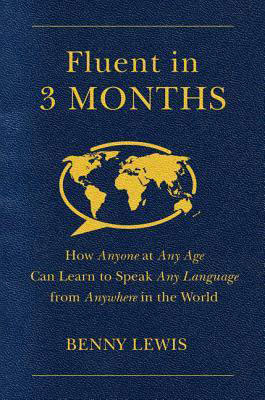
Fluent in 3 Months: How Anyone at Any Age Can Learn to Speak Any Language from Anywhere in the World by Benny Lewis

Fluent in 3 Months: How Anyone at Any Age Can Learn to Speak Any Language from Anywhere in the World by Benny Lewis

Fluent in 3 Months is a self help guide for anyone who aspires to speak more than one language.

Though it’s mainly filled with common sense ideas, I liked how the author, Benny Lewis, put it all together.

Lewis begins by sharing his own life experience with readers- that he felt he failed in his early attempts to learn another language through the traditional method of high school class. He also details how he spent six months in Spain with the idea that he’d absorb language like a sponge but then didn’t learn any Spanish.
Photo by RODNAE Productions on Pexels.com

The reasons why he feels like he was unsuccessful, because he was lacking the passion to learn and also didn’t speak the language to native speakers, are his main suggestions for language learning in this book.

“When it comes to language learning, there is no room for doubt: you decide your own success.” pg 24

Beyond those two main tips, Lewis shares shortcuts for learning tons of vocabulary quickly (visualization methods) and practicing immersion without going to the actual country. The latter, as he points out, has been made much easier since technology has brought distant countries into the comfort of your own home.

Through Skype calls or internet programs or even Netflix, language learners can interact with and immerse themselves in their target language.

Photo by Anna Nekrashevich on Pexels.com

“You must speak the language with other human beings.” pg 87

The task facing language learners has now become putting in the work to do so rather than traveling the distance for the opportunity.

I think Lewis is on to something with his insistence on speaking your target language from the start.

“As a result of speaking the language right away, students start to acquire the language rather than learn it as they would other academic subjects.” pg 6

I have a friend who’s niece majored in Spanish. But when they visited Spain together, she lacked the confidence to speak it when ordering dinner.

Photo by Adrianna Calvo on Pexels.com

If, from the first stages, learners were able to clear that initial hurdle, day-to-day use, and the successive ones of perfectionism or uncertainty, I agree that the whole language learning process would flow more easily.

Because, as Lewis points out, language is meant for communication with others. We’re rather missing the point if we acquire skills on paper that can’t be put to real life use.

Highly recommended for language learners of any age.

And thanks for reading!

Mystical Places by Sarah Baxter, Amy Grimes

Mystical Places by Sarah Baxter, Amy Grimes

Throughout history, humankind has told each other stories. Sometimes these stories center on places that become sacred through their association to the legends that are told.

Sarah Baxter highlights 25 such locations from all over the world. Each brief chapter includes a short description of the site and the stories associated with it.

Photo by diana plotkin on Pexels.com

“In these pages we meet mythical kings, sacred summits, and enchanted architecture, plus a cast of elves, giants, ghosts, golems and sea creatures without which our planet might be a more logical and well-reasoned place but also less colourful and compelling.” pg 6, ebook.

I thoroughly enjoyed armchair traveling from Africa to Canada, China to Portugal, and more. This book gave me so many ideas for places I want to see when I feel comfortable boarding a plane again.

And, in the meantime, there’s always the possibility of travel-filled day dreams.

In the chapter about Cadair Idris in Wales, Baxter writes: “It’s said that on the very crown of the peak there is a long, wide platform of stone slabs that is the Bed of Idris and that whoever sleeps on that bed will suffer one of two fates: they will wake up either as the most profound poet or completely mad.” pg 18, ebook.

Photo by Adrian Dorobantu on Pexels.com

Worth the risk, right?

I was also taken with the descriptions of the Stone Circles of Senegambia, thousands of ancient stone monuments found in Senegal and The Gambia.

“Stories passed down the generations claim that the stones were put in place by the gods at the very dawn of time. Other legends suggest they are the gravestones of an ancient race of giants or chiefs and that a curse will fall on anyone who dares disturb them…” pg 76, ebook.

I had never heard anything about these circles, despite taking a class in ritual and religion in prehistory from Oxford. I am also fairly well-read in world mythologies yet there were surprises on almost every page.

Photo by Oleg Magni on Pexels.com

Highly recommended for travelers, armchair or otherwise, who are seeking destinations of mystical significance or anyone who wants to learn about legends from around the world. The only trouble that may be encountered for the mystical tourist is the remoteness of some of the locations.

Thank you to NetGalley and the publisher for a free advance reader copy of this book. The brief quotations I cited may change or be omitted entirely from the final version, which I believe is slated to be published tomorrow.

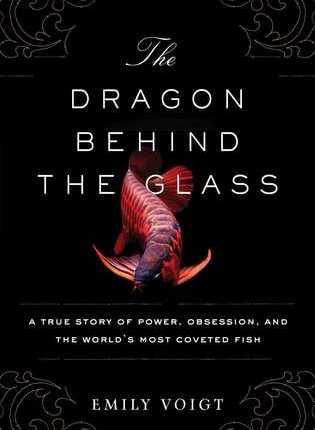
The Dragon Behind the Glass: A True Story of Power, Obsession, and the World’s Most Coveted Fish by Emily Voigt

The Dragon Behind the Glass: A True Story of Power, Obsession, and the World’s Most Coveted Fish by Emily Voigt

The Dragon Behind the Glass documents journalist Emily Voigt‘s descent down the rabbit hole of fish collecting, money, power, and scientific exploration in some of the most remote locations in the world.

“A pair of whiskers juts from its lower lip, and two gauzy pectoral fins extend from its sides, suggesting a dragon in flight. This resemblance has led to the belief that the fish brings prosperity and good fortune, acting as a protective talisman to ward off evil and harm.”

(Fish pictured below is not an arowana.)

Photo by Chevanon Photography on Pexels.com

Though it starts off with a major hook, Voigt takes the reader to a crime scene where a pet store owner appears to have been killed for his shelf of rare fish, the book begins to meander after that and never gets back to the compelling pace of the opening.

That is not to say there aren’t some fascinating history and fish-related trivia tidbits. In fact, the majority of the book consists of that.

“… the keeping of pets reflects our hunger for status symbols, for what the philosopher Jean-Paul Sartre called the ‘carnal, clinging, humble, organic, milky taste of the creature,’ which underlies all luxury goods. The modern pet shop first appeared in American cities in the 1890s; and with it began the mass importation of exotic animals from Asia and South America.” pg 21, ebook.

Photo by La Miko on Pexels.com

Voigt explores the history of aquariums, pet-crazes throughout history, and the ascendance of the arowana as the pet fish of choice in the East. Complicating matters, the arowana has become incredibly rare in the wild, partially due to its desirability among collectors, but also because of the destruction of its native habitat.

“The most highly coveted – or at least the traditional favorite – is the legendary Super Red, native to a single remote lake system in the heart of Borneo. … As late as 2008, researchers with Conservation International reported that rural Cambodians were still eating greens, even as wild populations plummeted due to over-harvesting for the aquarium trade.” pg 30, ebook

Like other rare and precious commodities, the interest and money surrounding the arowana has led to some shady dealings. I wasn’t too surprised by the alleged criminal activity Voigt describes among collectors. But I was flabbergasted by the fierce competition among some scientists in the rush to catalog and name the increasingly rare fish.

Perhaps that’s naive of me. Scholars jockey for prestige as much as anyone else. I suppose I’ve never stopped to think about it.

Photo by Andrea Piacquadio on Pexels.com

I was also surprised by how many species are out there that science has not studied yet.

“When I first set out to report on the Asian arowana, I figured I would start by finding the researcher studying the species in the wild- only to realize no such person exists. The popular illusion that modern science has the entire living world covered, that there is an expert analyzing every crevice, is far from true.” pg 205, ebook

Recommended for readers who are interested in a detailed study of fish, travel and history. It’s a slow-paced adventure, and not for everyone, but there are some treasures to be found if you stick with it.

Thanks for reading!

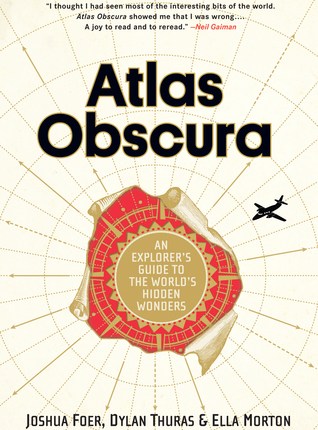
Atlas Obscura: An Explorer’s Guide to the World’s Hidden Wonders by Joshua Foer

Atlas Obscura: An Explorer’s Guide to the World’s Hidden Wonders by Joshua Foer

Atlas Obscura reminds readers that the world is a weird and wonderful place full of amazing things to see. It examines extraordinary places from across the globe and includes informational tidbits about each.

This book could be handy as a reference guide for choosing an exotic locale for a vacation or for someone who is seeking information about places of historical significance for a certain YouTube channel that covers forgotten history.

Photo by ArtHouse Studio on Pexels.com

Or, if neither of those things are your jam, it would make a lovely coffee table book. I found curious information about places I’d never heard of on almost every page.

Here’s Atlas Obscura author Joshua Foer giving a TedTalk about ways to improve your memory:

Now when you visit all of these incredible places, you’ll remember enough to share a story about it. 🙂

Highly recommended for travelers- traditional and of the armchair variety.

The 25 Best World War II Sites, European Theater: The Ultimate Traveler’s Guide to Battlefields, Monuments and Museums by Chuck Thompson

The 25 Best World War II Sites, European Theater: The Ultimate Traveler’s Guide to Battlefields, Monuments and Museums by Chuck Thompson

Excruciatingly detailed travel guide for those interested in World War II. My husband, The History Guy on YouTube, thought it was amazing.

I’m married to someone who is obsessed with war, war machines, war documentaries, military uniforms and, well, you get the idea. This one time, I went to England just to wander around a tank museum with him. A tank museum. This is true love, people. Was I bored? Yeah. Did I care about any of the tanks? No. Could I think of a million other things I’d rather be doing? Yeah. And yet, there I was- the hippie in the tank museum.

Me at the Tank Museum. Really, it’s me.

So, my plan is: convince him that he needs to go on a tour of the European Theater- all of the battle fields in order. It will probably take him two, three months, say, six months to do it right. I will suck it up and go with him, somehow finding a way to survive half a year in Europe. HALF A YEAR!

Think of the libraries, the museums… oh my God, the pubs! The art! The culture!

This book is step one. 🙂 Check back with me in twenty years or so and I’ll let you know how the war lover and the hippie’s European tour went. Maybe we’ll end up writing a tour guide of our own. Half of the book will be war stuff, the other half will be a tree-hugging, far-out love fest. Heck, I’d read it.

If you’re interested in reading another book by Chuck Thompson, I’d recommend Smile When You’re Lying: Confessions of a Rogue Travel Writer. It is more of a collection of stories than a travel guide, like this one, but more amusing in my opinion.

Thanks for reading!

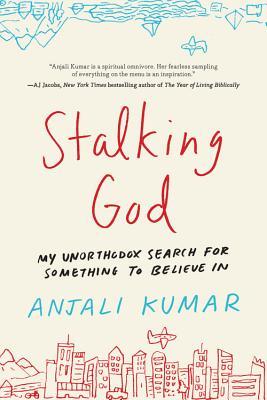
Stalking God: My Unorthodox Search for Something to Believe In by Anjali Kumar

Stalking God: My Unorthodox Search for Something to Believe In by Anjali Kumar

Anjali Kumar is a lawyer who is used to having all the answers. After she had a daughter, Anjali realized she knew very little about the big questions: why are we here? What is it all about? Is there a God?

“In 2010, when my daughter Zia was born, I decided that I needed to find God.” loc 24, ebook.

Anjali went on a quest to find out the answers, not only for the sake of her daughter, but also herself. She touches all the bases – from meditation to faith healing to Burning Man to yoni worship – Anjali leaves no stone unturned in her search to find what is real.

Photo by Artem Beliaikin on Pexels.com

“Along the way, I learned to chant, to meditate, and to marvel. I wrestled with my own identity, from my ethnic and cultural roots in India, to my femininity, to my role as a woman, daughter, mother, and wife. … I fancied myself an explorer, no different really than Magellan or Columbus. I was looking for a new world.” locs 148-163.

It’s a fascinating memoir.

Before each experience, Anjali puts in her research in an effort to find the science behind the beliefs. It’s not always as concrete as she would like it to be, but Anjali tries to engage her brain and her heart in her quest.

This is before she goes to her first “para-tan sounding”: “According to string theory, the entire universe is basically humming – all of it and all of us. Add that to the fact that the chanting of mantras has a long, compelling spiritual history, that cancer researchers are using sound- high-intensity focused ultrasound- to successfully destroy prostate cancer cells … and this whole Paramji thing starts to look like it might be grounded in a bit of hard science…” loc 500

Photo by Nataliya Vaitkevich on Pexels.com

Anjali tries to keep an open mind, even when things sound very strange: “One thing I had to be cognizant of… was how difficult it is as an outsider to come to terms with what are easy to perceive as the odd behaviors and strange beliefs of ‘other people.’ … as outsiders we have no idea what those behaviors and traditions stand for or mean.” loc 904.

She finds layers of meaning, even when particular experiences weren’t all that she hoped they would be. Anjali also experiences a few surprises along the way.

“I was looking for a theory of everything spiritual for Anjali and Zia. And yet, so far, just like those physicists had failed to find a theory of everything in the entire universe, I had failed to find a theory of everything for my own spirituality.” loc 1343.

Photo by Pixabay on Pexels.com

And she never gives up because: “A spiritual home is something that we all have to find for ourselves.” loc 2853.

Recommended for seekers everywhere. Anjali’s discoveries may not be earth-shattering, but they’re real and worth the read.

Thank you to NetGalley and Seal Press for a free advance reader copy of this book. Reminder: the short quotations in this review may change or be omitted in the final printed version.

Thanks for reading!