Trance-Portation Learning to Navigate the Inner World by Diana L. Paxson

Trance-Portation Learning to Navigate the Inner World by Diana L. Paxson

“The goal of this book is to teach skills that underlie the spiritual practices of a variety of traditions, from the ceremonial to the shamanic. But acquiring the ‘gifts of the spirit’ cannot be an end in itself. They have to be used.” pgs xv-xvi

Author Diana Paxson pulls from a variety of spiritual traditions in an effort to teach readers the basics of going into trance.

The first few chapters are about how to prepare yourself, set up cues for trance work, and to do the exercises “safely” which include setting up wards and how to come back out of trance.
Photo by Plato Terentev on Pexels.com

“All of the senses can provide cues for psychic or magical work. By repetition, we condition ourselves to move into a particular state when we experience a specific stimulus.” pg 64

The next chapters delve into what practitioners may find once they’re in trance and how to navigate this other state of consciousness. This includes how one might find guides, how to behave, and how to deal with the various entities that may be encountered.

The final parts of the book tackle the difficult topic of spiritual emergencies and give some suggestions for group trance work.
Photo by Polina Tankilevitch on Pexels.com

Overall, this book covers a wide variety of topics that spiritual practitioners may need when they begin the practice of going into trance. In that way, it could be an invaluable addition to your library.

On the other hand, I didn’t agree with all of the advice given. It didn’t make sense with my experience of the trance work I’ve completed and I think it might scare beginners away.

The particular advice that I’m referring to is the idea that if you come out of trance too fast that you might leave parts of your soul behind, which you will then need to retrieve before you are able to feel like yourself again.

I understand, from the book, that soul retrieval is a common enough shamanic practice. Still, I feel like we are doing beginners a disservice to plant in their minds the idea that this is something that could happen.

Why not instead say it is best to come out of trance slowly and leave it at that? Anyone who falls asleep knows that it is more pleasant to wake up slowly than to be shaken to consciousness. Do we leave portions of ourselves behind when we’re jolted awake by an alarm clock? I say no.

Photo by Aphiwat chuangchoem on Pexels.com

In addition, when Paxson talks about the kinds of entities one may encounter in trance, including animal guides or even gods, she gives them all of the foibles that go along with being a part of the human race. In the section about developing a relationship with a god or goddess, she talks about how practitioners may have to deal with divine jealousy.

I think it might be better to say, you bring your entire self with you when you go into trance. Your strengths and failings are on full display in your interactions with what or who you find there. Again, this avoids planting any negative expectations for practitioners while still providing ample warning.

Recommended with reservations for spiritual seekers who are looking to add trance work to their repertoire.

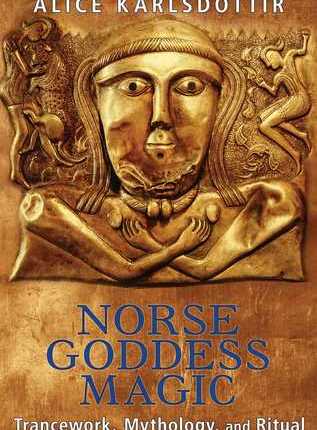
Norse Goddess Magic: Trancework, Mythology, and Ritual by Alice Karlsdóttir

Norse Goddess Magic: Trancework, Mythology, and Ritual by Alice Karlsdóttir

This is a new age, non-fiction book about trance work, which can loosely be described as deep meditation. I practice a type of meditation called “pathwalking” which is basically just another word for the same kind of practice. This book is about someone who focuses on the Norse religion exclusively.

I read Norse Goddess Magic not for the details about the Norse pantheon (which admittedly I know very little about, so it was very interesting and educational) but mainly for the author’s experience in trance work. To my disappointment, she spends pages and pages explaining what going into trance is, how she does it, and then only a few paragraphs in each chapter detailing an actual trance.

Photo by Lucian Potlog on Pexels.com

I wanted the book to be mainly trance work. That is what made it unique and original- her personal sojourns into “another world” and what she brought back. The rehashing of all of the old mythologies were, as I said, interesting, but if I wanted to read them, I could have picked up any book about Norse mythology.

I also felt like Alice spent a lot of time explaining why trance work is a valid method of information gathering and defending her opinion on why she believes that. I agreed with her completely so I just read through the pages thinking- preaching to choir, get to the trances! So, that was a frustration.

A part of the book that I disagreed with was Alice’s assertion that it is “difficult” to go into trance. In my experience, if you believe something is difficult to do be that hypnosis, meditation, whatever- you’re putting stumbling blocks on your path that don’t need to be there. Going into trance is as simple as watching your breath flow in and out. If you breathe, you can go into trance. I felt like she did a disservice to beginners with that particular teaching.

Photo by Daisa TJ on Pexels.com

I felt like Alice’s trances were so closely focused on one goddess or aspect of the goddess, that she didn’t really get all that she could out of her trance work or interactions in the other worlds. She read all of this information to prime her subconscious mind and then… it felt like not much happened.

To be fair, she did see the person she was looking for, describe their physical characteristics, express the emotion that they evoked in her, and then, maybe, have a brief interlude with them. In my personal trance work, there’s more interaction in the world itself but that could be the difference of our focus.

Alice said from the start that she wanted to know more about these different goddesses and form a working relationship with them whereas I’m just curious to see what’s out there. I’ve run into Roman gods and goddesses, Native American figures, Tibetian locations, some Egyptian and Hindu gods… but again, I’m not focused on one or another of the world religions. With an open mind, it’s incredible the types of things that you see.

Photo by carol wd on Pexels.com

So, I don’t believe in priming your mind with symbols before you do your work. Pick where you’re going or who you want to see, and just go. Personally, I use the symbols on the Tree of Life or tarot cards. Believe that you can do it. Figure out what works for you. And do it.

Then write it down so that I can read it. 🙂 Because I will.

Thanks for reading!

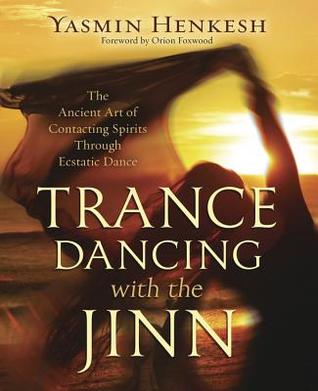
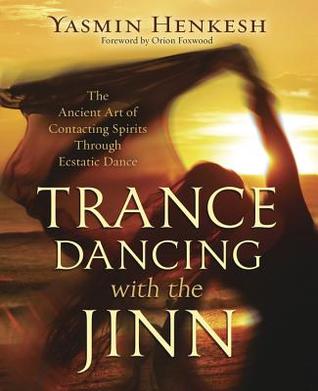
Trance Dancing with the Jinn: The Ancient Art of Contacting Spirits Through Ecstatic Dance by Yasmin Henkesh

Trance Dancing with the Jinn: The Ancient Art of Contacting Spirits Through Ecstatic Dance by Yasmin Henkesh
trancedancing

I read The Golem and the Jinni a few months ago and realized that I knew next to nothing about the mythology of the Jinn. Not that I’m an expert on golems either, but I had at least been exposed to the idea.

Trance Dancing with the Jinn is a book about kinetic meditation (trance dancing) but it also documents the history of the Jinn as written in the Quran and other sources as well as the biological and historical reasons that humans go into trance.

In addition to the mythology and biology, I learned about how trance dancing at meetings called “zars” is an outlet for women who have very little control over any other aspect their lives in Northern Africa.

The author is clearly a believer in the existence of “the Invisibles” but, if you don’t share the same beliefs, this book still has plenty of fascinating information for those interested in cultural, religious, or feminist studies and ritual dance.

The author asks the reader to have an open mind: “Do you believe in Invisibles or do you consider them an outdated tradition from an ignorant past? What if you had a safe, drug-free way to see for yourself? Would you be curious enough to try it- even though the method takes practice and you probably won’t succeed on your first attempt?” loc 200.

Yeah, I’m down for that.

I don’t think it is that difficult to entertain the idea that there may be intelligences that exist that can’t be perceived in normal states of consciousness.

As Henkesh reminds us: “According to NASA’s website, “Everything on Earth, everything ever observed by all our instruments, all normal matter- adds up to less than 5% of the Universe… The rest is a complete mystery, but an important one. Roughly 68% of the Universe is dark energy, while dark matter makes up about 27%.” This energy and matter are called “dark” because they do not reflect light… or interact with electromagnetic forces. We only know they are there by their effects on gravity…” loc 233, ebook.

Photo by Pixabay on Pexels.com

Only 5% has been observed- that leaves a whole lot that we haven’t even looked at yet.

Western researchers are still discovering how and why trance works, but they at least acknowledge that it exists: “Neurologist Oliver Sacks once wrote, “Normal waking consciousness, rational consciousness as we call it, is but one special type of consciousness, whilst all about it, parted from it by the flimsiest of screens, live entirely different potential forms of consciousness.” loc 267.

The most fascinating part of this book was the emotional outlet that trance dancing has allowed women for hundreds of years: “… thousands of women in Egypt still turn to the zar when modern medicine fails them. If doctors cannot find the cause of their physical or mental ailments, they assume supernatural forces are involved. … Diagnostic zars can last anywhere from a day in Egypt to a week in Sudan and Ethiopia.” loc 2530-2548

I had never heard of this and looked up some examples of zar/trance dancing on YouTube. Go ahead, take a look:

I can see how such flowing, uninhibited movements would feel therapeutic now, so I can’t imagine the relief I’d feel if I was not allowed to have a job or leave the house without a male by my side. I’d probably be trance dancing non-stop.

Some further reading/listening for those interested in trance: Ecstatic Body Postures: An Alternate Reality Workbook, Seeking Heaven, or Brainwave Journey.

Thank you to NetGalley and Llewellyn Publications for a free digital copy of this book! And, thank you for reading.