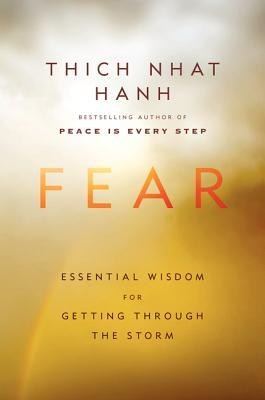
Fear: Essential Wisdom for Getting Through the Storm by Thich Nhat Hanh

Fear: Essential Wisdom for Getting Through the Storm by Thich Nhat Hanh

In Fear: Essential Wisdom for Getting Through the Storm, Thich Nhat Hanh simply and succinctly illuminates the Buddhist path beyond fear into an existence of freedom and joy.

“Nobody can give you fearlessness. Even if the Buddha were sitting right here next to you, he couldn’t give it to you. You have to practice and realize it yourself.” pg 6
Photo by Aleksandar Pasaric on Pexels.com

This book is more than theory, parables and anecdotal stories. Hanh also includes various meditations to assist in the effort.

“When the Buddha was very old, just before he died, he said, ‘My dear friends, my dear disciples, don’t take refuge in anything outside of you. In every one of us there is a very safe island we can go to. … That is a place where you can take refuge whenever you feel fearful, uncertain or confused.'” pg 71

He dissects the various forms fear can take in our lives- from fear of death, grief, anxiety about the future to reconciling with painful emotions from the past.
Photo by David Bartus on Pexels.com

My main takeaway from the book was, to deal with any kind of fear, we need only to approach it with mindfulness and compassion for ourselves and the suffering of others.

“We don’t try to grab on to the pleasant sensation, and we don’t try to push it away. We just acknowledge its existence. When a painful feeling comes, we do the same thing. … A feeling is just a feeling. And you are much more than that feeling.” pg 135

Hanh reminds readers that we are more than the temporary thoughts and feelings that cause so much havoc on their way through our minds and hearts. Our true nature is something else.

My favorite metaphor that Hanh employs to remind readers of this true nature is his comparison of a life to a wave.

“The wave is always water; it doesn’t ‘come from’ water, and it doesn’t go anywhere. It is always water; coming and going are just mental constructions. … Birth and death, coming and going, are just concepts. When we are in touch with our no-birth, no-death nature, we have no fear.” pg 50

Photo by Emiliano Arano on Pexels.com

I appreciated the reminders and found a lot of comfort in these pages. I hope other readers find the same.

Recommended for readers who are interested in learning and utilizing Buddhist philosophy and techniques to overcome any fear or other unpleasant emotion that may be in their lives.

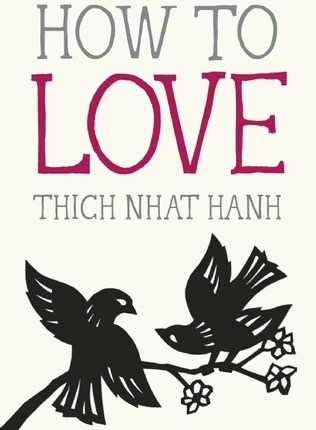
How to Love (Mindfulness Essentials, #3) by Thich Nhat Hanh

How to Love (Mindfulness Essentials, #3) by Thich Nhat Hanh

Thich Nhat Hanh, monk and spiritual leader, has written a short series of books he calls “Mindfulness Essentials.” This entry is all about love. You might ask yourself, what could a monk possibly know about love? Turns out, plenty.

Hanh applies the mindfulness techniques he’s learned over his lifetime of spiritual practice to the potentially thorny pathways of love, and the result is a gem of a read.

Photo by Asad Photo Maldives on Pexels.com

He counsels lovers to bring happiness to each other through being present in the moment and sharing your appreciation with each other. For example, if someone is distracted or worried, Hanh says you should draw their attention to the physical beauty of the world around them. In this way, you anchor the other in the present moment and ease the suffering of their busy mind.

This type of presence is a gift that you can give to anyone at anytime. And it doesn’t cost anything.

Hahn describes four defining traits of love as loving-kindness, joy, compassion, and equanimity. Then he examines these traits in detail so readers can ponder the mystery of love and see where, potentially, we may be falling short of these ideals.

Photo by Jasmine Carter on Pexels.com

He teaches all love begins with self love and walks hand-in-hand with spiritual practice. Through deep listening and the establishment of intimacy, Hahn believes love heals through empathy and “karuna,” a term that describes suffering with another and then doing what you can to end that suffering.

In addition, don’t take the other person for granted or make assumptions about what they may need. It is only through open communication that, Hahn believes, love lives.

He makes it sound so easy. I wish it was.

Photo by Pixabay on Pexels.com

Recommended for readers looking to learn about the spiritual side of love in a quick and easy read. Hanh doesn’t waste words and I am always in awe of what teachings he has to impart.

Thanks for reading!

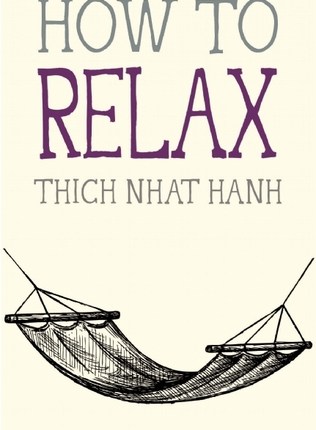
How to Relax by Thich Nhat Hanh

How to Relax by Thich Nhat Hanh

There are very few spiritual leaders who can communicate with the simplicity and succinctness of Thich Nhat Hanh.

As wise as the Dalai Lama is, I’ve only been able to really understand one of the books he’s written and I think that was because he had a co-author. It seems like he contemplates this stuff so much, you know, like it’s his job, that when he’s just trying to talk to a regular person about it, there’s a gap that can’t be crossed.

Photo by Mikhail Nilov on Pexels.com

That isn’t a problem in Thich’s Mindfulness Series.

Thich encourages the reader to find the quiet within. He says: “We already have calmness in us; we just need to know how to make it manifest.” pg 14, ebook.

How do we do this? Through focus, breathing, mindfulness, and relaxation.

One of Thich’s methods for connecting with inner peace that really resonated with me was that we should take “lazy days”: “A lazy day is a day for us to be without any scheduled activities. We just let the day unfold naturally, timelessly. … When we have unscheduled time, we tend to get bored, seek entertainment, or cast about for something to do. A lazy day is a chance to train ourselves not to be afraid of doing nothing. You might think that not doing anything is a waste of time. But that’s not true.” pg 32, ebook.

Not to brag, but I rather excel at “lazy days”.

Photo by Rachel Claire on Pexels.com

Anyone out there have a partner who snores? I do. Thich invites us to incorporate the snores into our relaxation practice.

“Sometimes you have to share a room with someone who snores. You may get irritated. But with mindfulness you can bring about compassion. You can lean on the sound of snoring in order to go to sleep. Listen and say that this brings you home to the here and now.” pg 42, ebook.

I think this could be a difficult exercise, but I’m willing to give it a try. 🙂

Ever tell yourself that relaxation/meditation is too hard? Thich addresses that concern too: “When you sit and watch television, you don’t make any effort. That’s why you can sit there for a long time. When you sit in meditation, if you struggle, you won’t be able to sit for very long. Please imitate the way you sit in your living room. Effortlessness is the key to success. pg 76 ebook.

If you can watch tv, you can meditate. It’s silly but it reminds me of that line from Dodgeball: “if you can dodge a wrench, you can dodge a ball”.

Highly recommended for anyone looking to introduce more relaxation into their lives and isn’t that everybody?

Some read alikes: Relax RX: A Self-Hypnosis Program for Health and Well-Being by Steven Gurgevich (very relaxing, all you have to do is listen), Guided Mindfulness Meditation by Jon Kabat-Zinn (simple and relaxing), or 10% Happier: How I Tamed the Voice in My Head, Reduced Stress Without Losing My Edge, and Found Self-Help That Actually Works by Dan Harris (a regular guy teaches himself to meditate- a light hearted memoir).

Thanks for reading!