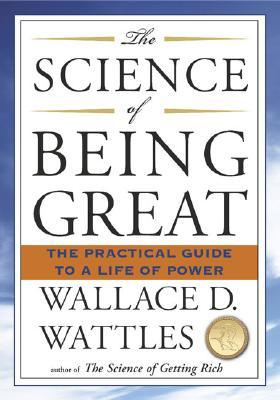
In the latest installment of “Heidi re-listens to all the old audiobooks on her hard drive”, I gave The Science of Being Great another chance to share its wisdom with me.
Couched in religious language, Wallace Wattles shares his new age viewpoint long before modern audiences became enamored of it with the mammoth success of The Secret. In fact, that’s how the publisher marketed this older manuscript, as source material for The Secret.

I suppose it could be considered “source material” in that Wattles teaches enlightenment is to be found within. But he has very little in it about the guiding power of emotions, which was a cornerstone of The Secret. Wattles book is more along the lines of: You are a god walking among gods and should act accordingly. And don’t stick your nose into other people’s business.
Some of his advice is more tricky, such as: see the world in a perfect state of becoming. Nothing has gone wrong or could go wrong. Everyone and everything is perfect for where they are and everything has the chance to get better.
That’s hard stuff to swallow if you take a second to think about it. “The world is in a perfect state of becoming.” Maybe I’ve become too accustomed to looking for problems rather than relying on faith that everything is working out how its supposed to.

Other parts of this book sounded similar to more modern new age authors with these ideas: Books and people will be drawn to you when you need them. Go where your inner feelings tell you to go. As you think, so you will become. Thoughts are things, etc.
By comparing and contrasting this book with other authors, I’m not intending to denigrate those teachings. I wouldn’t want to dismiss the power of the mind and emotions. Using just those things, people can certainly change their lives.
It’s just that the way they are packaged in The Science of Being Great may make it difficult for some readers to absorb it. Take the word “God” for example or “the Father”. Wattles throws those two around in every other sentence or so. That could be problematic for people who have struggled with religion or have involving it. Or those who don’t believe religion and science can mix.

And the whole book takes itself so seriously. Even the title “The Science of Being Great”, reminds me of an encyclopedia entry or something. I’ve had the most success in my own personal life when I’ve lightened up and stopped making such a big deal out of things.
In conclusion, is there helpful information in this book? Yes. Would I recommend taking the time to go through it to find those gems? It depends on how you learn best, I guess. Personally, I’d recommend Esther Hicks if you want the same sort of new age teachings with less religious trappings and a bigger dose of fun.
Thanks for reading!
- The Ballad of a Small Player: a Metaphysical Movie Review
- Otherwhere: A Field Guide to Nonphysical Reality for the Out-Of-Body Traveler by Kurt Leland
- Psychic Dreamwalking: Explorations at the Edge of Self by Michelle Belanger
- Archetypes on the Tree of Life: The Tarot as Pathwork by Madonna Compton
- The Goddess and the Shaman: The Art & Science of Magical Healing by J.A. Kent
 The Help Desk Book Blog