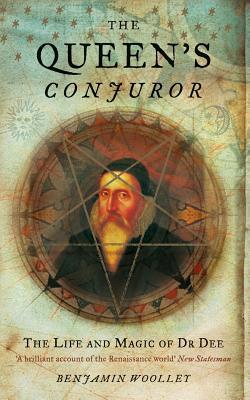
The Queen’s Conjuror: The Science and Magic of Dr. John Dee by Benjamin Woolley

The Queen’s Conjuror: The Science and Magic of Dr. John Dee by Benjamin Woolley

The Queen’s Conjuror is a biography of Dr. John Dee, a fascinating and much-maligned Renaissance man who was, among other things, Queen Elizabeth I’s personal astrologer.

“And for these and such like marvellous acts and feats, naturally, mathematically, and mechanically wrought and contrived: ought any honest student and modest Christian philosopher be counted and called a conjuror?” pg 15

He had interests in astrology, science, mathematics and the occult, which, to modern eyes, may seem strange. But Dee viewed the inner workings of nature and the universe as a type of magic and his studies of it, through the use of science, was another way that Dee worshiped God.

Photo by Tima Miroshnichenko on Pexels.com

“Queen Elizabeth, a symbol of Protestant sovereignty, told the French Ambassador Andre Hurault: ‘There is only one Jesus Christ… the rest is dispute over trifles.’ This, it seems, was Dee’s view as well.” pg 45

Part of Dee’s study of nature was an attempt to find a “universal language.” This universal language, Dee believed, was told to the Biblical Adam by God in the fabled Garden of Eden before the fall from grace. Dee hypothesized if a scientist could find this universal language, giving the secret name of beasts, plants and everything in creation, that it would unlock the secrets of the universe itself.

“In other words, Dee thought that the ‘astronomical’ symbols appeared to be the relics of a long lost universal language that transcended national and, by implication, religious barriers.” pg 75

Photo by cottonbro on Pexels.com

In addition to his legacy of mysticism and the Enochian alphabet, Dee is credited as the first man to formulate the idea of a ‘British Empire’ and he suggested that England develop its navy as a key to upholding that empire.

“The navy would become the ‘master key’ of English military strength, England would challenge the Spanish — to spectacular effect in its defeat of the Armada in 1588 — North America would be colonized, a British Empire would emerge, and the expeditions that Dee had in the last few years been helping to plan would lay its foundations.” pg 123

Another reason I admire Dee — he amassed one of the largest libraries in Europe. Unfortunately, his home was looted during a long sojourn on the Continent.

Photo by Ekrulila on Pexels.com

“In short, Dee’s house had been ransacked not by an ignorant peasant mob, but by pupils and associates. Their motives remain unclear. They may have seized the books to settle outstanding debts, or to discover the secrets they contained, or to hide them from others.” pg 278

Although he died in poverty and obscurity, he affected society then and today, and represented an era where science, religion, and mysticism were intimately entwined.

Highly recommended for readers who enjoy history, mysticism, and a curious combination of the two.

Here’s the History Guy episode I wrote about Dr. John Dee:

The History Guy remembers Dr. John Dee

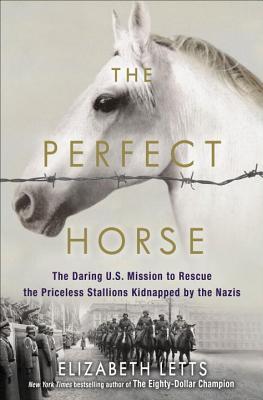
The Perfect Horse: the Daring U.S. Mission to Rescue the Priceless Stallions Kidnapped by the Nazis by Elizabeth Letts

The Perfect Horse: the Daring U.S. Mission to Rescue the Priceless Stallions Kidnapped by the Nazis by Elizabeth Letts

Author Elizabeth Letts‘ non-fiction book is about Operation Cowboy, the American protection of the Spanish Riding School and the plight of the Lipizzaner horses during World War II.

As priceless as any of the masterpieces that hung in Vienna’s museum, from their snow-white coats to their large aristocratic heads and deep brown eyes, the horses were unlike any others in the world.” prologue xvii

There was a precedent for saving irreplaceable works of art during the war, but Colonel Hank Reed‘s effort to save horses was something different. Reed, the most decorated American cavalry officer during WWII, recognized that there was something special about the horses at the Nazi stud farm at Hostau.

Photo by Helena Lopes on Pexels.com

Gustave Rau, the Nazi’s master of horse, was attempting to apply eugenics to his horse breeding program to create “the best warhorse”. He focused on gathering Lipizzaners from all over Europe.

Rau, in his next official report to Berlin, would declare, “There are no high-legged Lipizzaner, there are no flat-ribbed Lipizzaner, there are no bad-tempered Lipizzaner…” Clearly, he was impressed with what he had witnessed in Vienna. pg 87

But it wasn’t just about the breeding program, the Germans needed horses to feed the engines of war.

“The Germans were churning through horses at an astonishing rate — the army demanded six thousand fresh ones per month to replace those killed or lost to disease.” pg 37

I didn’t realize horses had such a large role in WWII. I assumed machines had taken over most of the vital functions horses used to perform like transportation and moving men into battle. I was wrong.

The Perfect Horse doesn’t cover the technical aspects of WWII or talk about the American defense of Hostau. It focuses on the horses though Letts does provide some context and information about the backgrounds of the men involved on both sides of the conflict.

Photo by Dids on Pexels.com

“Politics, prejudice, avarice, and intolerance had riven a brutal divide between the countries of these men; the grace of these horses had already started to knit them back together. The former enemies parted as friends.” pg 149

She follows the horses from their eventual relocation from the war front to the United States and what happened next.

The Perfect Horse is a difficult book to read in that it contains a lot of information and not as much “story,” but for readers interested in history, it may be a good fit.

Thanks for reading!

Here’s the History Guy episode I wrote about Operation Cowboy:

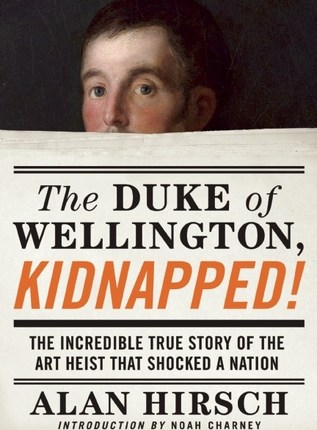
The Duke of Wellington, Kidnapped!: The Incredible True Story of the Art Heist That Shocked a Nation by Alan Hirsch

The Duke of Wellington, Kidnapped!: The Incredible True Story of the Art Heist That Shocked a Nation by Alan Hirsch

“The only successful theft from London’s National Gallery took place on August 21, 1961, when a brazen thief stole Goya’s Portrait of the Duke of Wellington.” Introduction

Alan Hirsch discusses an extraordinary art heist that took place in the 1960s, how it affected criminal law thereafter and even made an appearance in a James Bond movie. The thief sent authorities a series of ransom notes, demanding money for the return of the painting. This went on for years.

Photo by Pixabay on Pexels.com

“All the publicity led to a spike in visitors (from the usual August average of five thousand daily to more than seven thousand in the weeks following the theft), and reportedly even more people came to see the empty space where The Duke had hung than had come to see the painting itself.” pg 19

This potentially fascinating story becomes bogged down during the chapters discussing the trial and minutiae of the law. But, Hirsch is thorough, I’ll give him that.

“Where necessary, lawyers argued in the alternative: “My client did not take the painting, and if he did take it he intended to return it.”pg 125

I loved the information about the thief himself, which the world may not have seen before this book. Hirsch was given the man’s unpublished memoirs to add details to his side of the story.

“I understand you have information to give to police respecting the theft of the Goya portrait from the National Gallery in London.” “You don’t have to look any further, I am the man who took it,” the man calmly replied.” pg 107

Photo by Steve Johnson on Pexels.com

I also enjoyed the information about the ransom notes sent after the heist. That part of this book read almost like a movie. Who does that!

“In handwritten block letters, it began: “Query not that I have the Goya,” and it sought to prove the point by identifying marks and labels on the back of the canvas.” pg 52

Admittedly, I know very little about art history and had never heard of this event before reading The Duke of Wellington, Kidnapped!. But I think this would be a great read for anyone interested in history, especially art history. It may appeal even more if you’re interested in the development of criminal law in Great Britain.

Thanks for reading!

Here’s the History Guy episode I wrote about the theft of the Wellington portrait:

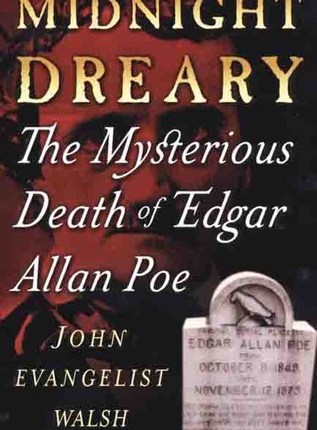
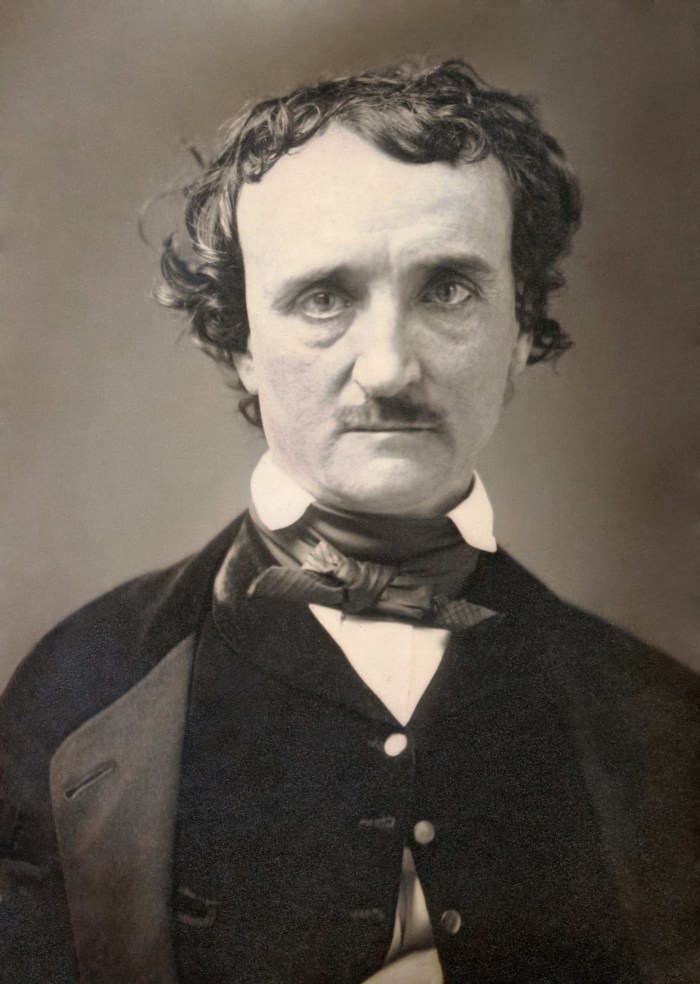
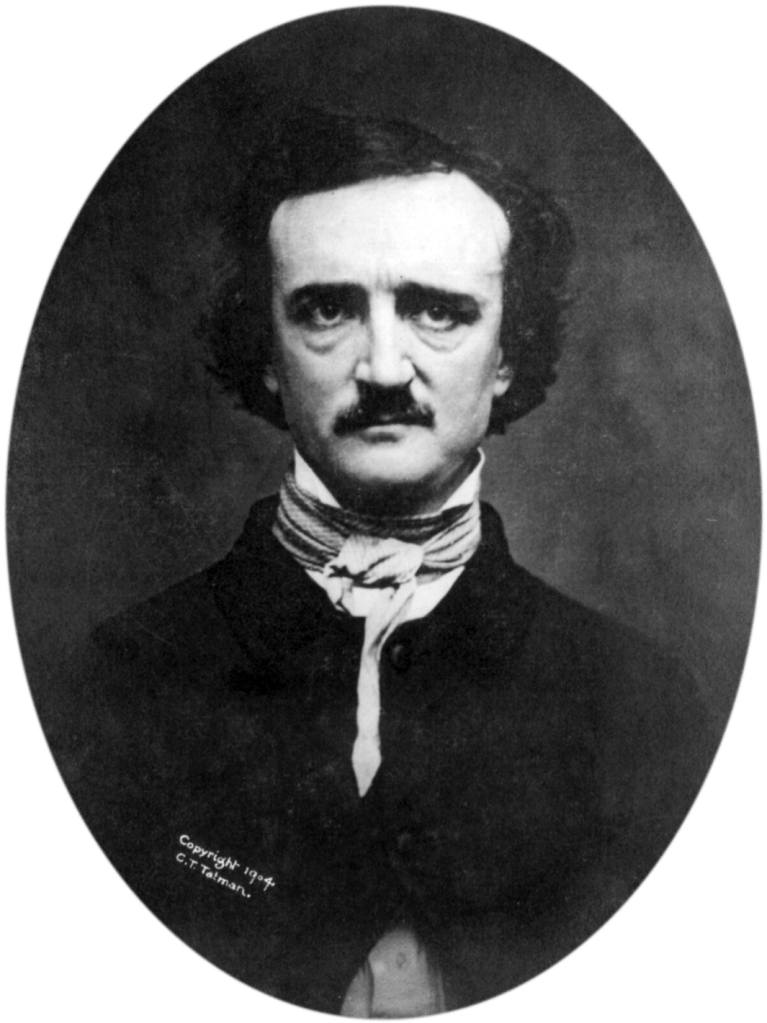
Midnight Dreary: The Mysterious Death of Edgar Allan Poe by John Evangelist Walsh

Midnight Dreary: The Mysterious Death of Edgar Allan Poe by John Evangelist Walsh

John Evangelist Walsh examines the last months of the life of Edgar Allan Poe and puts forth the hypothesis that he did not die of alcohol withdrawal, but something more sinister.

Poe, one of the most celebrated American authors, had a rough life. He was orphaned and adopted at an early age. He spent his life in poverty, scraping enough money from writing and editing jobs to keep himself fed, only to die mysteriously at age 40.

“We regret to learn that Edgar Allan Poe Esq. the distinguished American poet, scholar and critic died yesterday morning after an illness of four or five days. This announcement, coming so sudden and unexpected, will cause poignant regret among all who admire genius and have sympathy for the frailties so often attending it.”pg 34

Photo by Poppy Thomas Hill on Pexels.com

Walsh packs this book with details about Poe’s life and heartbreaks — that can be verified by historical documentation. After Poe’s untimely death, an author, perhaps more than one, who had been vilified by in Poe’s literary reviews, wrote angry and unflattering obituaries and biographies. It was an effort to black Poe’s name after his death which ultimately failed.

However, this “name blackening campaign” makes it difficult to separate fact from fiction.

Walter Colton, who was one of those who was kind to Poe after his death wrote: “I knew something of Poe. Something of the unfathomed gulfs of darkness out of which the lightning of his genius sent its scorching flashes.” pg 28

Perhaps that’s the lesson to take from Poe’s life, besides his astonishing literary achievements. Genius often seems to walk hand in hand with madness or emotional upheaval. I wonder why this is. Maybe, to touch the heights and depths required to write beautiful poetry, you have to go there? I don’t know.

“As always with this type of alcoholism, the unsettling fact was its combined certainty and unpredictability. After long periods of perfect sobriety, he seemed almost bound to fall again, and those who cared about him had to live with that relentless expectation.”introduction, pg xiv

Walsh’s hypothesis about the manner of Poe’s death was not convincing to me, but it gave me another angle to consider.

I had heard Poe may have died from “cooping” which was a practice where a man was kidnapped by a political party, kept drunk and imprisoned until election day, when he would let him free to vote as they directed. This idea holds water because he was found inebriated and ill outside a polling place and in clothing that didn’t seem to belong to him. I had also heard he was a victim of alcohol withdrawal.

Dear Sir, There is a gentleman, rather the worse for wear, at Ryan’s Fourth ward polls, who goes under the cognomen of Edgar A. Poe, and who appears in great distress, and he says he is acquainted with you, and I assure you, he is in need of immediately assistance.” pg 46

Walsh believes some relatives of one of the women Poe was involved with may have led to his untimely end.

Whatever happened, I can’t help but feel sad for the rest of us. Imagine what he could have accomplished with another 40 years on this earth.

It was many and many a year ago, 
In a kingdom by the sea, 
That a maiden there lived whom you may know 
By the name of Annabel Lee; 
And this maiden she lived with no other thought 
Than to love and be loved by me.

Recommended for fans of Edgar Allan Poe or readers who enjoy true crime.

Thanks for reading!

Here’s The History Guy episode I wrote about Edgar Allan Poe:

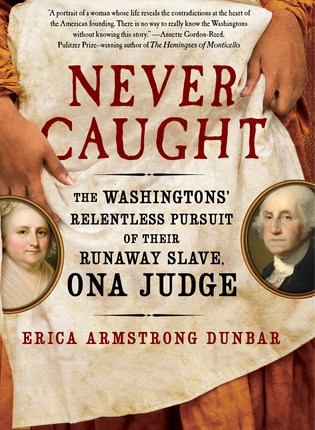
Never Caught: The Washingtons’ Relentless Pursuit of Their Runaway Slave, Ona Judge by Erica Armstrong Dunbar

Never Caught: The Washingtons’ Relentless Pursuit of Their Runaway Slave, Ona Judge by Erica Armstrong Dunbar

An interesting, non-fiction book about Ona Judge, a woman who was one of Martha Washington‘s personal slaves until she ran away. Ona remained a fugitive for the rest of her life. This book dissects early emancipation laws in the United States and Ona’s life, as well as revealing struggles in the private lives of George and Martha Washington.

Ona was born to a black slave and a white, indentured servant. Ona and her mother were abandoned by Ona’s father after only a few years.

“Ona Judge learned valuable lessons from both of her parents. From her mother she would learn the power of perseverance. From her father, Judge would learn that the decision to free oneself trumped everything, no matter who was left behind.” pg 14

Photo by Todd Trapani on Pexels.com

Author Erica Dunbar does a fairly good job bringing Ona Judge to life on the few details that were available. It must have been tricky to fill in the blanks on a life that wasn’t as well-documented as her famous, former owners.

“Those of us who research and write about early black women’s history understand how very difficult it is to find our subjects in the archives. Enslavement, racism, and sexism often discarded these women from the historical record, and as historians we are frequently left unsatisfied with scant evidence.” from the Author’s Note.

Because she gave two interviews to journalists towards the end of her life, Ona may well be one of the only female, fugitive slaves from Virginia to have a personal narrative that survived to exist in the historical record.

“The interviewer wrote, ‘When asked if she is not sorry she left Washington, as she has labored so much harder since, than before, her reply is ‘No, I am free, and I have, I trust, been made a child of God by the means.'” pg 187

Photo by Maksim Romashkin on Pexels.com

What I liked most about this book, beyond Ona’s own life story, was the way Dunbar made George and Martha Washington into people, not just icons, in my mind. They made mistakes and would act in their own best interest. It was interesting to discover that one of the founding fathers and his spouse were just as human as the next person.

But also sad in the way they held and treated “human property.” I suppose everyone is a product of his or her own time.

(Martha Washington) had no interest in releasing the slaves at Mount Vernon, who numbered in the hundreds. Instead, she would move quickly to join her husband in New York, shielding her slaves from the contagion of liberty.” pg 31

Photo by cottonbro on Pexels.com

They simply couldn’t understand why someone would want their freedom — at any cost. It seems like a no-brainer now. But, once the Washingtons discovered where Ona was hiding, they sent agents to talk to her and try to convince her to return to slavery.

“She told Whipple that under no circumstances would she return to slavery, where she could be “sold or given to any person.” She would rather die than return.” pg 144

Recommended for readers who love history, especially American history, and want to learn about another facet of the American experience.

Thanks for reading!

Here’s the History Guy script I wrote about Ona Judge:

The Midnight Assassin: Panic, Scandal, and the Hunt for America’s First Serial Killer by Skip Hollandsworth

The Midnight Assassin: Panic, Scandal, and the Hunt for America’s First Serial Killer by Skip Hollandsworth

A fascinating, non-fiction examination of what may have been the first serial killer in the United States. “The Midnight Assassin” or “Servant Girl Annihilator” terrorized Austin, Texas, for about a year before disappearing. Then, when Jack the Ripper began running around London, some in Texas theorized that their killer had crossed the ocean.

The scariest part, like Jack the Ripper, is that this person was never caught or identified.

“Several journalists proclaimed in their articles that the murders were nothing less than an Edgar Allan Poe tale of terror come to life. One reporter nicknamed the killer “the Midnight Assassin… who strides at will over Austin’s sacred soil.” pg 4

Photo by Yigithan Bal on Pexels.com

Skip Hollandsworth uses newspaper articles and period pictures to make these historical events come to life. It is a story that you almost can’t believe. You can feel the citizen’s terror as the murders increase and no one is found.

“A woman has been chopped to pieces!” Wilkie yelled. “It’s Mrs. Hancock! On Water Street!” pg 139

This was before investigations were conducting using forensic evidence or even finger prints. It is interesting to see how authorities looked for the killer.

“… the idea that Jack the Ripper was a Texan made for sensational copy, and soon the newspapers in England were in on the frenzy. “A Texas Parallel!” cried the Woodford Times of Essex. “The monster has quitted Texas and come to London!” trumpeted the London Daily News…” pg 234

It is also a glimpse into the shadowy part of the human soul.

“I do not believe any man figures into the world’s history with such a terrible and horrifying distinction from the rest of humanity,” the reporter declared. “He may well give to history a new story of crime — the first instance of a man who killed in order to gratify his passion.” pg 173

Photo by Matthew T Rader on Pexels.com

The Midnight Assassin is a story of forgotten history that most of the world no longer remembers. The murderer’s name has now become a fairy tale to scare children…

“But people in Austin hadn’t forgotten about him — not completely. Children had devised their own nickname for the Midnight Assassin: they called him the “Axe Man.” They raced for their homes as the sun was setting, shouting to one another that the Axe Man was hiding in the shadows just beyond the light of the moonlight towers, waiting for them to come close so he could grab them.” pg 255

Recommended for readers of true crime and thrilling history.

Thanks for reading!

Here’s The History Guy episode I wrote about the ‘Midnight Assassin’ also known as ‘The Servant Girl Annihilator’:

Barracoon: The Story of the Last “Black Cargo” by Zora Neale Hurston

Barracoon: The Story of the Last “Black Cargo” by Zora Neale Hurston

Zora Neale Hurston interviewed Oluale Kossola before he died in the 1930’s to create this first-person narrative by one of the last people to be transported to the United States through the middle passage. It is interesting in that, among the existing records of that period in time, it is written from the perspective of someone who lived slavery rather than perpetuated it. It wasn’t written with an agenda. It is a record of a history.

It is a story of a culture and a life lived far from home and family because of human greed.

“I hailed him by his African name as I walked up the steps to his porch, and he looked up into my face as I stood in the door in surprise.” pg 17

Photo by Johannes Plenio on Pexels.com

Hurston records Kossola’s responses to her questions phonetically, which makes you feel like you’re sitting there with her, listening to the remembrances of Kossola as he says them.

In the introduction by Deborah G. Plant, she captures this feeling: “The narrative space she creates for Kossula’s unburdening is sacred. Rather than insert herself into the narrative as the learned and probing cultural anthropologist, the investigating ethnographer, or the authorial writer, Zora Neale Hurston, in her still listening, assumes the office of a priest.” pg xxv

I think, as someone looking back, it’s important to understand the transportation of slaves into the U.S. was made illegal in 1808, fifty years before Kossula was taken from his home. It’s a piece of American history that has been almost entirely forgotten.

“Of the thousands of Africans smuggled into American after 1808, only one man was held accountable and hanged, and even he died proclaiming his innocence.” pg 132

Photo by GEORGE DESIPRIS on Pexels.com

In Barracoon, not only are we given the story of Kossula’s transportation in life in the U.S., but also, he shares fascinating details of his life in Africa. There’s information about the justice system, social structure, rites of initiation and more.

In addition to his life story, Kossula shares fables he created to share his feeling of loss about his family as he outlived all of his children and wife. I enjoyed this folk lore part of the book the most.

There’s some controversy surrounding this book. Apparently, Hurston published a magazine article about Kossula early in the last century and was accused by later scholars of plagiarism.

“Of the sixty-seven paragraphs in Hurston’s essay,” Hemenway relates, “only eighteen are exclusively her own prose.” pg 120

Photo by Pixabay on Pexels.com

The text in question is Emma Langdon Roche’s Historic Sketches of the South, that was published in 1917. The full text is available from the U.S. Library of Congress and can be accessed online. That’s how I read it and was able to see some of the similarities in the writing.

However, the interview portions of this book, written in Kossola’s distinctive style of speaking, are entirely unique. As the editor of this book points out, Hurston was never accused of plagiarism in her works after writing about Kossola and it was very early in her career. We all make mistakes.

Recommended for any readers interested in history. Barracoon is a treasure.

Thanks for reading!

Here’s the History Guy episode I wrote about Oluale Kossola:

Titanic Thompson: The Man Who Bet on Everything by Kevin Cook

Titanic Thompson: The Man Who Bet on Everything by Kevin Cook

“Are you a gambling man?” he’d ask. “Because I am.” Prologue.

A non-fiction biography that reads like fiction, this is the life story of Titanic Thompson. According to author Kevin Cook, Titanic’s life was the model for the gambler Sky Masterson in the musical “Guys and Dolls.” This poker and golf-playing phenomenon bet and propositioned his way across the country. In addition to all of the fun anecdotes about bets he made, Titanic was a star witness in the trial for the murder of the man accused of “fixing” the World Series.

Seriously folks, history doesn’t get much more interesting than this.

As Alvin collected his winnings, someone asked Snow Clark the stranger’s name. “I don’t rightly know but it ought to be ‘Titanic,'” Clark said. “He sinks everybody.” pg 3

Photo by Pixabay on Pexels.com

Alvin Clarence Thomas was born in 1893 in rural Missouri near the small town of Monett. The last name, Thompson, that he would adopt for most of his adult life, came from a later newspaper misprint that he embraced as his own.

Later in life, Thompson said he couldn’t read, but numbers and odds always made sense to him. He spent hours sitting alone in his room, teaching himself to adeptly shuffle cards, practicing dealing from the bottom of the deck more quickly than the eye could follow. Thompson developed a method of marking cards that some still use today, like putting dots on the back or notching the edges to be able to tell a face cards from the lower ones.

He was quite popular with the ladies and married 5 times to women significantly younger than him. Scandalous!

Photo by Irina Iriser on Pexels.com

“He was fun,” said a woman who knew him. “He took his hat off when he spoke to you. Alvin was slim like a willow, and he didn’t walk, he sauntered.” pg 21

When he was drafted into the army, he was made a sergeant and taught the men under him how to gamble.

“Sergeant Thomas spent hours dealing demonstration stud hands, providing a running commentary on each hand, training his men to calculate the odds of an opponent’s having an ace or king or deuce in the hole, telling them when to bet harder and when to fold their tents, so they could beat all the poor dumb soldiers who trusted to luck.” pg 53

Photo by Anna Shvets on Pexels.com

There are so many interesting stories in this book. My favorite was when he swindled Al Capone. Yes, THE Al Capone.

Highly recommended for fans of history or historical fiction. As I said, this guy’s life reads like a story.

Thanks for reading!

Here’s the History Guy episode I wrote about Titanic Thompson:

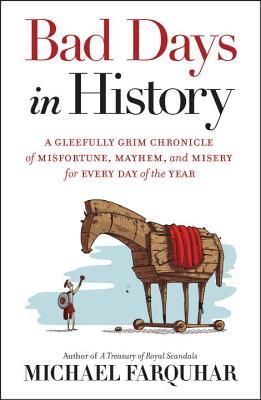
Bad Days in History: A Gleefully Grim Chronicle of Misfortune, Mayhem, and Misery for Every Day of the Year by Michael Farquhar

Bad Days in History: A Gleefully Grim Chronicle of Misfortune, Mayhem, and Misery for Every Day of the Year by Michael Farquhar

Michael Farquhar has compiled a veritable treasure trove of historical events and organized them by the calendar day upon which they occurred.

“Plucked from all eras of history, and from around the globe, the bad days in this book are intended to amuse, tantalize, and enlighten — without being too predictable.” From the introduction.

Photo by Andrea Piacquadio on Pexels.com

From ancient Rome to the more modern era, anyone interested in history should find something to enjoy in here.

For example, those who like to learn about doomed romance, may I suggest March 29: “There was nothing particularly special about Yaoya Oshichi, a grocer’s daughter living in 17th-century Japan. Indeed, her memory undoubtedly would have been lost to history had it not been for the extraordinary circumstances of her death — a tale of romance so tragic that it enshrined the 16-year-old girl forever in Japanese literature and theater.”

Or maybe you want to learn about the publishers of the so-called “Wicked Bible” who faced a committee for their misdeeds on May 8: “Some readers of a 1631 edition of the King James Bible were shocked (or at least pleasantly surprised) when they came across the Seventh Commandment in the Book of Exodus: ‘Thou shalt commit adultery.’ Then there was the apparent blasphemy found in Deuteronomy, chapter 5: ‘The Lord hath shewed us his glory, and his great asse.” (The proper word was ‘greatnasse’.) 

Photo by Wendy van Zyl on Pexels.com

From the amusing to the tragic, there’s something for everyone. Each listing is a short version of the event, just a couple of pages. If you want something more in-depth, you’ll have to keep looking. However, if you just want a few pages of something interesting to read before bed, this book could fit the bill.

Recommended for history lovers and trivia hounds.

Thanks for reading!

Here’s the History Guy episode I wrote about Yaoya Oshichi: