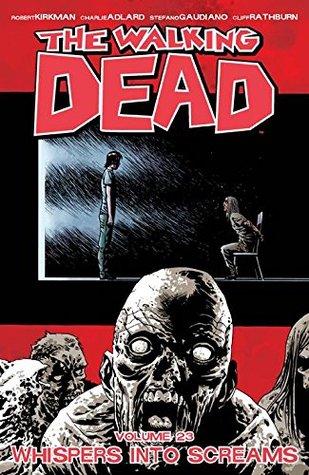
The Walking Dead, v. 23: Whispers into Screams by Robert Kirkman

The Walking Dead, v. 23: Whispers into Screams by Robert Kirkman

thewalkingdeadv23I forgot that I was reading this series and only remembered when there was that huge kerfluffle a couple weeks ago by the people who only watch the television show… something to do with a barbed wire covered bat. Those of us who read the comic had already mourned and moved on. Frankly, I think I put the books aside because I was getting a little tired of this series. But, to be fair, after 22 books… it’s natural for enthusiasms to slow down. Whispers into Screams was a great re-introduction for me into the perpetually dark world of The Walking Dead.

The characters have settled down into one place. Rick drives a cart to collect/deliver supplies and has this awesome hook for a hand. Maggie is running one of the settlements and Carl is hanging out with her and Lydia. What could possibly go wrong now? What indeed. As for the other side characters, there’s minor stuff going on but this comic predominantly deals with the Maggie/Carl side of the equation, which is good, because I had a hard time recalling who was involved or crushing on who.

First of all, that Carl Grimes. We’ve watched him grow, shoot people, take horrific injuries, and now- (view spoiler) As a parent, I’m proud of him. He could have become a monster, but he just turned out to have a bad case of PTSD and, from what he’s been through, who could blame the guy. “Everyone still alive these days knows how dangerous it is out there… and what you have to do to survive. Your people…in your group… however large it is, you’ve been surviving for a while.” pg 72ish. Tell us about it, Carl. There has been some major misbehavior going on. It makes one lament the fact that a mild mannered librarian, like me, would never make it through a zombie apocalypse.

“Childhood was always a myth brought about by the illusion of safety… it was a luxury we could never really afford.” pg 57ish. The Walking Dead has always been bleak, this episode goes just a little bit darker. I wish that something good would happen to these people. We cheer for them, follow them through hell and high water, but it never seems to get any better. Unfortunately, for me, this book ended on such a cliffhanger that I’m going to have to pick up the next one, but I may need a stiff drink to get me through it. Let’s play some more favorite character Russian roulette, shall we? Sigh.

Recommended for graphic novel fans who are in for the long haul or really, really enjoy apocalyptic horror. I may have to warn everyone else to steer clear. The Walking Dead is one of a kind, but sometimes, it is an awfully hard road to walk for the perpetually optimistic reader.

Thanks for reading!
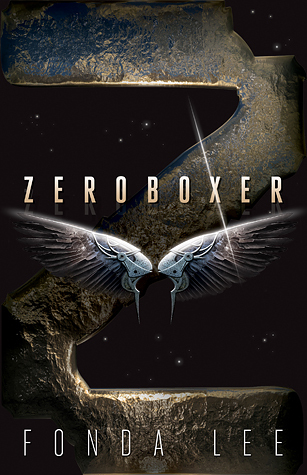
Zeroboxer by Fonda Lee

Zeroboxer by Fonda Lee

zeroboxerAt first, I thought that Zeroboxer was just Rocky in space, but as the story developed, I realized that it was more than that. Zeroboxer is also an examination of genetic ethics and, like most science fiction, poses some serious ‘what if’s. What if humanity begins to settle the universe- will they divide themselves into different races depending upon their planet of origins? What if the settlers develop their own system of government- how will humankind negotiate the potentially choppy waters of intergalactic politics? What if humanity could use gene therapy not just to eliminate disease but also to create a sort of super human? Fonda Lee has imagined a future filled with flawed but well-meaning people that feels very similar to our own and is, perhaps, not as far into the future as one may imagine.
The style of boxing in this story incorporates mixed martial arts with the added hiccup of no gravity: “To inflict any bare-handed damage to a person in zero gravity, you had to establish a brace or a point of leverage- preferably a vulnerable part of your opponent’s body- to keep them from floating away while you hurt them. Or you had to treat space itself as a weapon, using the infinite angles of movement to strike and rebound, strike and rebound, faster and harder than the other guy.” pg 13, ebook. Fans of MMA may enjoy this story more than I did- I don’t particularly care for violence but it was never too graphic or more than I could handle.

The colonists who settled on Mars (the Martians) embraced zero gravity sports while the people who stayed behind on Earth (the Terrans) didn’t. Luka, the main character in this story, is from Earth and he’s part of a group that is trying to popularize the sport on Earth- with mixed success: “I left Mars twenty-five year ago, saying I was going to grow the sport with the Terrans. I was practically laughed off the Red Planet. All the best zeroboxers in the Martian system… you know what they said to me? ‘Everyone on the old planet is a planet rat. The most daring and inventive Terrans left generations ago to build Mars and the other settlements. Why would a place with countless gravity-dependent sports want anything different?” pg 27, ebook.

The story becomes even more complicated because the Martians have accepted gene therapy as a way to improve and expand their race, while the Terrans only use it to keep children from developing poor eye sight or asthma. The Martian fighters are so dominant at the sport because not only were they born into a world that encouraged zero gravity sports, but also they were partially engineered to be that way. When the boxers from Earth face the boxers from Mars, it is more than planet vs planet- it is also a match up of nature vs science.

Luka doesn’t want to consider the complexities of it all and just wants to fight: “Two guys go into a Cube. They fight. One of them beats the other. How much simpler can it be? People don’t have to make it more than it is.” pg 176, ebook. Will Luka get his wish?

This book should appeal to fans of Ender’s Game or Red Rising (which is a much more adult examination of these themes). Thanks for reading!

Templar by Jordan Mechner

Templar by Jordan Mechner

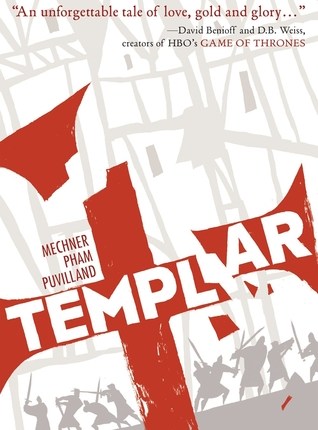
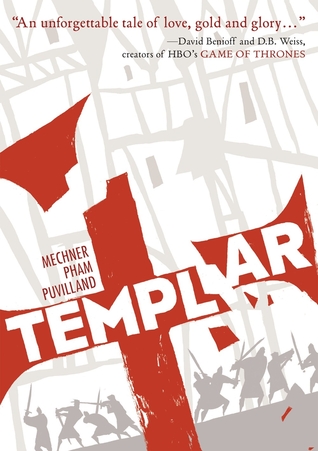
templarTemplar: a graphic novel about the dissolution of that famous order and the struggle for the legendary treasure that they left behind. A couple of weeks ago, I read the first book in this series and I enjoyed it more than this complete volume. It was the ending that diminished my enjoyment of it the most, which I won’t get into because I don’t want to ruin it for anyone, but that was really my issue. Mechner ties up the major plot points, but I didn’t like how he did it- at all.
Like the other book, this contains adventure, daring rescues, and amusing “heist movie” type moments. We’ve also got a strong female lead in Madame De Chalancon (love interest) who is actually very hard core for a 12th century woman. She’s sneaking out at night and running around with the guys, stealing horses, manipulating the powerful men around her, kissing people- I mean, that kind of stuff could have gotten her burned as a heretic or witch back then. So, that was good and the other characterizations are solid. The illustrations aren’t gorgeous (compared to Monstress #1 or Saga, Volume 1) but those are considered adult graphic novels while this one is marketed for the teen set.

Which reminds me, there’s a whole scene that takes place in a Turkish steam bath that some parents may find objectionable. I’d let my kid read it, but she’s a girl and has the parts that are revealed through the steam and also, I’m a librarian, and I don’t censor stuff. But yeah, there’s some (very tasteful) nude females, torture scenes, hand to hand combat, men being burned at the stake, arrows through limbs… I honestly think that this may have been better as a mature book than a watered down PG13, but it is what it is.

Still, it is a fun story and semi-educational in that some of the people featured in this book were actual historical figures. Mechner includes his sources in the back and also some recommended reading. I think I’m going to look into Foucault’s Pendulum, which I’ve never read, but Mechner gives high praise.

Some more graphic novels that teens may enjoy are The Guild (ties in to the show of the same name) or the surprisingly fun, Nimona.

Thanks for reading!

Some Kind of Fairy Tale by Graham Joyce

Some Kind of Fairy Tale by Graham Joyce

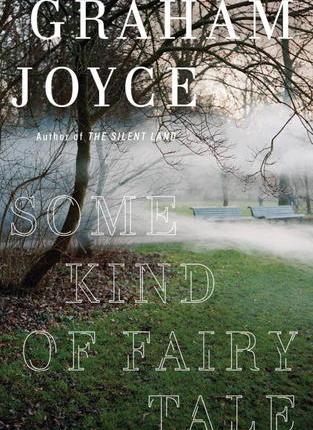
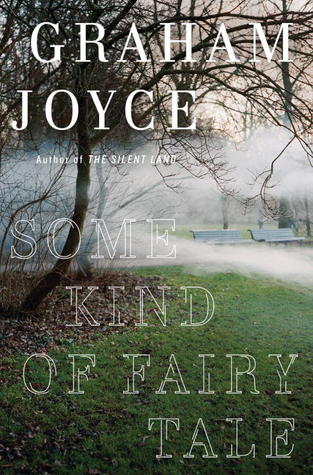
somekindoffairytaleSome Kind of Fairy Tale is a fantasy set in modern times. Peter is a farrier (shoes horses and fixes small, metallic things). He has a lovely wife and four beautiful children. He also has a sister whom he hasn’t seen for nearly twenty years, presumed dead. Imagine his surprise, when she shows up at their parent’s home on Christmas Day. Where has she been? Where indeed…
The magic in this book isn’t in your face, it’s hidden in the shadows and rocks of the woods and glens- very much like I imagine magic really is: “The Outwoods was one of the last remaining pockets of ancient forest… It was an eerie place, swinging between sunlight and damp, flaring light and shadow; a venue of twisted trees, its volcanic slopes of ash and granite ruptured by mysterious outcropping crags of the very oldest rocks in Britain.” pg 14, ebook.

I loved the twists and turns of the story and it had me questioning myself the entire time. Is Tara bonkers, injured in some way, or did something outside of her power actually spirit her away? “There is a veil to this world, thin as smoke, and it draws back occasionally and when it does we can see incredible things.” pg 142, ebook.

I also loved how Joyce used quotations from poetry, books, and an actual trial where a man was convicted of killing his wife because he thought she was a changeling (can you imagine?!) to introduce a few of the chapters. It was chilling- the deadly combination of superstition and violence and the trial in question happened, not in the dark ages, but 1895. Here’s Joseph Campbell’s thoughts that preface Chapter Twenty-Six: “Nevertheless- and here is a great key to the understanding of myth and symbol- the two kingdoms are actually one. The realm of the gods is a forgotten dimension of the world we know.” pg 169, ebook.

I did not like the surprising vulgarity of this tale, the few violent moments it contains, or when something terrible happens to a neighborhood cat but, if such things don’t bother you, you really must give Some Kind of Fairy Talea try. If you don’t already, it makes you believe in the possibility of other worlds and every day magic.

Some books with similar themes: Meeting the Other Crowd (non-fiction, but reads like fiction), Fairies: Real Encounters With Little People (non-fiction, again, reads like fiction) or Passport to Magonia: On UFOs, Folklore, and Parallel Worlds (classic work on real people and actual encounters with other worlds).

Thanks for reading!

Funeral Games by Colin Heintze

Funeral Games by Colin Heintze

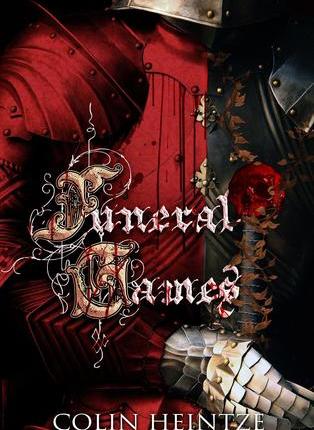
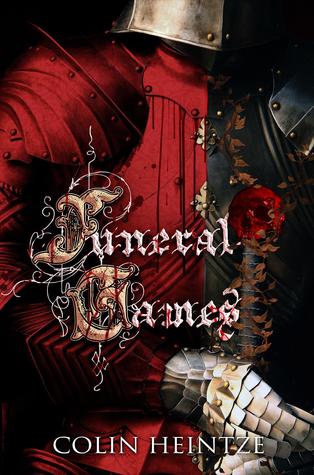
funeralgamesFuneral Games is a unique, fantastical romp through a medieval world. Syphax is a prince, but an unimportant one, being the younger son of one of his father’s many wives. He doesn’t excel in much of anything, other than reading and daydreams of greatness (reminds me of myself in some ways… I jest… but really). Syphax is a member of the nobility who are called the Undying because, when they shuffle off this mortal coil, they rise again as tangible ghosts called ancestors. These ancestors help govern the living and form another spooky faction in the sprawling complex of the capital city that is Ingerval Palace. The walls of the palace are filled with dead and living nobility who are divided into many different houses with a tangled history of treaties and backstabbing, all with the goal of more power for the members of their clan. The future looks, if not bright, then at least rosy, for our hero, Syphax, until, at one very memorable funeral celebration, something completely unexpected happens. And then, all hell breaks loose inside and outside the walls of Ingerval.
I loved the juxtaposition of the living and the dead in Funeral Games. It added a whole other level of political machinations to the usual struggles of a monarchy and its nobility. Here is the scene at one of the funerals: “The crowd roared with laughter- at least the Living among them. The Dead sat at their assigned places. They didn’t eat or drink, and weren’t the least bit amused by the antics of their descendants. There must have been two hundred ghosts and at least as many Living in attendance. Normally, the Dead kept their own company, but the day was a special one.” loc 56, ebook. I also loved how, in the course of the story, Heintze dealt with the ghost’s eternal nature, limitations, and struggle for recognition beyond the grave. It really is unlike anything else I’ve ever read.

There is a love interest in this but it doesn’t dominate the storyline or descend into the ridiculous. In fact, the girl/heroine, though she doesn’t play a huge part, is kind of hard core, which is a refreshing change of pace for the genre. In this passage, she’s talking to Syphax about one of the ancestors: “I feel like he watches me, Syphax.” “You’re in a palace full of ghosts. It’s natural to feel that way.” “Sometimes I have these dreams. And when I wake up, he’s always nearby…” … “It will be fine,” I said. “He’s harmless. All ghosts are.” loc 136, ebook. (suspenseful music building…)

My favorite part of Ingerval is, of course, the Library! “Ingerval Palace had many wonders. None were as great, nor so underappreciated, as the Library. Books were one of the few pleasures afforded to ghosts, and the Dead’s demand for the written word made Ingerval the world’s leader in the production, purchase, and dissemination of books.” loc 367, ebook. I would fit in well with the Undying, I think.

There is some rough language in this, some tense moments, and a small, if not too graphic, torture scene, so I’d suggest a reading audience of 14/15+ depending on the maturity level of the reader. I’d recommend Funeral Games for not-too-serious fantasy fans as it lacks the complexity of, say, the Malazan books, but for some folks (myself included), that may be considered a plus. Some similar reading: The Interminables by Paige Orwin (a ghost plays a large part in this story too), Ink Mage by Victor Gischler (fantasy world, lots of adventure), or The Quick by Lauren Owen (different time period, but also a fantasy).

Thank you to NetGalley and Curiosity Quills Press for a free digital copy of this book.  And, thank you for reading!

Snow White, Blood Red by Ellen Datlow

Snow White, Blood Red by Ellen Datlow

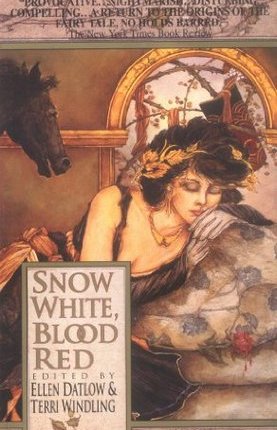
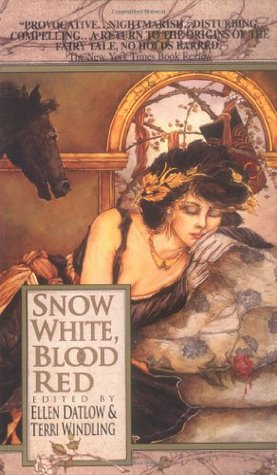
snowwhitebloodredFull credits for Snow White, Blood Red by Ellen Datlow (Editor), Terri Windling (Editor), Elizabeth A. Lynn (Contributor), Harvey Jacobs (Contributor), Steve Rasnic Tem (Contributor), Melanie Tem (Contributor), Caroline Stevermer (Contributor), Ryan Edmonds (Contributor) , Neil Gaiman (Contributor), Leonard Rysdyk (Contributor), Esther M. Friesner (Contributor)
This is a very adult collection of fairy tale re-tellings. From Little Red Riding Hood to Snow White, these are not stories that I’d share with my child or any impressionable young mind.

Fairy tales haven’t always been exclusively for children as Terri Windling explains in the introduction: “..most fairy tales were never initially intended for nursery duty. They have been put there, as J.R.R. Tolkien so evocatively expressed it, like old furniture fallen out of fashion that grown-ups no longer want. And like furniture vanished to the children’s playroom, the tales that have been banished from the mainstream of modern adult literature have suffered misuse as well as neglect.” pg 2

But fairy tales are important because they touch on dreams, archetypes, and the psyche. However, these re-workings were far more bleak than I expected. “The fairy tale journey may look like an outward trek across plains and mountains, through castles and forests, but the actual movement is inward, into the lands of the soul.” pg 10. And personally, I think that the soul is a rather light place.

The most disturbing of the bunch, in my mind was, Little Redby Wendy Wheeler, which told a tale of sexual relations between a mother/wolfish boyfriend/daughter. (A warning for any sensitive readers, triggers abound in these stories from rape to physical/sexual/emotional abuse towards adults as well as children.) “Before she climbed in, Helen looked in my face as though something in my smile disturbed her. “I’ve never noticed before what white teeth you have, Josef,” she murmured. “So large and white.” pg 140 The only saving grace for the darkness of these tales are that they’re short and you’re soon on to the next one.

My favorite was Puss by Esther M. Friesner: an excellent but nightmarish re-imaging of Puss-n-Boots. “Help! Help, ho!” My paws flailed the air; I brandished my plumed hat to make the coachmen see so small a creature as a cat before the horses trampled me. “Robbers, thieves, rascals and hounds! They have despoiled my good master, the Marquis of Carrabas!” pg 319

A close second was Troll Bridge by Neil Gaiman, based on The Three Billy Goats Gruff. His depiction of a troll was creepy but magical, that curious blend of two unrelated traits that Gaiman crafts so well. “Trolls can small the rainbows, trolls can smell the stars,” it whispered, sadly. “Trolls can smell the dreams you dreamed before you were ever born. Come close to me and I’ll eat your life.” pg 286

Recommended for ages 18+ and the brave at heart. Some read-alikes, if you dare: The Book of Ballads by Charles Vess, Alice by Christina Henry or The Library at Mount Char by Scott Hawkins.

Thanks for reading!

Monstress by Marjorie Liu

Monstress by Marjorie Liu

I wasn’t impressed by the graphic novel, Monstress. The story is downright confusing until the end of each issue when the reader is given a history lesson (info dump) by a talking cat with multiple tails. Let me attempt a summary of just the beginning (it gets really complicated after that):

There’s a teen. There’s something special about her but we’re not sure what. She’s purchased by a religious cult with others of her kind. They’re shipped to a prison fortress and tortured- for what, who knows? Maika (the girl) knows that she has to get out of this horrible place, but her “power” is unreliable. There are a bunch of flashbacks to explain where Maika came from and it seems to be as awful as where she is now. Will she survive? Will she figure out what her power is and learn to control it? Will anybody tell me what the heck is going on? Who are these witch/nuns? And why does the fox girl have such big eyes?

I managed to get into the story towards the end, but I was completely turned off by the F-bombs peppered throughout the text. I mean, there’s a whole language to choose from, and that’s the best you can do? I’m not opposed to a few well-timed ones, but it turned into the go-to exclamation. Also, what’s up with the females who are drawn so un-lifelike that it looks like their balloon filled chests are going to float away at any moment? Now, to be fair, they weren’t ALL ridiculously drawn, but some were. I understand that this kind of depiction is a stylistic choice, but it’s not my cup of tea. In addition, there is some seriously disturbing and graphic violence in this. With the popularity of various Tarantino films, I know that this type of art has its audience. But, again, I am not in the audience.

The bad guys in this are really, really bad, like unbelievably so. I think graphic novels are more fun when there are grey areas. Torturing children doesn’t leave a whole lot of room for sympathy.

I wanted to like Monstress as it has a lot of things that I do enjoy: magic, steampunk, gods, fairy-type creatures. But, there was just so much more that I didn’t like, that it soured the experience for me. I understand that I’m in the minority here so if you’re a graphic novel aficionado you may want to give Monstress a read through anyway as many of my friends seemed to enjoy it.

Thanks for reading!

The Queen of the Night by Alexander Chee

The Queen of the Night by Alexander Chee

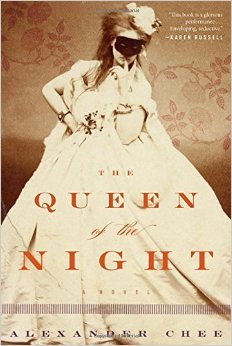
Lilliet Berne has secrets, many secrets hidden in her past and layered upon each other through time and circumstance. Now, she is a successful opera singer but, during a ball one night, a man brings a libretto to her attention that seems to be based on her life. Only a few people know the truth behind the secrets, which one would have made that truth public? Lilliet is going to find out and, along the way, the reader gets to experience the 18th century world from the American Midwest to the Paris Opera to Napoleon’s Imperial Court and beyond.

The Queen of the Night is a glittering, epic historical fiction, reminiscent of Margaret George’s style in that Chee weaves actual historical figures throughout his story. So, you’re learning as you’re entertaining yourself- two birds with one stone. I absolutely loved it.

Who is Lilliet? According to rumor: “I was innocent or I was the devil unleashed, I had nearly caused wars, I had kept them from happening. I was never in love, I had never loved, I was always in love. Each performance could be my last, each performance had been my last, the voice was true, the voice was a fraud. The voice, at least, was true.” pg 7, ebook.

Though true, the voice was not free from rumor either: “There’s a story told of my voice that says it was bought from a witch, the result of an occult surgery. … I never corrected this. … The real answer to where my voice came from is as ordinary as all of life. … I wanted to eat so I learned to sing.” pgs 65-66, ebook. But, as a public figure, Lilliet profited from being a spectacle on and off the stage. She encourages the stories because her notoriety brought her opera parts, connections, and money. Her true background, on the other hand, could ruin her.

The complexity of life in Paris: “Paris, which, when I looked close, was a vast 0péra-bouffe-féerie (opera with elements of comedy and magic in it)- and you did not know your role, I think, until it was too late, and the crowd was laughing at the joke you had uttered in all innocence.” pg 99, ebook. Chee explores many closed societies and the unwritten rules that are followed by them in The Queen of the Night. Among the many scenes examined are: the circus tent, the courtesan’s house, the opera, the French court, the Bohemian music culture, and the couture dressmaker. My favorite parts of this story were the glimpses into these forbidden or, in some cases, defunct cultures and learning the expected behaviors, way of dress, even the preferred perfumes. The fun is in the details.

The Queen of the Night is also a love story: “When love comes this way, the first dream of it feels like a prophecy that has come true. I had never known this feeling until now- he was my first. And so I let myself dream of him again and believe it could be the future.” pg 186, ebook. Swoon… “My theme here is love. Love and the gifts of love, love kept secret, love lost, love become hatred, war, a curse. Love become music. Love and those who died for love. Love- and, especially, first love. My first love, the one I could not keep and could never, will never, lose.” pg 215, ebook. Do you think he could have fit more “love” in there? 🙂

At one point, Lilliet says she feels like she has gotten “Fate’s attention”: “It is a peculiar thing to reach this conclusion, that a god has taken your life in hand. The sensation is not what people might imagine; it is not magic, nor is it a haunting, nor is it a miracle- there’s no storm of roses, no whistle that can put a raging ocean to sleep, no figure in the mirror besides your own.” pg 240, ebook. When I read that, I thought that Chee was going to break down the fourth wall. But, he didn’t. He kept the story flowing but I felt like he winked at me. “Where am I going to take Lilliet now?”, he seemed to say. I didn’t have any idea, but I was definitely along for the ride.

Recommended for readers who want a detailed, slightly (sometimes very) scandalous romp and mystery throughout the 18th century. If you’re into classical music, then it will be an even better fit. Some reads that you may want to explore after this one: The Dream Lover: A Novel of George Sand by Elizabeth Berg (same time period, same country), In the Company of the Courtesan by Sarah Dunant (different time period and country, some similar themes), The Night Circus by Erin Morgenstern (for the circus parts), and Before Versailles: A Novel of Louis XIV by Karleen Koen (different time period, French court).

Thanks for reading!

Diary of an Oxygen Thief by Anonymous

Diary of an Oxygen Thief by Anonymous

Did you like the emotionally disturbing/psychological train wreck that was Gone Girl? You may really enjoy this one. The Oxygen Thief may be the male equivalent to Amy Dunne.

Diary of an Oxygen Thief is written as an actual diary by, as you can see above, Anonymous. The story starts in London. He’s an alcoholic who discovers that he loves emotionally abusing women but, as the story progresses, he eventually meets his match.: “… I realized I had found my niche in life. … They say the sea is actually black and that it merely reflects the blue sky above. So it was with me. I allowed you to admire yourself in my eyes. I provided a service. I listened and listened and listened. You stored yourself in me. Nothing had ever felt so right to me. If I’m honest, even today I miss hurting. I’m not cured of it, but I don’t set out to systematically dismantle like I used to.” pgs 6-7 ebook

I don’t know that I’ve ever disliked a character in a book as much as I despised this ‘Anonymous’. That’s saying something: “Why would anyone set out to break the heart of someone he loved? Why would anyone intentionally cause that kind of pain? Why did people kill each other? Because they enjoyed it. Was it really that simple? To achieve a soul-shattering, it is better if the perpetrator has been through the same experience. Hurt people hurt people more skillfully.” pg 9 ebook. I didn’t know if I was going to be able to finish this book, given how much I hated the beginning, but, just like the numerous women in his diary, I was drawn into the Oxygen Thief’s lair and then (gasp) began to feel sorry for him.

Partially, it was because he manages to clean himself up in AA. But, the other part, is that he moved to the American Mid-West and experienced some serious culture shock, which I couldn’t help but find charming:“American lawns are loaded with social and political meaning. There is a law somewhere that says you have to maintain your lawn or the neighbors can force you to. I knew nothing of this and immediately reveled in the possibility of allowing my front and back gardens to return to nature. A polite knock on my front door changed all that.” pg 34, ebook. He calls lawns, “gardens”. I can’t…

Like a Shakespearean play, the Oxygen Thief’s eventual downfall is foreshadowed by a beautiful woman he meets in AA: “She’s evil,” said the blonde. She herself had apparently witnessed the awful effect this girl could have on guys. She looked at me for far too long. Like I wasn’t taking her seriously enough. I wasn’t.” pg 50 ebook

I also learned something about the physiology of love and heartbreak: “I read somewhere that when someone is in emotional shock, the area around the heart loses some of its protective fat and is therefore dangerously exposed. One well-aimed punch is not just painful; when the person who has been in shock starts to put the weight back on, the heart remains bruised, and this can lead to aortic fibrillation. It’s not life threatening, but it is uncomfortable. pg 85 ebook Who knew?

There aren’t any likeable characters in this book, but it is impossible to put down, so I had to give it at least three stars for its readability. I was absolutely shocked at the terrible ways in which the Oxygen Thief behaved and then was treated. No wonder people are cynical if there are people like this in the world. I tried to do a bit of research to discover who this “Anonymous” really was, but failed to come up with anything. Maybe, as time passes, his true identity will be revealed.

Recommended for the serious fans of psychological warfare tales or for those who have survived a very nasty relationship and want to compare their battle scars. The author of this book was recently paid for the film rights so we may see a movie made out of it. I don’t know if I could sit through it, but, if made the right way, it could be a very intense examination of the damage that people do to each other in the name of “love”. The obvious read alike is Gone Girl by Gillian Flynn but another book that reaches for the depressing depths of this one is: Black Moon by Kenneth Calhoun.

A couple people have asked if this book is appropriate for teen readers and as a librarian and a mother, I say no.  The themes are much too mature, sexually graphic, and emotionally disturbing.  16 or 17+ is my recommendation.

Thanks for reading!