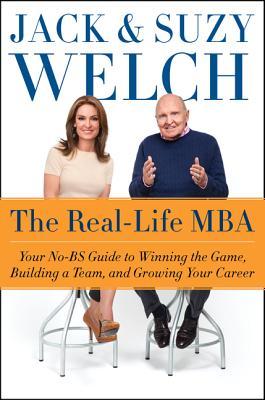

Jack & Suzy Welch have years of corporate experience under their belts. The Real-Life MBA is filled with some of their best practices culled from this background. Some of it I found helpful, other suggestions I didn’t enjoy as much, but I think that this may be because I’m coming from a non-profit career track rather than a cut-throat, competitive one.
Let’s get the negative out of the way first. Mr. Welch is well known for his practice of sorting his employees into tiered groups- the top 20%, the middle 70%, and the bottom 10%. If you are in the bottom 10% and you don’t improve within a certain amount of time, he promptly and tactfully assists you in finding new employment.
Now, I understand that there needs to be a balance when applying the carrot and the stick in business relationships. But, their approach just seems harsh. Welch insists that this system is more fair to the employer and employee- if you’re a bad fit, you’re not doing anyone any favors by sticking around.

On the other hand, your business will always have a bottom %10 so there will always be the shadow of that looming ax. I suppose that this could lend itself to an environment of continual growth, but I feel like it would be more motivated by fear than love. And, really, who wants that.
I liked the vision of organizational structure that was presented in Yes, And: How Improvisation Reverses “No, But” Thinking and Improves Creativity and Collaboration by Leonard Kelly. I think that creativity, trust, safe environments for occasional failures and career success go hand-in-hand. By encouraging an “ensemble” effort rather than a “team” mindset and fostering collaboration rather than a score board, I suspect that one would see just as excellent receipts with less turnover and a closer team bond.

I haven’t tested this theory though and Mr. Welch does have forty or fifty more years business experience than me, so take it with a grain of salt. But, that’s my two cents.
I liked the section on career development: It’s About You, starting on page 177. Most of it is just common sense advice, but it’s solid. Do what you love to do and don’t waste your time in a career you hate.
We spend most of our time at work so we may as well be happy when we’re there- it’s the fuel of success, etc. No big surprises, but sometimes the most useful and applicable advice isn’t surprising.
If you enjoyed The Real-Life MBA, I’d recommend Yes, And: How Improvisation Reverses “No, But” Thinking and Improves Creativity and Collaboration by Leonard Kelly to give you a slightly different viewpoint on teamwork. Also, Work Rules!: Insights from Inside Google That Will Transform How You Live and Lead by Laszlo Bock so that you can read about HR practices inside one of the most successful and employee friendly companies on the planet.
I received a free copy of this book through the Goodreads First Reads program. Thanks for reading!
- The Ballad of a Small Player: a Metaphysical Movie Review
- Otherwhere: A Field Guide to Nonphysical Reality for the Out-Of-Body Traveler by Kurt Leland
- Psychic Dreamwalking: Explorations at the Edge of Self by Michelle Belanger
- Archetypes on the Tree of Life: The Tarot as Pathwork by Madonna Compton
- The Goddess and the Shaman: The Art & Science of Magical Healing by J.A. Kent



 The Help Desk Book Blog