Ecstasy Through Tantra by Jonn Mumford

Dr. Jonn Mumford takes the complex topic of tantra and attempts to translate it from its Eastern roots for the Western mind. He is somewhat successful, but gets bogged down in the history of tantra coming to the west as well as the etymology of tantric terms.

“The Tantrist seeks freedom (Moksha) through life (sensation, sentient, sensual) and not through escape (abstinence, abstaining, absence), using the body as an instrument of evolution.” pg 47

Photo by KoolShooters on Pexels.com

I think when Westerners consider tantra, they generally think about exotic sexual positions. This book tries to show that tantra is so much more than that.

Through the recognition of the divine in your partner, tantra can be a method of reaching divine states of being. I think it is more of a mindset than any particular exercise.

“The key secret of the Western tradition lies in the demonstration that the sexual function has deeper implications than procreation.” pg 30
Photo by Kristina Nor on Pexels.com

Dr. Mumford provides a few rituals in this book so that readers can choose to practice some of his interpretations of tantra if they choose. He also includes illustrations of various chakras in order to encourage meditation upon the complex symbolism they contain. Through these practices, he says, one can begin to investigate the mystery that is tantra and the self.

“Although the major topic of this book has been sex magic and Tantric sexual practices, it must not be assumed that the whole of Tantra is concerned with these aspects. Tantra is the life science concerned with producing true individuals.” pg 122

I’m dubious about the efficacy of some of the exercises described in this book, like the practice of sucking ones bodily fluids back into oneself after expulsion. Maybe some of these things were meant to be metaphorical rather than literal? Who’s to say…

If you don’t allow yourself to be caught up in the strange (at least to my mind) details, there is some wisdom to be found in these pages. But the biggest problem of this book is that it tries to tackle too much.

It begins to do a comparison of witchcraft to tantra, which I feel could fill an entire book on its own. It also touches on similarities between tantra and western sex magic. Neither of these topics receive a thorough treatment, which was rather disappointing.

He also does a brief history of tantra coming to the west which I felt was over-simplified. History buffs might find that section off-putting.

However, if you’re looking for a brief introduction to tantra written for a Western audience, this might be a good place to start.

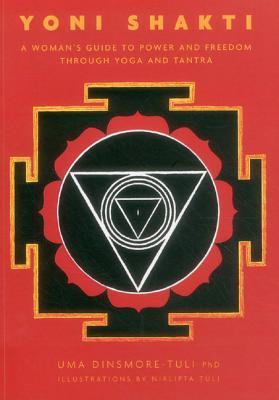
Yoni Shakti: A Woman’s Guide to Power and Freedom Through Yoga and Tantra by Uma Dinsmore-Tuli

Yoni Shakti: A Woman’s Guide to Power and Freedom Through Yoga and Tantra by Uma Dinsmore-Tuli

“When we unlock our sakti we re-connect with our capacity for inner joy and peace with ourselves: all our experiences begin to join up and make sense. Freeing our sakti in this way gives us the key back to our sexual selves, so that we may inhabit our whole being with authenticity and joy.” pg 508 ebook.

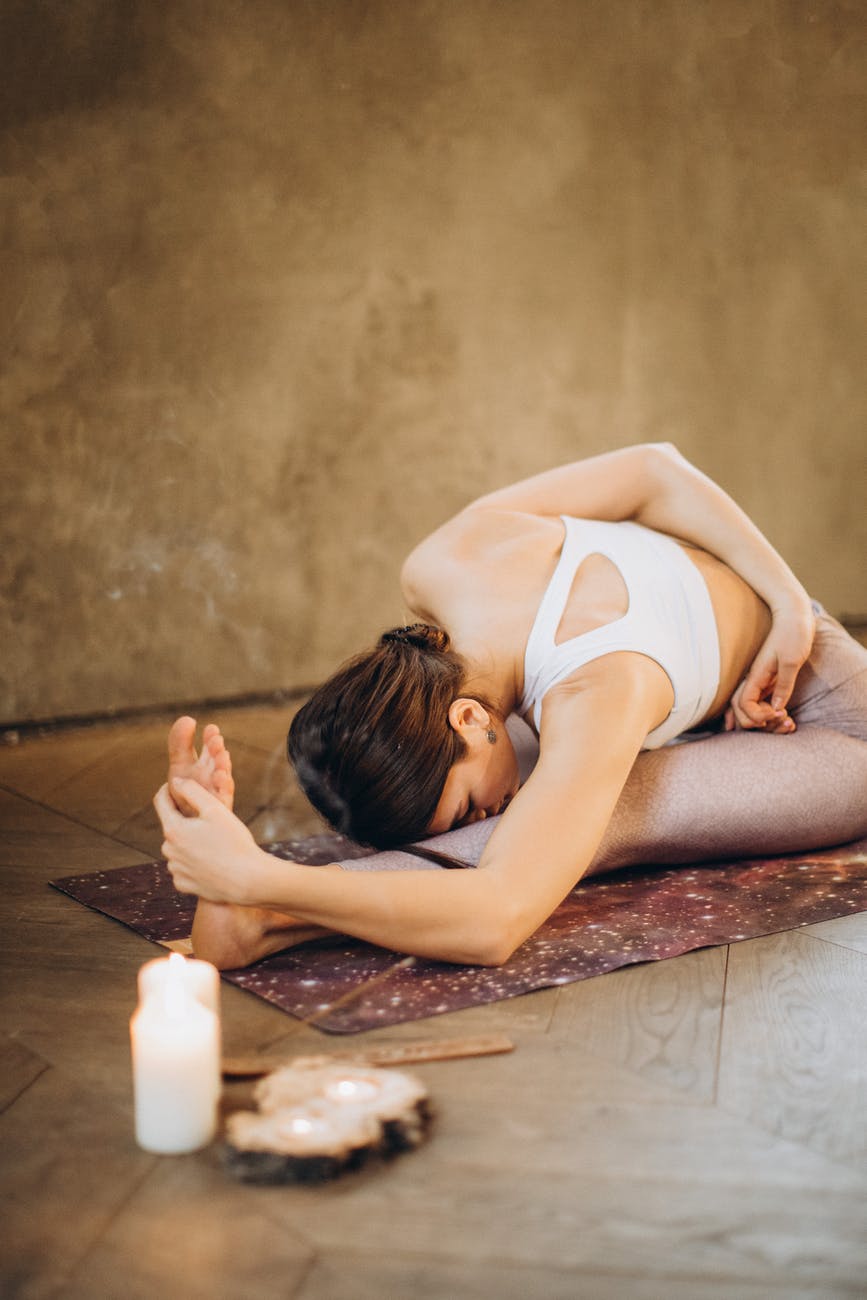
Author, yogini and tantrika, Uma Dinsmore-Tuli, shares yoga sequences, mantras, mudras and meditations to assist readers in becoming more aware of their inner selves.

Photo by Elina Fairytale on Pexels.com

What does this accomplish, you may be asking yourself. According to Dinsmore-Tuli, it’s the foundation of a mindful existence.

“All of the poses to unblock the life force energy are also very practical means to keep the creative and sexual energies in circulation so that they are available to nurture and enrich our creative, family, social and professional encounters.” pg 518, ebook

That sounds pretty good to me.

So, I tried some of the suggestions from this book which I had to cherry pick because there are dozens to try. And my results were unexpected and stunning.

Photo by Diego Madrigal on Pexels.com

After the first practice, I experienced an almost immediate increase in my sensitivity to my body’s energy and overall energy level. After the first week, this improved awareness led to some fascinating experiences during my meditations.

Apparently, practitioners of yoni shakti routinely encounter visions or spontaneous energy body knowledge. The goal is not to seek these experiences, but to be aware when they arise and dissipate, and then utilize them for greater self knowledge.

Using these teachings, I feel like I’m learning a whole new dimension to life- one that arises from practices of mindful awareness. Yoni Shakti is a good reference book for that journey.

Photo by Daniel Torobekov on Pexels.com

That being said, a majority of this book is repetitive to the point of unreadable. I realize Dinsmore-Tuli is passionate about the women’s movement in yoga, but she goes on so much about past abuses by gurus and organizations that it detracts from the delivery of the wisdom of the book.

I found myself skimming entire sections because they read the same in the previous chapter and the ones before it.

On the other hand, this book shines in its accounts of the women who were suffering and then rediscovered their power and ability to heal themselves through their yoga practice.

“There is a deep relief in knowing that other women have experienced the same losses, and a comfort in hearing others speak about what is so often unspoken. The sharing is healing.” pg 597

Recommended, with a few reservations, to spiritual seekers interested in yoga and tantra- particularly women.

Thanks for reading and namaste!

The Wild Woman’s Way: Unlock Your Full Potential for Pleasure, Power, and Fulfillment by Michaela Boehm

The Wild Woman’s Way: Unlock Your Full Potential for Pleasure, Power, and Fulfillment by Michaela Boehm

“This book is a call to come back to our wild, undomesticated ‘original nature,’ which, combined with an untamed heart, knows what is true for each of us. It is a call to return to the inborn genius that guides our passion, whispers in our ear with longing, and reveals itself abundantly when we allow our bodies to show us the way.” pg 8, ebook

Michaela Boehm utilizes her years of therapeutic practice and tantric training in this self help book designed for the modern woman.

Photo by Gabriela Cheloni on Pexels.com

There are so many choices and life paths from high-powered careers to motherhood, that many women try to do it all.

“The good news: amidst such a multitude of options we are free to choose what resonates with us. The bad news: it’s confusing, overwhelming, time-consuming, fraught with many pitfalls, and requires constant discernment.” pg 9, ebook

It’s not possible to do and have it all, Boehm writes, and while they attempt it, women cut themselves off from their sensual natures. She has written this book to give women practices and rituals to bring them back from this disconnection into the power and knowledge of their bodies.

Photo by Maria Orlova on Pexels.com

“Relaxing the body; engaging with life, beauty, and nature; and gentle, nonlinear movement and dance are some of those physical practices we’ll be engaging in throughout this book.” pg 34, ebook

I didn’t connect with all of Boehm’s writing, but I have begun to practice a version of her “formless dancing” every day. The practice itself is simple. Turn on music with no words and a beat, and move your body however it feels like moving. It’s designed to release tension and unconscious clenching that happens when one becomes disconnected from their physical form.

“Once you understand your own reasons for any numbness, tension, and strain that you may carry in your body, you can easily undo the related habitual body patterns and restore yourself to a state of pleasurable aliveness and sensual well-being.” pg 50

Photo by Engin Akyurt on Pexels.com

I find it extremely relaxing. I probably look mad, shimmying and bouncing and swaying around, but it feels really good so who cares. 🙂

Highly recommended for readers looking to reconnect with their body’s innate intelligence or who are interested in different spiritual practices.