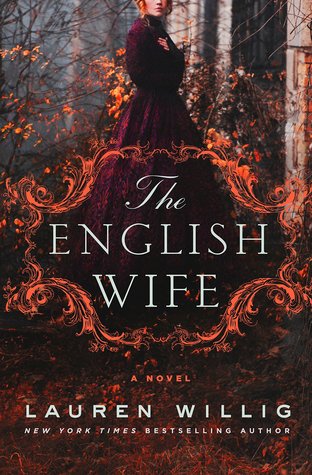
The English Wife by Lauren Willig

The English Wife by Lauren Willig
english wife

The year is 1899. The Van Duyvils are an extraordinarily wealthy and established family in New York. One night, at a holiday party, there is a murder… or is it a suicide?

The newspapers whip the public into a fury with their sensational headlines. They ask, ‘Who are the Van Duyvils and who is the new English wife?’

And there, our story begins.

Lauren Willig has created a lovely mystery/historical fiction with snappy dialogue and enough layers to keep readers guessing to the very end.

I loved Janie Van Duyvil, one of the main characters in this tale “There were times when she wished she had been born a male, that she might make her own way, that she might marry as she pleased and live as she would.” loc 45, ebook.

As she desperately tries to piece together the clues to find the murderer, Janie also comes into her own and begins to stand up to her tyrannical mother.

“It is her marriage,” Georgie pointed out drily. “Surely, she has some say.” “If you can think that, you haven’t met my mother.” loc 1179, ebook

I also enjoyed the role of the press in this story. James Burke is a reporter for ‘The News of the World.’ He wants to get the scoop on the murders. But, part of his job, is to sell papers. “The man had the gall to widen his eyes in innocence. “We prefer to call it investigative reporting, Miss Van Duyvil.” “I call it scandal-mongering, pure and simple.” loc 252, ebook.

My favorite scene is when Janie goes to ‘The News of the World’ building and readers get a glimpse into the crazy newsroom. “There was an undeniable energy to the room, the clacking typewriters, the shouting voices, that put energy into her step and color in her cheek.” What fun.

Photo by Suzy Hazelwood on Pexels.com

Willig seems to have a handle on what makes reporters tick. She even captures the gallow’s humor that they use to maintain their sanity. “Will it appear in an illustrated supplement in The World?” “Not unless there’s a body hidden there.” Mr. Bruke grimaced. “Sorry. In the newsroom, we… well, the worse it is, the more of a joke we make it. It’s a way to get through the day without being sick.” loc 2765, ebook.

Recommended for readers who want to lose themselves in a mystery with some romance along the way, The English Wife may just fit the bill.

Thank you to NetGalley and St. Martin’s Press for an advance digital copy of this book. Reminder: the brief quotations in this review may vary from the final printed form.

Thanks for reading!

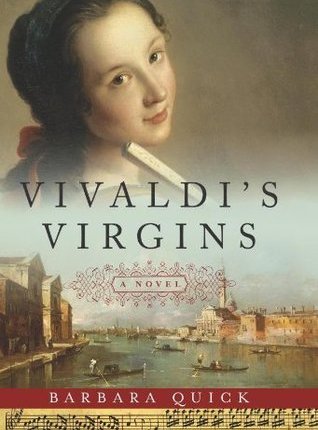
Vivaldi’s Virgins by Barbara Quick

Vivaldi’s Virgins by Barbara Quick
vivaldi

Vivaldi’s Virgins is a sparkling historical fiction about Anna Maria dal Violin, one of the orphans trained to perform music for the well-fare of the souls of Venice in the 1700’s.

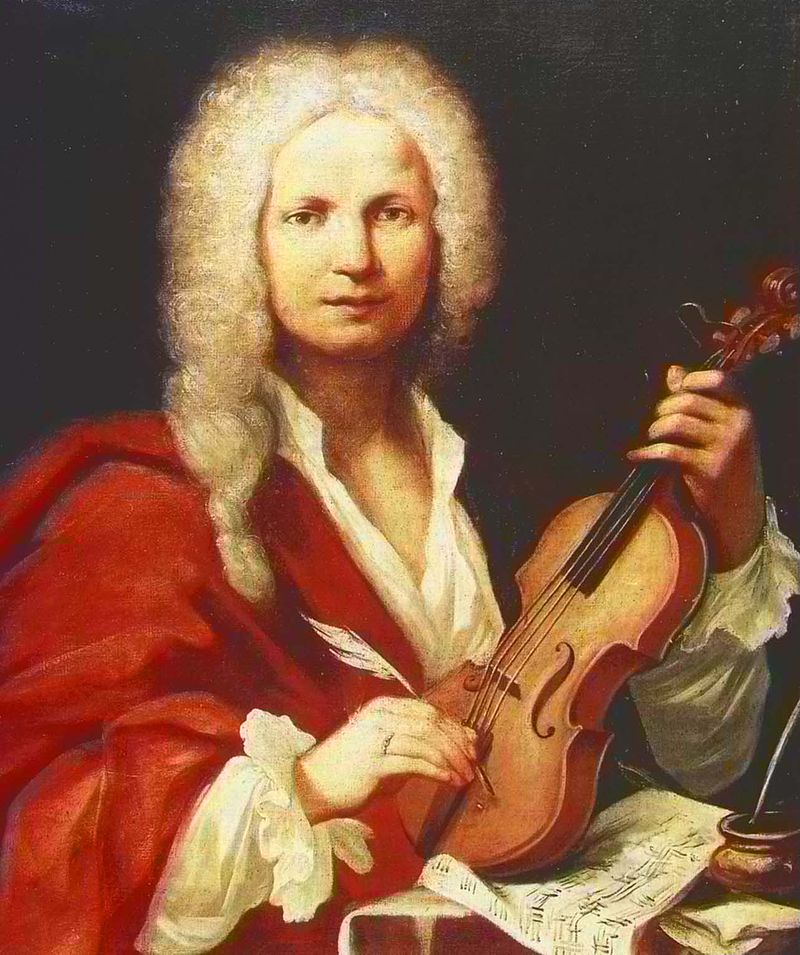
One of her instructors is Antonio Vivaldi, who is called “The Red Priest” because of his fiery hair: “I heard and then watched Maestro Vivaldi climb the stairs. He has been my teacher- and one of the very few men who has ever seen my face or spoken to me- for nearly half of my lifetime. I was only a girl of eight when, newly ordained as a priest, Antonio Vivaldi, native son of Venezia, was hired by the governors of the Pieta to be our master of the violin.” pg 2

Only girls are allowed to perform music in the Pieta. They are kept separate from the general population and all men, except for the priests who are their instructors, to maintain their purity. “Our lives are arranged so that every piece of every day and night is fit together into an intricate mosaic of music and study and prayer. But it is only a counterfeit of real life. We have no more reality in the world than the trompe l’oeil floor tiles of the church have depth or height.” pg 85

There is drama among the children through their interactions and competition with each other and some of their instructors, who are either nuns or priests. “Whoever says that girls are kind has never lived among them.” pg 13.

Anna longs to know who her family was, but that is a secret kept by the nuns who watch over the children. She spends much of her time trying to figure out how to learn more about who her family may be.

Anna also strains against the restrictions placed on her because of her gender in the 1700’s. The government only allows the female musicians from the Pieta to perform in public if they remain in the cloister. If they choose to marry, they have to sign a contract to promise not to perform or pay an exorbitant amount of money to the orphanage to pay for their childhood musical education. “It is one of the great injustices of this fair city. And it has made me dream sometimes of other cities- of London and Paris and Vienna, where, I’ve heard, female instrumentalists have actually been welcomed, from time to time, on the performance stage.” pgs 145-146.

A probable portrait of Vivaldi

During these struggles, Anna forms true friendships with other foundlings in the Pieta. “When I think of who my companions will be in Hell, I feel rather glad that I will be going there. It will be filled with those I most well and truly loved.” pg 150

I learned a lot about 18th century Venice in this book and Vivaldi. All that I knew about Vivaldi, before reading this book, was that he liked to use a bunch of stringed instruments in his compositions.

It makes so much more sense when I discovered who it was he had been composing for.

Recommended for those who enjoy historical fiction, books about composers or stories about troubled childhoods.

Thanks for reading!

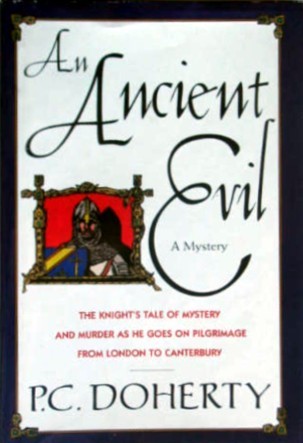
An Ancient Evil (Stories told on Pilgrimage from London to Canterbury, #1) by Paul Doherty

An Ancient Evil (Stories told on Pilgrimage from London to Canterbury, #1) by Paul Doherty
anancientmystery

An Ancient Evil is a charming historical fiction based loosely on the premise of The Canterbury Tales.

In the introduction, a knight tells a story to a group of pilgrims on their way to Canterbury. “My tale begins hundreds of years ago, just after the great Conqueror came here. So, gentles all, your attention as I describe these horrors sprung from the very pit of Hell.” pg 6.

In the story within the story, a menacing prologue introduces the reader to Sir Hugo, who buries alive the leader of a group of evil magic doers and burns the rest of his order. The evil leader who is buried alive doesn’t seem that upset about the whole thing. Which is weird.

Fast forward a couple hundred years into the future.

Sir Godfrey and a clerk, Alexander, are tasked by the king of England to discover the truth behind a series of mysterious and grisly murders in Oxford.

They are assisted in their task by Dame Edith, a blind anchorite who is known for her exorcism talents. ‘Sir Godfrey, whoever the killers are, we are about to enter the Valley of Death, but,’ Alexander couldn’t resist gentle banter, ‘we have your sword, my brains and the prayers of Dame Edith.’ ‘I think we might need more than that.’ pg 64.

I enjoyed this medieval, just a bit too bloody to be called “cozy”, mystery.

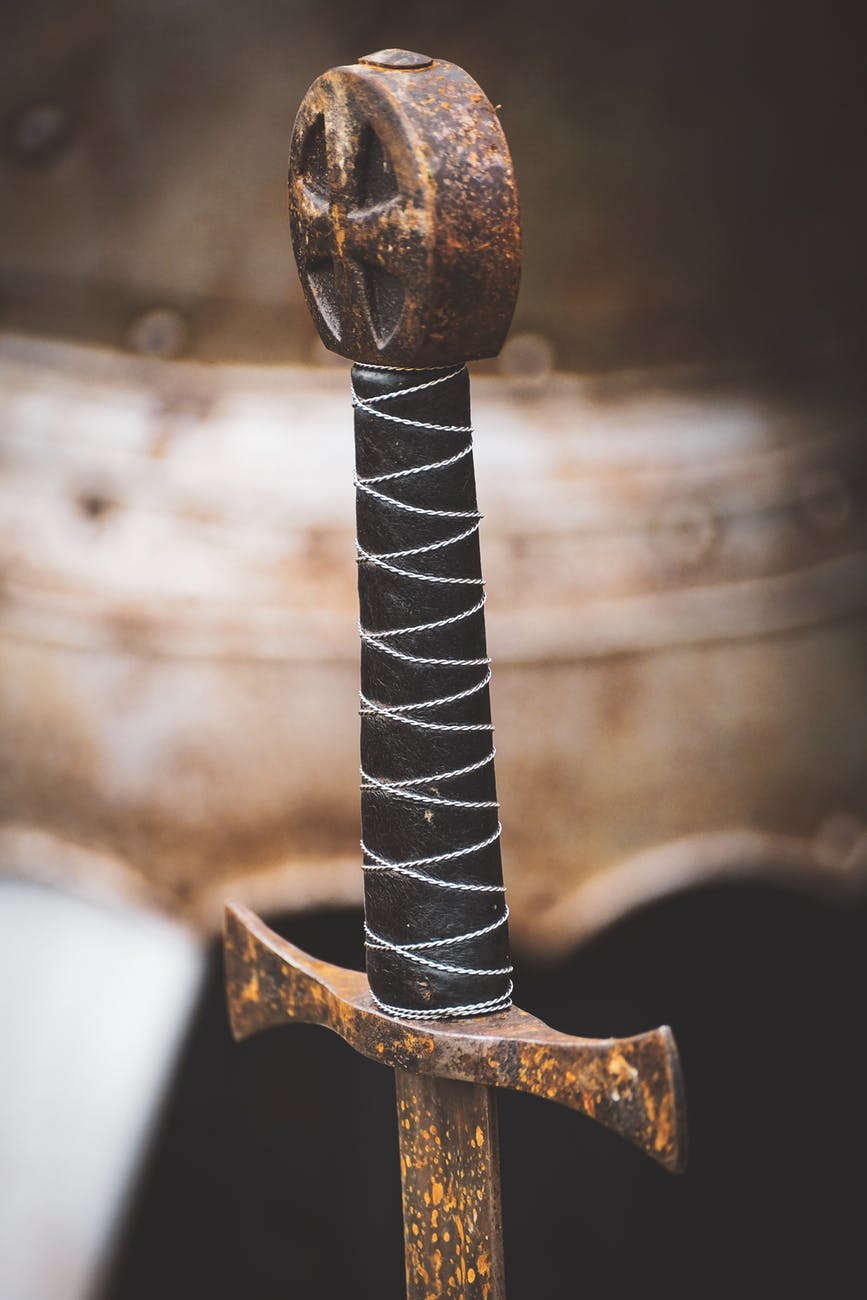
Photo by Susanne Jutzeler on Pexels.com

The characters are layered. The author drops enough hints to lead the reader towards the bad guy without giving the game away.

It reads a bit like a Nicholas Cage movie. We’ve got a battle between good and evil with some paranormal stuff and swords thrown in.

“Dame Edith tapped the side of her head. ‘Sir Godfrey, you are a soldier. You, of all people, should realize that a man is what he thinks he is. What causes one man to be a coward and another to be a hero? After all, they may be the same flesh and blood. They may even be brothers from the same womb. It’s what they think.” pg 170.

I also enjoyed the details about medieval life that are sprinkled throughout.

Recommended for readers who enjoyed The Thief Taker by C.S. Quinn or Mistress of the Art of Death by Ariana Franklin.

Thanks for reading!

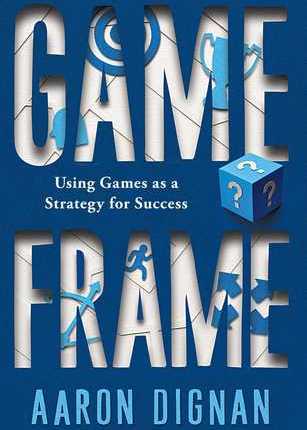
Game Frame: Using Games as a Strategy for Success by Aaron Dignan

Game Frame: Using Games as a Strategy for Success by Aaron Dignan

In Game Frame, Aaron Dignan outlines what games are, their components and how to create behavioral games to change your own and others behavior.

He clearly states his goals for the book in the introduction: “The truth is, we are born knowing how to play, and how to invent games where none exist. I’m convinced that there is a role for games and play in reshaping the world around us.” introduction, xiii.

Photo by lilartsy on Pexels.com

Dignan goes on to do just that. His detailed breakdown of the components of games and why we think they’re fun was particularly good.

I also agreed with his assertion that “play is a state of mind”: “…when a chef cooks something new, it feels like play. When I cook something new, it feels like work. Both of us are making a meal, but we’re not experiencing the same thing. Play is a state of mind.” pg 26.

Photo by Malidate Van on Pexels.com

My quibble with this book is that he didn’t convince me that games are the best way to change behavior. In Level 5 (Chapter 5), Dignan describes a speech given by Professor Jesse Schell at the D.I.C.E. conference in 2010 that scared the crap out of me.

Essentially, Professor Schell outlines how businesses and the government could use behavioral games to create a dystopian world in which our every action is analyzed and nudged towards consumerism.

“You’ll get up in the morning to brush your teeth and the toothbrush can sense that you’re brushing your teeth. So hey, good job for you, 10 points for brushing your teeth. And it can measure how long, and you’re supposed to brush your teeth for 3 minutes. You did! Good job! … And who cares? The toothpaste company. The toothbrush company. The more you brush, the more toothpaste you use. They have a vested financial interest.” pg 58

Photo by Karolina Grabowska on Pexels.com

After that chapter, I couldn’t shake the feeling that Dignan is inviting us to open a Pandora’s box.

“My challenge to you is simple: I believe that a million behavioral games could change everything, but they must be imagined and realized soon.” pg 169.

Hypothetically, say I design a game with the best intentions, but then, at some point, it’s taken over by the government and forced on people. Suddenly, it stops becoming a game and ruins the world.

Who wants to take the risk to potentially be the person who destroys society because of an ill-conceived behavioral game? Not me.

Recommended only for the truly brave gamers.

Thanks for reading!

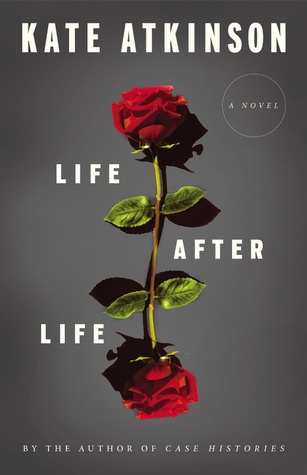
Life After Life by Kate Atkinson

Life After Life by Kate Atkinson

lifeafterlifeA lovely and unusual book about reincarnation, free will and destiny.
Ursula Todd was born on a snowy day in February with the umbilical cord wrapped around her neck. That was the first time she died…

I loved how Kate Atkinson built this story through seemingly insignificant details. As the reincarnations progress, layers are added upon layers, so that by the end of this tale, it is a rich tapestry of events, emotions and possibilities.

I was surprised by the open-endedness of this story. I feel like Atkinson wrote a tale that reads like real life- it has the meanings that we assign it. Nothing more, nothing less.

I listened to the audiobook of Life After Life and it was very good. A few times, I wished that I had the physical book in front of me so that I could double check a date or detail. Other than that, the narration was excellent.

This story has me wondering about life, reincarnation and all of it. If, as so many world religions say, there are parts of us that are immortal, wouldn’t we all go a bit bonkers after millennia of existence? Would we get bored of it? Would we ever choose to not come back? What’s the bigger picture?

Anyway, this book will make you wonder, question and dream about existence. Which, in my mind, is one of the highest functions of a book.

Recommended for fans of historical fiction, spirituality and life itself. I think Atkinson has written a masterpiece.

Thanks for reading!

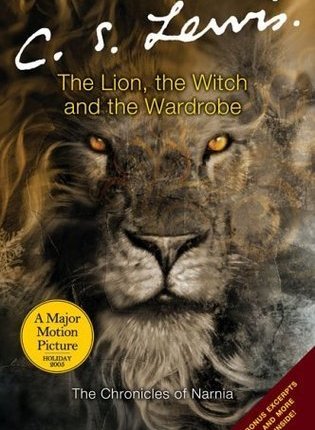
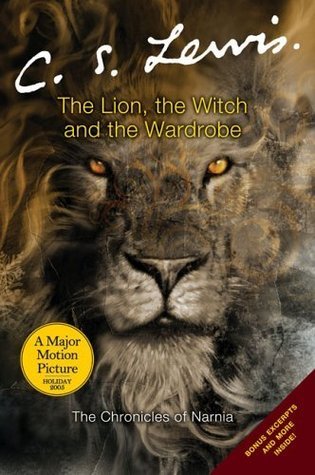
The Lion, the Witch, and the Wardrobe (Chronicles of Narnia, #1) by C.S. Lewis

The Lion, the Witch, and the Wardrobe (Chronicles of Narnia, #1) by C.S. Lewis
lionwitch

This is the story of four siblings who stumble through a wardrobe into a different world. They discover magic, monsters and their destiny.

One Christmas, when I was 11 or 12, my mother gave me The Chronicles of Narnia. It ignited a lifelong love of fantasy fiction and reading.

“Peter! Susan! It’s all true. Edmund has seen it too. There is country you can get to through the wardrobe. Edmund and I both got in. We met one another in there, in the wood.” pg 40.

I get the criticisms of this series- that it is heavy handed with its symbolism.

But, when I read it as a child, all of that slipped right over my head. All I knew, was that this was an adventure and I loved it.

The White Witch is one of the best villains in children’s literature: “As for you,” said the Witch, giving Edmund a stunning blow on the face as she re-mounted the sledge, “let that teach you to ask favour for spies and traitors. Drive on!” And Edmund for the first time in this story felt sorry for someone besides himself.” pg 113.

She opposes Aslan, a great golden lion and the ruler of Narnia, who hasn’t been seen for an age: “And now,” said Aslan presently, “to business. I feel I m going to roar. You had better put your fingers in your ears.” And they did. And Aslan stood up and when he opened his mouth to roar his face became so terrible that they did not dare to look at it.” pg 161.

The film did a solid job capturing the magic of this story, but nothing compares to the book.

“Once a King in Narnia, always a King in Narnia.” pg 186.

In fact, just writing up this review makes me want to read them all again.

I’ll see you on the other side of the wardrobe…

Thanks for reading!

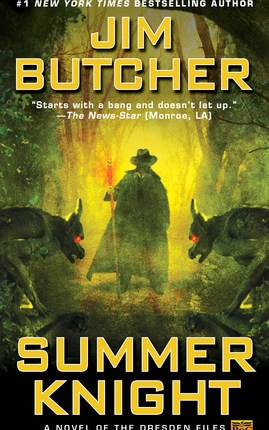
Summer Knight (The Dresden Files #4) by Jim Butcher

Summer Knight (The Dresden Files #4) by Jim Butcher

“Harry Dresden has been down and out in Chicago. He can’t pay his rent. He’s alienating his friends. He can’t even recall the last time he took a shower. The only professional wizard in the phone book has become a desperate man.”

-Goodreads

“Summer Knight” is the fourth entry in the delightful “Dresden Files.” If you’re looking for a fantasy soap opera starring a male lead and a cast of colorful, non-human characters, look no further.

Photo by RODNAE Productions on Pexels.com

Harry Dresden, a wizard-for-hire, is in the thick of it. He’s started a war between the vampires and wizards and the White Council is not happy about it. And, there’s the small matter of his former girlfriend, Susan, who’s been infected with vampire blood.

Can he save her from a terrible fate? Can he save himself?

Photo by RODNAE Productions on Pexels.com

Then, there’s Karrin Murphy, the head of the supernatural department at the Chicago PD. She’s suffering from nightmares caused by the last adventure that Harry brought to her doorstep. Will she be able to pull herself together long enough to help the wizard save the world?

Add to these troubles vengeful fairies, a handful of changelings, pizza-loving pixies, werewolves and, of all things, Dungeons and Dragons! The Summer Knight is a rollicking entry in The Dresden Files.

My one complaint: more Bob. That is all.

Photo by Ahmed Adly on Pexels.com

Recommended for urban fantasy readers, MMORPG players and people who believe or want to believe in fairies.

Thanks for reading!

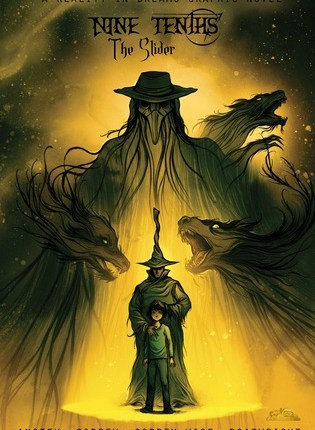
Nine Tenths: The Slider by Alex Anstey. Illustrated by Cory Godbey, Courtney Godbey Wise, Thomas Boatwright

Nine Tenths: The Slider  by Alex Anstey. Illustrated by Cory Godbey, Courtney Godbey Wise, Thomas Boatwright

nine tenthsNine Tenths: The Slider is a gorgeous graphic novel that introduces a world of archetypes and fantasy, where some of the forces that underlie nature have become unbalanced.


The panels are done primarily in greys, blues, and red. The overall effect is ethereal and dreamlike. I loved the artwork in this, especially the scenes of Lundon, the city of the dead and the gods in the introduction.

The characters are drawn beautifully as well. My favorites are the Dreads, hell hound creatures with elongated teeth, that sever the threads of life within souls. Excellent and very creepy.

Because this graphic novel is the first in a series, I felt like I didn’t get to enjoy all that much of the story before it was over. But, that’s nothing new. I seem to feel that way at the start of every series.

The world and main characters get their introductions then there isn’t time for much else. And this literally starts at the beginning of existence: “At the very beginning of time, long before there was an Earth or people to live upon it, there was only chaos… from chaos came life, and by consequence, death. Two natural forces through which all could be observed.” pgs 1-2

I’m always on the look out for age appropriate graphic novels for reluctant readers. Nine Tenths: The Slider has some violence in it so it may most appropriate for the 12-18 year old set.

The mythological setup and scope of the story are truly epic. It’s a shame that there haven’t been future entries in this series. Anyone who appreciates the intrinsic beauty of graphic novels will certainly find much to enjoy in this.

I received a free copy of this book through Goodreads First Reads.

Thanks for reading!

Nerd Do Well by Simon Pegg

Nerd Do Well by Simon Pegg
nerddowell

Nerd Do Well is Simon Pegg’s life story interspersed with the tale of a fictional alter ego, Pegg, a James Bond figure with a robotic sidekick. His coming of age stories and fictional bits are hilarious but once Pegg gets into his movie making period, the book loses it’s momentum.

I preferred the nostalgia of the first time he saw Star Wars to the actuality of meeting his hero, George Lucas and finding him stand-offish. There’s something heart breaking about seeing childhood hero worship crumble in the face of cold hard reality.

Pegg’s education in film appreciation and critique make for truly fascinating observations about pop culture films. I took his thoughts about how the Anakin/Frankenstein scene in the third Star Wars movie could have been made into a memorable and fitting theatrical moment instead of the joke that it was (pg 328-329) to my husband, who is the most ardent Star Wars fan that I know. Husband said in response, “His way would have made it much better.” You’ll have to trust me when I say that that’s very high praise.

Another of my favorite parts in Nerd Do Well was Pegg’s explanation for American readers about why the pub occupies a prominent place at the center of British social life. I’d never really understood what the attraction was until he painted the scene.

Photo by Kelly L on Pexels.com

I mean, in my hometown, we have all sorts of dive-bars lining main street where, any night of the week, I could roll in there and meet up with the prematurely aged classmates of mine who will never get out of that place. But, who wants to do that. The bar is the epitome of failure rather than community.

With his homemade quizzes, neighborhood regulars, and music, Pegg’s pub seems to be somewhere warm and inviting where I would actually enjoy hanging out. It makes much more sense to me now why Shaun of the Dead was based around a pub and also why most DnD campaigns begin in taverns.

If you enjoyed Nerd Do Well, you may want to read My Booky Wook (less Star Wars, more drugs, fairly funny) or Just a Geek: Unflinchingly honest tales of the search for life, love, and fulfillment beyond the Starship Enterprise (more Star Trek, more angst-filled than funny).

Thanks for reading!