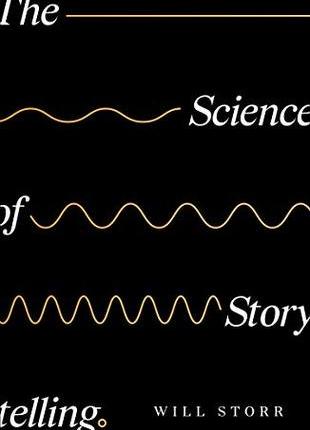
In The Science of Storytelling, Will Storr reminds readers our brains are hard-wired for stories and how best to utilize this in our own writing endeavors.
Through the use of various writing tools based on scientific research, Storr demonstrates how to appeal to an audience, keep them hooked and connected to the characters.

For example, Storr writes the use of change in storytelling grabs readers’ attention because human beings are always on the look out for it. Change can be good or bad- it’s life itself. Our brains look for change as a survival mechanism and this trait can be used to entice readers so they come back for more story.
“This is what storytellers do. They create moments of unexpected change that seize the attention of their protagonists and, by extension, their readers and viewers.” pg 13, ebook

Change is also something that people try to control (they can’t but they try). This universal pattern is called, ‘the theory of control’. When readers see traits they share with characters in stories, they become invested in the outcome which keeps them reading. Or when readers see traits they don’t believe they have, but do, they’re hooked.
There’s a lot of hooking going on, which is a good thing when you’re writing a story. 🙂
“A character in fiction, like a character in life, inhabits their own unique hallucinated world in which everything they see and touch comes with its own unique personal meaning.” pg 41, ebook

Storr suggests creating complex characters and writes that the story almost creates itself with a properly drawn character. A complex character has flaws, a personality, misunderstandings with others in the story.
Also, going back to the ‘change’ theme, complex characters are generally passing through a ‘change of status’ of some kind. This ignites curiosity in the reader. It makes readers ask themselves, ‘What’s going to happen next?!’
“The place of maximum curiosity- the zone in which storytellers play- is when people think they have some idea but aren’t quite sure.” pg 18, ebook
Highly recommended for writers or anyone interested in how the brain works. If you’re looking for more writing advice, I recommend Murder Your Darlings: And Other Gentle Writing Advice from Aristotle to Zinsser or Nobody Wants to Read Your Sh*t: Why That Is And What You Can Do About It.
Thanks for reading!
- The Ballad of a Small Player: a Metaphysical Movie Review
- Otherwhere: A Field Guide to Nonphysical Reality for the Out-Of-Body Traveler by Kurt Leland
- Psychic Dreamwalking: Explorations at the Edge of Self by Michelle Belanger
- Archetypes on the Tree of Life: The Tarot as Pathwork by Madonna Compton
- The Goddess and the Shaman: The Art & Science of Magical Healing by J.A. Kent




 The Help Desk Book Blog