Dying to Wake Up: A Doctor’s Voyage into the Afterlife and the Wisdom He Brought Back by Rajiv Parti

Dying to Wake Up: A Doctor’s Voyage into the Afterlife and the Wisdom He Brought Back by Rajiv Parti

Rajiv Parti was living a materialistic dream with the house, car, and beautiful wife to prove it. But, the many things in his life didn’t bring him comfort when he developed prostate cancer and a bunch of unfortunate side effects from the surgery to remove it.

Photo by PixaSquare on Pexels.com

Addicted to pain pills and disconnected from the people around him, Dr. Parti underwent emergency surgery and experienced something so incredible, that when he woke up, he completely changed his life, developed a new form of holistic health treatment, and gave up many of the possessions that were weighing him down.

This is the memoir about that experience and Dr. Parti shares it in the hopes that it will change the reader’s life or at least bring comfort to those who are struggling in their current life experience.

Like many of the other memoirs I’ve read by medical professionals, Dr. Parti talks about the completely scientific view he had of the soul, which is to say, if you couldn’t see it and measure it, then it doesn’t exist.

Also, working on the technological edge of medical breakthroughs in the treatment of various diseases, had given him an invincible feeling.

This experience blew that attitude away: “Feeling like a master of the universe is easy in the world of modern medicine. … Maybe it’s a sense of cheating death for others that gives us cardiac surgical teams the vague feeling that we can overcome our own death. Of course that isn’t true. … Reality popped that myth for me.” pg 10

Photo by Kevin Menajang on Pexels.com

In his near death experience, Dr. Parti not only encountered his father, but also a huge crowd of his ancestors.

They shared messages of forgiveness and love: “Love is the most important thing there is, my grandfather communicated to me. I am glad to let you know that simple truth while you can still make change in your earthly life.” pg 44

But his time on the other side wasn’t all light and love, Dr. Parti also had the (fairly rare) experience of seeing hell and the suffering souls within it.

This is entirely my opinion, but I think that the detached manner in which Dr. Parti was living his life brought forth a major wake-up call from the spirit world. He saw hell first and then heaven and, in a way, that could be a metaphor for his life experience.

Photo by Skitterphoto on Pexels.com

I don’t believe in “hell” myself other than the nightmare that people can create in their own minds and lives, but, I didn’t experience it like Dr. Parti did. This memoir does not focus on the hell portion of the narrative, but, with the rarity of that experience, it could have. That, in itself, says something.

When Dr. Parti “comes back”, he knows that he wants to start a new life and a new focus, but he doesn’t know how.

The information for developing a new type of medicine comes to him slowly during meditation: “What is (the new mode of healing) anyway?” “…It is how nonpharmacological treatments in combination with drugs can heal things like depression and addiction and other diseases. It’s about searching one’s own soul to fight back against the hollowness that pharmaceuticals alone or alcohol and illegal drugs create or don’t really fill.”pg 91.

He eventually develops meditations and lifestyle changes as well as a manifesto for treatment.

To me, the most fascinating part of this memoir was the communication between himself and the spirit world once he was back.

For readers who are unfamiliar with near death experiences, Dr. Parti provides a broad background with some of the major historical figures who went through it.

Like Jung: “(Carl) Jung’s NDE led to a split with Sigmund Freud, who believed that spiritual experiences were fantasies. Jung, however, considered spirituality an important part of our well-being saying that life has purpose beyond material goals and that our main task, the path we should all be on, is the one that leads to our own connection with the universe.” pg 124

Photo by Cliford Mervil on Pexels.com

Ultimately uplifting and empowering, Dying to Wake Up is another excellent entry into the literature about near death experiences.

Recommended for anyone who questions why we are here or what comes after. Some further reading: Into the Magic Shop: A Neurosurgeon’s Quest to Discover the Mysteries of the Brain and the Secrets of the Heart, Dying to Be Me: My Journey from Cancer, to Near Death, to True Healing, or Wisdom of Near-Death Experiences

Thanks for reading!

Uncharted: The Journey through Uncertainty to Infinite Possibility by Colette Baron-Reid

Uncharted: The Journey through Uncertainty to Infinite Possibility by Colette Baron-Reid
uncharted

In Uncharted, Colette Baron-Reid guides the reader with journaling, visualization, personal stories, and meditation exercises through unexplored realms of the spirit as a method for greater self knowing and actualization.

I enjoyed this book, but it felt a bit all over the place. Let me explain what I mean by examining some of the many subjects discussed:

In the introduction, Colette begins by giving some background information into what’s been going on with her for the past couple of years.

One of those big changes is that she is now channeling an group of beings, whereas, prior to this, she wasn’t.

In this passage, she’s talking about the entity helping her to write Uncharted: “It’s like “they” had the puzzle pieces, and when I was ready for them, they dropped them down on the page for me to discover. I’m not realizing that this is, in essence, what channeling an “entity” is. It’s something I never quite understood, and I’m afraid I didn’t respect its power as I should have. So I hereby surrender my inner critical cynic who doubted others when they shared their channeling stories. I get it now.” loc 55, ebook.

She calls this/these entities, Fred. Throughout the book, Fred pops up and shares a message or clarifies something. I felt as if the channeled messages could have composed a whole other book in addition to this one.

Plus, it’s clear that she’s still honing her ability to talk and understand to this inner knowing. Anyway, it “muddied the waters,” so to speak, of Uncharted from nearly the first page.

Colette doesn’t think much of the ego or what she calls the “small self”:“When you view the world through the limits of your small self, you see only the separated parts of the material world. You are guided by your personal narratives that tell you who you are based on your past experience, ambitions, and goals that were set within the Realm of Form. You’re oblivious to being part of one big matrix of interconnectedness. You forget where home is, and you feel lost.” loc 634, ebook.

Photo by Sachin C Nair on Pexels.com

I’ve read all sorts of different teachings about the ego, but I’ve started to lean towards Abraham Hick’s thoughts on the matter. They teach that the ego is the lens through which the divine within you perceives reality and that our desires are breadcrumbs along the path to eternal joy if we allow ourselves to realize them.

Hicks also says that (paraphrasing): “If you only remembered how much you wanted to be in these bodies, you wouldn’t be so quick to fault yourself and your desires. You are the leading edge of thought- you take spirit beyond which it has ever been before.”

In my mind, that is the function of ego: to express our unique personality. Isn’t the desire to be free of ego also a desire driven by the ego?

I did like Colette’s definition of co-creation, which is one I’d never heard before: “Here’s how it works between you and Spirit. You, as an individual, are always cocreating. The divine creative force is always there with you, along with spirits and allies who enthusiastically join in as you co-create reality. And you are never alone.” loc 712, ebook. Encouraging, I think.

Photo by Mayu on Pexels.com

I also liked the lesson on fate, our internal “stories” and the subconscious mind: “Listen, it’s not fun to admit that while your story about yourself has been influenced by other people and things that just seemed to happen “to” you, it was also co-written by you personally to a large degree. Fate played a role, to be sure, but you can take much greater control over your “fate.” As Carl Jung is supposed to have said, “Whatever is not brought from the unconscious into the awareness seemingly comes to us as fate.” loc 1568, ebook.

The fact that shadow dwells hand in hand with light is something that I’ve learned through my own meditation practice.

Here’s what Colette has to say about it: “In the Realm of Light, we recognize that light always exists in duality with a shadow- there’s no avoiding it. There is always a dark side to everything, a contrast between what is nourishing and loving and what is draining and entangled in fear, anger, or hatred. Those emotions will always exist, but they don’t have to overwhelm you or scare you away from the process of co-creation and transformation.” loc 1892, ebook. I believe that is true.

As for the movement through Colette’s “realms”, it reminded me of shamanistic work by Robert Moss. I’m not sure about the order in which she explores things (seems like every teacher has a different way to do it), but I think that, if your intention is greater self knowledge and if you practice what Colette teaches, you will find it.

In fact, if you try just a fraction of what she suggests in Uncharted, you will learn something about yourself. She gives plenty of exercises to attempt in here if one particular method doesn’t speak to you.

Recommended mainly for the New Age enthusiasts because of the subject matter, methods, and channeled material, but also for anyone who is curious about finding and embodying one’s authentic power.

Some similar reads: Thank & Grow Rich: A 30-Day Experiment in Shameless Gratitude and Unabashed Joy by Pam Grout, Ask and It Is Given: Learning to Manifest Your Desires by Esther Hicks, and Active Dreaming: Journeying Beyond Self-Limitation to a Life of Wild Freedom by Robert Moss.

A big thank you to Hay House and NetGalley for a free digital copy of this book!  And thank you for reading.

A Brief Tour of High Consciousness: A Cosmic Book on the Mechanics of Creation by Itzhak Bentov

A Brief Tour of High Consciousness: A Cosmic Book on the Mechanics of Creation by Itzhak Bentov

If you’ve been following this blog for awhile, you know now that I really enjoy “fringe” non-fiction that chronicles out of body experiences and remote reviewing.  This is another of those books.

If you’re not into those topics, my apologies in advance. 🙂

A lighthearted yet profound guide to the realms of higher consciousness and the ultimate nature of reality.

Goodreads
Photo by Pixabay on Pexels.com

My research into consciousness exploration continues with A Brief Tour of Higher Consciousness by Itzhak Bentov.

Having predominantly read books like this by artists (Jurgen Ziewe and Kurt Leland come to mind), it was refreshing to have a first person narrative by an engineer. Itzhak’s lens of perception is so different than my own- I loved it.

There is a part towards the end, What is a Hologram, and a chapter by another author, Essay on Cosmology by Edward Apgar, that I didn’t resonate with at all. But, perhaps for the most scientifically-minded, those parts will be your favorite.

hologram

Hologram image from nationaldefensemagazine.org

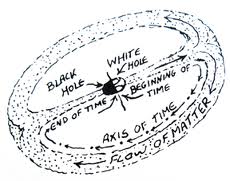
Itzhak has simplistic doodles scattered throughout the text which brings a “Randall Munroe” feel to the book- the use of simple pictures to illustrate complex and abstract ideas. This author definitely feels to me as if he was a bit ahead of his time in both his presentation and materials.

bentovdoodle

Bentov doodle from ritamarrpositivechange.wordpress.com

Itzhak’s explanation of “lens of consciousness”: “As consciousness evolves and information starts pouring in, the information is couched in a language best understandable to the person involved. For instance, a poet will be shown the nature of Creation in poetic images, an artist in visual symbols, and a mathematician in abstract equations; a nuts-and-bolts fellow like myself will have it shown to him as structure.” pg 5

I was reminded of Robert Monroe’s Journeys Out of the Body in which he puts emphasis on recording and comparing out-of-body experiences for consistency and real world applications to bring legitimacy to the practice.

I’ve heard that we’re all made of star dust and I really liked Itzhak’s description of it in this passage: “Stars collect into clusters or galaxies, and as they die, they explode and create cosmic dust, which again condenses into new stars and planets. Everything in the entire universe, including our bodies, is made of one cosmic substance. We contain atoms from the most distant galaxies and are thus connected to the whole universe.” pg 13

starsinthesky

Stars in the sky from wikipedia.org

Everything is vibration: “In short, consciousness in a vibratory state manifests itself as our familiar matter, from which the different forms that we see around us are made. The table, the flowers, the scent of the flowers, and our bodies are all made of rapidly vibrating consciousness.” pg 20 Wild!

A discussion of how to interact with devas (an ant deva to be precise, which is kind of silly, I realize), which Itzhak describes as “The name given to a being that is the rudimentary consciousness of any structure”: “To negotiate with her, the currency of exchange is love. Just send the ant deva a lot of love, which will stimulate her evolution. Even ant devas need love, in order eventually to know their Creator.” pg 33

Photo by Jimmy Chan on Pexels.com

In my meditations, I’ve frequently experienced what Itzhak describes in this next passage. It was nice to finally have a reason why: (While in a meditative state) “Wiggle your body. This causes a disturbance, a vibration, to spread … (This is similar to a fly falling into a spider web. The vibration of the web signals the spider and it shows up to investigate its dinner.) The deva .. appears immediately, looking worried and saying something like “What do you want?” or “Who are you?” pg 35

I’ll close with this excerpt of Itzhak’s philosophy: “There is nothing absolute and final. If everything were iron-clad, all the rules absolute and everything structured so no paradox or irony existed, you couldn’t move. One could say that man sneaks through the crack where paradox exists.” pg 78

If you enjoyed this book, you may want to take a look at Otherwhere by Kurt Leland or Multidimensional Man by Jurgen Ziewe. If you liked the doodles of complex concepts and want more of that, try Thing Explainer: Complicated Stuff in Simple Words by Randall Munroe.

Thanks for reading!

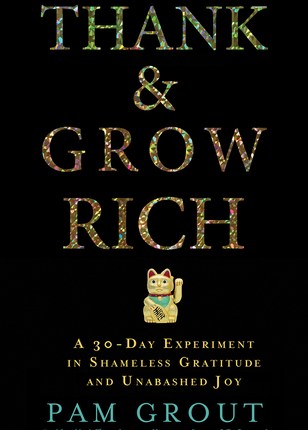
Thank & Grow Rich: A 30-Day Experiment in Shameless Gratitude and Unabashed Joy by Pam Grout

Thank & Grow Rich: A 30-Day Experiment in Shameless Gratitude and Unabashed Joy by Pam Grout

There is a disclaimer written in the description of this book on Goodreads that states it is not for everyone, but it was awesome in my opinion. I am going to admit that I am incredibly biased.

Photo by cottonbro on Pexels.com

I absolutely adored Pam’s other books on New Age thought and had some unbelievable experiences with the experiments recommended in them: E-Squared: Nine Do-It-Yourself Energy Experiments That Prove Your Thoughts Create Your Reality and E-Cubed: Nine More Energy Experiments That Prove Manifesting Magic and Miracles Is Your Full-Time Gig.

However, I couldn’t convince my public library to buy them because, I was told, they are “too fringe”.

Perhaps this book, which focuses on adopting an attitude of gratitude to improve your life, will be mainstream enough to make the cut.

Pam addresses the metaphorical elephant contained in her title early in the book: “No offense to Napoleon Hill, the author of the self help classic on which my title riffs, but the real power is in not thinking. If you want to override your brain’s unfortunate habit of leafing through your past and creating a present hologram to match, forget thinking. And start thanking.” Loc 108, ebook.

I read Think and Grow Rich last year and I could see how other people have beef with the classic. Napoleon Hill focuses on money, making connections, and doing the internal work to shoot yourself into the stratosphere of life success.

There’s very little in there about feeling your way to the same place.

Photo by fauxels on Pexels.com

Pam takes a different approach: “I should get this out on the table right now. This book won’t do a thing for your 401(k) or help you secure the McMansion you pasted onto your vision board. It’s not about getting rich in the traditional sense. … There’s nothing wrong with financial capital, but let me be very clear. It’s incapable of bringing any measure of real happiness.” Locs 324-337 ebook.

She gets to the heart of why seekers chase anything- because we believe that it will bring happiness. Pam suggests getting happy and then the success will come.

And, how does she say that we should “get happy”? By being thankful for what we already have.

“Be astonished by useless things. It’s easy to be thankful for the obvious- healthy kids, public libraries, strong marriages. But in this game we’re going to take it a step further. We’re going to build our gratitude muscle by also appreciating the insignificant and impractical…” Loc 856 ebook.

I had to include that passage for the library mention. Yay libraries!

Photo by Janko Ferlic on Pexels.com

Pam backs up her claims with scientific studies such as: “According to Richard Wiseman, psychology professor at the University of Hertfordshire in England and creator of Luck School, people who think they’re lucky actually are. After eight years of studying hundreds of self-identified exceptionally lucky and exceptionally unlucky people, he concluded that getting good breaks has nothing to do with karma or kismet and everything to do with how we see ourselves.” Loc 991 ebook.

I would like to state for the record that I am one of the luckiest people that I know. 🙂

She also includes a bunch of information from happiness researchers: “When it comes to success, research shows that while IQ, education, and training play cameo roles, the starring role, the headliner on the success stage, is “Do you have a vision? Do you believe it’s possible?” Shawn Achor, author of The Happiness Advantage: The Seven Principles of Positive Psychology That Fuel Success and Performance at Work… claims that predicting success using any other factor (say, your IQ or number of degrees) is about as effective as flipping a coin. What is effective, Achor and Frederickson and other happiness researchers have proven, is creating a happy brain that anticipates accomplishment, that knows success is just a matter of time.” Loc 1876 ebook.

I know that I have a pretty open mind when it comes to these types of books, but my thought is, what’s the harm in it? If it works for you, great! You’ve just discovered a new tool to use for living the best life for you.

If it doesn’t work, no harm done. At the very least, you would know for yourself.

Photo by Belle Co on Pexels.com

I recommend this book for readers of the Abraham Hicks materials because there are quite a few similarities in the philosophies contained within.

Some additional read-alikes for seekers like me who can’t get enough information about the law of attraction: The Power of the Heart: Finding Your True Purpose in Life, Happiness: A Guide to Developing Life’s Most Important Skill, or Dr. Quantum Presents: Meet the Real Creator–You!.

The opinions contained within this review are entirely my own. Thank you to NetGalley and Hay House for a free advance reader’s copy of this book for review purposes!  And, thank you for reading.

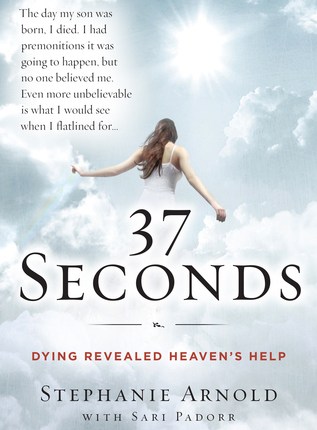
37 Seconds: Dying Revealed Heaven’s Help—A Mother’s Journey by Stephanie Arnold

37 Seconds: Dying Revealed Heaven’s Help—A Mother’s Journey by Stephanie Arnold

37 Seconds is a fascinating account of Stephanie Arnold’s near death experience. She had a premonition that she was going to die having her second child.

Photo by Pixabay on Pexels.com

Stephanie did die for 37 seconds and had an amazing spiritual experience.  Her religious upbringing is in Judaism which makes for a totally different lens of perception than other NDEs (near death experiences) that I have studied.

I like reading books about near death experiences and examinations of consciousness.  So far, I’ve read twenty one books by folks from different religions and parts of the world about their NDE and what they’ve brought back with them to their normal, every day lives.

I found it interesting that the focus of Stephanie’s consciousness during the event was on her deceased relatives and their support of the physical world rather than on a location on a higher level where people go to hang out around their G-d for the rest of eternity.

Photo by Pixabay on Pexels.com

Another portion of the account that made it different than others that I’ve read on the topic is that Stephanie accessed her memories of the time during her 37 second death through hypnosis.

Other NDE writers (Piper, Moorjani, Burpo, et al) came out of their NDEs with memories of what went down. Stephanie, because of the extreme trauma and the premonitions about her death that haunted her for months before the actual event, repressed her NDE.

Isn’t it fascinating?  The study of consciousness never ceases to surprise me. It seems that not only do our lenses of perception create what we see in other modes of existence, but we can choose whether to access those perceptions or not.

I also liked Stephanie’s repeated message through 37 Seconds of trusting your own intuitions and believing in that inner voice. I feel that in modern society, we’ve advanced in so many ways both scientifically and technologically, that we discount simpler modes of understanding and knowledge.

Why try learning about why your body is presenting symptoms of anxiety and stress when we can just medicate it away? Why believe in your dreams and intuitions when educated doctors and scans show that nothing is wrong?

Photo by alleksana on Pexels.com

If Stephanie had listened to the experts, she would be dead. She is a great role model for a return to trusting ourselves. Doctors, medicine, and therapy have their place but so do dreams, intuitions, and the inner voice.

If you enjoyed 37 Seconds, try Wisdom of Near-Death Experiences: How Understanding NDEs Can Help Us Live More Fully by Penny Satori or Journey of Souls: Case Studies of Life Between Lives by Michael Newton.

Thank you for reading!

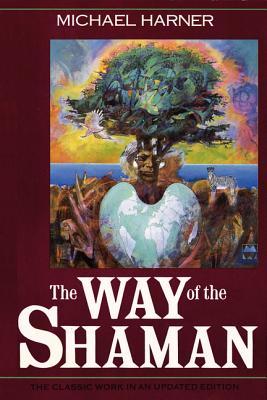
The Way of the Shaman by Michael Harner

The Way of the Shaman by Michael Harner

The Way of the Shaman says the practice of shamanism isn’t a cultural thing- it’s a “human” thing.

Michael Harner gives a brief biography of his own beginner experiences, then a very short history of shamanism, what it is, and how the experiences during the shamanic vision walks compare to ordinary reality.

He goes on to give a few practices for beginners to experience those states of consciousness for themselves as well as methods for contacting your “power animal” and some basic healing techniques.

I valued this book most for its discussions of shamanistic consciousness rather than the practices, but I could see both being of value for the proper audience.

Photo by Abet Llacer on Pexels.com

On shamanism across cultural boundaries: Shamanism represents the most widespread and ancient methodological system of mind-body healing known to humanity. Archaeological and ethnological evidence suggests that shamanic methods are at least twenty or thirty thousand years old… One of the remarkable things about shamanic assumptions and methods is that they are very similar in widely separated and remote parts of the planet, including such regions as aboriginal Australia, native North and South American, Siberia and central Asia, eastern and northernmost Europe, and southern Africa.”pg 40-41

One of Harner’s reasons for writing this book is to encourage everyone to deeper self knowledge: “…truly significant shamanic knowledge is experienced, and cannot be obtained from me or any other shaman. Shamanism is, after all, basically a strategy for personal learning and acting on that learning.” pg xxiv of introduction.

The world could use more self knowledge.

Photo by Mikhail Nilov on Pexels.com

How Harner has experienced the ineffable nature of shamanic consciousness: “His experiences are like dreams, but waking ones that feel real and in which he can control his actions and direct his adventures. While in the shaman state of consciousness, he is often amazed by the reality of that which is presented.” pgs 21-22

I find it interesting how various religious practices and occult teachings mix, blend, and borrow from each other. Or perhaps, at their base, they’re all just the same thing- various ways of experiencing the non-ordinary consciousness from which all humanity springs.

I read a book by practicing shaman, James Endredy, called The Flying Witches of Veracruz back in December of 2014 and it seemed to be a total pipe dream. It was filled with amazing creatures and impossible actions, like flying, shape shifting, and jumping higher than humanly possible.

Photo by Rakicevic Nenad on Pexels.com

James talked about the magical in the same breath that he talked about what he ate for breakfast.

Harner explains in this book why it reads like that: “The emphasis I make here on drawing a distinction between the experiences one has in (ordinary consciousness) and the (shaman consciousness)…is not a distinction that is usually noted in the conversations of shamans among themselves or even with Westerners. Thus, if you were to listen to a Jivaro shaman talk, you might hear in his everyday conversation accounts of experiences and deeds which could seem to you, as a Westerner, to be patently absurd or impossible…” pg 47-48.

That whole book makes so much more sense to me now.

In the afterword, Harner closes with thoughts about why shamanism works: “Albert Schweitzer reportedly once observed, “The witch doctor succeeds for the same reason all of the rest of us (doctors) succeed. Each patient carries his own doctor inside him. They come to us not knowing this truth. We are at our best when we give the doctor who resides within each patient a chance to go to work.”

Be a healer by reminding people that they have the power to heal themselves.

If you’re looking for more books like The Way of the Shaman, try The Flying Witches of Veracruz: A Shaman’s True Story of Indigenous Witchcraft, Devil’s Weed, and Trance Healing in Aztec Brujeria by James Endredy or Active Dreaming: Journeying Beyond Self-Limitation to a Life of Wild Freedom by Robert Moss.

Thanks for reading!

The Light: A Modern-Day Journey for Peace by Judith Lambert

The Light: A Modern-Day Journey for Peace by Judith Lambert

In The Light, Judy, the author, chronicles her dreams and her search through various countries and cultures for their ultimate meaning. She calls this book, a memoir, with some pieces changed to protect the privacy of the people involved.

I found it to be an engaging look into the life of a spiritual seeker and a fascinating comparative study of all religions, their symbols, and common meanings.

Judy talks to a librarian named Bill about symbols: “I’ve been having some dreams with symbols that seem to be very powerful and consistent, and I’m wondering whether these symbols have a history or a larger meaning…” “Oh, yes, absolutely,” he broke in. “All symbols have a history and a commonality. There’s no question about that… Images are the means people must employ to understand ideas and feelings. Without them, we cannot reason… but, you see, we often don’t know where these symbols and images come from, do we? We forget their origin and the long history of their use, until we end by thinking that the symbol is the thing itself!”

I’ve heard it said that all symbols are mere pointers. It is like a man trying to draw our attention to the moon by pointing at it, but we mistake the moon for the finger doing the pointing.

Photo by Aron Visuals on Pexels.com

A beautiful description of the chaos at the river, Ganges: “Over the course of the day, blessed pilgrims gathered at Mother Ganga to wash away their sins. Motionless holy men sat absorbed in rumination, their faces turned toward the sun in celebration of the endless cycle of mornings like this. The striking of wet clothing against the steps was accompanied by the distant ringing of temple bells, whose pitch and resonance varied with the preciousness of the material from which they were made- bronze, brass, or iron. And over it all hung a fetid haze smelling of smoke and of- well, I didn’t want to think what else.”

I enjoyedThe Light because Lambert made me feel as if I was there beside her in her spiritual wanderings. I enjoyed the travel parts of this book very much.

The City of Light: “…The Gita,” now he looked out at the Ganges, “speaks of a radiant river of light. Westerners.. well, they often see a surface, and then they have no idea how to look beyond that surface.” He gestured as if to indicate the whole city. “This is the City of Light. Is this not what you were looking for? I do not mean any disrespect, madam,” he hurried on before I could react, “but if one cannot see the Light here, then one has not looked long enough.”

A description of inner illumination: “Nothing changed. Or everything did, for though monk, mandala, walls, cushions, and robes all seemed to remain the same, I felt at last- and only for an instant- the sense of peace that had eluded me since my dreams began.”

Photo by Pixabay on Pexels.com

The author changes immensely over the course of her journey: “I feel a reassuring contentment from all I’ve discovered and all that I’ve been privileged to learn. I am a Jew, a Christian, a Hindu, a Muslim, a Buddhist, everything else, and nothing, all at once. I am…whole… And I believe that all religions possess and have knowledge of the Light. By claiming the Light myself, I can also retain my own personal stories, my own place, and time, and history…” An empowering message and a timely one.

If you enjoyed The Light, you may want to pick up The Realization of Being by Eckhart Tolle (a lecture, any of his talks are along this subject line) or The Invisible Hand: Business, Success & Spirituality by David Green (a memoir about another spiritual seeker and how he found the “Light”).

Thank you to NetGalley and Ann Duran Productions for the opportunity to read and review a digital ARC of this book!  And, thank you for reading.

Into the Magic Shop: A Neurosurgeon’s Quest to Discover the Mysteries of the Brain and the Secrets of the Heart by James R. Doty

Into the Magic Shop: A Neurosurgeon’s Quest to Discover the Mysteries of the Brain and the Secrets of the Heart by James R. Doty

This book is James Doty’s memoir. He had a tragic childhood with parents who, for various reasons, were not present for him. Then, after an encounter with a total stranger, James was taught meditation, creative visualization, and positive thought practices that changed his life.

As he comes of age, he dismisses the compassion related portions of his childhood training and focuses instead upon the money and prestige that it brings as he pursues a career as a neurosurgeon. It’s a fascinating and educational account.

Photo by Vidal Balielo Jr. on Pexels.com

I was particularly taken with the near-death experience portion of the book. James approached that experience as an atheist so I felt that made his opinion on it rather different than other accounts I’ve read.

Some of the bits that I want to remember (advance reader’s copy cited so the final published book may contain slightly different wording):
“Some of the wisest patients and people I have ever met have been children. The heart of a child is wide-open. Children will tell you what scares them, what makes them happy, what they like about you and what they don’t. There is no hidden agenda and you never have to guess how they really feel.” pg 3

Photo by Juan Pablo Serrano Arenas on Pexels.com

“Everyone has a story, and I have learned that, at the core of it, most of our stories are more similar than not.” pg 60  But not everyone tells their story.  Thank you, Dr. Doty, for telling yours.

“When our brain changes, we change. That is a truth proven by science. But an even greater truth is that when our heart changes, everything changes. And that change is not only in how we see the world but how the world sees us. And how the world responds to us.” pg 151  I think that this is one of the great mysteries of life.

About his near death experience: “At the time I felt the warmth of a light and a sense of oneness with the universe. I was enveloped in love, and while it didn’t transform my religious beliefs, it informed my absolute belief that who we are today doesn’t have to be who we are tomorrow and that we are connected to everything and everyone.” pg 203

Photo by Pixabay on Pexels.com

“There’s a reason stock traders are using meditation techniques; these techniques help them become not only more focused but, sadly in some cases, more callous. This is what Ruth warned me about before she taught me to visualize. Yes, we can create anything we want, but it is only the intelligence of the heart that can tell us what’s worth creating.” pg 231 A powerful lesson, but one, I think, that can only be learned through personal experience.

If you enjoyed this book, try Proof of Heaven: A Neurosurgeon’s Journey into the Afterlife by Eben Alexander or The Power of the Heart: Finding Your True Purpose in Life by Baptist de Pape.

Thank you to the Goodreads First Reads program for an advance reader copy of this book.  And, thank you for reading!

Soul Breathing: Spiritual Light and the Art of Self-Mastery by Carrie L’Esperance

Soul Breathing: Spiritual Light and the Art of Self-Mastery by Carrie L’Esperance

An incredibly ambitious book, Soul Breathing: Spiritual Light and the Art of Self-Mastery covers most major spiritual topics- from chakras to meditations and the evolution of the soul to aliens.

With this very diverse amount of material, readers are certain to find at least one chapter or section that resonates with them.

Photo by Egor Kamelev on Pexels.com

Unfortunately, he or she will probably also discover something that doesn’t, which is just fine, because as Carrie points out in this book, everyone experiences the “Universal Mind” in a different way.

What is enlightenment? In the author’s own words: “Enlightenment is a way of freeing oneself from ignorance in order to act, operate, and contribute as a Light in the world. It is through the balanced integration of body, mind, and spirit that a deeper and more profound Intelligence is expressed.”

The vocabulary in Soul Breathing is definitely New Age, but the reader doesn’t have to have any background in that to understand what Carrie is talking about. She starts out with a bit of her personal history and then jumps into general teachings about the soul and transcendence, which I found to be very reminiscent of Eckhart Tolle’s A New Earth.

After that, Soul Breathing goes in a bunch of different directions, which I didn’t enjoy nearly as much as the opening few chapters.

Photo by Jill Wellington on Pexels.com

What is Soul Breathing anyway? “Soul Breathing is the ability to create a balanced life on Earth through a conscious connection to Spirit. It is a state of grace achieved through action and experience.”

Carrie L’Esperance is at her strongest when she’s relating personal stories or giving concrete instructions- like specific affirmations or methods of meditating to support positive spiritual change.

I felt that Soul Breathing stumbled in the parts where Carrie talks about what is wrong with the world or how things have gone so badly. (The rampant energy pollution and government-alien conspiracy sections come to mind.)

All personal stories of spiritual or the otherworldly have value as Carrie reminds us: “There have always been the unbelievers and the hyperrational scientific intellectuals who attempt to devalue what for some people are the most powerful, transformative, and sacred experiences of their lives. In truth, there is really no one who can denigrate the authentic spiritual experiences of the individual.” I would add, except his or herself.

I thought that this book with its myriad of suggestions and prohibitions would be impossible for anyone to ever implement in their lives in a manageable way.

Photo by Chermiti Mohamed on Pexels.com

Carrie says: “We don’t have to dissect every aspect of how and why we exist in order to appreciate the miracle of life. We can experience all that is needed in the natural stages and steps that we take along the way. Ultimately we are to choose what capacities we will develop within the laws of existence.”

Despite that passage, Carrie seems to be a very demanding teacher.

It is clear that Carrie is passionate about spiritual, physical, earthly, and even galactic health and well-being.

Don’t read this book if you are unwilling to have an open mind about all manner of spiritual topics. Do read this book if you’re looking for more information about sensing, managing, and healing with subtle energy in the body, mind, and soul.

Photo by Magicbowls on Pexels.com

Her beliefs about aliens and a grand government conspiracy to control and manipulate the population were a bridge too far for me, but I’m certain that there are some readers out there who will resonate with her teachings.

Perhaps fans of Whitley Strieber or John Keel will enjoy Soul Breathing.

A big thank you to Netgalley and Bear & Company for a free digital Advance Reader copy of this book for review purposes!  And, thank you for reading.