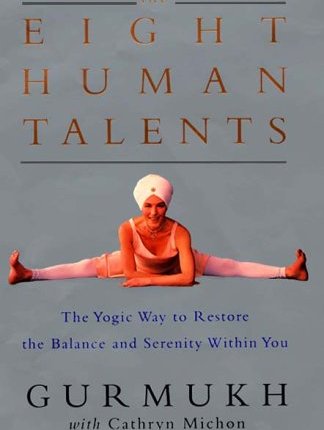
The Eight Human Talents: The Yogic Way to Restore the Balance and Serenity Within You by Gurmukh Kaur Khalsa

The Eight Human Talents: The Yogic Way to Restore the Balance and Serenity Within You by Gurmukh Kaur Khalsa

The Eight Human Talents is part-story and part-instruction manual for the practice of Kundalini yoga. I’ve only ever practiced hatha yoga and this is very different from what I’ve learned. I’ve tried a couple poses and this is definitely going to take some practice.

Photo by Elly Fairytale on Pexels.com

If I learned anything from this book, it is to breathe deeply. One of Gurmukh’s main points is that by connecting with the breath, we reconnect with ourselves.

Also, don’t be afraid to try, even if you fail. “If we can make one step towards happiness, towards healing, towards change, miracles begin to happen. The Kundalini Yoga and Meditation in this book are a way of making those small steps towards happiness. If you will try even one thing from this book-one breathing exercise, one stretch, one meditation- know that somewhere I am cheering right out loud for you, because I know that making that first step is the hardest thing to do…” introduction, xxii.

Some of Gurmukh’s stories were saccharine sweet, but I enjoyed most of them. “We are powerless over every other person on the planet, and we only have power over our own lives. No matter how problematic the people in your life are, you are always the solution.” pg 125.

I’ll have to get back to you on if these exercises deliver on the myriad of promises that Gurmukh makes. So far, I’ve discovered that my lower back needs to be strengthened and I should work on my neck flexibility.

Photo by Chermiti Mohamed on Pexels.com

She ties all of her suggested poses to different chakras and energies found within the body. If that concept is too far out for you, you may be better served with a different introduction to Kundalini yoga.

Recommended for beginners to moderately experienced practitioners.

Thanks for reading!

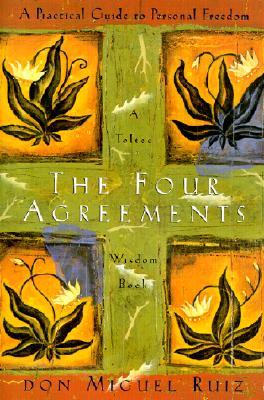
The Four Agreements: A Practical Guide to Personal Freedom by Miguel Ruiz

The Four Agreements: A Practical Guide to Personal Freedom by Miguel Ruiz

fouragreementsThe Four Agreements is a simple and short presentation of some very deep wisdom. In a world filled with spiritual reading material, this one’s a goodie. It just made a lot of sense to me.

These lessons come from the shaman culture of Central America. “Toltec knowledge arises from the same essential unity of truth as all the sacred esoteric traditions found around the world. Though it is not a religion, it honors all the spiritual masters who have taught on the earth. While it does embrace spirit, it is most accurately described as a way of life, distinguished by the ready accessibility of happiness and love. introduction pg x. Happiness and love! Sign up the Hippie Librarian, pronto.

The book goes on to talk about how everyone has unconscious beliefs that we pick up as children. We view and experience our world through these beliefs. Most folks aren’t even aware that they have them and this causes a myriad of misunderstandings and problems: “We keep searching and searching, when everything is already within us. There is no truth to find. Wherever we turn our heads, all we see is the truth, but with the agreements and beliefs we have stored in our mind, we have no eyes for this truth. We don’t see the truth because we are blind. What blinds us are all those false beliefs we have in our mind.” pg 17.

So, how do you cut through the fog of these beliefs to see clearly? Ruiz suggests using The Four Agreements.

The first is: “be impeccable with your word… you begin to see all the changes that can happen in your life. Changes first in the way you deal with yourself, and later in the way you deal with other people, especially those you love the most.” pg 46. This includes your inner voice, the way you talk to yourself and how you narrate your reality.

Ruiz mentions that some people talk to themselves in a manner that they would find unacceptable to use with the people they care about. Change the way you speak and, Ruiz claims, your life will follow.

The second agreement is: “Whatever people do, feel, think, or say, don’t take it personally. If they tell you how wonderful you are, they are not saying that because of you.” pg 59 This helps you because: “When we really see other people as they are without taking it personally, we can never be hurt by what they say or do. Even if others lie to you, it is okay. They are lying to you because they are afraid. They are afraid you will discover that they are not perfect.” pg 63.

The third agreement is ‘don’t make assumptions’: “If others tell us something, we make assumptions, and if they don’t tell us something we make assumptions to fulfill our need to know and to replace the need to communicate.” pg 74. Now that I’ve been looking for this, I’ve caught myself assuming things all the time.

It’s funny how quick hurt feelings evaporate when I just put an “assumption” label over any stories I’ve concocted. It has actually been world-changing for me: to realize how many stories I make up because I’m bored or confused or simply don’t know what someone else is thinking. And to realize that they’re not real is such a relief. Really.

Finally: “Just do your best – in any circumstance in your life. It doesn’t matter if you are sick or tired, if you always do your best there is no way you can judge yourself. And if you don’t judge yourself there is no way you are going to suffer from guilt, blame, and self-punishment. By always doing your best, you will break a big spell that you have been under.” pg 85.

This was another big one for me. I used to get down on myself about how circumstances played out even if I had nothing to do with it. Now, I just pause and give it a quick think over, “Did I try my best?” Generally, yeah, I was trying my guts out.

And that’s all I can ask of myself, really. I can’t control the uncontrollable, I can only do the best I can with what I’ve got in front of me.

The Four Agreements may help readers live in the now and experience life as it is rather than as they’ve imagined it to be. At least, that’s what it has done for me. Also recommended for readers who may be interested in spirituality but want a easy place to start. This one is simple and packs a big punch in a very few pages.

Thanks for reading!
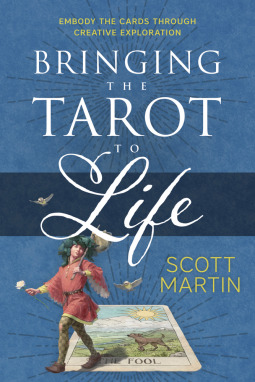
Bringing the Tarot to Life: Embody the Cards Through Creative Exploration by Scott Martin

Bringing the Tarot to Life: Embody the Cards Through Creative Exploration  by Scott Martin
bringingthetarot

Bringing the Tarot to Life is a unique tarot manual that invites the reader to use her own imagination in assimilating and interpreting the cards. I’ve never read anything quite like it.

Scott Martin was an actor and theater teacher for many years. “It struck me that just as an actor delves into his character, so a student of the tarot can explore the archetypes that are represented in the seventy-eight cards in the tarot. He can develop his intuitive abilities by participating in the written and performance exercises an actor uses to hone his talent and to create his role in a play.” loc 112-128, ebook.

He based the first two sections of the book on that idea and created a series of theater-inspired games and exploratory exercises to be played in groups or alone.

The last portion of the book consists of Martin’s interpretations of the cards. I found that section to be the least interesting, but there could be descriptions in those pages that others may not have heard. So, don’t let me deter you.

There was also some trivia included for tarot enthusiasts. Something that I didn’t know was that before Paul Foster Case helped to form The Golden Dawn, he was in theater.

Paul Foster Case became interested in tarot in 1900 when someone asked him where he thought playing cards came from. … Prior to that, he was actively involved in the theater. He was the musical director on a showboat and later worked in musical theater and vaudeville.” loc 128, ebook. But old man river, he just keeps rolling along…

Photo by Mikhail Nilov on Pexels.com

I agreed with Martin’s thoughts on improving your intuition: “How does one develop his intuition? One obvious answer is to expose the mind to more creative and imaginative ways to thinking and looking at the world. Creativity and intuition are inextricably linked.” loc 164. Indeed.

My favorite of the exercises presented in this book is “I Am What I Do” loc 231, ebook. It encourages readers to assign jobs to the different cards.

“Many people in life, as well as characters in plays, define themselves to a great extent in terms of what they do. … the possibilities are virtually limitless: The Ten of Pentacles- a family counselor. The Five of Swords- a crooked hedge fund manager. The Knight of Cups- a poet.” loc 231.

I thought that was hilarious. And, I was looking at the cards in ways that I never had before. Talk about ‘Bringing the Tarot to Life’!

Recommended for beginners or advanced practitioners of tarot cards. Every reader will most likely find an exercise or two to their liking because of the huge variety Martin offers.

Thank you to NetGalley and Llewellyn publishing for a free digital advance reader’s copy of this book. Reminder: the brief quotations that I cited in this review may change slightly in the final published version.

And, thanks for reading!

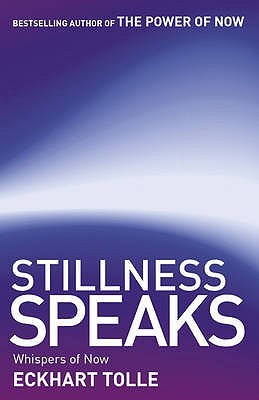
Stillness Speaks by Eckhart Tolle

Stillness Speaks by Eckhart Tolle
stillness speaks

Shorter and simpler than his other books, Stillness Speaks is the essence of Eckhart Tolle. If you’re interested in his teaching, but don’t feel up to some of his more far-out ideas, this would be a good place to start.

Waking up to who you really are: “When you recognize that there is a voice in your head that pretends to be you and never stops speaking, you are awakening out of your unconscious identification with the stream of thinking. When you notice that voice, you realize that who you are is not the voice- the thinker- but the one who is aware of it. Knowing yourself as the awareness behind the voice is freedom.” pg 29.

If you feel like things are out of your control, Eckhart Tolle hands the reins of power back to you: “Your thoughts make you unhappy. Your interpretations, the stories you tell yourself make you unhappy. “The thoughts I am thinking right now are making me unhappy.” This realization breaks your unconscious identification with those thoughts.” pg 120.

This book is filled with mind-blowing moments. Take this one (I underlined it in my copy): “Death is not the opposite of life. Life has no opposite. The opposite of death is birth. Life is eternal.” pg 103. Eckhart Tolle mic drop.

I’ve always loved his thoughts about the relationship between nature and man: “Nature can bring you to stillness. That is its gift to you. When you perceive and join with nature in the field of stillness, that field becomes permeated with your awareness. That is your gift to nature. Through you nature becomes aware of itself. Nature has been waiting for you, as it were, for millions of years.” pgs 85-86. So, go hug a tree today. 🙂

This book is an experience which is hard to describe. Read it and let me know what you think.

If you enjoy Stillness Speaks, you may want to give The Power of Now: A Guide to Spiritual Enlightenment or A New Earth: Awakening to Your Life’s Purpose a go. They are more difficult to get through than this offering, but I found them to be worth it.

Thanks for reading!

The Alchemy of Freedom: The Philosophers’ Stone and the Secrets of Existence by A.H. Almaas

The Alchemy of Freedom: The Philosophers’ Stone and the Secrets of Existence by A.H. Almaas

I picked up The Alchemy of Freedom because I was looking for an accessible book about alchemy. Unfortunately, it wasn’t actually about alchemy nor was it accessible in my opinion.

Photo by Evgeny Tchebotarev on Pexels.com

But, everybody is ready at different times for different manners of spiritual teachings. Don’t let my incomprehension deter you if you find the description intriguing.

I’m neither a genius nor a guru, just someone who studies religions and spirituality in a comparative, curious, meandering way. This could be the book that opens a door for you.

It simply wasn’t that for me.

There are some gems hidden in these pages but I found it mainly to be a labyrinth of words. I’ve had a similar feeling when listening or reading the works of Eckhart Tolle.

I feel like what Almaas is saying is worthwhile, so I made my way through it. But I just didn’t get the majority of it. Puzzling my way through this book was like grasping a cloud.

Photo by Rok Romih on Pexels.com

I had finished this book last week in preparation for writing a review the day it came out, but when I sat down to write yesterday, the words wouldn’t come. Rarely does reading a book leave me speechless.

I’ll pull some highlights to give you a feel for it. Reminder: this was a digital advance reader’s copy so the final published version could be slightly different.

I was able to comprehend Almaas’ thoughts about our “true nature” and most of the passages I highlighted talk about it: “Whether we recognize it as presence or awareness or emptiness, true nature is crucial to the process of awakening, realization, enlightenment, and liberation. It is the source of all spiritual experiences, insights, and transformations.” loc 116-133.

The bits of alchemy that Almaas did discuss were illuminating: “When we are experiencing ourselves as true nature, we realize that a human being is really the alchemical laboratory. The human being, the human consciousness, the human mind, the human heart are the instruments through which the magician works.” loc 186.

Photo by Vinu00edcius Vieira ft on Pexels.com

Most books that discuss alchemy are symbols heaped upon symbols. Perhaps it’s just the nature of the topic, but it’s frustrating.

About the philosophers’ stone: “The alchemists spent millennia trying to find it. They considered it the final result of the magnum opus, the great work of spiritual and material transmutation. Some alchemists thought they could make it, others believed it had to be discovered. … I am not teaching anything about alchemy here; I am borrowing the idea because it fits with what I am trying to say about true nature. … We can only experience true nature in the manifold ways it presents itself, and yet it is always one thing.” loc 666

I felt like this next quotation encompassed my experience of this book: “Sometimes we can rapidly absorb a teaching, and other times we can’t get very far with it for a long time. But we don’t need to get into a mental struggle with the ideas and the notions. Although understanding is an important part of awakening, it need not happen immediately.” loc 922.

So, that’s a relief. Perhaps my awakening is still on its way. Until then, I’ll just chill where I am.

Photo by Jill Wellington on Pexels.com

Thank you to NetGalley and Shambhala Publications for a free advance reader’s copy of this book.

And thank you for reading!

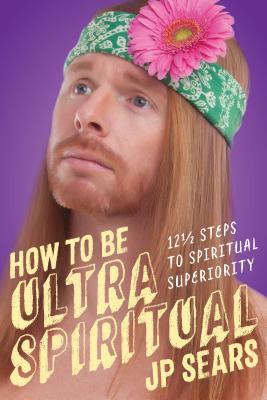
How to Be Ultra Spiritual: 13 1/2 Steps to Spiritual Superiority by Jp Sears

How to Be Ultra Spiritual: 13 1/2 Steps to Spiritual Superiority by Jp Sears

Anything can be a competition- even spirituality. JP Sears in How to Be Ultra Spiritual tackles everything from meditation to existing in the “soon” in a tongue-in-cheek effort to educate the reader on all spiritual matters.

Not for thin-skinned readers, this book uses humor to examine just how ridiculous the whole spiritual thing can be when taken to extremes. Though JP never breaks character, it is clear from the sheer amount of New Age material covered in these pages that if he hasn’t been on the retreats, met the gurus, done the shamanistic plant-fueled trips, then he’s talked to someone who has.

I found the whole thing incredibly funny, but it may not appeal to all seekers.

Photo by Eternal Happiness on Pexels.com

From the introduction: “… if there’s one thing for certain about consciousness, it’s that more is always better. There’s a lot more consciousness in the new level of consciousness that we’re now conscious of, but you’re unconscious to all of this if you’re still wasting your life in the old consciousness that is only spirituality.” loc 17, ebook. And so, the only choice we’re left with, is to become “ultra” spiritual.

What does this mean? “It’s not about being better than other people. It’s about being more spiritual than other people, which is exactly what makes you better than other people.” loc 72. Haha, JP, do go on.

When practicing veganism, he offers a few tips: “Thou shalt not acknowledge the illusionary nature of death in the presence of a thou who casts his stone at animal skulls.” loc 1079. The only vegans I’ve ever met are so not like that- and that’s what makes it so funny.

Photo by Polina Tankilevitch on Pexels.com

I’ve thought about taking a guru when I read a couple of Ram Dass’ books: “In the best circumstances your guru should be dead. … Aside from your guru always being with you like a caring stalker, the other advantage of assigning guru status to someone who’s dead is that it’s much easier for you to idealize his idealized self when he’s not alive. The tragedy of a guru still being alive is that they have their faults too.” loc 1250-1260 ebook.

It may be that I’ve never met my guru or it may be that everyone is meant to find their own way- it seems to me that we’re all just people doing the best we can. Not to pass judgement on anyone who has a guru or wants to find a guru, I’m certainly not a guru.

My favorite part of this book is when JP takes on Eckhart Tolle’s The Power of Now: A Guide to Spiritual Enlightenment with his ultra spiritual “power of soon”: “Conscious people never have hopes and dreams that are based on exactly what’s happening in this present moment of now in their life. Why? Because now isn’t a place- it’s an illusion of time that doesn’t exist. … The enlightened ones know that the only place where their hopes and dreams can live is in the present moment of their future.” loc 1578, ebook. Brilliant.

Recommended for folks who have followed a bunch of different spiritual trends and are ready for a hearty laugh about it all. Some further reading: Be Here Now, Awakening to Zero Point: The Collective Initiation, and Psychosomatic Wellness: Guided Meditations, Affirmations & Music to Heal Your Bodymind.

Thank you to NetGalley and Sounds True Publishing for a free digital copy of this book. And thanks for reading!

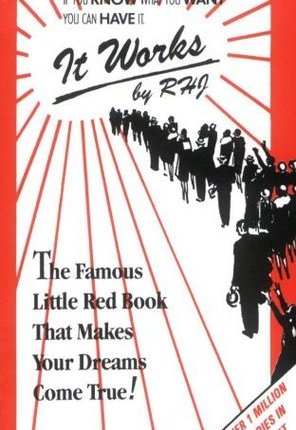
It Works: The Famous Little Red Book That Makes Your Dreams Come True! by RHJ

It Works: The Famous Little Red Book That Makes Your Dreams Come True! by RHJ

It Works by RHJ is a short book, pamphlet really, on the Law of Attraction. I was fortunate enough to pick up the deluxe version that not only had the text of the original work, but also a PDF of the way it appeared in its first printing.

A short chapter was also included that discussed the nearly-anonymous author.

Photo by Nilina on Pexels.com

I’ve read a lot of New Age/New Thought material, but I focused on this one because a certain loved one of mine is struggling. I won’t mention him by name because he says that I talk about him too much in my reviews, but suffice to say, I see him every day. Over a year and a half ago, he was laid off from a job that he enjoyed, had worked at for more than a decade, and he hasn’t found anything else yet to occupy his time. Part of the trouble, I think, is that he doesn’t know what he wants in a new occupation. It Works addresses that directly.

The mechanics of it are simple. Make a list of what you want, think about it every day, don’t tell anybody that you’re doing it. The assumption is that there is a force beyond our comprehension that responds to our thoughts and directs our lives based on what we choose to turn our thoughts towards.

Photo by Suzy Hazelwood on Pexels.com

The Abraham Hicks materials cover this in depth, but It Works was published in 1926, long before Abraham and The Secret burst into popular consciousness. This was, in fact, one of the first published books of its kind and even influenced the writings of that titan of new age thought, Napolean Hill.

To get what you want is no more mysterious or uncertain than the radio waves all around you. Tune in correctly and you get a perfect result…” pg 14.

“(Write down exactly what you want and the date you want it.) This may seem very foolish at first, but you can never realize your desires if you do not know positively and in detail what you want and when you want it. If you cannot decide this, you are not in earnest. You must be definite, and when you are, results will be surprising and almost unbelievable.” pg 20.

Photo by Kaboompics .com on Pexels.com

So, let’s cut to the chase. Does it really work?

The jury is still out. I made my list. 🙂 I guess we’ll see.

Recommended for fans of Abraham Hicks, Napoleon Hill and Pam Grout.

Thanks for reading!

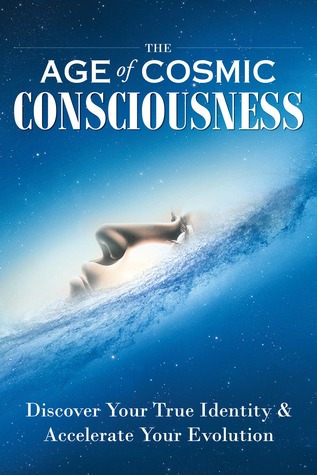
The Age of Cosmic Consciousness: Discover Your True Identity & Accelerate Your Evolution by Transform Publishing

The Age of Cosmic Consciousness: Discover Your True Identity & Accelerate Your Evolution by Transform Publishing
ageofcosmic

Time for the hippie librarian to get a little New Age-y!

The Age of Cosmic Consciousness is a bunch of different metaphysical concepts strung together sort of like Ram Dass’ Be Here Now but written on regular paper instead of- I don’t know what that stuff is- let’s say brown paper bags.

The first thing to know about this book is that it is written in a flow of consciousness style. I found it very difficult to get into, but then hypnotic once I got reading, and thus it became difficult to put dow

. I found it similar to Kelly Howell’s Secret of the Universal Mind Meditation in that one idea leads to the next idea in a very natural and linear fashion.

A lot of the concepts in here have been covered by The Secret and various other authors. There’s a good bit about the Law of Attraction, but there’s so much more than that.

What I loved about this book can be summed up in this quote: “Do not overly focus on the inaccessible gurus and unapproachable enlightened people. Recognize and accept that a higher consciousness can be attained by anyone who proactively pursues its realization.” pg 136 I truly believe that enlightenment is for everyone and possible for everyone. This book really puts that idea forward.

That being said, I don’t know that I was prepared for the “other beings of light consciousness” mentioned in this book or the section that purports to have information directly from them but not “channeled”. Or the other section about aliens tampering with human DNA in the dawn of time. My inner self doesn’t necessarily “resonate” with those ideas yet, but some readers out there may feel it and understand it.

Photo by Julia Volk on Pexels.com

In conclusion, The Age of Cosmic Consciousness is worth the read for anyone interested in improving themselves and the world through inner transformation. Remember to keep an open heart and mind because some of the ideas presented are fairly “evolved”. Some similar books are: Be Here Now and Gateway to the Heavens: How Simple Shapes Mould Reality and the Fabric of Your Being.

I received a free copy of this book through the Goodreads First Reads program. Thanks for reading!

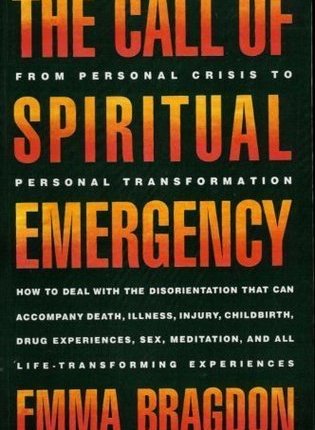
The Call of Spiritual Emergency: From Personal Crisis To Personal Transformation by Emma Bragdon

The Call of Spiritual Emergency: From Personal Crisis To Personal Transformation by Emma Bragdon

Though a bit dated (written in 1990), Emma Bragdon presents information about “spiritual emergencies,” what they are and how to help your loved ones or yourself through it.

Photo by Pixabay on Pexels.com

To begin, what is a “spiritual emergency”? : “Spiritual emergence is a natural process of human development in which an individual goes beyond normal personal feelings and desires-ego- into the transpersonal, increasing relatedness to Higher Power, or God. … When spiritual emergence is punctuated by profound emotions, visions, psychosomatic illness, and compelling desires to behave in unusual ways, including suicidal thoughts, the spiritual emergence becomes a crisis, a spiritual emergency.” pg 1.

This process can be absolutely terrifying if the person has no idea what is going on and is surrounded by professionals who are also clueless.

I think that the main problem with integrating such experiences is that modern society neither supports or recognizes them as valid: “People in our culture are afraid of speaking openly about spiritual experiences, because psychic phenomena… have been considered symptomatic of psychosis. Most psychiatrists, psychologists, and even clergy have believed that most spiritual experiences are indicative of either retarded development or emotional disease.” pg 12.

The clergy part of that passage is particularly interesting to me. These are the so-called experts on the spiritual realm, yet, when something breaks through into reality, they’ve got nothing.

Photo by cottonbro on Pexels.com

And humanity is the poorer for it.

Bragdon then relates numerous instances of men and women from all over the world who have gone through this process and reminds us: “In all the major religions of the world can be found examples of people … who have been through intense and sometimes physically and emotionally debilitating periods of spiritual experiences and ultimately attained transpersonal levels of consciousness.” pgs 81.

It makes one wonder, if Jesus, Mohammed, Moses, or pick-your-prophet had been born in the modern era, would his/her vision just been medicated into oblivion?

Bragdon points out that the problem is in the attitudes of the religious and medical establishments- the places that should be the most educated and accepting of these sorts of troubles: “The administrators of (religious) institutions are inconsistent in their view of spiritual experience as part of spiritual growth. The conventional religious establishment is similar to the conventional medical establishment, which is so ambivalent about the reality of spiritual experiences that it doubts their validity altogether.” pg 101.

When did we completely separate the health of the body from that of the soul? After all, one won’t work without the other.

Photo by Retha Ferguson on Pexels.com

Then, she goes on to talk about all of the different ways that these sorts of experiences emerge from drug use, sex, stress, and just life.

It is so pervasive that it seems that it must be a part of the human experience, but it is hard to study and come to grips with in scientific terms because the phenomena can’t be forced or replicated.

Despite these difficulties to categorize and treat it, Bragdon suggests that being present for the person going through it is enough: “What these people do want is acknowledgement, recognition that they aren’t crazy, and the companionship of others who know what they have experienced is real.” pg 113

So, even though this book was written 26 years ago, I don’t think that we’ve really made that much progress in that time- at least not in the arena of holistic medicine or transpersonal psychology.

Some further reading: Polishing the Mirror: How to Live from Your Spiritual Heart, Dreambody: The Body’s Role In Revealing the Self, or The Power of Myth.

Thanks for reading!