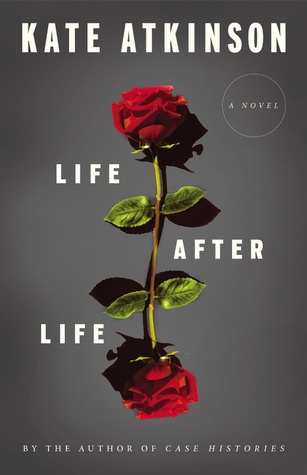
Walking Wisdom: Three Generations, Two Dogs, and the Search for a Happy Life by Gotham Chopra

Walking Wisdom: Three Generations, Two Dogs, and the Search for a Happy Life by Gotham Chopra

Gotham Chopra, the son of Deepak Chopra, shares what he has learned through the ownership of his crazy dog, Cleo, and becoming a father for the first time. He also deepens his relationship with his own father when his mother has to spend an extended time away in India.

It’s a hodgepodge of a book with the themes differing from chapter to chapter. I generally enjoyed it but felt like it was a bit scattered.

Photo by Spoortesh Honey on Pexels.com

I remembered Gotham from all of the Channel One news I watched during junior high and high school. I thought it was a waste of time (even then, I would have rather been reading), but I remembered him.

A few years ago, I watched the documentary he made about when his father joined a monastery- he mentions this at the end of Walking Wisdom. I was intrigued by the dynamic between them in the documentary.

Gotham seemed to focus on his father’s foibles, like his addiction to his phone and his frequent trips to Starbucks. I thought those parts were unfair, but the window into his strange, spiritual/rock star world was one I couldn’t forget.

Photo by Maksim Goncharenok on Pexels.com

My favorite parts of this book were similar to that documentary. I loved learning about Gotham and Deepak’s close friendship with Michael Jackson. The best part was when Gotham brought his pup, Cleo, to meet the mega-star. It’s very surreal.

I also liked learning about how Deepak’s family handles his active mind and constant spiritual seeking. Gotham describes being his father’s “guinea pig” for different experiments from meditation to yoga to spoon-bending.

Gotham’s non-traditional upbringing gave him a quirky lens through which he views the world. It also has made him a master meditator.

Recommended for dog lovers and those curious about what goes on behind the scenes of Deepak Chopra’s life. If you can’t stand books that skip from one topic to another, you may want to choose a different read.

Thanks for reading!

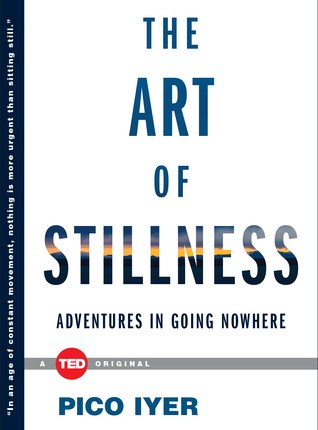
The Art of Stillness: Adventures in Going Nowhere by Pico Iyer

The Art of Stillness: Adventures in Going Nowhere by Pico Iyer
artofstillness.jpg

Pico Iyer approaches stillness from a Buddhist perspective in “The Art of Stillness.”

“And it’s only by going nowhere- by sitting still or letting my mind relax- that I find that the thoughts that come to me unbidden are far fresher and more imaginative than the ones I consciously seek out.” pg 62.

It’s not a world that most people are accustomed to experiencing, a space of being rather than an active doing. But, as Iyer so succinctly illustrates, it’s a realm that our fast-paced and technology addicted world desperately needs.

To venture into this emptiness is a restful and required experience for the health of the mind as much as inspired action is necessary for the experience of a fulfilling life.

I think that our culture has forgotten the power of stillness and the beauty of balancing our male and female energies. This book is an excellent reminder to appreciate both.

For those folks out there who haven’t heard Pico Iyer’s TED talk on this topic, I would recommend that you watch it first, then read this.

I read this and then I listened to the talk. Almost all 18 minutes of it were taken verbatim from The Art of Stillness. So, you’ll enjoy it more, I believe, if you do the opposite of what I did.

My big takeaway from this was the idea of air travel as “a retreat in the sky” pg 56. I dislike flying to the point where I tend to reach my destination exhausted and ready to return home the moment I land.

I think if I could successfully adopt the process that Iyer describes of treating the flight as a “meditative retreat” that I could change my experience of air travel from a nightmare into a restful pause.

There are many large ideas like that contained within this small book.

For the right person at the right time, The Art of Stillness could change her life. As Iyer says, The Art of Stillness doesn’t contain any “new” ideas but they are powerful and much needed ones.

Readers who are short on time, but big on stress may really love this book.

I received a free copy of this book through Goodreads First Reads. FTC guidelines: check!

Thanks for reading!

When Bad Things Happen to Good People by Harold S. Kushner

When Bad Things Happen to Good People by Harold S. Kushner
badthingshappen

When Bad Things Happen to Good People is Rabbi Harold Kushner’s examination of life, why things happen and the role of God in all of it.

Kushner wrote the book because his son was born with progeria, a disease where his body aged much faster than it should, and he died young. It shook Kushner to his core. “Tragedies like this were supposed to happen to selfish, dishonest people whom I, as a rabbi, would then try to comfort by assuring them of God’s forgiving love. How could it be happening to me, to my son, if what I believed about the world was true?” pg 3.

Kushner methodically picks apart traditional explanations for why tragedy strikes. When he’s through, none of them hold water.

“I would find it easier to believe that I experience tragedy and suffering in order to ‘repair’ that which is faulty in my personality if there were some clear connection between the fault and the punishment. A parent who disciplines a child for doing something wrong, but never tells him what he is being punished for, is hardly a model of responsible parenthood. Yet, those who explain suffering as God’s way of teaching us to change are at a loss to specify just what it is about us we are supposed to change.” pg 23.

Photo by Pixabay on Pexels.com

It’s no secret that earlier this year, I changed jobs – from a reference librarian to a writer in a newsroom. I picked up this book because I was going through a spiritual crisis of sorts.

It’s not that I’m overly-religious, but I am spiritual. I believe in things we can’t see or explain. I believe in the goodness of people and the universe.

In my job, every day, I read and hear about terrible things that happen for no reason at all. Sometimes, I write about families who lost a child to a rare disease or I read a story about someone dying in a car or motorcycle accident, and I think, “Why do things like this happen?”

I just didn’t see how a universe that was inherently good, as I believed, could have things like this happen, all the time, every day.

Photo by Snapwire on Pexels.com

Kushner says, don’t look for God or goodness in the bad things, look for the good in the response or what comes after. “For me, the earthquake is not an ‘act of God.’ The act of God is the courage of people to rebuild their lives after the earthquake and the rush of others to help them in whatever way they can.”pg 60

In the final analysis, the question why bad things happen to good people translates itself into some very different questions, no longer asking why something happened, but asking how we will respond, what we intend to do now that it has happened.” pg 147

That was a philosophy that I needed.

I now try to look for the good in the response to tragedy and, wouldn’t you know, I find it. Every day, there’s someone who’s kind or generous or brave. The goodness was always there. I just had to change where and how I was looking for it.

Thanks for reading!

Secrets of Meditation: A Practical Guide to Inner Peace and Personal Transformation by Davidji

Secrets of Meditation: A Practical Guide to Inner Peace and Personal Transformation by Davidji

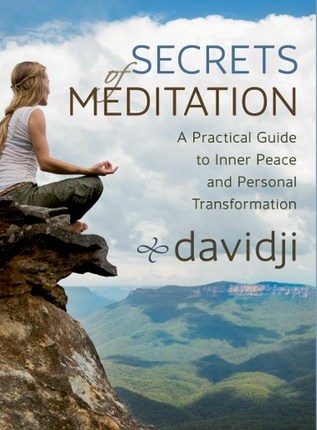
Secrets of Meditation is one of the clearest and beginner friendly meditation manuals that I’ve ever read.

Davidji breaks practices down not only into type and step-by-step instructions with examples, but also by lineage and development over time and place.

Davidji provides enough background on himself to establish his bona fides but not so much as to overpower the instruction with meaningless chatter about himself.

Photo by Spencer Selover on Pexels.com

He intersperses the text with helpful advice, additional authors to explore, and a myriad of ways to connect with him online for some meditation freebies.

Though it’s clear that he’s immersed himself in Eastern culture and practices (having traveled extensively in the East and studied under various gurus), Davidji hasn’t adopted an insider’s way of talking about meditation.

Sometimes, and maybe this is just me, it feels like meditation instructors go so far out into the “oneness” that they never come back fully into the real world. That’s not Davidji at all. I loved this text mainly because of how he could keep one foot “over there” and the other firmly planted “back here”.

Admittedly, my daily meditation practice has lately fallen somewhat on my priority list. This book makes me want to head back to the mat.

If you enjoyed Secrets of Meditation, you may want to read 10% Happier: How I Tamed the Voice in My Head, Reduced Stress Without Losing My Edge, and Found Self-Help That Actually Works which is not so much meditation instruction as a memoir from someone beginning meditation. I recommend it a lot because Dan Harris seemed so relatable to me.

And also, Seeking Heaven. Eben Alexander is a neurosurgeon who had a near death experience turned it into guided meditations. I think they’re easy enough for beginners to use.

Thanks for reading!

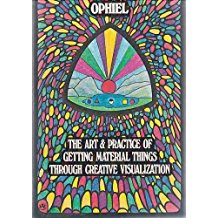
Art and Practice of Getting Material Things Through Creative Visualization by Ophiel

Art and Practice of Getting Material Things Through Creative Visualization by Ophiel

Originally published in 1967, the Art and Practice of Getting Material Things Through Creative Visualization arrived nearly three decades before The Secret.

With more of an occult than a New Age twist, the one-name author, Ophiel, talks readers through what is essentially the Law of Attraction, but he never calls it that.

Photo by Egor Kamelev on Pexels.com

Ophiel tends to write portions of the book that he thinks are most important in all caps. LIKE THIS. It can be annoying.

Another interesting quirk, Ophiel talks about him/herself in the third person, at all times.

In this passage, he’s talking about why he wrote this book, and you get to see the author’s style in action: “Ophiel’s defect consists of not being about to accept self-styled prophets’ sayings, and teachings, without raising the following awkward question- and making the following embarrassing test. The question is IS WHAT THEY SAY TRUE? and the test is DOES WHAT THEY SAY WORK, AND PRODUCE RESULTS? And if what they SAY DOES NOT WORK THEN IT IS NOT TRUE, and into the garbage can with it!!” pg iii

Ophiel claims that creative visualization techniques don’t always work for a variety of reasons. He gives the reader exercises and suggestions for improving their results.

“In Creative Visualization work all the planes involved in our cosmic existence are used, the Etheric, the Lower Astral, The Higher Astral, the Mental Plane, and the Causal Plane, AND ALL THESE PLANES HAVE DEFINITE RULES AND LAWS FROM WHICH THEY WILL NOT DEVIATE ONE IOTA.” pg 5.

Again, with the capitalization.

Photo by stein egil liland on Pexels.com

He also has interesting ideas about reasons why beginners fail out of the gate.

He cites something called “the sphere of availability”: “The new student then proceeds to visualize for LARGE THINGS. BIG THINGS. VALUABLE THINGS. Things that are far beyond his ability- not to visualize-imagine-desire, BUT FAR BEYOND HIS PRESENT ABILITY TO DEMONSTRATE-VISUALIZE.” pg 31.

Ophiel uses different words, but essentially he says, start small, celebrate the small victories and increase your “sphere of availability” in that manner. He also gives practices to improve your visualization skills.

Honestly, if asked to recommend a teacher for creative visualization, I’d say skip Ophiel and read Abraham Hicks. They’re a lot more fun.

Thanks for reading!

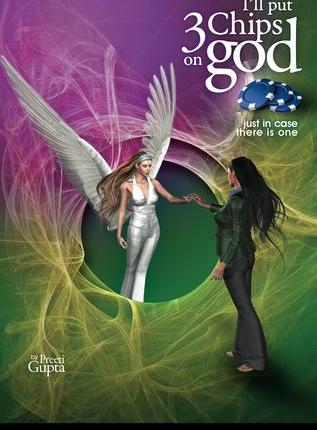
I’ll Put 3 Chips on God, Just in Case There is One by Preeti Gupta

I’ll Put 3 Chips on God, Just in Case There is One by Preeti Gupta

I’ll Put 3 Chips on God, Just in Case There is One reads like what you would get if you crossed Bridget Jones’ Diary with an episode of Seinfeld and added a dash of New Age spiritual musings.

Preeti, in a conversational way, discusses topics ranging from karma to palm reading.

Photo by Rakicevic Nenad on Pexels.com

I liked that she didn’t talk down to the reader or apologize for her thoughts. She just puts it out there and lets everybody come to their own conclusions.

My favorite part of this book was when Preeti goes to the astrologist twice to see if he would give her the same natal chart on both visits. She lets some years pass so that she won’t be recognized by her face and compares the results. They don’t match.

Preeti celebrates the fact that the charts were completely different because it backs up her theory that folks who are in the spiritual business only for money are hucksters.

But, at the same time, she doesn’t dismiss astrology as utter nonsense and leaves the door open for more learning on the subject.

Photo by Min An on Pexels.com

It’s refreshing to find an author who is that willing to entertain different traditions even in the face of a fraudulent experience. She freely admits that she doesn’t know the ultimate truth and I think everyone can resonate with that idea… because, who does, really? Not me.

If you enjoyed I’ll Put 3 Chips on God, I’d recommend reading Life’s Operating Manual: With the Fear and Truth Dialogues(Tom Shadyac’s thoughts on life and spirituality) or Tipping Sacred Cows: The Uplifting Story of Spilt Milk and Finding Your Own Spiritual Path in a Hectic World (in the same conversational type of style as this book and with irreverent humor, Betsy Chasse talks about her journey through the New Age Movement).

I received a free digital copy of this book from the author. Thank you, Preeti, for sending it to me.

And, thank you, for reading!

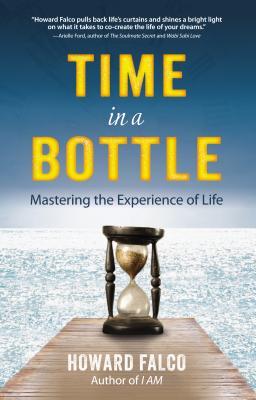
Time in a Bottle: Mastering the Experience of Life by Howard Falco

Time in a Bottle: Mastering the Experience of Life by Howard Falco
timeinabottle

Time in a Bottle is a self help book about changing your perceptions to improve your life. Though not a new message, some readers may find this book worth the time.

Howard Falco presents this knowledge with a spiritual slant. Readers who are turned off by that kind of thing may want to choose another book.

The main premise: “Our misunderstanding of time- how our thoughts relate to time, how time is actually created, and how time seems limited- is one of the biggest reasons we suffer and at times feel hopeless or powerless in our lives.” pg 1, introduction.

One of the ways to “master the experience of life” is to realize that you are infinite potential like the universe itself: “You are a part of infinity. To the degree that you feel that life is finite and limited, you will act out of this fear, and work to create an experience that is a result of this fear.” pg 33.

I agree that mindset is important to determining your life’s path. Love and fear seem to be the two driving forces of our world. Wonder why that is…

Photo by Nacho Juu00e1rez on Pexels.com

Falco also discusses giving up resistance to how life is: “It is critical that you know that the ending of your resistance toward any particular thing (sickness, layoffs, war, family, financial trouble, death, political chaos, natural disasters, etc.) is not in anyway condoning these terrible things or giving up on change. It is simply the full acknowledgment that for the moment this is what is happening.” pg 40

He talks about giving up regrets about the past that could potentially be holding you back: “This is not about accepting that something had to happen to you; it is about acknowledging that it did happen and standing in front of the universe saying, “I trust that there is perfection and a specific, divine purpose for my past and the exact way it unfolded. Because of this, I am realizing more of my unlimited potential for the future.”

So then, unburdened, you step into your future with faith.

Falco incorporates quotes from famous philosophers and scientists along with anecdotal stories to illustrate his points. As I said, no new wisdom here, but plenty of good reminders to trust, forgive and move forward to a life outside of time.

Thanks for reading!

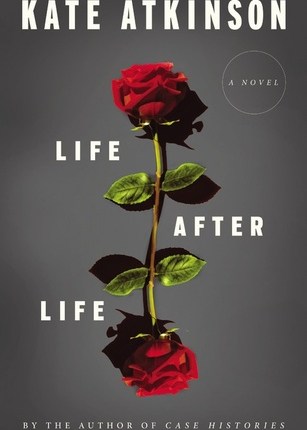
Life After Life by Kate Atkinson

Life After Life by Kate Atkinson

lifeafterlifeA lovely and unusual book about reincarnation, free will and destiny.
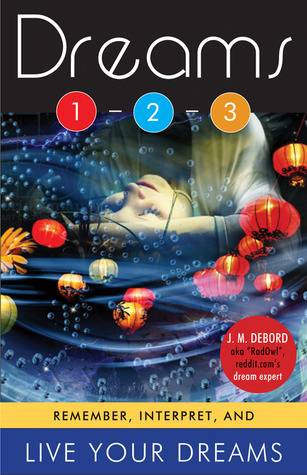

Ursula Todd was born on a snowy day in February with the umbilical cord wrapped around her neck. That was the first time she died…

I loved how Kate Atkinson built this story through seemingly insignificant details. As the reincarnations progress, layers are added upon layers, so that by the end of this tale, it is a rich tapestry of events, emotions and possibilities.

I was surprised by the open-endedness of this story. I feel like Atkinson wrote a tale that reads like real life- it has the meanings that we assign it. Nothing more, nothing less.

I listened to the audiobook of Life After Life and it was very good. A few times, I wished that I had the physical book in front of me so that I could double check a date or detail. Other than that, the narration was excellent.

This story has me wondering about life, reincarnation and all of it. If, as so many world religions say, there are parts of us that are immortal, wouldn’t we all go a bit bonkers after millennia of existence? Would we get bored of it? Would we ever choose to not come back? What’s the bigger picture?

Anyway, this book will make you wonder, question and dream about existence. Which, in my mind, is one of the highest functions of a book.

Recommended for fans of historical fiction, spirituality and life itself. I think Atkinson has written a masterpiece.

Thanks for reading!

Dreams 1-2-3: Remember, Interpret, and Live Your Dreams by J.M. DeBord

dreams

J.M. DeBord starts his book about dreams with the idea that dream interpretation used to be the job of a wise man or woman in the community. Dreams were an integral part of living a fully conscious and realized life.

Now, dream interpretation experts charge for their services and not everyone has access to their skills.

This clever little book opens the doors of dream interpretation so that average people can again know the meaning of their dreams. It doesn’t stop there- J.M. DeBord also provides suggestions for integrating the dreams into your daily life.

Finally, in Dreams 1-2-3, DeBord empowers readers by reminding us that no matter how expert the dream interpreter, the final meaning for any dream really rests in the hands of the dreamer herself. Only she can feel the “ringing of truth” in the interpretation.

This is by far the best book that I have ever read on dream symbolism. DeBord doesn’t provide lists of animals/colors/scenarios and their most common meanings. He ties whatever shows up in the dream to the rest of its contents and the dreamer’s own internal and external world.

Photo by Ylanite Koppens on Pexels.com

In this way, each dream can be understood and applied in as unique a way as the dream itself.

My one critique of Dreams 1-2-3 is that DeBord made the process seem so simple. I’d read the dream example and think, I have absolutely no clue what that one means, and then DeBord would go on to provide a crystal clear interpretation.

See how simple it is?… he seems to say. Perhaps not.

DeBord may have a gift for it, honed by practice, and he doesn’t realize that what he is doing is rather amazing. I suppose he gives me a goal to strive towards.

I have had a few dreams since completing this book and, with DeBord’s method, have been able to wring some meaning from what I otherwise would have assumed to be nonsense. Dreams 1-2-3 has already changed my life. Read it if you want to change yours too.

Thanks for reading!