Money, and the Law of Attraction: Learning to Attract Wealth, Health, and Happiness by Esther Hicks

Money, and the Law of Attraction: Learning to Attract Wealth, Health, and Happiness by Esther Hicks

Esther Hicks channels the wisdom of her inner being, called Abraham, to write these books. It sounds kind of far out there if you’ve never been exposed to that type of teaching before, but I have to say, I like it. If you’re in to self help and new age books, you may want to give them a try.

The majority of her (their) message seems to be to find joy. They teach that the purpose of life is to do what makes you happy as often as you can. Interestingly enough, that was the same lesson my grandfather taught me before he passed on. “Whatever you do in life, Heidi, be happy. The most important thing is to be happy.”

Photo by Sam Lion on Pexels.com

Maybe it is in memory of him that I connect so easily with these teachings. I don’t know.

I’ve really taken to heart her encouragement to start out your day in the proper mindset. Lately, I’ve been chilling in bed for a few minutes rather than jumping right into my day. I don’t really have the words to explain why this is making a difference, but it is. I take a second to think about something awesome, even if its as banal as, “My pillow is so soft.” Try it and let me know how it works out for you.

“So as you awaken, open your eyes and say Today I will look for reasons to feel good. Nothing is more important than that I feel good.” pg 37

Also, she’s a big proponent for imaging and living your own life to its fullest and not comparing yourself to others. In the new age of social media and twitter where it seems like everybody is into everybody else’s business, it’s refreshing.

Photo by Tim Samuel on Pexels.com

Do not write your story like a factual documentary, weighing all the pros and cons of your experience, but instead tell the uplifting, fanciful, magical story of the wonder of your own life and watch what happens. pg 81

Overall, these teachings have changed my life. I can’t really say enough positive things about her books, of which there are several best sellers. She also does a bustling business of hosting workshops, which she does across the United States and on a few different cruises.

Last month, I went to an Abraham Hicks workshop for the first time. I’ve enjoyed her videos on YouTube for a long time and thought I might shake things up and see what she’s like in person. This was kind of a production because Esther doesn’t come to the St. Louis area. So, I went out west and heard her speak in Phoenix.

The papers for the workshop registration encourage attendees to write down questions about life, whatever comes into your mind that you’re curious about. I brainstormed with my husband and came up with about a dozen different things I’d talk about if I got to the “hot seat”. (That’s what she calls the chair up front.)

I arrived about 15 minutes before the whole thing started, which seemed like ample time to me, only to discover the auditorium was nearly filled! That was fine because I wanted a seat towards the outside anyway. If things gave me a weird vibe, I wanted to be able to get the heck out as fast as possible.

Photo by Paula Schmidt on Pexels.com

In the moments before Esther emerged, this music started up about “Joy, joy, joy. Joy is the key” and almost half the crowd got up and started dancing. I nearly bolted. It felt rather cultist in those moments.

But then the music cut and there she was and things settled down somewhat. What followed was a lot of laughs and learning about topics ranging from relationships to illness to someone’s dog. The whole day ended with a marriage proposal from one of the attendees to another. In fact, I enjoyed it so much, I’m kicking around the idea of going again next year.

I never made it to the hot seat and felt rather disappointed. But, later, as I was reading over the questions I took to the workshop, I found, to my surprise, that she had directly addressed every single one of them in other people’s questions. And then, that night, I dreamed I was back at the workshop. I was sitting in the chair and asking any question that came to my mind.

So, that’s my personal experience with this author and the “magic” of Abraham. I know these teachings aren’t for everyone. But they’re for me. And that’s pretty cool.

Thanks for reading!

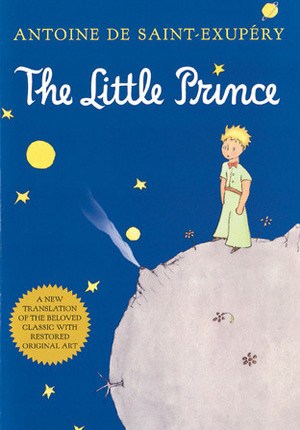
The Little Prince by Antoine de Saint-Exupéry

The Little Prince by Antoine de Saint-Exupéry

Similar to The AlchemistThe Little Prince is a metaphorical tale that people seem to love or not.

“In the face of an overpowering mystery, you don’t dare disobey. Absurd as it seemed, a thousand miles from all inhabited regions and in danger of death, I took a scrap of paper and a pen out of my pocket.” pg 4

Photo by Alex Andrews on Pexels.com

A pilot crashes in the desert and discovers a child wandering around who claims to be from another planet. His planet is so small that the prince can see multiple sunsets by simply moving his chair. And there’s a rose with four thorns that the prince loves. But he left this planet because of a disagreement with the rose. After a series of adventures where he meets dysfunctional adults on other planets, sees that his rose isn’t the only rose in the universe and learns about love from a fox, the prince decides he wants to go back home.

How he’s going to do that is not really clear.

So that’s the literal story.

The allegorical part has to do with how differently children perceive life than adults, what love is or means and how growing up, change or death affects love… among other things.

Here is my secret. It’s quite simple: One sees clearly only with the heart. Anything essential is invisible to the eyes.” pg 63

Photo by Jovana Nesic on Pexels.com

I felt like there were layers to this story that I haven’t grasped yet. I suppose this could also be about a man contemplating his inner child. Then again, I suppose this story could be about a lot of things.

This was the first time I’ve ever read it and, to my amusement, when I checked it out from the library, my 12-year-old said she has already read it. I asked her what she thought of it and she just shrugged her shoulders. I liked it more than a simple shoulder shrug, but, in conclusion, I think there was stuff I was missing.

This book has been adapted for the screen a couple times. One of the latest was in 2015.

Thanks for reading!

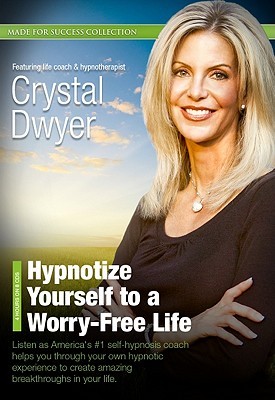
Hypnotize Yourself to a Worry-Free Life by Crystal Dwyer

Hypnotize Yourself to a Worry-Free Life by Crystal Dwyer

Crystal Dwyer, a new age instructor, has developed a set of guided meditations to enable listeners to improve their lives in a variety of ways. These tracks address issues from insomnia to anxiety. She has a pleasant voice and the meditations are enjoyable.

If you’re not into new age themes, you may want to try another hypnosis program. At the beginning of the audiobook, Dwyer is straight forward with her beliefs about God being within each of us and our individual power as creators. I could see that being problematic with those who don’t connect with those teachings.

Photo by Pavel Danilyuk on Pexels.com

I feel that the title of this work is a bit misleading. There are going to be ups and downs in any life. To suggest that you can eliminate anything seems suspect and sort of pie-in-the-sky. It reminds me of books that tout “read this and lose ten pounds in three weeks” and things of that nature. These meditations are valuable enough without the publisher (or author) making promises that perhaps they can’t keep.

That being said, I don’t think many people know what hypnosis is. In my experience, hypnosis, similar to a trance-state, just feels like deep relaxation. Everyone is different, but when I’m under, my body feels heavy but light, which seems impossible. My limbs sort of disappear and I feel as if I’m floating.

Once I’m there, in that relaxed state, then I let the meditation I’m listening to just wash over me. It feels really good actually. Generally, at the end, the hypnotist will say something like, “You’re coming back and you’ll feel entirely refreshed.” And, wouldn’t you know it, I do.

I think popular culture hasn’t done hypnosis any favors with people’s expectations about how it works. (The film “Office Space” comes to mind.) You don’t turn into some suggest-able zombie person when you’re under. Like most things, hypnosis and relaxation are a choice. Worry is a choice. It’s all about controlling that inner narrative and changing your inner thought processes to ones that are pleasing to you.

Photo by Maria Orlova on Pexels.com

A child once asked me to teach her about hypnosis so she could “control her brother”, which cracked me up. But then I explained to her that hypnosis isn’t a tool for controlling other people. The name of the game is improving and controlling yourself.

It’s like Marcus Aurelius said: “You have power over your mind – not outside events. Realize this, and you will find strength.”

Recommended for seekers looking for another tool to help them on their path to self knowledge.

Thanks for reading!

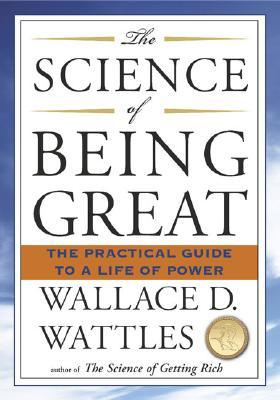
The Science of Being Great: The Practical Guide to a Life of Power by Wallace D. Wattles

The Science of Being Great: The Practical Guide to a Life of Power by Wallace D. Wattles

In the latest installment of “Heidi re-listens to all the old audiobooks on her hard drive”, I gave The Science of Being Great another chance to share its wisdom with me.

Couched in religious language, Wallace Wattles shares his new age viewpoint long before modern audiences became enamored of it with the mammoth success of The Secret. In fact, that’s how the publisher marketed this older manuscript, as source material for The Secret.

Photo by Maria Orlova on Pexels.com

I suppose it could be considered “source material” in that Wattles teaches enlightenment is to be found within. But he has very little in it about the guiding power of emotions, which was a cornerstone of The Secret. Wattles book is more along the lines of: You are a god walking among gods and should act accordingly. And don’t stick your nose into other people’s business.

Some of his advice is more tricky, such as: see the world in a perfect state of becoming. Nothing has gone wrong or could go wrong. Everyone and everything is perfect for where they are and everything has the chance to get better.

That’s hard stuff to swallow if you take a second to think about it. “The world is in a perfect state of becoming.” Maybe I’ve become too accustomed to looking for problems rather than relying on faith that everything is working out how its supposed to.

Photo by Pixabay on Pexels.com

Other parts of this book sounded similar to more modern new age authors with these ideas: Books and people will be drawn to you when you need them. Go where your inner feelings tell you to go. As you think, so you will become. Thoughts are things, etc.

By comparing and contrasting this book with other authors, I’m not intending to denigrate those teachings. I wouldn’t want to dismiss the power of the mind and emotions. Using just those things, people can certainly change their lives.

It’s just that the way they are packaged in The Science of Being Great may make it difficult for some readers to absorb it. Take the word “God” for example or “the Father”. Wattles throws those two around in every other sentence or so. That could be problematic for people who have struggled with religion or have involving it. Or those who don’t believe religion and science can mix.

Photo by Flickr on Pexels.com

And the whole book takes itself so seriously. Even the title “The Science of Being Great”, reminds me of an encyclopedia entry or something. I’ve had the most success in my own personal life when I’ve lightened up and stopped making such a big deal out of things.

In conclusion, is there helpful information in this book? Yes. Would I recommend taking the time to go through it to find those gems? It depends on how you learn best, I guess. Personally, I’d recommend Esther Hicks if you want the same sort of new age teachings with less religious trappings and a bigger dose of fun.

Thanks for reading!

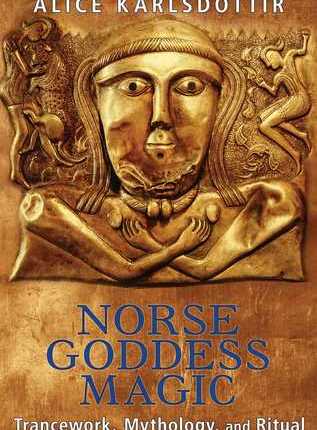
Norse Goddess Magic: Trancework, Mythology, and Ritual by Alice Karlsdóttir

Norse Goddess Magic: Trancework, Mythology, and Ritual by Alice Karlsdóttir

This is a new age, non-fiction book about trance work, which can loosely be described as deep meditation. I practice a type of meditation called “pathwalking” which is basically just another word for the same kind of practice. This book is about someone who focuses on the Norse religion exclusively.

I read Norse Goddess Magic not for the details about the Norse pantheon (which admittedly I know very little about, so it was very interesting and educational) but mainly for the author’s experience in trance work. To my disappointment, she spends pages and pages explaining what going into trance is, how she does it, and then only a few paragraphs in each chapter detailing an actual trance.

Photo by Lucian Potlog on Pexels.com

I wanted the book to be mainly trance work. That is what made it unique and original- her personal sojourns into “another world” and what she brought back. The rehashing of all of the old mythologies were, as I said, interesting, but if I wanted to read them, I could have picked up any book about Norse mythology.

I also felt like Alice spent a lot of time explaining why trance work is a valid method of information gathering and defending her opinion on why she believes that. I agreed with her completely so I just read through the pages thinking- preaching to choir, get to the trances! So, that was a frustration.

A part of the book that I disagreed with was Alice’s assertion that it is “difficult” to go into trance. In my experience, if you believe something is difficult to do be that hypnosis, meditation, whatever- you’re putting stumbling blocks on your path that don’t need to be there. Going into trance is as simple as watching your breath flow in and out. If you breathe, you can go into trance. I felt like she did a disservice to beginners with that particular teaching.

Photo by Daisa TJ on Pexels.com

I felt like Alice’s trances were so closely focused on one goddess or aspect of the goddess, that she didn’t really get all that she could out of her trance work or interactions in the other worlds. She read all of this information to prime her subconscious mind and then… it felt like not much happened.

To be fair, she did see the person she was looking for, describe their physical characteristics, express the emotion that they evoked in her, and then, maybe, have a brief interlude with them. In my personal trance work, there’s more interaction in the world itself but that could be the difference of our focus.

Alice said from the start that she wanted to know more about these different goddesses and form a working relationship with them whereas I’m just curious to see what’s out there. I’ve run into Roman gods and goddesses, Native American figures, Tibetian locations, some Egyptian and Hindu gods… but again, I’m not focused on one or another of the world religions. With an open mind, it’s incredible the types of things that you see.

Photo by carol wd on Pexels.com

So, I don’t believe in priming your mind with symbols before you do your work. Pick where you’re going or who you want to see, and just go. Personally, I use the symbols on the Tree of Life or tarot cards. Believe that you can do it. Figure out what works for you. And do it.

Then write it down so that I can read it. 🙂 Because I will.

Thanks for reading!

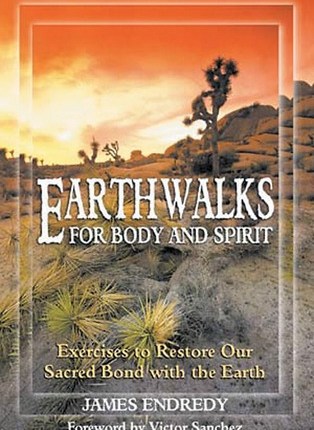
Earthwalks for Body and Spirit: Exercises to Restore Our Sacred Bond with the Earth by James Endredy

Earthwalks for Body and Spirit: Exercises to Restore Our Sacred Bond with the Earth by James Endredy

Earthwalks for Body and Spirit is a handbook of sorts for a shamanistic experience of nature. James Endredy, through various exercises for both the solo and group walker, crafts a system through which the reader can get in touch with nature and, he believes, heal the world through this relationship.

Photo by Charlotte May on Pexels.com

It’s an interesting idea.

I’ve always enjoyed the outdoors for its healing aspect. I’m more of a sun bather than an avid walker but I think that the general principle is the same. If you’re in a funk, go outside for awhile. It clears the clouds from your mind so to speak.

Actually, this is one of the first books I’ve ever read that goes into actual shaman practices. It’s worth the read just for that, really.

I read in What the Most Successful People Do Before Breakfast by Laura Vanderkam that most adults from middle class, dual income families spend less than 15 minutes per week outside in their yards. Stats like that make me a little sad for all of us. Time to go read outside! 🙂

Photo by Allan Mas on Pexels.com

If you enjoyed Earthwalks for Body and Spirit, I’d recommend The Four Agreements: A Practical Guide to Personal Freedom by Miguel Ruiz, This Trip Will Change Your Life by Jennifer Monahan, or The Way of the Shaman by Michael Harner.

And, as always, thanks for reading!

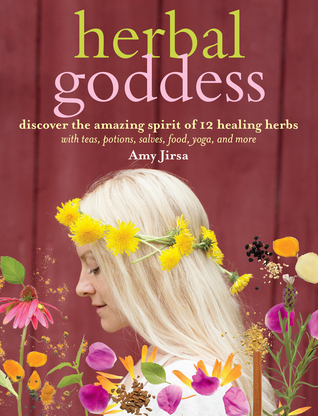
The Herbal Goddess Guide: Create Radiant Well-Being Every Day with Herb-Inspired Teas, Potions, Salves, Food, Yoga, and More by Amy Jirsa

The Herbal Goddess Guide: Create Radiant Well-Being Every Day with Herb-Inspired Teas, Potions, Salves, Food, Yoga, and More by Amy Jirsa

The Herbal Goddess Guide is a beautiful little reference book in which 12 different herbs are examined for physical, mental and spiritual healing purposes.

Amy Jirsa provides recipes, yoga poses, crafts and more to utilize the healing power of the plants in various ways.

Photo by Tim Douglas on Pexels.com

This book may not be for everyone as it has a very new age feel. Jirsa discusses magical traditions, honoring a plant’s spirit and more.

However, if you’re into tapping your inner goddess, this may be the perfect book for you.

If you read it and you enjoy it, you may want to purchase The Herbal Goddess Guide for your personal collection because Jirsa suggests “getting to know” each plant for a month and there is a chapter devoted to each.

It could take you awhile to thoroughly digest the information in these pages. (And to try everything!)

My favorite chapter, probably because it is my favorite herb, is lavender. Did you know it is a member of the mint family?

Photo by Palo Cech on Pexels.com

While lavender is known for being relaxing, it can, in some cases, be stimulating, so be sure to check in with your mind, your mood, and your energy level after each recipe.” pg 131.

Some of the yoga poses Jirsa outlines are rather advanced, but she offers modifications for each. If your flexibility isn’t up to snuff, no worries.

Highly recommended for the open-minded reader and non-traditional healers.

For similar, new age/self help books I’ve reviewed, check out:

How to Be Happy, Dammit: A Cynic’s Guide to Spiritual Happiness by Karen Salmansohn

The Four Agreements: A Practical Guide to Personal Freedom by Miguel Ruiz

Trance Dancing with the Jinn by Yasmin Henkesh

And thanks for reading!

Be Here Now by Ram Dass

Be Here Now by Ram Dass

A classic exploration of spirituality and consciousness by the former Harvard professor turned drug-fueled, then clean, spiritual seeker, Ram Dass.

What a strange book.

The first part is Ram Dass‘s life story.

Photo by Alesia Kozik on Pexels.com

He has trouble relating exactly how his guru changed his life. He also has trouble expressing his life changing spiritual insights.

This could perhaps be because of all the LSD he experimented with, but no judgement here.

I think Dass could have added another couple hundred pages to the first part and still probably not fully described his experience.

The next section of the book is block text printed on, what seems to be, brown paper bags. Monty Python-esque photos are drawn in, and sometimes behind, the text.

Photo by Giftpundits.com on Pexels.com

It reads like a stream-of-consciousness, path to enlightenment, how-to lecture.

Some of it is worthwhile, but I can’t sugarcoat it: It’s pretty far out there.

My description doesn’t really do it justice. Perhaps Be Here Now is one of those books that needs to be “experienced” rather than read.

The last section was a “cook book” on how to live an enlightened lifestyle.

Photo by Mikhail Nilov on Pexels.com

If you have a question about how an enlightened person lives, it’s probably included in there.

Dass elucidates how he believes you should eat, sleep, breathe, interact with others, think, meditate, raise a family, form a commune and so on.

I didn’t like it because it felt too brain-washy, cult-ish.

Dass attempts to put the reader’s mind at ease to all of the strictures. He mentions that one needn’t be concerned about family or social responsibilities because, once you reach the ultimate level, you’ll realize that none of those things are real anyway.

Looking back on my review, it seems as if I don’t like Ram Dass, but I do.

I rather enjoyed his Polishing the Mirror: How to Live from Your Spiritual Heart and a documentary that I saw about him once called Fierce Grace.

I too have had life experiences that have led me to the belief that human kind is here to “be high” and not just to “get high.”

Photo by Tim Gouw on Pexels.com

I don’t buy into the idea that life has to be lived a certain way to get certain results.

And, perhaps because I haven’t personally had the experience yet, I don’t get the whole guru relationship thing. I know it’s my western background speaking, but there you have it.

Recommended for spiritual seekers, but don’t forget to trust your own inner guidance.

Thanks for reading!

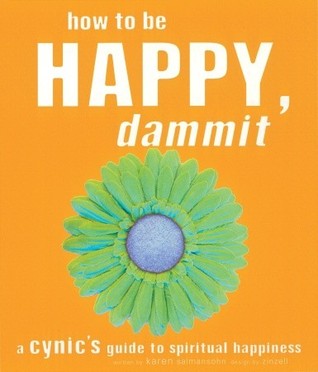
How to Be Happy, Dammit: A Cynic’s Guide to Spiritual Happiness by Karen Salmansohn

How to Be Happy, Dammit: A Cynic’s Guide to Spiritual Happiness by Karen Salmansohn

How to Be Happy, Dammit is a succinct, brightly colored treatise on enlightenment. Coming in around 230 pages with only a few words per page, this is a book that can be read over the course of a lunch hour or *ahem* during other short breaks in your life on a porcelain throne.

Photo by Andre Furtado on Pexels.com

It doesn’t use an abundance of coarse language (see title), but it does utilize a few words to get the point across.

The book is broken down into short life lessons that feed into the next. “Life Lesson 1: Pain exists. Life can hurt. Like a lot. Even when you’re good, you can get whacked. Without apology. Without explanation.” pgs 14-15.

That’s the life lesson about being born. Can’t really argue with that.

My child was born wailing before she was even entirely out. I was wailing too, for different reasons of course, but life can hurt. No doubt.

I found meaning in “Life Lesson 6: Never go shopping for kiwis in a shoe store. Some people just don’t have what you need. So why waste time, banging on their doors, ringing their bells, demanding service?” pgs 38-39.

Photo by PhotoMIX Company on Pexels.com

I think I’m still learning that one.

“Life Lesson 19: This is a world of duality: of good and bad, yin and yang, decaffeinated and caffeinated. So you must always be prepared!” pg 112. Decaffeinated? Poor souls…

In the chapter on self-programming, we get this wisdom: Life Lesson 27: The world is your mirror.” pg 174.

Photo by Mauru00edcio Mascaro on Pexels.com

I don’t think folks realize that either.

Recommended for people who are interested in spirituality, but don’t necessarily have a lot of time or patience for more touchy-feely books. How to Be Happy, Dammit delivers on its title. Now let’s all go be happy. Dammit. 🙂

Thanks for reading!