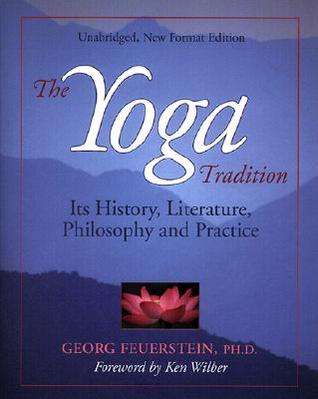
The Yoga Tradition: Its History, Literature, Philosophy and Practice by Georg Feuerstein

The Yoga Tradition: Its History, Literature, Philosophy and Practice by Georg Feuerstein

The Yoga Tradition is a reference book for the history and practical methods of yoga in its myriad forms throughout time and different religious traditions.

“In its oldest known form, Yoga appears to have been the practice of disciplined introspection, or meditative focusing, in conjunction with sacrificial rituals.” pg 27

Photo by Lucas Pezeta on Pexels.com

From these ancient beginnings, author Georg Feuerstein takes readers on a fantastical and spiritual journey through the various branches of yoga including Raja, Hatha, Bhakti, Jnana and more. He’s printed original texts, along with analysis of them, throughout the book to provide context and origin materials for each tradition.

What emerges in The Yoga Tradition is stunning in its complexity as well as sheer variety of methods, beliefs and practices.

“Long before the word yoga acquired its customary meaning of ‘spirituality’ or ‘spiritual discipline,’ the sages of India had developed a body of knowledge and techniques that aimed at the transformation and transcendence of ordinary consciousness. This stock of ideas and practices formed the matrix out of which grew the complex historical phenomenon that later came to be called Yoga.” pg 65

Photo by Karolina Grabowska on Pexels.com

Beyond sharing the history, philosophy, and practice of yoga, Feuerstein encourages modern scientists to look closely at the traditions in these pages to see what benefits could be gained from the ancient knowledge.

“Gradually, modern medicine and psychology, aided by advanced scientific concepts, methods, and instrumentation, are rediscovering some of the amazing facts that yogins have talked about and demonstrated for centuries.” pg 400

In my mind, that is one of the most exciting aspects of this book- what humanity could possibly learn about the enduring mystery of consciousness itself through the application of modern methods of study to ancient techniques.

Highly recommended for anyone interested in yoga and looking for a scholar’s thorough dissection of its history and forms. Your search can begin and end with this title.

Thanks for reading!

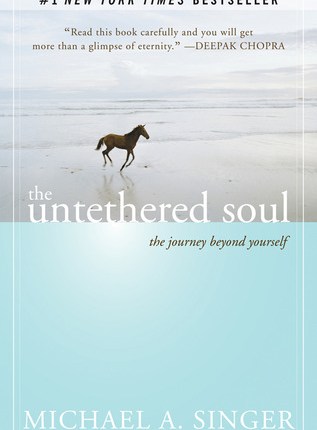
The Untethered Soul: The Journey Beyond Yourself by Michael A. Singer

The Untethered Soul: The Journey Beyond Yourself by Michael A. Singer

Michael Singer reminds readers that we are not the thoughts that we habitually think or the bodies that we walk around in. He gives multiple tips on how to access the spiritual strength inside ourselves and how to view life through the wide lens of this non-attached perspective.

Singer writes that it is through this new way of looking at life that one can find enlightenment.

Photo by Supriyo Ghoshal on Pexels.com

The ideas that are shared in Untethered Soul can be found in countless other books on spiritual studies. This isn’t new information. But, I think, there is always room on my bookshelf for a book that reminds me of spiritual truths.

It is all too easy to get caught up in the day-to-day trivialities of life with its stresses and constant demands on our attention. If you take a breath and a step back, it’s surprising what you can see.

Photo by Engin Akyurt on Pexels.com

Perhaps the mammoth success of The Untethered Soul over other books in its genre is the exposure it received on The Oprah Winfrey show. Whatever the case, it is quite accessible to readers who haven’t considered these concepts before.

Recommended for spiritual seekers both seasoned and not.

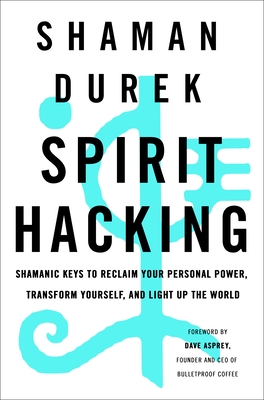
Spirit Hacking: Shamanic Keys to Reclaim Your Personal Power, Transform Yourself, and Light Up the World by Shaman Durek

Spirit Hacking: Shamanic Keys to Reclaim Your Personal Power, Transform Yourself, and Light Up the World by Shaman Durek

Shaman Durek offers practices to spiritual seekers who are looking for ways to improve their lives through the use of shamanistic techniques. Like most new age or spiritual books, not everything in here resonated with me. But I will take a few key concepts and jettison the rest.

Photo by Abet Llacer on Pexels.com

For starters, I took issue with the title of this book, “Spirit Hacking”. It implies that there are some sort of tested and proven short cuts to bringing spiritual dimensions into one’s life. I think most readers are wise enough to know that such a thing doesn’t exist. To put that sort of label on a work is false advertising to delusional, depending, I suppose, on how much one believes one’s own hype.

On the other hand, if “Spirit Hacking” was simply an effort to connect with readers who sincerely want to believe in such spiritual short cuts then this book will probably fill some sort of gap in his or her journey to a desired “goal”.

Personally, I took the title as a type of warning flag before I read it. Tread softly here, Heidi, I said to myself. And question everything.

Photo by Darius Krause on Pexels.com

Shamanism, like other semi-organized movements, varies greatly depending upon who is imparting the wisdom and from what tradition. Shaman Durek touches upon topics I’ve studied from other sources such as there are different types of spirits, various rituals or practices to interact with these spirits and time isn’t as fixed as some imagine it may be. But he puts his own unique spin on the information.

I like the empowering side to shamanism. If you have lingering physical or emotional pain, these practices suggest that you can do something about it, today if you’d like. If you’d like to change the world, go within and change yourself, then the rest will follow.

I also like the idea that everything on the planet from plants to animals to places has a guiding spirit or intelligence. If only one knew the way to interact with these intelligences, life itself could become a guide into the mysteries of the spirit. That part of shamanism is pretty cool.

Photo by Aleksandar Pasaric on Pexels.com

On the other hand, I don’t like how some shamanistic movements act like established religions, insisting that their ways or traditions are the only way to go. In addition to the snobbery, I take issue with the manner in which some shaman teach their methods. They fail to distinguish between the real world and visionary space, leading adherents to confuse one with the other or worse, not draw any dividing lines at all.

Shaman Durek’s tone can be somewhat abrasive, but if readers are looking for basic shamanistic ideas, they can be found here. Recommended with reservations for new age spiritual seekers.

Other titles about shamanism that you may want to explore if you’ve read this: This Trip Will Change Your Life: A Shaman’s Story of Spirit EvolutionThe Way of the ShamanActive Dreaming: Journeying Beyond Self-Limitation to a Life of Wild Freedom or The Flying Witches of Veracruz: A Shaman’s True Story of Indigenous Witchcraft, Devil’s Weed, and Trance Healing in Aztec Brujeria.

The Buddhist on Death Row by David Sheff

The Buddhist on Death Row by David Sheff

David Sheff examines the life and spiritual transformation of Jarvis Jay Masters, a man who has spent years on death row and in solitary confinement for a crime he says he didn’t commit.

“Even if Masters was innocent, I didn’t know what to think about the claims that he was, as his supporters described him, an enlightened Buddhist practitioner who had changed and saved lives.”

Photo by Donald Tong on Pexels.com

It is a powerful non-fiction account not only because Masters is honest and open about how he came to be where he is today, but because the spiritual lessons he has discovered throughout his experience are applicable for all of us. You don’t have to be sitting in a literal prison to feel like you’re locked in a cell and can’t get out.

The mind and heart can create suffering wherever in the world you are.

“Set in a place of unremitting violence, insanity, confusion, and rage, Masters’s story traverses the haunted caverns and tributaries of loneliness, despair, trauma, and other suffering- terrain we all know too well- and arrives at healing, meaning, and wisdom.”

Photo by Caroline Martins on Pexels.com

I don’t think you need to be a practitioner of Buddhism to appreciate the wisdom in this book. Spiritual lessons like the knowledge that can be found in self awareness and how to obtain freedom from suffering can be helpful for all of us.

I enjoyed the book so much that I read it in only a few sittings.

The lama wrote that all people have been sentenced to death- in that way, Jarvis wasn’t unique. … “We all live in a prison, and we all hold the key,” Chagdud Tulku wrote.

Photo by Pixabay on Pexels.com

Highly recommended for spiritual seekers of all types.

Thank you to NetGalley and the publisher for a free digital copy of this book.

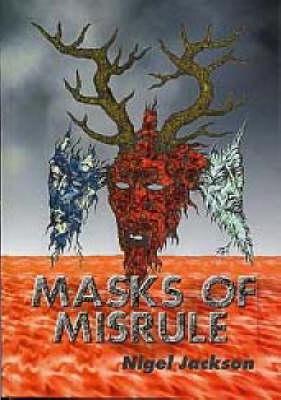
Masks of Misrule: The Horned God and His Cult in Europe by Nigel Jackson

Masks of Misrule: The Horned God and His Cult in Europe by Nigel Jackson

My mind has been going in circles as I’ve pondered, for days, how to review this book. It is a poorly organized and bewildering publication that could be tremendously important for pagans or religious scholars who are looking for information about The Horned God.

“The Knell of Inbetweenness hath been struck,
The Bell of MISRULE soundeth;
Reverberating the Thirteen Angles,
Echoing through the Nine Spheres”

Photo by Luca Paul on Pexels.com

It begins with a foreword by Michael Howard speaking of the scarcity of information about a male god within the existing neo-pagan revival movement. Then, the author, Nigel Jackson, goes into what could almost be called a tirade against established religions and the current neo-pagan movement in a chapter entitled, “In the Sign of the Horns.”

“The old time is passed away and the ‘age between the ages’ is begun: the Aionic Twilight falleth over the world and the day of the cross and the mitre is wholly done with.” pg 11

Honestly, that type of tribalism and fear-mongering is a poor look for any type of spiritual movement. Why immediately alienate readers from other spiritual paths who are coming to your materials with an open mind and a willingness to learn?

Photo by Vladyslav Dushenkovskyi on Pexels.com

Despite his initial hostility, Nigel Jackson quickly turns his attention to what he believes are different aspects of a male pagan god, throughout history, and includes various rituals to invoke this ancient being.

As I mentioned earlier, it is a bewildering hodge-podge of material with only the thinnest of connecting threads between. Newcomers to occult matters or pagan practices may lose their way within the quickly shifting time periods, places, names and associated mythologies.

However, I found information in “Chapter Three: Cycles of the Midnight Hunt” and “Chapter Seven: Wudewasa, the Knowledge of the Green Man” that was completely new to me and interesting.

“It was held that when nocturnal thunder broke over the wildwood and the forked lightning-flash clove the darkness and the night-tempest roared and tossed the boughs, that the wild host of Woodwoses came forth in primal panoply, raging through the hoary oaks and pines, their eldritch voices mingling with the storm’s tumult.” pg 107

Photo by Pixabay on Pexels.com

The printing of Masks of Misrule is a travesty for any lover of books. The font is irregular and fades, seemingly at random, within the text. The cover is ridiculous and does nothing to convey the seriousness with which the author treats his subject.

But if you set all of these concerns aside, some of the mythology contained within this book is entirely original, at least to me, and could be incredibly useful for seekers who are looking for a new movement within paganism that celebrates the male side of nature.

Thanks for reading!

The Seep by Chana Porter

The Seep by Chana Porter

Warning: minor spoilers ahead that are listed in the book’s description on Goodreads. Do not read this review if you don’t want to know anything about the book’s plot before beginning it.

“They would soon realize that The Seep had already infiltrated their city’s water supply. They were already compromised, already bodily hosts to their new alien friends. It was through that connection they could hear one another’s thoughts, feel the same emotions, overlaid with the all-consuming adage that Everything Will Be All Right, No Matter What.” pg 10, ebook

The Seep by Chana Porter asks many questions like: what would humanity and society look like if thoughts could actually create reality, if physical material was permeated with the spiritual, if enlightenment was only a sip or two of alien-filled water away?

Photo by Arnie Watkins on Pexels.com

How would people live, work and raise their children? What would relationships look like? And how would it feel to adults who grew up with a whole other version of reality only to spend the last half of their lives in a world, that to them, feels turned upside-down?

Would they embrace it, fight against it or choose another as-yet unknown path?

Trina, a trans-woman from the time before alien technology, when humanity changed genders with surgery and hormone therapy, is in a happy and fulfilling marriage with her wife, Deeba, until the day when Deeba decides she wants to become a child and live her life again. She asks Trina to be her mother in this second life, still sharing her reality but in an entirely different way than as a lover. This desire is something that is within the realm of the possible now thanks to the alien invasion called, “The Seep”.

Trina does not take this revelation well.

“It felt akin to coming home one day to find that your wife had become a hawk, with dusty talons and a great golden eye. Your hawk-wife can’t live with you anymore. She wants to live in the sky and eat smaller birds, not drink coffee and read the newspaper in bed with you.” pg 26, ebook

Photo by Flickr on Pexels.com

The majority of this book reveals how Trina adjusts to her new reality.

“The main message I have for you today is that we don’t yet know what to call ourselves, as both human beings and symbionts of The Seep.” pg 46, ebook

I think this book does a good job, like other science fiction novels, of holding up a mirror to reality and saying, what if. It also makes a great metaphor for how older generations might feel out of touch with the generations who come after them.

Prior to the alien invasion, Trina was on the leading edge of society in both her self actualization and lifestyle. After, she feels abandoned in a landscape that no longer makes sense and unloved by the people in her life she valued the most.

There’s a palpable sense of isolation and ever-increasing paranoia in this story. If the aliens exist on a level of conscious thought, they know what you want before you even voice it. It’s disturbing, but with technology increasing the pace of life and guessing consumers’ wants and needs before they even know, how far off the mark are we from that sort of interaction, really.

Highly recommended for readers who enjoy short science fiction that makes you think.

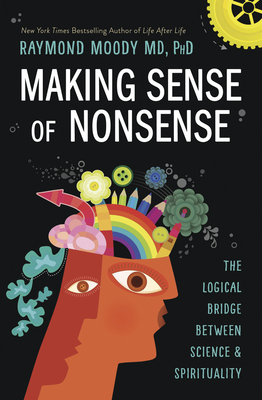
Making Sense of Nonsense: The Logical Bridge Between Science & Spirituality by Raymond Moody

Making Sense of Nonsense: The Logical Bridge Between Science & Spirituality by Raymond Moody

“A little nonsense now and then, is relished by the wisest men.” ― Anonymous

Raymond Moody, renown researcher of near death experiences (NDEs), has spent decades codifying and categorizing nonsense, proving it has a structure. Through his endeavors, Moody hopes nonsense, spoken by those who experience NDEs or upon their death beds, may be analyzed in order to provide another avenue of exploration into humanity’s experience after death.

It may sound like a load of nonsense, but I promise it is anything but. 🙂

Photo by Produtora Midtrack on Pexels.com

“Nonsense itself affects people positively, but the word ‘nonsense’ affects people negatively. That is, people like nonsense itself, but they dislike the word ‘nonsense.’ … they associate the word ‘nonsense’ with one common negative effect of involuntary nonsense: specifically, errors.” pg 13

It is not the accuracy of the utterance that researchers are examining, instead, it is the structure of the language itself.

In a class on this topic, Moody says his students learned to identify and write seventy different types of nonsense. (Who knew there were so many!) Once you know the forms, you’ll be able to do the same.

Why is this useful if you’re not a NDE researcher? Not only is nonsense regularly utilized in poetry, plays, television shows and other forms of entertainment, Moody shows examples of nonsense in religious texts, alchemical writings, advertising and more.

“My sense of nonsense has been an indispensable asset during my career as a medical doctor and psychiatrist, for it often helps me make sense of someone’s unique inner experience.” pg 105

Photo by Andrea Piacquadio on Pexels.com

And he’s right. Since finishing this book, I’ve become aware of how often nonsense is bandied about in both daily conversations I have with friends and family as well as in the Netflix shows I watch.

It’s not only used for communication and art. Moody claims nonsense goes a step further, providing a link to other mystical states of mind.

“Talking nonsense to people makes them experience a curious, hard-to-describe alternate state of consciousness. In sum, nonsense is an alternate state of language that can induce an alternate state of consciousness.” pg 125

Photo by Vinícius Vieira ft on Pexels.com

So, babble away, my friends. If anybody says anything negative about it, tell them you’re conducting a science experiment and you won’t just be talking nonsense. 🙂

“It takes a heap of sense to write good nonsense.” ― Mark Twain

Thanks for reading!

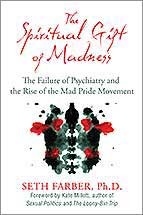
The Spiritual Gift of Madness: The Failure of Psychiatry and the Rise of the Mad Pride Movement by Seth Farber

The Spiritual Gift of Madness: The Failure of Psychiatry and the Rise of the Mad Pride Movement by Seth Farber

In The Spiritual Gift of Madness, Seth Farber interviews half a dozen people who have had negative experiences with western psychology as well as experts in mental health. His thesis is the mental health system as it is values medication over other types of therapy and, because of this misguided focus, harms the very people it is attempting to help.

He is a champion of the Mad Pride movement, a group that seeks to celebrate and assist those suffering from mental health issues to embrace who they are rather than medicating it away.

Photo by Engin Akyurt on Pexels.com

“… helping the mad does not mean drugging or coaxing them into a state of “adjustment,” but rather appreciating the state of madness for what it is: an existential clearing in the jungle of our insane modern society that potentially leads into the realm of true sanity, which, in the world today, means a state of creative maladjustment.” pg 124

I should mention that Farber doesn’t use “mad” in a negative way, rather he uses it to highlight how individuals with different viewpoints from the rest of society are marginalized and sedated into silence. He puts forward the idea that insanity is believing everyone must view the world in the same manner or be ostracized for it. He holds up society’s repeated failures to handle issues like global warming to racial and gender equality as evidence of the insanity of the world.

“Now one of the things that’s so detrimental about the hospitalization is the power impact of being treated like a patient – people end up believing they’re chronically mentally ill.” pg 44

Farber believes mental illness is a transition to a new, potentially powerful state of being that, as a modern society, we quash before it’s completed. He points out that many of the great prophets and visionaries from history had, what we would now call, complete breakdowns before their epic breakthroughs.

Photo by Ryan Millier on Pexels.com

“… a few weeks of mania could give one access to a sense of understanding that it could take ‘years of meditation’ to achieve, access to visions of ‘the wholeness’ of the universe and ‘the interconnected nature of love, access to a sense of time and space that allows one to discern what is and what is not important.'” pg 21

Instead of medication and psychiatric facilities, Farber would like to see the creation of safe havens for people going through this process so they could assimilate whatever is going on in their minds before going back to the rest of society. That would be for the experiencer’s protection as well as the public.

I think Farber brings up important issues in this book. As someone who has struggled with mental illness, I’ve viewed the system from the inside and recognize some of the problems he points out. There’s the stigma of the diagnosis and the embarrassment of feeling separated from “normal”. There’s the expectation you will take your meds from the day you’re labeled until you die, no matter the side effects.

But, worst of all, is feeling like you can’t trust what’s going on in your head because it went so spectacularly wrong before and what’s to prevent it from going sideways again.

I agree some changes need to be made to the system and, as a society, perhaps we can do a better job minimizing stigma, maximizing communication, and helping people live in a happy and healthy manner that they choose.

However, I feel like Farber goes too far in his insistence that the “mad” are the future. That somehow they hold the keys to a paradise on earth if only we’d let them share their messages unfettered.

Photo by Oliver Sjöström on Pexels.com

In the midst of my psychosis in 2009, I wouldn’t have wanted any of the nightmares in my head to permanently affect my future or my family. If there are lessons to be learned from it, maybe it’s an individual message for the people undergoing the change rather than expecting it to be universal lessons, applicable for everyone.

But, that’s my two cents. I certainly don’t have all the answers, but The Spiritual Gift of Madness asks some interesting questions.

Recommended for seekers who are interested in a different way to both approach and treat those with mental illnesses or for those who have gone “through the looking glass” and are now viewing the world from the other side, like me and the people in this book and many, many others.

Thanks for reading!

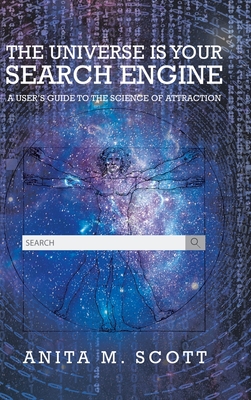
The Universe Is Your Search Engine: A User’s Guide to the Science of Attraction by Anita M Scott

The Universe Is Your Search Engine: A User’s Guide to the Science of Attraction by Anita M Scott

The Universe is Your Search Engine is a new age, metaphysical book with anecdotes, suggestions and exercises to assist readers in utilizing the law of attraction in his or her own life.

Anita Scott compares the law of attraction to a universal “search engine.” What you put in, comes back to you kind of like Google for the mind.

Photo by Pixabay on Pexels.com

“While the Universe’s Search Engine delivers real-life experiences, it is not responsible for your quality of life. You are, because no one else can use your mind to think thoughts. You alone are the thinker of your mind, and it is your thoughts alone that trigger the search and the ensuing return of life experiences.” loc 310, ebook

The book is divided into three sections: the first handles different aspects of the law of attraction from science to energy and quantum physics. The next part goes into metaphysics, the body, purpose and more. The third part is a workbook that ties the first two sections together and is also scattered throughout the text.

“Fighting against what is elongates suffering, makes an issue bigger, and squanders your valuable energy.” loc 428, ebook

Photo by Jill Wellington on Pexels.com

I’ve read quite a few books like this- new age materials that teach your thoughts create your reality. I was honestly surprised how much I enjoyed this version of the teaching.

The publisher sent me an email offering a free digital copy of this book through NetGalley, I didn’t request it. And, I’m going to be blunt here, I was feeling rather unsure about it. I simply wasn’t in the right head space to read and review a new age book. But then, I thought, why not give it a chance and I’m glad I did.

This year, 2020, has been the worst. Prior to this mega-disaster of a year, I would have described myself as someone who created her own reality sometimes successfully, other times not so much, but I felt like I always had at least a glimpse of where my life was going.

This year has changed all of that. Now, I’m not certain I create my reality at all.

Current angst aside, I liked The Universe is Your Search Engine. I liked the empowering messages it shares. I like the exercises that encourage readers to find their purpose, focus their thoughts and joyfully move into a future of their own design.

Photo by Dina Nasyrova on Pexels.com

I’m just not sure I believe in it myself anymore. Maybe I’ll get back there some day.

Recommended for readers and seekers who are looking for information on the law of attraction. Anita Scott has written a beautiful, modern book about it. Give it a shot and see if it’s for you.

Thank you to NetGalley and the publisher for a free digital copy of this book. And thanks for reading!