The Highly Sensitive Person in Love: Understanding and Managing Relationships When the World Overwhelms You by Elaine N. Aron

The Highly Sensitive Person in Love: Understanding and Managing Relationships When the World Overwhelms You by Elaine N. Aron

Author Elaine Aron defines “highly sensitive persons” (HSPs) and gives a plethora of coping mechanisms as well as case studies to support the definition. She also includes tests so you can discover where you are in the HSP world.

“The trait was always there, of course, just called by other names. But its essential elements were not known, so it was described by external behaviors only, such as ‘shy’ or ‘introverted.'” pg 54, ebook

Photo by Michelle Leman on Pexels.com

This was only the second book I’ve read about HSPs. Prior to this, I have heard HSPs being described as having sensory processing disorders, which exist on a spectrum like most everything else in the psychology universe, or simple shyness.

“My term for it is sensory processing sensitivity, but the same trait is also called environmental sensitivity or reactivity; biological sensitivity to context; differential susceptibility or vantage sensitivity; or identified by the names of certain genetic variations or as in animals, sometimes termed behavioral plasticity or flexibility.” pg 82, ebook

Despite my lack of background in the topic, there was very little new information in this book. A big take-away was to improve your communication style and keep in touch with the people in your life who love you. So many problems can be cleared up with clear, concise communication.

Photo by Gustavo Fring on Pexels.com

Also, attempt to address any troubles you may have from a dysfunctional childhood or relationships prior to embarking on a new relationship. Healer, heal thyself.

Another coping mechanism I use regularly, but didn’t realize I did, is handling over arousal. Whenever I find myself being overwhelmed by life, I find a backroom and take a minute or two to myself. Sometimes I just breathe. If I’m not at work, I pick up a book or get a hot drink.

“Anger is a highly stimulating emotion. HSPs are strongly affected by it, even when we just witness it. pg 77, ebook

Photo by freestocks.org on Pexels.com

Aron encourages readers to find their “optimal level of arousal” since it varies from person to person. Know yourself and your limits, and tell your loved ones. Also, give yourself permission to turn off your sensitivity. It may seem silly- but that never occurred to me.

“All HSPs, men or women, are more aware of what other people are feeling, what they want and need. Thanks to your spontaneous deep processing, you also can sense what will happen if others don’t receive what they need- they may suffer, fail at what they want to do, become angry with you, feel disappointed with you. And being more sensitive, when they feel bad, you will be bothered too… pg 56, ebook

I tried to treat everyone the same and it led to some serious problems in my personal as well as professional life.

Photo by Kat Smith on Pexels.com

One of the most helpful parts of this book was Aron’s invitation to reframe my past in light of my new self knowledge. Prior to learning about HSPs, I was barely functioning in a world that didn’t necessary make room for me. Now I know I’m not alone in this- and have more tools in my metaphorical belt to help me get through the day.

I’m not entirely convinced by the final section of The Highly Sensitive Person in Love that discusses HSPs being more spiritual or falling harder in love than non-HSPs. It’s a romantic sentiment perhaps, but I was unconvinced by the evidence. I think we’re all in this love game together.

Recommended for readers who are or have a loved one who is a highly sensitive person. I’m curious to know what others in the community think about this book. If you do have a chance to pick it up, please write a review and let me know. 🙂

O’s Little Book of Happiness by O, The Oprah Magazine (Editor), Thelma Adams (Contributor)

O’s Little Book of Happiness by O, The Oprah Magazine (Editor), Thelma Adams (Contributor)

This collection of essays from the pages of O are wonderful. Through memories and insights, the writers of each chapter have something uplifting and inspiring to share.

My favorite was the chapter entitled “My Unplanned Adventure” by Catherine Price, pgs 88-99. It’s about an uptight traveler who planned every aspect of her trips around the world until she came to the conclusion that she was overthinking it.

Photo by Andrew Neel on Pexels.com

Once she figured this out, she walked up to a person, asked them where they would travel if they could go anywhere, and went there. I won’t ruin the essay by relating all of it here, but it resonated with me. I also have to remind myself that going with the flow is always more desirable than white-knuckling intricate plans and time tables.

I have to confess: I am not a reader of magazines. I find them to be filled to the brim with advertisements for things I neither want nor need and, after I’ve dug through the pages of stuff for sale, I find the writing to be insipid. “Six new sex positions!” “Keep your romance alive!” blah, blah, blah…

Photo by KoolShooters on Pexels.com

That being said, O’s Little Book of Happiness was totally different from my expectations of what a magazine is and introduced to me the idea of what a magazine could be. (And there were no advertisements!)

A couple of the essays felt too short- one page or one paragraph in some instances- but for the most part I enjoyed their length and the order they are arranged in.

There’s something very powerful in reading back-to-back essays about happiness and accounts of people finding their path in life. I read this through in almost one sitting but it could also be savored slowly like a-chapter-a-day devotional guide.

Photo by Andre Furtado on Pexels.com

I enjoyed this very much. And I hope you will too.

If you like O’s Little Book of Happiness, I would also recommend Happiness: A Guide to Developing Life’s Most Important Skill by Matthieu Ricard and Living Oprah: My One-Year Experiment to Live as TV’s Most Influential Guru Advises by Robyn Okrant.

I received a free copy of this book through Goodreads First Reads. FTC guidelines: check! And thank you for reading.

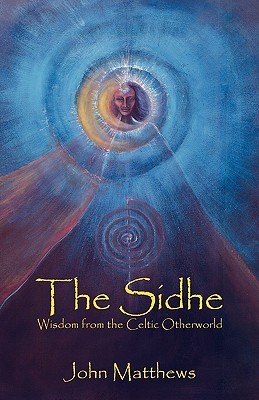
The Sidhe: Wisdom from the Celtic Otherworldby John Matthews

The Sidhe: Wisdom from the Celtic Otherworldby John Matthews

“I knew then that something was going to happen in Ireland. I had no idea then just what an enormous and irrevocable change it was going to make to my life.” pg 5, ebook

John Matthews received a call from a friend whose occupation is archaeology. The friend showed John into a barrow where he first saw the glyph that is on the cover of this book.

John claims that through meditation upon the glyph, he communicated with other beings whom he believes are ‘the Sidhe.’

“To truly know a thing is to become one with it. Just as to become one with it is to truly know it.” pg 27, ebook

Photo by cottonbro on Pexels.com

He shares the communications that he had through the glyph throughout the text. At the end, he includes six exercises that the beings gave him and encourages readers to try the practices for themselves.

Readers could potentially experience the connection John felt.

“Drawn by this feeling, I lay down beneath the branches of the old oak, and, as I had done countless times before, stared up through the branches at the patches of blue sky that showed through. As I did so a sense of stillness and peace descended upon me.” pg 36, ebook

Photo by Magda Ehlers on Pexels.com

The Sidhe: Wisdom from the Celtic Otherworld reminded me of the multiple works of Abraham Hicks or Seth Speaks: The Eternal Validity of the Soul. There’s probably a reason for that.

It could be that the channelers are tapping into a similar place. In this book, John calls it the “great net” of creation. I’ve heard it called, “Indra’s net,” among other names in other sources.

Whatever it may be, I find it interesting that the communications received are similar enough to draw comparisons.

“Among the greatest gifts we have observed in your race is the desire to know and to explore. This hunger has propelled you far along the path of the day and the path of the night. Hence, your journey is indeed one of exploration, not only in time and space, but in the dimensions of Spirit.”

Photo by Stefan Stefancik on Pexels.com

Of course, I had to try John’s method for myself. I’m always so curious about these kind of things.

Unfortunately, I fell asleep rather than having a memorable experience. I expect the fault was on my side, but perhaps I experienced something in my sleep- I just failed to remember it.

I do plan to give the meditation a try again in the future, when I’m not so sleepy.

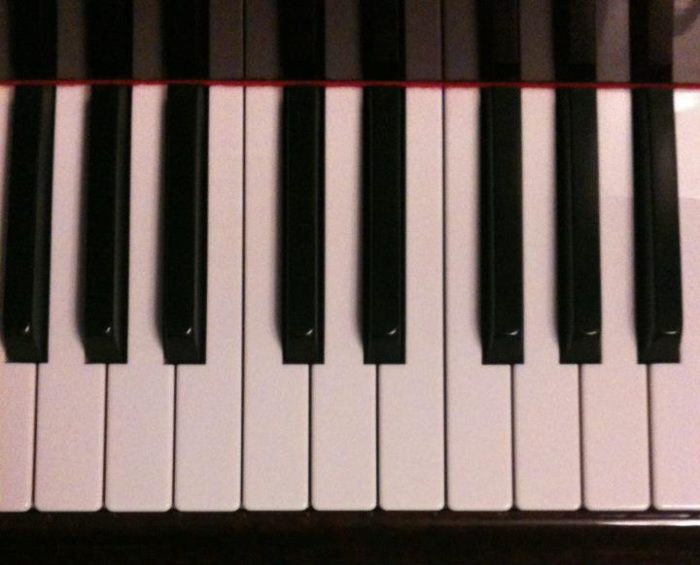
I was fascinated with the way the glyph looks like a treble clef with multiple circles. When John began to describe the Sidhe’s connection to music, I felt that comparison made sense.

“Much of our time is spent in the making of music- though for us it is more serious than a pleasant pastime, since it is part of our creative process in more than an abstract fashion.” pg 69

Playing music is one of the few activities that put me into a flow state. Perhaps I should try meditating that way.

Anyway, I recommend this book for the curious or spiritual seekers. If you try the exercises within, please do share your results. Maybe some day, the world will have more answers than questions about these ineffable things.

Or, maybe, we’ll open yet another door for endless discoveries. Either way, I’ll be interested to see what comes next.

Thanks for reading!

Find Your Goddess: How to Manifest the Power and Wisdom of the Ancient Goddesses in Your Everyday Life by Skye Alexander

Find Your Goddess: How to Manifest the Power and Wisdom of the Ancient Goddesses in Your Everyday Life by Skye Alexander

Find Your Goddess by Skye Alexander is a compendium of goddesses and their various aspects as well as attributions from all over the world. She covers the well-known goddesses from the Roman, Greek, Egyptian and Norse pantheons, and also delves into the lesser known (at least to me) Shinto, Hindu, and Native American deities.

And more.

Photo by Pranjall Kumar on Pexels.com

Some of the entries have corresponding artwork opposite the deity information- but not all. I wish every listing had some artwork because, as they say, a picture is worth a thousand words.

Though I picked this book up for entertainment’s sake, I could see this being a useful tome for spiritual seekers who are looking for a tradition that fits their inner reality.

On a different note, I could see gamers discovering the information contained in Find Your Goddess quite handy. Anyone looking to roleplay characters in their tabletop games or dungeon masters who want to craft a scene with new (to players) world powers could utilize this book.

Photo by lilartsy on Pexels.com

This could also be a useful reference book for pagans on the forefront of recreating rituals and knowledge bases from long ago. I find it interesting that once upon a time the goddesses in this book were recognized and worshipped, and now society has forgotten not just about the deity herself but also how she was honored or her role in keeping civilization together.

Many of the goddesses have roles in the home or schools- goddesses of the hearth, learning or heart. But some have spheres of influence that were primarily held by male gods, at least in the western world.

One of these that comes readily to mind is Amaterasu Ōmikami, a goddess of the sun and the Japanese imperial family. The Greek and Roman god Apollo has always occupied that role in my classically-educated mind.

Japanese Sun goddess Amaterasu emerging from a cave.

I enjoy considering other viewpoints because my own biases come to the forefront when I do so. Though I may not be able to rid myself completely of these biases, knowledge and wisdom helps me to see the blind spots. My hope is to know where they reside so I may easily brush them aside when they raise their ugly heads.

Highly recommended for pagans, spiritual seekers or readers with a curious mind, like me.

Thanks for reading!

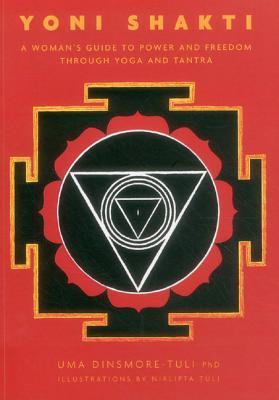
Yoni Shakti: A Woman’s Guide to Power and Freedom Through Yoga and Tantra by Uma Dinsmore-Tuli

Yoni Shakti: A Woman’s Guide to Power and Freedom Through Yoga and Tantra by Uma Dinsmore-Tuli

“When we unlock our sakti we re-connect with our capacity for inner joy and peace with ourselves: all our experiences begin to join up and make sense. Freeing our sakti in this way gives us the key back to our sexual selves, so that we may inhabit our whole being with authenticity and joy.” pg 508 ebook.

Author, yogini and tantrika, Uma Dinsmore-Tuli, shares yoga sequences, mantras, mudras and meditations to assist readers in becoming more aware of their inner selves.

Photo by Elina Fairytale on Pexels.com

What does this accomplish, you may be asking yourself. According to Dinsmore-Tuli, it’s the foundation of a mindful existence.

“All of the poses to unblock the life force energy are also very practical means to keep the creative and sexual energies in circulation so that they are available to nurture and enrich our creative, family, social and professional encounters.” pg 518, ebook

That sounds pretty good to me.

So, I tried some of the suggestions from this book which I had to cherry pick because there are dozens to try. And my results were unexpected and stunning.

Photo by Diego Madrigal on Pexels.com

After the first practice, I experienced an almost immediate increase in my sensitivity to my body’s energy and overall energy level. After the first week, this improved awareness led to some fascinating experiences during my meditations.

Apparently, practitioners of yoni shakti routinely encounter visions or spontaneous energy body knowledge. The goal is not to seek these experiences, but to be aware when they arise and dissipate, and then utilize them for greater self knowledge.

Using these teachings, I feel like I’m learning a whole new dimension to life- one that arises from practices of mindful awareness. Yoni Shakti is a good reference book for that journey.

Photo by Daniel Torobekov on Pexels.com

That being said, a majority of this book is repetitive to the point of unreadable. I realize Dinsmore-Tuli is passionate about the women’s movement in yoga, but she goes on so much about past abuses by gurus and organizations that it detracts from the delivery of the wisdom of the book.

I found myself skimming entire sections because they read the same in the previous chapter and the ones before it.

On the other hand, this book shines in its accounts of the women who were suffering and then rediscovered their power and ability to heal themselves through their yoga practice.

“There is a deep relief in knowing that other women have experienced the same losses, and a comfort in hearing others speak about what is so often unspoken. The sharing is healing.” pg 597

Recommended, with a few reservations, to spiritual seekers interested in yoga and tantra- particularly women.

Thanks for reading and namaste!

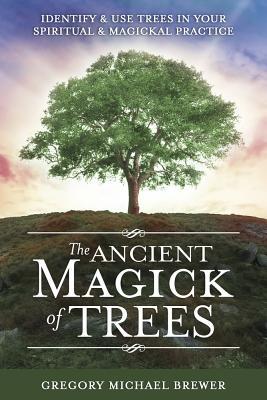
The Ancient Magick of Trees: Identify & Use Trees in Your Spiritual & Magickal Practice by Gregory Brewer

The Ancient Magick of Trees: Identify & Use Trees in Your Spiritual & Magickal Practice by Gregory Brewer

“Since the dawn of humanity, in all cultures and religions across the globe, trees have been revered not only as a life-sustaining source of food and medicine but also as a place where spirits dwelt, awaiting to reveal great mysteries to those who sought their wisdom, knowledge, and magick.” pg 2

Author Gregory Brewer examines the wonder and mystery that are trees from the pagan perspective in this book which is part informational, tree-related ritual/meditation suggestions, and reference.

Photo by Pixabay on Pexels.com

Understanding the symbolism of trees throughout countless cultures of human history is an enlightening study, but equally important is learning to form a personal connection with them in order to better comprehend the interaction of how the divine reveals itself to us through nature.” pg 243

The majority of the book is dedicated to descriptions and occult associations for different types of trees.

I read The Ancient Magick of Trees in order to learn more ways to invite nature into my life. The book has that but I found Forest Bathing: How Trees Can Help You Find Health and Happiness to be more immediately practical. I also connected more with the information in the forest bathing book.

Thanks for reading!

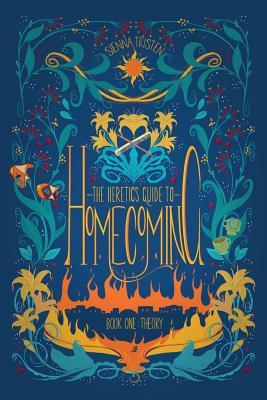
The Heretic’s Guide to Homecoming: Book One: Theory by Sienna Tristen

The Heretic’s Guide to Homecoming: Book One: Theory by Sienna Tristen

The Heretic’s Guide to Homecoming is a fantasy journey in which Ronoah, an introverted and anxious main character, discovers a strength inside himself that he didn’t know he had and, along the way, learns about the world outside of the regimented and ill-fitting expectations of his hometown.

It is not a simple adventure because Ronoah, with all of his hang ups, is a very unlikely hero.

“… Ronoah was not one tenth the rebel she needed him to be. Inertia had him by the throat, and its consequence was a keen pain squatting ugly at the bottom of his soul, rotting it from the roots up.” pg 9

Photo by Mariana Montrazi on Pexels.com

Like other readers, I found author Sienne Tristen‘s depiction of Ronoah’s crippling anxiety and panic attacks to be one of the most insightful and sensitive pieces of writing I’ve ever had the privilege to read. Unlike most works of fantasy in which the action takes place in an external world, Ronoah’s greatest battles are in his own mind.

The anxiety speaks with its own voice and becomes a main character throughout the story.

“What were you thinking, it sneered, acting like you’re so important, so worldly, making it out like you’re some big intellectual champion when all you really are is a petulant runaway with a few bits of trivia stuck in your useless head? Talking and talking like you’re an authority on anything- who do you think you are?” pg 53

Photo by Brigitte Tohm on Pexels.com

Ronoah’s interactions with the other characters from the book take on a secondary importance to the all-encompassing relationship that he has with his inner world. But they are still beautiful connections.

“… He had this way of grabbing life by the horns and refusing to let go, no matter how it tried to shake him off. You know those people you sometimes find, the ones who…” “Who shine.” pg 154

Sienna Tristen’s writing brings to light foibles of anxious people that might otherwise remain shrouded in the sufferer’s inability to vocalize their feelings. Anybody who has ever spent a sleepless night stuck in the agony of fear and indecision will understand exactly what Tristen is spelling out in this story.

On the other hand, I found the first two-thirds of the book to be extremely triggering because of this gigantic magnifying glass that is held up to anxiety. The pacing didn’t do me any favors either. As Ronoah slowly twisted in the unending spirals of panic in his own head, I hung on the hook right along with him.

Photo by Meruyert Gonullu on Pexels.com

It was helpful to see Ronoah’s thinking process which Tristen writes so beautifully. Almost every time, readers can feel the moment he tips from functional person with some worries to frozen anxious mess. In my own life, I’ve started to watch for those tipping points- the moments I go from concerned about the future to paralyzed by anxiety. It has actually been quite illuminating.

But all of that new found self knowledge doesn’t make for a fun read. Fiction is one of my escapes from reality. In this book, I found quite a lot of reality and it wasn’t an escape after all.

“How far do you have to push your boundaries before you can feel them stretch? How high do you have to climb before your horizon expands? Is it possible to notice your own growing, or is improvement like an eyeball- visible to everything but itself?” pg 193

Recommended for readers who don’t mind very slow pacing in exchange for gorgeous writing about anxiety. Mind the triggers.

Thanks for reading!

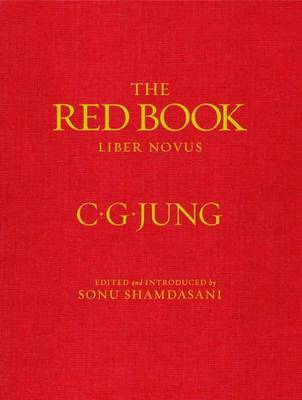
The Red Book: Liber Novus by C.G. Jung

The Red Book: Liber Novus by C.G. Jung

“The years, of which I have spoken to you, when I pursued the inner images, were the most important time of my life. Everything else is to be derived from this.” preface

The Red Book is a stunning publication. It is a physically large book which mimics Jung’s own handwritten copy which measured 11.57 inches by 15.35 inches.

Carl Jung’s calligraphy

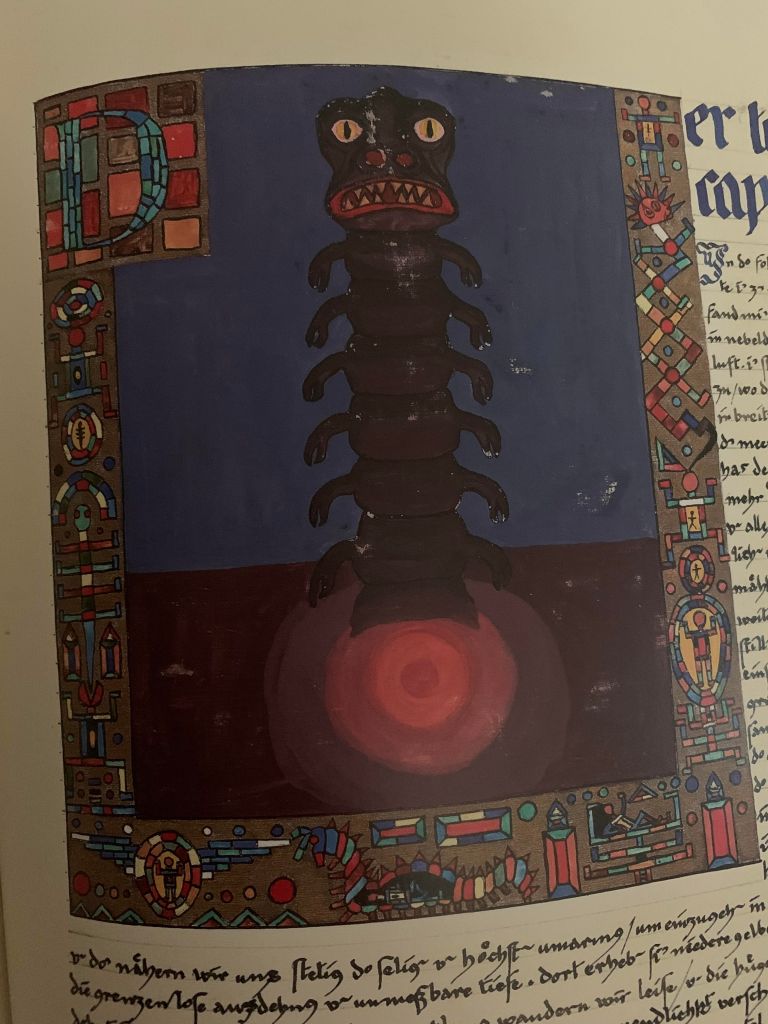
The contents are just as impressive. The first part is a brief history of Jung and his publications. The second contains pages of calligraphy in both German and Latin of his “active imagination” visualizations as well as sketches and paintings created by Jung to accompany the text.

The last section of the book is the English translation of the second part.

“Jung described his technique for inducing such spontaneous fantasies: ‘The training consists first of all in systematic exercises to eliminating critical attention, thus producing a vacuum in consciousness.'” pg 209

Painting from Carl Jung’s The Red Book

The visions themselves are interactions between Jung and voices or figures that he named his soul, gods and other archetypical figures.

“To this my soul spoke a word that roused my anger: ‘My light is not of this world.’ I cried, “I know of no other world.” The soul answered, “Should it not exist because you know nothing of it?” pg 240

As he stated in the preface, Jung felt as if his ‘confrontations with his subconscious’ affected his work for the rest of his life. It is a fascinating, little-examined side of a man who has had a huge effect on psychology and is credited, by some, as being one of the leading figures of the New Age movement.

The road to publication for this book is a story in itself. At first, Jung’s family carefully kept The Red Book in a safe deposit box to protect it as they recognized its value as a one-of-a-kind creation. They also believed that Jung wouldn’t have wanted its contents made public as he hadn’t left any specific instructions in his will about it.

Painting from Carl Jung’s The Red Book

However, researchers and scholars have since examined the text and found parts where Jung addresses, “my dear friends,” leading to the opinion that he did intend to share it with a wider audience. They also point to its importance to Jung’s following works as another reason why it should be published.

Whatever their reasoning, I’m so very glad his family and foundation made the decision to publish. This book is a treasure.

Curiously, The Red Book ends in an incomplete sentence.

Here it is:“I knew of nothing better than to write them down in a ‘precious,’ that is to say, costly book and to paint the images that emerged through reliving it all- as well as I could. I knew how frightfully inadequate this undertaking was, but despite much work and many distractions I remained true to it, even if another/possibility never…” epilogue

Painting from Carl Jung’s The Red Book

I wonder what he was going to write next.

Though I didn’t use Jung’s method of active imagination, I too have undertaken lengthy ‘confrontations’ of my subconscious and have come back with pages of material that read, in some ways, quite similar to this book.

Perhaps, one day, I will also find the courage to publish it.

Highly recommended for any readers interested in Carl Jung’s methods, archetypes or dream interpretation.

Thanks for reading!

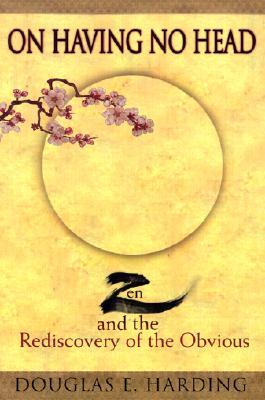
On Having No Head: Zen and the Rediscovery of the Obvious by Douglas E. Harding

On Having No Head: Zen and the Rediscovery of the Obvious by Douglas E. Harding

Douglas Harding had a strange experience when he was a young man. As he was hiking in the Himalayas, Harding had a moment he would later describe as of “no thought”, and where he perceived his body as having no head. In addition, he had a vision of his body as a house with a single window, but inside the house, there was nothing looking out at the world.

That nothingness is where Harding envisioned his consciousness resides.

Trippy, I thought. If that had happened to me, I might have been pretty freaked out.

Photo by Asep Syaeful Bahri on Pexels.com

Not necessarily so for Harding, who described the experience as incredibly peaceful and enlightening. When he came back from this experience, he applied his insight to various Eastern schools of philosophy, notably Zen.

The result is this book- a discussion of not only what happened to him, but an examination of consciousness itself. Where does consciousness reside? Where is the ‘me’ of our constant thoughts and emotions?

It’s somewhat of a winding path to get there, but Harding eventually points to the idea that consciousness is space in which reality is perceived.

When I first hopped into this book, I thought, how ridiculous. We all have heads attached to our necks. We can see them and feel them. Not only that, we can see and feel the heads of other people if we really wanted to.

Photo by Gabby K on Pexels.com

Harding takes this idea of ‘seeing’ and ‘touch,’ and questions what it is that people actually perceive. Yes, he says, you can see your head in a mirror. But that is a reflection of your head and not the head itself.

Everybody says these constructs are the thing itself. However, as Harding points out, they’re not really, are they? If you look down your own face, you can usually ‘see’ your nose as a series of splotches and shapes. Is that your nose though, or just splotches?

And he goes on from there.

By the end of the book, I was nodding my head a little and felt like I could understand something of what he was saying. But now that I’m trying to write a portion of it down, it just sounds like nonsense.

Photo by Olya Kobruseva on Pexels.com

Perhaps this is a book to be experienced rather than described. Rather, I might humbly suggest, like consciousness itself?

Recommended for spiritual seekers or anybody who enjoys pondering koans.

Thanks for reading!