Otherwhere: A Field Guide to Nonphysical Reality for the Out-Of-Body Traveler by Kurt Leland

Otherwhere: A Field Guide to Nonphysical Reality for the Out-Of-Body Traveler by Kurt Leland

Kurt Leland’s Otherwhere is the first out-of-body memoir/guide (that I’ve read, so far) that discusses the importance of the individual’s consciousness in how the inner worlds are perceived.

It’s not a new idea, being repackaged and sold throughout time, lately in the New Age/New Thought movement, that one’s beliefs shape one’s reality. But, as Kurt Leland points out in other dimensions where thoughts literally are that reality, this individual viewpoint takes creation to a whole different level.

He suggests that what Robert Munroe, Jurgen Ziewe, and so many other consciousness explorers experience when they are in their various out-of-body states is archetypical energy, though he doesn’t use that terminology. Leland calls the perception of this energy: one’s own personal translation tables.

Rather than taking the figures that one encounters at face value or judging them based on ingrained religious beliefs, Leland encourages the Otherwhere visitors to examine what the figure does. It’s very similar to what dream interpreters teach about how to understand your dreams.

Like me, Leland believes that anyone can have out-of-body experiences. He has this to say about why more people don’t: “It’s my firm belief that what prevents people from having out-of-body experiences and exploring nonphysical reality on their own is fear of the unknown. In my experience, the best way to overcome fear of the unknown is to familiarize oneself with the personal accounts of people who have overcome that fear themselves. I believe that personal accounts of out-of-body experiences are far superior to how-to manuals in stimulating people to venture into the unknown.” Preface, xii

He goes on to say: “In my opinion, our fear of the unknown is really just anxiety about becoming unlovable as a result of having had unfamiliar experiences and being changed by them. If we attempt to explore nonphysical reality and succeed, we’re afraid that we’ll be rejected, disbelieved, or thought to be crazy.” pg 27. Time to get over that. Don’t you think? 🙂

Lelend uses lucid dreaming as his method of exploring other worlds (Otherwhere). I’ve explored a few books about lucid dreaming one of which you can read here. If you are interested in my explorations into nonphysical reality, you can read those here.

I found this episode of a woman that he encountered there to be very illuminating. In this passage, he is talking to his Otherwhere instructors about her: (the Instructor saying) “As you can see, my colleague and I intended every image in the dream to contribute in some way to the lesson we wanted you to learn.” (Leland asks) “What about the woman reading the book?” “As you recall, she was facing the door into Otherwhere. There are many people in the world who have an interest in exploring psychic phenomena. They love to read about other people’s adventures in altered states of consciousness. But if a door that would allow them to undertake such explorations on their own were to open, they would make up excuses not to go through. The most common one is that they don’t have time.” pg 99

Let’s not be that woman.

The importance of physical life- in this excerpt, Leland is listening to an instructor in Otherwhere: “While it’s true that I no longer feel regret about anything I’ve experienced during previous lifetimes on Earth, I wouldn’t say that I’m grateful to be among the dead. That would imply that life over here, in Otherwhere, has a greater value than life on Earth. From our perspective, that isn’t true. There are things that can be learned only here and not there. But there are also things that can be learned only on Earth. Learning is all that matters, and no lesson is more or less valuable than any other. pg 152

Keep on learning, check.

In this passage, Leland examines the availability of teachings on other dimensions: “There are many maps of nonphysical reality… scattered throughout the history of your art and literature. These can provide useful translation tables for orientation within nonphysical reality. Why should every individual who explores nonphysical reality start from scratch?” pg 158

Why indeed… with the modern age and the easy availability of formerly difficult-to-discover information through the internet and public libraries, one can stand on the shoulders of giants to begin your own personal studies.

Everyone is an artist: “Every human being is immensely creative. But unless that creativity is channeled into some art or craft, it will be used instead to generate illusion. It could be said, therefore, that every human being is an artist, at least in potential. Developing this creativity is an essential part of every person’s life purpose, even if it isn’t the main focus of one’s career.” pg 238.

I believe that too. I’ve read a bunch of books about creativity, one of which you can explore here.

“How you choose to represent to yourself the ways of gaining access to any zone of Otherwhere is up to you. The validity of such images lies in their usefulness, not in some kind of absolute truth. The only important thing is that you give yourself some way of identifying the zone into which you’ve traveled, so that you can return on future occasions. Whether this manner of identification is the name of a subway line or station, or the number on a gate in an alley, is your choice. The identifying function of such names or numbers is all that matters.” pg 262

Or, like in my own personal explorations, tarot cards.

Leland finishes his account with a modern version of Dante’s Paradiso in which, he traveled to Otherwhere and discovered different areas within that place where the dead came to terms with the life they had just completed. Absolutely fascinating stuff.

Then he talks about ways to remove your consciousness from the ordinary to experience what he and others (and me!) have experienced- whether that be through meditation, lucid dreaming, shamanic drumming, etc, and, the librarian in me loved this part, gives book lists for learning each type of technique. He saves consciousness explorers a lot of time, which is a kind thing to do.

I highly recommend Otherwhere for folks beginning their consciousness exploration or the experienced traveler. It is a how-to guide, a journal, and an encouraging, exploratory ramble through Otherwhere, a place where anyone can go, if they only set their mind and heart on doing so.

Thanks for reading!

Archetypes on the Tree of Life: The Tarot as Pathwork by Madonna Compton

Archetypes on the Tree of Life: The Tarot as Pathwork by Madonna Compton

Archetypes on the Tree of Life is a dense spiritual text exploring the Tree of Life through the use of Tarot cards.

It’s kind of funny- I think my favorite part of this book wasn’t actually the book at all but instead the brief introduction which was written by Hans Nintzel. Nintzel was a student of the western mysteries who describes himself as “living down the street from Israel Regardie.” As I used the writings of Israel Regardie to do my own explorations into the Tree of Life, I found my mind blown right there. How cool would that have been, to have lived on the occult teacher’s own street? Too cool.

Here’s what Nintzel had to say that was so compelling:
As Qabalah evolved, it was discovered that, using this glyph or map called the Tree of Life, one could move around the geography of the consciousness, so to speak, contacting or balancing various personal energies by contemplating various aspects of the God energy using myths, legends, visions, and dreams, represented by the archetypes of the Tarot.”pg 4

I have yet to see a more concise description of what pathworking is than that. Now why Nintzel didn’t write his own book, I simply don’t know. Being the librarian that I am, I did a bit of digging into his background and it seems that he was a prolific lecturer and a translator of alchemical texts, but didn’t write his own. Disappointing. Here’s a link that I found of works that he helped to bring to the US which were listed in his obituary: https://www.alchemywebsite.com/rams.html

As for Compton’s 300 or so page contribution, I found myself to be disappointed. Archetypes on the Tree of Life is in the main, rather obscure Qabalistic/Kaballistic theory. It reads almost exactly like Regardie’s Garden of Pomegranates or Fortune’s The Mystical Qabalah. That’s not to say that it doesn’t have some gems of interest, but mostly it’s slow going and not as accessible as the publisher (Llewellyn) promised it to be in the page where it described the goals of its Spiritual Perspectives Series.

Compton’s most interesting point has nothing to do with traditional pathworking but is instead a hypothesis that she and her meditation partner have constructed about potential alternate paths across Daath. They’ve chosen a five pointed star to create the paths, but I would perhaps lean more towards a six pointed star, which still sort of works. The six pointed star is a combination of an upwards and downwards facing triangle, an ancient alchemical symbol for self actualization. Though, admittedly, the five pointed star has definite Tiphareth associations… and so the debate continues I suppose. 🙂 Anyway, if you’re interested in Compton’s theory, turn to page 304 to save yourself some time digging through the other stuff.

If you enjoyed this book, may I recommend reading either of the two books I mentioned earlier: The Garden of Pomegranates by Israel Regardie or The Mystical Qabalah by Dion Fortune. If you want more examples of modern pathworking, see my book: https://thelightcongress.com

Thanks for reading!

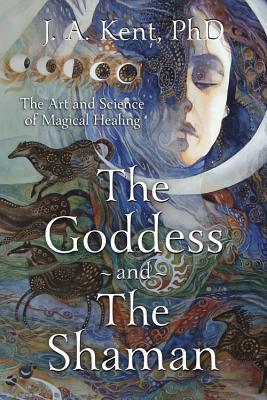
The Goddess and the Shaman: The Art & Science of Magical Healing by J.A. Kent

The Goddess and the Shaman: The Art & Science of Magical Healing by J.A. Kent
“I discovered the presence of a mystical and magical tradition that was largely concealed within our culture that had its roots in ancient pre-Christian Paganism, alchemy, Hermetic philosophy, the holy Qabalah, and elements of Greek, Egyptian, and Gnostic mysticism. It is generally referred to as the Western magical tradition. I tend to see it as the lost shaman tradition of the West.” -From the Preface

J.A. Kent, PhD, examines various occult and healing practices from a variety of traditions by interviewing practitioners as well as providing case studies of her own patients in order to present, what I can only call, her doctoral thesis of her personal magical paradigm. Her paradigm is the title of her book, The Goddess and the Shaman.

“There are strong social and medical pressures in Western-style thinking that regard those who have psychic experiences to be either fraudulent or psychotic.” pg 16

Let me briefly explain this paradigm, though I highly recommend reading the book to get it in Kent’s own words.

“The Goddess” is another name for what Kent calls the “Elphame,” essentially the other non-physical worlds that exist either alongside or on top of (depending upon who you speak to) our normal every day world. “The shaman” are the lightworkers and healers who explore these realms for various reasons including healing others of sicknesses both of the body and spirit.

I think it took a great deal of bravery to write a book like this, especially with the prevailing worldviews at work today. Well done, J.A. Kent!

The world is an enchanted, mysterious, and magical place that will reveal its many secret powers and energies to those who have the persistence and determination to unlock them.” pg 64

The trouble with spiritual healing or any type of work in the Elphame, Goddess, or whatever you want to call it, is that the practitioner exits the consensual reality of the every day world and enters non-consensual reality- the abode of the dreamers, lovers, poets, musicians, mad, etc. I have come to believe that the Western world, Western medicine especially, is not kind to those who venture outside the bounds of the normal.

Kent discusses this in depth in multiple places of this book. Suffers who could find no mundane explanation for their troubles turn to her in order to find some relief. And, encouragingly, many found healing.

“Ultimately they rejected the reductionist psychiatric explanation and embarked on their own magical journey of healing.” pg 159

Recommended for therapists and spiritual healers who are looking for more ideas about how to assist those who come to them seeking help. I enjoyed this book very much.

Thanks for reading!

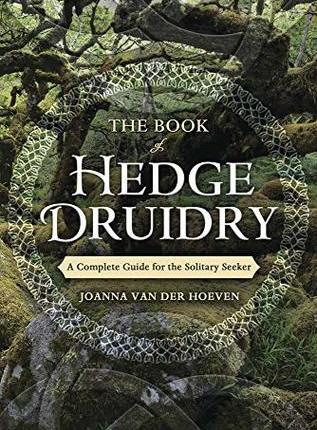
The Book of Hedge Druidry: A Complete Guide for the Solitary Seeker by Joanna van der Hoeven

The Book of Hedge Druidry: A Complete Guide for the Solitary Seeker by Joanna van der Hoeven

Joanna van der Hoeven, a practicing Druid, has written an excellent introduction for anyone interested in creating their own similar spiritual path.

The book has four parts: Theory, Practice, Study, and Skills and Technique

The first part, Theory, discusses various aspects of Druidry including the mysterious Awen, the role of gods and ancestors, the three realms, the world tree, the wheel of the year, the cycles of the moon and more.

“Druidry is the quest to find our place in the world and to work in the world in balance and harmony.” pg 2

Photo by Felix Mittermeier on Pexels.com

I loved how the author presented this section, which could have been mammoth, very succinctly. She gives so many aspects of the practice because she’s encouraging readers to find the parts that work for them. You don’t have to embrace everything, only what speaks to you.

The second part, Practice, outlines various rites and rituals to incorporate one’s practice into daily life.

She talks about how the ancient practice of Druidry has been lost and how practitioners today are creating their own versions of what that might have looked like. I liked that she emphasizes that unbroken lineage doesn’t lend credence to the practice as much as personal exploration and empowerment. Again, she encourages readers to make these rituals their own.

“We don’t know what ancient Druids really did, nor do we wish to emulate them in every aspect. We seek to find out as much as we can and learn from it, thereby creating wisdom in our being.” pg 66

Photo by cottonbro studio on Pexels.com

The third part, Study, looks into herblore, ogham (a type of alphabet that can be used like runes), and spellcraft. Practitioners are encouraged to study and learn these various topics in order to deepen their knowledge.

The final part, Skills and Technique, was the most interesting to me. In it, Joanna van der Hoeven discusses ethics, peace, voice, body and movement, as well as leadership roles.

I found the topics of ethics and peace to be timely.

“We cannot control how others behave. We only have control over how we behave in the world, how we act and react to others. We can lessen our reaction to others to a more intentional way of being through mindfulness of our thoughts, our bodies, and the world around us.” pg 296

Change ultimately starts at the individual level and goes from there. Thank you, Joanna, for the reminder.

Highly recommended for spiritual seekers who may be looking for an earth-based spiritual practice.

Trance-Portation Learning to Navigate the Inner World by Diana L. Paxson

Trance-Portation Learning to Navigate the Inner World by Diana L. Paxson

“The goal of this book is to teach skills that underlie the spiritual practices of a variety of traditions, from the ceremonial to the shamanic. But acquiring the ‘gifts of the spirit’ cannot be an end in itself. They have to be used.” pgs xv-xvi

Author Diana Paxson pulls from a variety of spiritual traditions in an effort to teach readers the basics of going into trance.

The first few chapters are about how to prepare yourself, set up cues for trance work, and to do the exercises “safely” which include setting up wards and how to come back out of trance.

Photo by Plato Terentev on Pexels.com

“All of the senses can provide cues for psychic or magical work. By repetition, we condition ourselves to move into a particular state when we experience a specific stimulus.” pg 64

The next chapters delve into what practitioners may find once they’re in trance and how to navigate this other state of consciousness. This includes how one might find guides, how to behave, and how to deal with the various entities that may be encountered.

The final parts of the book tackle the difficult topic of spiritual emergencies and give some suggestions for group trance work.

Photo by Polina Tankilevitch on Pexels.com

Overall, this book covers a wide variety of topics that spiritual practitioners may need when they begin the practice of going into trance. In that way, it could be an invaluable addition to your library.

On the other hand, I didn’t agree with all of the advice given. It didn’t make sense with my experience of the trance work I’ve completed and I think it might scare beginners away.

The particular advice that I’m referring to is the idea that if you come out of trance too fast that you might leave parts of your soul behind, which you will then need to retrieve before you are able to feel like yourself again.

I understand, from the book, that soul retrieval is a common enough shamanic practice. Still, I feel like we are doing beginners a disservice to plant in their minds the idea that this is something that could happen.

Why not instead say it is best to come out of trance slowly and leave it at that? Anyone who falls asleep knows that it is more pleasant to wake up slowly than to be shaken to consciousness. Do we leave portions of ourselves behind when we’re jolted awake by an alarm clock? I say no.

Photo by Aphiwat chuangchoem on Pexels.com

In addition, when Paxson talks about the kinds of entities one may encounter in trance, including animal guides or even gods, she gives them all of the foibles that go along with being a part of the human race. In the section about developing a relationship with a god or goddess, she talks about how practitioners may have to deal with divine jealousy.

I think it might be better to say, you bring your entire self with you when you go into trance. Your strengths and failings are on full display in your interactions with what or who you find there. Again, this avoids planting any negative expectations for practitioners while still providing ample warning.

Recommended with reservations for spiritual seekers who are looking to add trance work to their repertoire.

Ecstasy Through Tantra by Jonn Mumford

Dr. Jonn Mumford takes the complex topic of tantra and attempts to translate it from its Eastern roots for the Western mind. He is somewhat successful, but gets bogged down in the history of tantra coming to the west as well as the etymology of tantric terms.

“The Tantrist seeks freedom (Moksha) through life (sensation, sentient, sensual) and not through escape (abstinence, abstaining, absence), using the body as an instrument of evolution.” pg 47

Photo by KoolShooters on Pexels.com

I think when Westerners consider tantra, they generally think about exotic sexual positions. This book tries to show that tantra is so much more than that.

Through the recognition of the divine in your partner, tantra can be a method of reaching divine states of being. I think it is more of a mindset than any particular exercise.

“The key secret of the Western tradition lies in the demonstration that the sexual function has deeper implications than procreation.” pg 30

Photo by Kristina Nor on Pexels.com

Dr. Mumford provides a few rituals in this book so that readers can choose to practice some of his interpretations of tantra if they choose. He also includes illustrations of various chakras in order to encourage meditation upon the complex symbolism they contain. Through these practices, he says, one can begin to investigate the mystery that is tantra and the self.

“Although the major topic of this book has been sex magic and Tantric sexual practices, it must not be assumed that the whole of Tantra is concerned with these aspects. Tantra is the life science concerned with producing true individuals.” pg 122

I’m dubious about the efficacy of some of the exercises described in this book, like the practice of sucking ones bodily fluids back into oneself after expulsion. Maybe some of these things were meant to be metaphorical rather than literal? Who’s to say…

If you don’t allow yourself to be caught up in the strange (at least to my mind) details, there is some wisdom to be found in these pages. But the biggest problem of this book is that it tries to tackle too much.

It begins to do a comparison of witchcraft to tantra, which I feel could fill an entire book on its own. It also touches on similarities between tantra and western sex magic. Neither of these topics receive a thorough treatment, which was rather disappointing.

He also does a brief history of tantra coming to the west which I felt was over-simplified. History buffs might find that section off-putting.

However, if you’re looking for a brief introduction to tantra written for a Western audience, this might be a good place to start.

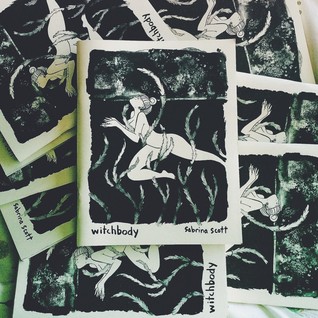
witchbody by Sabrina Scott

witchbody by Sabrina Scott

What is a “witchbody”?

Sabrina Scott defines this nebulous concept in graphic novel format.

Basically, to have a witchbody, the spiritual practitioner uses his or her senses and whole body to connect with everything in the world around her- be that a polluted parking lot or a clear mountain lake.

Scott touches on this idea that sometimes in our spiritual practices we only consider “pure” and “unpolluted” things as holy. They put forward the theory that, if we continue down this path, there may be nothing left to connect with as everything in existence mixes and mingles with everything else.

The spiritual is in the here and now, in the interaction of all things. I heartily agreed.

They wander through philosophy and other theories in the delivery of this message, which some readers may enjoy. I found myself wishing the text had a little more organization to it.

The art in this black and white graphic novel is beautiful. There is some non-graphic nudity- for librarians looking to categorize this book, I’d suggest in the adult graphic novel section.

As lovely as the art is, the lettering is close together and difficult to read in places. I think the author was going for the obviously hand drawn look, but I think they went one step too far. Otherwise, this book was enjoyable.

Highly recommended for spiritual seekers.

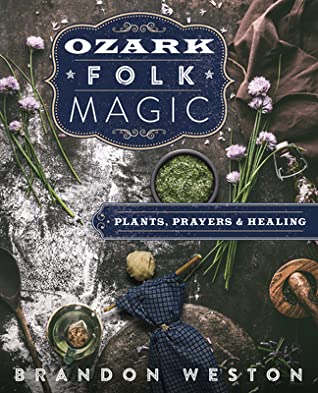
Ozark Folk Magic: Plants, Prayers & Healing by Brandon Weston

Ozark Folk Magic: Plants, Prayers & Healing by Brandon Weston

“There are many more folk beliefs unique to the Ozarks, some of which will be discussed in this work, but we also have to remember that much of what makes up this tradition can be traced to influencing factors from outside the region.” pg 16

Author and healer Brandon Weston takes readers through the varying histories and roles of Ozark folk magic. He discusses the different kinds of historical practices as well as following the evolution of Ozark traditions in the modern day.

Photo by Gaspar Zaldo on Pexels.com

“What worked was saved, treasured, and passed down through the generations. This process continues even today, and as a practitioner in the modern world, I’m constantly making these changes not only within my own work, but also for the culture as a whole.” pg 33

It is an illuminating look into a culture that remains fairly closed and secretive even today.

Brandon discusses the historical reasons for this secret keeping and doesn’t dismiss the darker portions of Ozark history such as racial tensions.

Also, he makes sure to talk about the dangers of overdosing on certain herbs or not seeking the help of western medicine when it is warranted. This book is fully of cautionary tales as well as educational ones.

Photo by lilartsy on Pexels.com

“There are many rituals that might be very interesting to look at but that aren’t worth using in a modern setting. Take, for instance, those rituals that involve the harming or killing of an animal, like the infamous black cat rite. I can’t stress enough that many traditions of the past need to be left in the past.” pg 247

My favorite part of this book was the chapter dealing with how different practitioners have reported receiving “the gift”. There were so many different ways and methods! It was fascinating to read Brandon’s take on all of it.

“Another unique road to power often found in the modern Ozarks comes in the form of receiving the gift through communion with nature. It might seem overly simplistic, but one of the beautiful aspects of Ozark healing is its simplicity.” pg 92

Highly recommended for anyone interested in the history and practices of Ozark folk magic.

Thanks for reading!

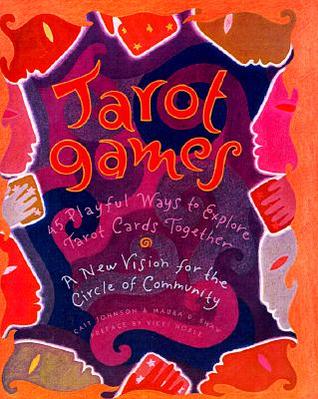
Tarot Games: 45 Playful Ways to Explore Tarot Cards Together; A New Vision for the Circle of Community by Cait Johnson

Tarot Games: 45 Playful Ways to Explore Tarot Cards Together; A New Vision for the Circle of Community by Cait Johnson

Tarot Games is a cute book about different tarot card layouts and how you can share these games with your loved ones in order to promote communication and the sharing of emotions.

“The wonderful thing about using these simple games and ‘reading layouts’ is that they catalyze the deeper processes taking place between people. This in itself is healing.” pg xii

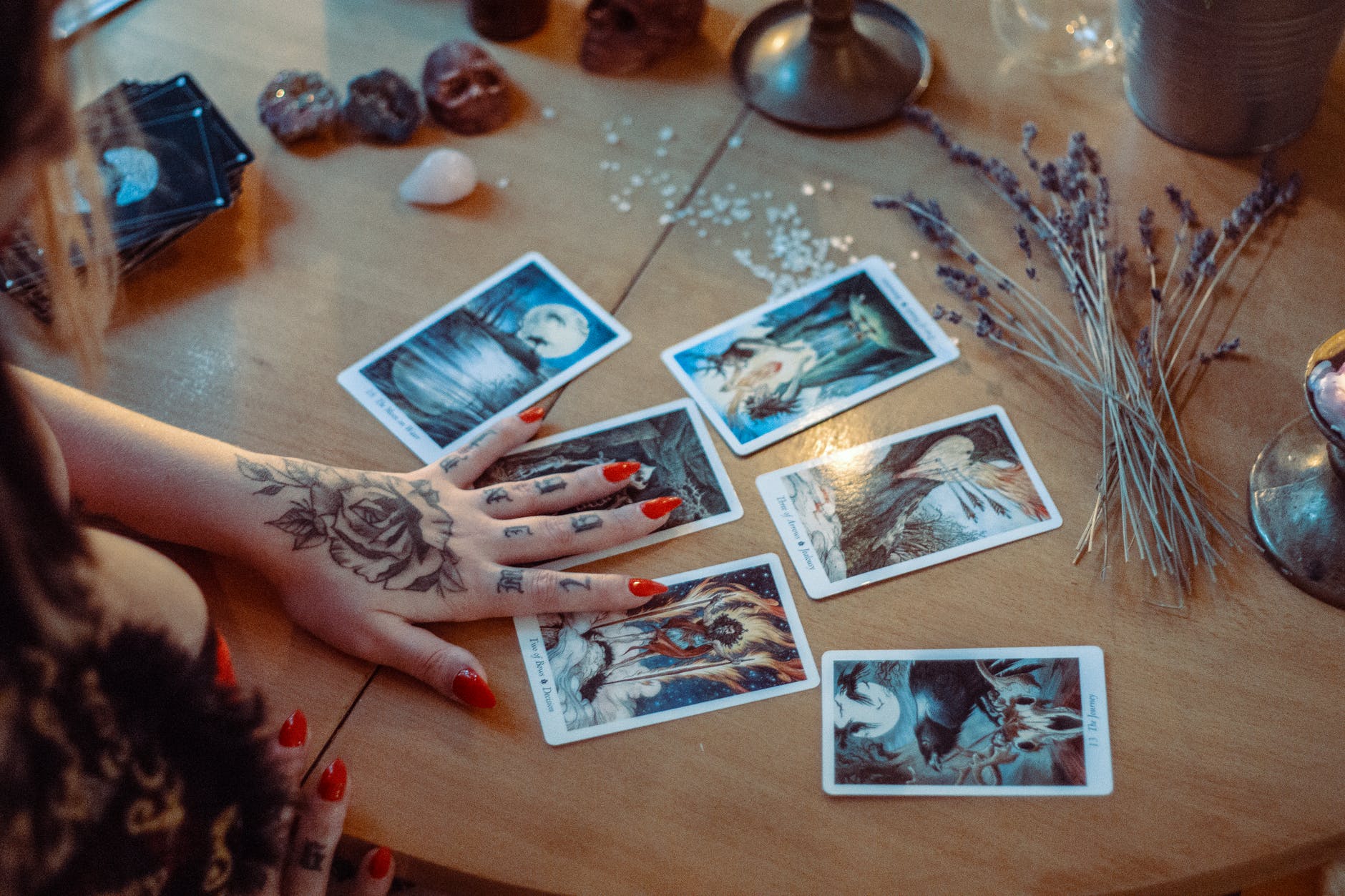
Photo by Alina Vilchenko on Pexels.com

Throughout the text, the author has sprinkled spiritual images and spirals. It makes for a relaxing read.

“Playing this game together gave both friends a sense of being supported, understood, and protected.” pg 27

I think people take tarot cards too seriously sometimes. This book is a good reminder to allow ourselves to play and share. It doesn’t have to be as dire as all that.

Highly recommended for beginners to advanced practitioners of tarot card reading.

Thanks for reading!