“So then, there seems little reason why I should not undertake my motoring trip to the West Country.” pg 20, ebook
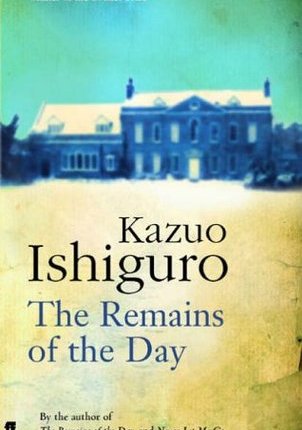
The Remains of the Day is mainly told through the memories of a butler named Stevens of Darlington Hall as he takes a short vacation to visit an old friend.
“It is sometimes said that butlers only truly exist in England.” pg 44, ebook
Throughout the story, Stevens again and again demonstrates his inability to connect with or show his emotions. But he believes this to be a positive attribute, something that he calls, “dignity.”
He gives all that he has to his position as a butler of Darlington Hall. And I was hoping his striving was worth it. In the end, the reader gets to decide if his was a life worth living or not.
Kazou Ishiguro received the Nobel Prize for this book and it is very well written. I was impressed by how Ishiguro tells the story and finds a way to connect the reader with this character who can be very unlikeable at times.
Despite some of his more infuriating attributes, I found myself cheering for Stevens anyway.
I did not like the ending of this book, which I won’t spoil for anyone. It reminded me of The Buried Giant, another well written book by Kazou Ishiguro with an ending I didn’t connect with.
This story is easier to experience than describe. If you read it, please let me know what you think about it.
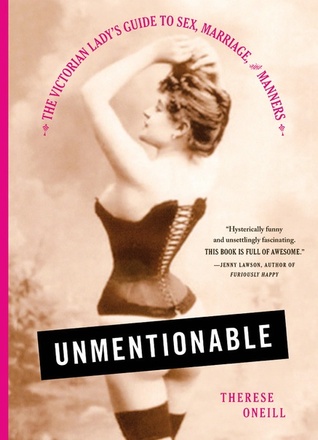
Unmentionable made me truly appreciate how good I have it compared to my female ancestors.
This clever little book examines the gross, disturbing, and, at times, hilarious “unmentionable” facets of a Victorian woman’s life and also, their powerlessness in society when compared to their male counterparts.
The women’s rights portion sounds grim, but Oneill’s writing keeps it light. I learned so much and was entertained too.
For example, I don’t consider modern cities to be very clean, but Oneill explains in her book, that they are shining examples of cleanliness compared to what came before: Some would argue that the nineteenth century was one of the filthiest times in all of Western history, particularly in any urban, developed area. … Ankle deep in filth, I said, but forgive me, I was inaccurate. You will wish the filth terminated at your ankles. Foulness is everywhere. Grime and rot cling to the very air, the buildings, the people; even the soap is made out of lard and poison.” pg 20, ebook.
All that dirt, but bathing was considered bad for your health and even, depending upon your religious upbringing, immoral! I’ve never read a historical fiction that describes the foul stench of the streets or the crowd upon it… now, I know better. Thanks Unmentionable!
Make up and other personal care products used to be either oily goop or filled with poisonous substances that could kill you or permanently wreck your face.
With this in mind, Oneill gives us a new take on the story of Jezebel: “She painted her face, and tired her head [fixed her hair], and looked out at a window.” “Some think this means Jezebel planned to seduce her way out of this problem; others think she was facing death with composure and dignity. At any rate, her eunuchs saw that they were on the wrong team and shoved her out the aforementioned window, and dogs ate her face. Which reinforces the assumption that her face was coated in sinfully delicious animal fat.” pgs 67-68, ebook.
Because women really had no other choice, being the ideal wife and mother was no laughing matter: “Your only job now that you are a nineteenth-century wife is to do everything within your power during every waking moment to make his life so sweet and full that he will literally dread the glory of Christ’s return, if only because it will mean parting from your secret strudel recipe and the unmatched craftsmanship of your trouser hemstitch.” pg 130, ebook.
So, unreasonable expectations of perfection abounded at home.
Women, especially single, unmarried ones, weren’t supposed to go anywhere alone: “Etiquette for Ladies reminds us that no woman has any business being alone in a museum, a library, or any other such den of unwholesomeness. Wherever you are going, your behavior once you arrive should remain every bit as self-aware-but-pretending-not-to-be as when you were in transit.”pg 165, ebook.
The library is a “den of unwholesomeness”… ha!
But the worst of the era, in my opinion, was the medical community’s attitude towards women. At that time, we hadn’t figured out how the female body worked and didn’t connect the idea that people need intellectual stimulation and purpose for a life well lived.
That lead to the lumping of every female complaint under the title, “Hysteria”: “First I would like to tell you what hysteria actually was. Which is incredibly difficult. Because the only honest definition I can give you is “a misdiagnosis.” Epilepsy, diabetic shock, neural disorders, post-traumatic stress disorder, postpartum depression, and bipolar disorders do not necessarily cause similar symptoms, but they were all commonly diagnosed as hysteria.” pg 173, ebook. So, pretty much, everything then.
Oneill reminds the reader that many of the rights, and indoor plumbing, and personal care products that we enjoy today are because of the demands for a better life by women who lived during the Victorian era.



 The Help Desk Book Blog