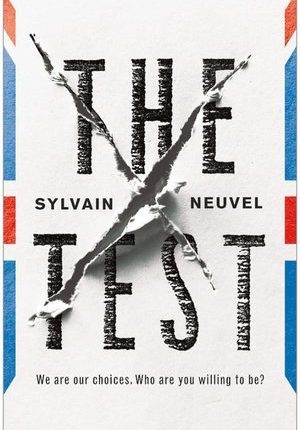
The Test is a science fiction short story detailing a sinister new type of citizenship test and a possible dark future humanity could face.
“I am the only one taking the test. Only men. Only between the ages of sixteen and forty-five. She said it was unfair. I told her it was a blessing. I do not care what their motivations are; it is a simple matter of probabilities.” pg 12
Idir Jalil was a dentist in Teheran. He wants to immigrate with his wife and children to the United Kingdom. But first, he has to pass the test.
“Guns and impunity. This is why we’re here.” pg 21
As technology advances, one can’t help but wonder what sorts of new programs are going to be created. Passports with radio frequency identification chips already exist. Will we soon start putting computer chips in ourselves?
And with all of these changes, how do we hold on to our essential humanity? The test Idir receives has significant consequences for him.
Beyond the question of technology, Sylvain Neuvel also tackles how immigration procedures have a dehumanizing effect. When you’re reducing people to statistics and probabilities, you dismiss everything else that makes someone a person.
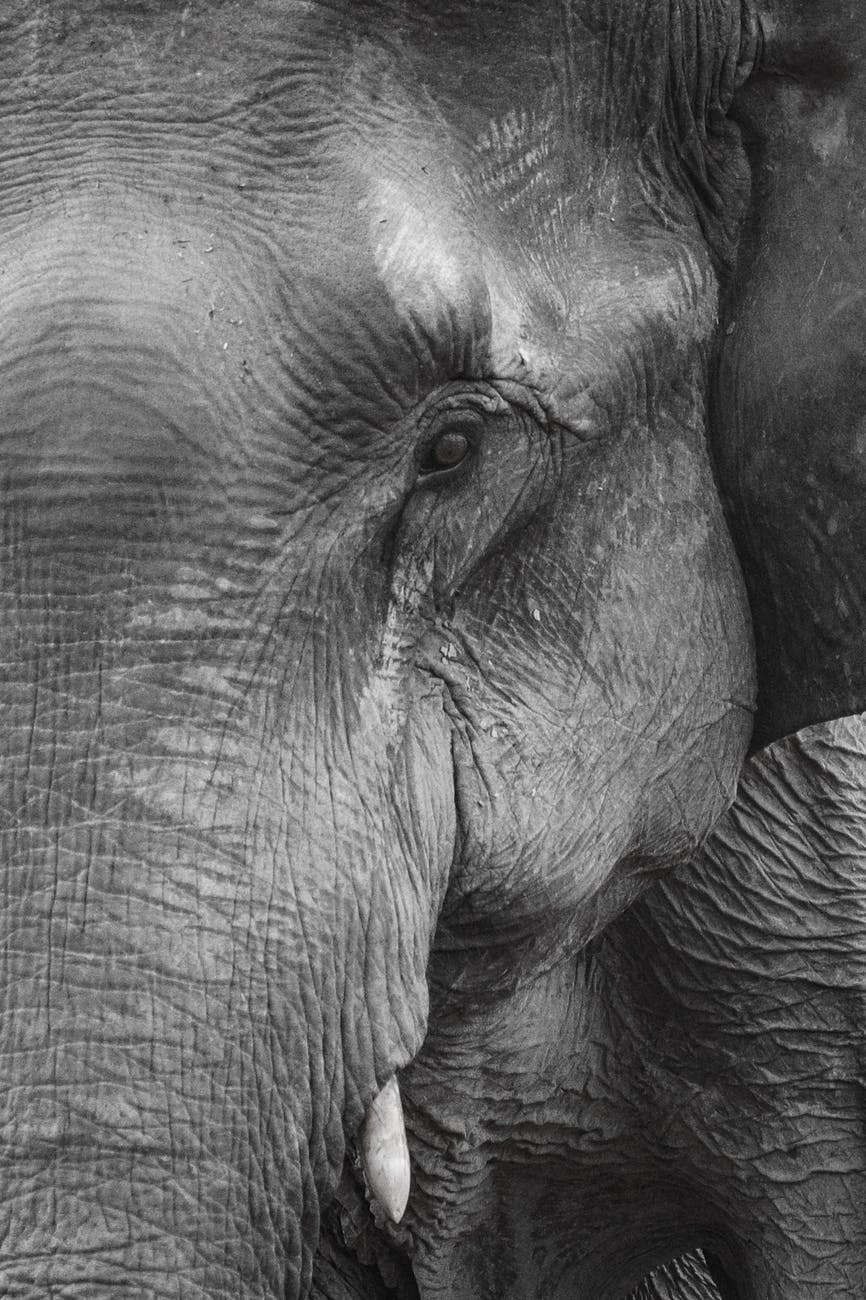
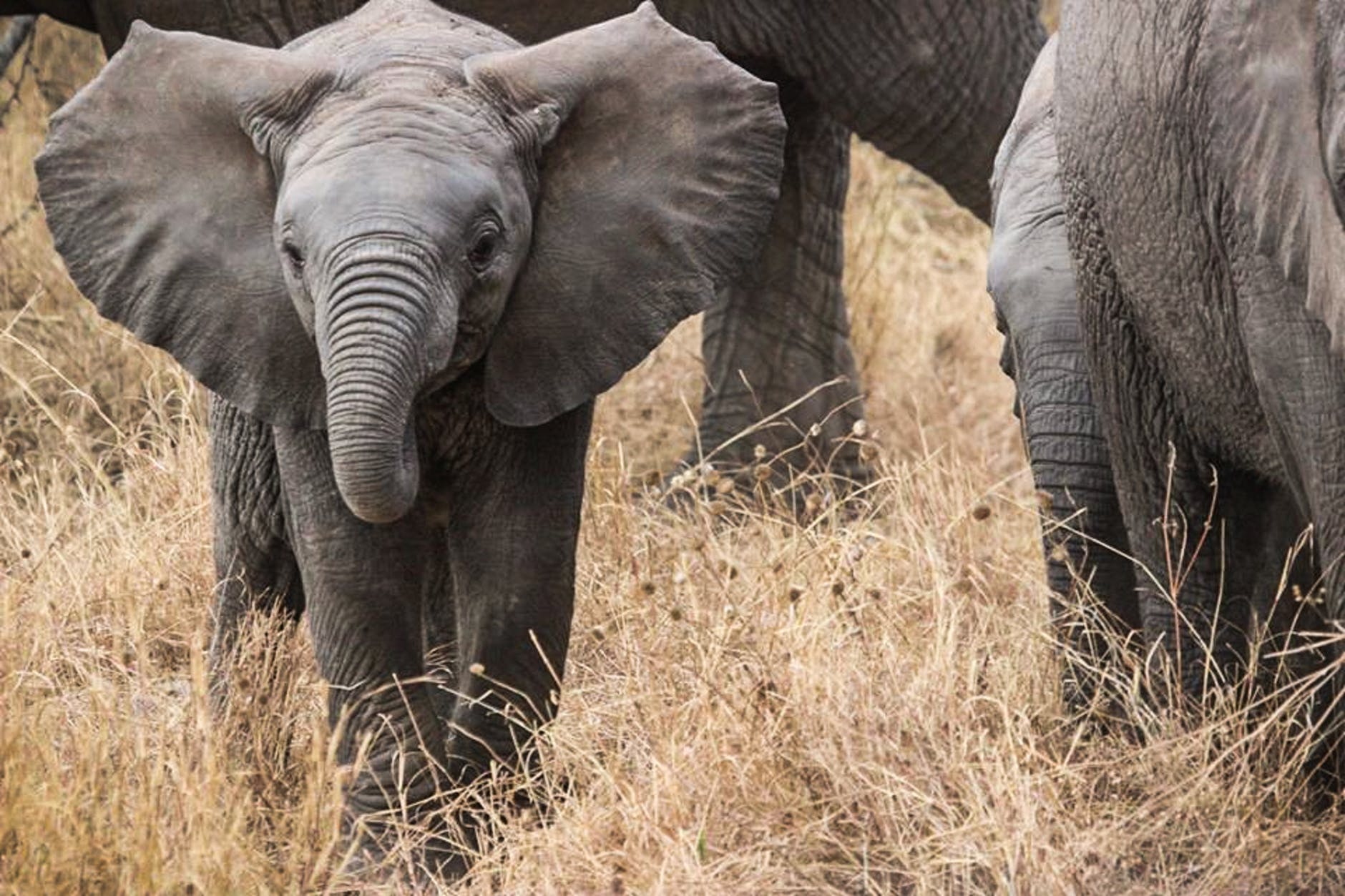
Author Brooke Bolander takes two unrelated historical events and ties them together in an effort to make a statement about the inherent darkness in humanity. Historically speaking, an elephant named Topsy was actually put to death by electrocution. The radium dial painters, whom you can read about in The Radium Girls: The Dark Story of America’s Shining Women, actually existed.
In this science fiction/alternative history story, elephants are a sentient race, forced to work where the radium girls once worked. And to bear the same lethal doses of radiation. It leads to a sad conclusion.
“The ‘greater good’, as you put it, was also used to justify the use of my people in your radium factories during the war, was it not? To save costs. To save your own from poisoning.” pg 32
This new history is reflected in a future narrative that takes place between the historical portions of the story. (You’ve got three stories being told from three different narrators. I didn’t find it confusing once I figured out that the author switched stories after each break on the page. But prior to that, I was grasping at straws.)
In this new future, the government is looking for a way to warn humankind away from nuclear waste sites. They decide to ask the elephants if they can alter their DNA, to make them glow in a version of a living “keep away” sign.
And so here Kat sits, tie straightened, hair teased heaven-high, waiting to meet with an elephant representative. Explaining the cultural reasons why they want to make the elephant’s people glow in the dark is going to be an exercise in minefield ballet…” pg 12
I felt like this book lessened each historical event rather than making them stronger by tying them together. They were both awful, yes, and sentient elephants deserve their own story. The women who suffered and died because no one shared the dangers of radiation with them, deserve their own story. Something far more than the simplistic alternative future Bolander gives them in which, yet again, elephants were about to be abused by human beings and confined to a nuclear wasteland.
“They will see how we shine, and they will know the truth.” pg 59
In some ways, it all reminded me of what was done to the Native American tribes. Which was also awful. And also deserves its own write-up.
Another quibble I had with this story, Bolander takes aim at the males of both species, painting them as both stupid and addicted to violence.
“The bull rolled one red eye to look up at her. He laughed with malice and with scorn, but most of all with madness. As is the way with bulls. … Furmother looked at him with sadness — because then as now We pitied the bulls, our Sons and Fathers and occasional Mates.” pgs 30-31
Can you imagine if those pronouns were reversed? “The Furmother rolled one red eye to look up at him. She laughed with malice and with scorn, but most of all with madness. As is the way with Furmothers…” I don’t believe in hurling hate or blame from either end of the spectrum. We’re all in this together.
On a more positive note, the curious collective intelligence of the elephants that the author hinted at was fascinating, as well as their different methods of communication. But this short story format doesn’t allow for an in-depth examination of this aspect of the story.
“They had blown raw red holes through the Many Mothers, hacked away their beautiful tusks, and the sky had not fallen and she had not mourned the meat. She was She — the survivor, the prisoner, the one they called Topsy — and She carried the Stories safe inside her skull, just behind her left eye, so that they lived on in some way.” pg 14
Elephants are something special. I’m reminded of the Romans and how they loved to kill people and all manner of animals in the Coliseum, except elephants. They banned killing elephants because they couldn’t stand to look the creatures in the eye as they died. There was something too sad to be borne that was communicated in the moments before an elephant’s death, something that crossed species lines.
That’s why I wanted this story to work. And, sadly, I just didn’t connect with it.
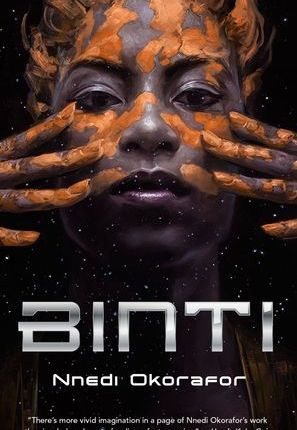
Binti Ekeopara Zuzu Dambu Kaipka of Namib is from a small tribe on Earth. They have the ability to use mathematics to create instruments called astrolabes that can read and interact with the energy of the universe. These astrolabes can be used for purposes ranging from a simple “phone call” to interpreting a person’s future.
Even among her people, Binti is extremely talented in this art. She is a mathematical genius who contemplates complex equations to enter a flow state. She is also the first from her tribe to be accepted at Oomza University.
I was the only Himba on the ship, out of nearly five hundred passengers. My tribe is obsessed with innovation and technology, but it is small and private, and, as I said, we don’t like to leave Earth. We prefer to explore the universe by traveling inward, as opposed to outward. pg 21
Can she leave everything and everyone she’s ever known or loved to go to the university?
Binti is a science fiction novella with an extraordinarily unique premise and world. But I felt it was complex enough that it would have been more enjoyable as a full length novel. I wanted to know more: about the Meduse, the astrolabes, the meditative “treeing” or mathematical contemplation.
“My people are the creators and builders of astrolabes,” I said. “We use math to create the currents within them. The best of us have the gift to bring harmony so delicious that we can make atoms caress each other like lovers.” pg 62
Perhaps that’s not fair of me, to expect more out of a novella rather than appreciate it for what it is. I mean, Binti is a Hugo and Nebula award winner. There is something almost magical about it. I could see this becoming an extraordinary science fiction series of books or even a television show.
Highly recommended for readers who appreciate science fiction short stories, which (apparently) isn’t my thing.
The Lady Who Plucked Red Flowers Beneath the Queen’s Windowis a fantasy short story about how much one’s world view is shaped by culture, the time period in which one lives, and love.
The main character, Naeva, is a powerful magician. She serves the queen of a matriarchal society to the best of her capability.
Naeva’s love for the queen is used to trap her soul, so she can be summoned from beyond the grave to serve forever.
“The Queen needs you, Naeva. Don’t you love her?” Love: the word caught me like a thread on a bramble. Oh, yes. I loved the queen. My will weakened, and I tumbled out of my body. Cold crystal drew me in like a great mouth, inhaling.
This binding is problematic, because the queen doesn’t live forever.
I was captivated by this story. It surprised me because short stories aren’t usually my thing.
During a bout of insomnia one night, I read The Lady Who Plucked Red Flowers in one sitting.
There are subtleties in the story about feminine and masculine power, but also mankind’s penchant for judging current culture as superior to all others that have ever or will ever exist.
“It was becoming increasingly clear that this woman viewed me as a relic. Indignation simmered; I was not an urn, half-buried in the desert. Yet, in a way, I was.”
Naeva suffers not only because she’s trapped and cannot die, but also because her matriarchal culture is left behind in the depths of time.
“I had never before been aware of the time that I spent under the earth, but as the years between summons stretched, I began to feel vague sensations: swatches of grey and white along with muted, indefinable pain.”
Something strange happened last night, but Amanda can’t remember what it was. She’s terribly hung over and she knows that she fought with her boyfriend, but that doesn’t explain why her roommate isn’t the person she remembers or why she can’t see out the window. Why does she feel like something is watching her and why does the university campus not look like it did yesterday? And, so starts The History Major.
Discovering what is going on is part of the fun of this short story, so I’d suggest stopping here if you have any intention of reading this yourself. Thank you to NetGalley for a free copy of this short story for review purposes. ***Please do not read beyond this point to avoid spoilers!! Warning… Warning!!***
For those that either have read it or are not going to read it… let’s discuss!
So, I feel as if this story, like life some would say, is all about consciousness. How aware are you of your internal worlds? Does our history define us or do we decide what has meaning? Is there such thing as the collective unconscious? And, the biggest question of all, what happens to consciousness after death?
The author begins with Amanda feeling paranoid and it sets the stage for the whole thing: “Her skin prickled again; she felt the sensation of being watched. Amanda turned around and walked backward, looking across the vast estate for the intrusive eyes. The wind ruffled the leaves. Amanda paused, searching for the discordant thing that pulled at her, but there was nothing out of place. She searched but couldn’t find the cause of her uneasiness.” loc 206, ebook. There’s a general feeling of creepiness that never goes away. I didn’t really like that part of The History Major but readers of horror might really love it. Self discovery and self knowledge shouldn’t be scary. The various dream books that I’ve read say that the way to end nightmares is to stop running and face the monster. I feel like Amanda spends far too much time running, but then, I suppose, it wouldn’t make a very good story if she didn’t, would it? Amanda discovers monster, faces monster, and is ok after all.
Amanda is a sympathetic character. I think we’ve all been there: the day after having one too many and waking up to an “uh oh” feeling. She, fairly bravely, faces the first day of college even though she knows something is not right. She even takes her messed up schedule to the secretaries and tries to get them to change her classes. But, I didn’t like how reliant she is on her boyfriend. Given her childhood history (warning, if you are triggered by childhood molestation do not read this book), I can see how she turned out that way, but I wanted her to take the reigns of her life and go for it- not fret about if walking down the sidewalk with another man will make her boyfriend jealous.
I also did not like Death being personified as a monster or the fate of Nick. I don’t believe that Death is evil or comes at us with choking hands. I prefer to view it as a doorway to another reality. As for the “hell” vision for Nick, I think that hell is a state of mind and something that we create on earth, but, this is just my opinion.
“People are trapped in history, and history is trapped in them.” Loc 611, ebook. I thought that The History Major did a good job of using historical figures to help Amanda remember her present circumstances, but I thought that the “history” itself was given too much credit. For example, Amanda could have been watching the tv and been triggered into remembering her past by what came on the screen. Or, she could have taken an art class and been triggered by the works of art in the classroom… there are many topics that could have led to her epiphany.
So, that was my beef with this book: the frightening aspect of searching the subconscious mind, the co-dependent heroine, the nasty personification of Death and the hellish afterlife, and the reliance on historical figures who, when you consider it more closely, have very little to do with what actually happened to Amanda. But, even saying all those things, I read this short story in one sitting and was really interested to see where the author was taking it. Pick up The History Major if you’re interested in a short, metaphysical read. If you’re looking for more in-depth books about any of the history that appears in this story try: Blood & Beauty: the Borgias by Sarah Dunant or Joan of Arc: a History by Helen Castor.










 The Help Desk Book Blog