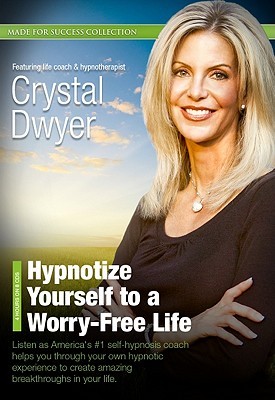
Hypnotize Yourself to a Worry-Free Life by Crystal Dwyer

Hypnotize Yourself to a Worry-Free Life by Crystal Dwyer

Crystal Dwyer, a new age instructor, has developed a set of guided meditations to enable listeners to improve their lives in a variety of ways. These tracks address issues from insomnia to anxiety. She has a pleasant voice and the meditations are enjoyable.

If you’re not into new age themes, you may want to try another hypnosis program. At the beginning of the audiobook, Dwyer is straight forward with her beliefs about God being within each of us and our individual power as creators. I could see that being problematic with those who don’t connect with those teachings.

Photo by Pavel Danilyuk on Pexels.com

I feel that the title of this work is a bit misleading. There are going to be ups and downs in any life. To suggest that you can eliminate anything seems suspect and sort of pie-in-the-sky. It reminds me of books that tout “read this and lose ten pounds in three weeks” and things of that nature. These meditations are valuable enough without the publisher (or author) making promises that perhaps they can’t keep.

That being said, I don’t think many people know what hypnosis is. In my experience, hypnosis, similar to a trance-state, just feels like deep relaxation. Everyone is different, but when I’m under, my body feels heavy but light, which seems impossible. My limbs sort of disappear and I feel as if I’m floating.

Once I’m there, in that relaxed state, then I let the meditation I’m listening to just wash over me. It feels really good actually. Generally, at the end, the hypnotist will say something like, “You’re coming back and you’ll feel entirely refreshed.” And, wouldn’t you know it, I do.

I think popular culture hasn’t done hypnosis any favors with people’s expectations about how it works. (The film “Office Space” comes to mind.) You don’t turn into some suggest-able zombie person when you’re under. Like most things, hypnosis and relaxation are a choice. Worry is a choice. It’s all about controlling that inner narrative and changing your inner thought processes to ones that are pleasing to you.

Photo by Maria Orlova on Pexels.com

A child once asked me to teach her about hypnosis so she could “control her brother”, which cracked me up. But then I explained to her that hypnosis isn’t a tool for controlling other people. The name of the game is improving and controlling yourself.

It’s like Marcus Aurelius said: “You have power over your mind – not outside events. Realize this, and you will find strength.”

Recommended for seekers looking for another tool to help them on their path to self knowledge.

Thanks for reading!

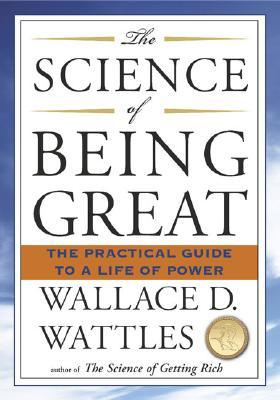
The Science of Being Great: The Practical Guide to a Life of Power by Wallace D. Wattles

The Science of Being Great: The Practical Guide to a Life of Power by Wallace D. Wattles

In the latest installment of “Heidi re-listens to all the old audiobooks on her hard drive”, I gave The Science of Being Great another chance to share its wisdom with me.

Couched in religious language, Wallace Wattles shares his new age viewpoint long before modern audiences became enamored of it with the mammoth success of The Secret. In fact, that’s how the publisher marketed this older manuscript, as source material for The Secret.

Photo by Maria Orlova on Pexels.com

I suppose it could be considered “source material” in that Wattles teaches enlightenment is to be found within. But he has very little in it about the guiding power of emotions, which was a cornerstone of The Secret. Wattles book is more along the lines of: You are a god walking among gods and should act accordingly. And don’t stick your nose into other people’s business.

Some of his advice is more tricky, such as: see the world in a perfect state of becoming. Nothing has gone wrong or could go wrong. Everyone and everything is perfect for where they are and everything has the chance to get better.

That’s hard stuff to swallow if you take a second to think about it. “The world is in a perfect state of becoming.” Maybe I’ve become too accustomed to looking for problems rather than relying on faith that everything is working out how its supposed to.

Photo by Pixabay on Pexels.com

Other parts of this book sounded similar to more modern new age authors with these ideas: Books and people will be drawn to you when you need them. Go where your inner feelings tell you to go. As you think, so you will become. Thoughts are things, etc.

By comparing and contrasting this book with other authors, I’m not intending to denigrate those teachings. I wouldn’t want to dismiss the power of the mind and emotions. Using just those things, people can certainly change their lives.

It’s just that the way they are packaged in The Science of Being Great may make it difficult for some readers to absorb it. Take the word “God” for example or “the Father”. Wattles throws those two around in every other sentence or so. That could be problematic for people who have struggled with religion or have involving it. Or those who don’t believe religion and science can mix.

Photo by Flickr on Pexels.com

And the whole book takes itself so seriously. Even the title “The Science of Being Great”, reminds me of an encyclopedia entry or something. I’ve had the most success in my own personal life when I’ve lightened up and stopped making such a big deal out of things.

In conclusion, is there helpful information in this book? Yes. Would I recommend taking the time to go through it to find those gems? It depends on how you learn best, I guess. Personally, I’d recommend Esther Hicks if you want the same sort of new age teachings with less religious trappings and a bigger dose of fun.

Thanks for reading!

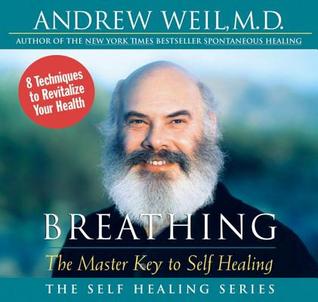
Breathing: The Master Key to Self Healing by Andrew Weil

Breathing: The Master Key to Self Healing by Andrew Weil

Andrew Weil presents pranayama, Eastern breathing techniques for health and well being, for a Western audience. If you have never tried meditation or deep breathing before, this would be a good place to start.

Weil talks about how breathing is one of the only bodily functions that can be performed both consciously and automatically. That unique control allows for a bridge to be made between the conscious and subconscious minds. Ever notice how people who are upset breathe faster? There’s reasons for that.

Photo by Karolina Grabowska on Pexels.com

The first disc of this audiobook is almost unbelievable in Weil’s claims of healing mental and physical disorders through simple breathing, but I don’t think he’d lie about it. I guess our culture has always put so much belief in Western healing through the use of medicines and concrete therapies, that we haven’t always entertained other types of healing.

Of particular interest to me was Weil’s testimony about a patient of his with anxiety disorders that were so severe that they were causing heart palpitations. His patient was given medications to suppress the anxiety, but after awhile they stopped working and Weil’s patient was forced to find something else. He approached all manner of doctors and psychologists, but didn’t see any movement forward on his problems until he began to practice Weil’s breathing techniques.

I know a few people in my own life who might find that story interesting too. Couldn’t we all use tools to increase our inner peace and decrease those pesky anxieties?

Photo by Harry Cooke on Pexels.com

The second disc is half a dozen or so different breathing exercises. They’re all fairly simple and you can do them in minutes.

I listened to this audiobook years ago and, honestly, forgot everything I learned. But I explored it again last week and realized that it was never too late to get back on track. Recommended self help book for anybody who breathes. 🙂

Thanks for reading!

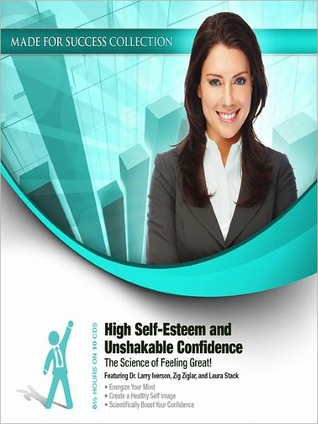
High Self-Esteem and Unshakable Confidence: The Science of Feeling Great! by various authors

High Self-Esteem and Unshakable Confidence: The Science of Feeling Great! by various authors

High Self-Esteem and Unshakable Confidence is a mixed bag of self help and psychology tips from half a dozen different speakers. Some of the speakers are good, but some are mediocre at best. Almost all talked about common sense things.

Larry Iverson approaches this topic from a psychologist’s point of view. He wants you to get up from your desk and get exercise. Watch how you talk to yourself.

Photo by Tirachard Kumtanom on Pexels.com

Bob Proctor, one of the featured speakers from the new age blockbuster The Secret, is more of a motivational speaker who uses anecdotal stories to encourage listeners towards their goals of self confidence. If I had to pick a favorite out of the bunch, I think Proctor would be my pick. I like how approachable he sounds and as if he’s just having a chat with a friend or mentor.

Lorraine Howell uses visualization techniques to nurture self confidence. It’s very short and some-what helpful if you have trouble picturing yourself as a confident person.

Laura Stack’s disc is about “Stopping Your Stinking Thinking” and it kind of felt like the type of speech you’d hear at a motivational meeting for women. It was cutsie, but not necessarily my favorite.

Kimberly Alyn reminded me of Stack. It was a good motivational speech, but I didn’t get much out of “Stress Management for Better Life Balance”. In fact, the two were rather similar in my mind.

Photo by Olya Kobruseva on Pexels.com

Crystal Dwyer’s contribution is a guided hypnosis and new age take on confidence and life creation. She had the most “hippie” feel of the group. I’m rather fond of both hypnosis and new age topics, but for those who are looking for a straight business presentation, this may come off as too granola or religious. She reminds listeners that our ability to create our own reality is a gift from God and we’ll find our confidence by embracing our own power.

Finally, Dr. Mache Seibel, now at Harvard Medical School (not certain where he was during the recording of this CD), presents common psychological problems through song. I’m not going to lie — very cringey. The spoken parts between the songs were actually very informative and managed to convey what could be complex topics in a simple and understandable manner.

The songs themselves were just painful and I found myself skipping through most of them. Dr. Seibel explains that he prefers to sing songs because sometimes that helps people recall what to do when they’re triggered and it brings a smile to people’s faces. His method just wasn’t for me. Maybe it’ll work for you.

Thanks for reading!

Converse With Charisma!: How To Talk To Anyone And Enjoy Networking by Made for Success

Converse With Charisma!: How To Talk To Anyone And Enjoy Networking by Made for Success

Converse with Charisma is an audiobook collection of business speakers and experts who each offer different suggestions for how to improve your speaking skills, networking, presentation and improvisational speaking styles.

My big takeaway from this, besides some very helpful hints, is that speaking and networking is a skill that can be learned. It’s not something that some people are just born with and others aren’t. That being said, it would certainly be a step out of my comfort zone to try some of these suggestions.

Photo by bongkarn thanyakij on Pexels.com

For example, one of the sections was a meditative visualization where you see yourself going to a networking event and successfully exchanging business cards with 25 contacts. I’m game for most any meditation, but in this middle of this one, my mind was screaming at me combinations of “WHAT ARE YOU DOING?” and “NOOOOOOO”.

But then again, I’m a self-confessed introvert. I’m trying to step up my presentation game for filming an episode of my family’s YouTube channel and also taking a bigger part in marketing it. These are both skills I think I can master, but it’s scary to try new things, you know?

Anyway, back to Converse with Charisma.

My favorite section was Jim Rohn’s fun, motivational speech on the first disc. As I’ve expressed in a few other reviews, Rohn is a master storyteller and life coach. He lifts you up, empowers you, makes you believe in life-long learning and goal setting. I think this collection may be worth borrowing from the library just to hear his contribution.

Photo by Christina Morillo on Pexels.com

As for new material, the presentation on disc 8 “Thinking on Your Feet” contained a bunch of information I hadn’t heard before. It gives suggestions for soliciting questions from a crowd and leading programs. It also gave a formula for organizing speeches to make a higher impact. I think I’m going to have to listen to that part a couple times to get everything I can out of it.

Recommended for people looking to step up their speaking and presentation game… fellow introverts I’m looking at you.

Thanks for reading!

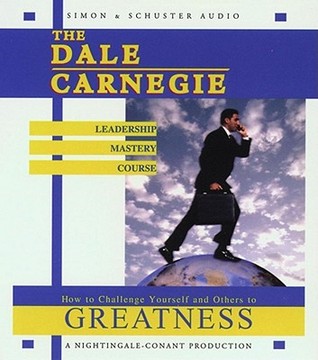
The Dale Carnegie Leadership Mastery Course: How To Challenge Yourself and Others To Greatness by Dale Carnegie

The Dale Carnegie Leadership Mastery Course: How To Challenge Yourself and Others To Greatness by Dale Carnegie

The version I listened to of The Dale Carnegie Leadership Mastery Course, published in 2001, has not necessarily aged well, but still had some applicable lessons for business leaders.

On the positive side, this audio program encouraged me to examine my own leadership style, something I’d never considered before. Are you a innovative or organizational leader? Do you bring people together or drive them apart, intentionally or unintentionally? What is your risk tolerance and why?

Photo by RODNAE Productions on Pexels.com

In addition to introspection, this program asks you to plan for the future based on your strengths and take steps towards those dreams. What are your goals, personally, professionally and for your current company? What would you like to see happen to your company after you die?

It also examines a leader’s entire life with the idea of success isn’t success if you lose your family and important relationships while building your career or vice versa. Are you capable of taking time off? Do you devote time to those who are most important to you at home and at work?

Those are just a few of the positive aspects of this program. On the other end of the spectrum, the music between sections is hilariously dated, almost like motivational elevator music. And there seemed to be what amounted to hero-worship of Dale Carnegie slipped in between the lessons or at the end of sections.

For example, in the lesson on handling disasters and poor decisions as a leader, the program was discussing a CEO’s almost universally hated idea of putting a thermometer on soda dispensers and having the price of a drink go up as the temperatures rose. The narrator closed the section with a statement like: “If Dale Carnegie had been at that meeting, he would have suggested the price of a drink go down as the temperatures went up.” (Cue motivational elevator music.)

Photo by Karolina Grabowska on Pexels.com

I don’t want to dismiss Carnegie’s extensive contributions to the realm of business and leadership skills, but he was human too. To assume he would have been able to turn around some spectacularly bad corporate decisions with just his mere presence struck me as a bit ridiculous.

In that same vein, some of the fable-like stories put into the lessons for emphasis felt heavy-handed, particularly one where a father expected too much of his son. It was a lesson about empathy but it was over the top.

As I said, I did learn some valuable skills from this audiobook and continue to ponder some of the lessons it presented. At the same time, I did have a few giggles at material that, I don’t believe, was ever intended to be satirical. Recommended for those interested in building their leadership acumen, but prepare yourself for a few misses in the presentation.

If you’re interested in non-fiction, business and self improvement books, here are a few I’ve recently reviewed:

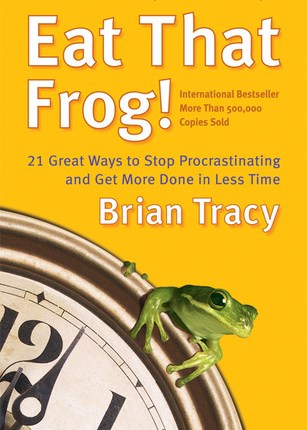
Eat That Frog!: 21 Great Ways to Stop Procrastinating and Get More Done in Less Time by Brian Tracy

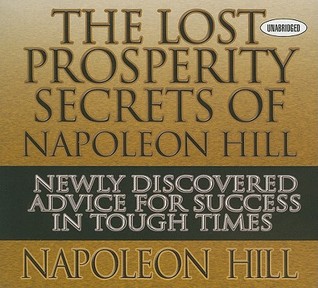
The Lost Prosperity Secrets of Napoleon Hill by Napoleon Hill

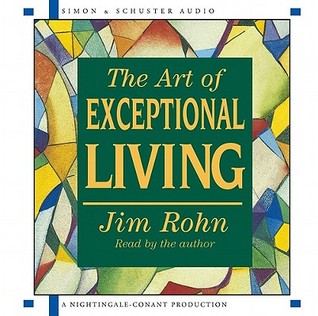
The Art of Exceptional Living by Jim Rohn

Thanks for reading!

Eat That Frog!: 21 Great Ways to Stop Procrastinating and Get More Done in Less Time by Brian Tracy

Eat That Frog!: 21 Great Ways to Stop Procrastinating and Get More Done in Less Time by Brian Tracy

Brian Tracy gives simple and easily acted-upon suggestions for stream lining and maximizing your productivity. The title itself, Eat That Frog!, refers to completing the biggest, ugliest task you may have on your plate on any given day. If you do whatever that is first (the frog), in the morning when you’re at your most energetic and before anything else distracts you, then at least you can say you got something done today. Most everything else will seem almost easy by comparison… at least, that’s the theory.

Photo by Pixabay on Pexels.com

At first, I thought all of the ideas in this book sounded almost too simple. But as the short audiobook continued, it became more clear just why Tracy is considered one of the leaders in his field of expertise.

Taken altogether, this book gives someone the tools to turn their life around (if they’re in a bad place) or take them to the next level, if they’re already on their way. It’s not just about learning tools to boost your efficiency, it’s also about discovering what you do best and then prioritizing doing THAT to the best of your ability.

The most intriguing idea in here, to me, was “practice creative procrastination”. As we couldn’t possibly get everything done that we ever have to do in one day, by doing the things that MUST get done, you can procrastinate on the things that won’t sink the ship if they’re left undone. You’re doing things, yet not doing things and feeding the inner procrastinator. It’s like having your cake and eating it too.

I’m not a big procrastinator. What I am is a collector of ideas and methods. I’m always open to improving myself or the way that I do things. In fact, I can be too gung-ho when it comes to implementing some of the ideas I read in self-help books. For example, a couple years ago I changed my life through “the magic of tidying up” and was so successful at removing the knick-knacks littering the house that my husband thought I was moving out.

Photo by Susanne Jutzeler on Pexels.com

But seriously, I can take things to the extreme. So, I’m encouraged that this book mainly consists of writing lists, scheduling and prioritizing tasks. That shouldn’t freak out the hubby.

And I do find myself doing other, less important things when a big, fat frog of a chore is staring me in the face. At least now, I’m aware of what I’m doing and knowledge is the first step on the road to change.

Recommended for readers looking for a few simple tips to maximize their productivity.

Thanks for reading!

The Lost Prosperity Secrets of Napoleon Hill by Napoleon Hill

The Lost Prosperity Secrets of Napoleon Hill by Napoleon Hill

The Lost Prosperity Secrets of Napoleon Hill examines some of Hill’s lesser known newspaper essays. He writes about his life and the workings of the “unseen hand” of the universe within it. He dissects how a series of failures ultimately caused him to succeed.

And he writes about his studies of some of the most successful people of his time, what they have in common and what you can do to become one of them.

Photo by The Lazy Artist Gallery on Pexels.com

Some of these essays share powerful advice for inner transformation.

I particularly enjoyed Hill’s detailed description of the ’round table method’ that he used to change his personality. I think it is a fascinating mental exercise that can be customized for anyone.

But, at other points in this audiobook, his essays felt a bit heavy-handed in his declarations of his faith and belief in an organizing intelligence. But Hill’s faith seems to have been partially what he credited for his mammoth success… though not at first.

He freely admits that, early on in his career, he was obsessed with the accumulation of money to the cost of all else. It wasn’t until later on, that he realized money was nice, but there are other important goals that should be considered in one’s professional life. He talks about the golden rule and morality.

Photo by Karolina Grabowska on Pexels.com

And Hill talks about how you should treat someone who treats you poorly. He wasn’t alone in some of his most spectacular failures, but the people who used those low moments to get ahead in business did not do well afterwards. Again, Hill credited a higher power for that balance. Some would call it karma, but he did not.

If you liked Think and Grow Rich, you will probably enjoy this audio program.

Thanks for reading!

The Art of Exceptional Living by Jim Rohn

The Art of Exceptional Living by Jim Rohn

Nearly every house valued over $200,000 has a library in it. Now why do you think that is?

Jim Rohn, motivational speaker and business genius, was a kinder, gentler Tony Robbins. Originally from Iowa, he uses common sense and a storytelling style in an effort to encourage listeners to improve their lives. This audiobook presentation is a mix of live presentations and studio-recorded bits. Personally, I think he was better in front of a live audience, but there was plenty to take away from in both sections.

Photo by Ihsan Aditya on Pexels.com

Here’s some of what he shares in this audiobook:

Read, learn, journal. Write down what works and what doesn’t. Write down your goals and then take a minute to look at the passing days, weeks and months and see what you’ve accomplished.

Eat healthy and take that walk around the block. If you don’t, you may seriously regret it, maybe not today or tomorrow but in the years to come, you’ll wish you took a minute to invest in yourself.

Work hard at your job and you’ll make a living. Work hard on yourself and you’ll make a fortune!

Photo by Taryn Elliott on Pexels.com

Rohn insists that anyone can be exceptional. He says success in business (and life) comes from small positive steps taken consistently over time. That type of approach really works for most any goal or dream you may have.

Read contracts all the way through, every time. It seems like a simple thing, but it can take you down some dark roads if you don’t read the fine print. He learned that the hard way.

Don’t stop reading and be a lifetime learner. Stay curious. Stay involved.

And take pictures. Part of your legacy to the next generation can be the pictures and documentation you’ve made of your life.

Photo by Kaique Rocha on Pexels.com

I can’t tell you how many times I’ve listened to this audiobook. It’s one of my go-to programs when life has me down. Jim Rohn believed you can accomplish anything that you set your mind to do. He makes listeners believe that too. Highly recommended for anyone who wants to learn “the art of exceptional living.”

Thanks for reading!