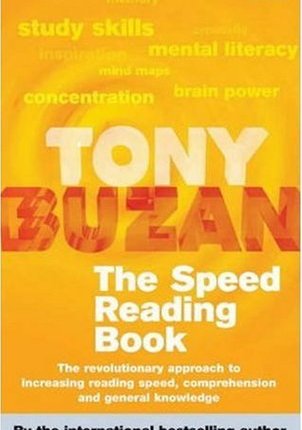
The Speed Reading Book by Tony Buzan

The Speed Reading Book by Tony Buzan

I did not speed read Tony Buzan’s The Speed Reading Book because I found it to be rather a slog. There is useful information in here about the physical capabilities of your eyes and brain, methods for training your eyes how to move, the benefits of improving your vocabulary, how to recognize patterns in the way paragraphs are structured, and the basics of logic.

However, it’s interspersed with information that I felt was better presented in Use Your Head.

“Quite apart from important improvements in the technique of learning how to read fast which are set forth in this book, what I wish to emphasize in my system is that understanding and remembering factual material is not nearly as important as knowing how to relate new material to what you already know. This is the all-important ‘integrative factor’, or if you will, learning how to learn.” pgs 12-13

Photo by fotografierende on Pexels.com

He re-hashes the proper way to make a mind-map and the importance of previewing all reading material, even mystery novels, which I felt was silly. I can’t speak for the whole world, but I read mysteries to be entertained, not create a template into which I fit important details as I go along.

“The purpose of the preview is to develop a structure into which the mind can more easily fit the smaller details of that structure. … Previewing should be applied whatever kind of material you are going to read, which it be letters, reports, novels or articles.” pg 115

Though he did backpedal on his “preview everything” stance somewhat in a chapter about reading poetry: “When reading literature and poetry, bring to bear all your knowledge and judgment, and if you feel that it is the kind of writing you wish to treasure forever, forget about speed reading through it and reserve it for those occasions when time is not so pressing.” pgs 167-168

Thank you, I will.

Photo by Mark Cruzat on Pexels.com

Perhaps part of my problem with this book is that it revealed to me just how slowly I read and assimilate non-fiction, because Buzan offers the reader information about the absolute limitlessness of human capability.

“Theoretically, the human visual system can photograph an entire page of print in one-twentieth of a second, and thus a standard length book in between six and twenty-five seconds, and the entire Encyclopaedia Britannica in less than an hour. Advanced skinning and scanning skills take you on the first step of that incredible and inevitable journey.” pg 70

Let’s say I have much room for improvement.

The book also showed its age somewhat during a chapter on the importance of organizing how you take in information from newspapers: “Newspapers are so much a part of our everyday life that we seldom stop to think that they are a very recent development.” pg 148

But are they still? I’m not so sure.

Photo by Masha Raymers on Pexels.com

The book ends on a high note and, of course, I plan to continue practicing and improving my skills: “Your continuing success in all fields of speed reading depends on your personal decision to continue the course you have begun, and on the capacity of your brain to read, assimilate, comprehend, recall, communicate and create, abilities which we know approach the infinite. Your success is therefore guaranteed.” pg 177

But if you’re only going to read one book by Tony Buzan, I recommend Use Your Head.

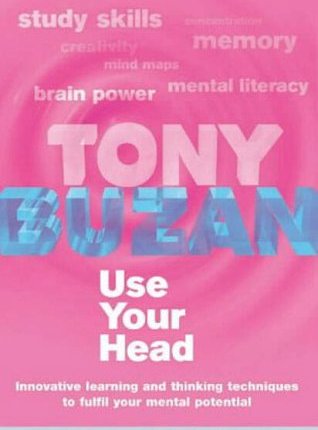
Use Your Head by Tony Buzan

Use Your Head by Tony Buzan

In “Use Your Head,” Tony Buzan teaches the reader strategies to utilize the infinite powers of your mind.

“I call it the ‘operations manual’ for your brain. It is designed to help you nurture your ‘super-biocomputer’ and unleash the natural and extraordinary range of mental skills that you possess.pg xii

Photo by Maria Orlova on Pexels.com

I’ve read a lot of non-fiction books about what the potentials of the mind and positive thinking are. This book gives more than just information about what could be, it shares tools for expanding your creative skills and organizing what goes in and comes out of our mind.

“No man yet exists or has existed who has even approached using his full brain. We accept no limitations on the power of the brain — it is limitless.” pg 24

Buzan shares the keys for maximizing your memory — imagination and association. By combining images with simple rhymes, he’s created a surprisingly easy way to remember lists and, potentially, large sections of information.

Photo by Pixabay on Pexels.com

I was intrigued by his method of organizing information and study materials with the use of “mind maps.” Basically, you start with a topic and draw branches coming out from this main theme, that relate to the information in some way. Continue to branch out, using colors and shapes to stimulate your brain while drawing conscious connections between the ideas on the paper.

It’s a fun little creative exercise, but also it helps you see associations you may not have considered before.

Personally, I do mounds of research on an almost daily basis and it helps to have a tool to organize the facts I come across. The mind map may be the most helpful tool in this book.

There’s a lot of self help advice in these pages too. It’s mainly common sense, but I found almost all of it useful as reminders of what is possible. For example, Buzan suggests considering your perspective before starting any program of study or problem solving.

Photo by Andrea Piacquadio on Pexels.com

“On average, people assume that there are theoretically infinite insoluble problems and only a relatively minor number of solutions. The fact is, every problem has a solution and there are no insoluble problems for a human brain that is properly trained, activated and aware of its creative functions.” pg 82

After a bit of research on the author, it seems Buzan is quite popular in Great Britain and has been for some time. Perhaps it’s time for the U.S. to jump on this train too.

Thanks for reading!

The Astonishing Power of Emotions: Let Your Feelings be Your Guide by Esther Hicks, Jerry Hicks

The Astonishing Power of Emotions: Let Your Feelings be Your Guide by Esther Hicks, Jerry Hicks

“Beyond the five physical senses that you are actively aware of, there is another less-realized sense — the sense of emotion.” pg 20

Esther Hicks channeled this book from her “higher self,” an entity she calls Abraham. It is about how one can deliberately create their experience by being aware of their emotions. It also gives advice on how to focus on those things that make you feel good, because by doing so, Hicks believes it will “bring you into alignment” with your higher being. And, therefore, you’ll allow the goodness of creation to flow through you.

Photo by Emre Kuzu on Pexels.com

“Allowing yourself to become what life has caused you to desire is not about action. It is about the aligning of thought Energies. It is about focusing your attention in the direction of your desire rather than looking back at the current conditions that have given birth to your desire.” pg 25

My favorite part of this book was contained within the first 45 pages in which Abraham talks in a general way about emotions and their latent power. The rest of the book contained examples of how to apply this teaching to specific questions Hicks received at her various workshops.

I didn’t find the second portion as helpful because, first of all, it felt like we were focusing on current conditions. Secondly, the answer to every question was to soften the emotions by looking for things that made you feel good about in whatever subject was being discussed. Then, roll with that until the emotions shift. Honestly, it felt repetitive after the first two or three examples.

Photo by Quang Anh Ha Nguyen on Pexels.com

I suppose if one of the questions had applied directly to my life experience right now, then maybe I would have had a different view of this book. As it is, I prefer Ask and It Is Given: Learning to Manifest Your Desires to this.

Ask and It is Given deals with the topic in a more general way and I got more out of it.

I can understand the criticisms of Hicks as a life philosophy: that she teaches people to ignore their problems, to be selfish, to be utterly self absorbed. But wasn’t it a teaching of the Buddha that the first love you should attend to, before you can offer unconditional love to others, is self love. You build a base of love and everything else flows from that. I see Hick’s teachings as the same kind of thing — self love first.

I think another point to bring up before closing the discussion of this book is the idea that the Law of Attraction, so beloved of New Age teachers and authors, functions rather like gravity. You don’t have to teach someone how to utilize gravity because it just works. The Law of Attraction is the same kind of deal and isn’t that nice to know.

Photo by Mary Taylor on Pexels.com

So, no matter what you’re doing, thinking or feeling, you’re not going to float off into outer space because gravity has got both of your feet safely planted on the ground. I like to approach any teachings about the Law of Attraction the same way. I can play with ideas and techniques, but at the end of the day, it’s going to do its thing whether I’m paying attention to it or not.

Recommended for readers who like New Age materials or love the teachings of Abraham Hicks.

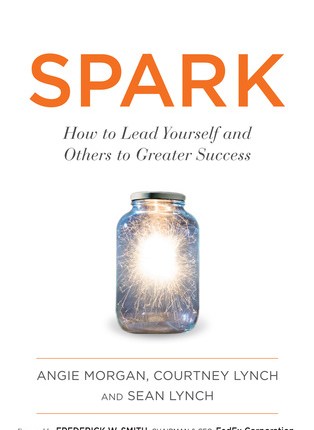
Spark: How to Lead Yourself and Others to Greater Success by Angie Morgan, Courtney Lynch, Sean Lynch

Spark: How to Lead Yourself and Others to Greater Success by Angie Morgan, Courtney Lynch, Sean Lynch

Spark is a manual to help an individual or a business develop leadership skills. The important attributes are outlined in each chapter with highlighted stories provided by the authors’ own life experiences. The salient points of the different topics are simply and clearly listed at the end of each chapter as well as further resources.

“Our society values leadership — craves it, for that matter. Yet we don’t teach it in formal education.” pg 9, ebook.

Photo by Sora Shimazaki on Pexels.com

The title itself “Spark” refers to those who know they carry the seeds of greatness within themselves and are willing to learn how to make those seeds bloom. As the authors are quick to point out, there are a lot of misconceptions about leadership.

One of them is that people are born leaders and only certain people can lead. They say, and I believe this too, that anyone can become anything they set their minds too. This book helps provide the necessary skills to make that process simpler.

“No one else can make or anoint you a leader. The only way to become a Spark is to make yourself into one.” pg 24, ebook

I thought it was an interesting that these skills are taught to our military personnel but are not stressed as much in the private sector. The main reason the authors started their leadership business was because they noticed leadership was required in business but no one was teaching it. I suppose that’s true, but I’d never considered it before because I had assumed that leaders were born that way.

“… invest the time in seeking to uncover your values, and you’ll be led to discover any misalignment between your expectations of yourself and your actions. The next step is having an honest conversation with yourself so that you not only understand where, when, and why you’ve compromised your values in the past but also recognize the changes you need to make to lead more consistently with your intentions.” pg 42, ebook

Photo by Cade Prior on Pexels.com

I think some of the suggestions in Spark might discomfort those who haven’t taken the time to look and evaluate their own character. Or accept responsibility for reoccurring issues in their experience.

“Overwhelmingly, we all seem to agree that we live in a pass-the-buck culture. Pointing to others as the reason for a problem is a typical response.” pg 69, ebook.

And, taking responsibility for a problem gives you the power to change it. Because, at the end of the day, you can’t control somebody else’s actions — despite how much we may want to.

The chapters I, personally, liked the most were about how to “build your confidence” and “demonstrate consistency”. The information in that section felt the most relatable because it deals with the humanity of leaders. We all fail sometimes or experience self doubt. What matters is how you handle that and continue onwards.

Photo by Ono Kosuki on Pexels.com

Which brings me to my last thought about this book, as I mentioned earlier, the authors insist leaders make themselves. If you want to learn these skills, you can. If you want to make change in your organization, you can. What you can’t do is force other people to become leaders if they don’t want to be.

I think the power in becoming a leader or a “spark” is the example you hold up to others who have the same aspirations. As for the rest, I suppose they can provide the background against which your brilliance shines.

Thanks for reading!

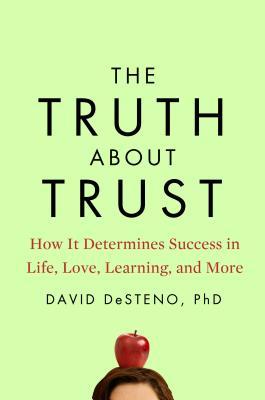
The Truth About Trust: How It Determines Success in Life, Love, Learning, and More by David DeSteno

The Truth About Trust: How It Determines Success in Life, Love, Learning, and More by David DeSteno

“Deciding to trust someone, more than almost any other decision we make, holds the keys to how resilient we, both as individuals and as a society, will be.” pg 241

Trust is one of the things that makes society work. We trust that our taxes will go towards making our society better. We trust we will be paid for the jobs we perform. We trust in contracts, news agencies and family members. Sometimes it seems this trust is misplaced. David DeSteno examines trust, what is it and how or why you decide to give someone all your trust or not.

Photo by Karolina Grabowska on Pexels.com

I held as true many of the fallacies that DeSteno deconstructs in The Truth About Trust. That was disturbing, in a way, but I also enjoyed it because I learned new ways to approach trust issues and even to define what trust is. Although it may seem like a simple concept, I realized that I didn’t know the basic definition of trust. I knew what it felt like, but not the mechanics behind it.

Tell me: what do you think trust is?

“There are two facets to trust: integrity and competence. Some of the best partners or teachers you may ever have had may not be the warmest people in the world, but they knew their stuff.” pg 33

DeSteno reminds readers that beyond examining a new business or potential romantic partner to determine their trustworthiness, you need to remember your own perceptions color your reality.

If you want to be able to trust as you should, take a moment before negotiating with someone new to allow any feelings from a previous event to dissipate. pg 60

Photo by fauxels on Pexels.com

I liked that DeSteno waded into the potentially thorny world of cyberspace and who or what to give your trust to in the technological age. It seems that is going to be the future — programs, applications and machines.

…the basic issue of whether to trust technology has in fact been around for thousands of years. What makes it feel new now, however, is that technology is beginning to encroach on what had until recently been a solely human domain — sociality. pg 183

DeSteno gave me plenty to think about including why I sometimes place great trust where it has not necessarily been earned. Recommended for readers who want to ask themselves the same types of questions.

If you enjoyed The Truth About Trust, I’d suggest also picking up Terms of Service: Social Media and the Price of Constant Connection (DeSteno deals with trust in cyberspace and the two books complement each other nicely) or The Happiness Advantage: The Seven Principles of Positive Psychology That Fuel Success and Performance at Work (which discusses the issue of trusting yourself to do the things that will benefit you most in the future and why we don’t always do those things).

Thanks for reading!

inGenius: A Crash Course on Creativity by Tina Seelig

inGenius: A Crash Course on Creativity by Tina Seelig

As my mentor pointed out to me a couple years ago, creativity is one of the most important skills to master and develop throughout your career. No matter what you’re doing, in your professional or personal life, creativity provides the answers and greases your wheels to whatever goal you desire.

inGenius is Tina Seelig’s offering to those interested in learning about creativity. She is a professor at Stanford University and these chapters are like talking points from her class.

Photo by Tima Miroshnichenko on Pexels.com

Granted, some of these tips seem like common sense. But if that’s the case, then why aren’t we all creative geniuses who have solved all of our problems? In my mind, there’s plenty still to be learned from the topic or, if you’ve already heard it, reiterating the important points.

What is that saying… your thoughts become actions, become habits, become your life? Or some such. Well, it’s true.

“With enhanced creativity, instead of problems you see potential, instead of obstacles you see opportunities, and instead of challenges you see a chance to create breakthrough solutions.” pg 4

Photo by Allan Mas on Pexels.com

It’s more than a positive mind-set, it’s a way of viewing your reality. And, as Seelig points out in this book, your attitude at any given moment affects your creativity. You have to view any problem as solvable — you just haven’t found the solution yet.

Seelig says anyone can be creative: “There is a concrete set of methods and environmental factors that can be used to enhance your imagination, and by optimizing these variables your creativity naturally increases.” pg 9

I figure it’s a bit like exercise. Flex those creative muscles on a regular basis and they’ll get stronger.

Photo by nappy on Pexels.com

Seelig brought my attention to the fact that our environment affects our creativity. She cites studies with the way classrooms are set up and how those changed the results of experiments. I had no idea.

She also reminded me that one does not have to re-invent the wheel to be creative: “Building upon existing ideas and inventions is another way to foster innovation.” pg 41

inGenius offers readers a clear path to creativity. Recommended for anybody who wants to up their creative game.

Thanks for reading!

Money, and the Law of Attraction: Learning to Attract Wealth, Health, and Happiness by Esther Hicks

Money, and the Law of Attraction: Learning to Attract Wealth, Health, and Happiness by Esther Hicks

Esther Hicks channels the wisdom of her inner being, called Abraham, to write these books. It sounds kind of far out there if you’ve never been exposed to that type of teaching before, but I have to say, I like it. If you’re in to self help and new age books, you may want to give them a try.

The majority of her (their) message seems to be to find joy. They teach that the purpose of life is to do what makes you happy as often as you can. Interestingly enough, that was the same lesson my grandfather taught me before he passed on. “Whatever you do in life, Heidi, be happy. The most important thing is to be happy.”

Photo by Sam Lion on Pexels.com

Maybe it is in memory of him that I connect so easily with these teachings. I don’t know.

I’ve really taken to heart her encouragement to start out your day in the proper mindset. Lately, I’ve been chilling in bed for a few minutes rather than jumping right into my day. I don’t really have the words to explain why this is making a difference, but it is. I take a second to think about something awesome, even if its as banal as, “My pillow is so soft.” Try it and let me know how it works out for you.

“So as you awaken, open your eyes and say Today I will look for reasons to feel good. Nothing is more important than that I feel good.” pg 37

Also, she’s a big proponent for imaging and living your own life to its fullest and not comparing yourself to others. In the new age of social media and twitter where it seems like everybody is into everybody else’s business, it’s refreshing.

Photo by Tim Samuel on Pexels.com

Do not write your story like a factual documentary, weighing all the pros and cons of your experience, but instead tell the uplifting, fanciful, magical story of the wonder of your own life and watch what happens. pg 81

Overall, these teachings have changed my life. I can’t really say enough positive things about her books, of which there are several best sellers. She also does a bustling business of hosting workshops, which she does across the United States and on a few different cruises.

Last month, I went to an Abraham Hicks workshop for the first time. I’ve enjoyed her videos on YouTube for a long time and thought I might shake things up and see what she’s like in person. This was kind of a production because Esther doesn’t come to the St. Louis area. So, I went out west and heard her speak in Phoenix.

The papers for the workshop registration encourage attendees to write down questions about life, whatever comes into your mind that you’re curious about. I brainstormed with my husband and came up with about a dozen different things I’d talk about if I got to the “hot seat”. (That’s what she calls the chair up front.)

I arrived about 15 minutes before the whole thing started, which seemed like ample time to me, only to discover the auditorium was nearly filled! That was fine because I wanted a seat towards the outside anyway. If things gave me a weird vibe, I wanted to be able to get the heck out as fast as possible.

Photo by Paula Schmidt on Pexels.com

In the moments before Esther emerged, this music started up about “Joy, joy, joy. Joy is the key” and almost half the crowd got up and started dancing. I nearly bolted. It felt rather cultist in those moments.

But then the music cut and there she was and things settled down somewhat. What followed was a lot of laughs and learning about topics ranging from relationships to illness to someone’s dog. The whole day ended with a marriage proposal from one of the attendees to another. In fact, I enjoyed it so much, I’m kicking around the idea of going again next year.

I never made it to the hot seat and felt rather disappointed. But, later, as I was reading over the questions I took to the workshop, I found, to my surprise, that she had directly addressed every single one of them in other people’s questions. And then, that night, I dreamed I was back at the workshop. I was sitting in the chair and asking any question that came to my mind.

So, that’s my personal experience with this author and the “magic” of Abraham. I know these teachings aren’t for everyone. But they’re for me. And that’s pretty cool.

Thanks for reading!

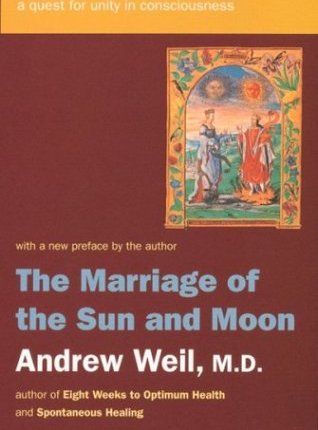
The Marriage of the Sun and Moon: A Quest for Unity in Consciousness by Andrew Weil

The Marriage of the Sun and Moon: A Quest for Unity in Consciousness by Andrew Weil

Andrew Weil travels around the world taking conscious-altering drugs or participating in mind-altering experiences (like a solar eclipse) to see what happens.

And to think, I assumed this book would be about meditation. 🙂

I recently read Weil’s Breathing: The Master Key to Self Healing and I really liked the way he presented Eastern teachings and techniques for a Western audience. I also like his mind-set, that practical knowledge is better than mere theory.

“I must emphasize at the outset my prejudice that the experience of an altered state of consciousness is intrinsically more valuable than any amount of theorizing about it, unless the theory helps individuals to make more and better use of the states available to them.” pg 241

Andrew Weil
Photo by Pixabay on Pexels.com

Similar to Tim Ferriss (the self help/improvement guru who brought us such works as The 4-Hour Body: An Uncommon Guide to Rapid Fat-Loss, Incredible Sex, and Becoming Superhuman), Weil is focused on collecting actual experiences and he uses his own body and mind as a test subject.

This book is a collection of newsletters that Weil wrote for the Institute of Current World Affairs. They offered him a fellowship after the publication of his book The Natural Mind: A Revolutionary Approach to the Drug Problem, to further test his theories about consciousness in the real world. I think his results are fascinating.

All of the chapters converge toward the idea of unifying consciousness. pg 5

Photo by Jonas Ferlin on Pexels.com

The dual consciousness Weil is talking about is the active mind, represented in ancient alchemy by the sun, and the subconscious mind, represented by the moon. Within each of us, both minds operate more or less in balance. Though many of his studies involve the conscious use of drugs to achieve that balance, Weil promotes natural methods above all else. He believes that though drugs may be used ritualistically and responsibly, that any state they reveal was already a latent potential in the mind.

Basically, you can get there without the drug.

The highs of altered states of consciousness such as those of trance and meditation are similarly related to the focusing of awareness. When we learn to bring about this kind of concentration at will, we can be independent of external triggers for highs, whether drugs, sex or mangoes. pg 26

Yes, according to Weil, mangoes, the fruit, have been used by mystics for millennia to unify the conscious and subconscious minds through a type of ecstasy of the mouth. Who knew?

Weil exposes himself some far out stuff. He has three different chapters about his experiences with mushrooms.

“In other words, there is no line between poisonous and psychedelic mushrooms. Mushrooms are a pharmacological continuum, from the white cultivated variety that has no action as a drug to species like the Death Cup that can easily kill. If one likes to get high by eating mushrooms, he can choose species over a wide range of toxicity.” pg 47

Photo by Pixabay on Pexels.com

In addition to all kinds of drugs, there’s consciousness altering through purposeful vomiting in Mexico, chili eating, personally observing Uri Geller doing his metal-bending thing and more.

This book is perfect for readers who are interested in varying states of consciousness but, for whatever reason, aren’t able to make the trips or take the risks themselves. And there are risks because not everything that Weil tries is safe. At one point, he’s riding waves of nausea in the rain in the middle of the jungle while his friend vomits again and again an arm’s length away and there’s nothing he can do about it. Certainly doesn’t sound like something I’d want to attempt.

Though these newsletters were written in the ’70s and this book was published in 1980, I feel that it still has applicable uses for today. Just look at all of the states that are legalizing marijuana (and our Canadian friends!). Questions about altered states of consciousness and addiction are going to crop up that society, after decades of avoidance, is going to have to answer.

“Sooner or later we will learn that plants with effects on the body and mind, such as marijuana, are what we make of them. Used intelligently and carefully they can help us. Used irresponsibly they can harm us.” pg 98

Good thing we have trailblazers like Weil showing us a middle way.

Thanks for reading!

This Is Why You’re Sick and Tired: (And How to Look and Feel Amazing) by Jackie Warner

This Is Why You’re Sick and Tired: (And How to Look and Feel Amazing) by Jackie Warner

Jackie Warner sets the gold standard for diet and exercise books with This is Why You’re Sick and Tired. She starts out with the science of nutrition, exercise, and rest then goes into custom diet and weekly exercise suggestions. It’s easy to see why she’s so sought after by Hollywood stars — this lady knows her stuff.

Photo by Karl Solano on Pexels.com

I first saw Jackie in action on her, now ended, Bravo show, Work Out. At the time, I had just had a baby and was awake at all hours of the night doing the infant-feeding dance. Work Out was a nice escape from the spit up, exhaustion-filled reality that I was living at the time.

Jackie looked pretty serious about her business, but Work Out mainly focused on the drama between Jackie, her trainers, and the folks who came to her for help. It’s nice to see that she actually knows what she’s doing as a trainer and she’s not just another reality show poser.

The exercises that Jackie suggests are intense. They can be executed with hand weights, but by the fourth set, I’m so wobbly that it’s comical. We’ll see if I ever reach the heights of fitness put forth in This is Why You’re Sick and Tired. At this point, I’d be happy to finish her workout strong rather than falling apart in the last few reps.

Photo by Karolina Grabowska on Pexels.com

Recently, I saw on Jackie’s Facebook page that she intends to lose 30 pounds in the coming weeks. She has shared that her fitness and nutrition has spun a bit off the rails in the last year. But, using what she knows about the body, Jackie intends to get herself back on track and fast.

I think it was brave of her to share that struggle in such a public manner. She’s as human as the rest of us and I think I like her even more since she’s admitted that. Here’s hoping Jackie accomplishes everything she sets out to do.

And you do too, dear readers. I’m not big into New Year’s resolutions, but this book may be a help to you if you’re looking to jump start your fitness and diet plans in the new year.

Photo by Mikhail Nilov on Pexels.com

If you enjoy This is Why You’re Sick and Tired, I also suggest reading Reboot with Joe: Fully Charged: 7 Keys to Losing Weight, Staying Healthy and Thriving by Joe Cross (instructions on how to add juicing to your daily diet) and Down Size: 12 Truths for Turning Pants-Splitting Frustration into Pants-Fitting Success by Ted Spiker (to keep you laughing through any ups and downs of your new diet and exercise routine).

I received a free copy of this book through Goodreads First Reads.

Thanks for reading!