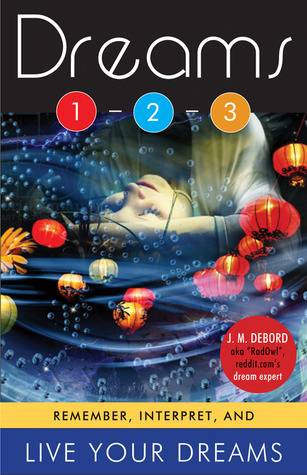
Dreams 1-2-3: Remember, Interpret, and Live Your Dreams by J.M. DeBord

dreams

J.M. DeBord starts his book about dreams with the idea that dream interpretation used to be the job of a wise man or woman in the community. Dreams were an integral part of living a fully conscious and realized life.

Now, dream interpretation experts charge for their services and not everyone has access to their skills.

This clever little book opens the doors of dream interpretation so that average people can again know the meaning of their dreams. It doesn’t stop there- J.M. DeBord also provides suggestions for integrating the dreams into your daily life.

Finally, in Dreams 1-2-3, DeBord empowers readers by reminding us that no matter how expert the dream interpreter, the final meaning for any dream really rests in the hands of the dreamer herself. Only she can feel the “ringing of truth” in the interpretation.

This is by far the best book that I have ever read on dream symbolism. DeBord doesn’t provide lists of animals/colors/scenarios and their most common meanings. He ties whatever shows up in the dream to the rest of its contents and the dreamer’s own internal and external world.

Photo by Ylanite Koppens on Pexels.com

In this way, each dream can be understood and applied in as unique a way as the dream itself.

My one critique of Dreams 1-2-3 is that DeBord made the process seem so simple. I’d read the dream example and think, I have absolutely no clue what that one means, and then DeBord would go on to provide a crystal clear interpretation.

See how simple it is?… he seems to say. Perhaps not.

DeBord may have a gift for it, honed by practice, and he doesn’t realize that what he is doing is rather amazing. I suppose he gives me a goal to strive towards.

I have had a few dreams since completing this book and, with DeBord’s method, have been able to wring some meaning from what I otherwise would have assumed to be nonsense. Dreams 1-2-3 has already changed my life. Read it if you want to change yours too.

Thanks for reading!

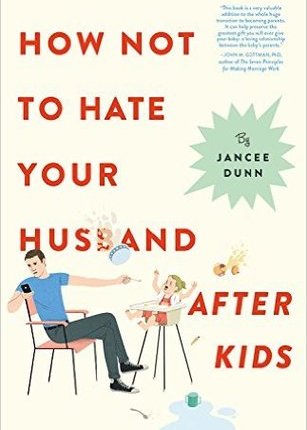
How Not to Hate Your Husband After Kids by Jancee Dunn

How Not to Hate Your Husband After Kids  by Jancee Dunn

This book gave me so many “ah-ha” moments that after a hundred pages I started to feel like an idiot. Why did I assume that so many of these little “life after baby” marital frustrations had only ever happened to me?

How Not to Hate Your Husband After Kids made me feel like I was part of a larger group called ‘mothers who try to do it all and feel secretly guilty that they can’t and wonder how everybody else does it.’ What a relief to know it wasn’t just me.

Photo by Andreas Wohlfahrt on Pexels.com

Dunn weaves her personal stories in with interviews from experts in fields as diverse as couples’ counseling to organizational gurus on a quest to save her sanity and her marriage from the hole that it had fallen into post-baby.

She is largely successful and gives plenty of tips that readers can incorporate immediately into their lives.

But, I was bothered by the, what I interpreted as, straight-up manipulation of her husband. Yes, Dunn is simply following expert advice, but reading about her self-satisfied crowing as she changes some of his more irritating behaviors felt disrespectful.

I mean, husband Tom is going to read this book.

I would feel devastated if my spouse wrote those sorts of things about me for millions of people to read and dissect. Granted, he was clued in that things were being recorded in a tell-all book, but still.

Photo by Public Domain Pictures on Pexels.com

“When I was six months pregnant with my daughter, I had lunch with a group of friends, all of whom were eager to pass along their hard-won scraps of parental wisdom. … ” … get ready to hate your husband,” said my friend Lauren. … Wrong, I told her calmly… But my friend Lauren was right.” locs 115-140 ebook.

We joke about how babies change lives but it’s not really funny, is it. It is a legit problem that marital happiness decreases because of less sleep, less money, less time, less sex… no need to go on.

Dunn begins her efforts to change her situation when she realizes that she’s reached a breaking point.

“Our daughter is now six, and Tom and I still have endless, draining fights. Why do I have the world’s tiniest fuse when it comes to the division of childcare and household labor? I am baffled that things have turned out this way.” loc 158.

In cringe-inducing honesty, Dunn admits to being verbally abusive to her spouse. My stomach actually churned when I read the sorts of things that she’d call him during fights.

Photo by cottonbro on Pexels.com

That part of the memoir made me very glad that she decided she didn’t want to live like that because I know that I wouldn’t have wanted that either.

I learned a lot about “maternal gatekeeping,” a pernicious practice where a mother discourages fathers from interacting with their children because of an internal belief that she knows better how to do EVERYTHING. And also, I learned about the importance of blocking time on weekends for personal rejuvenation and rest.

“And must we be compulsively busy every second of the day, briskly doing something “useful”? Nonstop activity can be addictive, but it’s a mistake, warns the University of Houston’s Brene Brown, a mom of two.” loc 1697.

Word. Everybody needs to chill out, calm down and unwind.

We also need to appreciate each other more.

At the end of the day and on the other side of all of the experts, Dunn comes to a dozen important realizations. One of which, appreciation, seems to be the magic bullet for most of her formerly-insurmountable marriage woes. It isn’t a new message but it is one that is worth repeating.

Photo by Magda Ehlers on Pexels.com

Recommended for parents of all ages, How Not to Hate Your Husband After Kids contains wisdom for just about every troublesome situation that one may find themselves in after children. Let’s hope the book can live up to its title.

Thank you to NetGalley and Little, Brown and Company for a free digital copy of this book. And thank you for reading!

The Zen of You and Me: A Guide to Getting Along with Just about Anyone by Diane Musho Hamilton

The Zen of You and Me: A Guide to Getting Along with Just about Anyone by Diane Musho Hamilton
zen of you and me

The Zen of You and Me takes on conflict mediation through zen philosophy. I learned a lot about managing conflict but more about myself and why, perhaps, I tend to avoid it. Hamilton is never preachy, but gently guides the reader through the dark woods of differences into the clear fields of appreciation and inclusion.

“It is a very freeing experience to suddenly realize that a difference between us is not only OK- it is stimulating and worthwhile. This realization heights our confidence to bring them out directly and openly.” loc 180.

Hamilton talks about leading classes through difficult discussions about race and privilege. The group only manages to make their way through it when one of the members expresses his desire to be heard and the others in the group allow themselves to listen.

But it isn’t easy to listen. You might be angry or otherwise triggered by what you’re listening to. Hamilton addresses that: “Threat provokes such intense sensations in our body and mind that sitting still seems wildly counter intuitive and impossible. But the first step is to learn to sit still and simply pay attention.” loc 310. Mindfulness provides the way out.

Photo by Elina Fairytale on Pexels.com

I also learned that I’m not as good a listener as I could potentially be. Hamilton provides some excellent advice for improving your skills: “Listening has a lot in common with meditation. Both involve a clear intention of bringing attention to this moment, receiving input, and letting go of the preoccupations of the self. … My first impulse was to tell her it was OK; everything would be all right. Then it occurred to me that she didn’t want to hear that. … I distinctly remember the warm sensation of letting go move through me.” loc 377.

I’ve started practicing not listening to answer but listening to listen. I surprised myself with how often my mind was racing away somewhere else as soon as another person opened her mouth. But, now that I know I do that, I can focus on changing that behavior. Thanks Diane Musho Hamilton!

I expect that now I’ll experience my loved ones in wholly new ways. “Anytime we express our real thoughts and feelings, it creates more truth and reveals a bigger perspective. And anytime someone else shares their truth with us, we should be grateful that we are given the opportunity to see and feel more than we did before. It is a privilege to feel.” loc 511. It is a privilege, isn’t it.

Hamilton talks about one of her students who set an intention to not lose her temper but was then hijacked by her emotions: “Her conditioned patterns are her suffering, like mine are mine, and yours are yours. I invited her to include them, to love them, because this practice is love.” loc 1331. So, it’s not about banging yourself into shape or forcing yourself to become something you’re not. It is more like becoming who you naturally are- which is freedom, joy, love and boundlessness.

Recommended for those who struggle with conflict within themselves or between themselves and others. The Zen of You and Me is helpful, succinct, beautiful and very zen.

Thank you to NetGalley and Shambhala Publishing for a free digital copy of this book. And thank you for reading!

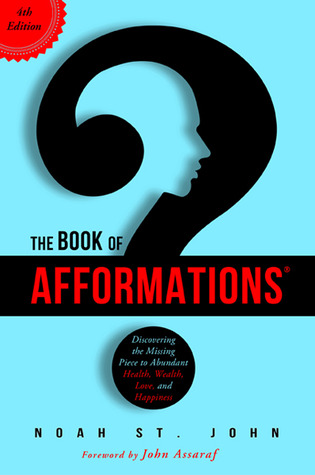
The Book of Afformations: Discovering the Missing Piece to Abundant Health, Wealth, Love, and Happiness by Noah St. John

The Book of Afformations: Discovering the Missing Piece to Abundant Health, Wealth, Love, and Happiness by Noah St. John
afformations

The Book of Afformations isn’t just another self help book putting forth the same old ideas of positive thinking, visualizations, and affirmations. Noah St. John has created a four part system to literally change the way you think, then act, and as a result, your life.

Step One: Ask yourself what you want, in all areas of your life. (A part of this stage is writing down all of the negative questions that you ask yourself like “Why am I never enough?”. That section was difficult to get through but eye opening.)

Step Two: Form empowering questions to help you achieve the priorities that you wrote down in Step One.

Step Three: Accept. Accept these new ways of looking at your life situation. Repeat the afformations. Create new beliefs and internal dialogue. Repetition is key here.

Step Four: Act. Here is where St. John steps away from other New Age authors that I’ve read. He suggests writing down three actions to take for each Afformation that you want to incorporate into your life. Do one a day. Keep going.

It seems really simple and the author peppers the text with success stories of people who have created amazing change in their life with this system. Another part of his book is a short biographical section about the author, how he came up with the system, and the extraordinary changes that he has made in his own life using it. The last couple pages are ads selling St. John’s other books, success workshops, online audio programs, and applications. They all seem to be quite popular, so it seems that at least some folks are having success with this.

I enjoyed the read and the author gave me some really interesting new techniques to try in my own life. I’d suggest this book to anyone who has tried affirmations and failed or is just looking to try something new for their negative thought patterns.

I received a free copy of this book through the Goodreads First Reads program. Thanks for reading!

Get Me Skinny by Tony Arreola

Get Me Skinny by Tony Arreola

Why is Getting Skinny So Hard?

Or so, Aubrey thought. Healthy hopes habitually crumbled into misery. Empty promise after empty promise, the fitness industry routinely burned her. Destined for another failed attempt, a disillusioned Aubrey hears of the talented Mr. Skinny. He holds the secret to her success. He’s smart, fit, charming and…too busy for her. She needs to get in shape, she needs to find a man, and she needs to make this year, her year.

-Goodreads

I liked the way that this book was written. It seemed overly simplistic at first, but I think that’s just because I’ve conditioned myself to think that eating healthy and becoming/remaining fit is a difficult thing to do. Tony Arreola breaks it down and drums it into your head that taking care of yourself is something that everyone can do and you can start, RIGHT NOW.

Photo by ROMAN ODINTSOV on Pexels.com

He clearly outlines the path to success with a narrative involving a girl named Aubrey who meets Tony and says “Get me skinny!”. She learns the proper way to eat, move, and retrain her inner voice for success- not just today but for the rest of her life.

If the reader didn’t pick it up through the story, Tony conveniently outlines all of the important points of his plan, coping mechanisms, exercise ideas, water/food intake information at the back of his book. That way, you don’t have to reread everything if you forget a point or two.

I wish that Tony had included more about his own personal background story and his motivation for getting into fitness. I feel that would be extra motivational for folks reading his book. A brief summary of it is included in “About the Author” in the back of the book and there is a short interlude in the story where Mr. Skinny talks about what drove him to a lifetime of health and fitness. More of that would be great. He has a lot of heart and the experiences that made him into what he is are really interesting.

Overall, this is an excellent resource for someone looking to make a major change in their life. I would recommend it for anyone who has tried and failed at diets, exercise programs, or just wants the motivation to do better. Tony/Mr. Skinny will take you to your goals and beyond.

Also recommended: This is Why You’re Sick and Tired by Jackie Warner or Making the Cut by Jillian Michaels.

I won a free copy of this book through the Goodreads First Reads program. Thanks for reading!

The End of Self-Help: Discovering Peace and Happiness Right at the Heart of Your Messy, Scary, Brilliant Life by Gail Brenner

The End of Self-Help: Discovering Peace and Happiness Right at the Heart of Your Messy, Scary, Brilliant Life by Gail Brenner

Dr. Gail Brenner, from a completely Western point of view, presents a method of self realization that feels quite Eastern in its premise. To escape from troubling thoughts or life situations, go within and stay in awareness of your own consciousness.

From this new way of existence, external problems will either change or cease to exist in your new perspective of non-being. In fact, this book read a lot like Eckhart Tolle but was, I felt, a lot more understandable with some easy exercises thrown in.

Photo by Brett Jordan on Pexels.com

I think sometimes it helps to read the same type of material from different people because maybe something that they say will finally penetrate the fog in your mind. It can be a frustrating slog through buzz words and generalities. Or, perhaps, this author’s life experience is closer to yours and you are more able to figure out what the heck they’re saying- the finger pointing at the moon and all that.

I try to have an open and empathetic mind when I read self-help because you run into a lot of authors who want you to jump through the exact same hoops that they did even though your life experiences or difficulties aren’t the same. Yes, you may find some techniques that work for you but it’s never quite the extraordinary break through that they’re claiming.

Photo by Karolina Grabowska on Pexels.com

I run into the same messages again and again in self-help, but, I’m always thinking, maybe THIS time it’ll stick and I won’t have to try, yet another, author. Dr. Brenner has written a message that resonated with me even though it wasn’t the first time I’d run into it and it’s almost universally applicable in its technique.

She wrote this book so that, theoretically, the reader would never have to delve into self help again out of feelings of lack, loneliness, fear, etc. I’m certain that I will go there again, the self help shelf, out of a sense of curiosity which Dr. Brenner doesn’t discourage. She doesn’t ask readers to check out of their lives, but she wants to make sure that you’re going into self help for the right reasons.

This is a great read. If you like Eckhart Tolle, but he feels too far or you don’t dig his teachings about the “pain body”, The End of Self-Help might be just what you’re looking for. If you’re looking for more of this type of teaching, listen to the audio lecture, In the Presence of a Great Mystery by Eckhart Tolle or Resist Nothing: Guided Meditations to Heal the Pain-Body by Kim Eng.

I received a free copy of this book through Goodreads First Reads program. Thanks for reading!

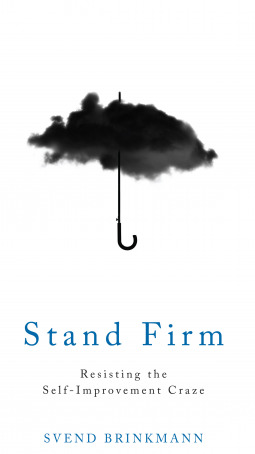
Stand Firm: Resisting the Self-Improvement Craze by Svend Brinkmann

standfirm

This was not the book for me at all, but it was excellently written. Basically, Stand Firm is an application of Stoic philosophy to the modern era.

It is serious anti-self help as opposed to the joke-y anti-self help of Sara Knight like Get Your Sh*t Together: How to Stop Worrying About What You Should Do So You Can Finish What You Need to Do and Start Doing What You Want to Do.

Brinkmann provides seven steps that outline his plan to apply Stoicism to your life and free yourself from the (as he sees it) needless, endless introspection and self improvement that plagues modern society. “In spheres like diet, health and exercise, a veritable religion has emerged that constantly churns out new edicts to follow and regimes to live by. … It seems that we- and I’m not afraid to count myself among the collective ‘we’- lack purpose and direction, and run around looking for the latest recipe for happiness, progress and success. From a psychological perspective, this resemble a collective state of dependency.” loc 118, ebook.

I disagree. I think that the myriad of different approaches are only of benefit to society. No one solution is going to fit everyone. The variety appeals to the varying needs.

Brinkmann also talks about using ‘negative visualization’ to build a sense of appreciation and gratitude: “Think about losing something (or someone) you care for and note how this enhances the pleasure you derive from it/them. Psychologists speak of the concept of ‘hedonic adaptation,’ i.e. that we very quickly get used to the good life. Negative visualization can counteract hedonic adaptation and make you more grateful.” loc 497, ebook.

Just playing the devil’s advocate here, but you can also build appreciation through positive visualization. See Thank & Grow Rich: A 30-Day Experiment in Shameless Gratitude and Unabashed Joy for more about that.

He explains why suppressing emotion is a good thing and should be practiced: “… the worship of authenticity in the pursuit of true feelings infantilises us. … As an adult, you should admire those who are capable of controlling- even suppressing- negative emotions. You should also be careful not to casually hurl around positive emotions. When repeated too many times, ‘Wow, that’s megafantastic!’ quickly loses its meaning.” loc 759, ebook. Again, I just can’t agree. It doesn’t feel right to me. That’s kind of the point of this book, that I shouldn’t trust those quickly passing ‘feelings’, but I do.

“Self-help literature is part of the problem, and should be ignored. However, since reading is generally a good thing, I recommend you throw yourself into a different type of literature instead- namely novels.” loc 983.

Eh, read whatever you want, whenever you want, as much as you want- that’s my recommendation.

I guess I figured out that I’m not a Stoic. Not a huge surprise there, but if you think that you may be or you’re just generally interested in Stoic philosophy- you should read this book. As for me, I’m going to go back to my navel-gazing, infantilising feeling releasing, self help inspired life. Stand Squishy, that’s me.

Thank you to NetGalley and Polity Publishing for a free digital copy of this book. And, thank you for reading!

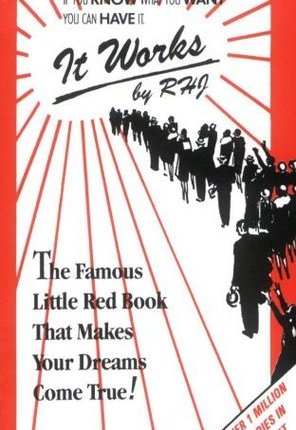
It Works: The Famous Little Red Book That Makes Your Dreams Come True! by RHJ

It Works: The Famous Little Red Book That Makes Your Dreams Come True! by RHJ

It Works by RHJ is a short book, pamphlet really, on the Law of Attraction. I was fortunate enough to pick up the deluxe version that not only had the text of the original work, but also a PDF of the way it appeared in its first printing.

A short chapter was also included that discussed the nearly-anonymous author.

Photo by Nilina on Pexels.com

I’ve read a lot of New Age/New Thought material, but I focused on this one because a certain loved one of mine is struggling. I won’t mention him by name because he says that I talk about him too much in my reviews, but suffice to say, I see him every day. Over a year and a half ago, he was laid off from a job that he enjoyed, had worked at for more than a decade, and he hasn’t found anything else yet to occupy his time. Part of the trouble, I think, is that he doesn’t know what he wants in a new occupation. It Works addresses that directly.

The mechanics of it are simple. Make a list of what you want, think about it every day, don’t tell anybody that you’re doing it. The assumption is that there is a force beyond our comprehension that responds to our thoughts and directs our lives based on what we choose to turn our thoughts towards.

Photo by Suzy Hazelwood on Pexels.com

The Abraham Hicks materials cover this in depth, but It Works was published in 1926, long before Abraham and The Secret burst into popular consciousness. This was, in fact, one of the first published books of its kind and even influenced the writings of that titan of new age thought, Napolean Hill.

To get what you want is no more mysterious or uncertain than the radio waves all around you. Tune in correctly and you get a perfect result…” pg 14.

“(Write down exactly what you want and the date you want it.) This may seem very foolish at first, but you can never realize your desires if you do not know positively and in detail what you want and when you want it. If you cannot decide this, you are not in earnest. You must be definite, and when you are, results will be surprising and almost unbelievable.” pg 20.

Photo by Kaboompics .com on Pexels.com

So, let’s cut to the chase. Does it really work?

The jury is still out. I made my list. 🙂 I guess we’ll see.

Recommended for fans of Abraham Hicks, Napoleon Hill and Pam Grout.

Thanks for reading!

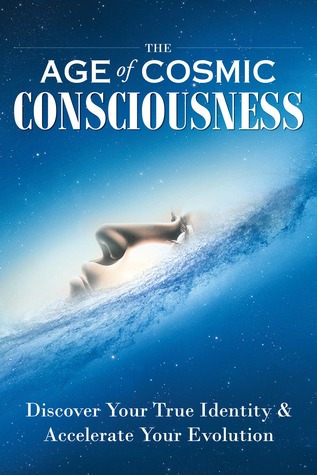
The Age of Cosmic Consciousness: Discover Your True Identity & Accelerate Your Evolution by Transform Publishing

The Age of Cosmic Consciousness: Discover Your True Identity & Accelerate Your Evolution by Transform Publishing
ageofcosmic

Time for the hippie librarian to get a little New Age-y!

The Age of Cosmic Consciousness is a bunch of different metaphysical concepts strung together sort of like Ram Dass’ Be Here Now but written on regular paper instead of- I don’t know what that stuff is- let’s say brown paper bags.

The first thing to know about this book is that it is written in a flow of consciousness style. I found it very difficult to get into, but then hypnotic once I got reading, and thus it became difficult to put dow

. I found it similar to Kelly Howell’s Secret of the Universal Mind Meditation in that one idea leads to the next idea in a very natural and linear fashion.

A lot of the concepts in here have been covered by The Secret and various other authors. There’s a good bit about the Law of Attraction, but there’s so much more than that.

What I loved about this book can be summed up in this quote: “Do not overly focus on the inaccessible gurus and unapproachable enlightened people. Recognize and accept that a higher consciousness can be attained by anyone who proactively pursues its realization.” pg 136 I truly believe that enlightenment is for everyone and possible for everyone. This book really puts that idea forward.

That being said, I don’t know that I was prepared for the “other beings of light consciousness” mentioned in this book or the section that purports to have information directly from them but not “channeled”. Or the other section about aliens tampering with human DNA in the dawn of time. My inner self doesn’t necessarily “resonate” with those ideas yet, but some readers out there may feel it and understand it.

Photo by Julia Volk on Pexels.com

In conclusion, The Age of Cosmic Consciousness is worth the read for anyone interested in improving themselves and the world through inner transformation. Remember to keep an open heart and mind because some of the ideas presented are fairly “evolved”. Some similar books are: Be Here Now and Gateway to the Heavens: How Simple Shapes Mould Reality and the Fabric of Your Being.

I received a free copy of this book through the Goodreads First Reads program. Thanks for reading!