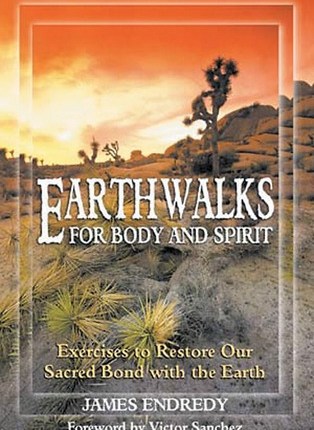
Earthwalks for Body and Spirit is a handbook of sorts for a shamanistic experience of nature. James Endredy, through various exercises for both the solo and group walker, crafts a system through which the reader can get in touch with nature and, he believes, heal the world through this relationship.
I’ve always enjoyed the outdoors for its healing aspect. I’m more of a sun bather than an avid walker but I think that the general principle is the same. If you’re in a funk, go outside for awhile. It clears the clouds from your mind so to speak.
Actually, this is one of the first books I’ve ever read that goes into actual shaman practices. It’s worth the read just for that, really.
In life, there are fundamental skills a gal must master: Walk in heels. Poach an egg. Pen a thank you note. And, most absolutely, without a doubt, create a cat eye. pg 172
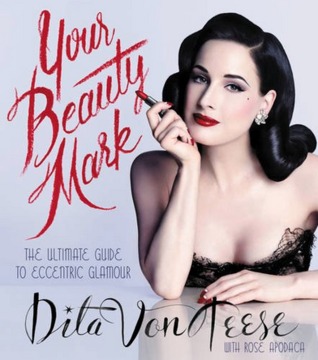
Your Beauty Mark by Dita Von Teese is the most inclusive guide to beauty I’ve ever had the chance to peruse. From make-up to perfume to grooming, she leaves no stone unturned in her quest for glamour.
And she’s not afraid to share some secrets. If you read this book, you’ll have the rare privilege of viewing Ms. Von Teese sans her glamour. (Well, and clothes, as she includes some burlesque photos.) She tells about one Halloween when she dressed up as “the girl next door” and no one recognized her because her appearance has literally become her identity.
She also has separate entries by many of her cutting-edge fashion and beauty friends, sharing their lives, struggles and unique brands of beauty. In a world that sometimes tries to push everyone into cookie cutter molds of both appearance and behavior, it is a breath of fresh air. The history of beauty is sprinkled throughout and we learn about the origins of lipstick, heels and more.
This was a book I had to enjoy slowly, otherwise it had moments where I felt overwhelmed by the level of dedication Ms. Von Teese brings to her art, which is, beauty. She eats a certain way, walks a certain way, arranges her hair just so…
I enjoy dressing up, occasionally, as much as the next person, but I don’t think I’ll ever give up the level of comfort I’ve come to enjoy in my footwear. Or dedicate as much time to adorning my body as Ms. Von Teese does. But that being said, it’s fun to dream.
Everyone, male and female, will probably find something to enjoy in this book. They say beauty is in the eye of the beholder and Ms. Von Teese makes herself so easy to love.
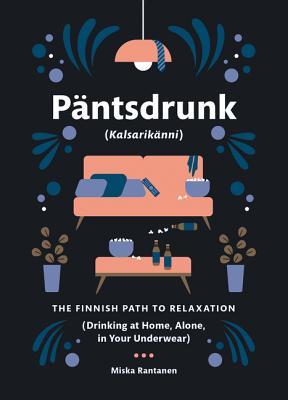
Päntsdrunk, a satirical self help read, seemed fairly straight-forward to me. To keep your cool, occasionally you should take a page out of the Finnish playbook and put on your most comfy underwear, grab your favorite alcoholic beverage and chill out. But then Miska Rantanen had to write something to fill up the rest of the pages. There was quite a lot of filler material.
Päntsdrunk doesn’t demand over-the-top arrangements. Affordability and democracy are its hallmarks. It’s quick acting and suitable for all who have reached the age of majority.” pg 16
Rantanen talks about how Finland developed this coping mechanism from a couple of different factors: freezing weather, long distances between cities and towns, and very little sunlight near the winter solstice.
“The Finnish term kalsarikanni is a simple compound word: kalsari (underwear) + kanni (state of inebriation). This pithy idiom crystallizes the essential: at its simplest, pantsdrunk means imbibing alcohol in one’s underwear at home without any intention of going out. The term’s ingenuity lies in everything it doesn’t imply.” pg 21
But pantsdrunk practitioners don’t have to stay in or solitary. You can drink as a couple, with friends, with a couple of friends. As the night wears on, you can go from pantsdrunk to plus pants at the club or bar, if the mood lends itself that way. The trick is to go with the flow of the evening and enter a state of total relaxation.
“As a philosophy, pantsdrunk is not in conflict with lagom and hygge. Au contraire. They all spring from the same Nordic origins and share the same ultimate goals: optimal peace of mind, joie de vivre, comfort, equilibrium, and recuperation as embodied in a snug coziness.” pg 22
Pantsdrunk is not about getting blasted as fast as possible. It’s a slow slide into mellow.
“At its most minimal, pantsdrunk is a device for balancing life and work. It can, however, be expanded into a lifestyle and worldview. The beauty of pantsdrunk lies in its possibilities.” pg 27
I’m not sure about some of the statistics Rantanen cites in his book, but he claims Finland is one of the stablest, safest, most educated countries in the world. And he credits the practice of pantsdrunk with part of this fantastic result.
Heidi, you may say, what could your problem be with pantsdrunk? Anyone who has dealt with an alcoholic can easily point out the potential roadblocks to happiness with this. Also, there’s addiction issues to consider. None of which can be dealt with if you’re indulging in this behavior by yourself and aren’t aware there’s a problem.
Rantanen does say that if pantsdrunk becomes a conscious choice every day to deal with stresses, that a reshuffling of your life may be in order. He also suggests counting bottles or cans to keep tabs on how much you’re consuming. Or gauging how well you’ve managed to balance drunk and relaxed by your hangover the next day.
I’m not entirely convinced this is possible. Rantanen also talks about how pantsdrunk has gotten a bad rap with some films depicting people drinking in their underwear alone as sad and pathetic rather than empowered and relaxed.
One of the most uplifting performances (of pantsdrunk) can be seen during the credits of Bridget Jones Diary (Maguire 2001), when Bridget Jones (Renee Zellweger) belts out the quintessential pajama playback solo while sloshed on red wine. pg 76.
But wasn’t that one of her lowest points?
Recommended for brave readers over 21 who mostly have their lives together, but need to allow themselves to chill out now and then.
For other satirical self-help reads, please see the following reviews:
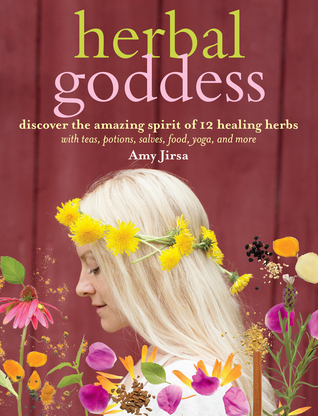
The Herbal Goddess Guide is a beautiful little reference book in which 12 different herbs are examined for physical, mental and spiritual healing purposes.
Amy Jirsa provides recipes, yoga poses, crafts and more to utilize the healing power of the plants in various ways.
This book may not be for everyone as it has a very new age feel. Jirsa discusses magical traditions, honoring a plant’s spirit and more.
However, if you’re into tapping your inner goddess, this may be the perfect book for you.
If you read it and you enjoy it, you may want to purchase The Herbal Goddess Guide for your personal collection because Jirsa suggests “getting to know” each plant for a month and there is a chapter devoted to each.
It could take you awhile to thoroughly digest the information in these pages. (And to try everything!)
My favorite chapter, probably because it is my favorite herb, is lavender. Did you know it is a member of the mint family?
While lavender is known for being relaxing, it can, in some cases, be stimulating, so be sure to check in with your mind, your mood, and your energy level after each recipe.” pg 131.
Some of the yoga poses Jirsa outlines are rather advanced, but she offers modifications for each. If your flexibility isn’t up to snuff, no worries.
Highly recommended for the open-minded reader and non-traditional healers.
For similar, new age/self help books I’ve reviewed, check out:
The self-styled “anti-guru” Sarah Knight adds another volume to her quirky, profanity-laden self-help series with You Do You.
The focus, as you can guess from the title, is the art of allowing your authentic self to shine through without feeling guilt or being so far out of the social norms that you border on “psychopath.”
You Do You is about accepting your strengths and your flaws, whether those flaws are self-identified, or just things that you’re perfectly happy about but that other people seem to have a problem with. Or, should I say, that you WOULD be happy about, if you felt a little more confident in yourself…” loc 146, ebook.
And, like the previous books, Knight doesn’t stint on the bad words. She admits she kept the title clean so a certain publication *cough* New York Times *cough* would print the all the words of the title in their sought after Best Seller list.
Which Knight has made before… but had her titles censored for their content.
“The advice in this book boils down to one simple mantra: Stand up for who you are and what you want. How do you do that? Stop letting other people tell you what to do, how to do it, or why it can’t be done.” loc 188, ebook.
I enjoyed You Do You, but I felt it wasn’t as strong as Knight’s other titles because she spends so much time rehashing material she has already covered elsewhere.
That being said, I like Knight’s style, her famous diagrams and her illuminating stories. This is an author who has been there, done that and cussed about it.
My favorite diagram in You Do You is Knight’s “ouroboros” or symbolic, conjoined serpent of wisdom picture. The text with the cute doodle says: “Is it right or wrong? You won’t know unless you have the confidence to take a risk and find out. If you regret your decision, then accept the consequences, swallow the lesson, and start over. With confidence.” loc 1995, ebook.
Verges on mystic Eastern wisdom, doesn’t it?
She encourages all readers everywhere to let the strange sides of yourself out- within certain boundaries. Don’t hurt anybody. Don’t take advantage of people. Be reasonable within your freakishness.
“Now, with those ground rules established, I do declare that we, as a society, should celebrate weirdness in all its forms- and that the right to be weird should be inalienable- just like the right to life, liberty, and the pursuit of happiness.” loc 2130, ebook.
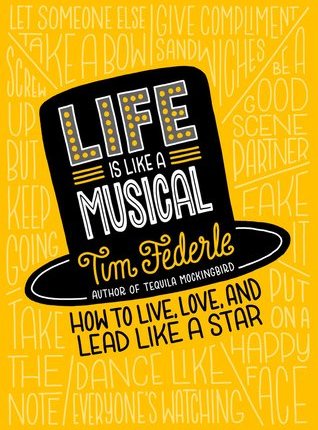
Tim’s advice is common sense, but I appreciated it anyway. Make your weaknesses your strengths. Be nice to everybody. Pay attention. Don’t try to be a perfectionist, and so on.
He pairs these nuggets with his life stories. So, it’s part-memoir, part-self help.
“When Bob Fosse had a bald spot, he put on a stylish hat. Where’s your bald spot? Or blind spot? Or thing that you can barely accept about yourself? Go put a hat on it, and make it something wonderful.” pg 23. There’s nothing wrong with advice like that.
First off, the key to approximately 90 percent of adulthood is appearing more interested in something than you actually are. Seriously.” pg 31.
Truth bombs, people.
Don’t give your power away. Remember who you are: “Please, never forget you’re the leading character in your own life. Read that sentence again: You aren’t the supporting cast. You’re it, baby.” pg 48.
And most importantly of all, have a sense of humor about the whole thing.
“Forgive yourself when you screw up. Develop a sense of humor that allows you to snort-giggle before anyone else can.” pg 139.
Recommended for people who are looking for a peppy voice to get them back on track and singing throughout the soundtrack of their own lives. This read will do the trick.
It’s the last day of 2017! As usual, this year I’ve enjoyed an eclectic mix of fiction and non-fiction.
I had a lot less time to read this year because of my full-time job, but I surprised myself with how many I was able to get through.
I’d like to take a moment to say thank you to all of my friends here on WordPress and Goodreads. Reading and reviewing wouldn’t be nearly as fun without all of you.
And without further ado, here’s my end-of-the-year book recommendations:
Most Depressing but Worth It: Night by Elie Wiesel (non-fiction) or Year of Wonders by Geraldine Brooks (fiction).
Book about books: Bizarre Books by Russell Ash, Brian Lake.
Classic I Should Have Read Before but Hadn’t: Animal Farm by George Orwell and Fahrenheit 451 by Ray Bradbury (read a bunch of classics this year, these were my top two).
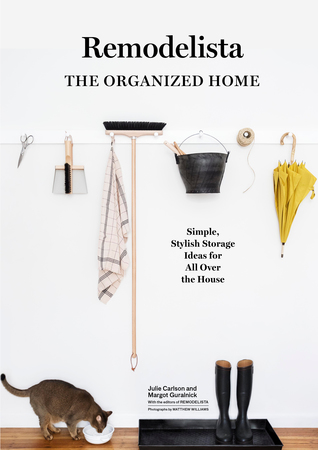
Remodelista is another de-cluttering book. This one encourages readers to utilize storage containers made out of natural materials, to hang items in unexpected places and to make your space functional and beautiful.
Maybe I’ve reached my limit on these types of books. For example, I loved The Life Changing Magic of Tidying Up, but that was one of the first books of this kind that I read.
I know not everyone responds well to Marie Kondo’s philosophy of considering the spirit of your stuff, but that clicked with me, for whatever reason. Must be a hippie thing.
I thought this one was a bit ridiculous. It just wouldn’t work for me in my real life with my crazy pets, busy family and serious amounts of stuff.
My main problem with this one is illustrated quite clearly on the cover. We’ve got two brooms, a towel, an umbrella, some string and a large bucket hung right over a cat drinking from a water bowl.
I can think of a hundred reasons why that wouldn’t work for me, but let’s start with three:
First of all, the kitties would think I was trying to kill them- hanging menacing items over the watering hole. And, let’s be honest, with my poor hanging-things-up skill, it just might.
Second, putting string high up but visible is inviting a kitty disaster. They would hunt the heck out of that string, probably using the umbrella as a climbing wall to get to it, destroying my artfully arranged buckets and mops in the process.
Third, where would I put the rest of my family’s entryway stuff? We’ve got a lot more than that in just umbrellas, not even counting the brooms, swiffer mops, you-name-it.
The result: easy-to-maintain spaces that are both orderly and artful, personal and purposeful. Because, ultimately, the goal isn’t a flawless, impossible-to-maintain showcase. The aim is an unencumbered life in a house that makes you happy.” pg 9.
All of the rooms and cabinets in this book had like three things in them. It’s just not realistic.
That being said, I did like the “Daily Rituals” on pg 18. The authors included “seven simple habits” to adopt every day to make your life easier. They include activities like making your bed and opening the mail.
I can handle that.
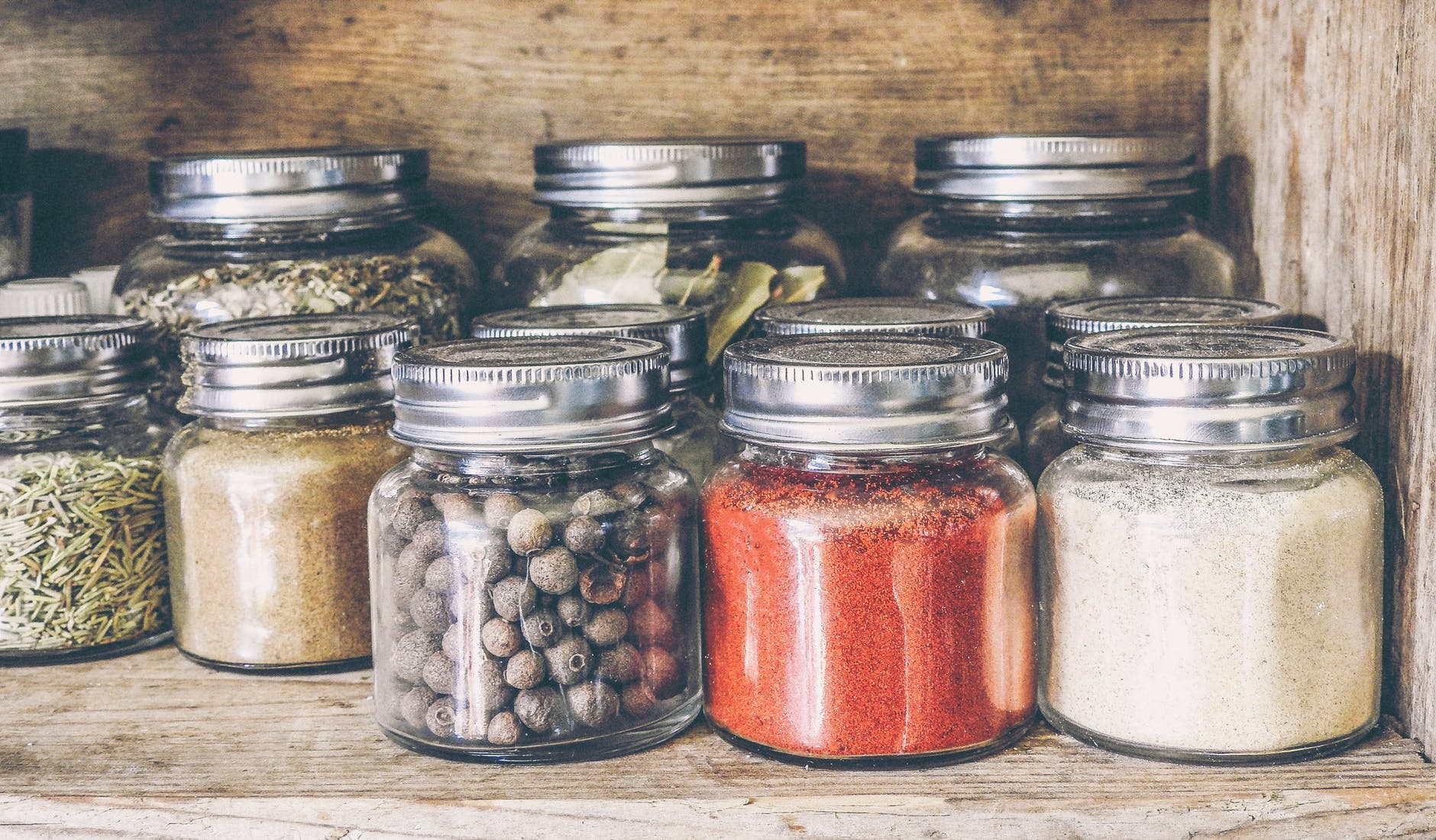
I also liked the ‘Herb and Spice Drawer’ suggestion on page 70. My spices are a jumble of bottles and sizes and it’s nearly impossible to find anything quickly.
The authors suggest storing herbs and spices in: “Uniform glass jars- we like small paint jars from the art supply store.”Then, label the tops. It’s a simple solution but one that never occurred to me.
Only recommended for people who have calm cats and very few items. Other than the suggestions mentioned, I can’t see myself using very many of the tips from Remodelista.
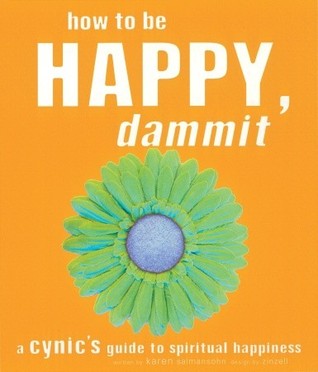
How to Be Happy, Dammit is a succinct, brightly colored treatise on enlightenment. Coming in around 230 pages with only a few words per page, this is a book that can be read over the course of a lunch hour or *ahem* during other short breaks in your life on a porcelain throne.
It doesn’t use an abundance of coarse language (see title), but it does utilize a few words to get the point across.
The book is broken down into short life lessons that feed into the next. “Life Lesson 1: Pain exists. Life can hurt. Like a lot. Even when you’re good, you can get whacked. Without apology. Without explanation.” pgs 14-15.
That’s the life lesson about being born. Can’t really argue with that.
My child was born wailing before she was even entirely out. I was wailing too, for different reasons of course, but life can hurt. No doubt.
I found meaning in “Life Lesson 6: Never go shopping for kiwis in a shoe store. Some people just don’t have what you need. So why waste time, banging on their doors, ringing their bells, demanding service?” pgs 38-39.
“Life Lesson 19: This is a world of duality: of good and bad, yin and yang, decaffeinated and caffeinated. So you must always be prepared!” pg 112. Decaffeinated? Poor souls…
In the chapter on self-programming, we get this wisdom: Life Lesson 27: The world is your mirror.” pg 174.
Recommended for people who are interested in spirituality, but don’t necessarily have a lot of time or patience for more touchy-feely books. How to Be Happy, Dammit delivers on its title. Now let’s all go be happy. Dammit. 🙂


















 The Help Desk Book Blog