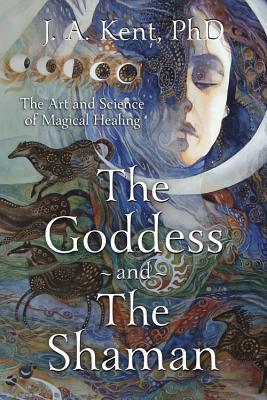
The Goddess and the Shaman: The Art & Science of Magical Healing by J.A. Kent

The Goddess and the Shaman: The Art & Science of Magical Healing by J.A. Kent

“I discovered the presence of a mystical and magical tradition that was largely concealed within our culture that had its roots in ancient pre-Christian Paganism, alchemy, Hermetic philosophy, the holy Qabalah, and elements of Greek, Egyptian, and Gnostic mysticism. It is generally referred to as the Western magical tradition. I tend to see it as the lost shaman tradition of the West.” -From the Preface

J.A. Kent, PhD, examines various occult and healing practices from a variety of traditions by interviewing practitioners as well as providing case studies of her own patients in order to present, what I can only call, her doctoral thesis of her personal magical paradigm. Her paradigm is the title of her book, The Goddess and the Shaman.

“There are strong social and medical pressures in Western-style thinking that regard those who have psychic experiences to be either fraudulent or psychotic.” pg 16

Let me briefly explain this paradigm, though I highly recommend reading the book to get it in Kent’s own words.

“The Goddess” is another name for what Kent calls the “Elphame,” essentially the other non-physical worlds that exist either alongside or on top of (depending upon who you speak to) our normal every day world. “The shaman” are the lightworkers and healers who explore these realms for various reasons including healing others of sicknesses both of the body and spirit.

I think it took a great deal of bravery to write a book like this, especially with the prevailing worldviews at work today. Well done, J.A. Kent!

The world is an enchanted, mysterious, and magical place that will reveal its many secret powers and energies to those who have the persistence and determination to unlock them.” pg 64

The trouble with spiritual healing or any type of work in the Elphame, Goddess, or whatever you want to call it, is that the practitioner exits the consensual reality of the every day world and enters non-consensual reality- the abode of the dreamers, lovers, poets, musicians, mad, etc. I have come to believe that the Western world, Western medicine especially, is not kind to those who venture outside the bounds of the normal.

Kent discusses this in depth in multiple places of this book. Suffers who could find no mundane explanation for their troubles turn to her in order to find some relief. And, encouragingly, many found healing.

“Ultimately they rejected the reductionist psychiatric explanation and embarked on their own magical journey of healing.” pg 159

Recommended for therapists and spiritual healers who are looking for more ideas about how to assist those who come to them seeking help. I enjoyed this book very much.

Thanks for reading!

Hyperfocus: How to Be More Productive in a World of Distraction by Chris Bailey

Hyperfocus: How to Be More Productive in a World of Distraction by Chris Bailey

In Hyperfocus, author Chris Bailey describes different types of attention and gives methods to improve the quality of your attention each day.

He suggests attention is a limited resource and, as such, you should take control of when, where, and to what you give your attention to.

Photo by Pixabay on Pexels.com

Most of his advice on how to improve your focus was common sense: drink a cup of coffee, rid your environment of distractions, only check your email once an hour.

The brilliance of this book is his method of codifying attention. He compares two types of attention, hyperfocus and scatterfocus.

Hyperfocus is fairly self explanatory – you only focus on one thing and redirect your attention if it wanders.

Photo by Chevanon Photography on Pexels.com

Scatterfocus is the mode that most of us wander around in every day. But, Bailey says, you can harness this type of focus too.

Use this method of focusing when you’re trying to be creative or looking for connections between seemingly unrelated ideas. It is the focus that sometimes hits in the shower, a ah-ha moment that changes the way you view reality.

I feel like there’s no real way to control that type of focus, other than to be self aware while you’re in it. However, I found Bailey’s suggestion intriguing. Perhaps if I set aside time each day to consciously let my mind wander, I will have a different view on it.

I’m definitely game to give it a try.

I Thought It Was Just Me (But It Isn’t): Making the Journey from “What Will People Think?” to “I Am Enough” by Brené Brown

I Thought It Was Just Me (But It Isn’t): Making the Journey from “What Will People Think?” to “I Am Enough” by Brené Brown

Researcher Brené Brown gives readers another self help title on how to handle the difficult emotion called shame.

“This book offers information, insight and specific strategies for understanding shame and building “shame resilience.” We can never become completely resistant to shame; however, we can develop the resilience we need to recognize shame, move through it constructively and grow from our experiences.” pg xiv

Photo by Kei Scampa on Pexels.com

It’s not easy to handle shame. In fact, it’s not that easy to read about it.

But Brown says the way through is sharing those uncomfortable feelings with others. One of the solutions to shame is empathy and another is self awareness.

Other attributes shared by those with high shame resilience are:

“The ability to recognize and understand their shame triggers. High levels of critical awareness about their shame web. The willingness to reach out to others. The ability to speak shame.” pg 67

Photo by Pixabay on Pexels.com

Part of her work in psychology has been to define what shame is. Brown writes everyone has different triggers based on unique childhood and adult experiences. Therefore, it is impossible to name universal shame triggers which can make it difficult to study shame.

Her studies have led her to believe the opposite of shame is self esteem, which was an interesting aspect I had never considered. Other aspects of shame include: feeling like you’re not good enough or don’t belong.

Brown has discovered another hurdle in her research- it can be difficult to speak about shame as words sometimes fail us when we experience visceral feelings.

“Sharing our shame with someone is painful, and just sitting with someone who is sharing his or her shame story with us can be equally painful.” pg 147

Photo by Tima Miroshnichenko on Pexels.com

On a more positive note, Brown writes everyone has experienced this at some point or another. She uses this universality of experience to issue a clarion call for change. To foster shame resilience, we should build networks of support and be kind to each other by showing our own vulnerability. We’re all in this together.

And I couldn’t agree more.

Recommended for anyone who has ever felt shame. That’s everybody.

Thanks for reading!

The Body Keeps the Score: Brain, Mind, and Body in the Healing of Trauma by Bessel van der Kolk

The Body Keeps the Score: Brain, Mind, and Body in the Healing of Trauma by Bessel van der Kolk

The Body Keeps the Score is a non-fiction book about how the body stores trauma and what you can do about it.

My most distressing take-away from this book was how common trauma is. Author Bessel van der Kolk discusses how people from all walks of life suffer from trauma.

Photo by Thiago Matos on Pexels.com

People suffering from these kinds of afflictions believe they’re the only ones. They try to numb the pain with drugs or alcohol and are easily triggered which brings back the pain of the traumatic events again and again.

This affects their lives, relationships and ability to trust others.

Kolk details how traumatic memories can be triggered by smells, touch and taste. He explains how powerful emotions remain behind, even after the logical mind has processed the event.

Photo by cottonbro on Pexels.com

He suggests you can’t think your way out of strong emotions.

What do we do about this?

Form a strong community around yourself with supportive relationships. Practice mindfulness and yoga- exercises that explore the mind and body connection.

Photo by Elina Fairytale on Pexels.com

Also, find a therapist who practices eye movement desensitization and reprocessing (EMDR). The author records amazing recoveries by sufferers who utilized this therapy.

Personally, I’ve practiced EMDR with a therapist and the results were astounding. I left the session feeling lighter than I have in years, having released trauma I didn’t realize I was carrying.

But, like others, I still struggle with powerful emotions stored in my body. It is a process, not a cure. And I’ve learned to take life one day at a time.

Highly recommended for readers looking for scientifically-proven ways to handle trauma.

Thanks for reading!

The Highly Sensitive Person in Love: Understanding and Managing Relationships When the World Overwhelms You by Elaine N. Aron

The Highly Sensitive Person in Love: Understanding and Managing Relationships When the World Overwhelms You by Elaine N. Aron

Author Elaine Aron defines “highly sensitive persons” (HSPs) and gives a plethora of coping mechanisms as well as case studies to support the definition. She also includes tests so you can discover where you are in the HSP world.

“The trait was always there, of course, just called by other names. But its essential elements were not known, so it was described by external behaviors only, such as ‘shy’ or ‘introverted.'” pg 54, ebook

Photo by Michelle Leman on Pexels.com

This was only the second book I’ve read about HSPs. Prior to this, I have heard HSPs being described as having sensory processing disorders, which exist on a spectrum like most everything else in the psychology universe, or simple shyness.

“My term for it is sensory processing sensitivity, but the same trait is also called environmental sensitivity or reactivity; biological sensitivity to context; differential susceptibility or vantage sensitivity; or identified by the names of certain genetic variations or as in animals, sometimes termed behavioral plasticity or flexibility.” pg 82, ebook

Despite my lack of background in the topic, there was very little new information in this book. A big take-away was to improve your communication style and keep in touch with the people in your life who love you. So many problems can be cleared up with clear, concise communication.

Photo by Gustavo Fring on Pexels.com

Also, attempt to address any troubles you may have from a dysfunctional childhood or relationships prior to embarking on a new relationship. Healer, heal thyself.

Another coping mechanism I use regularly, but didn’t realize I did, is handling over arousal. Whenever I find myself being overwhelmed by life, I find a backroom and take a minute or two to myself. Sometimes I just breathe. If I’m not at work, I pick up a book or get a hot drink.

“Anger is a highly stimulating emotion. HSPs are strongly affected by it, even when we just witness it. pg 77, ebook

Photo by freestocks.org on Pexels.com

Aron encourages readers to find their “optimal level of arousal” since it varies from person to person. Know yourself and your limits, and tell your loved ones. Also, give yourself permission to turn off your sensitivity. It may seem silly- but that never occurred to me.

“All HSPs, men or women, are more aware of what other people are feeling, what they want and need. Thanks to your spontaneous deep processing, you also can sense what will happen if others don’t receive what they need- they may suffer, fail at what they want to do, become angry with you, feel disappointed with you. And being more sensitive, when they feel bad, you will be bothered too… pg 56, ebook

I tried to treat everyone the same and it led to some serious problems in my personal as well as professional life.

Photo by Kat Smith on Pexels.com

One of the most helpful parts of this book was Aron’s invitation to reframe my past in light of my new self knowledge. Prior to learning about HSPs, I was barely functioning in a world that didn’t necessary make room for me. Now I know I’m not alone in this- and have more tools in my metaphorical belt to help me get through the day.

I’m not entirely convinced by the final section of The Highly Sensitive Person in Love that discusses HSPs being more spiritual or falling harder in love than non-HSPs. It’s a romantic sentiment perhaps, but I was unconvinced by the evidence. I think we’re all in this love game together.

Recommended for readers who are or have a loved one who is a highly sensitive person. I’m curious to know what others in the community think about this book. If you do have a chance to pick it up, please write a review and let me know. 🙂

Eckhart Tolle’s “The Everyday and the Transcendent”: a Podcast Review

Eckhart Tolle’s “The Everyday and the Transcendent”: a Podcast Review

While I was on my daily walk, I listened to “The Everyday and the Transcendent” a podcast on Spotify in Eckhart Tolle’s “Essential Teachings” series.

Was it worth the listen? I say yes.

I enjoy learning from Eckhart occasionally but not all the time. He has a soothing voice and his stream-of-consciousness delivery style is hypnotizing.

However, after a couple hours of his teachings, they all begin to sound exactly the same. And that’s because his core message never changes- which isn’t a bad thing.

Photo by Sebastian Voortman on Pexels.com

Beware self help or spiritual gurus who hold up a carrot of further secrets. As my hairstylist said after visiting an aura cleanser for the first time, “You can overdo stuff like that.” By which she meant, pouring piles of money into someone’s hands to “fix” something you can’t even perceive.

The cool thing about Eckhart’s teachings is you can begin practicing and perceiving what he’s talking about right this second, no matter your situation or state-of-mind.

For example, in this podcast, a practical tool he offers for spiritual insight is to simply observe what he calls your “inner body”. His focus, which he says he’s used over the years to great success, is to monitor what the energy of his hands are doing.

Photo by Meryl Merlin on Pexels.com

How do you do that? Simple- feel your hands. Act like you’re going to pick up a pencil, but don’t move. There! You can feel that can’t you.

Do this multiple times a day or just once in awhile and you’ll begin taking your focus away from what Eckhart calls “thought forms” and enter the state of “the now”.

This particular podcast deals with “the everyday” which Eckhart describes as your job, your family, your home, all of the trappings of the physical life. He says most people never move beyond the everyday. We can get lost in the world around us, which he reminds us, are simply projections that we create through our perceptions.

Photo by Ricardo Esquivel on Pexels.com

He describes the everyday as a horizontal line- a visualization that I found very helpful.

When you are lost in anxiety or fear, you’re moving either forwards or backwards on this line and not staying in the present moment, which is where the second part of his visualization comes in.

Eckhart describes “the transcendent” as a vertical line that intersects the horizontal line of daily living. He says we travel upwards and downwards on this line through our thoughts as we go about our lives.

Photo by eberhard grossgasteiger on Pexels.com

The thing is: most of humanity isn’t aware that we’re doing this. We unconsciously move about our day, responding in a kneejerk way to things we perceive as “happening to” us. And, Eckhart says, they actually are “happening to” us because we aren’t aware we are doing it.

If only we could realize our own internal processes, then, he says, we would realize that nothing really “happens to” you. It is all movement along the metaphorical everyday and the transcendent lines of our lives.

Photo by Anna Roguszczak on Pexels.com

We break the power that thoughts have over us and enter into the timeless state of the Now. The holy grail, so to speak, of spiritual experiences.

Highly recommended for spiritual seekers who are looking for practical ways to practice being present. Thanks for reading!

If you’re interested in Eckhart Tolle’s further teachings, here my book review of his “Stillness Speaks”:

And you can listen to the podcast yourself here:

O’s Little Book of Happiness by O, The Oprah Magazine (Editor), Thelma Adams (Contributor)

O’s Little Book of Happiness by O, The Oprah Magazine (Editor), Thelma Adams (Contributor)

This collection of essays from the pages of O are wonderful. Through memories and insights, the writers of each chapter have something uplifting and inspiring to share.

My favorite was the chapter entitled “My Unplanned Adventure” by Catherine Price, pgs 88-99. It’s about an uptight traveler who planned every aspect of her trips around the world until she came to the conclusion that she was overthinking it.

Photo by Andrew Neel on Pexels.com

Once she figured this out, she walked up to a person, asked them where they would travel if they could go anywhere, and went there. I won’t ruin the essay by relating all of it here, but it resonated with me. I also have to remind myself that going with the flow is always more desirable than white-knuckling intricate plans and time tables.

I have to confess: I am not a reader of magazines. I find them to be filled to the brim with advertisements for things I neither want nor need and, after I’ve dug through the pages of stuff for sale, I find the writing to be insipid. “Six new sex positions!” “Keep your romance alive!” blah, blah, blah…

Photo by KoolShooters on Pexels.com

That being said, O’s Little Book of Happiness was totally different from my expectations of what a magazine is and introduced to me the idea of what a magazine could be. (And there were no advertisements!)

A couple of the essays felt too short- one page or one paragraph in some instances- but for the most part I enjoyed their length and the order they are arranged in.

There’s something very powerful in reading back-to-back essays about happiness and accounts of people finding their path in life. I read this through in almost one sitting but it could also be savored slowly like a-chapter-a-day devotional guide.

Photo by Andre Furtado on Pexels.com

I enjoyed this very much. And I hope you will too.

If you like O’s Little Book of Happiness, I would also recommend Happiness: A Guide to Developing Life’s Most Important Skill by Matthieu Ricard and Living Oprah: My One-Year Experiment to Live as TV’s Most Influential Guru Advises by Robyn Okrant.

I received a free copy of this book through Goodreads First Reads. FTC guidelines: check! And thank you for reading.

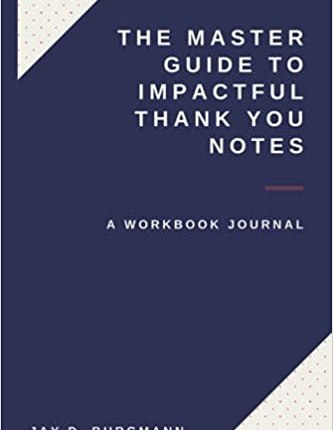
The Master Guide to Impactful Thank You Notes by Jay D. Burgmann

The Master Guide to Impactful Thank You Notes by Jay D. Burgmann

“An effective follow-up with a prospect, client, boss, work associate, friend, or even relative accomplishes two things; first, it gives you the occasion to recap your event, and second, provides the opportunity to celebrate actions or accomplishments from it.”

Photo by cottonbro on Pexels.com

Thank You notes are a big deal for me during the month of December. At the beginning of the month, I have my birthday and at the end there’s Christmas- the mother of all holidays that require thank you notes.

For full transparency, I received a free copy of this book from the author Jay D. Burgmann after his brother conducted a lovely and gratis ‘understanding Medicare’ event at my local library. Afterwards, Jay suggested I schedule an event based off his book and I just may.

The book itself is clearly self published. The author didn’t chose a font that appeals, at least to me. Occasionally, when he wants the reader to know the text is important, he goes into the faux pas of all caps.

I don’t know about you, but I personally don’t like being shouted at- even in literature form.

Photo by Andrea Piacquadio on Pexels.com

Like this: “KEY POINT- IT DOESN’T HAVE TO BE PERFECT. SAYING THANKS IS MOST IMPORTANT. A WELL WORDED MESSAGES MAKES IT EVEN MORE POWERFUL. BEAUTIFYING IT WITH GOOD STATIONARY IS A NICE TOUCH”

Beyond the superficial, this self-described “workbook journal” is very helpful, especially for younger readers who have either never been educated about the importance of saying thank you, or don’t care.

Burgmann highlights the note as an important networking tool. He recalls a visit to the office of someone he wrote a thank you note to and says the client framed his handwritten note and had it on the wall of her office.

It was that impactful. And it’s easy to understand why.

Photo by u0158aj Vaishnaw on Pexels.com

Beyond the emotional appeal which Jay focuses on, expressing gratitude is one of the great strategies in the New Age law of attraction. What you think and speak about, so the teachers say, you bring about- perhaps in ways and means you never could imagine.

Burgmann, with this short book, joins the ranks of these educators and gurus. Saying thank you is important. Knowing how to write it is important.

Highly recommended for everyone. Don’t be put off by the format, focus on his message.

Lauren Berger the ‘Intern Queen’ shares how to write an excellent Thank You note. You can find internships and read her blog at http://Internqueen.com

And thanks for reading!

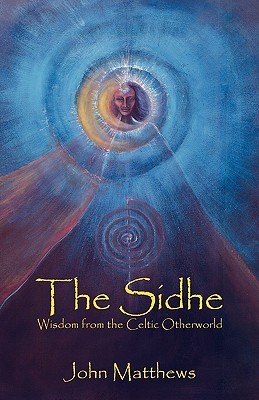
The Sidhe: Wisdom from the Celtic Otherworldby John Matthews

The Sidhe: Wisdom from the Celtic Otherworldby John Matthews

“I knew then that something was going to happen in Ireland. I had no idea then just what an enormous and irrevocable change it was going to make to my life.” pg 5, ebook

John Matthews received a call from a friend whose occupation is archaeology. The friend showed John into a barrow where he first saw the glyph that is on the cover of this book.

John claims that through meditation upon the glyph, he communicated with other beings whom he believes are ‘the Sidhe.’

“To truly know a thing is to become one with it. Just as to become one with it is to truly know it.” pg 27, ebook

Photo by cottonbro on Pexels.com

He shares the communications that he had through the glyph throughout the text. At the end, he includes six exercises that the beings gave him and encourages readers to try the practices for themselves.

Readers could potentially experience the connection John felt.

“Drawn by this feeling, I lay down beneath the branches of the old oak, and, as I had done countless times before, stared up through the branches at the patches of blue sky that showed through. As I did so a sense of stillness and peace descended upon me.” pg 36, ebook

Photo by Magda Ehlers on Pexels.com

The Sidhe: Wisdom from the Celtic Otherworld reminded me of the multiple works of Abraham Hicks or Seth Speaks: The Eternal Validity of the Soul. There’s probably a reason for that.

It could be that the channelers are tapping into a similar place. In this book, John calls it the “great net” of creation. I’ve heard it called, “Indra’s net,” among other names in other sources.

Whatever it may be, I find it interesting that the communications received are similar enough to draw comparisons.

“Among the greatest gifts we have observed in your race is the desire to know and to explore. This hunger has propelled you far along the path of the day and the path of the night. Hence, your journey is indeed one of exploration, not only in time and space, but in the dimensions of Spirit.”

Photo by Stefan Stefancik on Pexels.com

Of course, I had to try John’s method for myself. I’m always so curious about these kind of things.

Unfortunately, I fell asleep rather than having a memorable experience. I expect the fault was on my side, but perhaps I experienced something in my sleep- I just failed to remember it.

I do plan to give the meditation a try again in the future, when I’m not so sleepy.

I was fascinated with the way the glyph looks like a treble clef with multiple circles. When John began to describe the Sidhe’s connection to music, I felt that comparison made sense.

“Much of our time is spent in the making of music- though for us it is more serious than a pleasant pastime, since it is part of our creative process in more than an abstract fashion.” pg 69

Playing music is one of the few activities that put me into a flow state. Perhaps I should try meditating that way.

Anyway, I recommend this book for the curious or spiritual seekers. If you try the exercises within, please do share your results. Maybe some day, the world will have more answers than questions about these ineffable things.

Or, maybe, we’ll open yet another door for endless discoveries. Either way, I’ll be interested to see what comes next.

Thanks for reading!