The Creator’s Code: The Six Essential Skills of Extraordinary Entrepreneurs

The Creator’s Code: The Six Essential Skills of Extraordinary Entrepreneurs

For The Creator’s Code, Amy Wilkinson interviewed over 200 wildly successful entrepreneurs and narrowed down the skills that they used to create their businesses to an “essential” six.

These essentials are the keys to the “creator’s code,” she writes.

Photo by Canva Studio on Pexels.com

My favorite chapter from The Creator’s Code is Chapter 5: Network Minds- Solve Problems Collectively. We’ve recently instituted some collaborative projects where I work and I’m excited to see this creative skill in action.

Also, I enjoyed the portion of the book where Wilkerson explored businesses trying to integrate computer games into the work day in order to encourage co-workers to help each other as well as to instill a sense of play into the creation process.

Photo by Garrett johnson on Pexels.com

I wish that my library management system could be tweaked to do something like that. Imagine how fun that would be! Playing computer games in order to boost productivity.

In some ways, this book reminded me of Napoleon Hill‘s Think and Grow Rich. He also interviewed hundreds of wealthy people to understand their mind set. However, unlike the New Age, positive thinking slant of Hill’s work, Wilkinson relies on scientific studies as well as real world results.

Of the two approaches, I personally favor Napoleon Hill’s, but readers of a more scientific mind-set might enjoy this book more.

Photo by Pixabay on Pexels.com

While we’re on the subject of read-alikes, I also read [book:How to Fly a Horse: The Secret History of Creation, Invention, and Discovery|20342540] by Kevin Ashton and it shared some of the stories from The Creator’s Code.

It felt slightly repetitive because of this. Otherwise, I may have given The Creator’s Code five stars instead of four. It felt like I was covering the same material. Despite this bookish deja vu, The Creator’s Code is very well researched.

Photo by Pixabay on Pexels.com

So, if you’ve already read the other book, don’t be hesitant to pick this one up too. It was just not ground-breaking reading for me- my reviewer’s bias, I suppose.

There are some differences between the two works: How to Fly a Horse focuses on the history of the creative process and uses that knowledge to encourage the average Joe to be creative today.

The Creator’s Code has distilled the essential nature of creation and lists guidelines that can be used for success in business, art, science, whatever.

Though both encourage creation, Wilkinson gives actionable steps to take at the individual level whereas Ashton focuses more on the big picture.

If you enjoyed The Creator’s Code, I highly recommend How to Fly a Horse by Kevin Ashton and Think and Grow Rich by Napoleon Hill. Both of these works share the themes of success in business through creativity exploration.

I received a free copy of this book through Goodreads First Reads. FTC guidelines: check! And thank you for reading!

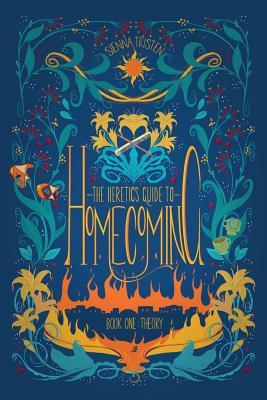
The Heretic’s Guide to Homecoming: Book One: Theory by Sienna Tristen

The Heretic’s Guide to Homecoming: Book One: Theory by Sienna Tristen

The Heretic’s Guide to Homecoming is a fantasy journey in which Ronoah, an introverted and anxious main character, discovers a strength inside himself that he didn’t know he had and, along the way, learns about the world outside of the regimented and ill-fitting expectations of his hometown.

It is not a simple adventure because Ronoah, with all of his hang ups, is a very unlikely hero.

“… Ronoah was not one tenth the rebel she needed him to be. Inertia had him by the throat, and its consequence was a keen pain squatting ugly at the bottom of his soul, rotting it from the roots up.” pg 9

Photo by Mariana Montrazi on Pexels.com

Like other readers, I found author Sienne Tristen‘s depiction of Ronoah’s crippling anxiety and panic attacks to be one of the most insightful and sensitive pieces of writing I’ve ever had the privilege to read. Unlike most works of fantasy in which the action takes place in an external world, Ronoah’s greatest battles are in his own mind.

The anxiety speaks with its own voice and becomes a main character throughout the story.

“What were you thinking, it sneered, acting like you’re so important, so worldly, making it out like you’re some big intellectual champion when all you really are is a petulant runaway with a few bits of trivia stuck in your useless head? Talking and talking like you’re an authority on anything- who do you think you are?” pg 53

Photo by Brigitte Tohm on Pexels.com

Ronoah’s interactions with the other characters from the book take on a secondary importance to the all-encompassing relationship that he has with his inner world. But they are still beautiful connections.

“… He had this way of grabbing life by the horns and refusing to let go, no matter how it tried to shake him off. You know those people you sometimes find, the ones who…” “Who shine.” pg 154

Sienna Tristen’s writing brings to light foibles of anxious people that might otherwise remain shrouded in the sufferer’s inability to vocalize their feelings. Anybody who has ever spent a sleepless night stuck in the agony of fear and indecision will understand exactly what Tristen is spelling out in this story.

On the other hand, I found the first two-thirds of the book to be extremely triggering because of this gigantic magnifying glass that is held up to anxiety. The pacing didn’t do me any favors either. As Ronoah slowly twisted in the unending spirals of panic in his own head, I hung on the hook right along with him.

Photo by Meruyert Gonullu on Pexels.com

It was helpful to see Ronoah’s thinking process which Tristen writes so beautifully. Almost every time, readers can feel the moment he tips from functional person with some worries to frozen anxious mess. In my own life, I’ve started to watch for those tipping points- the moments I go from concerned about the future to paralyzed by anxiety. It has actually been quite illuminating.

But all of that new found self knowledge doesn’t make for a fun read. Fiction is one of my escapes from reality. In this book, I found quite a lot of reality and it wasn’t an escape after all.

“How far do you have to push your boundaries before you can feel them stretch? How high do you have to climb before your horizon expands? Is it possible to notice your own growing, or is improvement like an eyeball- visible to everything but itself?” pg 193

Recommended for readers who don’t mind very slow pacing in exchange for gorgeous writing about anxiety. Mind the triggers.

Thanks for reading!

Embrace Your Weird: Face Your Fears and Unleash Creativity by Felicia Day

Embrace Your Weird: Face Your Fears and Unleash Creativity by Felicia Day

Embrace Your Weird is a non-fiction and self help manifesto encouraging creativity and told in Felicia Day’s unmistakably humorous way.

I say “unmistakable” for any of her myriad fans who have watched her ground-breaking web series, “The Guild,” or read another of her books like You’re Never Weird on the Internet. Her tone and sense of humor remains the same.

Photo by Prateek Katyal on Pexels.com

And if you haven’t had the chance to enjoy any of Day’s other creations, I encourage you to give them a try. They’re light-hearted and fun.

“Aside from (over)sharing a lot of my opinions, I have filled this book with exercises designed to uncover the joy of creativity. To help people beat back the fear that keeps them from trying new things.” pg xi

On almost every other page, Day encourages readers to stop a moment and draw a picture, fill out a list, or write empowering messages over and over so that they’ll sink in. The act of reading this book is nearly a creative act in and of itself. (Sadly, I couldn’t do this because I was reading a library book. Suggestion for future readers: buy yourself a copy.)

“No, I don’t think creativity is a cure-all. But I do believe it could be a cure-most.” pg 29

Photo by Pixabay on Pexels.com

Besides reminding readers that we have unique voices and viewpoints that the world needs to hear, Day loosely structures the rest of the book off of life viewed as a game. She asks us to remember our “hero-self,” identify “enemies” and “allies” of our creativity, and to view the steps we take towards creation as “quests.”

Day also shares moments in her life when she’s completed or failed attempting various pieces of this philosophy in her own life.

“I constantly hand my heart over to strangers to batter however they wish, and I wonder why I’m constantly wounded all the time, and this makes me reluctant to create. Good way to operate? NOT REALLY!” pg 143

As I said, the whole book has a definite Felicia Day vibe. And it’s fun!

“Playfulness is the root of all creation. All invention. All discovery. There is no reason NOT to feel joyous when we make things.” pg 206

Photo by Sharon McCutcheon on Pexels.com

She wasn’t afraid to tackle all sorts of hang-ups people might have in their creative process. Day nailed my biggest issue: finishing projects once they’re started.

“But we will never get anywhere if we don’t focus on one thing at a time. And then see that thing through before moving on!” pg 239

Message received. Now to put it into action…

Recommended for anyone looking to start or jump start their creativity. This book is an excellent place to begin. Thanks for reading!

The Spiritual Gift of Madness: The Failure of Psychiatry and the Rise of the Mad Pride Movement by Seth Farber

The Spiritual Gift of Madness: The Failure of Psychiatry and the Rise of the Mad Pride Movement by Seth Farber

In The Spiritual Gift of Madness, Seth Farber interviews half a dozen people who have had negative experiences with western psychology as well as experts in mental health. His thesis is the mental health system as it is values medication over other types of therapy and, because of this misguided focus, harms the very people it is attempting to help.

He is a champion of the Mad Pride movement, a group that seeks to celebrate and assist those suffering from mental health issues to embrace who they are rather than medicating it away.

Photo by Engin Akyurt on Pexels.com

“… helping the mad does not mean drugging or coaxing them into a state of “adjustment,” but rather appreciating the state of madness for what it is: an existential clearing in the jungle of our insane modern society that potentially leads into the realm of true sanity, which, in the world today, means a state of creative maladjustment.” pg 124

I should mention that Farber doesn’t use “mad” in a negative way, rather he uses it to highlight how individuals with different viewpoints from the rest of society are marginalized and sedated into silence. He puts forward the idea that insanity is believing everyone must view the world in the same manner or be ostracized for it. He holds up society’s repeated failures to handle issues like global warming to racial and gender equality as evidence of the insanity of the world.

“Now one of the things that’s so detrimental about the hospitalization is the power impact of being treated like a patient – people end up believing they’re chronically mentally ill.” pg 44

Farber believes mental illness is a transition to a new, potentially powerful state of being that, as a modern society, we quash before it’s completed. He points out that many of the great prophets and visionaries from history had, what we would now call, complete breakdowns before their epic breakthroughs.

Photo by Ryan Millier on Pexels.com

“… a few weeks of mania could give one access to a sense of understanding that it could take ‘years of meditation’ to achieve, access to visions of ‘the wholeness’ of the universe and ‘the interconnected nature of love, access to a sense of time and space that allows one to discern what is and what is not important.'” pg 21

Instead of medication and psychiatric facilities, Farber would like to see the creation of safe havens for people going through this process so they could assimilate whatever is going on in their minds before going back to the rest of society. That would be for the experiencer’s protection as well as the public.

I think Farber brings up important issues in this book. As someone who has struggled with mental illness, I’ve viewed the system from the inside and recognize some of the problems he points out. There’s the stigma of the diagnosis and the embarrassment of feeling separated from “normal”. There’s the expectation you will take your meds from the day you’re labeled until you die, no matter the side effects.

But, worst of all, is feeling like you can’t trust what’s going on in your head because it went so spectacularly wrong before and what’s to prevent it from going sideways again.

I agree some changes need to be made to the system and, as a society, perhaps we can do a better job minimizing stigma, maximizing communication, and helping people live in a happy and healthy manner that they choose.

However, I feel like Farber goes too far in his insistence that the “mad” are the future. That somehow they hold the keys to a paradise on earth if only we’d let them share their messages unfettered.

Photo by Oliver Sjöström on Pexels.com

In the midst of my psychosis in 2009, I wouldn’t have wanted any of the nightmares in my head to permanently affect my future or my family. If there are lessons to be learned from it, maybe it’s an individual message for the people undergoing the change rather than expecting it to be universal lessons, applicable for everyone.

But, that’s my two cents. I certainly don’t have all the answers, but The Spiritual Gift of Madness asks some interesting questions.

Recommended for seekers who are interested in a different way to both approach and treat those with mental illnesses or for those who have gone “through the looking glass” and are now viewing the world from the other side, like me and the people in this book and many, many others.

Thanks for reading!

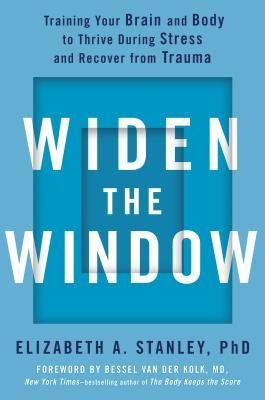
Widen the Window: Training Your Brain and Body to Thrive During Stress and Recover from Trauma by Elizabeth A. Stanley

Widen the Window: Training Your Brain and Body to Thrive During Stress and Recover from Trauma by Elizabeth A. Stanley

Managing stress and recovering from past traumas are some of the many challenges facing humanity in the modern era. Widen the Window addresses both those problems.

Elizabeth Stanley explains how individuals handle stress and trauma varies widely from person to person. It is first affected by your biology, then your unique childhood experiences making everyone’s responses different. What is incredibly stressful to one person may to a cakewalk to the next, and vise versa.

Photo by Pixabay on Pexels.com

She describes the ability to manage responses to stress as a window. Through a variety of mindfulness techniques, healthy eating, maintaining a large social network, and getting plenty of rest, Stanley guides the reader through ways to “widen the window” or increase your ability to manage stress.

I am always on the lookout for ideas on how to appropriately manage stress. If I manage my stress responses when they’re small, it prevents something more serious from building up and coming out in other, perhaps more dysfunctional, ways.

Photo by Pixabay on Pexels.com

I could see this book being useful to every reader who picks it up. Everybody has something they’re dealing with – from current work to family to friends issues or traumatic past experiences that push themselves into the present. We’re all in this together, even if your mind is telling you otherwise.

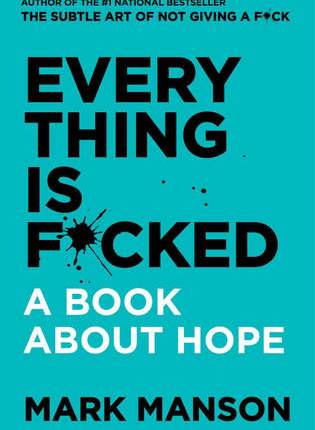
Everything is F*cked: A Book About Hope by Mark Manson

Everything is F*cked: A Book About Hope by Mark Manson

This creatively titled self-help book, Everything is F*cked, presents psychology, philosophy and the author’s view of reality.

In a series of essays, Mark Manson discusses a variety of topics including the differences between the “thinking brain” and “feeling brain.” He uses Isaac Newton’s laws to create a parallel universe’s version of emotional laws and completes a fairly scathing dissection of religion.

Throughout the various topics, he circles back to the idea of hope and how it can potentially create more problems than it solves.

Photo by meo on Pexels.com

Why did Manson write a book about hope?

“This book is my little source of hope. It gives me purpose; it gives me meaning. And the narrative that I’ve constructed around hope is that I believe this book might help some people, that it might make both my life and the world a little bit better.” pg 15

I did not read Manson’s other incredibly popular title, The Subtle Art of Not Giving a F*ck: A Counterintuitive Approach to Living a Good Life, so I went into this one not knowing what to expect. I found Manson to be particularly adept at breaking down complex topics into simple, easy-to-understand analogies.

For example, here’s his take on the psychological cause of a underlying feeling of unworthiness: “This feeling of unworthiness is usually the result of some bad sh*t happening to us at some point. We suffer through some terrible stuff, and our Feeling Brain decides that we deserved those bad experiences. Therefore, it sets out, despite the Thinking Brain’s better knowledge, to repeat and re-experience that suffering.” pg 46

Photo by Pixabay on Pexels.com

And here’s the analogy he crafts around his explanation of unworthiness: “Put another way, the problem isn’t that we don’t know how not to get punched in the face. The problem is that, at some point, likely a long time ago, we got punched in the face, and instead of punching back, we decided we deserved it.” pg 46

His writing is simple and succinct, which could be incredibly useful for readers who are looking for more information about the self help topics presented. I didn’t particularly care for Manson’s overall style, but that’s a personal preference rather than a commentary on the value of what he’s discussing.

“The stories of our future define our hopes. And our ability to step into those narratives and live them, to make them reality, is what gives our lives meaning.” pg 70

Photo by Engin Akyurt on Pexels.com

I think this author may be similar to Sarah Knight and her series of self help books about The Life-Changing Magic of Not Giving a F**k. Readers either love or hate those, I fell somewhere in between.

My favorite part of this was when Manson dived into some Buddhist philosophy in the chapter, “Pain is the Universal Constant.” He discusses the teaching of suffering being similar to a person struck by arrows. The first arrow brings physical pain and the second brings the emotional pain, which can be far worse and last longer than the physical pain because of the narratives we weave around it.

Through meditation, the second arrow, emotional pain, can be diminished or perhaps eliminated.

“That while pain is inevitable, suffering is always a choice. That there is always a separation between what we experience and how we interpret that experience. That there’s always a gap between what our Feeling Brain feels and what our Thinking Brain thinks. And in that gap, you can find the power to bear anything.” pg 186

Photo by Aleksandar Pasaric on Pexels.com

Recommended for readers who aren’t offended by strong language and have the ability to hold the book they’re reading in that gap in their minds — between the thoughts and the emotions, in the space of pure being.

I’ll meet you there. 🙂

Aware: The Science and Practice of Presence by Daniel J. Siegel

Aware: The Science and Practice of Presence by Daniel J. Siegel

Daniel Siegel, MD, psychiatrist and author, shares his research into neuroscience and a meditation practice he has developed called the “Wheel of Awareness“.

“The Wheel practice is a way to open awareness and cultivate a larger, more expansive container of consciousness. People who participate in the practice seem to be strengthening their minds.” pg 9

Photo by Polina Tankilevitch on Pexels.com

The practice uses focused attention on the senses, bodily sensations, mental activities and interconnectedness, in order to encourage the mind to become more integrated. When this integration happens, the mind gives off certain brainwaves that Siegel and other researchers have measured coming from experienced meditation practitioners such as monks.

Basically, Siegel is using western science in an effort to measure and replicate meditation practices.

The science portions of Aware are not very accessible to the non-scientists readers and I could see that being off-putting. However, if you are interested in the intersection of neuroscience and meditation practice, this book could be incredibly useful to you.

“Where attention goes, neural firing flows, and neural connection grows.” pg 19

Photo by cottonbro on Pexels.com

I found the implications of Siegel’s research to be fascinating. He claims, through focused attention, one can change the neural patterns and behavior of the brain. Meditation affects biology in a physically measurable way.

There have been countless studies on the positive benefits of meditation practice, but, I think, fewer on the changes in the function and integration of the mind. The rewards of such can be profound.

“When our minds wander unintentionally, we are not present, we are not receptively aware, we are not mindful, and studies suggest, we inhibit being happy — even if we are daydreaming about exciting things. … Presence cultivates happiness.” pg 49

Besides the Wheel of Awareness portion, the part of Aware I found most helpful was a discussion about the proper cultivation of empathy, the ability to put yourself in another’s place to feel and share what they are feeling.

Photo by Anastasia Shuraeva on Pexels.com

Tania Singer, in a presentation to the Dalai Lama, had this advice: “… we need to place empathy in the larger space of altruistic love and compassion. This space will act like a buffer for empathic distress. Since altruism and compassion are positive mental states, they reinforce our courage and give us the resources to deal with the suffering of others in a constructive way.” pg 86

I liked the visual of that and think it will come in handy in the future.

Recommended for non-fiction readers interested in the science behind meditation and the development of presence. Spiritual seekers looking for different meditation methods may want to look for that in another, less technical, book.

Thanks for reading!

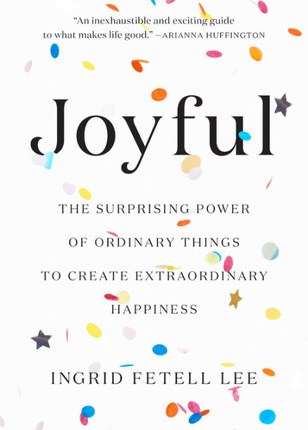
Joyful: The Surprising Power of Ordinary Things to Create Extraordinary Happiness by Ingrid Fetell Lee

Joyful: The Surprising Power of Ordinary Things to Create Extraordinary Happiness by Ingrid Fetell Lee

Ingrid Fetell Lee shares how to bring more joy into your life through the appreciation of ordinary things. Using tools like color selection, feng shui, gardening and room design, you can utilize your environment to foster an inner sense of joy and well being.

I think anything that increases joy and appreciation in my life is a good thing. I found it interesting almost every other book I’ve read on this subject focuses on the inner aspects of joy, the ones that won’t fade. But Lee convinced me there is something to appreciate and cultivate in the outer world as well. We may all be spiritual beings but we’re living very physical lives.

Photo by Rodrigo Feksa on Pexels.com

I knew little to nothing about interior design or some of the more troubling aspects of minimalism. But I do like to move through spaces that feel warm and lived in.

I can see the appeal of simplifying a space down to just a few items, but I wouldn’t want to stay there very long. Lee helped me understand some of my intuitive feelings about minimalism and why maximalism has the opposite effect, at least on me.

Lee also talks about the joy one can find in quirkiness versus convention. The caveat being that you have to be in a space or group of people who allow such things to exist rather than quashing them at the start. Different colors, unexpected materials, strangely-shaped furniture — if introduced to your every day environment can bring joy and a sense of relief from staid normalcy.

Photo by Pixabay on Pexels.com

This book really got me thinking about what joy I take in my surroundings and why or why not. Recommended for readers interested in interior design, gardening, or those looking for small ways in which to introduce a little more joy into their every day lives.

Thanks for reading!

The 4-Hour Workweek by Timothy Ferriss

The 4-Hour Workweek by Timothy Ferriss

“I’ve spent the last three years traveling among those who live in worlds currently beyond your imagination. Rather than hating reality, I’ll show you how to bend it to your will. It’s easier than it sounds.”

Photo by Ronu00ea Ferreira on Pexels.com

Timothy Ferriss promises the stars in the sky in his new-classic business/self help book, The 4-Hour Workweek. Though he gives some good productivity tips, he fails to provide a true road map to freeing yourself from the 9-to-5 grind. Partially, this is because there is no real road map to doing this.

But he does detail how he found his way into a life of his dreams. Readers can take whatever lessons and information from that as they will.

After Ferriss relates a timeline of his life story, he begins by detailing his “DEAL” plan to a four hour work week which consists of “definition, elimination, automation and liberation”. Each step of this process, he says, helps guide the reader to a new world of free time. Though, he admits, traditional bosses may have serious problems with your new program and, perhaps, you should go more “DELA”. Yes, understatement.

“Resolve now to test the concepts as an exercise in lateral thinking. If you try it, you’ll see just how deep the rabbit hole goes, and you won’t ever go back.”

Photo by Anna Shvets on Pexels.com

He examines the concepts of “busy work” and suggests boiling your workload down to the most important tasks you complete. Then, just do those as fast as possible. Don’t allow yourself to be derailed by the internet or chatty coworkers. (Not a friendly method, but Ferriss seems to have his eyes on the prize rather than concerning himself with making friends.)

Out of everything he suggests in the first part of this book, I was most taken with the idea of only checking your email once a day or week. There is a definite time-suck there that maybe I have been blinding myself to.

After that, Ferriss enters more conceptual territory with an idea about creating a business for yourself that essentially runs itself or can be run by someone else, cheaply. For example, a website that sells something awesome. But, what exactly that something or muse is, that’s for you, the reader, to discover on your own.

It reminded me of Godin’s Purple Cow: Transform Your Business by Being Remarkable. You know an awesome product or “purple cow” when you see it, but how exactly to make one isn’t a clear thing. Interesting idea, but necessarily helpful for those looking for actionable items to improve their work life.

The most useful part of the book, in my opinion, is his encouragement to create a dream plan by “dreamlining”. Write down what you want to do. Create a timeline. Crunch the numbers. It may cost less than you thought and, with it on paper, it takes on a bit of reality already. If you don’t get started, how do you know what you might accomplish.

Photo by Negative Space on Pexels.com

“It’s lonely at the top. Ninety-nine percent of people in the world are convinced they are incapable of achieving great things, so they aim for the mediocre. The level of competition is thus fiercest for ‘realistic’ goals, paradoxically making them the most time-and energy-consuming. It is easier to raise $1,000,000 than it is $100,000.”

Ferriss’ tone in this book has been criticized by readers and I see what they mean. Some of his ideas are alienating. Sometimes he seems to say: I’ve done this-this-this and this, and it’s so easy that if you can’t figure it out too, especially with the book I’ve put in your hands, then you must be either complacent or dumb.

But I took this book to be written by someone who dared, a nod to Brené Brown, greatly. Ferriss believed his life could be something other than a slog and yours could too. He’s written down some tips to help you along the way that he discovered through real life trial and error. Read it or not. He’ll be over there, living the life of his dreams.

Photo by Alex Fu on Pexels.com

Recommended, with reservations, to folks interested in life-hacking their work/life balance. I think we can achieve whatever dreams we set our minds to while still being friendly.

Thanks for reading!