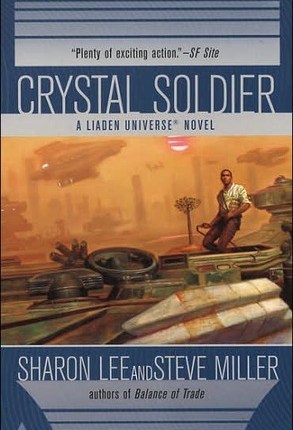
Crystal Soldier (The Great Migration Duology, #1; Liaden Universe, #1) by Sharon Lee and Steve Miller

Crystal Soldier (The Great Migration Duology, #1; Liaden Universe, #1) by Sharon Lee and Steve Miller

Pilot Jela has crashed on a lonely world where great forests once stood. He was in a fight in space against a highly advanced robotic society that seeks to destroy life itself.

Photo by mali maeder on Pexels.com

The sheriekas, for that’s what the enemy are called, have done a number on this world with its endless, lifeless forests. Until, after days of hardship, Jela finds a sign of life.

“The sheriekas (eliminated life) wherever they could, as if life itself was anathema. Overt signs of sheriekas action were an indication that a planet or system held something worthwhile… pg 23, ebook.

Cantra is a pilot whose hauls are generally on the up-and-up. She crosses paths one night with Jela. And that’s where the story truly begins.
Photo by Alberlan Barros on Pexels.com

The first entry in the Liaden Universe was written later as sometimes happens with these mammoth science fiction series. As the authors explain in the prologue, they felt creating Jela and Cantra’s story took a type of maturity that they did not yet have in the 1980’s, when they began writing the series.

“The problem we face,” he murmured, “is that someone- and we must assume that someone equals the Enemy- is experimenting with dismantling the universe.” pg 63

Photo by Tara Winstead on Pexels.com

I’ve been considering what to think about that. Certainly, authors don’t have to experience everything they write- imagine Suzanne Collins and her “Hunger Games.” But every artist has her process so, whatever works for them.

This is a well-written book, if a bit plodding at times. The pacing problem is offset with sparkling dialogue between Jela and Cantra. They converse in both words and a type of sign language called “pilot speak.”

It gives a different dimension to the communication between them. I liked that a lot.

Photo by Tatiana on Pexels.com

The universe itself, like other science fiction works I’ve read, is full of promise for both adventures and exploration. The nemesis- a group seeking to destroy life itself- is a fitting metaphor for industrialization run amok with its climate change implications.

I’m sure there are other comparisons that can be drawn. That’s simply the first one to pop into my mind.

I also liked that one of the main characters in this story is a tree. Wouldn’t life be fun if you could take a walk and talk to the trees lining your path? I think so.

Highly recommended for readers who enjoy science fiction and don’t mind an occasional pacing problem. Thanks for reading!

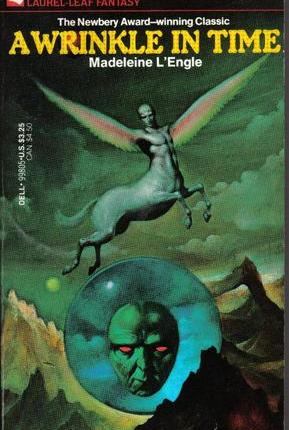
A Wrinkle in Time (Time Quintet, #1) by Madeleine L’Engle

A Wrinkle in Time (Time Quintet, #1) by Madeleine L’Engle

**Spoiler alert: for those who haven’t had the chance to read this classic tale. Please read before you enjoy this review!**

A Wrinkle in Time begins in a deceptively normal way: on a night with wind-tossed trees and a howling rain storm. From there, award-winning author Madeleine L’Engle takes readers literally to the stars and beyond in this extraordinary coming-of-age fantasy novel.

Photo by Lachlan Ross on Pexels.com

I first read about the adventures of Meg, Charles Wallace and Calvin when I was eleven or twelve years old. It was during my early bookworm phase, when I was still learning there were genres that I enjoyed more than others.

I was swept up in the adventure part of this story- facing down the shadows and ‘It’ in my subconscious mind and heart. I remember thinking the Aunt Beast portion of the story was boring and being disappointed Meg’s father was a real man with flaws rather than a superhero who could solve all of her problems.

Photo by Josh Willink on Pexels.com

Looking back on that interpretation now, I see my own burgeoning psychological development and the belief that my parents were some kind of godlike beings- something that most if not all children pass through at some point or another. When did you discover that your parents were real and fallible, just like you?

However, listening to the audiobook as a fully grown adult with a daughter of my own, I was struck by Meg’s strength and bravery. It takes a great deal of inner resolve to face down society’s expectations and the numbing experience of living soullessly every day, following someone else’s school or work schedule and agenda. (A real life version of the pulsing, all-encompassing brain of L’Engle’s fantasy world.)

Photo by SHVETS production on Pexels.com

How many days have I awoken only to race off to the hamster wheel of the work week- toiling away so the highly-paid minds of the CEOs could rest easy, knowing that the company was producing product (whatever industry that may be) and providing value for the shareholders? More than I’d care to admit, before I discovered the safe haven of the librarian’s world.

In my own effort to find my calling, I was reminded of Meg’s struggles to survive her encounter with It, not just survive but decide how her body and mind should function. In some ways, the modern work experience feels like someone else dictates how many breaths you should take per minute or what rhythm your heart should beat.

Photo by Designecologist on Pexels.com

I had the good fortune of listening to an audiobook that has L’Engle speaking a brief introduction and then an afterword read by one of L’Engle’s granddaughters.

The granddaughter (I’m embarrassed I don’t remember her name) shared the details and struggles of L’Engle’s life- including the rejection of her manuscript by numerous publishing houses and the shade some readers threw her way for their own interpretations of her story. Some claimed the book was too overly Christian while others thought it promoted witchcraft. Her granddaughter said L’Engle was baffled by the hate mail.

Photo by Abstrakt Xxcellence Studios on Pexels.com

Curious how a reader’s lens of perception shapes the experience you have with a book. As I mentioned earlier, as a child I thought this book was a grand adventure. As an adult, I see it as a metaphor for living in the modern world.

I’m keen to have my own reluctant reader try this book and share what she thinks about it.

Recommended for everyone but especially those who find themselves a beat or two out of step with the proverbial Its of the modern world. This book reminds you that you’re not alone.

I enjoyed the book more than the movie- but here’s the trailer for those who like movies more than books.

Thanks for reading!

Machine (White Space, #2) by Elizabeth Bear

Machine (White Space, #2) by Elizabeth Bear

Dr. Jens, a rescue specialist for a medical group composed of different species from across the galaxy, is on a mission to save the lives of thousands of humans on an ancient ship, stranded among the stars. Something has gone terribly wrong with their computer system.

In addition, there’s a strange, and dangerous looking, machine in the hold of another, far more modern ship, that is attached to the archaic ship. Could it be the genesis of everything that went wrong or something more sinister?

“There could be people alive in there. We had to proceed as if there were, until we had proven otherwise.”

Photo by Pixabay on Pexels.com

Elizabeth Bear has created a fantastical, possible future in Machine where humanity has learned to manage some of our more troublesome brain chemistry through the use of sophisticated machines implanted in our heads.

I loved her imagining of what aliens (she calls them ‘systers’) may look like and how thousands of different people from worlds separated by both time and space would be able to come together and create something resembling a community.

It leads to some particularly interesting questions in this story as Dr. Jens is concerned primarily with the physical, and occasionally emotional, health of the beings, both flesh-bound and digital, whom she encounters.

“An AI couldn’t suffer a psychotic break, exactly. But they had their own varieties of sophipathology, and dissociation of their various subroutines into disparate personalities was definitely one that had been well-testified in the literature.”

I liked those aspects of the story- the exploration of a universe so far removed from my own.

Photo by Felix Mittermeier on Pexels.com

Unfortunately, I felt that this exploration was bogged down by long and meandering self reflection at key moments in the story. I realize that much of the development of the plot is an emotional journey for the characters, but it’s not fun to read about and occasionally comes off as a little preachy.

“We had to learn that there were more important things than being ‘right.’ Brilliant people are sometimes terrible at being people.”

And, as I said, it slowed the story down to a painful crawl through neurosis and the perpetual struggle Dr. Jens has between allowing her emotions or handling them through her technologically advanced and chemically-altering brain tech.

All that being said, Machine was an enjoyable sci-fi adventure and mystery, and I look forward to reading more from Elizabeth Bear in the future.

Thank you to NetGalley and the publisher for a free digital copy of this book for review purposes.

The Loop by Jeremy Robert Johnson

The Loop by Jeremy Robert Johnson

“It was so surprisingly calm that it took a few minutes before anyone in the room even noticed the way that Chris Carmichael was twitching at his desk.”

Photo by Pixabay on Pexels.com

The first hint that something has gone wrong in Lucy Henderson’s town is a horrific event in her high school classroom. The violent-nature of the event triggers trauma from Lucy’s past, an emotional wound that goes so deeply into her psyche that she hasn’t begun to process it- let alone the damage it has left behind.

It doesn’t help that Lucy feels like an outcast and an outsider in her small hometown. Part of this is baggage from Lucy’s past, but the majority of it is the racism and tribalism she faces from the small-minded young adults in the community. They won’t let her forget she looks different from them and torment her with their racial hatred on a near-daily basis.

The only semblance of friendship in her life is with a young man who goes by the name of “Bucket,” for reasons that are explained in the story. (No spoilers.)

Photo by Anna Shvets on Pexels.com

When all hell breaks loose in town, Lucy and Bucket only have each other and a few acquaintances to help in a race to save their families. The nightmare that they had been living solely in their minds becomes all too real.

“What the hell is going on in this town? Sometimes it feels like things are f*cked up in every direction, you know?”

The character and world-building of The Loop is well done in that I connected deeply with Lucy and Bucket before the story took off.

My lack of enjoyment of the book stems from the graphic nature of the violence against people and animals, both physical and mental. There are also brief instances of sexual abuse between underage teens as well as the discussions of porn with descriptions vague enough that young adults reading this book will immediately turn to Google to answer any questions they may have. There is bullying, unaddressed by the adults in the young peoples’ lives, as well as the trauma Lucy suffered at the hands of a system that should have protected her.

Photo by cottonbro on Pexels.com

Which brings me to another discussion point, this is not a book for young adults. If it was television, it would carry a mature rating. The horror genre has a huge following and graphic violence is definitely a part of that. That being said, it is strange to me how cavalierly some treat depictions of absolutely horrific things.

I feel like society has become desensitized to violence in the media we mindlessly consume. Descriptions of fingers popping through eyeballs and knives cutting through flesh is delivered as a matter-of-course, part of what makes the story so scary.

I picked this title out of the myriad being published in the next months because it was compared to Stranger Things, a horror show, true, but one that leans on the psychological and paranormal scares far more than the physically violent ones. I watched that show with my young daughter. I would not let her read this book, at least until she’s 18.

I say that as a former librarian but also a mother.

All that being said, there are beautiful lines in the book that perfectly capture the agony of mental pain.

For example: “She imagined herself tilting her head back and opening her mouth to scream again, only this time her mouth kept opening and her jaw detached like a snake’s and she kept splitting until she was cleaved in two and all that came out of her was white flame.”

Photo by Matej on Pexels.com

But I didn’t feel that the beauty of those fleeting moments made the time I spent reading the title worth it.

Recommended only for adult horror readers who can handle the triggers of violence and everything else described above.

Thank you to NetGalley and the publisher for a free digital advance readers copy of this book. The brief quotations I cited may be changed or omitted in the final, printed version.

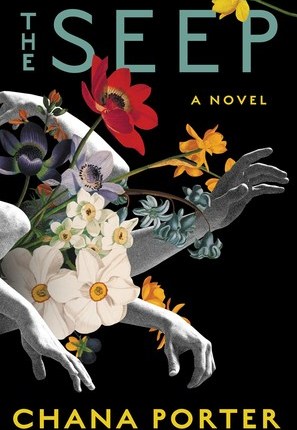
The Seep by Chana Porter

The Seep by Chana Porter

Warning: minor spoilers ahead that are listed in the book’s description on Goodreads. Do not read this review if you don’t want to know anything about the book’s plot before beginning it.

“They would soon realize that The Seep had already infiltrated their city’s water supply. They were already compromised, already bodily hosts to their new alien friends. It was through that connection they could hear one another’s thoughts, feel the same emotions, overlaid with the all-consuming adage that Everything Will Be All Right, No Matter What.” pg 10, ebook

The Seep by Chana Porter asks many questions like: what would humanity and society look like if thoughts could actually create reality, if physical material was permeated with the spiritual, if enlightenment was only a sip or two of alien-filled water away?

Photo by Arnie Watkins on Pexels.com

How would people live, work and raise their children? What would relationships look like? And how would it feel to adults who grew up with a whole other version of reality only to spend the last half of their lives in a world, that to them, feels turned upside-down?

Would they embrace it, fight against it or choose another as-yet unknown path?

Trina, a trans-woman from the time before alien technology, when humanity changed genders with surgery and hormone therapy, is in a happy and fulfilling marriage with her wife, Deeba, until the day when Deeba decides she wants to become a child and live her life again. She asks Trina to be her mother in this second life, still sharing her reality but in an entirely different way than as a lover. This desire is something that is within the realm of the possible now thanks to the alien invasion called, “The Seep”.

Trina does not take this revelation well.

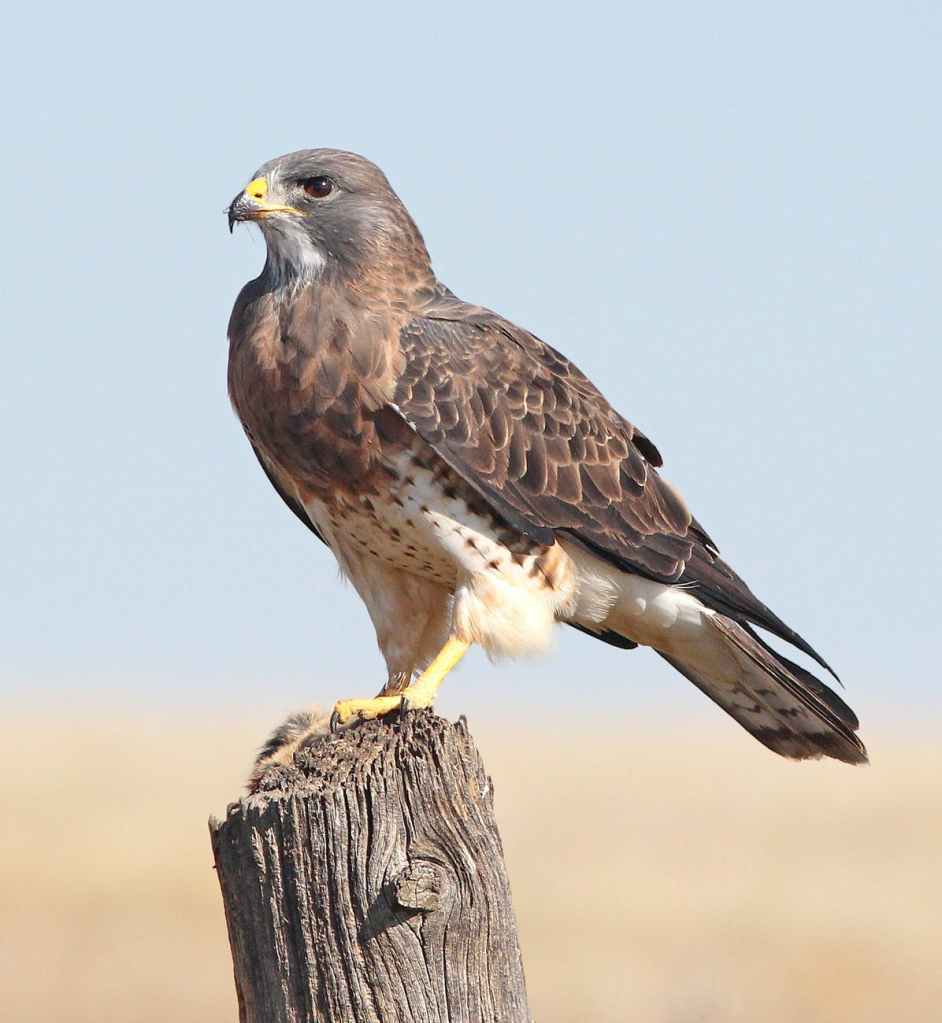
“It felt akin to coming home one day to find that your wife had become a hawk, with dusty talons and a great golden eye. Your hawk-wife can’t live with you anymore. She wants to live in the sky and eat smaller birds, not drink coffee and read the newspaper in bed with you.” pg 26, ebook

Photo by Flickr on Pexels.com

The majority of this book reveals how Trina adjusts to her new reality.

“The main message I have for you today is that we don’t yet know what to call ourselves, as both human beings and symbionts of The Seep.” pg 46, ebook

I think this book does a good job, like other science fiction novels, of holding up a mirror to reality and saying, what if. It also makes a great metaphor for how older generations might feel out of touch with the generations who come after them.

Prior to the alien invasion, Trina was on the leading edge of society in both her self actualization and lifestyle. After, she feels abandoned in a landscape that no longer makes sense and unloved by the people in her life she valued the most.

There’s a palpable sense of isolation and ever-increasing paranoia in this story. If the aliens exist on a level of conscious thought, they know what you want before you even voice it. It’s disturbing, but with technology increasing the pace of life and guessing consumers’ wants and needs before they even know, how far off the mark are we from that sort of interaction, really.

Highly recommended for readers who enjoy short science fiction that makes you think.

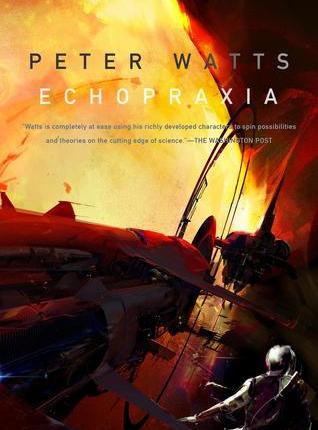
Echopraxia (Firefall, #2) by Peter Watts

Echopraxia (Firefall, #2) by Peter Watts

Peter Watts returns readers to the dystopian world of Firefall with Echopraxia, the second novel in the series.

Meet Daniel Bruks, an outcast biologist with a secret. He’s struggling to continue with his scientific studies in a world that has ceased to make sense after the alien contact in Firefall.

Photo by Pixabay on Pexels.com

“The Theseus mission would be well past Pluto by now. If it had found anything, Bruks hadn’t heard about it. For his part, he was sick of waiting. He was sick of life on hold, waiting for monsters or saviors to make an appearance. … He wished the world would just hurry up and end.” pg 15

His life quickly changes when he finds himself herded into an esoteric and technologically advanced cult’s desert compound while they’re under attack from weaponized zombies. (It makes more sense when you read it, I promise.) What follows is an exploration into the realms of religion, technology and faith.

“One day you’re minding your own business on your camping trip…” “Field research.” “… the next you’re in the crossfire of a Tran war, the day after that you wake up on a spaceship with a bull’s-eye painted on its hull.” “I do wonder what I’m doing here. Every thirty seconds or so.” pg 81

The same microscopic lens Watts used to take apart consciousness in the last book, he applies to a totally different topic, religion, in this one and it doesn’t quite work.

He doesn’t take any time to introduce readers to some of the more far-out concepts from the last book. If I had dived into Echopraxia without reading Firefall, I would have been totally lost. And as it was, I certainly was confused by the end.

Photo by Pixabay on Pexels.com

Where the last book was a space and science adventure, this one is a journey, both metaphorical and physical. The threats along the way are somewhat as scary, but the characters aren’t as well-fleshed out.

Maybe I was spoiled in the last book because I really enjoyed Siri, the narrator’s, character. Daniel Bruks is more difficult to love.

But it’s not just the characters. The science of the last book was more connected to the story line. In this book, it almost felt like a tacked-on after thought.

And as hard as I tried to put the pieces together, the ending never quite made sense. I put some serious thought into it too. It’s one thing to leave an ending somewhat ambiguous so the readers can hash it out, it’s another to give almost no clues at all.

That’s not to say Watts isn’t brilliant, because he is. However, if you have the choice between reading Firefall or Echopraxia, I would suggest the former rather than the latter.

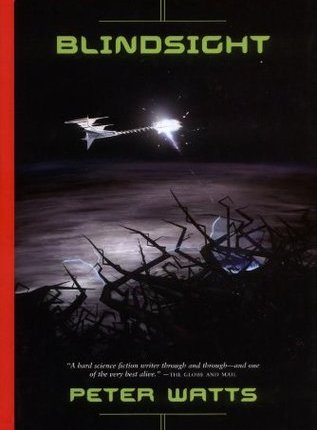
Blindsight (Firefall, #1) by Peter Watts

Blindsight (Firefall, #1) by Peter Watts

Blindsight is an incredibly imaginative science fiction novel that takes on the foibles of human consciousness and examines, in a serious way, what an alien-form of consciousness might look like.

Siri is a unique protagonist. Because of severe seizures when he was young, doctors performed dramatic brain surgery in order to save his life, essentially cutting his brain in half.

Photo by meo on Pexels.com

“The brain’s a very flexible piece of meat; it took some doing, but it adapted. I adapted.” pg 9, ebook.

This early surgery changed the way Siri’s brain worked and how it processed reality, making him the perfect translator for other humans whose brains and bodies have been so changed that baseline humans can no longer communicate with them.

And Siri’s special talents are desperately needed after aliens unleash surveillance technology in the atmosphere. Humanity called the strange lights in the sky, “fireflies.”

“How else would you explain 65,536 probes evenly dispersed along a lat-long grid that barely left any square meter of planetary surface unexposed? Obviously the Flies had taken our picture.” pg 24, ebook.

Photo by Felipe Helfstein on Pexels.com

Siri becomes part of an elite mission sent by Earth to discover where the “fireflies” originated from and who or what created them.

Blindsight isn’t a simple read. It proposes complex ideas that demand some attention to unravel and it makes the reader consider how real is her own perception of this thing we call “reality.”

It asks how technology may change not only how humankind takes in information, but how that information is interpreted and how that would separate people from each other. The characters Peter Watts has created for the alien-seeking mission are some of the most unique I’ve read because he takes those ideas to extreme conclusions.

“When the fate of the world hangs in the balance, you want to keep an eye on anyone whose career-defining moment involves consorting with the enemy.” pg 135, ebook.

But it feels very real. That is Watts’ strength – making the fantastical seem perfectly logical like vampires, real vampires.

Highly recommended for readers who enjoy “hard” science fiction.

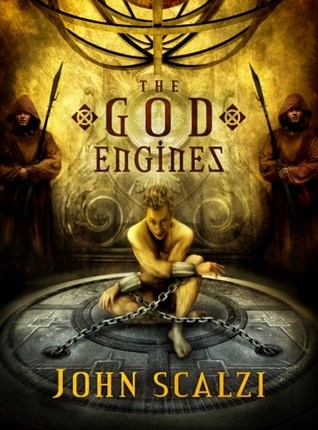
The God Engines by John Scalzi

The God Engines by John Scalzi

In the world of The God Engines, beings called gods power the ships that take humanity between the stars. How the world became this way is not for Captain Tephe to question, instead it is a matter of faith. As part of Tephe’s service and devotion to his own deity, he has to keep the being that powers his engine in check and subservient to his will.

That is not a simple task.

Photo by Pixabay on Pexels.com

“I do not know why this is. Why single made iron can kill a god. I know only that it can. I know the gods fear death more than do men. I can kill you with this, god.” pg 8, ebook

When Tephe is called to perform a secret mission of great importance for his deity, it throws his entire world view in jeopardy. He discovers his god, and all the others, may not be what they appeared to be.

“Words. They have power. To name a god is to give it power. To deny it such is to take it.” pg 16, ebook

I feel like this story was too short to fulfill its full potential. The general idea was very promising – what would a world where embodied gods were used as power sources look like? How would the society be structured? And how would a worshiper’s faith change or be challenged through day-to-day interactions with the gods?

Photo by Ben Yi on Pexels.com

The plot felt rushed as the characters raced from one place to another. I also wanted a bit more background about the universe of The God Engines, but the lack of it added somewhat to the mystery of the story.

“You are charged with silence,” proclaimed the third Bishop. “What is spoken to you here is not to be spoken again, on remit of your soul.” pg 31, ebook

I think the strength of this story is in how it addresses faith. Faith in the goodness of the unseen shapes lives and guides actions. It explains why some gods power ships and others rule empires. Because of faith, humanity has waged wars and conquered planets.

Perhaps someone should have made certain this faith wasn’t misplaced…

Recommended for readers who enjoy short science fiction novels with a liberal dash of horror.

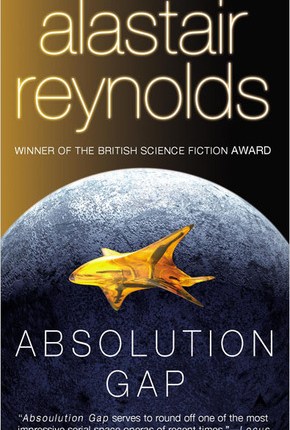
Absolution Gap (Revelation Space, #3) by Alastair Reynolds

Absolution Gap (Revelation Space, #3) by Alastair Reynolds

Alastair Reynolds ends his space opera trilogy with Absolution Gap. Many of the characters from the last book are desperately fighting the Inhibitors, but humankind seems to be losing the war. In a final hail Mary, the Conjoiners and a new member of their race seek a distant star system where a planet seems to disappear and the phenomena is worshiped by a group of fanatics led by a prophet with religious fervor literally in his bloodstream.

For a fraction of a second something inexplicable had occurred. A sensor anomaly. A simultaneous hiccup in every sensor that happened to be observing Haldora as the ship made its approach. A hiccup that made it appear as if the gas giant had simply vanished. Leaving, in its place, something equally inexplicable.” pg 54

Photo by Edvin Richardson on Pexels.com

Reynolds weaves two main story lines together to create an adequate, but perhaps not entirely satisfying, ending. The science in his books is impeccable. But, like in my previous reviews, I wanted a bit more from the characters.

“Are you all right, sir?” he had asked. Clavain had looked at him sharply. “I’m an old man,” he had replied. “You mustn’t expect the world of me.” pg 77

Readers have come to care about Clavain, Anoinette Bax, Scorpio, and the myriad others characters in this world. The endings given to them are, in my opinion, abrupt and almost given as an aside.

But some of Reynolds writing is simply beautiful and it makes up for a variety of quibbles I had with the story telling.

“It was quiet now, but coming nearer, and he knew that when it reached its awesome crescendo it would fill his soul with joy and terror. And though the bridge looked much the way it had before, he could see the beginnings of stained-glass glories in the black sky beyond it, squares and rectangles and lozenges of pastel light starting to shine through the darkness, like windows into something vaster and more glorious.” pg 100

Photo by Pixabay on Pexels.com

The broader themes are worth considering as well. What would happen to the human mind if the body becomes essentially immortal? Why does it seem like we’re so alone in the universe when there are so many inhabitable planets? What would advanced technological warfare look like? How would technology and its awesome capabilities change society, our modes of transport, and us?

“Brane theory suggested that the universe the senses spoke of was but one sliver of something vaster, one laminate layer in a stacked ply of adjacent realities. There was, Quaiche thought, something alluringly theological in that model, the idea of heavens above and hells below, with the mundane substrate of perceived reality squeezed between them. As above, so below.” pg 286

Photo by Miriam Espacio on Pexels.com

Recommended for science fiction readers who want to ponder those types of questions.