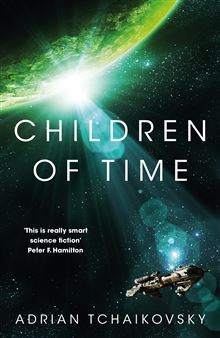
Children of Time (Children of Time, #1) by Adrian Tchaikovsky

Children of Time (Children of Time, #1) by Adrian Tchaikovsky

“And then the great bulk of the Gilgamesh is drawing close, at the end of its long deceleration, its ailing thrusters fighting to slow it to the point where the momentum of a dive past the planet will mesh with the reaching gravity and bring the ark ship into orbit.” pg 536, ebook

In Children of Time, humanity has poisoned Earth and needs to find a new home. An ark ship, the Gilgamesh, carries a cargo of sleeping humans as they search for a fresh planet to colonize.

In an earlier era, a scientist was working on elevating other species through an evolutionary vaccine. When her project goes awry, she does her best to salvage the situation, but not even she can predict what is going to happen next with her virus on an alien planet.

Photo by Jaymantri on Pexels.com

This story is told from a few different perspectives. Readers get to enjoy the story of the human colonists, the ancient scientist, and the species that is changed by her virus- the spiders.

The brilliance of this book is the spider portion of the story. I was amazed at how Adrian Tchaikovsky was able to make spiders relatable. (Not a huge fan myself, though not phobic.)

“For now they can only cling to their webs, as the extended senses their technology gives them track the approach of the end.” pg 536, ebook

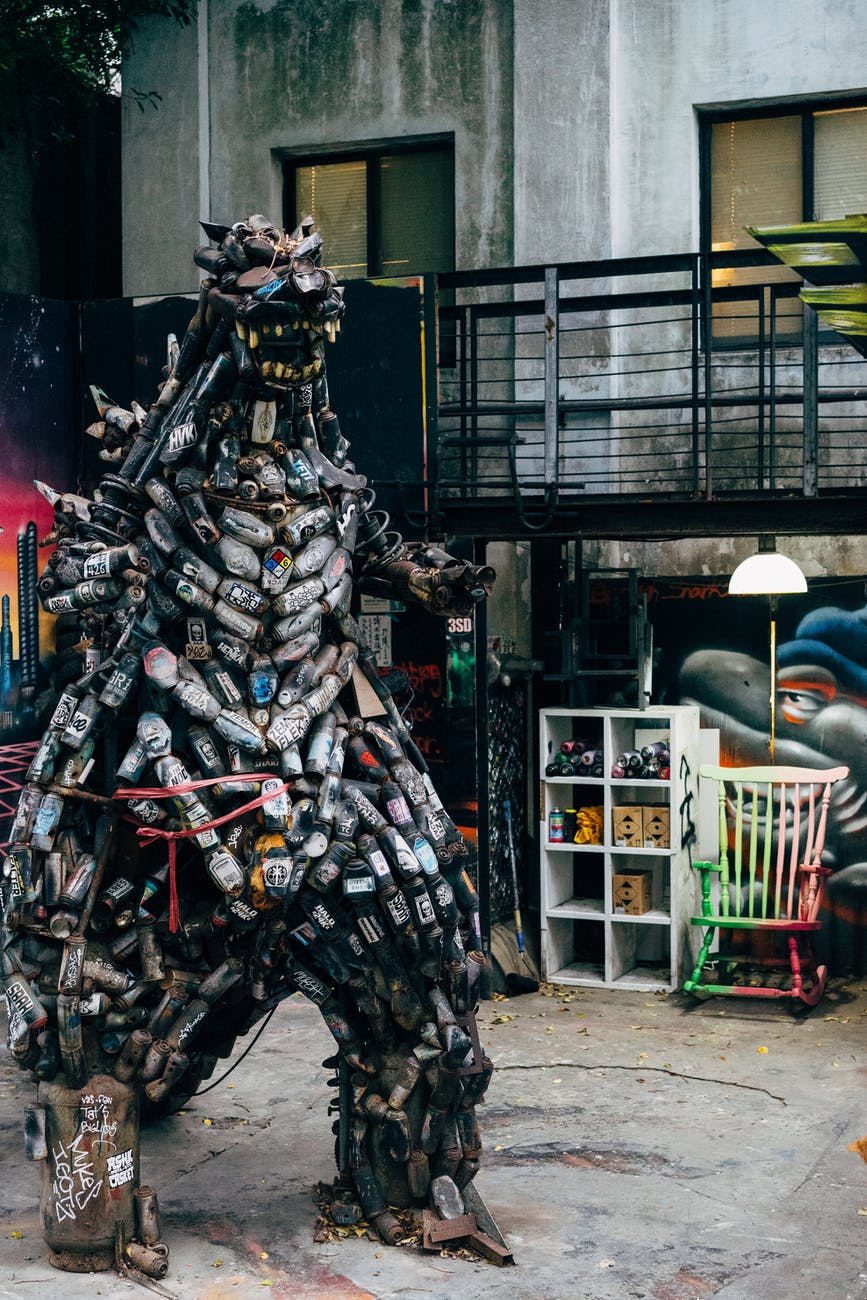
Photo by Pixabay on Pexels.com

I was cheering for the spiders as they struggled and evolve throughout the tale.

That’s not to say the human portions are lacking, they are also fascinating to follow.

How would humanity fare, being many light years away from home and knowing that they have no fixed destination in mind? How long would a space ship hold together with millennia of use? I thought Tchaikovsky’s story nailed the problems that would arise in such a situation.

The ending of Children of Time is fantastic and definitely worth the build up to it. I don’t want to say too much here beyond that because I don’t want to ruin someone else’s enjoyment of such a great science fiction tale. Highly recommended.

Thanks for reading!

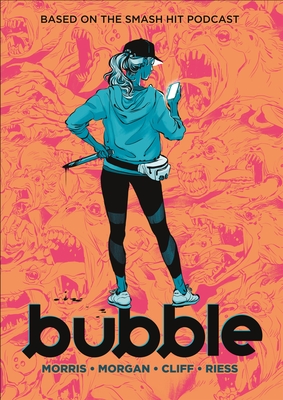
Bubble by Jordan Morris, Sarah Morgan

Bubble by Jordan Morris, Sarah Morgan

Morgan, Annie, Mitch, and Van live in a bubble, a manufactured dome that protects them from the alien lifeforms outside of the city.

Occasionally, the critters outside get in and that leads to Morgan fighting back to save the people around her. She’s very good at it because she grew up outside the bubble, learning to kill aliens with a bow and arrow.

But when one of the corporations running the bubble develops an app called Huntr to hire people to kill the imps and various creatures that plague the bubble residents, Morgan discovers she hasn’t left her past behind as much as she thought.

Things accelerate from there.

I enjoyed Bubble very much for its story and characters. I realize it is a satire on various things from the gig economy to millennials to survivalists, but it also stands on its own legs as a fun fantasy.

The story leaves a small opening for a second entry in the series, but closes the first book in a satisfying way. Not all comics bother to do so, and I appreciated it.

Because of some of the content (language and drug use), I’d recommend this book to older teens or adults only.

It is clever and a lot of fun. Highly recommended.

Rogue Protocol (The Murderbot Diaries, #3) by Martha Wells

Rogue Protocol (The Murderbot Diaries, #3) by Martha Wells

“The good thing about pretending to be an augmented human security consultant instead of a construct SecUnit is that you can tell the humans to shut up.” pg 11, ebook

Murderbot is still on the case of GrayCris, a company it suspects is illegally mining materials from ancient alien civilizations. There are also humans who need help- as usual. Why can’t people just save themselves so our hero could get on watching its favorite entertainment vids?

“Actually, with my experience in security, anybody who wanted to hang around and live on a deteriorating terraforming facility worried me a lot more than raiders.” pg 40, ebook

Rogue Protocol though fun, didn’t live up to the quality of the first two books in this series. The plot was quite similar to the first book. Don’t get me wrong, it’s still a great read, but I think the first two books were better than this one.

I will be continuing on in the series, which I highly recommend for science fiction fans.

A Memory Called Empire (Teixcalaan, #1) by Arkady Martine

A Memory Called Empire (Teixcalaan, #1) by Arkady Martine

In A Memory Called Empire, a diplomat from an out-of-the-way space station makes her way through the Teixcalaan Empire, a society which is in some ways more advanced than her own, but in other ways not.

The most interesting part of this novel was the world building. Arkady Martin has created an amazing space opera with fascinating technologies and cultures.

On the other hand, her characters didn’t appeal to me at all. I made myself finish the book, but didn’t care much about what happened to anyone.

I wasn’t surprised this book won the Hugo Award – for world building alone.

For a first novel, it is a tremendous effort and I’m certain Arkady will write more fascinating books in the future.

Perhaps I’ll give some of those other books a go. I won’t be continuing on to the other books in this series.

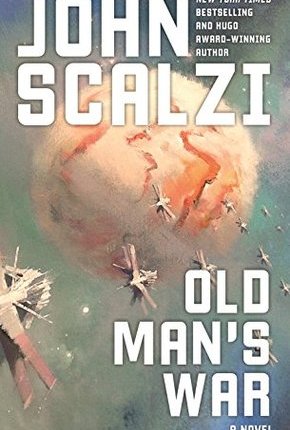
Old Man’s War (Old Man’s War, #1) by John Scalzi

Old Man’s War (Old Man’s War, #1) by John Scalzi

In Old Man’s War, humanity has gone to the stars, and it’s a jungle out there. For the people on Earth, life and death continues as it always has. Out in space, it’s a whole different story…

I really enjoyed this book. After recently reading and being disappointed by John Scalzi’s The Kaiju Preservation Society, a friend recommended I give this series a try.

It is a fast-moving, action-packed book full of fascinating aliens and small (sometimes large) windows into the human condition.

I read it in two days – that’s how good it is.

A couple times, I felt like the narration was bogged down by scientific jargon. But for the most part, I loved it.

Highly recommended for science fiction readers.

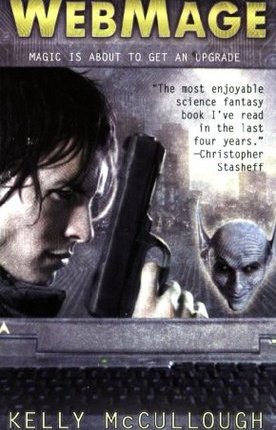
WebMage (Webmage #1, Ravirn #1) by Kelly McCullough

WebMage (Webmage #1, Ravirn #1) by Kelly McCullough

“I’m a thoroughly modern sorcerer, a code-warrior, a programmer. I’m not a classical magician. I hate the old ways. They’re painful, inefficient, and hideously dangerous.” pg 81, ebook

Ravirn uses magic like programmers use code- it’s a unique magic system and author Kelly McCullough should be very proud for coming up with it. I loved that part of the story.

Photo by Markus Spiske on Pexels.com

The wizard’s minions act like computer programs and execute directives given to them. They’re curious creatures, full of attitude and spunk. The closest comparison that immediately pops into my mind is Harry Dresden’s skull- Bob.

But unlike Dresden, Ravirn’s magic is coded and can be bugged. So when one of the Fates comes to him with an idea of how to change reality through a particularly nasty computer program, his adventure truly begins.

“Life with you is always interesting. I don’t know what I’d do for entertainment without the chaos that follows in your wake.” pg 196, ebook

This story is action from the beginning. One event after another spins our hero in circles. I could have used a few breaks from the action myself, but readers who crave that sort of thing may really like this one.

I keep going back to the Dresden Files as a comparison for this story and I think it’s apt. We have a love interest, minions (as I mentioned), magic and a dry sense of humor that seeps out of the story. Recommended for fans of those books as well as general fantasy readers.

Thanks for reading!

The Kaiju Preservation Society by John Scalzi

The Kaiju Preservation Society by John Scalzi

It’s like the foreign legion for nerds,” I said, and laughed. “With polar bears.” “Or seals,” Aparna added.” pg 32, ebook

Master author John Scalzi penned a lovely book about large creatures in an alternate dimension. That ending though… no spoilers in this review so I won’t say much more about it other than it was a huge disappointment.

“We think we’re smart,” Niamh repeated. “And because we think we’re smart, we only looked at what we wanted to look at and didn’t think to look past it.” pg 165

Photo by Markus Winkler on Pexels.com

I was looking for a light-hearted fiction read, which this book is. The characters are diverse and it was quite fun to discover the world Scalzi created for them.

The kaiju themselves are fascinating. Again, I don’t want to say too much and ruin the best part of this book- the creatures.

I liked the humor in the story even though the same gag is used multiple times. It lends a sense of familiarity in the middle of an alien world.

Though it does get a bit repetitive after a little while.

All that being said, I only recommend this book to Scalzi fans. I could not get over that ending.

Thanks for reading!

Artificial Condition (The Murderbot Diaries, #2)by Martha Wells

Artificial Condition (The Murderbot Diaries, #2)by Martha Wells

Murderbot is back again- trying to discover what went wrong in her past while avoiding being captured for her rogue SecUnit status.

“Yes, the giant transport bot is going to help the construct SecUnit pretend to be human. This will go well.” pg 59, ebook

In the second installment of “The Murderbot Diaries,” readers are introduced to ART, the robotic pilot of a transport ship, who has more computing power than Murderbot ever imagined.

Together, they will find a way to do the investigation into Murderbot’s past.

Their relationship is interesting. Both are machines, both have their shortcomings. They don’t always get along very well.

“Tlacy’s terms were great,” Tapan added, “but maybe too great, if you know what I mean.” ART did a quick search and returned the opinion that it was intended to be a figure of speech. I told it I knew that.” pg 66, ebook

I read this novella in a day- it was that good. Highly recommended for science fiction fans. You’ll want to start at the beginning to fully appreciate this story.

Thanks for reading!

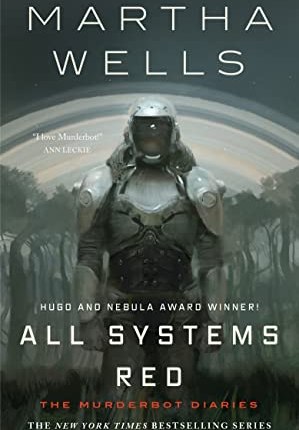
All Systems Red (The Murderbot Diaries, #1) by Martha Wells

All Systems Red (The Murderbot Diaries, #1) by Martha Wells

In All Systems Red a sentient android, who calls herself, Murderbot, is with a group of scientists on a mission to survey a planet. She (though technically not a she, but I think of her as a she) is responsible for the security of the group.

When things begin going horribly wrong, Murderbot’s job becomes infinitely more complex. She doesn’t experience emotions but is thrust into situation after situation where the humans around her are dealing with emotions.

Photo by Tara Winstead on Pexels.com

At least she has hours of videos in storage to keep her busy- watching films is her favorite pastime.

It’s not an easy job. But someone has to do it.

From the first pages of this story, I was hooked. Author Martha Wells pulled me in and my attention never wavered throughout this novella. It’s easy to see why this one is an award winner – both Hugo and Nebula Awards.

The characters are delightful. The action is both intense and entertaining.

Throughout the story, I was mentally comparing Murderbot’s interactions with other people with the plight of real soldiers who are returning from war. In many ways, she feels like she doesn’t belong. Her special skillsets and very existence forever separates her from the people around her.

She has no emotions; mimicking the numbness that some soldiers feel with post-traumatic stress disorder.

I realize soldiers are not actually robots, but the allegories drawn from this book could make for interesting book club conversations.

Even though it’s science fiction, it’s not the “hard” variety which leads to appeal far beyond the typical group of science fiction readers.

This is a stand-alone novel as well as the first in a series. Readers who are completionists, like me, may like that, especially if they’re reading outside of their typical genre.

Highly recommended for fiction readers and book clubs.

Thanks for reading!