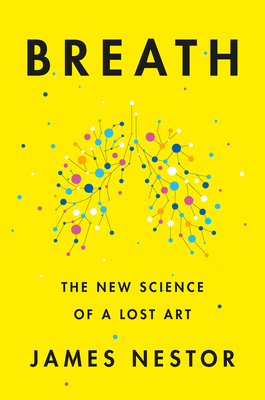
Breath: The New Science of a Lost Art by James Nestor

Breath: The New Science of a Lost Art by James Nestor

James Nestor takes a deep dive into the fascinating and surprisingly mysterious world of breathing. “How mysterious could it be, Heidi?” I hear you ask. It’s something everyone does without thinking literally a few times every minute every day of their lives.

Photo by Daisa TJ on Pexels.com

Well, there’s a lot of mysteriousness, as Nestor discovered through his journey from terrible breathing to consciousness-shifting, bone-building, better breathing.

“I do as instructed, and listen as the rushing wind that was pouring through my lungs suddenly stops and is replaced by pure silence, the kind of jarring quietude a skydiver feels the moment a parachute opens. But this stillness is coming from inside.” pg 143, ebook

He talks to researchers and mystics from around the globe to access both cutting edge research as well as ancient teachings from such exalted texts as The Upanishads.

What he’s discussing here isn’t new, but it feels new, perhaps because of the chronic disconnect between the mind and body that seems to haunt modern humanity.

Photo by Craig Adderley on Pexels.com

From breathing slower to exhaling more, the dangerous of mouth breathing and the astonishing connection carbon dioxide inhalation has to panic attacks, there’s a lot to explore.

And, despite all of the observed benefits and ten years of extensive research, Nestor doesn’t forget to mention that breathing isn’t a panacea. I appreciated that part as well.

“… what I’d like to make clear now, is that breathing, like any therapy or medication, can’t do everything. Breathing fast, slow, or not at all can’t make an embolism go away. … No breathing can heal stage IV cancer. These severe problems require urgent medical attention.” pg 184-185, ebook

Photo by Daria Shevtsova on Pexels.com

I bookmarked all of the exercises Nestor gathers together from the text and lists at the end of the book. Each has similar yet slightly different affects according to practitioners of the methods. I may have to try every one to see for myself.

Highly recommended.

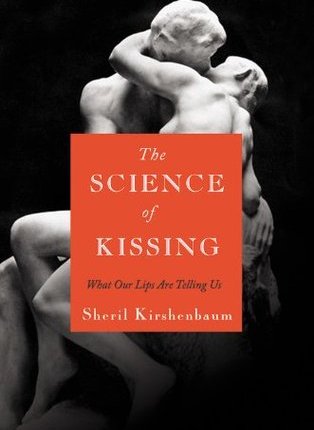
The Science of Kissing: What Our Lips Are Telling Us by Sheril Kirshenbaum

The Science of Kissing: What Our Lips Are Telling Us by Sheril Kirshenbaum

What do we know about the “science” of kissing? Researcher and author Sheril Kirshenbaum shows we know surprisingly little in The Science of Kissing.

“Kissing is a type of universal language, best interpreted by those involved in the exchange.” pg 209

Photo by Flora Westbrook on Pexels.com

To start, I didn’t know that humankind wasn’t the only species to demonstrate “kissing” behavior.

“Moose and ground squirrels brush noses. Manatees nibble at their partners. Moles rub snouts and turtles tap heads. Porcupines nuzzle noses – one of the few regions of their bodies that lack quills.” pg 29

Photo by Snapwire on Pexels.com

I also didn’t know, seems obvious in hindsight, that kissing wasn’t always a common behavior. It has spread throughout cultures and countries because of the way we’re interconnected with technology.

But that wasn’t always the case. Historians and anthropologists have recorded different attitudes towards kissing among various cultures for hundreds of years.

“… he noted that some Finnish tribes were not very interested in kissing, and observed that while the sexes would bathe together completely nude, a kiss on the lips was considered indecent.” pg 57

Kirshenbaum briefly covers a few different scientific studies into sexual behavior or kissing.

“In Alfred Kinsey’s 1948 report ‘Sexuality in the Human Male,’ for instance, kissing style was found to correlate with a person’s level of education. Seventy percent of well-educated men admitted to French kissing, while only 40 percent of those who dropped out of high school did.”

Photo by Pixabay on Pexels.com

However, I felt that the majority of this book was written anecdotally because there are so few rigorous studies that have been conducted. In fact, one of the chapters of this book consists of suggestions of studies that could be done with some of the information that Kirshenbaum compiled.

… only one in seven women answered that she would consider sex with someone she had not first kissed. Conversely, the majority of men reported that they would not be deterred.” pg 92

Despite what I perceived as a lack of hard science in here, I found the book amusing. Recommended for readers who are looking to be entertained, rather than enlightened, about kissing.

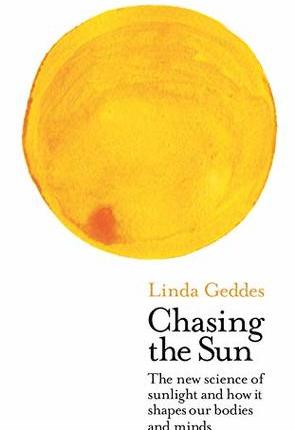
Chasing the Sun: The New Science of Sunlight and How it Shapes Our Bodies and Minds by Linda Geddes

Chasing the Sun: The New Science of Sunlight and How it Shapes Our Bodies and Minds by Linda Geddes

Chasing the Sun reminds readers of the importance of the sunlight in shaping some of the body’s processes, regulating mood, and the surprisingly deleterious effects that not enough sun, or not adhering to the body’s natural rhythms, can have.

I picked up this book because I’ve been having trouble sleeping and thought maybe this would have some helpful tips. It did, but I felt like most of this information I had heard before in some form or another. I suppose it is nice to have a reminder to get ample sunlight during my daily routine. I have experienced bouts of seasonal affective disorder in the past and know first hand how it can affect your mood.

Photo by Jill Wellington on Pexels.com

It is rather depressing how far removed modern society has made itself from nature. Linda Geddes points out this gap and how the ancients, and some members of our era, made better use of this natural resource.

I enjoyed the history lessons about the Romans and their solariums. They used “heliotherapy” to treat a variety of illnesses. I also enjoyed the studies about the potential effectiveness of “chronotherapy” for patients suffering from certain mental disorders as well as learning about efforts to increase their sunlight by towns that receive little light during the day. For example, there’s a town in Norway that put mirrors on top of the nearby mountains in order to direct more sunlight their way.

Photo by ArtHouse Studio on Pexels.com

As we know more about the importance of sunlight, I’m certain we’ll see more efforts to incorporate this information into our daily routines. And it affects things we may not even consider from school start times to a good night’s sleep.

Recommended for readers who want to learn more about how the sun affects our lives and some of the newer scientific research about the same.

Aware: The Science and Practice of Presence by Daniel J. Siegel

Aware: The Science and Practice of Presence by Daniel J. Siegel

Daniel Siegel, MD, psychiatrist and author, shares his research into neuroscience and a meditation practice he has developed called the “Wheel of Awareness“.

“The Wheel practice is a way to open awareness and cultivate a larger, more expansive container of consciousness. People who participate in the practice seem to be strengthening their minds.” pg 9

Photo by Polina Tankilevitch on Pexels.com

The practice uses focused attention on the senses, bodily sensations, mental activities and interconnectedness, in order to encourage the mind to become more integrated. When this integration happens, the mind gives off certain brainwaves that Siegel and other researchers have measured coming from experienced meditation practitioners such as monks.

Basically, Siegel is using western science in an effort to measure and replicate meditation practices.

The science portions of Aware are not very accessible to the non-scientists readers and I could see that being off-putting. However, if you are interested in the intersection of neuroscience and meditation practice, this book could be incredibly useful to you.

“Where attention goes, neural firing flows, and neural connection grows.” pg 19

Photo by cottonbro on Pexels.com

I found the implications of Siegel’s research to be fascinating. He claims, through focused attention, one can change the neural patterns and behavior of the brain. Meditation affects biology in a physically measurable way.

There have been countless studies on the positive benefits of meditation practice, but, I think, fewer on the changes in the function and integration of the mind. The rewards of such can be profound.

“When our minds wander unintentionally, we are not present, we are not receptively aware, we are not mindful, and studies suggest, we inhibit being happy — even if we are daydreaming about exciting things. … Presence cultivates happiness.” pg 49

Besides the Wheel of Awareness portion, the part of Aware I found most helpful was a discussion about the proper cultivation of empathy, the ability to put yourself in another’s place to feel and share what they are feeling.

Photo by Anastasia Shuraeva on Pexels.com

Tania Singer, in a presentation to the Dalai Lama, had this advice: “… we need to place empathy in the larger space of altruistic love and compassion. This space will act like a buffer for empathic distress. Since altruism and compassion are positive mental states, they reinforce our courage and give us the resources to deal with the suffering of others in a constructive way.” pg 86

I liked the visual of that and think it will come in handy in the future.

Recommended for non-fiction readers interested in the science behind meditation and the development of presence. Spiritual seekers looking for different meditation methods may want to look for that in another, less technical, book.

Thanks for reading!

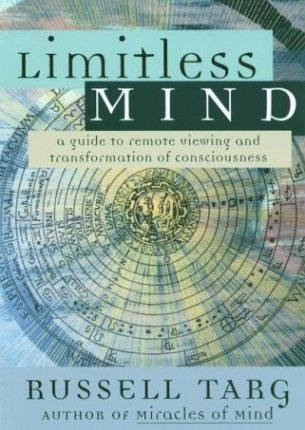
Limitless Mind: A Guide to Remote Viewing and Transformation of Consciousness by Russell Targ

Limitless Mind: A Guide to Remote Viewing and Transformation of Consciousness by Russell Targ
limitless mind

Russell Targ is one of the founding members of the Stanford Research Institute’s studies of psychic phenomena. He worked with Hal Puthoff and Ingo Swann to develop the remote viewing protocols for the CIA.

Remote viewing, though lambasted in popular culture in such films as “Men who Stare at Goats,” is an actual practice. It was utilized by United States and Russian militaries with some success or complete failure- depending on who you ask.

I thought that a handbook on remote viewing from this seminal scientist would delve more into the nitty-gritty of the practice. But, it doesn’t.

Targ does give a broad outline of what remote reviewing is. He also give examples of his research, but it wasn’t all that I had hoped it would be.

Limitless Mind is, however, packed with information about psychic studies from the late 1800’s until the current time. Targ discusses the studies from multiple countries covering such diverse topics as spoon bending, distance healing and psychic diagnosis.

If the reader is looking for remote viewing techniques only, I’d recommend Remote Viewing: The Complete User’s Manual for Coordinate Remote Viewing or The Seventh Sense: The Secrets of Remote Viewing as Told by a “Psychic Spy” for the U.S. Military.

Thanks for reading!