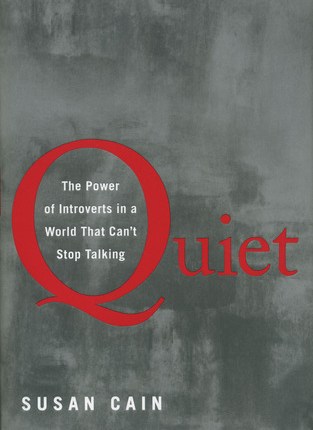
Quiet: the Power of Introverts in a World that Can’t Stop Talking by Susan Cain

Quiet: the Power of Introverts in a World that Can’t Stop Talking by Susan Cain

Quiet: The Power of Introverts in a World That Can’t Stop Talking entered my life at a particularly low moment.

Allow me to set the scene: I had been on vacation for a week and a half. We were in Colorado, visiting my husband’s family, some of whom I had met before, others whom I had not. I knew I wasn’t going to be entirely comfortable being around people the whole trip- I’m a huge introvert and I’m self aware enough to know that I need downtime, and quite a bit of it, to feel as if I’m functioning normally.

But I didn’t realize that my husband, who is just as introverted as I am and who I was counting on to help me through all of the introductions, dinners, conversations, etc, was going to immerse himself in Pokemon Go a majority of the time and essentially leave me to my own devices.

As Susan Cain would say, he found a “restorative niche” for himself in a digital world. It was hard on me as I didn’t have that escape.

Photo by ROMAN ODINTSOV on Pexels.com

So, here we are, visiting a friend’s home and my daughter, who strangely enough is a huge extrovert (the exact opposite of her parents), is struggling. She’s tired, out-of-sorts, and throwing a sulk every ten minutes.

I’m meeting yet more people, trying to hold trite conversations, and steer my child, all the while just wanting to retreat into a cave and not talk to anyone for a very long time. Honestly, I felt that way before we reached the party, but things seemed to get much, much worse the moment we arrived.

It had been building over the course of the vacation, but that day, my internal clamor reached a boiling point. My husband was oblivious to my growing discomfort as he’s catching Pokemon, again. (I don’t mean to sound bitter here, but I suppose that I am.)

I had forced myself for ten days to be social, keep the smile on my face, keep everything flowing smoothly. To my horror, I realize that I am about to have a panic attack in the middle of this crowd of people, more than half of whom I don’t even know. I grab my keys and leave.

I drive a couple blocks away, castigating myself for not being able to handle it and just pissed because, once again, like many times in my childhood, adolescence, and adulthood, I feel like I’m failing at life because I’m not a social butterfly.
Photo by Ryanniel Masucol on Pexels.com

I can’t stand to be around strangers for extended periods of time. I’ve always been this way- overly sensitive to others, noise, motion, events. I really dislike groups, parties, places where I have to circulate with a bunch of people who don’t know me or care about anything that I have to say.

The tears fell down my cheeks as I opened up my tablet and began reading this book. And I discovered that about half of all people are just like me.

Thank you, Susan Cain. Your book gave me the courage to drive back to my friend’s house and face the rest of the evening. I am not a pariah. I am an introvert and perhaps I can do a better job figuring out when I’ve reached my socializing limits before I meltdown.

Many of the positive attributes of introverts which Susan describes, I have, I’ve just never considered them as worth the trade-off of the extroverted personality.

I notice small details, have a great memory for conversations and events, long past the time when others forget such things. I think carefully about problems and people, devoting time to taking apart small nuances of books and movies, that other people don’t even consider, which makes me a good reviewer of media- perfect for my job as a librarian.

Susan nailed my general feeling about myself in the introduction: “Introverts living under the Extrovert Ideal are like women in a man’s world, discounted because of a trait that goes to the core of who they are. Extroversion is an enormously appealing personality style, but we’ve turned it into an oppressive standard to which most of us feel we must conform.” pg 34 ebook. Yes!

My role at the reference desk calls for an extroverted personality but I muddle through it, because I care about the job and helping others. Usually, I come home from work, totally worn out and in need of quiet time to unwind.

Susan helped me understand that sometimes “faking it” is worth it, if it for a cause that means something to you and that others do the exact same thing that I do.

Pull out the mask for the job, but then allow yourself the freedom to be who you really are at home: “According to Free Trait Theory, we are born and culturally endowed with certain personality traits- introversion, for example- but we can and do act out of character in the service of “core personal projects.” In other words, introverts are capable of acting like extroverts for the sake of work they consider important, people they love, or anything they value highly.” pg 391 ebook.

My favorite parts of the book were about sensitivity and social situations. Take this passage: “…maybe we didn’t choose … social accessories at random. Maybe we’ve adopted dark glasses, relaxed body language, and alcohol as signifiers precisely because they camouflage signs of a nervous system on overdrive. Sunglasses prevent others from seeing our eyes dilate with surprise or fear; we know from Kagan’s work that a relaxed torso is a hallmark of low reactivity; and alcohol removes our inhibitions and lowers our arousal levels. When you go to a football game and someone offers you a beer, says the personality psychologist Brian Little, “they’re really saying hi, have a glass of extroversion.” pg 277 ebook.

I may use that in my life. “Please hand me that glass of extroversion.”

I also really enjoyed learning the differences in thinking: “Introverts and extroverts also direct their attention differently: if you leave them to their own devices, the introverts tend to sit around wondering about things, imagining things, recalling events from their past, and making plans for the future. The extroverts are more likely to focus on what’s happening around them. It’s as if extroverts are seeing “what is” while their introverted peers are asking “what if.”pg 323 ebook. Yeah, I do that too.

I can’t recommend this book highly enough. It saved an evening for me, but more importantly, it changed the way that I view myself. There is power in knowing that you’re not alone. Again, thank you, Susan Cain. Some read-alikes: The Introvert’s Way: Living a Quiet Life in a Noisy World by Sophia Dembling (for introversion) or Furiously Happy: A Funny Book About Horrible Things by Jenny Lawson (for more instances of social anxiety).

Thank you for reading!

Princeless, Volume 4: Be Yourself by Jeremy Whitley

Princeless, Volume 4: Be Yourself by Jeremy Whitley

Dear readers, there are some spoilers in this review, but they’re necessary for a thorough discussion of the comic.  Please, if you haven’t read this one yet, go pick it up from your local library and then come back to this review.  Thank you 🙂

The Princeless series continues to deliver strong female characters, beautiful (child appropriate) artwork, and storylines with meaning. Each time Adrienne and Bedelia venture out to rescue one of Adrienne’s sisters, a facet of relationships is dissected and examined. This volume dealt with abusive relationships and gender roles in government.

Now, it’s not that cut and dry on the surface- the story itself is really fun and engaging. Adrienne and Bedelia have to survive a cannibalistic tribe of goblins in a monster infested swamp in order to reach Angoisse’s tower. On the way, they befriend unlikely allies and encounter a plant-like terror.

While this is going on, Adrienne’s brother, Devin, refuses to embrace traditional gender roles and activities, which continues to infuriate his tyrannical father. Their relationship illustrates the eternal struggle between parent and child. Parents think they know better and push their child in the direction they believe they should go, while children want to follow their natural inclinations. In the push-pull dynamic, somehow everything works out fine, but with more bad feelings on either side than there need to be.

The abusive relationship portion is tactfully presented in the interactions between Angoisse and Raphael. Sometimes people act a certain way because they want something out of you, other than your company. Kids get it. But in an era of Twilight idealization, I think the presentation of a “vampire” who acts out of self-interest rather than undying love is an important topic to discuss.

Teen relationships are just as thorny and prone to abuse as adult relationships and, because they are some of the first experiences that teens have, they have the potential to color the rest of that person’s lifetime and set the stage for the relationships to come.

Angoisse is a victim of Raphael but also her own beliefs. She’s always thought that she needed a man to complete her and she was going to do whatever it took to keep that relationship intact, even to the point of giving up her humanity or betraying her own family.

It didn’t take a very smart predator to see that she could be manipulated through her feelings. Sadly, such people actually exist. Thank you, Princeless for opening a door to the discussion of how to remain true to yourself in relationships and a powerful example of how to leave the ones that have soured.

The story is not too complex and adult readers may find it rather simplistic (unless you dig deeper into the underlying meaning), but it’s perfect for the 8 to 12 year olds. This comic will appeal to reluctant readers of either gender. I highly recommend it.

Thank you for reading!

Women Who Read Are Dangerous by Stefan Bollmann, Foreword by Karen Joy Fowler

Women Who Read Are Dangerous by Stefan Bollmann, Foreword by Karen Joy Fowler
womenwhoread

Part art appreciation and part homage to the female reader, Women Who Read Are Dangerous is probably the the most aptly titled book that I’ve ever read.

In addition to the beautiful images (my favorites pages 73 & 89), this book educates the reader about the politics, historical trends, and gender inequality tied to reading. Who knew that simply picking up a book could be such a subversive act?

Women Who Read are Dangerous sums up years of strange thinking about women and books with a dose of humor that I appreciated.

Take these historical opinions for example: “Women are too literal-minded for reading. Women are too sentimental, too empathetic, too distractable for reading. Women are passive, practically somnolent, consumers of popular culture, never realizing how, with the very books they choose, they participate in their own subordination.” pg 16

Photo by Los Muertos Crew on Pexels.com

Or this: “The lack of all physical movement while reading, combined with the forcible alternation of imagination and emotion,” said the teacher Karl G. Bauer in 1791, would lead to “slackness, mucous congestion, flatulence, and constipation of the inner organs, which, as is well known, particularly in the female sex, actually affects the sexual parts”- so anyone who read a great deal and whose powers of imagination were stimulated by reading would also be inclined to masturbation, as indeed we can already observe in Baudouin’s painting. But such moralizing could not hold up the triumphal march of reading, including- and specifically- female reading.” pg 23

Can’t hold us back, right readers? I’m actually feeling pretty well for all the reading that I do.

Photo by cottonbro on Pexels.com

Reading is power, I’ve always known that: “With the ability to read, however, there developed new patterns of private behavior that were to threaten the legitimacy of both the Church and secular authorities on a permanent basis. Women who learned to read at that time were considered dangerous. For the woman who reads acquires a space to which she and no one else has access, and together with this she develops an independent sense of self-esteem; furthermore, she creates her own view of the world that does not necessarily correspond with that conveyed by tradition, or with that of men.” pg 26

An introvert’s paradise, the keys to your freedom, the way to stick it to the “man”… as if I needed more reasons to read.

I also liked this description of reading: “Reading is an act of friendly isolation. When we are reading, we make ourselves unapproachable in a tactful way.” pg 34 I never really considered it that way before, but it is a method in which you remove yourself from the world for a time, even from those sitting in the same room.

Photo by Karolina Grabowska on Pexels.com

Seems obvious, when I consider it, but I had never taken the time to do so.

Finally, I learned about how “silent reading” is a recent trend. Did you know?: “An illiterate today is not only someone who cannot read (or write), but also anyone who cannot understand a text unless he or she reads it aloud. Yet there must have been a time when the opposite was the case- when reading aloud was the norm, as silent reading is today. … Until well into the Middle Ages and in some cases well into modern times, reading consisted of both thinking and speaking, and was above all an act that took place not in separation from the outside world, but at its center, within the social group and under its surveillance.” pg 25

Ugh. “Under its surveillance”?

That brings to mind the quotation, “Let others praise ancient times; I am glad I was born in these.” -Ovid.

Highly recommended for art enthusiasts and anyone who loves to read, Women Who Read are Dangerous is a lot of fun and a walk on the wild side… if one believes in such things.

If you’re looking for more non-fiction information about reading, try “Wild Things! Acts of Mischief in Children’s Literature” by Betsy Bird. It doesn’t have the beautiful artwork of this book, but it does contain a lot of information about the history and, sometimes scandalous, back story of children’s books and authors.

A big thank you to the Goodreads First Reads Program for a finished copy of this book for review purposes.  And, thank you for reading!

Tin Star by Cecil Castellucci

Tin Star by Cecil Castellucci

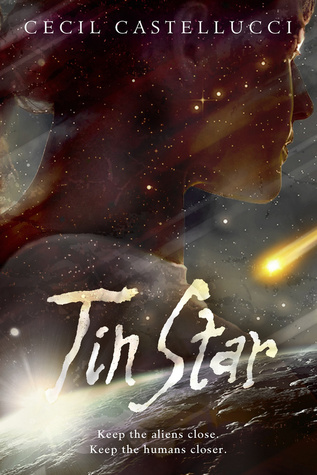
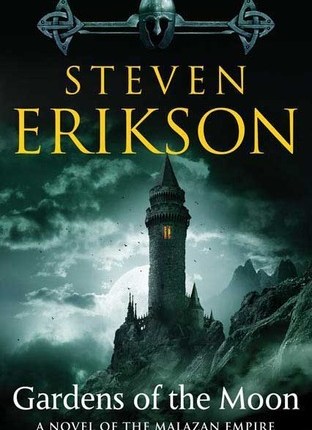
tinstarTin Star is the story of Tula Bane, a teenager who joined a space colonizing cult from Earth. She is abandoned on a way station near the edge of the known universe on the way to her new home.

How will Tula Bane survive among aliens who think human beings are the worst? Will she ever be able to go home to Earth or the colony’s planet? How will she manage to put bread on the table?

I love a good space opera and I thought that I would enjoy Tin Star more than I did.

The promise of books set in space, in my opinion, is the opportunity for unique interstellar exploration and worlds created entirely from the author’s imagination. Because of Tula’s unique plight- being stuck in what is essentially a space gas station- the author left herself very little room to write a creative story.

Mainly, Tin Star deals with character development and social struggles, not adventuring in new places.

The villain of the tale was charismatic and creepy. Take this description: “He had his hand on my shoulder in a way that he had a million times before. Only before it was comforting, encouraging, affectionate. Now it was menacing. He was looking at me and his face was smiling. To anyone looking from afar, he seemed to be pleased with me, but it was just a mask. His attitude shifted from concerned leader to unknowable monster.” pg 4

Tula manages to befriend a shady, insect-like alien named Heckleck. He’s my favorite character.

In this passage, Heckleck explains the problems Tula will face in trying to leave the station: “I know about you,” Heckleck said. “Everyone does. And you will never get off this station. You are nobody. And worse, you’re a Human. Even if you did not get on a ship that would take one of your kind, you’d have nowhere to go but to roam like the others of your kind do.” pg 35.

Keeping it real: with Heckleck.

I thought Cecil Castellucci could have done more with the cultural differences between Tula and the others on the station.

One of the most interesting exchanges in the book was between Tula and Tournour, the head of the outpost. She’s trying to figure out how old he is and, because they’re from different planets/species, it’s a surreal conversation. More of that would have been nice.

But Castellucci wrote cultural and language barriers out of the story by introducing nanites into Tula’s bloodstream to translate alien languages for her.

Something that Castellucci did well was writing profound silences between characters into her story. For much of this story, Tula finds herself standing around with Heckleck and Tournour and having nothing to say. But, somehow, it works.

I liked how Castellucci wrote the thoughts spinning through Tula’s mind at these moments. It reminded me of myself when I can’t think of anything to say: “It was a silent agreement between us that if we spoke too much then we would have to talk about the practical things. … If we ever spoke of the things that truly pressed up against us, our very real worries, our seemingly impossibly plans for escape, our divergent hopes for the future, our bubble would blow apart.” pg 184

This book in three lines: “In the end, good must win over evil. The trouble is trying to figure out which is which. Sometimes they look so much alike.” pg 204

Read this book if you enjoy light, young adult drama in space. If you’re looking for a meaty, space adventure, you’ll need to find another title.

Some read-alikes are: The Knife of Never Letting Go (teen trying to survive on an alien planet) or Gated (teen trying to leave a cult).

Thank you to Roaring Brook Press for sending an advance reader copy of this book. And, thank you for reading!

Following Your Path by Alexandra Collins Dickerman

Following Your Path by Alexandra Collins Dickerman

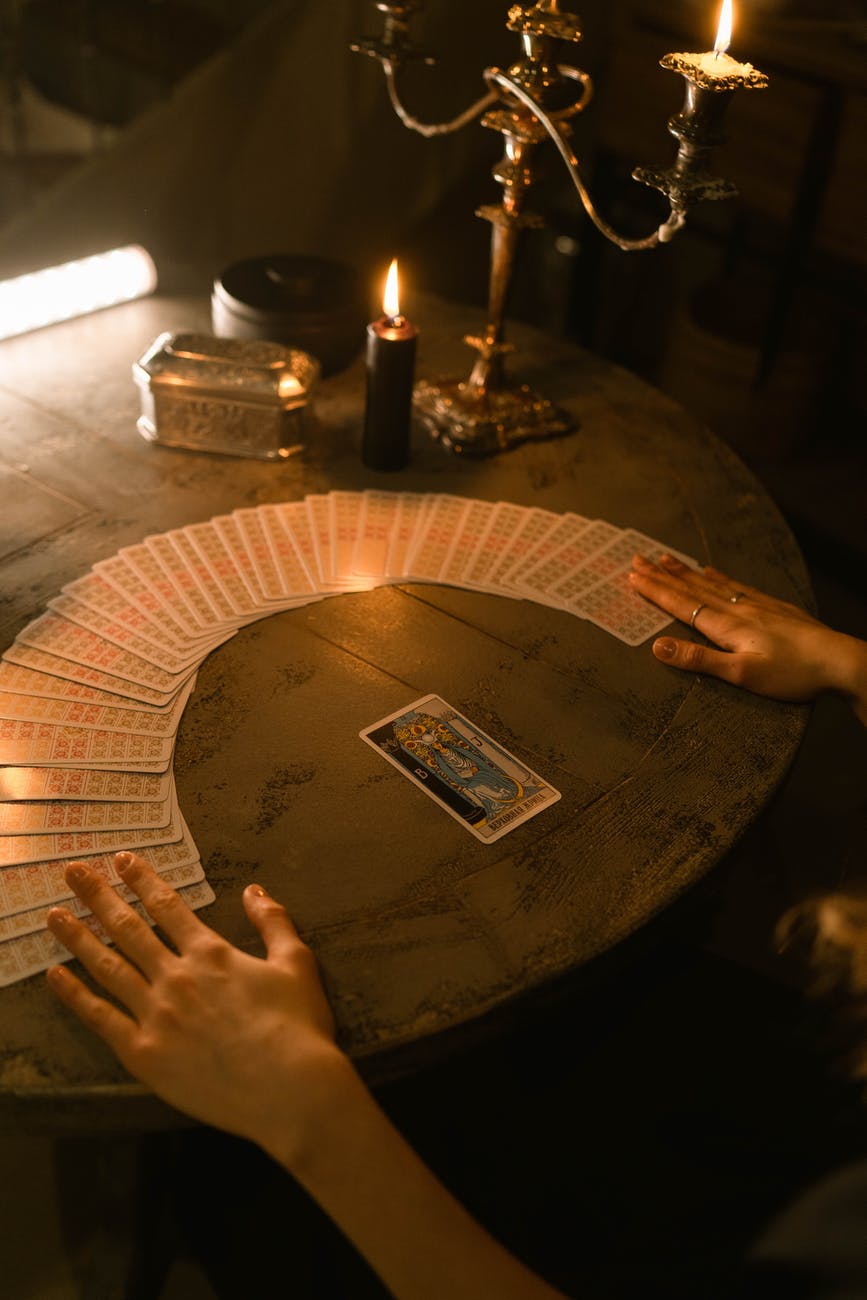
Following Your Path is about using tarot cards and meditation in order to communicate with your psyche. I was particularly excited about this book because that’s the method that I use for my own meditations and writings. This book is a treasure trove of mythological symbolism and fairy tales. I enjoyed much of it. But, I felt as if Alexandra guides the reader almost too well.

She breaks down the cards into their various pieces and encourages reflection on each piece of the Tarot artwork in a sort of automatic writing process (write down the first thing that comes to mind when you look at “blank”).

I felt like she was depriving the reader of the richer experience of pathwalking into the cards themselves.

If I were to write a manual, perhaps someday, I would leave the meditations themselves as completely open ended with plenty of blank pages for writing. So, more like: “Here is the card. Walk through it as if it is a doorway. What do you see?”

It may be difficult to believe, but the mind fills the space with “something”. The endless writing prompts for the small details really aren’t needed. But, I could see this book being very useful for true beginners who are unsure of the way or don’t yet trust or know their own inner worlds.

Another small criticism, Alexandra has the reader starting their journey into the major Trumps (the minor cards aren’t even presented) and she starts her study with the Fool rather than the Universe. But, I suppose it doesn’t really matter the order in which you explore the cards. The fact that you’re doing it at all is what is important.

I loved this explanation of the psyche in the introduction by Jean Houston: “The psyche is not unlike an archaeological dig in which different civilizations, stories, and interpretations may be revealed at each level. Unlike the field archaeologist, however, we have living access to the cultures and knowings of the various strata within ourselves and therefore can learn on site how to tap our hidden dimensions for the benefit of our existential lives. It is also possible, with the help of those primordial patterns of meaning and relationship known as archetypes, to build sustaining bridges to, and networks among, these strata, thereby encouraging an ongoing communication and exchange of content- a kind of commerce of the psyche.” introduction, pg vii

There are quotations scattered throughout the text that I found very enlightening, such as: “Myth is the secret opening through which the inexhaustible energies of the cosmos pour into human cultural manifestation. Religions, philosophies, arts, the social forms of primitive and historic man, prime discoveries in science and technology, the very dreams that blister sleep, boil up from the basic, magic ring of myth.” -Joseph Campbell, pg 17 Makes you want to start meditating right now!

This book is extremely positive and affirming. I liked that in addition to the meditation prompts, Alexandra provides further exercises and questions to help heal and creatively examine the mind. She says: “It is only when we learn to evaluate ourselves in terms of our own inner values that we can exist in a positive emotional state, aware of the continual opportunities for growth and for feelings of satisfaction.” pg 138

She also provides hope for those who may be going through the darkness of depression or despair:“Often when we find ourselves in a state of stupor, hopelessness, pain, loneliness, depression, and even madness, we may be on the verge of great vision and inspiration. Our condition of desperation is often only a stopping place on the road to greater self-development. By looking inward, we can find a way past destruction, to salvation and to a new life.” pg 244 So, if you’re going through hell, keep going.

If you enjoyed this book, you may want to look at The Creative Tarot: A Modern Guide to an Inspired Life by Jessa Crispin. If you want numerous examples of tarot card pathwalkings, take a look at my book, The Light Congress: thelightcongress.com

Happy meditating and thanks for reading!

Gardens of the Moon by Steven Erikson

Gardens of the Moon by Steven Erikson

Second read-through August 2021: I have a few thoughts to add on my second read-through of Gardens of the Moon. Unlike my first foray into Malazan, I came out of this reading with a better appreciation of the female characters of the story.

Instead of being focused on what the characters were not, I looked at what the characters were. Powerful leaders, most of them, who imposed their will on the world around them through violence. It is an unexpected role for women, but still feels somewhat one dimensional. I wish some of the characters were more fleshed out, but I have the feeling that this development will happen before the end of the series.

Also, this go-round, I had a better grasp on the complexities of Gardens of the Moon and was prepared to be dropped into the middle of the action. Steven Erikson doesn’t hold the reader’s hand. He pushes her through the door into another world. Some readers hate/love this strategy. I fall mainly on the side of hate, but if it’s a good story, I’ll put up with it.

My favorite part is still the new tarot card deck that Erikson created.

Unlike last time, I’m going to keep pushing forward with this series. On to the next book!

Photo by ArtHouse Studio on Pexels.com

Review from first read-through June 2016: Gardens of the Moon is an extraordinarily complex fantasy. The over-arching story: the Malazan Empire (a militaristic conglomeration of nations) is invading everywhere and trashing cities as it goes. The Empress of Malazan, her High Fist Dujek (like a top general), Adjunct Lorn (a magic-hating fixer), Whiskeyjack and the Bridgeburners (like the A-team for Malazan, they go in and cause chaos before the main army arrives), Tattersail (a Malazan mage), Ganoes Paran (a soldier), and more are on the side of the Empire.

There’s about a dozen other main characters that I won’t list here for brevity’s sake.

One of the many heroes of this tale is Paran. The story begins with Paran as a child, gazing down from the walls of his city, towards destruction being wreaked by Malazan mages. He dreams of being a warrior and tells this dream to the aged soldier with him.

Their conversation: “Every decision you make can change the world. The best life is the one the gods don’t notice. You want to live free, boy, live quietly.” “I want to be a soldier. A hero.” “You’ll grow out of it.” pg 5

Photo by Mikhail Nilov on Pexels.com

And so the story begins. Paran gets his desire, of course, but so much more than he bargained for… kind of like the reader who picks up this book.

At first, I thought that the story was going to go like The Game of Thrones. We were going to have a bunch of different characters all fighting for the same thing. I was so wrong. The only similarities between the two tales are that 1. they’re fantasies, 2. they have a bunch of characters, and 3. there is a power struggle, but otherwise, they’re very different.

Gardens of the Moon contains direct interventions between gods and humanity as well as magical creatures from the past and other realms of existence.

As for the magic system, the magically-inclined in this story take their power from different dimensions called “warrens“. There are half a dozen different ones, with further warrens hinted at as the story progresses.

Photo by Filipe Delgado on Pexels.com

Taken as a whole- it is a many layered cake of fantasy awesomeness. I was overwhelmed by it all at times.

Perhaps because of the sheer scope of the story, the characterizations suffered. The author could only build so much detail into each person.

For example, Erikson tried to make Paran more than just a simple hero, but it didn’t always work: “When he thought of himself, of that young noble-born man with the overblown faith in honesty and integrity, the vision that came to him now was of something cold, hard, and dark. It hid in the deepest shadows of his mind, and it watched. No contemplation, no judgment, just icy, clinical observation.” pg 110

I was unimpressed with the role of the females in this story. With as many characters that we had, I thought we’d have at least one or two amazing, strong, female heroes. I know that fantasies are not known for their gender equality but in a world with magic, gods, and other surprising things, I would count a strong female character as one of the greatest miracles of all.

Erikson’s world building was so complete that he even created a new set of Tarot cards, just for his world. It’s one of my favorite parts of the story.

Photo by Anastasia Shuraeva on Pexels.com

Here’s a passage that I really liked: “Those whom the gods choose, ’tis said, they first separate from other mortals- by treachery, by stripping from you your spirit’s lifeblood. The gods will take all your loved ones, one by one, to their death. And, as you harden, as you become what they seek, the gods smile and nod. Each company you shun brings you closer to them. ‘Tis the shaping of a tool, son, the prod and pull, and the final succour they offer you is to end your loneliness- the very isolation they helped you create.” Never get noticed, boy. pg 510 Bleak, but beautiful.

Or this part, the explanation of the story’s title, which is so brief, if you blink, you’ll miss it: (On the moon) The Lord of the Deep waters living there is named Grallin. He tends vast, beautiful underwater gardens. Grallin will come down to us, one day, to our world. And he’ll gather his chosen and take them to his world. And we’ll live in those gardens, warmed by the deep fires, and our children will swim like dolphins, and we’ll be happy since there won’t be anymore wars, and no empires, and no swords and shields.” pg 531-532

That’s the dream of all of the characters in this story- to live in peace. But, because of the Malazan Empire, they can’t.

Recommended for true fans of fantasy. There’s so much to sink your teeth into that, unless you really love the genre, you’ll probably just put it aside for simpler fare.

Thanks for reading!

Sleeping Giants by Sylvain Neuvel

Sleeping Giants by Sylvain Neuvel

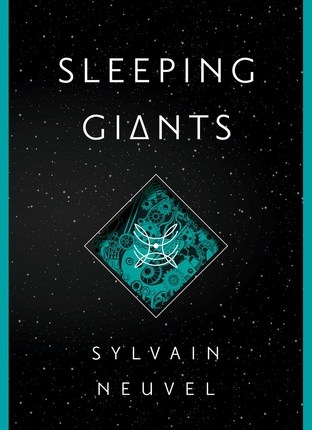
In Sleeping Giants, a large, metal object shaped like a gigantic hand is found in South Dakota. It glows with its own light and scientists have no idea what it is made of or what it can do. And so, the mystery and adventure begins.

Photo by Mayur Rawte on Pexels.com

I enjoyed the story a lot but not how it was written. Neuvel tells Sleeping Giants through a series of “case files” or question and answer sessions between the main characters and a mysterious, all-powerful figure who is manipulating the scenario from behind the scenes.

This method of storytelling seemed especially ridiculous during some of the action scenes, when Neuvel had the characters talking to each other on the phone, describing what was happening to them as it occurred.

But, otherwise, the Q & A setup gave readers a behind-the-scenes look at what was going on in the character’s minds and allowed for a lot of personality development.

I wish that Neuvel had switched back and forth between traditional storytelling and the “case file” thing, so that he could both tell the story and have the in-depth character portions. Maybe he could do something like that in the next book.

I was nervous that Sleeping Giants was going to be more science fiction than fantasy, but it wasn’t. There are only a few mind-boggling moments when the scientists are trying to figure out mathematics with a base of 8 rather than a base of 10.

Mostly, The Sleeping Giants asks the questions: what would happen to humanity if something very strange and not of our civilization was discovered on earth? What would that mean for world politics? And how, on an individual level, would everyone involved handle it?

Photo by Pixabay on Pexels.com

Kara Resnik, a pilot, was my favorite character in this story. She’s impulsive, passionate, and honest.

In this passage, she’s talking about the possibility of leaving the project before it’s completed: What would I do anyway? Go about my business as if nothing ever happened? I couldn’t even talk about it to anyone. This is gonna sound incredibly selfish, but I’d get bored to death unless someone started World War III or something.” pg 54

The moral dilemma for the scientists involved in the project is interesting.

In this passage, lead scientist Rose Franklin talks about the fact that the technology discovered could be used for good or ill, depending on who controls it and how that makes her complicit in their actions, because she’s the one figuring out how it works: “What I’ve been trying so hard to deny is that I’m loving every minute of it. … I’m a scientist, and this is what I breathe for. If I had learn to live with that, I might be able to sleep again.” pg 167

Photo by Pixabay on Pexels.com

If you enjoyed Sleeping Giants, you may want to pick up The Many Selves of Katherine North by Emma Geen (in which, advanced technology raises moral questions) or The Interminables by Paige Orwen (in a dystopian world, humanity tries to save itself from inter-dimensional creatures, but maybe some solutions aren’t worth the cost).

Big thanks to the Goodreads First Reads Program for a free copy of this book. And, thank you for reading!

The Way of the Shaman by Michael Harner

The Way of the Shaman by Michael Harner

The Way of the Shaman says the practice of shamanism isn’t a cultural thing- it’s a “human” thing.

Michael Harner gives a brief biography of his own beginner experiences, then a very short history of shamanism, what it is, and how the experiences during the shamanic vision walks compare to ordinary reality.

He goes on to give a few practices for beginners to experience those states of consciousness for themselves as well as methods for contacting your “power animal” and some basic healing techniques.

I valued this book most for its discussions of shamanistic consciousness rather than the practices, but I could see both being of value for the proper audience.

Photo by Abet Llacer on Pexels.com

On shamanism across cultural boundaries: Shamanism represents the most widespread and ancient methodological system of mind-body healing known to humanity. Archaeological and ethnological evidence suggests that shamanic methods are at least twenty or thirty thousand years old… One of the remarkable things about shamanic assumptions and methods is that they are very similar in widely separated and remote parts of the planet, including such regions as aboriginal Australia, native North and South American, Siberia and central Asia, eastern and northernmost Europe, and southern Africa.”pg 40-41

One of Harner’s reasons for writing this book is to encourage everyone to deeper self knowledge: “…truly significant shamanic knowledge is experienced, and cannot be obtained from me or any other shaman. Shamanism is, after all, basically a strategy for personal learning and acting on that learning.” pg xxiv of introduction.

The world could use more self knowledge.

Photo by Mikhail Nilov on Pexels.com

How Harner has experienced the ineffable nature of shamanic consciousness: “His experiences are like dreams, but waking ones that feel real and in which he can control his actions and direct his adventures. While in the shaman state of consciousness, he is often amazed by the reality of that which is presented.” pgs 21-22

I find it interesting how various religious practices and occult teachings mix, blend, and borrow from each other. Or perhaps, at their base, they’re all just the same thing- various ways of experiencing the non-ordinary consciousness from which all humanity springs.

I read a book by practicing shaman, James Endredy, called The Flying Witches of Veracruz back in December of 2014 and it seemed to be a total pipe dream. It was filled with amazing creatures and impossible actions, like flying, shape shifting, and jumping higher than humanly possible.

Photo by Rakicevic Nenad on Pexels.com

James talked about the magical in the same breath that he talked about what he ate for breakfast.

Harner explains in this book why it reads like that: “The emphasis I make here on drawing a distinction between the experiences one has in (ordinary consciousness) and the (shaman consciousness)…is not a distinction that is usually noted in the conversations of shamans among themselves or even with Westerners. Thus, if you were to listen to a Jivaro shaman talk, you might hear in his everyday conversation accounts of experiences and deeds which could seem to you, as a Westerner, to be patently absurd or impossible…” pg 47-48.

That whole book makes so much more sense to me now.

In the afterword, Harner closes with thoughts about why shamanism works: “Albert Schweitzer reportedly once observed, “The witch doctor succeeds for the same reason all of the rest of us (doctors) succeed. Each patient carries his own doctor inside him. They come to us not knowing this truth. We are at our best when we give the doctor who resides within each patient a chance to go to work.”

Be a healer by reminding people that they have the power to heal themselves.

If you’re looking for more books like The Way of the Shaman, try The Flying Witches of Veracruz: A Shaman’s True Story of Indigenous Witchcraft, Devil’s Weed, and Trance Healing in Aztec Brujeria by James Endredy or Active Dreaming: Journeying Beyond Self-Limitation to a Life of Wild Freedom by Robert Moss.

Thanks for reading!

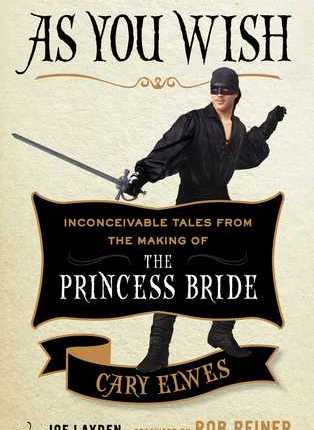
As You Wish: Inconceivable Tales from the Making of The Princess Bride by Cary Elwes

As You Wish: Inconceivable Tales from the Making of The Princess Bride by Cary Elwes

Before I start my review, I want to mention that As You Wish is the perfect audiobook for a road trip between St. Louis, Missouri and Kansas City, Kansas. I was traveling with my daughter and husband, and we were all entertained by Elwes’ memories of the making of the film.

It’s really not that easy to find a book that works for all three of us, but this was an absolute hit. I can’t recommend it enough and if you’re already a fan of the movie, I’m sure that you’ll love it even more.

Though it starts out a bit self-congratulatory in tone, throwing around words like “timeless”, “modern classic”, and “once-in-a-lifetime experience”, As You Wish is ultimately, like The Princess Bride, a very sweet and and enjoyable memoir about the events behind the making of the film.

At first, as I said, I was afraid that I was going to be bored to tears. Rob Reiner wrote and narrated the foreward and it is sugary sweet in its praise of the author, the movie, and everything to do with either. This high praise, some may argue, is well deserved, but I thought that it might have fit better in the flow of the tale as an afterword. First, the play then the applause, but, that’s just my opinion.

Some of the best parts of the memoir, not surprisingly, centered around Elwes’ interactions with his colorful co-stars. Andre the Giant figures largely into this tale, as he did in life, not only because of the enormous size of his body but also his heart.

The brightest among us always seem to burn too quickly.

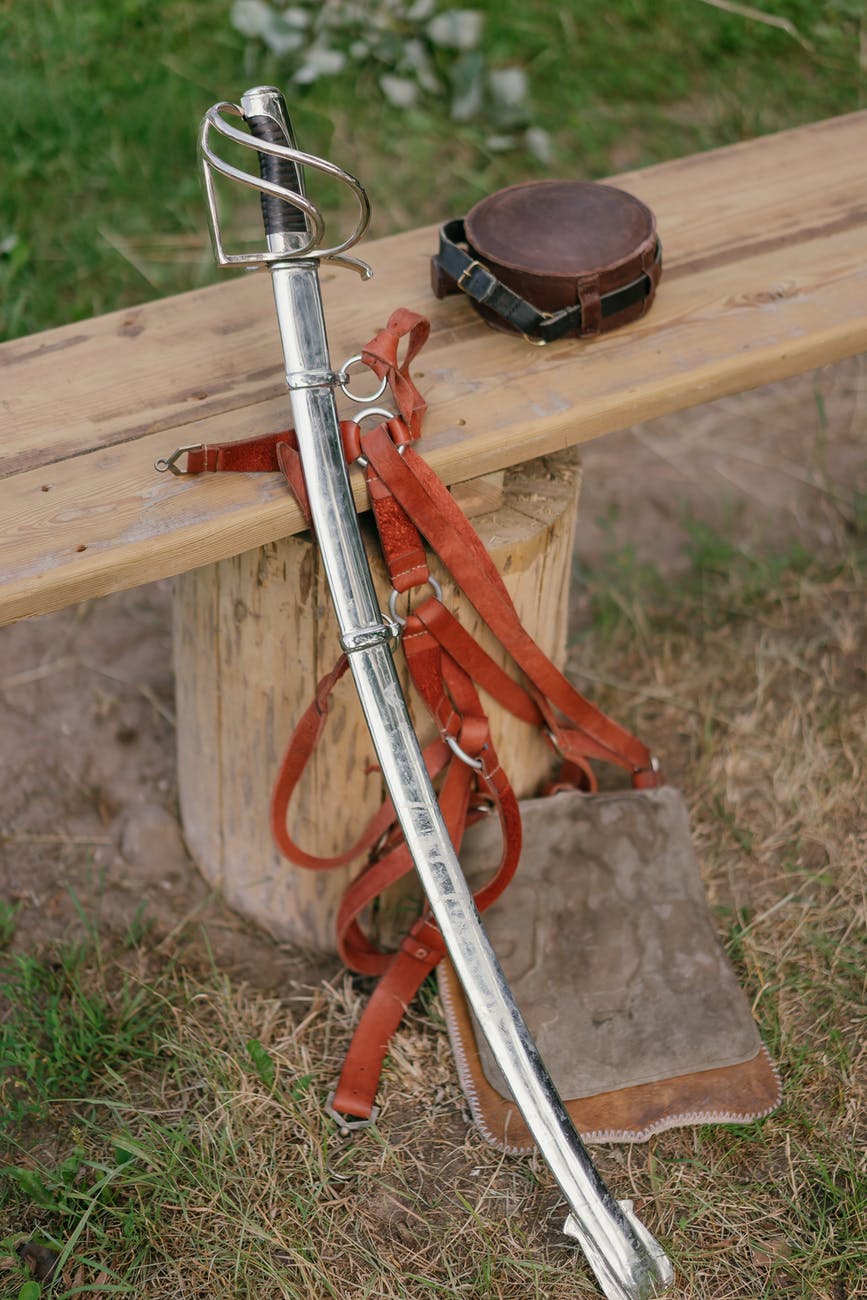
Another of my favorite parts is the description of Elwes’ and Patinkin’s struggle to film the “greatest sword fight in modern times.” I had no idea of the amount of backbreaking work that went into the acquisition of the skills to run the scene. From day one of filming, Elwes and Patinkin were schooled by some of the best sword fighters in the movie business. Now that I know, I’m going to have to re-watch the film. I had always assumed that the fight was done by stuntmen. How wrong I was…

If you enjoy the film, The Princess Bride, you must listen to this audiobook. It is a real treat and you’ll appreciate some hidden gems revealed by Elwes’ narration. To borrow some descriptors from the book, it was a magical, “once-in-a-lifetime” moment when talent and story mixed together to create a “timeless, modern classic”. If you’re looking for some film related read-alikes (for movies other than the Princess Bride), try Nerd Do Well by Simon Pegg or A Funny Thing Happened on the Way to the Future…: Twists and Turns and Lessons Learned by Michael J. Fox.

Thanks for reading! -Heidi