A Brief Tour of High Consciousness: A Cosmic Book on the Mechanics of Creation by Itzhak Bentov

A Brief Tour of High Consciousness: A Cosmic Book on the Mechanics of Creation by Itzhak Bentov

If you’ve been following this blog for awhile, you know now that I really enjoy “fringe” non-fiction that chronicles out of body experiences and remote reviewing.  This is another of those books.

If you’re not into those topics, my apologies in advance. 🙂

A lighthearted yet profound guide to the realms of higher consciousness and the ultimate nature of reality.

Goodreads
Photo by Pixabay on Pexels.com

My research into consciousness exploration continues with A Brief Tour of Higher Consciousness by Itzhak Bentov.

Having predominantly read books like this by artists (Jurgen Ziewe and Kurt Leland come to mind), it was refreshing to have a first person narrative by an engineer. Itzhak’s lens of perception is so different than my own- I loved it.

There is a part towards the end, What is a Hologram, and a chapter by another author, Essay on Cosmology by Edward Apgar, that I didn’t resonate with at all. But, perhaps for the most scientifically-minded, those parts will be your favorite.

hologram

Hologram image from nationaldefensemagazine.org

Itzhak has simplistic doodles scattered throughout the text which brings a “Randall Munroe” feel to the book- the use of simple pictures to illustrate complex and abstract ideas. This author definitely feels to me as if he was a bit ahead of his time in both his presentation and materials.
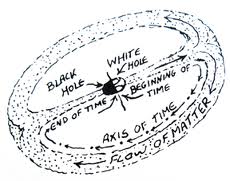
bentovdoodle

Bentov doodle from ritamarrpositivechange.wordpress.com

Itzhak’s explanation of “lens of consciousness”: “As consciousness evolves and information starts pouring in, the information is couched in a language best understandable to the person involved. For instance, a poet will be shown the nature of Creation in poetic images, an artist in visual symbols, and a mathematician in abstract equations; a nuts-and-bolts fellow like myself will have it shown to him as structure.” pg 5

I was reminded of Robert Monroe’s Journeys Out of the Body in which he puts emphasis on recording and comparing out-of-body experiences for consistency and real world applications to bring legitimacy to the practice.

I’ve heard that we’re all made of star dust and I really liked Itzhak’s description of it in this passage: “Stars collect into clusters or galaxies, and as they die, they explode and create cosmic dust, which again condenses into new stars and planets. Everything in the entire universe, including our bodies, is made of one cosmic substance. We contain atoms from the most distant galaxies and are thus connected to the whole universe.” pg 13

starsinthesky

Stars in the sky from wikipedia.org

Everything is vibration: “In short, consciousness in a vibratory state manifests itself as our familiar matter, from which the different forms that we see around us are made. The table, the flowers, the scent of the flowers, and our bodies are all made of rapidly vibrating consciousness.” pg 20 Wild!

A discussion of how to interact with devas (an ant deva to be precise, which is kind of silly, I realize), which Itzhak describes as “The name given to a being that is the rudimentary consciousness of any structure”: “To negotiate with her, the currency of exchange is love. Just send the ant deva a lot of love, which will stimulate her evolution. Even ant devas need love, in order eventually to know their Creator.” pg 33

Photo by Jimmy Chan on Pexels.com

In my meditations, I’ve frequently experienced what Itzhak describes in this next passage. It was nice to finally have a reason why: (While in a meditative state) “Wiggle your body. This causes a disturbance, a vibration, to spread … (This is similar to a fly falling into a spider web. The vibration of the web signals the spider and it shows up to investigate its dinner.) The deva .. appears immediately, looking worried and saying something like “What do you want?” or “Who are you?” pg 35

I’ll close with this excerpt of Itzhak’s philosophy: “There is nothing absolute and final. If everything were iron-clad, all the rules absolute and everything structured so no paradox or irony existed, you couldn’t move. One could say that man sneaks through the crack where paradox exists.” pg 78

If you enjoyed this book, you may want to take a look at Otherwhere by Kurt Leland or Multidimensional Man by Jurgen Ziewe. If you liked the doodles of complex concepts and want more of that, try Thing Explainer: Complicated Stuff in Simple Words by Randall Munroe.

Thanks for reading!

How to Use a Pendulum for Dowsing and Divination by Ronald L. Bonewitz

How to Use a Pendulum for Dowsing and Divination by Ronald L. Bonewitz
pendulum

I read a book a couple of years ago called Extraordinary Knowing: Science, Skepticism, and the Inexplicable Powers of the Human Mind by Elizabeth Lloyd Mayer. She opens the book with a chapter about how her daughter’s instrument was stolen and she called a professional dowser, though she didn’t believe in such things, to help her find it.

And guess what happens. 🙂

Pendulums work along the same kind of lines as dowsing and, after reading that, I thought maybe there is something to this.

You can watch Elizabeth Mayer talking about her experience on YouTube by clicking this sentence.

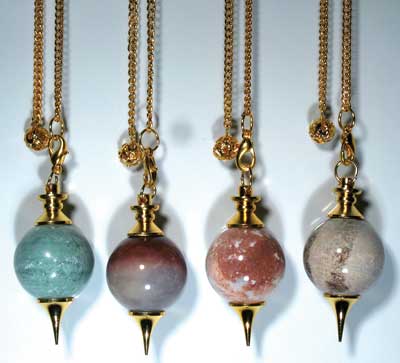
There used to be holistic shop (it has since closed) in my town that I liked to pop in for “fringe” books that libraries don’t purchase (but I love!) and, one day, the owner had a huge collection of pendulums for sale. I picked one up, not knowing anything about it beyond what I had read in that book, and it has sat on my meditation table for months, just looking mysterious and interesting.

Then, last week, I saw this book and was so excited to finally have some instructions!

pendulum-brass-gemstone

Photo from shamanschool.com

First of all, some background info: (Divination practices) most directly related to pendulum use fall under the general category of sortilege- the casting of lots. The word ‘sortilege’ comes from the Latin word sors, which means lots, and the title Sortilegus was given to the person who was the reader or the diviner via means of this process. Broadly, the practice involved (and still involves) holding an object or group of objects in the hand or hands while imbuing them with the question for which an answer is sought, then casting them through the air. It was believed that the answers were ‘in the air’, and that, as the lots moved through it, they became impregnated with the answer, causing them to fall in a certain pattern. The answer is then divined from the pattern made by the objects in their landing positions. The movements of the pendulum are derived from the same source.” pg 11

herkimon

Image from http://www.harmony000.org

What is divination anyway?: “Divination lifts up and beyond the normal. Divination is all a question of moving the self into a deeper consciousness, a totality of awareness, of discovering messages and information as we seek, passing between the mind of the great architect of the universe and the mind of man. Divination is a state; it is not a technique. But, you can use techniques to develop your ability to be in that state.” pg 15

I’ve always used meditation for that.

I thought that the authors took the use of pendulums a bit too far in this part where they advised bringing your pendulum with you wherever you go ‘just in case’: “Carrying your answers with you- Pendulum work is extremely useful in your everyday life, whether at home or abroad. For instance, at the local market or the supermarket, if you can’t decide which grocery to put in your basket, use your pendulum. You can also use it for yourself, for those times when you’re wondering ‘Is this product good for me?’ Maybe, maybe not. It’s helpful to be informed. Before purchasing anything, you can check.” pg 56. Intriguing idea, but I just can’t see myself doing that. Should I recommend THIS book to that patron or THAT book?

pendulumatlibrary

Image from consortiumlibrary.org

How the human body connects to the spirit like a pendulum: “Just as the pendulum connects into this (spirit) flow, so we, too, connect in physically. In past times, there was a consciousness of the fluid flow from the brain. Initially, it was equated with palmistry. Napoleon, for example, always had his palmist with him. He- among many others at that time- was convinced of the belief that the brain directed fluid (spirit) flow down through the top of the head, along the arm, and over the top of the wrist, hand and fingertips, and that it even created the lines on the palms of the newborn child. This was revered as a map of the child’s future. It has also been shown that a hand that is paralysed becomes void of any lines.” pg 68 I didn’t know any of that.

I was disappointed to discover that there are some minor binding errors in this book. It has half a dozen or so blank pages in the middle.

I’m not entirely convinced about this pendulum thing, but, for total novices like me, How to Use a Pendulum for Dowsing and Divination is a good place to start.

Thanks for reading!

Margaret the First by Danielle Dutton

Margaret the First by Danielle Dutton

This book is life story of Margaret Cavendish, a duchess and one of the first popular female writers in England.

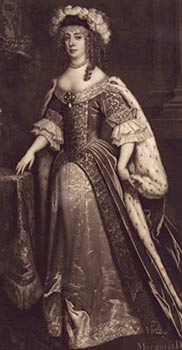
cavendish

Nice hat, right?  Digital image from nottingham.ac.uk

Margaret the First is written like a dream- the scenes come and go with little or no explanation in them and years pass in the blink or an eye or turning of the page.

Usually, I read historical fiction to immerse myself in the details of a time period, but this book doesn’t really cater to that. It’s a bubble in the wind or a glimpse from the windows of a fast moving car. It hints at depth more than delivers it.

Photo by Lucas F. on Pexels.com

But still, despite this strangeness, I was mainly captivated.

Margaret describing her mother: “As for our mother, she was beautiful beyond the ruins of time. None of her children would be crooked, of course, nor in any ways deformed. Neither were we dwarfish, or of a giantlike stature, but proportional, with brown hair, sound teeth, sweet breath, and tunable voices- not given to wharling in the throat, I mean, or speaking through the nose, unless we had a cold- yet we were none so prone to beauty as she, and I perhaps the least of them all.” pg 14, ebook. Beautiful.

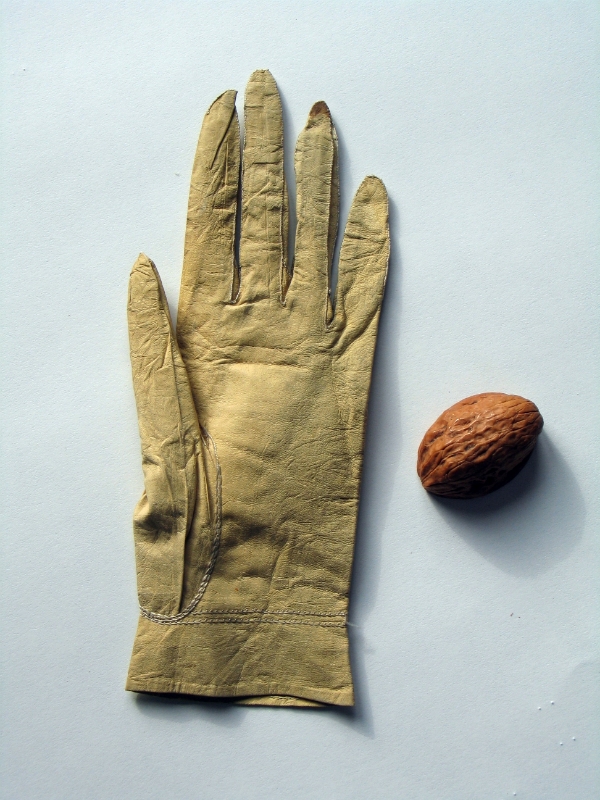
Margaret describing the difference between her childhood education and her brother’s: “You must wear chicken-skin gloves on your hands all night,” my mother began… “When inside the house,” my mother went on, “you must not spend all your time writing little books.” Yet out the window, as she spoke, under a net of branches, my youngest brother, Charlie, arrived on the lawn with a hawk. … It is nobler to be a boy, I thought- and looked back with nostalgia, as if I just had been.” pg 18, ebook

chicken-skin-gloves-0031

Actual chicken skin glove. Image from www.museumofleathercraft.org

The first time Margaret speaks out in a group of intellectuals: “A second man then sportingly suggested they debate the nature of woman. “You will find, sir,” I abruptly spoke, “women as difficult to be known and understood as the universe.” The room fell silent. I was surprised as any man.” pg 43, ebook.

This may be a work of fiction, but I feel like that’s something that Margaret would have actually said. Don’t you?

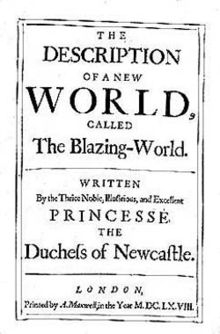
theblazingworld

Cover of one of Margaret’s books.  Photo from wikipedia.org.

The attitudes of that time period were astonishing: “Unlike Mr. Hobbes in his Leviathan, then under production in Paris, William thought that common man should be kept illiterate and happy, with sport and common prayer. “Too much reading,” he said, “has made the mob defiant.” I chewed my mutton and considered.” pg 56 (ebook)

Margaret undergoes a lot of unfortunate medical treatment in this book.

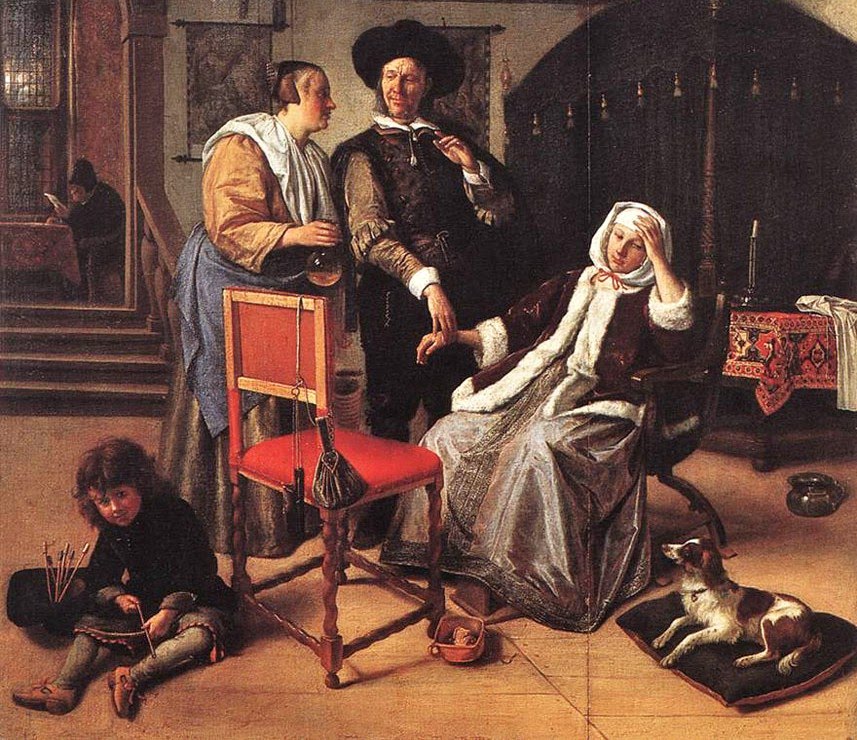
I thought that this passage was charming and really showed the time period rather than purely grotesque, bodily manipulations like some of the other doctor visits: “He (the doctor) tapped and patted, then scribbled in a book: how clear, how pale, how pink. I looked, he assured me, ten years younger than my age, in blossom, in perfect health, and prescribed only a new herb from China called tea. “The decoction of it drunk warm doth marvels,” he told Charles. “Very comforting, abates fumes.” To me he spoke nonsense, as he would to any child, suggesting candy or gossip, or candy with gossip, to lift my mood.” pg 64 (ebook)

thedoctorsvisit

Painting: The Doctor’s Visit by Jan Steen.

Digital image from b-womeninamericanhistory17.blogspot.com

The science of the 1600’s was so off from reality as to seem absurd now in retrospect.

Take this scene where Margaret and an intellectual friend are viewing a map of the North Pole:“Here,” he said, “lies the very pole of the pole of the Earth, where all the oceans’ waters circle round and fall, just as if you’d poured them down a funnel in your head, only to see them come back out the southern end. And in the middle of the middle sits a large black rock, the very pole of the pole of the pole of the Earth, wholly magnetic, possibly magic, and thirty-three miles across!” “Where is the ice?” she wanted to know.” pg 100, ebook.

Photo by Ylanite Koppens on Pexels.com

In this passage, Margaret’s husband asks her what she wants in life and I thought that Dutton captured the (occasionally) unsettled attitude of every woman who has ever lived nearly perfectly:“But Margaret wanted the whole house to move three feet to the left. It was indescribable what she wanted. She was restless. She wanted to work. She wanted to be thirty people. She wanted to wear a cap of pearls and a coat of bright blue diamonds. To live as nature does, in many ages, in many brains.” pg 102, ebook. I’ve been there.

If the reader is looking for a historical fiction with more umph to it, she may want to consider The Dream Lover: A Novel of George Sand by Elizabeth Berg.

But, if she wants a frothy, fun, and fantastical journey into what might have been, look no further than Margaret the First.

Thanks for reading!

This review also appeared on O’Fallon Public Library’s blog.

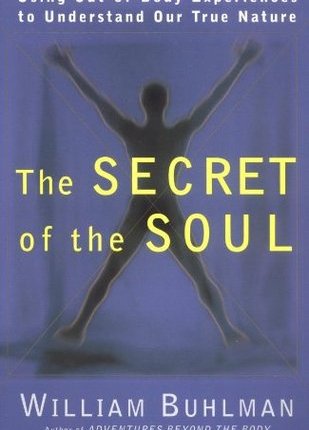
The Secret of the Soul: Using Out-of-Body Experiences to Understand Our True Nature by William Buhlman

The Secret of the Soul: Using Out-of-Body Experiences to Understand Our True Nature by William Buhlman

The Secret of the Soul is a great title for beginners who are looking to understand this, sometimes confusing, other times frightening, skill that we all seem to possess — the ability to exit our bodies in a kind of vision or trance.

Some call this the “out of body experience” or OBE.

Photo by Joshua Abner on Pexels.com

The first half of the book, Buhlman discusses OBEs, why they are important, and gives countless examples of actual OBEs that folks have had. The second part of the book gives concrete techniques and problem solving tips to assist readers in having their own OBEs.

One of my friends is a long distance runner who has had some OBEs during his ultra marathons. I thought of him in the section entitled “Combat and Trauma-Induced Experiences”: “It was while I was running in a marathon last year that I had a very strange experience. I was at about the eighteen-mile marker when I looked beside me and saw myself running. At first I thought it was someone who was my build and wearing the same shoes, but then I realized it was me!” pg 55

Buhlman has story after story like that.

Photo by anouar olh on Pexels.com

If you’ve never had an out of body experience of your own, the sheer variety and number of people who have fills you with confidence that you can.

I also liked Chapter 4, “Transformational Experiences”: For thousands of years spiritual masters have taught that the act of withdrawing from the senses is essential in order to consciously experience our spiritual self. pg 61

And the testimony from that chapter: “This is bigger then anything I can imagine; how can I tell people without sounding like a nutcase? This changes everything I ever thought I knew or thought was true.” pg 68

That’s the thing about powerful transformational experiences. Until someone has one him or herself, there’s not really anyway to explain it.

Chapter 6, “Extraterrestrial Contact and Abduction,” was the first time that I’ve read about aliens alongside traditional OBEs. Buhlman writes: “After reading more than two hundred such letters (from his OBE survey), I noticed a startling similarity: The letters describing extraterrestrial contacts and abductions were almost identical to the thousands of letters I have received describing out of body experiences. In fact, I often could not distinguish between letters.” pg 89

Photo by Francesco Ungaro on Pexels.com

In Chapter 7, A Brief History of Out-of-Body Experiences, the reader is given cultures from different time periods, all over the planet, that support and confirm the existence of out of body experiences.

These seem to suggest that OBEs are a “human” experience rather than a culturally specific one.

Take Emanuel Swedenborg’s words: “It has pleased the Lord to… open the interiors of my mind or spirit, whereby I have been permitted to be in the spiritual world with angels, and at the same time in the natural world with people, and this now (has happened for) twenty-seven years.” pg 113

I was surprised at how many of the historical figures presented here as having OBEs were scientists… I guess in my mind I’ve always drawn a line between the artsy/mystic types and the scientists. Line erased. 🙂

I’ll conclude with a few statements from the Appendix of the book, which was compiled from Buhlman’s extensive survey of people who had had OBE’s: “Self-initiated out-of-body exploration is a direct and powerful method to experience our true spiritual essence. It is an effective method to accelerate our personal growth and evolution. … This is achieved by personal spiritual experience and exploration beyond the physical limits.” Appendix pg 253.

Photo by Enrique Hoyos on Pexels.com

Couldn’t have said it better myself.

If you’re looking for more books on the topic of out-of-body experiences, check out Otherwhere by Kurt Leland, Journeys Out of the Body by Robert Monroe, or Multidimensional Man by Jurgen Ziewe.

Thank you for reading!

The Reason I Jump: The Inner Voice of a Thirteen-Year-Old Boy with Autism by Naoki Higashida

The Reason I Jump: The Inner Voice of a Thirteen-Year-Old Boy with Autism by Naoki Higashida

Description from Goodreads: “You’ve never read a book like The Reason I Jump. Written by Naoki Higashida, a very smart, very self-aware, and very charming thirteen-year-old boy with autism, it is a one-of-a-kind memoir that demonstrates how an autistic mind thinks, feels, perceives, and responds in ways few of us can imagine. Parents and family members who never thought they could get inside the head of their autistic loved one at last have a way to break through to the curious, subtle, and complex life within.”

The reviews on this one from my Goodreads friends are very mixed and I understand why. The Reason I Jump touches on a very emotional topic.

I’m not an expert on autism so I am completely unqualified to determine if Naoki wrote this book with or without help or the over arching truth of his experiences. However, as a reader, I thought that some of Naoki’s words were very beautiful.

Naoki talks about difficulties in communicating his feelings, the beauty of nature, the impossibility of controlling his emotions or repetitive actions- knowing that he’s not behaving “normally” but not able to do anything about it.

“Please don’t judge us from the outside only. I don’t know why we can’t talk properly. But it’s not that we won’t talk- it’s that we can’t talk and we’re suffering because of it.”pg 24, ebook.

It seems to me that everyone’s lens of perception is different and we can learn from each other if we share our own unique viewpoint. I certainly learned about Naoki’s inner world from this book.

Thank you for reading!

Making the Cut: The 30-Day Diet and Fitness Plan for the Strongest, Sexiest You by Jillian Michaels

Making the Cut: The 30-Day Diet and Fitness Plan for the Strongest, Sexiest You by Jillian Michaels

“Making the Cut” is a collection of recipes, workout tips, and insider training techniques from Jill Michaels, one of the trainers of the television program: The Biggest Loser. She’s hardcore and this book is a reflection of that.

Definitely not for everyone, myself included, I’d only recommend it to those who are already in very good shape. Let me make one thing clear, I’m not in “bad” shape, but I am not at the level required to complete these exercises.

Photo by Pixabay on Pexels.com

So, I nearly killed myself trying to do Day 1 of the circuit training. I have a predictable cycle with fitness books. I read them, get all fired up about changing my diet and amping up my workouts, try it for awhile, then give up.

This one, at least, was so hard and I was hurting so bad that I gave it up right away rather than drawing it out to its inevitable conclusion. Her clean eating tips are solid and I’ve added a lot more fresh fruits and veg to my table, but, the workouts are just too hard.

I had my husband helping with the timer and figuring out what I was supposed to do at each step because her descriptions of the exercises are all gathered together in an index at the end. He was encouraging me to stop after the first two minutes, but I insisted on doing at least ten- silly me.

The weird frog push-ups were an impossibility from the start. I almost broke my nose when I tried to lower my face to the floor. I had to laugh, it was ridiculous.

My only saving grace was that I was using the equipment at my home rather than the gym. If I had humiliated myself like that in public, I might not have been able to give this book the “liked it” three stars.

Some read alikes, for those fitness buffs who just can’t get enough! : This Is Why You’re Sick and Tired: by Jackie Warner, Get Me Skinny by Tony Arreola or, if you’re tired of the exercise and diet merry-go-round: Down Size: 12 Truths for Turning Pants-Splitting Frustration into Pants-Fitting Success by Ted Spiker or Confessions of an Unlikely Runner: A Guide to Racing and Obstacle Courses for the Averagely Fit and Halfway Dedicated by Dana L. Ayers.

Thanks for reading!

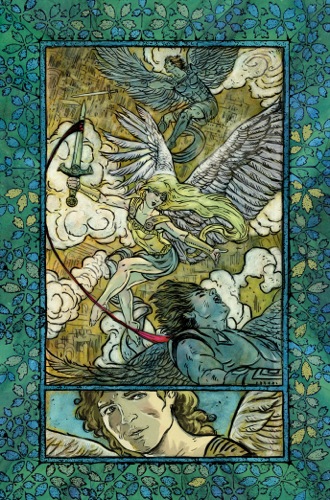
A Flight of Angels, Illustrated by Rebecca Guay

A Flight of Angels, Illustrated by Rebecca Guay

A Flight of Angels includes stories by Holly Black, Louise Hawes, Todd Mitchell, Alisa Kwitney, Bill Willingham.

Lovely art elevates a so-so collection of short stories about angels. Rebecca Guay, in my opinion, is one of the most talented illustrators I’ve ever seen. The artwork is classic but ephemeral with tasteful nudes and multi-layered backgrounds. In a word: gorgeous.

flightofangels

I picked this one up because of The Last Dragon by Jane Yolen. In that book, as in this, I loved the art but thought that the story was predictable. I feel like the authors that Guay has partnered with, at least so far, don’t measure up to the masterworks she produces.

flightofangels2

Borrow this one from your nearest library so that you can see how beautiful it is.

Read alikes: some of the Fables, Vol. 1: Legends in Exile series has art on this level but they’re kind of hit or miss. Saga, Volume 1 is beautiful but the story has some very vulgar moments popped in there. If you can handle that, and I know that some people are huge fans of Saga, then that series might be a good fit. Or, of course, you may want to pick up The Last Dragon as that is done by the same illustrator.

Thanks for reading!

Lord of the Flies by William Golding

Lord of the Flies by William Golding

Spoilers abound in this review, dear readers, so beware!  If you haven’t read this one yet, stop now.

I had never read this classic before now. It was one of the options in Advanced Literature, my freshman year of high school, along with Wuthering Heights and Dune. I ended up choosing Wuthering Heights, which, is an excellent read if you’re into the gothic romance stuff. So, I was bringing adult eyes to a book that most people seem to have read as a young adult. And, I have to say, I was enthralled.

As I mentioned in previous reviews, my undergraduate degree is in political science. For whatever reason, I love studying the building blocks of society, the structures of power, and the shifting sands of public opinion and group think. Lord of the Flies is a powerhouse of a book for all of those things.

For those like me who haven’t read this (I imagine there must be somebody out there), we start out on an island. There has been a plane crash and only children have survived. We’re on an island full of boys- no girls, interestingly enough. I guess Golding didn’t want to muddy the waters with gender issues in addition to the social hierarchy stuff. So, there’s a charismatic boy named Ralph who meets an overweight kid. Overweight kid shares with Ralph in confidence that the boys back at school used to call him, ‘Piggy’, but he’d rather be called anything but that. They find a huge conch shell on the beach and use it to call the other survivors to the shoreline. They’re sharing names and Ralph tells the group to call the fat kid, Piggy. Now, that was a huge red flag to me. When you tell somebody a secret and, not ten minutes later, they turn around and use that secret against you, you’ve got to know that you’ve got problems heading your way.

Well, the newly christened Piggy doesn’t have a lot of choice in the matter, because there’s an older group of choir boys on the island and the head of that group doesn’t like Piggy. So, to protect himself from the provocations of the bigger and stronger boy, Piggy allies himself with Ralph. The entire group takes a vote and decides that Ralph is going to lead this rag-tag bunch. Ralph wants to keep a smokey fire burning at all times, in order to attract the attention of any passing ships, and get the heck off of the island. Choir boy leader, Jack, wants to hunt the wild pigs on the island for meat. He becomes strangely obsessed with this chore and begins to go a bit bonkers- sort like Colonel Kurtz in Apocalypse Now. Remember, there are no adults around to keep the peace. And then things start to fall completely apart…

That’s the basic plot.  Now for some quotes: “This is our island. It’s a good island. Until the grownups come to fetch us we’ll have fun. pg 54 ebook. Famous last words, right?

Superstition and fear enter the picture in some of the first moments on the beach: “He wants to know what you’re going to do about the snake-thing.”… Either the wandering breezes or perhaps the decline of the sun allowed a little coolness to lie under the trees. The boys felt it and stirred restlessly. pg 55 ebook. Golding could have taken this story a completely different direction and made the beast real. It would have been so cool in a science fiction type of way. Oh well.

My favorite character was, of course, Piggy: “Ralph moved impatiently. The trouble was, if you were a chief you had to think, you had to be wise. And then the occasion slipped by so that you had to grab at a decision… Only, decided Ralph as he faced the chief’s seat, I can’t think. Not like Piggy. … Piggy could think. He could go step by step inside that fat head of his, only Piggy was no chief. But Piggy, for all his ludicrous body, had brains. Ralph was a specialist in thought now, and could recognize thought in another.” pg 125, ebook. You think Roger ever got any psychological treatment for being such a psycho and killing people? One can only hope.

One of the original young adult dystopian reads, Lord of the Flies is an excellent pick for reluctant readers. Don’t let the label of “classic” fool you. It has a very fast pace and I’m still picking apart the details in my head even though I finished it a couple days ago. Some read alikes: The Hunger Games by Suzanne Collins (of course) and The Girl with All the Gifts by M.R. Carey (fresh take on a dystopian world, accepted social order, and power struggles between characters).

Thanks for reading!

Shadow Scale by Rachel Hartman

Shadow Scale by Rachel Hartman

This is the second book in the Seraphina series. Seraphina is a half dragon/half human musician who, in the last book, was trying to hide her identity from those around her because, in this world where dragons are real, her existence was considered an abomination by religious authorities. How would a human and a dragon come together to make such a child, you ask? Dragons can take human form when they choose to, the trouble is that, they’re not very human-like in their actions and behavior, even when they do. Dragons consider emotions to be beneath logic, so, to put it in Star Trek terms, Hartman wrote them like Vulcans.

Seraphina, for a young adult novel, was rather complex. Not only was Seraphina dealing with her species identity, there’s also religious conflicts, internal/emotional conflicts, a meditation based “magic” system, a burgeoning war between the humans and dragons, factions on both sides who are opposed to the majority, dragon culture and hierarchy questions, tricky cross species friendships, the obligatory romance that every young adult book seems it MUST have and, in Shadow Scale, the added complication of Seraphina trying to find other half dragons like herself. It’s mind-boggling really when you write it all down and try to sort it out. I enjoyed trying to keep it all straight but I can see how Seraphina might not be a good fit for reluctant readers. There is a long list of characters at the end so that if you get confused, you can look each one up. If that kind of thing makes you crazy, you may want to pass on this one.

Seraphina has really come into her own in this story. Hartman certainly doesn’t skimp on the characterizations:“These scales, my visible emblem of shame… which I had hidden, suppressed, and even once tried to pry off with a knife- how was i now able to laugh about them with strangers? Something had changed in me. I was such a long way from where I had started.”pg 436, ebook.

My favorite parts of this book were anything to do with dragons! :“Dragons lay one egg at a time, and we grow slowly. Each death is significant, and so we settle our differences with litigation, or with an individual combat at most. It has never been our way to fight on this scale; if the war continues, our whole species loses.” pg 38, ebook.

Seraphina has a dream- to bring all the half-dragons like herself together to create a family, of sorts: “I am on a mission to find all our kind. Goredd requires our assistance with the dragon civil war, but once that’s over, I hope we might form a community of half-dragons, supporting and valuing each other.” Dame Okra rolled her eyes so hard I feared she’d give herself an aneurysm.” pg 112, ebook.

The intolerance taught by the religion in Seraphina’s world was terrifying, perhaps because it sounded so real: “I was no great hand at scripture- I avoided most of it- but I knew every line written about my kind, thanks to the pamphlet Orma had made me. “Half human, all malevolence” was one of Abaster’s best. Or: “If a woman hath lain with the beast, beat her with a mallet until she miscarries or dies. Let it be both, lest her horrifying issue live to claw its way out, or the woman live to conceive evil again.” pg 287, ebook. One of the main messages of Seraphina is tolerance for different cultures- that everyone has something positive to contribute in their own way.

As much as I gripe about the romance that always crops up in the young adult books, at least this one is well written:“However strenuously the world pulls us apart, however long the absence, we are not changed for being dashed upon the rocks. I knew you then, I know you now, I shall know you again when you come home.” pg 491, ebook. Awww, right?

This is a well written fantasy about dragons- fire breathing, scaled, roaring dragons! There’s nothing in here that parents should find objectionable for their teens to read and the messages that it teaches are worth while and should be repeated. Some read alikes: Daggerspell by Katharine Kerr (first book in a long, adult series, but, eventually, there’s dragons!) or The Last Dragonslayer by Jasper Fforde (appropriate for young adults).

Thanks for reading!