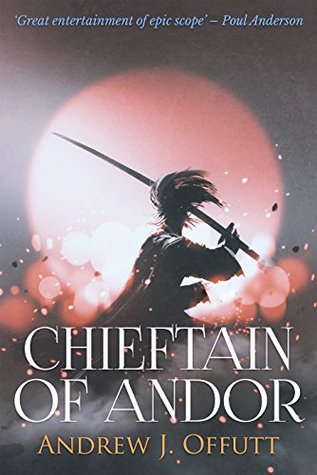
I thought I would enjoy Chieftain of Andor but this reprint of a 1976 classic wasn’t to my liking. Unfortunately, the anachronistic treatment of a majority of the women in the writing of the story, as either sex object or victim, ruined any possible enjoyment that I might have had in the adventure.
As for the story itself, it’s straight forward and may appeal to true fans of pulp science fiction. Robert Cleve is seeking an adventure. A shadowy company on Earth offers to transfer his consciousness to a man on a hugely distant planet where magic is real: “You will have adventures, Mr. Cleve- yes, plural, and in abundance. The opportunity for greatness- although your friends will never know of your achievements. And the opportunity to die. In which case your friends will never be certain. For once you agree, Robert Cleve- … you vanish from this world.” loc 27, ebook.
The women are the ones who are able to do magic on the planet, Andor. In this aspect, it was vaguely reminiscent of Dune: “..she was Starpowered, and of Starinor, oldest of families. Down to her had come centuries of generations of Andorite witchery.” loc, 289, ebook. But, even with these magical powers, the females are never able to secure power, which I found puzzling. They act primarily as a sort of supporting role for the chieftains because… that’s how it’s done, I suppose. Offutt tries to dissect gender roles a little bit in Chieftain of Andor but I never found it satisfying.
Robert Cleve doesn’t believe in magic and so, his troubles begin from almost the first moment that he arrives in his new body: “…Robert Cleve was of Earth. Worse, he was of America, where belief in magic is laughed at and sneered at, save only in church and on Wall Street. …despite all he had seen and heard here, despite the beliefs of his peers and of the memories he now possessed… Cleve found it most difficult to accept witches and witchery. loc 419, ebook. Of course, the sorceress does not care if he believes in her or not…
As I mentioned before, readers who loved Dune may eat this up with a spoon as it has some similar themes. Unfortunately, I can’t recommend it for the modern female reader.
Thank you to NetGalley and Endeavor Publishing for the opportunity to read this book.
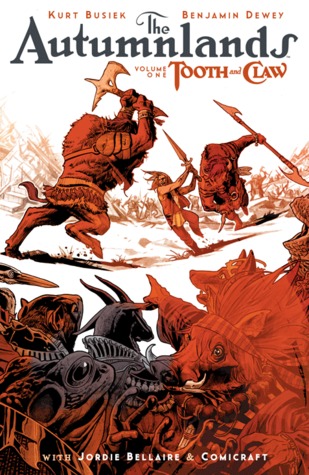
Excellent introduction to a world where anthropomorphized animals live on cities that float in the sky with the help of a magic that is fading from existence.
To combat this magic shortage, a talented magic user gathers a coalition of wizards to bring a great warrior from the past to the present in order to reawaken the powers.
The warrior is surprising, his summoning has unintended consequences, and the reader, after just a few pages, finds herself quickly caught up in a strange new world.
Highly recommended for adult readers who enjoy fantasy graphic novels.
There is a bunch of graphic violence and full frontal male nudity in here so, head’s up librarians. Make sure to shelve The Autumnlands in the appropriate section.
Alyssa is a descendant of Alice Liddell- the Alice who inspired Carroll to write his tale of white rabbits and fantastical creatures. But, Alyssa has a family secret: the women of her bloodline go insane when they come of age.
She tries to look on the positive side of this: At least one good thing has come out of my inherited insanity. Without the delusions, I might never have found my artistic medium.” pg 10, ebook.
Alyssa is in love with Jeb, a dark and brooding young man with a penchant for grunge clothing and a lip piercing (that she talks about all the time). But, he is dating the most popular girl in Alyssa’s high school class, Taelor (of course).
Things get really exciting when Alyssa starts to hear voices coming from the bugs and plants.
After a brief introduction where the reader learns that Jeb is freakishly controlling and Alyssa’s mother is in an insane asylum, she falls through a mirror and after some trials, finds her way into Wonderland.
I thought this could have been a potentially interesting re-telling of the classic Alice in Wonderland story, but Splintered‘s uniqueness is stifled under a bunch of teen angst and a love triangle.
Granted, I’m not the target audience for this book, but I’d been on a roll lately with awesome fairy tale re-tellings and I thought I’d give it a shot. Oh well.
I actually enjoyed A.G. Howard’s interpretation of Wonderland itself. The characters were familiar but twisted slightly.
Here’s a passage from the tea party- my favorite part: “Now we need to get back to our world. Like yesterday.” “Yesterday, you say?” the hatmaker warbles in his bouncing timbre. “Yesterday is doable.” Guffawing, the hare slaps a knee and adds, “Although two yesterdays would be impossible.” The Door Mouse snickers, slipping back into his uniform. “No, no! You can retrogress as many yesterdays as you please. Simply walk backward the rest of your life.” pg 187, ebook.
See? Howard nailed the classic characterizations, but Carroll’s original creations were far superior to Alyssa, Jeb, and Morpheus, who were her main contributions to the story.
Disregard my opinions on this book if you simply must read any and all fairy tale re-tellings because, at the very least, it is that.
Just be aware what you’re picking up- a young adult romance/coming of age- and if that’s what you’re in the mood for, you may really enjoy it.
I find that my expectations shape my opinion of a book almost as much as the text itself. For example, I think if I had been warned that Alice in Zombieland had really very little to do with the Wonderland story, I may not have disliked it as much as I did.
Splintered actually has a lot of the original Wonderland in it and, if I had to choose between Alice in Zombieland or Splintered, I’d pick this in a heartbeat.
Sometimes poignant, other times appalling memoir by Gwendolyn (Wendy) Knapp that describes her dysfunctional family, drama filled relationships, and quest to find a job as a struggling writer in New Orleans.
The poverty level and drug addicted aunt described in After a While You Just Get Used to Itreally reminded me of Hillbilly Elegy: A Memoir of a Family and Culture in Crisis except that instead of in Appalachia, Gwendolyn describes a childhood in Florida. I suppose that some struggles are universal.
Although I enjoyed the stories, I wanted to read more about how the family dealt with Gwendolyn’s mother’s hoarding. Anybody else binge watch episodes of A&E’s Hoarders? It’s strangely compelling.
One lady collected every single flower bouquet message card that she had ever received- a leaning tower of Pisa in miniature, just perpetually collecting dust on one of her many side tables.
Anyway, the hoarding angle isn’t what this book is really about. The focus is mainly on Gwendolyn’s coming of age and early adulthood.
Gwendolyn is slightly older than me, but I enjoyed hearing about specific details from her childhood because I remembered some of those things in mine, like: “I applied my Dr Pepper lip gloss and pulled on my deflated Nike Airs, watching Mom give John a hug before saying her world-famous line, “Well, excuse our junk.” pg 6.
Not to brag, but I think I had a Dr Pepper lip gloss and a Mint Chocolate Chip chapstick. Those were the days…
I knew that hoarders were emotionally attached to their belongings, but what I didn’t realize is that they’re also connected to their relatives through their stuff, though it makes sense when you think about it.
This is what happened when Gwendolyn’s grandpa died: “When an old relative dies, pack rats usually take in all they can from the person’s home as if they’re adopting abandoned children. It’s their duty. Since Grandma kept all his things, her kids had to find new ways to fill their void. Pack rats build up the world around them, separating themselves with a cloak of comfort from the outside world…” pg 16
Gwendolyn’s large, extended family has a passive aggressive, sometimes overtly aggressive love/hate thing going for it.
She describes her holidays as: “It was cacophonous, ear piercing, and annoying. Don’t worry, you might warn a newcomer, some bewildered boyfriend or classmate you’d invited and would never hear from again, after a while you just get used to it. Once the first jug of wine was finished, the racist diatribes and Burl Ives impersonations reared their ugly heads like gophers in need of malleting. … It wasn’t a holiday until my mother, and everybody else for that matter, had left Grandma’s feeling victimized by their loved ones.” pgs 54-55.
Reading scads of memoirs has made me truly appreciate my own family and our very low levels of dysfunction, especially considering how large we are.
Here was the moment when I thought that we were going to deal with the hoarder thing for good, but Gwendolyn records this realization and time just marches on: “Imagine your mother burying herself alive. Imagine knowing there’s nothing you can do to help her. Imagine this every day of your life.” pg 85
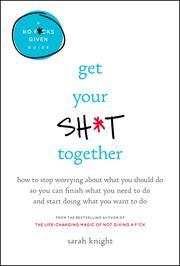
Knight is an acquired taste, but I generally enjoyed Get Your Sh*t Together. Her self help books are full of useful tips, profanity, and irreverent humor so don’t pick this title up if you’re easily offended.
If you know someone who seriously needs to get their you-know-what together, this could be the title you’ve been waiting for!
Knight keeps it real from the first page: “(This book) is more of a let-me-help-you-help-yourself-help book, with “me” here to “help” when your “self” gets in the way. Let’s face it- if you could help yourself, you’d have done it by now, right? Also, unlike many traditional self-help authors, I am going to use the word sh*t 332 times (including several sh*tmanteaus of my own invention), so please do not go on Amazon saying you were expecting sunshine and kittens and got sh*tstorms and sh*ttens.” loc 31, ebook. And so on, and so forth.
We learn that she had/has anxiety attacks and had to pull her life together because it was falling apart. Not many self help authors display their humanity and imperfections like that and I really appreciated her honesty.
Plus, readers get to reap the benefits of her hard won wisdom and we know it works because she got her stuff together enough to write the book.
I really like Knight’s various life philosophies, which she sprinkles throughout.
Here’s one of my favorites: “In my book- and in the Game of Life- you’re competing exclusively against yourself. Not other players, not even the computer. … Winning is getting what you want out of your time on planet Earth, whatever that entails. It could be the house, job, car, partner, or hairstyle of your dreams.” loc 502, ebook.
Be the best you that you can be and forget about the rest. Good advice.
Knight also gives a ‘nod’ to Marie Kondo’s internationally best selling title and Knight’s thoughts about it may appeal to more readers than the original material: “At this point, we’re living in a post-tidying society. … People get their tidying groove on for a few months, or even just a few weeks, and then… kinda lose the thread. … Why is that? Well, I submit that if they had their sh*t together in the first place, the tidying bug would have stuck.” loc 2547, ebook. Sound familiar to anyone?
Among the many life issues that Knight tackles, her thoughts on perfectionism struck particularly close to home for me: “When you accept that failure is an option, you move it from the realm of anxiety-inducing anticipation into a reality that you’ll deal with when (and more importantly, IF) that ever happens. Your energy is better spent on accomplishing goals in the here and now than on worrying about failure in the abstract.” loc 3049, ebook.
Recommended for people who need self help but don’t like reading self help, probably 18+ because of the language.
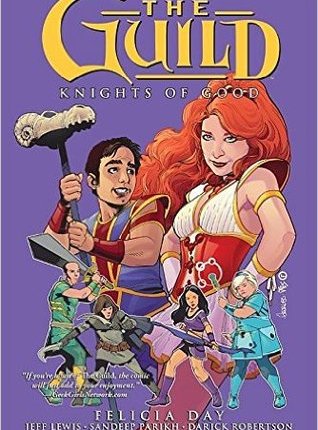
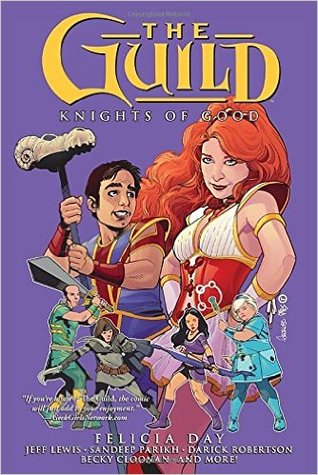
A continuation of the first Guild comic. Please watch the show before you enjoy these comics!
If you don’t know what The Guild is about, let me give you a quick recap: Cyd likes to play videogames, specifically MMORPG’s. She spends much of her time avoiding reality and playing a character named Codex.
Codex is a member of an online guild, which is a group of other real life people who are also playing the computer game.
Together, they forge friendships and explore real life issues, online and off. It’s a heart-felt series and perfect for any fans of MMORPG’s or loved ones of computer players who want to understand their partners more.
On to the context of the comic itself: the first chapter/issue with Vork’s backstory and the story behind Bladezz’s infamous sausage photo were engaging but the rest was so-so.
I felt like all of the other characters were basically re-hashing what happens on the show rather than giving the reader any huge surprises. On the plus side, there are some more panels showing the characters in-game, which is more than we were ever given on screen.
If you’re going to read any of the Guild comic books, I recommend reading The Guild (the first one) and skipping this. Unless you’re a major fan of the show and you have to read every little piece of literature that is out there on it, by all means, borrow this from the nearest library.
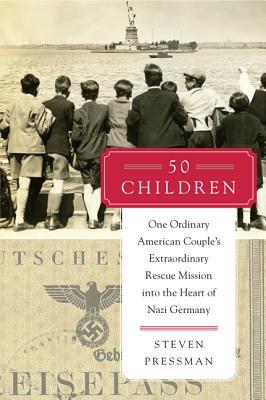
Extraordinary and true story about how Gil and Eleanor Kraus saved fifty Jewish children from the Nazi Holocaust.
I watched the HBO documentary after I read this and, though similar and emotionally powerful, I enjoyed the book more because it provides a detailed history for each child (that Pressman was able to locate).
My only complaint about the book is that, though the story is gripping, it moves very slowly. My book club had a fascinating and educational discussion about 50 Children and, all said, I am very glad that it was the final club pick of 2016.
Did you know about this episode from US history?: “The fifty boys and girls whose lives were saved by Gil and Eleanor Kraus comprised the largest single known group of children, traveling without their parents, who were legally admitted into the United States during the Holocaust.” pg 9, ebook.
I didn’t realize that in the late 1930’s, that Jewish people were allowed, and even violently encouraged, to leave the Third Reich. The trouble was that, like other large displaced populations more recently, no country on earth was prepared to let that many people in or provide the social services required.
Fortunately, Gil Kraus was a well-connected lawyer who was willing and able to work within existing immigration and labor laws to find a way to bring the children into the US.
I knew that the situation was awful for Jewish people in Europe before and during World War II, but, until I read this book, I didn’t realize the complete hopelessness that was experienced even before concentration camps became the ‘final solution’: “Within the first ten days of the Anschluss, the Viennese police reported nearly one hundred suicides throughout the city, virtually all of them Jews. By the end of April, the number of suicides had jumped to at least two thousand. Among the victims was Henny Wenkart’s pediatrician, who took his life by jumping out a window.” pg 42, ebook.
The American diplomats in Austria and Berlin had a front row seat to the horrors that the Jewish population were experiencing, but their hands were tied by national policy and immigration caps.
George Messersmith and Raymond Geist helped the Krauses as much as they could, within the law: “The Jews in Germany are being condemned to death. Their sentence will be slowly carried out, but probably too fast for the world to save them,” Geist (US foreign service officer in the Third Reich) wrote in a private letter to Messersmith (State Department secretary, stationed in Washington D.C.) in December 1938, less than a month after Kristallnacht.” pg 61, ebook.
Why was the American publication so anti-immigration?: “The United States still bore the scars of the Great Depression, and restricting immigration was seen as a way to protect jobs for Americans, who for years had been plagued with staggering unemployment rates. But challenging economic considerations were not the only factors at play in the immigration debate. The American public simply was not moved by the dire situation in Europe.” pg 68, ebook.
And, antisemitism was far more prevalent than it is today. All of these things made it difficult if not impossible for the Jewish people who were trying to escape the Nazis.
Even after the Krauses were able to get the children to the United States, they faced harsh criticism from other Jewish charity groups for their actions. I was absolutely blown away by that.
You’d think that people would have banded together and said, “Look what’s possible!”, but instead, they fractured and accused the Krauses of breaking immigration laws. “Was it envy that prompted others to criticize what had clearly been a stunningly unique and successful rescue? Whatever their motivation, some of these same people now wondered if they might simply duplicate Gil’s strategy. pg 201, ebook.
But, since this was the largest group to get out, clearly the others didn’t succeed.
At book club, we talked about how the 1939 situation is similar to what the world is facing today with the Syrian refugee crisis and, though we all thought that immigration policy needs to be re-examined, that the real tragedy is that the world still hasn’t found a way to respond to the wars and conflicts that cause such displacement in the first place.
Is humanity ever going to figure out a way to either co-exist peacefully or provide sanctuary for those displaced by the fighting? I don’t know, but it’s a question that we should think about.
Recommended for anyone interested in the Holocaust, immigration, or testimonies from World War II- as uplifting as it is unsettling, 50 Childrenis a timeless lesson for everyone about the evils that happen when those able to help choose not to or look away.
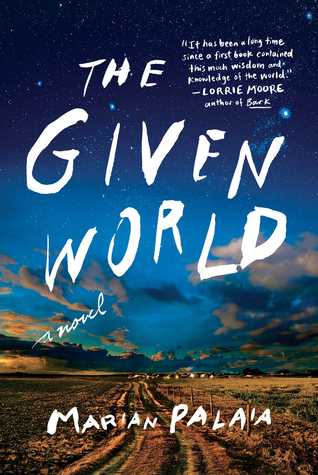
The Given World gave me a headache. Why is it that when “serious” fiction “examines” life that it only focuses on the bad stuff?
Riley is a young girl in Montana who worships her brother. He’s drafted and shipped off to war in Vietnam. It breaks her heart and she systematically begin to ruin her life, because she can’t get past it. She eventually leaves home, gets lost in worlds of drugs, domestic violence, and alcoholics on the California coast. Everyone she meets is as dysfunctional as she is or on their way to dysfunction. Personal opinion here: if society was only composed of people like that, it would have fallen apart a long time ago.
Riley is a character that I tried to like but just couldn’t. She always made the worst decisions and if there was a way to improve her situation, she didn’t choose it. It was like she had blinders on to the possible goodness in life and jumped enthusiastically into the darkness. She turns her back on her family, blames everyone else in life for her problems, and consistently isolates herself from anyone who could possibly lend comfort or stability. In this passage, she’s talking about her father: “The way they smoke, so casually oblivious, reminds me of my father- on the porch, maybe, or out in the yard at night, looking up at the sky, for weather, but it’s not as if he could miss the stars. I hear my name in his voice: “Riley…” Never loud or angry, just gentle reminders: try to grow up with some degree of intentionality and grace; try to believe the world is more benevolent than not. I wonder if he knows I did hear him.” pg 10, ebook. Riley, I don’t think you did.
I did grow to feel sorry for Riley. She didn’t ask for her family to be ripped apart by war. I guess, after experiencing that sort of emotional turmoil at an early age, that it might be almost impossible to put your life on track to begin with. “She reminded him of a deer who knew you weren’t out to shoot it. Like she’d let you get just so close, and then bolt to the edge of the clearing; the forest nearly impenetrable behind her where she knew you couldn’t easily follow.pg 40, ebook. But, I just couldn’t get over the fact that she didn’t use her intimate knowledge of pain to help other people.
Riley’s mother was a hot mess too, but she managed to raise two children fairly successfully. I was surprised that Riley didn’t use her as a role model, even for a moment. In this passage, Riley’s mother writes her a letter, trying to connect with her wayward child: “And lost as you already are these days, or as I think you must be, you still probably understand, maybe better than most, that kids don’t necessarily hold you steady. Even if they do, somehow, hold you in place.” pg 97, ebook.
Rather than continue on in this vein, I will end this review with acknowledging that The Given World was not for me. But, if you enjoy reading coming of age stories with multiple flawed characters and plenty of bad decisions, you may want to pick this one up. Some trigger warnings for sensitive readers: domestic abuse, racially motivated violence, and drug use.
All Darling Children asks the question: what if something corrupted the ‘boy-who-never-grew-up’?
Peter Pan is one of my favorite fairy tales and it has featured in quite a few beautiful re-tellings. (Tiger Lily is one.)
All Darling Children is a masterful, twisted take on a literary classic. I loved this for its horror filled examination of the spiritual cost of eternal youth and the strong female lead.
From her first moments in Neverland, Madge, the grandaughter of Wendy, can tell that something isn’t right: “Neverland. It seemed a hodgepodge of landscape ripped from a dream. Or maybe a nightmare. On one side, lush forest grew dense with heat and energy. Flowers bloomed in a rainbow of colors. They shuddered as Madge gazed at them, and then, as Pan looked in their direction, shriveled to pale, dry nothings.” loc 525, ebook.
This is not Disney’s version of Neverland.
Peter and his Lost Boys are dangerous in this world. Immature and wild, they try to force the traditional gender role of ‘mother’ on Madge (because they don’t know how to handle girls otherwise) and she resists: “Outsiders aren’t supposed to know how to find the tree house until they’ve been initiated.” “Initiated?” Madge’s stomach fell. “What’s that mean?” “It means you’re in the club, not that you’d ever get in, being a girl and all.” loc 692.
I never questioned the ‘Father’/’Mother’ roles of Peter and Wendy from the original book but, if the authority of the position was abused… it gets so creepy very quickly.
Madge’s story is told in-between entries from Wendy’s old diary. Here’s one of the passages: “I’ve learned much about (Peter), and while he is erratic and inconsistent in most ways, in one he is steadfast. Predictable. Peter must always be forced to try harder. If one gives in, he loses interest. I will never give in.”loc 921.
The back and forth from the story that the reader thinks she knows that is presented in Wendy’s diary, to the new story that Monroe is weaving with Madge, is awesome. There are enough similar elements drawn in from the original that the whole thing feels chillingly familiar- a mirror version of the classic.
Peter’s bragging about his exploits is presented as charming in Barrie’s version- Monroe takes a far more modern view: “Who wants to hear the story of how I cut off Captain Hook’s hand?” The boys whooped and smacked the table. Madge paled. He’d cut off someone’s hand? What was worse, he was bragging about it? Psycho.” loc 973
If you like twisted fairy tale re-tellings, you may love All Darling Children. I did. Another one that you’ve got to pick up if you liked this is Alice by Christina Henry. It’s an incredible, dark re-imagining of Alice in Wonderland and it’s also amazing.
Thank you to NetGalley and Red Adept Publishing for a free, digital ARC.
Also thank you to my Goodreads friend, Rosemarie Short, for writing a fantastic review that convinced me that I just had to read All Darling Children. You can see her review here: https://www.goodreads.com/review/show…
 une: “..she was Starpowered, and of Starinor, oldest of families. Down to her had come centuries of generations of Andorite witchery.” loc, 289, ebook. But, even with these magical powers, the females are never able to secure power, which I found puzzling. They act primarily as a sort of supporting role for the chieftains because… that’s how it’s done, I suppose. Offutt tries to dissect gender roles a little bit in Chieftain of Andor but I never found it satisfying.
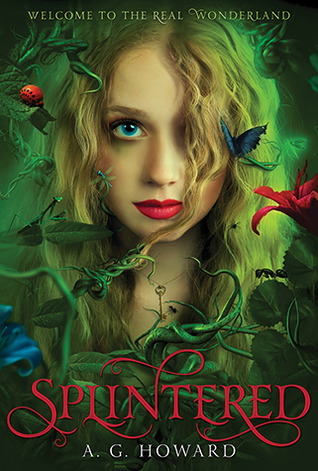 Alyssa is a descendant of Alice Liddell- the Alice who inspired Carroll to write his tale of white rabbits and fantastical creatures. But, Alyssa has a family secret: the women of her bloodline go insane when they come of age.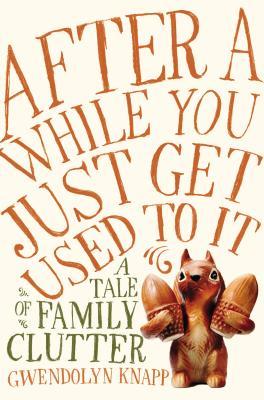






 The Given World gave me a headache. Why is it that when “serious” fiction “examines” life that it only focuses on the bad stuff?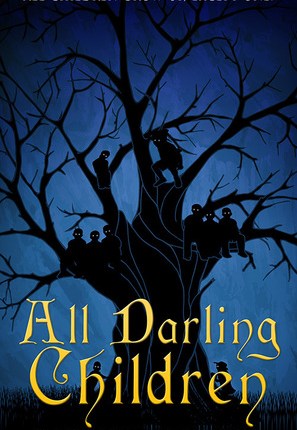

 The Help Desk Book Blog