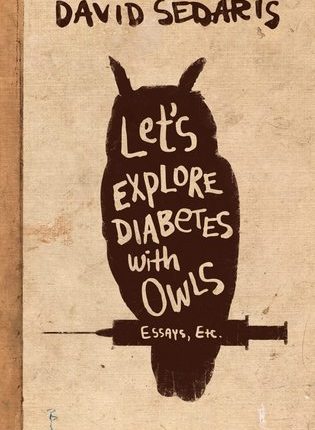
Let’s Explore Diabetes with Owls by David Sedaris

Let’s Explore Diabetes with Owls by David Sedaris

David Sedaris is a unique American humorist. Sometimes I love his essays and other times I hate them, so ranking a collection of his work fairly is difficult.

I listened to the audiobook of Let’s Explore Diabetes with Owls on my daily commute and he’s a wonderful narrator.

Actually, having read a handful of his other books, I’d recommend listening to him read his essays. His timing and inflections are perfection. He’s one of the few humorists who has literally made me laugh out loud.

The high points of this collection are Understanding Understanding Owls, Laugh Kookaburra, and A Guy Walks into a Bar Car. They’re unbelievably funny and have a lot of heart.

The low points were: Health-Care Freedoms and Why I want my Country Back, If I Ruled the World, and Dog Days. It’s as if he ran out of material and tacked the worst of it on the end.

Dog Days was awful and reminded me of Squirrel Seeks Chipmunk: A Modest Bestiary which I couldn’t stand. Vulgar prose just isn’t my thing, I guess.

Recommended for adult readers who are looking for a laugh and don’t mind some profanity and general silliness. More humorous books that I’ve enjoyed: Are You There, Vodka? It’s Me, Chelsea, Dad Is Fat, and It’s All Relative: Two Families, Three Dogs, 34 Holidays, and 50 Boxes of Wine.

Creativity: The Perfect Crime by Philippe Petit

Creativity: The Perfect Crime by Philippe Petit

In Creativity, Philippe invites the reader into his mind and attempts to dissect his creative process. For this to make any sense, you sort of have to let go of reality as you know it and step into his pipe dream world for the duration of the read.

Sometimes I was able to do this and followed his twisting train of thought to some fascinating conclusions, but other times I couldn’t. So, if you pick this one up, prepare yourself. It’s not for everyone.

I marked a couple of his ideas that resonated with me:“If you are an artist, you want to create a giant wall around yourself and, inside that wall, to follow your honesty and your intuition. What the audience will see is a man or woman who is a prisoner of his or her passion, and that is the most inspiring performance in the world.” pg 16 “To be a prisoner of passion”- I’ve never heard an artist described that way before.

Photo by ShonEjai on Pexels.com

In pages 20 to 26, Philippe essentially describes his brainstorming process as a paper version of Pinterest (my comparison, not his). He takes all of these words and pictures and files them according to some associations that his mind makes, then reassembles the results into art… somehow.

Read these pages if you want to explore how difficult it is for a creative type to write down his process in a manner that makes sense to anyone other than him or herself. It’s interesting but baffling.

“Another theory of mine: turning in circles and getting lost is important! You find yourself when you get lost.” pg 28 I embrace that theory as well.

“Go to school if you want to learn. Go to life if you want to feel.” pg 85 Loved that.

“Use your creative paranoia to be on the lookout for negativity; observe with a positive spirit: “What a beautiful disaster!” uttered the French architect Le Corbusier when he visited Manhattan for the first time.” pg 100

Photo by Trev Adams on Pexels.com

“Even if you are not a performer, even if you don’t have an act, do not think that you have nothing to rehearse! The art of living makes a performing artist out of you.” pg 122 We are all creators, painting our lives in wide strokes around us, even those of us who can’t draw a stick figure or walk on a rope between skyscrapers.

“Look in the mirror of fear and focus beyond it. What appears in the background is your path, awaiting.” pg 149 Something to keep in mind when life’s anxieties and impossibilities assail you.

Creativity: The Perfect Crime is one of a kind but if you liked it, I’d recommend reading PostSecret: Extraordinary Confessions from Ordinary Lives by Frank Warren (hundreds of people around the country decorate plain postcards with a secret that they’ve never revealed to another person- it shows the heights and depths of creativity and artistic catharsis) or How to Fly a Horse: The Secret History of Creation, Invention, and Discovery by Kevin Ashton (a more logical than emotional book about the creative process, how it works, and how everybody can create).

thewalkfilm

Speaking of Philippe Petit, did anybody else watch The Walk with Joseph Gordon-Levitt which was about his famous tight rope walk between the Twin Towers? 

If you read this book first, it makes so much more sense.

Thanks for reading!

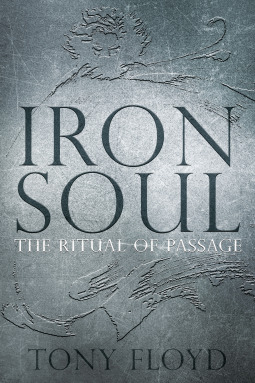
Iron Soul: The Ritual of Passage by Tony Floyd

ironsoulAn ambitious book with complex world building, I nearly gave up on Iron Soul because I felt like it was too much for one story. But, I stuck with it and really enjoyed the ending. Here’s just a taste of this book: there’s multiple worlds in which the dead spend their after lives that all have their own sets of immortal (sort of) warriors each with their own unique magic system, the struggles of the dead stuck on Earth, the plight of the dead who don’t know that they’re dead, the living who have no faith and no where to go after they die, the spaces between the worlds that are filled with monsters, a sophisticated system of hierarchy and trade among souls, a process of augmentation of powers among the dead, souls trapped in dolls, animal spirits and soul bonding…

That’s all in addition to the basic story line- Aldus fights spectres and saves lost souls, he is called a Ferryman. While out on duty, he finds a powerful soul bound to Earth, whose name is Robert. Together, with a Jewish warrior named Benjamin, an ancient animal spirit, and an unlikely wandering soul who is bound in an unexpected container, Aldus and Robert will face one of the greatest threats that the living and immortal worlds have ever known- a mad man who will stop at nothing to allow spectres (monstrous spirits) to enter the world and prey on the living. Like I said, this is very ambitious and well-conceived novel but I felt that the book, like Robert in his earth bound chains, struggles under the huge weight of so many story elements.

The characterizations were awesome though:
“Aldus Vorkis was an old soul. To an elder Ferryman of his caliber there were ways, there were means, there were paths, and therein lay the answers for every question worth answering if people could only be bothered to take the time and look.” loc 78, ebook. Aldus makes an excellent mentor figure.

Robert was my favorite character: “Being an Iron Soul is not just about raw power, Robert. You were isolated from any true, intelligent contact whatsoever for two hundred years, boy, and yet I have no doubt that you are psychologically the same now as when you still lived. An Iron Soul has the power to not only face mighty forces on the same footing, but to also endure trials that would break a normal man’s spirit.” loc 1600, ebook.

This story may not appeal to atheists as atheists are written as clueless wanderers who don’t belong in any after life and are gathered up and shunted to the Christian world out of pity. Liberal readers may also take exception as an abortion clinic is depicted as the spawn point for countless spectres and the greatest of all evils on Earth. Granted, Floyd never uses the world “abortion” but it is clear what he’s talking about. But, on the other hand, this book may appeal to readers because of those very reasons. So, my friends, choose whatever option is appropriate for you. As I said, I was tripping over the sheer amount of information contained in this book and am rarely offended by anything that I read, but I noted it because it could potentially trigger people with strong opinions about these topics one way or another.

Also, I noticed that the Christian and Jewish after lives are shown but no Buddhist, Muslim, or Hindu worlds… yet. They’re hinted at certainly and this is the first book in a series, so maybe Floyd is saving them for later.

This all sounds far more negative than I was intending this review to be. As I said, the ending packs quite a punch (in more ways than one) and if you can wind your way through this book, there are rewards to be found. I very much enjoyed the character development, the relationships between the characters, and Robert’s awesome ride (which I will not detail here as it is one of the best parts of Iron Soul in my opinion). Recommended for readers who enjoy complex science fiction/fantasy and truly unique concepts.

Some similar reads: The Interminables, The Breedling and the City in the Garden, or Funeral Games.

Thank you to NetGalley and North Loop Books for a digital advance reader’s copy of this book! And, thank you for reading!
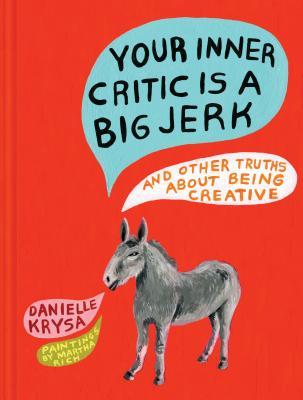
Your Inner Critic Is a Big Jerk: And Other Truths About Being Creative by Danielle Krysa

Your Inner Critic Is a Big Jerk: And Other Truths About Being Creative by Danielle Krysa
yourinnercritic

A quirky little book about how to inspire your own creativity and how to use your inner negative voice to its best advantage. Martha Rich’s art elevates what is actually rather simple text, but, on a more positive note, it is a quick read for those who may be short on time.

I couldn’t help but draw similarities between this book and Unmistakable: Why Only Is Better Than Best, which I read last week. Your Inner Critic is a Big Jerk deals with the sensitive parts of the creative process and breaking through your fears about how your art will be received.

Unmistakable is more about why you need to create the art that only you can create and how a bunch of different artists have managed to do just that. But, if you’re looking to jump start your creativity this year, pick up both of these because they actually complement each other fairly well.

One of my take-aways from Your Inner Critic is that it is never too late to start doing what you do: “Far too often, people tell me, “I wish I hadn’t given up on art [or dancing, acting, writing, music], but it’s too late now.” What! Why? I don’t believe that for a second. Many amazingly talented people didn’t hit their stride until their thirties, forties, or later.” pg 20

And Krysa goes on to list such luminaries as van Gogh, Money, and Julia Child. Can you believe that!

Even if you didn’t go to school to learn whatever art you feel compelled to create, you are still an artist. I’ve been pricked by that negative inner whisper once or twice and it was cathartic to learn that I’m not alone in that struggle and to finally put it to rest: “If you want to learn something new, go learn something new. Set yourself up to get this new skill in whichever way suits you best. You are what you know, regardless of when and where you did the learning.” pg 45

Some further reading: Unmistakable: Why Only Is Better Than Best or Creativity: The Perfect Crime

Thanks for reading!

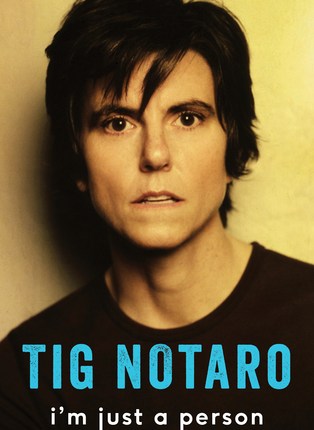
I’m Just a Person by Tig Notaro

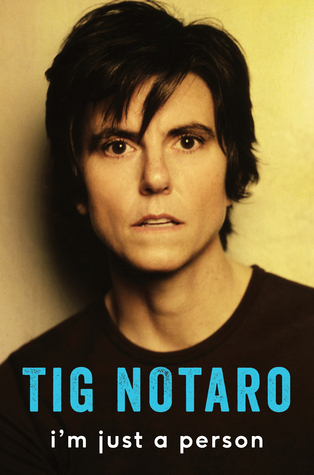
I’m Just a Person by Tig Notaro
imjustaperson

Tig Notaro is a survivor. Her dry humor shines through these pages as she tells her life story: multiple brushes with death, romantic relationships, and snapshots of her childhood, parents, and thought processes.

She shows us that she’s “just a person”, yes, but also how extraordinary an ordinary person can be when presented with nearly insurmountable difficulties like dropping out of school at an early age, having a biological father who was never present and a stepfather who was never available emotionally, a mother who was so immature that Tig practically raised herself, not to mention all of the health problems that came later.

I picked up this book because I was enamored of Tig’s stand-up routines. This book has their flavor but far more detail than her act- if you’ve enjoyed her comedy, you’ll probably like this too.

I loved reading about how Tig found her calling and her people: “I began to refer to the comedy scene as “the land of misfit toys.” It was comforting to be surrounded by people who didn’t fit into the confines of society, and it was the first time in my life that I wasn’t met with the boring conversation stopper: “Oh my God, you’re so weird.” pg 47

This part cracked me up- Tig’s discovered lumps in her breasts but she doesn’t think they’re anything to be concerned about. Her girlfriend disagreed: “Instead of making a doctor’s appointment, I spent the next couple months teasing Brooke by removing my shirt and saying, “Hey, wanna touch my cancer?” It was really fun to walk past her holding my chest and blurting out, “Ow! My cancer!” pg 109-110.

I thought that the chapter in which Tig talks about her biological father, Pat, was particularly well-written. She takes complex emotional pain and makes it into something beautiful: “He was obviously still in pain over the loss of my mother and the news of my health, but I knew that this grief could not kindle any real kind of familial bond between us. I guess I believed there was something inherently broken in Pat’s relationship with me and my brother. Maybe we had all missed some ambiguous window of time when we could have salvaged some hope for a real connection. I am certain, however, that we have the same feelings: I want everything to be okay for him and he wants everything to be okay for me.” pg 205

That is Tig’s strength- her ability to take the worst in life and wring not just humor but meaning out of it. Some similar reads: Sleepwalk With Me and Other Painfully True Stories, Shrinkage: Manhood, Marriage, and the Tumor That Tried to Kill Me, or A Girl Named Zippy.

Thanks for reading!

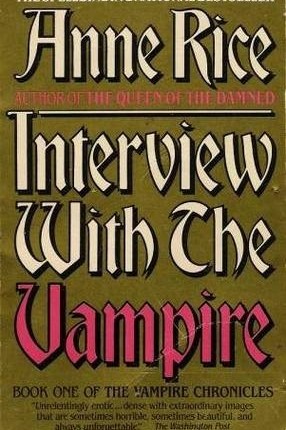
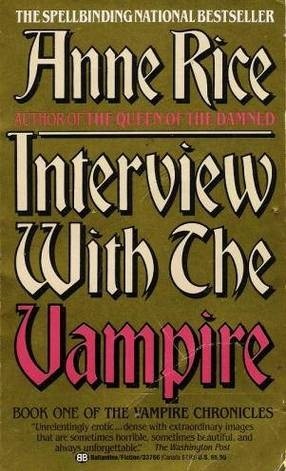
Interview with the Vampire by Anne Rice

Interview with the Vampire by Anne Rice

interviewwiththevampHalfway through reading this one, it occurred to me that I read Interview with a Vampire in high school, but it left so little impression that I promptly forgot about it until 16 or so years later when, as I was reading it again, I began to recall some of it as I went along. This is a cerebral treatment of the vampire genre, an examination of good vs evil, what immortality really means, the first of its kind in “vampire books” and an allegory of the soul itself. It is all of those things, but it’s not very fun to read. The pace drags along and, for being a horror novel, it’s not horrific, mainly dull.

Now, as back in high school, I wanted more information about what happened to Louis’s brother at the very start. Rice hints at paranormal interference on the stairs and in the brother’s religious vision, but the truth is never revealed. Maybe I have to dig through subsequent novels to find out what happened. That is the start of Louis’ troubles, the lynch pin of the whole book and Rice just glosses over it.

I also was unimpressed by Louis’s self professed “sensitivity” to life. It all combined to make him into an unending complainer. “People who cease to believe in God or goodness altogether still believe in the devil. I don’t know why. No, I do indeed know why. Evil is always possible. And goodness is eternally difficult.” pg 14, ebook. He monologues like that a lot as the book is set up as an interview, which I didn’t mind too much, but I could have done without for the last third. I mean, at that point, we know the kid with the tape recorder is there. I wanted to get lost in the story but we’re never really allowed to because we’re always flashing back and forth.

It’s difficult to enjoy a book when you don’t really like the main character.“I lived like a man who wanted to die but who had no courage to do it himself. I walked black streets and alleys alone; I passed out in cabarets. … And then I was attacked. It might have been anyone- and my invitation was open to sailors, thieves, maniacs, anyone. But it was a vampire.” pg 13, ebook. Interview with the Maniac just doesn’t have the same ring, does it. And yet, I might read it. 🙂

Rice’s vampires are emotionless, except for Louis who is seemingly exploding with sensitivity and angst: “By morning, I realized that I was his complete superior and I had been sadly cheated in having him for a teacher. … I felt cold towards him. I had no contempt in superiority. Only a hunger for new experience … Lestat was of no use.” pg 29, ebook. Or later with Claudia: “I even conceived a savage jealousy of the dollmaker to whom she’d confided her request for that tinkling diminutive lady, because that dollmaker had for a moment given her something which she held close to herself in my presence as if I were not there at all.” pg 176, ebook. On and on it goes. Lestat doesn’t understand him. Lestat’s a boor. Lestat this, Lestat that. Claudia’s out of control. Claudia too much like Lestat, Claudia’s too much like him…. Louis has eternity to explore the world and everything in it, and he chooses to hang out with the two people who makes him nuts. But, I hear you say, Lestat created him so he had control over him and he couldn’t leave Claudia because she was like an eternal child, wasn’t she?  As the story unfolds, we discover that separation was possible. Louis was simply too “sensitive” to do what was necessary.

Anyway, between the whining, the incomplete background information, and black/white view of good and evil, I did not enjoy Interview with the Vampire nearly as much as I had hoped I would. Perhaps I will revise my view if I read the rest of the series, but just thinking about digging into it makes me feel tired so I’m not sure that I’ll ever get that. Maybe I was ruined on this book by reading the Sookie Stackhouse novels, which I surprisingly loved (until the painfully awful final ones, skip those). Jump into Charlaine Harris’ novels for some vampire brain candy, save Anne Rice for the more serious, contemplative mood as it is considered a classic and beloved by many- just not me.

I plan to watch the film now and do a comparative review with the book. I watched it a long time ago too and can’t really recall it at all, but my Goodreads friends seem to think that it was better than the novel. We’ll see. 🙂 Thanks for reading!

Unmistakable: Why Only is Better than Best by Srinivas Rao

Unmistakable: Why Only is Better than Best by Srinivas Rao
unmistakable

A call-to-action for artists and business people of all types to create the work that only they can create which makes them irreplaceable and also Unmistakable.

“When you’re the only person who could have created a work of art, the competition and standard metrics by which things are measured become irrelevant because nothing can replace you. The factors that distinguish you are so personal that nobody can replicate them.” pg 2.

That makes sense to me. You’re essentially writing the book so no one can tell you how it’s supposed to go.

The theory of becoming Unmistakable is fairly simple but the journey to that place is not. There are no maps to this realm because it is different for everyone and the paths to that place vary as widely as the talents that people bring with them.

As Srinivas reminds us: “Unmistakable work is a process of self-discovery. We start our ride not knowing what it is that makes us unmistakable, and a thread reveals itself through the creation of a body of work. Dots connect, patterns emerge, and our unmistakable gift is revealed. Time is the critical ingredient required for this to take place, hence the role of longevity and commitment in the quest to become unmistakable.” pgs 56-57

So, you can’t give up. Create and fail and try again. That is as hard and as easy as it is.

“…creating unmistakable work might be one of the hardest things to do: you have to look into the depths of who you are, explore what matters to you, and infuse that into every element of your work until it can’t possibly be mistaken for something anybody could have done but you.” pg 68.

The messages contained within Unmistakable become repetitive after a few chapters, but Srinivas threads some of the stories and artists from his podcast to break up the material as well as his personal testimony.

Unmistakable encourages creation even in areas that you may have no prior experience: “Lack of formal instruction might keep us from attempting some sort of creative pursuit or starting anything in which we don’t have experience. … When we lack experience, we also have the advantage of lacking preconceived notions of what’s possible.” pg 113.

And, you don’t know what you’re capable of until you get started. So, what are we waiting for!

As Srinivas writes from an interview with Seth Godin: “The enemy of creativity is fear; that seems pretty clear. The enemy of fear is creativity; that doesn’t seem that obvious.” The antidote to our fear is to put our heads down, do our work, and make something each day.”pg 189.

Let’s all become Unmistakable.

Some further reading: Creativity: The Perfect Crime, Do the Work, and How to Fly a Horse: The Secret History of Creation, Invention, and Discovery.

Thanks for reading!

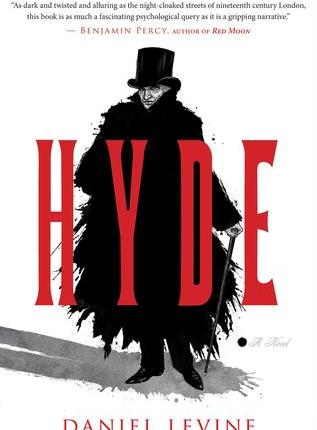
Hyde by Daniel Levine

Hyde by Daniel Levine

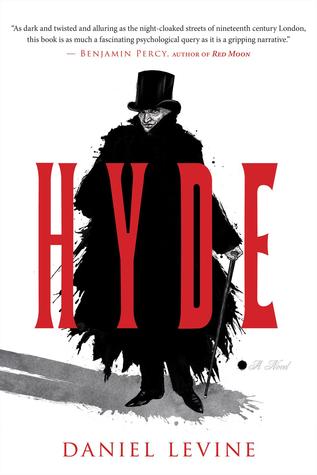
hyde**Please do not read this review if you intend to read this book and haven’t yet. I discuss a major plot twist and don’t want to spoil it for anyone.**
Hyde is the story of Jekyll and Hyde from the villain’s point of view and what a story it is. The visceral and sense obsessed descriptions are just what one would expect from a character that is made almost completely of someone’s baser nature, but if you have a weak stomach, you may want to steer clear of this disturbing tale.

The story is told in flashbacks from Hyde’s final days as he’s holed up in Dr. Jekyll’s lab: “I don’t want to die at all, but if there’s no escaping it, then at the very least I want to remember everything properly first, the way it truly happened. The truth is inside this head. I simply must extract it. In the end no one will know it but me, but that will be enough.” pg 10, ebook. I never considered it before, but how would it feel to be shut away inside someone’s mind in a type of half life, always looking out from someone’s eyes, then to be suddenly thrust into a body, given complete control, and then blamed for everything that inevitably goes wrong.

Levine’s darkly imaginative reasons why Jekyll would have “created” Hyde in the first place were chilling. I found myself pitying Hyde rather than fearing him: “It was a frustrating, blinding feeling, my ignorance. I wanted to know what my purpose was, what Jekyll needed me for.” pg 36, ebook. I always wondered that too. After the first failed experiment, Jekyll summons Hyde forth again and again with increasingly awful results. He could have just stopped after the first time and been like, “whoa, THAT was a bad idea” and chucked the rest of his solution into the river. Hyde examines the twisted motivations behind the repeated transformations.

It also looks into the infinite nature of the human psyche. The rest of this review is going to have a major spoiler in it, but I have to talk about it to truly discuss this story because this twist is what elevated Hyde in my mind from a horror story with cheap thrills to a spine tingling look into the darkness of the abyss that could exist in the soul.

How about the idea that Mr. Hyde could have a dark side of his own? That, within a damaged and fractured mind, there’s no end to the shadows that could emerge. The worst of the actions recorded in Jekyll and Hyde were not done consciously by either man, but by a monster that was created by the rage that Jekyll suppressed in his childhood. I thought that was genius. I only wish Mr. Seek had a bigger part in this tale! Because, beyond that huge twist, this story felt repetitive.
Recommended for readers who enjoy dark, violent re-tellings and can tolerate a slower paced read. Some similar, grisly tales: The Last Werewolf or Black Moon.

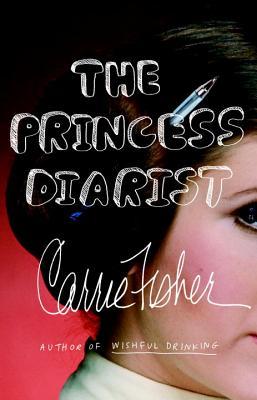
The Princess Diarist by Carrie Fisher

The Princess Diarist by Carrie Fisher
diarist

Take a highly intelligent, anxiety prone girl, mix in the life changing, world wide phenomena that is Star Wars, and add a dash of handsome, introverted, and married leading man and you have: The Princess Diarist.

This is not really about Star Wars as much as it is about obsession and Carrie trying to figure out who she is.

Though there are some tidbits sprinkled throughout: “And as much as I may have joked about Star Wars over the years, I liked that I was in those films. Particularly as the only girl in an all-boy fantasy. They were fun to make. It was an anecdote of unimaginable standing.” pg 5.

Or the moment Carrie found out that she got the part: “…I laughed and dropped the phone and ran out into the front yard and into the street. … It was raining in L.A. and I was Princess Leia. I had never been Princess Leia before and now I would be her forever. I would never not be Princess Leia. I had no idea how profoundly true that was and how long forever was.” pg 31

Carrie’s not afraid to make fun of herself: “When you watch the movie, it turns out that the voice I used when I was upset was vaguely British, and my not-upset voice is less British.” pg 44.

Or confess her hopeless awkwardness around her co-star: “But one thing I knew was that Harrison made me feel very nervous. I got tongue-tied in his company, and clumsy. It was uncomfortable in the extreme, and not in any way I could over come with a few well-chosen witticisms. We met, hit a wall, and stayed there. pg 61.

I’ve known someone who had that kind of effect on me. Poor Carrie.. poor me. 🙂

Here’s an actual entry from her diary that includes a mention of George Lucas: “George says that if you look at the person someone chooses to have “a relationship” with, you’ll see what they think of themselves. So Harrison is what I think of myself. It’s hardly a relationship, but nevertheless he is a choice. … I can’t think about it anymore. It makes my head hurt.” pg 114.

The older journal entries were my favorite part, but I can see how some readers may not enjoy them. They’re written in stream of consciousness and, at one point, I think Carrie flirts with a full on psychotic break- there’s a particularly disturbing entry about a rainbow colored talking fish that you can’t miss!

After the “Carrison” portion of the book, there’s some cringe worthy moments revealed between Carrie and mega Star Wars fans. Yes, she may have become a household name, but it doesn’t seem like it was worth the price.. or was it?

All of this just makes me want to watch Episode IV again! Read The Princess Diarist if you want to touch the depths of despair in a decades old love affair or if you want some quirky details about one of the most beloved science fiction films of all time. Also recommended: Fisher’s Shockaholic in which she details her struggles with bipolar disorder.

Thanks for reading!