Adulthood Is a Myth (Sarah’s Scribbles, #1) by Sarah Andersen

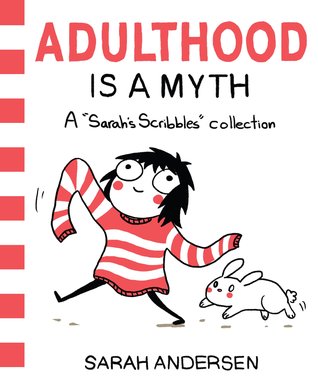
Adulthood Is a Myth (Sarah’s Scribbles, #1) by Sarah Andersen

adulthood is a mythAn utterly charming collection of simple cartoons which illuminate some of life’s undeniable truths.

For example, thinking about putting on your pajamas all day and then the joy of actually doing so.

Or considering being productive but then laying around on the couch in a stupor.

Totally relatable and reminiscent of I Was a Child by Bruce Eric Kaplan, Adulthood is a Myth is for anyone who tries to be a normal, functional adult but doesn’t succeed. And isn’t that all of us?

Thanks for reading!

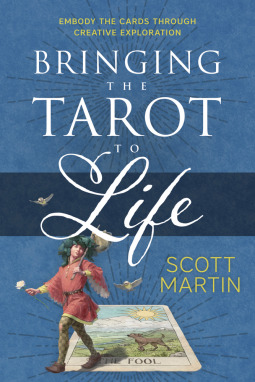
Bringing the Tarot to Life: Embody the Cards Through Creative Exploration by Scott Martin

Bringing the Tarot to Life: Embody the Cards Through Creative Exploration  by Scott Martin
bringingthetarot

Bringing the Tarot to Life is a unique tarot manual that invites the reader to use her own imagination in assimilating and interpreting the cards. I’ve never read anything quite like it.

Scott Martin was an actor and theater teacher for many years. “It struck me that just as an actor delves into his character, so a student of the tarot can explore the archetypes that are represented in the seventy-eight cards in the tarot. He can develop his intuitive abilities by participating in the written and performance exercises an actor uses to hone his talent and to create his role in a play.” loc 112-128, ebook.

He based the first two sections of the book on that idea and created a series of theater-inspired games and exploratory exercises to be played in groups or alone.

The last portion of the book consists of Martin’s interpretations of the cards. I found that section to be the least interesting, but there could be descriptions in those pages that others may not have heard. So, don’t let me deter you.

There was also some trivia included for tarot enthusiasts. Something that I didn’t know was that before Paul Foster Case helped to form The Golden Dawn, he was in theater.

Paul Foster Case became interested in tarot in 1900 when someone asked him where he thought playing cards came from. … Prior to that, he was actively involved in the theater. He was the musical director on a showboat and later worked in musical theater and vaudeville.” loc 128, ebook. But old man river, he just keeps rolling along…

Photo by Mikhail Nilov on Pexels.com

I agreed with Martin’s thoughts on improving your intuition: “How does one develop his intuition? One obvious answer is to expose the mind to more creative and imaginative ways to thinking and looking at the world. Creativity and intuition are inextricably linked.” loc 164. Indeed.

My favorite of the exercises presented in this book is “I Am What I Do” loc 231, ebook. It encourages readers to assign jobs to the different cards.

“Many people in life, as well as characters in plays, define themselves to a great extent in terms of what they do. … the possibilities are virtually limitless: The Ten of Pentacles- a family counselor. The Five of Swords- a crooked hedge fund manager. The Knight of Cups- a poet.” loc 231.

I thought that was hilarious. And, I was looking at the cards in ways that I never had before. Talk about ‘Bringing the Tarot to Life’!

Recommended for beginners or advanced practitioners of tarot cards. Every reader will most likely find an exercise or two to their liking because of the huge variety Martin offers.

Thank you to NetGalley and Llewellyn publishing for a free digital advance reader’s copy of this book. Reminder: the brief quotations that I cited in this review may change slightly in the final published version.

And, thanks for reading!

The Accidental Highwayman: Being the Tale of Kit Bristol, His Horse Midnight, a Mysterious Princess, and Sundry Magical Persons Besides (Adventures of Kit Bristol #1) by Ben Tripp

The Accidental Highwayman: Being the Tale of Kit Bristol, His Horse Midnight, a Mysterious Princess, and Sundry Magical Persons Besides (Adventures of Kit Bristol #1) by Ben Tripp
accidentalhighwayman

This is the story of Kit, a half-fairy princess, a highwayman, a tightrope walker, a man who’s lost his memory and more.

The Accidental Highwayman is not a “swashbuckler.” I listened to the digital audiobook and didn’t see that description of this story until I came to its Goodread page. That’s a positive thing because I may have felt cheated otherwise.

Though it has a large cast of characters, the pace is quite slow. This is a book that can be savored but I see how it could just as easily be put aside.

I confess, I nearly gave it up when I went nearly four chapters in a row with nothing happening other than the wagon moving onwards. But, I stuck with it to the end.

The style of storytelling feels more like a Victorian era book rather than a modern fairytale. I believe this was a purposeful choice on the part of Ben Tripp- to give it a faux-classic feel.

I feel like The Princess Bride could be an apt comparison if you slowedBride‘s pacing way down and remove almost half of the adventure. The Accidental Highwayman has charm in my opinion, but not a lot of substance.

That being said, it contains one of the most over-the-top romantic lines I’ve ever heard in an audiobook: “If I don’t kiss you, I shall perish.”pg 269. If you like that kind of thing, you might enjoy this book very much. Think “slow burning wick” of a romance. Very slow. And not graphic but sweet.

Actually, The Accidental Highwayman was sort of like The Night Circus but with more goblins and less immersive descriptions. In that book, as in this, I felt like the story was reaching for more but never quite made it.

In conclusion, I recommend this book for readers with buckets of patience and a penchant for the fantastical and overly dramatic.

Thanks for reading!

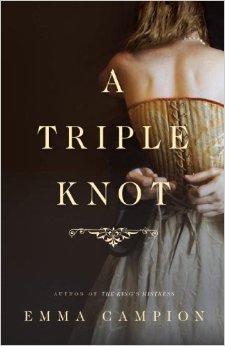
A Triple Knot by Emma Campion

A Triple Knot by Emma Campion
a triple knot

I love historical fiction about the English monarchy and court. This time period, the 1300’s, is one that I wasn’t very familiar with, which was fine with me. I’m always up for learning something new while being entertained. Warning: there are some spoilers ahead if you aren’t familiar with English history.

This story centers around Joan of Kent. Joan’s father was executed by her grandmother’s lover when she was very young. She also didn’t trust her own family to provide for her or believe that they had her best interests at heart. After reading about the actions of some of her clan, I can’t really blame her for that.

Joan seemed ridiculously naive when she married, clandestinely, at the age of twelve for love. Then, when her family insisted on a more advantageous match, she was heart broken.

I was surprised at first about her behavior and reaction but then I imagined that the lack of training, guidance or protection that she received during her childhood was probably the reason that she believed she could marry whomever she wished. Royalty didn’t enjoy the freedom of marrying for love. Poor Joan.

The historical figures described in this tale, such as Edward III and his son, The Black Prince, were larger than life with tempers to match. I loved the descriptions of the clothing, the feasts, the dancing, building maintenance and other minutiae of daily life.

I didn’t love other aspects of this story. I felt like this book was too long and the second half was incredibly rushed. I think the author should have created a trilogy.

She could have ended book one at the decision of the Pope about Joan’s marriage status. (I won’t ruin that one for you.) Then, a second book could have followed about the birth of her first four children and family life. A third book could have chronicled her next marriage and what followed.

In this book, five years passed in approximately a page and a half, sometimes less. There could have been so much more to the story and I would have loved to have read it.

Fans of Philippa Gregory’s brand of historical fiction will probably eat this up with a spoon. Prepare yourself for some rushed passages though.

I received a free copy of this book through Goodreads First Reads. Thanks for reading!

Nerd Do Well by Simon Pegg

Nerd Do Well by Simon Pegg
nerddowell

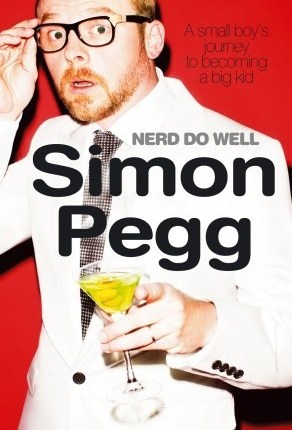
Nerd Do Well is Simon Pegg’s life story interspersed with the tale of a fictional alter ego, Pegg, a James Bond figure with a robotic sidekick. His coming of age stories and fictional bits are hilarious but once Pegg gets into his movie making period, the book loses it’s momentum.

I preferred the nostalgia of the first time he saw Star Wars to the actuality of meeting his hero, George Lucas and finding him stand-offish. There’s something heart breaking about seeing childhood hero worship crumble in the face of cold hard reality.

Pegg’s education in film appreciation and critique make for truly fascinating observations about pop culture films. I took his thoughts about how the Anakin/Frankenstein scene in the third Star Wars movie could have been made into a memorable and fitting theatrical moment instead of the joke that it was (pg 328-329) to my husband, who is the most ardent Star Wars fan that I know. Husband said in response, “His way would have made it much better.” You’ll have to trust me when I say that that’s very high praise.

Another of my favorite parts in Nerd Do Well was Pegg’s explanation for American readers about why the pub occupies a prominent place at the center of British social life. I’d never really understood what the attraction was until he painted the scene.

Photo by Kelly L on Pexels.com

I mean, in my hometown, we have all sorts of dive-bars lining main street where, any night of the week, I could roll in there and meet up with the prematurely aged classmates of mine who will never get out of that place. But, who wants to do that. The bar is the epitome of failure rather than community.

With his homemade quizzes, neighborhood regulars, and music, Pegg’s pub seems to be somewhere warm and inviting where I would actually enjoy hanging out. It makes much more sense to me now why Shaun of the Dead was based around a pub and also why most DnD campaigns begin in taverns.

If you enjoyed Nerd Do Well, you may want to read My Booky Wook (less Star Wars, more drugs, fairly funny) or Just a Geek: Unflinchingly honest tales of the search for life, love, and fulfillment beyond the Starship Enterprise (more Star Trek, more angst-filled than funny).

Thanks for reading!

Feast of Sorrow: A Novel of Ancient Rome by Crystal King

Feast of Sorrow: A Novel of Ancient Rome  by Crystal King
feastofsorrow

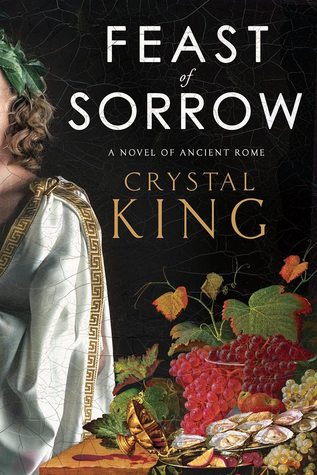
A Feast of Sorrow captures the beauty, opulence and madness of Rome during the reign of the Caesars. The story is told from the point of view of a slave in the household of Apicius. But, not just any slave. Thrasius is a cook, a coquus, the head of Apicius’ kitchen. He makes some of the finest delicacies known and invents new ones.

Apicius is wealthy beyond reason. He has the ability to purchase Thrasius the finest ingredients and the rarest spices. Apicius’ dream is to become Caesar’s gastronomic adviser. But that position isn’t acquired by wealth alone. Political currency and power is the only way forward.

And the stage is set. Feast of Sorrow has heroes, villains and, of course, food. What a strange and weird feast it is. Honeyed dormice, flamingo tongues, and more- only the best for Apicius and his clients.

Thrasius begins writing a book to preserve his master’s recipes for all time. “I added your trick about using eggs to help make cloudy wind clear, instructions on how to preserve oysters, and even Fannia’s recipe for how to make wormwood liquor. I thought about how many cooks don’t have the right information or knowledge.” loc 1592. Interestingly enough, after the tale, Crystal King talks about how Apicius’ recipes are some of the oldest surviving examples of ancient cuisine.

“Stuff the dormice with pork forcemeat and also with all the flesh from all the parts of the dormouse, pounded with pepper, pine nuts, silphium, and liquamen. Sew them up and arrange them on a tile and put them into the oven or cook them, stuffed, in a covered pot.” -On Cookery, Apicius. Loc 4466, ebook. Mmmmmm.

King fills these pages not just with food, but also, to modern eyes, the strange and sometimes cruel practices of the Roman people. Did you know that Roman diners used to wipe their hands clean in the hair of their slaves? Did you know that Romans had special priests who read the flight of birds to determine if an event was going to be successful or not? Did you know that patricians, the nobility of Rome, were judged not only for their appearance and natural abilities but also how well they could throw a dinner party?

I enjoyed this book not only for the way that King told the story of the nameless people who made Apicius’ name known for all time but also for the twists and turns it contains. Feast of Sorrow will shock you, entertain you and, maybe, make you want to try a dormouse.

Thank you to NetGalley and Touchstone Publishing for a free digital advance reader copy of this book. Note: the brief quotations that I pulled from my copy may change in the final published version. Thanks for reading!

Wolf Hall (Thomas Cromwell Trilogy #1) by Hilary Mantel

Wolf Hall (Thomas Cromwell Trilogy #1) by Hilary Mantel
wolfhall

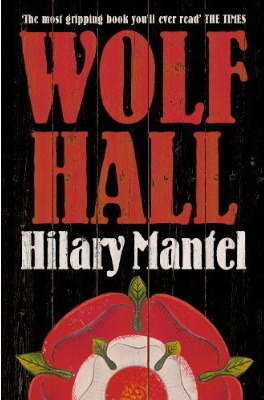
Wolf Hall is a historical fiction reader’s feast. Henry the VIII’s story, though it has been told, is re-examined through the eyes of Thomas Cromwell, one of his counselors. Who knew that a professional paper-pusher and merchant could be so fascinating?

Cromwell’s history made it unlikely that he would ever climb to such heights among the powerful. Born the son of an alcoholic blacksmith, Cromwell’s cleverness is his only advantage.

Then, through a relative, Cromwell is taken into Cardinal Wolsey’s household. Wolsey recognizes the diamond in the rough and Cromwell becomes his right-hand man. It is a life-or-death dance that Cromwell and Wolsey play with King Henry, as the king demands a new wife. (the Cardinal speaks) “Tell me why you are scowling in that way.” (Cromwell) “The people up there say they are going to kill me.” “Really?” the cardinal says. He face says, I am astonished and disappointed. “And will they kill you? Or what do you think?” pg 31, ebook.

Meanwhile, those around the king never let Cromwell forget his humble beginnings for a moment. The duke of Norfolk scowls. He paces; he rattles a little; at last he bursts out, “Damn it all, Cromwell, why are you such a … person? It isn’t as if you could afford to be.” Thomas waits, smiling. He knows what the duke means. He is a person, he is a presence. He knows how to edge blackly into a room so that you don’t see him; but perhaps those days are over.” pg 154, ebook.

The fact that Cromwell survives Wolsey’s disgrace is a miracle. As he builds his connections and power, the reader can only gape in amazement. “Chapuys greet him without a smile. “Well, you have succeeded where the cardinal failed, Henry has what he wants at last. I say to my master, who is capable of looking at these things impartially, it is a pity from Henry’s point of view that he did not take up Cromwell years ago. His affairs would have gone on much better.” pg 415.

The BBC made a fantastic book-to-screen version of this story. Many of my favorite moments from the book were taken exactly from these pages. I highly recommend it too.

My only complaint about this novel is that the style is ambiguous. Instead of labeling who is speaking, Mantel often just says “he”.

The reader must stay on her toes to keep up with the machinations of the characters, because Mantel doesn’t bother to explain it or their reasoning. I expect, that in some ways, it is very much like how these historic figures lived their lives. Never quite knowing who to trust or how the wind was blowing.

Yes, now we know what happened, who went to the block and who didn’t, but this story nearly succeeds in making the reader forget the ending. Wolf Hall throws you right into confusion of Henry the VIII’s reign. And, it was a Wolf Hall indeed.

Thanks for reading!

The Love Poems of Rumi by Jalaluddin Rumi, Edited by Deepak Chopra

The Love Poems of Rumi by Jalaluddin Rumi, Edited by Deepak Chopra

I think Rumi’s poetry is unsurpassed in its mysticism and beauty.

“In your light I learn how to love.
In your beauty, how to make poems.”

“You dance inside my chest,
where no one sees you,”

“but sometimes I do, and that
sight becomes this art.”
pg 62

Photo by Rahul on Pexels.com

When my husband and I were first dating, we lived in different parts of the country. This was one of the books he sent when he found out that I loved poetry. He bought himself a copy too and we read it together- separately. Then we talked about it on the phone later. This was in the days before Skype or Facetime. It seems so quaint now.

“I desire you
more than food
or drink”

“My body
my senses
my mind
hunger for your taste”

“I can sense your presence
in my heart
although you belong
to all the world”

“I wait
with silent passion
for one gesture
one glance
from you”
pg 34

Photo by Wendy van Zyl on Pexels.com

I’ll be married for 11 years this May.

If you ever meet someone romantically interesting who tells you they like poetry, buy them a book of Rumi. You won’t regret it- at least, my husband says he doesn’t. 🙂

Thanks for reading!

Stillness Speaks by Eckhart Tolle

Stillness Speaks by Eckhart Tolle
stillness speaks

Shorter and simpler than his other books, Stillness Speaks is the essence of Eckhart Tolle. If you’re interested in his teaching, but don’t feel up to some of his more far-out ideas, this would be a good place to start.

Waking up to who you really are: “When you recognize that there is a voice in your head that pretends to be you and never stops speaking, you are awakening out of your unconscious identification with the stream of thinking. When you notice that voice, you realize that who you are is not the voice- the thinker- but the one who is aware of it. Knowing yourself as the awareness behind the voice is freedom.” pg 29.

If you feel like things are out of your control, Eckhart Tolle hands the reins of power back to you: “Your thoughts make you unhappy. Your interpretations, the stories you tell yourself make you unhappy. “The thoughts I am thinking right now are making me unhappy.” This realization breaks your unconscious identification with those thoughts.” pg 120.

This book is filled with mind-blowing moments. Take this one (I underlined it in my copy): “Death is not the opposite of life. Life has no opposite. The opposite of death is birth. Life is eternal.” pg 103. Eckhart Tolle mic drop.

I’ve always loved his thoughts about the relationship between nature and man: “Nature can bring you to stillness. That is its gift to you. When you perceive and join with nature in the field of stillness, that field becomes permeated with your awareness. That is your gift to nature. Through you nature becomes aware of itself. Nature has been waiting for you, as it were, for millions of years.” pgs 85-86. So, go hug a tree today. 🙂

This book is an experience which is hard to describe. Read it and let me know what you think.

If you enjoy Stillness Speaks, you may want to give The Power of Now: A Guide to Spiritual Enlightenment or A New Earth: Awakening to Your Life’s Purpose a go. They are more difficult to get through than this offering, but I found them to be worth it.

Thanks for reading!