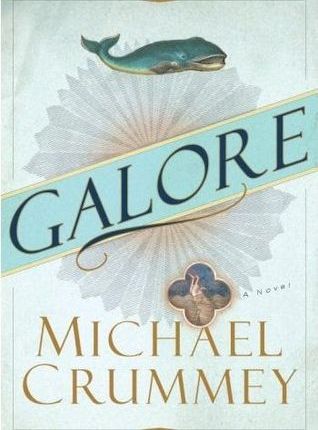
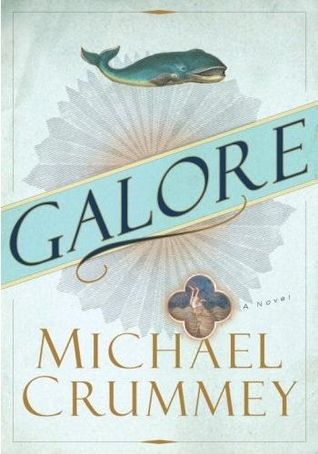
“An intricate family saga and love story spanning two centuries, Galore is a portrait of the improbable medieval world that was rural Newfoundland, a place almost too harrowing and extravagant to be real. Remote and isolated, exposed to savage extremes of climate and fate, the people of Paradise Deep persist in a realm where the line between the everyday and the otherworldly is impossible to distinguish.”
-Description from Goodreads
Galore is all over the place. And I didn’t like it.
I like epic historical fiction. (The Far Pavilions) But, this one wasn’t epic. It was more a collection of pointless stories strung together than a rich tapestry with unifying threads.
I don’t necessarily mind plot lines about priests who act in un-priestly ways. (The Thorn Birds) But there was nothing redeeming about this priest.
In fact, I can’t think of a single character that I cared for much. That’s a shame because there were so many to choose from.
On to the next book. 🙂 I recommend giving this one a pass.
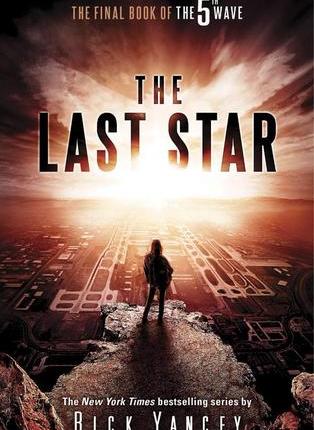
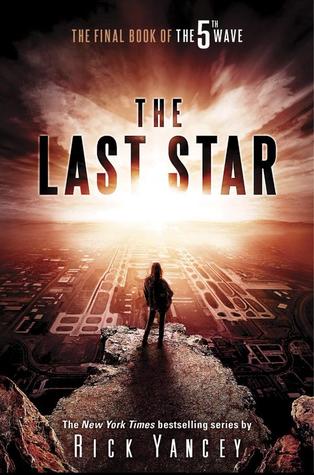
The Last Star is the final entry in The 5th Wave, a trilogy about aliens, teenagers and the end of the world.
It is also a morality play about what matters. Why do cars, jobs and stuff matter so much when, in the end, it is all about our relationships and love.
I’m sorry to say that I found the ending to be unsatisfying. Yancey wove such a puzzling yarn that I felt like he didn’t completely untangle all the knots. To be fair, there was a lot going on. But, I read the last pages and I felt a big, internal: “huh?”
This book also reminded me of The Road. “From piles of blackened bones to corpses wrapped head to toe in tattered sheets and old blankets, just lying there in the open like they’d dropped from the sky, alone or in groups of ten or more. So many bodies that they faded into the background, just another part of the mess, another piece of the urban vomit.”pg 70.
The Last Star also raised big questions about civilization and its durability. How thin is the veneer on civilization? What would it take for humanity to turn on itself? Most dystopian writers say, not much.
I don’t know. I’m of two minds on the issue. One part of me says, civilization is a flimsy set of agreements that could easily crumble with enough fear, famine and plague.
The other part of me, the eternal optimist side, says that there is something within each of us that even the worst calamity couldn’t touch.
Kill the body, yes. Kill hope, yes. But kill the soul and its purpose? No. I feel like that part would find a way. And part of that soul’s purpose, I think, is connection to others. That means, civilization. So, there’s something more permanent to it, something fated.
Anyway, The 5th Wave as a three-part story is intense, gritty and could lead to some excellent discussions because it leaves a lot of open-ended questions and ambiguous answers. Rather like life.
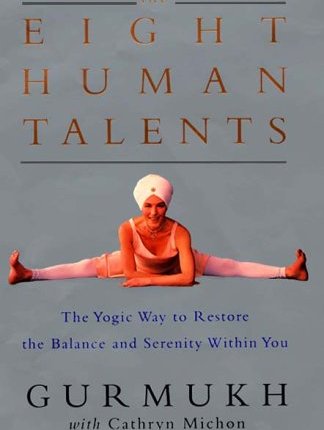
The Eight Human Talents is part-story and part-instruction manual for the practice of Kundalini yoga. I’ve only ever practiced hatha yoga and this is very different from what I’ve learned. I’ve tried a couple poses and this is definitely going to take some practice.
If I learned anything from this book, it is to breathe deeply. One of Gurmukh’s main points is that by connecting with the breath, we reconnect with ourselves.
Also, don’t be afraid to try, even if you fail. “If we can make one step towards happiness, towards healing, towards change, miracles begin to happen. The Kundalini Yoga and Meditation in this book are a way of making those small steps towards happiness. If you will try even one thing from this book-one breathing exercise, one stretch, one meditation- know that somewhere I am cheering right out loud for you, because I know that making that first step is the hardest thing to do…” introduction, xxii.
Some of Gurmukh’s stories were saccharine sweet, but I enjoyed most of them. “We are powerless over every other person on the planet, and we only have power over our own lives. No matter how problematic the people in your life are, you are always the solution.” pg 125.
I’ll have to get back to you on if these exercises deliver on the myriad of promises that Gurmukh makes. So far, I’ve discovered that my lower back needs to be strengthened and I should work on my neck flexibility.
She ties all of her suggested poses to different chakras and energies found within the body. If that concept is too far out for you, you may be better served with a different introduction to Kundalini yoga.
Recommended for beginners to moderately experienced practitioners.
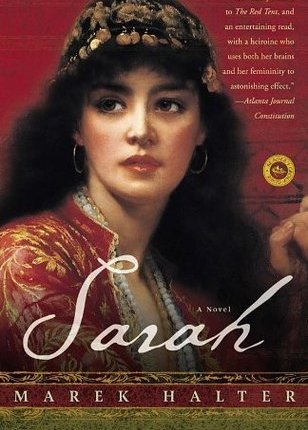
A historical fiction about the early days of Abraham from Sarah’s (Sarai’s) point-of-view.
I think that this novel wasted an opportunity for a great story. Like a majority of women in the Bible, Sarai’s life was largely untold. So, Marek Halter had a blank slate to work with.
And what he wrote for Sarai was a life of waiting. Waiting for Abram to talk to his god. Waiting for Abram to come back from war. Waiting to become pregnant. Waiting and wandering, looking for a home.
If I had written this story, Sarai would have been so busy doing something spectacular that she would have hardly even noticed Abram’s absence or presence. Maybe she invented a new form of weaving. Maybe she started her own business selling those herbed loaves that she was so proud of. Or, to introduce a fantasy twist, maybe she was secretly a vampire hunter, like Abraham Lincoln: Vampire Hunter.
My point is: for a story about a woman, it was mostly about the men in her life. Which makes it not very different than the source material. And, in my mind, a disappointment.
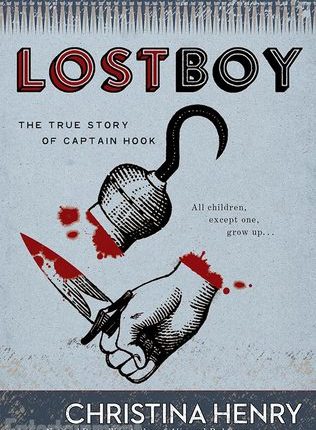
Christina Henry, author of the chilling Alice, which is a brilliant re-telling of Alice in Wonderland, has shifted focus to a new fairytale. In Lost Boy, readers get to experience the story of the boy-who-never-grew-up through the origin story of his arch-nemesis. And what a story it is.
“Peter will say I’m a villain, that I wronged him, that I never was his friend. But I told you already. Peter lies. This is what really happened.” loc 85, ebook. Goosebumps? Yeah.
Fans of the original tale will need to prepare themselves for having beloved characters shown in a new and sinister light. Think Longbourn, but worse, much worse. “I had been with Peter longer than I’d been in the Other Place, longer than I could count, anyway. The seasons did not pass here and the days had no meaning. I would be here forever. I would never grow up.” loc 146, ebook. The others in Peter’s group call the narrator, Jamie.
He is a fierce fighter- the best. And he protects the younger and weaker members of those lucky few that Peter brings back from the real world or in this tale, the Other Place. This protective instinct is sneered at by Peter who accuses Jamie of “babying” or “mothering” the boys. In truth, there is no worse insult in Peter’s arsenal. Grown ups either abuse you or take your stuff or both. They’re pirates.
“(Peter) had invited us there, had promised us we would be young and happy forever. So we were. Unless we got sick, or died, or were taken by the pirates.” loc 257, ebook. So, Neverland is not the paradise that it is portrayed as in the original tale. There are also monsters called Many-Eyed that eat the boys alive, if they catch them.
“Was this, I wondered, what it felt like to be a grown-up? Did you always feel the weight of things on you, your cares pressing you down like a burden you could never shake? No wonder Peter could fly. He had no worries to weight him to the earth.” loc 1971, ebook.
The stage is set. Love and hate intertwine with magic, blood and, of course, a little bit of fairy dust.
If you enjoyed this tale, you may also want to explore some other Peter Pan re-tellings like Tiger Lily by Jodi Lynn Anderson or All Darling Children by Katrina Monroe. The last, a horror-filled offering, may really appeal to those who want to delve more into the potential shadows of Neverland. There’s a price to pay for never growing up. In that tale, as in this, Peter pays it without a qualm.
Thank you to NetGalley and Berkley Publishing for a free advance reader’s copy of this book. Reminder: the short quotations I cited in this review may vary in the final published version.
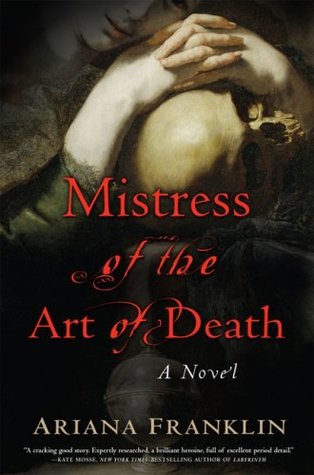
A medieval mystery in which Simon of Naples, a eunuch and a unique woman with the ability to decipher the wounds inflicted on bodies, race to discover the identity of a violent killer of children before he strikes again.
From its opening lines, The Mistress of the Art of Death had me in its thrall. “Here they come. From down the road we can hear harnesses jingling and see dust rising into the warm spring sky. Pilgrims returning after Easter in Canterbury. Tokens of the mitered, martyred Saint Thomas are pinned to cloaks and hats- the Canterbury monks must be raking it in. They’re a pleasant interruption in the traffic of carts whose drivers and oxen are surly with fatigue from plowing and sowing. These people are well fed, noisy, exultant with the grace their journey has gained them. But one of them, as exuberant as the rest, is a murderer of children.” pg 1.
I have been to Canterbury and viewed the spot where Thomas Becket was cut down by the knights of Henry II. It is an amazing place. Even more so when you consider that it has been standing for so long. I loved going back there, if only in a story.
The Mistress of the Art of Death herself, Adelia, is a brilliant and headstrong heroine. She embodies what I imagine women to have been in the time before we were allowed the same privileges as men. “She sighed with impatience. “I see you are regretting that the woman, like the doctor, is unadorned. It always happens.” She glared at him. … “Turn over that stone”- she pointed to a flint nearby-“and you will find a charlatan who will dazzle you with the favorable conjunction of Mercury and Venus, flatter your future, and sell you colored water for a gold piece. I can’t be bothered with it. From me you get the actuality.” He was taken aback. Here was the confidence, even arrogance, of a skilled artisan.” pg 52.
The reality that Adelia has been taught to see is not pretty. She learns all about the horrors that mankind inflicts on one another through her schooling. It has hardened her, but she seeks, beyond all else, to give voice and justice to the murdered. “Man hovers between Paradise and the Pit… Sometimes rising to one, sometimes swooping to the other. To ignore his capacity for evil is as obtuse as blinding oneself to the heights to which he can soar.” pg 77.
And yet, Adelia is still sassy. I loved her attitude. “He found her modest- a description, Adelia had long decided, that was applied to women who gave men no trouble.” pg 88. Though this novel could have dragged the reader through the stultifying reality of medieval attitudes and prejudices, instead Ariana Franklin takes us on a sparkling adventure filled with just enough detail to give the flavor of the time.
Recommended for those who like mysteries, historical fiction, strong heroines and perhaps some romance on the side. The Mistress of the Art of Death, though it touches on dark themes, was a welcome respite for me from a world that so often shows its shadows. I hope that it is an escape for you too.
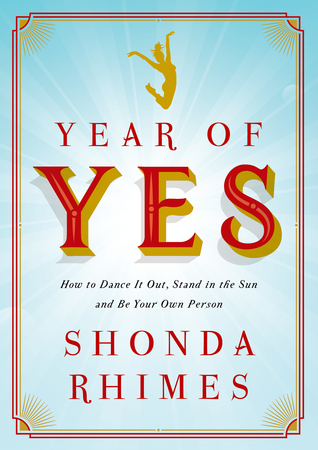
Shonda Rhimes’ heartfelt memoir about the power of embracing who you are and having the courage to set aside what you are not.
Though outwardly successful, Shonda was miserable. Between over-working and her introverted tendencies, she turned down every invitation and social event. The ones that she was forced to accept were anxiety inducing trials or complete blanks because of panic attacks.
Shonda didn’t even realize she was unhappy until, one Thanksgiving, her sister tells her that she doesn’t say yes to anything. Something clicks and Shonda embarks on a Year of Yes. Her results are astonishing and so is this memoir.
I have never watched a single episode of Grey’s Anatomy. I didn’t even realize that that was her show. You don’t need to be an aficionado to appreciate this book.
Shonda begins with some crushingly honest passages about her discomfort at sharing her life and her passion for writing. “Making stuff up is responsible for everything-everything I’ve done, everything I am, everything i have. Without the tales, the fiction, the stories I’ve spun, it is highly likely that right now, today, I’d be a very quiet librarian in Ohio.” pg 6, ebook. Not that there’s anything wrong with that. 🙂
The first part of this book was actually hard for me to get through because she was so obviously uncomfortable at creating a window into her heart and mind. She gets over it and so did I. “When it was first suggested to me that I write about this year, my first instinct was to say no. Writing about myself feels a lot like I have just decided to stand up on a table in a very proper restaurant, raise my dress and show everyone that I’m not wearing panties. That is to say, it feels shocking.” pg 12, ebook.
Shonda is just so relatable. Take this confession about motherhood: “I don’t know about you, but the mistakes and missteps I have made since becoming a mother… before kids, my confidence could not be dented. Now it’s shattered on a daily basis. I don’t know what I am doing.” pg 63, ebook. I know, right! Nobody knows what they’re doing. I take comfort in that.
Throughout her year of challenging herself, Shonda discovers that she’s uncomfortable in her own skin because of her weight. This next passage is for anyone out there who has body image issues: “I believe everyone’s body is theirs and everyone has a right to love their body in whatever size and shape and package it comes in. I will fight for anyone’s right to do so. I will kick ass and take names if I have to. Your body is yours. My body is mine. No one’s body is up for comment. No matter how small, how large, how curvy, how flat. If you love you, then I love you.” pg 85, ebook. End of story.
I also liked how she came to a new understanding about how life works: “I’ve started to think we are like mirrors. What you are gets reflected back to you. What you see in yourself, you may see in others, and what others see in you, they may see in themselves.” pg 120, ebook. I’ve started to think that too.
The Year of Yes is recommended for readers who enjoy memoirs or for those folks out there whose lives are in need of an awakening- a shaking of the snow globe of your reality, if you will. Shonda said yes to things that scared her and discovered, on the other side of fear, a life truly worth living. I hope that we can all be as fortunate and as brave on our journeys.
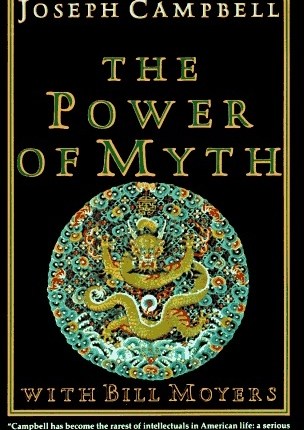
Though a bit rambling at times, The Power of Myth is a great introductory text on archetypes found within all world mythologies from almost every time period.
In it, Joseph Campbell explains why the underlying stories are the same from all over the world and what they mean in both cultural, personal, and world contexts.
He breaks down some of the major archetypes like the sacrificed god and resurrection, virgin births, goddesses, trees, snakes, and more. As someone who has studied tarot and The Tree of Life extensively, I found it to be an illumination.
I particularly liked learning about the mythology of Star Wars. With the release of the new film, that particular series is back in the top of the pop culture charts. I think that The Power of Myth explains why it has such enduring appeal.
Or pick up any of the many books about mythology from any country you’d like. If you immerse yourself in enough of the stories, you will pick up on the reoccurring patterns yourself.
I believe that one of the many purposes of mythology, beyond its entertainment value, is to teach us about what we have in common with each other, and also, the hidden dimensions of ourselves.
As the doorway to the Delphic Oracle said, “Know Thyself.” And, really, that is the greatest power there is. Mythology helps you do that.
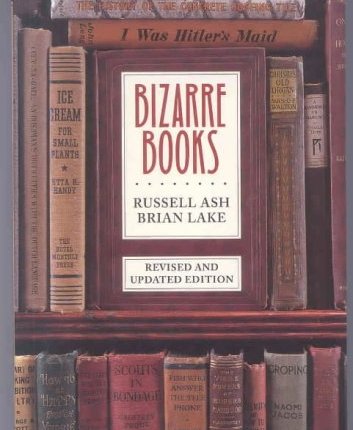
Though it relies too heavily on puns and doubles ententes, Bizarre Books is a humorous look at titles, subjects and author names in published materials. It is a must-read for any book lover or professional who deals with the printed word on a daily basis. *cough* Librarians. *cough*
“All the books recorded are real titles, with real authors. All of them were published with the serious intention of informing, not amusing. In this, they have signally failed.” introduction, pg 7.
I don’t think that ALL of them were meant to be informative. Take this entry from one of my favorite genres, science fiction: Planet of the Knob Heads. Stanton A. Coblentz. Science Fiction, Atlas Publishing, 1939. “Jack and Marjorie are brought to the distant world of their captors. In far Andromeda, they struggle against “favors” of the knob-heads – but hope fades as they face the High Knobule!” pg 40. Almost irresistible, isn’t it?
If science fiction isn’t your thing, how about this (I’m guessing) thriller: What Farrar Saw. James Hanley. Nicholson & Watson, 1946. “No story by Mr. Hanley is without its moral implications; here we have a glimpse of nightmare horror and chaos in a monstrous machine ridden world. It starts simply enough as chaos does. A young couple set off for a holiday in Scotland.” pg 44. Sounds at least as promising as The Girl on the Train, wouldn’t you say?
Those were some of the fictional books that caught my eye. On to the non-fiction. If it was on a shelf in front of me, I’d pick up Carnivorous Butterflies by Austin Hobart Clark, pg 62.
In the most ineffective category, the prize goes to: Atomic Bombing: How to Protect Yourself. Watson Davis, et al. New York: William H. Wise & Co. 1950. One of its suggestions was: “Curl up in a ball as you hit the ground.” pg 166.
By far, my most favorite selection is: The New Guide of the Conversation in Portuguese and English in Two Parts. Pedro Carolino.
Familiar phrases: Let us go on ours feet. At what o’clock is to get up? At which is this hat. Have him some children? pg 54. And so on. The authors dedicated another three pages to this gem alone.
Highly recommended from this bookworm. It made me laugh a lot and that is not easy to do.






 The Help Desk Book Blog