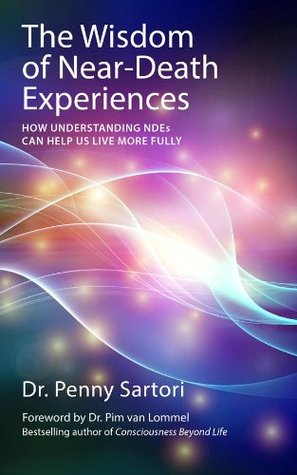
Wisdom of Near-Death Experiences: How Understanding NDEs Can Help Us Live More Fully by Penny Sartori

Wisdom of Near-Death Experiences: How Understanding NDEs Can Help Us Live More Fully by Penny Sartori
wisdomofneardeath

An extraordinary book by Penny Sartori who was a nurse, now doctor, and worked for years in the NHS.

She realized that with end life issues, there are many categories of experiences that are not discussed in medical educations but that happen often enough to be tacitly understood by practicing medical staff. Dr. Sartori compiled this book with the aim of helping other medical professionals understand near-death experiences and their potential effects on recovering patients.

Refreshingly, Dr. Sartori writes simply enough for a lay-person (like me) to completely understand the text and I found first-hand account after account fascinating, uplifting, and educational.

I’ve read about many near-death experiences and I’ve always gotten the feeling that there was something more there. As if, in reading the account, I was viewing a light behind a veil. Dr. Sartori calls this, “Ineffability.” “Ineffability: When people try to make sense of the (near-death) experience or try to verbalize it they find that words fail them. They have experienced something with which they have nothing to compare, and to try to find words to describe it is impossible.” pg 9

It’s nice to be able to put a word to that feeling.

At the end of the chapter about international near-death experiences, she has this to say: “It is evident that NDEs are worldwide phenomena and it has therefore been suggested that they are merely the effects of a dying brain. However, some cultures report components that are not present in other cultures, which would rule out materialist explanations. As some components are interpreted according to culture then it is reasonable to construe that the components may be interpreted symbolically through each individual’s cultural filter. This could suggest an underlying collective consciousness, as discussed by Carl Jung.” pg 83.

Photo by Timo A. on Pexels.com

Most of the books I’ve read on this topic have had little to say about the commonality of NDEs among the world’s population. This is a good introduction to it.

About the power of love: “Hospice and palliative-care consultant Dr. John Lerma has reported that 70 to 80 percent of his patients waited for loved ones to leave the room before dying. He also remarked that he had witnessed patients who had been certified dead return to life as the pain of their loved ones had pulled them back from a place of peace and love.” pg 103 Mind blown.

Love literally brought people back from the dead.

About the science of spirituality and how that relates to religious texts: “Texts such as the Books of the Dead have many similarities to NDEs. For many thousands of years these have been reduced to myths but now they appear to be ‘maps of the inner territories of the psyche encountered in profound non-ordinary states of consciousness’. Maybe this is what is needed to reintegrate our spiritual roots with our huge advances in technology.“pg 191 I think that this may be true too.

And finally: “One thing I’ve come to realize over the past few years is that heaven is not a location – it is a state of mind and is within us all. We just have to go within and find it.” pg 191 Absolutely, Dr. Sartori.

If you enjoyed The Wisdom of Near-Death Experiences, I would suggest reading, The Map of Heaven by Eben Alexander. You may also enjoy Journey of Souls: Case Studies of Life Between Lives by Michael Newton- a hypnotherapist explores between life/past life consciousness with his patients to heal current issues.

Also, if you want to explore the idea that heaven is inside of us, you may want to check out What if This is Heaven by Anita Moorjani.

Thanks for reading!

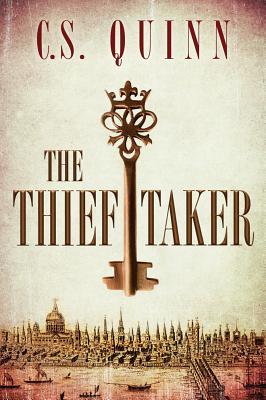
The Thief Taker (The Thief Taker #1) by C.S. Quinn

The Thief Taker (The Thief Taker #1) by C.S. Quinn

In the 1660s, thief takers solved the cases that were beneath the dignity of the typical London watchmen.

The poorer sort of people, who had experienced a crime or theft, would come to men like the title character in this story for justice. He would attempt to track down the perpetrator by finding the property that they took and fenced.

Photo by Wallace Chuck on Pexels.com

Usually, the thief taker could either get the property back for his client or turn the thief in to the higher authorities. But, the punishments back then were so barbaric- chopping off a hand, splitting noses- that the thief taker would usually just let the criminal go with a warning to not steal again or advise him to find a different clientele.

Charlie Tuesday is a thief taker in London. One day, a beautiful young woman comes to him for help in solving her sister’s murder. Normally, he doesn’t work on any cases larger than theft but the money that is offered is more than he can refuse.

From the strange mutilation of the body, he determines that there’s more to this crime than meets the eye. As the plague descends on London, he and Anna-Maria race to stop the murderer from striking again and, perhaps, even threatening the throne of England itself.

Photo by Yoss Cinematic on Pexels.com

The Thief Taker‘s scenery is lush. The customs, clothing, and food from 1665 are so different from what we have now. The reader is whisked away to a world that is the same in some ways (human behavior and emotions) and so different in other ways (social structures and occupations). I didn’t even know what a thief taker was until I read this book.

The story is an intricate mystery with the murders, possible witchcraft, and treason. I didn’t see the ending coming at all. It could be that I don’t read that many mysteries, but I thought that it was really well done.

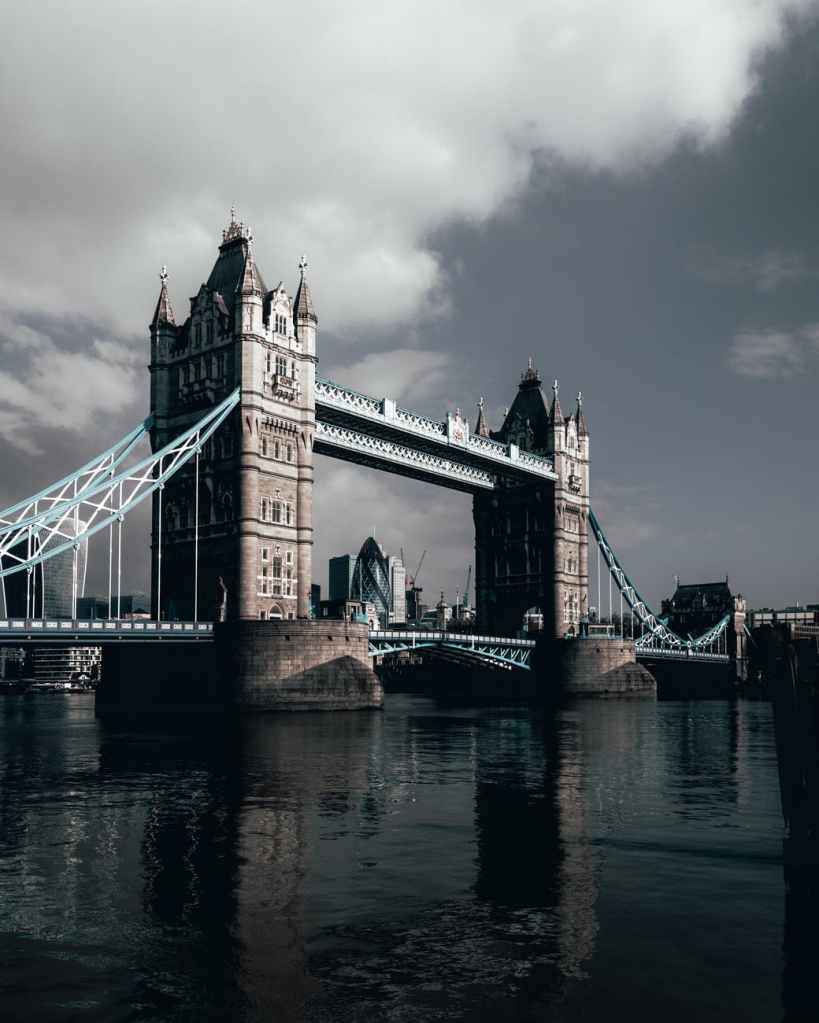
Another fascinating piece to this story are the plague victims. The horrific conditions that the author describes, like bodies rotting in the streets and the Thames becoming clogged with corpses around London Bridge, actually took place.

Photo by Yoss Cinematic on Pexels.com

Because of these icky details, The Thief Taker occasionally veers towards the horror genre but never really crosses that line.

I kept picturing the rotting plague victims as zombies. In some ways, they’re similar. Contact with a plague victim could bring infection. Sometimes, the main character would come across a body that would appear dead, but wasn’t dead.

At one point in the story, a character describes the plague victims who are wandering the streets in search of mercy as the “walking dead.” It was very creepy.

Photo by Renato Danyi on Pexels.com

Also, the societal breakdown that accompanied the plague was so quick. Every moment the characters were in the London streets was filled with tension. The reader didn’t know if a plague victim was going to pop out of a quarantined house or if a thug was going to try to commit a robbery in a dark alley.

Readers who like the historical fiction of Philippa Gregory, Judith Merkle Riley, and Sarah Dunant may enjoy this.

I received a free copy of this book through Goodreads First Reads program.

Thanks for reading!

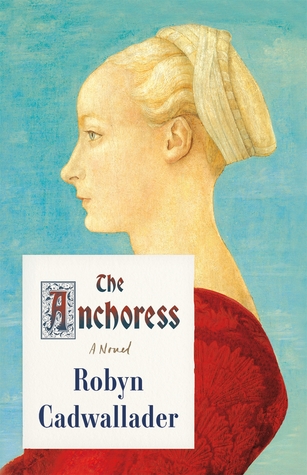
The Anchoress by Robyn Cadwallader

The Anchoress by Robyn Cadwallader

England, 1255. What could drive a girl on the cusp of womanhood to lock herself away from the world forever? -from Goodreads

anchoress

The 1200’s was an exciting time in many ways. But, not if you were a woman.

In The Anchoress, I learned about yet another way in which women were treated poorly by the male dominated church. Apparently, the anchoress was an actual calling where the woman chose to be walled up near or in a church in order to move closer to God.

The people who walled up the woman left a small window for food and waste to pass through. That was the extent of her interaction with the outside world. How messed up was that.

Sarah, the anchoress in this story, chooses the position for a variety of reasons, but they’re not all that mysterious. The description of the book plays it up as a mystery which the reader will figure out in probably five pages or so.

I enjoyed this book more for the historical details of the period.

The interesting part is when Sarah starts to go bonkers (no big surprise there) and her confessor tries to keep her straight. That particular drama was gripping even though most of the action took place in one room.

If you enjoyed The Anchoress, you may want to read A Triple Knot by Emma Campion or Pope Joan by Donna Woolfolk Cross.

Thanks for reading!

Trials of the Earth: The True Story of a Pioneer Woman by Mary Mann Hamilton

Trials of the Earth: The True Story of a Pioneer Woman by Mary Mann Hamilton
trials of the earth

Trials of the Earth is Mary Mann Hamilton’s memoir about her hardscrabble life in America during the late 1800’s.

She uses period speech to illuminate a life of struggle and hard work. If certain anachronistic and racially insensitive terms bother you, especially the casual use of the N-word, you may want to chose another memoir. It was shocking but I kept reminding myself that Mary was a product of her times.

On top of the constant struggle of putting food on the table and keeping a roof over her head, it seems like she was perpetually pregnant and her husband was an alcoholic.

But Mary lived up to the challenges, raised and buried children, nursed her husband through his hangovers and illnesses- she was a survivor. That is mainly what Trials of the Earth was to me- a survival story.

“Nevertheless, this is not a book of repining; it is a tale simply told of what one woman has lived through in the Mississippi Delta. I say ‘lived through’ because at times this history reads like a record of the extreme limits of human endurance.” loc 75, introduction

So many of the modern conveniences that we take for granted didn’t exist. Mary moved around a lot and notes with relief every time her husband manages to install a pump in her new house so that she didn’t have to haul water from the river.

Mary’s relationship with her husband, Frank, isn’t a fair deal. She is a very young woman when she gets married and from the start he’s controlling- telling her what they will eat and what friends they will have. He even tells her what books she can read.

Photo by Gaspar Zaldo on Pexels.com

That would have been the last straw for me. But again, she was a woman of her times.

“To me he seemed like a man that had taken a silly child to raise rather than a wife. … As time went on I found there were plenty other things I didn’t know, too. The first thing I found out was that he drank.” loc 226, ebook.

In addition to the inequality in their relationship, Frank is from England and has a secret past. He won’t tell Mary, his own wife, his real name or talk about his circumstances or the family he left behind. But, Mary doesn’t let it bother her too much. I suppose she was too busy with everything else they had going on. That lack of trust would have driven me bonkers.

Not that she felt like anything was wrong with their relationship. “Women can stand more work, more trouble, and more religion than men.” loc 528, ebook. She accepted the hardships because she knew that she could. I admire her gumption but I also felt sad for her too. I felt sad because she didn’t have the option to live any other sort of life.

Frank is always talking about the sin of Eve and all the baggage that comes with it to Mary. There is a lot of mansplaining that goes on too. Parts of this book were infuriating to me.

Recommended for readers who enjoy memoirs that read like historical fiction. Ability to tolerate the bleak role that women occupied in society in the late 1800’s is a must.

Thank you to NetGalley and Little, Brown and Company for a free advance reader’s copy of this book. Reminder: some of the quotations in this review may change in the final printed copy.

Thanks for reading!

Amish Confidential by “Lebanon” Levi Stoltzfus and Ellis Henican

Amish Confidential by “Lebanon” Levi Stoltzfus and Ellis Henican

I wasn’t expecting much from Amish Confidential, a tell-all memoir, by Amish mafia reality television star, Lebanon Levi Stoltzfus. Despite my expectations, it was quite good.

I picked it up because watching The Amish Mafia is one of my guilty pleasures. It is a reality, cultural, crime-syndicate show with horses.

Photo by Pixabay on Pexels.com

The Amish, like other insular communities, have plenty to teach the outside world about they live their lives. Levi definitely has the inside scoop, having been raised Old Order Amish, a more conservative branch of the culture.

I loved learning about how the Amish were formed and the historical background of his people. I ate up the bits about Amish marriage ceremonies and the social customs surrounding the party afterwards. Celery, apparently, is huge. Who knew, right?

I wish he had talked more how he fell into the world of “Amish mafia” itself. It’s clear from his narrative that he feels the Amish are taken advantage of because of their religious pacifism. He believes that they desire to deal with potentially criminal matters among themselves rather than going to the authorities. That is the basis of the mafia. For legal reasons, he probably couldn’t be that transparent. But it would have been excellent if he had.

Photo by Brandon Randolph on Pexels.com

If you enjoy the television show, you may not like this as much because it lacks some of the moment to moment tension and drama that one gets from watching the show. But, if you go into it with an open mind to learn more about the Amish in general, it certainly accomplishes that.

If you enjoyed Amish Confidential, I’d recommend The Terrorist’s Son: A Story of Choice (a Muslim boy is raised one way but chooses to live another) or License to Pawn: Deals, Steals, and My Life at the Gold & Silver (a memoir by a pawn shop owner who has his own reality television show).

Thanks for reading!

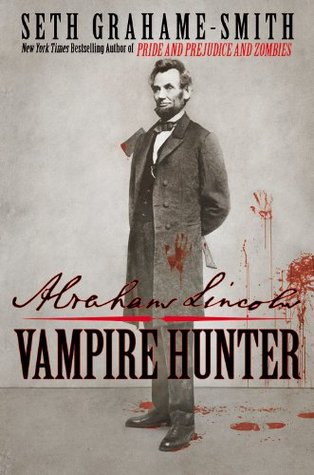
Abraham Lincoln: Vampire Hunter by Seth Grahame-Smith

Abraham Lincoln: Vampire Hunter by Seth Grahame-Smith

vampirehunterTake Abraham Lincoln and his famous rail-splitting ax, add a dash of vampires and voila: Abraham Lincoln: Vampire Hunter.
Fans of horror may enjoy this creative re-mix of history more than I did. Though I enjoyed learning about Lincoln, the moments of gore inbetween weren’t for me.

I listened to the audiobook and my favorite parts were the Americana inspired musical interludes between some of the chapters. Banjos or plaintive violins shepherded readers into the next section. It was beautiful.

As for the story itself, I suppose I didn’t realize how easy it was to introduce vampires into every moment of a person’s life.

Example: Last night I had trouble sleeping. I opened my eyes at 3:45 a.m. and whispered to myself, “The vampires must be closer than I thought.”

Or, another real example, there was a terrible accident yesterday in which one of the bar owners in my small hometown was killed riding her motorcycle. I turned to my coworker with a grim look and said, “Vampires.”

See? You can vampire-ize anything!

Food goes bad in the refrigerator? Vampires. Cat pukes behind the bed? Vampires. Traffic is bad? Vampires.

Though it was fun at first, it became ridiculous.

But don’t let me deter you- if you like horror, you may love this. I enjoyed it but, I confess, I’ve had enough vampires to last me for the foreseeable future.

Thanks for reading!

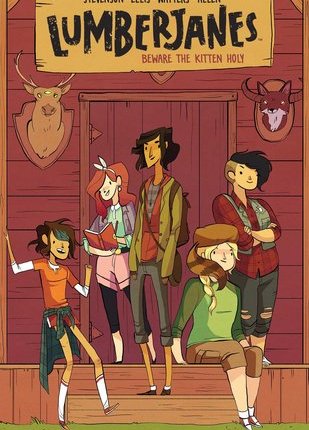
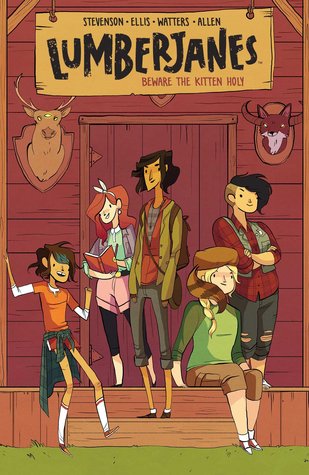
Lumberjanes, Vol. 1: Beware the Kitten Holy by by Noelle Stevenson, Grace Ellis, Shannon Watters, Brooke A. Allen

Lumberjanes, Vol. 1: Beware the Kitten Holy by by Noelle Stevenson, Grace Ellis, Shannon Watters, Brooke A. Allen
lumberjanes

The Lumberjanes is a group of girls, a mysterious forest, strange creatures, tunnels filled with living statues, river monsters and cookies!

I have high hopes that my reluctant reader child is going to love this if I can convince her to sit down and give it a try. One of her favorite television shows is Gravity Falls and this has a very similar vibe.

It is also a girl power book in that it showcases young women looking after and protecting themselves. A positive message, a fun story and cute graphics- I highly recommend it.

The highlights of this graphic novel are: the panel containing “the Kitten Holy” (Though she hasn’t read it yet, my child flipped through the book just to find it. Totally worth the “squee” she produced when she saw it.) and this joke, “Why are hipster yetis so odd? Because they can’t even.” pg 101. Hilarious.

Thank you to my friends for recommending this excellent graphic novel to me. You guys were right. It’s awesome.

And, thanks for reading!

The Dream Lover: A Novel of George Sand by Elizabeth Berg

The Dream Lover: A Novel of George Sand  by Elizabeth Berg
thedreamlover

The Dream Lover encompasses some of the best qualities that historical fiction has to offer. It transports you to the 1800’s France. It introduces you to an extraordinary person: Aurore Dupin, pen name, George Sand. Then, the reader gets to sit back and enjoy the wild ride that was her life. Talk about escapism.

For a woman in the 1800’s, George Sand had it going on. She left her husband, had a series of lovers- both male and female- became a famous author, involved herself in the political upheavals of her time… it is truly an incredible life.

Not everyone in her life accepted her for who she was: “I feel I have made a mistake, George, and that I do not love you after all. … The only thing you are passionate about is locking yourself up at night and writing your precious fiction, ignoring all that is before you here, which, if you would pay attention to it, would make your stories infinitely richer!” … It was as if I had been shot in the chest.” pg 242. But she wrote and loved anyway. Well done, Aurore, well done.

She rejected the role that society set out for her. “Tell me, George. Do you wish you’d been born a man?” … “In my youth, I wished that. … But now I find I don’t wish to be either man or woman. I wish to be myself. Why should men serve as judge and jury, deciding for us what can and cannot be done, what is our due? Why should they decide in advance of our deciding for ourselves what is best for us; why should they decide what IS us?” “But then you do wish to be a man!” “Perhaps I wish to be a woman with a man’s privileges.” pg 151. Amen.

I loved the drama in this novel as well as the romance. One would think that the sheer quantity of lovers that she had would have nullified any quality in the feelings, but Berg does a good job proving that this was otherwise. The passion that she exhibits in one, Sand seems to have shown in them all.

My only complaint about The Dream Lover is that it felt rushed because of the almost unbelievable amount of important events that peppered Sand’s life. I would have savored a 1000+ page book like Margaret George’s treatment of Cleopatra in The Memoirs of Cleopatra, but The Dream Lover appeals to the more casual reader.

Still, it would have been awesome. A bookworm can dream, can’t she?

If you enjoy Margaret George, you may like this book too for its sumptuous descriptions and tempestuous relationships. Also, you may want to pick up In the Company of the Courtesan or Marrying Mozart. Both are excellent historical fiction novels with similar themes to The Dream Lover.

I received a free advance reader’s copy of this book through Goodreads First Reads. FTC guidelines: check!

Thanks for reading!

Authority (Southern Reach #2) by Jeff VanderMeer

Authority (Southern Reach #2) by Jeff VanderMeer
authority

The mystery of Area X continues with an FBI agent’s entry into the Southern Reach. What’s going on? Why can’t anybody remember anything? Why is everyone so antagonistic? And why does everything smell bad?

Rarely have I been so disappointed with a book as I was with Authority. The first entry in this series is a gripping, psychedelic adventure that reads like a nature-gone-wild acid trip. This book, on the other hand, is like going to work with a punishing hangover. You don’t know what’s going on and everybody is pushing piles of paper at you.

“A shadow had passed over the director’s desk then. He’d been here before, or somewhere close, making these kinds of decisions before, and it had almost broken him, or broken through him. But he had no choice.” pg 18. On and on it goes. No answers, only confusion and bewilderment. I honestly thought, up until the very end, that something mega-cool was going to happen to make up for all of the so-so stuff that had happened so far. Unfortunately…

I also got super excited anytime Area X was mentioned, sort of like passing an old fling on your way to a funeral. Take this passage: “But the truth did have a simple quality to it: About thirty-two years ago, along a remote southern stretch known by some as the “forgotten coast,” an Event had occurred that began to transform the landscape and simultaneously caused an invisible border or wall to appear.” pg 35. Yes! And then we were immediately back into the boring office work/politics stuff.

“You’ve heard of the Southern Reach?” He had, mostly through a couple of colleagues who had worked there at one time. Vague allusions, keeping to the cover story about environmental catastrophe. Rumors of a chain of command that was eccentric at best. Rumors of a significant variation, of there being more to the story. But, then, there always was. He didn’t know, on hearing his mother say those words, whether he was excited or not.” pg 71. And that, my friends, is pretty much the whole book. Let me save you another 250 or so pages.

I exaggerate. A bit. It’s just that I’m incredibly disappointed in the turn this story took. I suppose I’ll read the last one in this series because I’m a completionist, but that is the only reason.

Thanks for reading!