Bloody Rose (The Band, #2) by Nicholas Eames

Bloody Rose (The Band, #2) by Nicholas Eames

Readers get the opportunity to return to the adventure-filled world of bands and monsters, Grandual, in Bloody Rose. Nicholas Eames second book in The Band series, the sequel to The Kings of the Wyld takes place years after the first book. It follows the exploits of a band called Fable, a bard named Tam and Bloody Rose, the daughter of Golden Gabe, one of the members of a band called Saga, who readers got to know and love in Kings of the Wyld.

The world is on the brink of annihilation, again.

“Hey, did you hear the news? There’s another Horde, apparently. North of Cragmoor, in the Brumal Wastes. Fifty thousand monsters hell-bent on invading Grandual.” pg 5

Photo by Lisa Fotios on Pexels.com

Tam wants to see the world, but her father is a retired mercenary. He doesn’t want Tam to have the life he led, risking life and limb to battle monsters. He also doesn’t want to lose her, like he lost her mother.

“To Tam, there was nothing worse than the prospect of never leaving home, of being cooped up in Ardburg until her dreams froze and her Wyld Heart withered in its cage.” pg 20

Bloody Rose, Gabriel’s daughter, has never quite left her father’s shadow, even though she’s a formidable fighter and bandleader in her own right.

“She’s got something to prove — whether it’s to herself, or her father, or the world in general, I don’t know. I can’t have been easy growing up the daughter of Golden Gabe. The man’s got boots even a giant could wriggle its toes in, but that doesn’t stop Rose from trying to fill them.” pg 63

The other members of Rose’s band include Brune (a shaman), Cura (an inkmage) and Freecloud (a mighty druin fighter). They have their own burdens to bear and shadows to face down. A large part of this story is getting to know them through the band’s adventures.

“And yet here they all were: at the cold edge of the world — each of them vying to be worthy of one another, to protect one another, to prove themselves a part of something to which they already, irrevocably belonged.” pg 265

Photo by eberhard grossgasteiger on Pexels.com

Like the first book, the world has become more civilized and bands fight in contrived battles against captive-bred monsters in arenas to the cheers from bloody-thirsty crowds. It is more show than substance.

“She began to question every song she’d ever heard about heroic mercenaries and vile monsters doing battle on the arena floor. If those so-called battles were anything like the one-sided slaughter she watched from the comfort of the Lair’s armory, then the work of a bard was even more difficult than she’d been led to believe.” pg 103

I enjoyed Bloody Rose, but I missed the characters from the first book. Eames writes an ripping tale, but my favorite parts of this book included cameos (and one rather large story arc) of people from the last one.

That being said, there is still the snappy dialogue, epic fights and breath-stealing finale that characterized Eames’ debut novel. Highly recommended for fantasy readers and I look forward to his next one.

Thanks for reading!

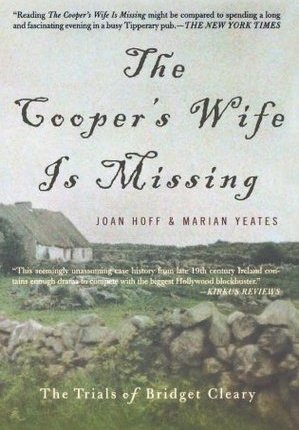
The Cooper’s Wife Is Missing: The Trials of Bridget Cleary by Joan Hoff, Marian Yeates

The Cooper’s Wife Is Missing: The Trials of Bridget Cleary by Joan Hoff, Marian Yeates

“Are you a witch, are you a fairy, are you the wife of Michael Cleary?”

In March 1895, after walking the fabled “fairy fort” of Kylnagranagh Hill in Tipperary County Ireland, Michael Cleary’s wife, Bridget Boland Cleary, returned home ill with a fever and headache. Michael Cleary thought she was exhibiting signs of fairy abduction. And he was determined to get her back.

What happened next highlighted the clash of paganism and Catholicism, and the ushering out of old superstitions to make way for the modern era. After days of abuse, he eventually burned Bridget until she died because he believed she had been replaced by a fairy.

Photo by Steven Hylands on Pexels.com

“… they continued to feed her herbs and to shake, slap, and swing her while she ‘screamed horrible’ and they shouted: ‘Away with you. Come back, Bridget Boland, in the name of God.'” pg 191

The Cooper’s Wife is Missing gives nearly complete context of Ireland in this era and the political and social pressures during the time period.

The crime was shocking in its brutality but also the stated motive. The press had a field day. It was 1895, the world was on the brink was technological, social and political change. And yet, they wrote, these rural Irish peasants still believed in fairies or practiced witchcraft. (Depending on which publication you chose to read.)

And it wasn’t just perpetrated by Michael Cleary. Bridget’s own family and neighbors participated in the “fairy trial” that led to her death. Nine people were found guilty at varying levels of culpability for the crime.

“As the police led him away, he shouted, ‘I am innocent.’ Cleary maintained it was not his wife he burned but a fairy.” pg 361

Photo by Gantas Vaiu010diulu0117nas on Pexels.com

The Cooper’s Wife is Missing jumps back and forth, giving the reader the history of Ireland, fairy lore and what historians believe happened to Bridget Cleary. That was my only complaint with this read, some of the story repeats itself, especially during the testimony at the trials.

But, overall, highly recommended for fans of true crime and history. This book has both of those in spades.

Thanks for reading!

Here’s the History Guy episode I wrote about Bridget Cleary:

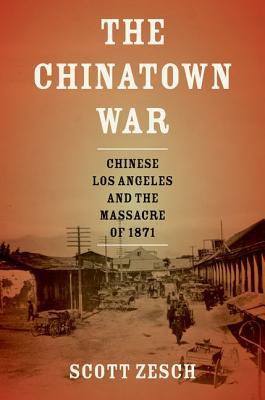
The Chinatown War: Chinese Los Angeles and the Massacre of 1871 by Scott Zesch

The Chinatown War: Chinese Los Angeles and the Massacre of 1871 by Scott Zesch

The Chinatown War is an outstanding examination of a little remembered event in Los Angeles history. One terrible night in 1871, racial tension boiled over in what was later labeled “the Chinese Massacre” and what the people of Los Angeles at the time called “Black Tuesday” or “the night of horrors”.

Scholars can’t even agree on how many people were murdered that night in October 1871. Scott Zesch, the author of The Chinatown War, believes it was around 18.

“Most Angelenos do not even know what happened that night, for the city’s fathers decided to put the incident behind them shortly after it occurred, and the victims were not people of consequence. They were ordinary immigrants whose American dream ended in a nightmare.” prologue

Photo by Roberto Nickson on Pexels.com

Public opinion was driven by resentment and distrust of Chinese immigrants. While often portrayed as a working class complaint over jobs, the hatred towards the Chinese was a thinly veiled racism against a people who were hated largely because their ways and culture were different.

“Contrary to popular belief, the earliest Chinese immigrants to America did not come to build the transcontinental railroad in the 1860s. Instead, it was the California Gold Rush of 1849 that brought the first large wave of Chinese to the West Coast.” pg 6

I learned so much from this book.

For example, Chinese immigrants in Los Angeles were often members of social groups called huiguan – commonly called “companies” in the newspapers of the time, although that translation is not exactly correct. Huiguan were social groups formed to help Chinese immigrants in their new lives in America. Members would sign up for the huiguan based on the location they immigrated from in China.

Also, though it is now one of the most populous cities in the U.S., in 1871 Los Angeles only had a population of around 6,000 people. Unfortunately, this massacre is one of the events that brought Los Angeles to the attention of the rest of the world.

“One of the city’s early historians, Charles Dwight Willard, characterized Los Angeles as ‘undoubtedly the toughest town of the entire nation’ during the 1850s and 1860s. He claimed that it had a larger percentage of miscreants than any other American city and, for its size, also had the highest number of fights, murders, and robberies.” pg 23

Photo by Pixabay on Pexels.com

Policing this rough and tumble western town wasn’t easy. This was compounded by the fact that the police department was too small.

Los Angeles’s early police department was too small, and was staffed by men too inexperienced or indifferent to their responsibilities, to be very effective in keeping order.” pg 53

The riot itself is difficult to read about, even now that nearly 150 years have passed since that night. Innocent people were dragged from their homes, brutalized and murdered.

“One eyewitness reported that the ‘stark, staring corpses hung ghastly in the moonlight,’ while ‘others, mutilated, torn and crushed, lay in our streets.'” pg 150

Not all of the citizens of Los Angeles participated in the massacre. Some tried to shame the mob into stopping or hid the terrified Chinese in their own homes to protect them.

“Baldwin quickly realized that the crowd’s sentiment was very much against him. As he said later, ‘I might as well have spoken to a cyclone.'” pg 145

Photo by Megan Markham on Pexels.com

A man named William H. Gray concealed several people in his home. In the years following the massacre, he received anonymous gifts in thanks for his actions that night.

Zesch examines the whole incident from the beginning to the trials following and how it affected (or didn’t) Los Angeles afterwards. His research and scholarship really is astonishing. He gives context and history not only of the city but also of the Chinese immigrant community at that time.

Highly recommended for anyone who wants to learn about an event in Los Angeles history that should never be forgotten.

Thanks for reading!

Here’s the History Guy episode I wrote about this event:

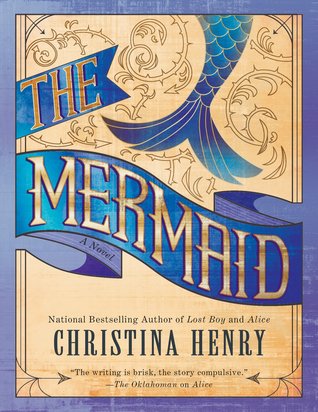
The Mermaid by Christina Henry

The Mermaid by Christina Henry

The Mermaid begins like most other mermaid tales. A creature from the sea is caught in a fisherman’s net. With one glance, the mermaid falls in love with him and decides to leave the ocean.

But her eyes had seen inside him the way that women’s eyes do, and his loneliness snaked into her, and she was sorry for it, for that loneliness caught her more surely than the net.” pg 4

Predictably, their life together goes well, until one day it doesn’t.

Photo by cottonbro on Pexels.com

Then, one of P.T. Barnum’s right-hand men, Levi Lyman, comes seeking a real mermaid, or at least a woman with a reputation of being a mermaid, for the showman’s museum.

“What he’d caught in his net had been far more alien, a creature covered in silver scales all over, with webbing between its fingers and teeth much sharper than any human’s. pg 9

Barnum is cast as the villain of this tale, a grasping coin-counter with little regard for the feelings of people, let alone magical creatures like a mermaid: “Barnum privately thought that if the woman was really a mermaid — not likely, as Levi had said, but there was always hope — she wouldn’t be going anywhere. There wasn’t a chance in heaven or hell that Barnum would let something like that go once he had it.” pg 43

Photo by Robert Fisk on Pexels.com

Coincidentally, the day before I picked up this book, I had the chance to watch “The Greatest Showman“, a musical film about P.T. Barnum’s life, museum, and the people he hired to fill its halls.

I enjoyed the music and choreography, but felt that a man as complex as P.T. Barnum couldn’t fairly be depicted in a 90-minute film. There was a darker side to Barnum’s story — the way he fleeced people out of their money with “humbugs” and, in a particular, his treatment of a woman named Joice Heth.

P.T. Barnum is a purveyor of wonders, a seller of miracles, a showman of the first order.” pg 58

In this book, Christina Henry doesn’t shy from these shadows in Barnum’s life, but I didn’t feel like he was a particularly scary antagonist.

I suppose the true struggle in The Mermaid could be Amelia’s difficulty in maintaining her mermaid nature in a human world. However, that story has been told before.

She meant to do the proper human thing, to behave the right way, but they were not as easy with each other as she’d thought they would be.” pg 153

Photo by Rachel Claire on Pexels.com

Henry didn’t put a twist to this fantasy tale as she so successfully managed to do with Alice, her dark re-telling of Alice’s Adventures in Wonderland by Lewis Carroll. I confess, I was rather disappointed.

I wanted a unique mermaid story. Instead, I got a fairly standard interpretation of a classic.

“I left because I wanted something I didn’t have, and once I loved Jack and lost him, I wasn’t the same as I was before. Love does that. It changes you in ways that can’t be undone.” pg 177.

The Mermaid is a charming little tale, for what it’s worth. Just don’t expect too much out of it. It’s not a humbug, but I wouldn’t call it a wonder of the world either.

Here are some of my other reviews of books by Christina Henry:

Lost Boy: The True Story of Captain Hook by Christina Henry

The Red Queen by Christina Henry

And thanks for reading!

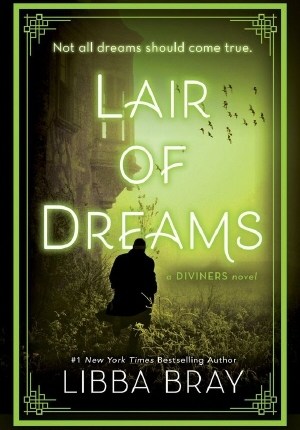
Lair of Dreams (The Diviners, #2) by Libba Bray

Lair of Dreams (The Diviners, #2) by Libba Bray

Something is attacking sleepers during their dreams. They enter another realm, tempted by their deepest desires and then become haunted by their greatest fears, and never wake up.

“For dreams, too, are ghosts, desires chased in sleep, gone by morning. The longing of dreams draws the dead, and this city holds many dreams.” pg 9, ebook.

Photo by Francesca Zama on Pexels.com

All of your favorite characters from The Diviners are back on the case while dealing with drama in their personal lives. And readers are introduced to a new diviner, a talented dream walker named Ling.

“Ling often spoke to the dead in dreams, but these men weren’t like any dead she had known. ‘What do you want?’ she’d asked them, afraid. ‘Help us,’ they said, and then the sky exploded with light.” pg 19, ebook

Even as the characters face the menace in their dreams, something even bigger and darker is on the horizon, threatening the future of the entire country.

Lair of Dreams is a story by itself, but it leads to a bigger story arc and the third book in the series.

Libby Bray has created a richly detailed world of Prohibition-era New York with flappers, flasks and speak-easys. She effortlessly transports the reader from Harlem to Chinatown and back again.

Photo by Guilherme Rossi on Pexels.com

Evie O’Neill, now “America’s Sweetheart Seer”, is just as sassy as she’s always been. But she’s come a long way since the last book and stepping into her power has given her a smidgen of gravitas.

“Evie only told the object holder what he or she wanted to hear. People wanted entertainment, yes, but mostly they wanted hope.”pg 23, ebook

Fans of Henry get to learn more of his backstory. Theta and Memphis continue to develop their relationship, while Memphis’ brother, Isaiah, faces a shadowy menace of his own. Mabel and Jericho receive less attention in this installment, but they do have some development too.

My complaint with Lair of Dreams is that I found the dream sequences repetitive. It slowed the forward motion of the plot to a plodding pace. Other than that, the characters are fantastic and the dialogue is snappy.

Photo by Ena Marinkovic on Pexels.com

It is a fun historical fiction and fantasy novel for young adults, but readers have to practice some patience during its reveal.

Check out my review of the first book in the series: The Diviners (The Diviners, #1) by Libba Bray

And thanks for reading!

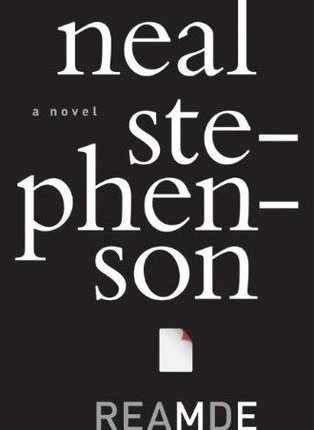
Reamde by Neal Stephenson

Reamde by Neal Stephenson

A former drug smuggler turned (mostly) straight-laced business man owns a multi-million dollar computer game, a refugee from Eritrea, a Hungarian computer hacker, a computer engineer, a further cast of international characters and the Russian mob all feature largely in Reamde. It is a science fiction novel by Neal Stephenson, but more than that.

This book will teach you about how flight paths are planned, how to properly check the safety on a firearm, and how the best laid plans of mice and men oft go astray.

“Thanks for coming all the way out from Vancouver,” Peter said. They had not introduced themselves, or shaken hands, just sized each other up and confirmed with nods that they were who they were.” pg 108, ebook.

Photo by Brayden Law on Pexels.com

Stephenson gives almost every character a full-fleshed out backstory and motivations. Sometimes he allows you into their mind to experience each nagging insecurity or existential crisis they may have.

He’s big into writing about body language, setting, and giving readers context on cultures or situations that she may not understand.

For example, the addictive quality of gaming for the non-gaming crowd: “She’d been awake for twenty-four hours. There was something deeply wrong about the situation, and the only thing that had kept her from simply running out the door of the building and flagging down the first car she saw and asking them to call 911 was the addictive quality of the game itself, her own ability to pull herself out of the make-believe narrative that she and Wallace had found themselves in.” pg 150, ebook.

Or making plans. Stephenson also enjoys writing about his characters concocting plans: “It is a classic Dilbert situation where the technical objectives are being set by management who are technically clueless and driven by these, I don’t know, inscrutable motives.” “Then we just need to scrutinize them harder. Do what those guys in the high-tech companies do.” “Which is what?” “Set expectations. Look busy. File progress reports.” pg 198, ebook.

Photo by Ekrulila on Pexels.com

And it is a long read. My ebook clocked in around 1420 pages. So, definitely not for the impatient reader. I found myself wanting more to happen and less agonizing by the characters.

That being said, if you invest the time in it, the last dozen or so chapters of Reamde are incredibly satisfying. You know the characters, you’ve been with them through all sorts of insane situations, and when Stephenson starts bringing them all together in the most unlikely and unexpected ways… it is very good.

But you have to make it that far first.

I’m not explaining this book and its attributes very well, but it may be one of those books you just have to experience for yourself. I picked it up on the recommendation of a friend and was not disappointed.

Photo by Thought Catalog on Pexels.com

But I don’t think I’m going to immediately go running for the next Stephenson epic. Or maybe I will…

If you’re into epic-length science fiction, you may want to check out The Abominable by Dan Simmons

Thanks for reading!

The Herbal Goddess Guide: Create Radiant Well-Being Every Day with Herb-Inspired Teas, Potions, Salves, Food, Yoga, and More by Amy Jirsa

The Herbal Goddess Guide: Create Radiant Well-Being Every Day with Herb-Inspired Teas, Potions, Salves, Food, Yoga, and More by Amy Jirsa

The Herbal Goddess Guide is a beautiful little reference book in which 12 different herbs are examined for physical, mental and spiritual healing purposes.

Amy Jirsa provides recipes, yoga poses, crafts and more to utilize the healing power of the plants in various ways.

Photo by Tim Douglas on Pexels.com

This book may not be for everyone as it has a very new age feel. Jirsa discusses magical traditions, honoring a plant’s spirit and more.

However, if you’re into tapping your inner goddess, this may be the perfect book for you.

If you read it and you enjoy it, you may want to purchase The Herbal Goddess Guide for your personal collection because Jirsa suggests “getting to know” each plant for a month and there is a chapter devoted to each.

It could take you awhile to thoroughly digest the information in these pages. (And to try everything!)

My favorite chapter, probably because it is my favorite herb, is lavender. Did you know it is a member of the mint family?

Photo by Palo Cech on Pexels.com

While lavender is known for being relaxing, it can, in some cases, be stimulating, so be sure to check in with your mind, your mood, and your energy level after each recipe.” pg 131.

Some of the yoga poses Jirsa outlines are rather advanced, but she offers modifications for each. If your flexibility isn’t up to snuff, no worries.

Highly recommended for the open-minded reader and non-traditional healers.

For similar, new age/self help books I’ve reviewed, check out:

How to Be Happy, Dammit: A Cynic’s Guide to Spiritual Happiness by Karen Salmansohn

The Four Agreements: A Practical Guide to Personal Freedom by Miguel Ruiz

Trance Dancing with the Jinn by Yasmin Henkesh

And thanks for reading!

The Autumnlands, Vol. 2: Woodland Creatures (The Autumnlands #2) by Kurt Busiek

The Autumnlands, Vol. 2: Woodland Creatures (The Autumnlands #2) by Kurt Busiek

The curious fantasy/science fiction graphic novel series The Autumnlands continues in volume two: Woodland Creatures.

In the last book, the chosen one, “Learoyd”, a violent and profanity-laden human from the future or, perhaps, the distant past, was summoned by a group of magic-wielding, sentient animals to save their world from the disappearance of magic.

But the effort of summoning Learoyd was so great, that it caused one of their sky-roving cities to crash to the earth. On the earth, there were tribes of violent and power-hungry creatures waiting for their chance to plunder the riches of the sky.

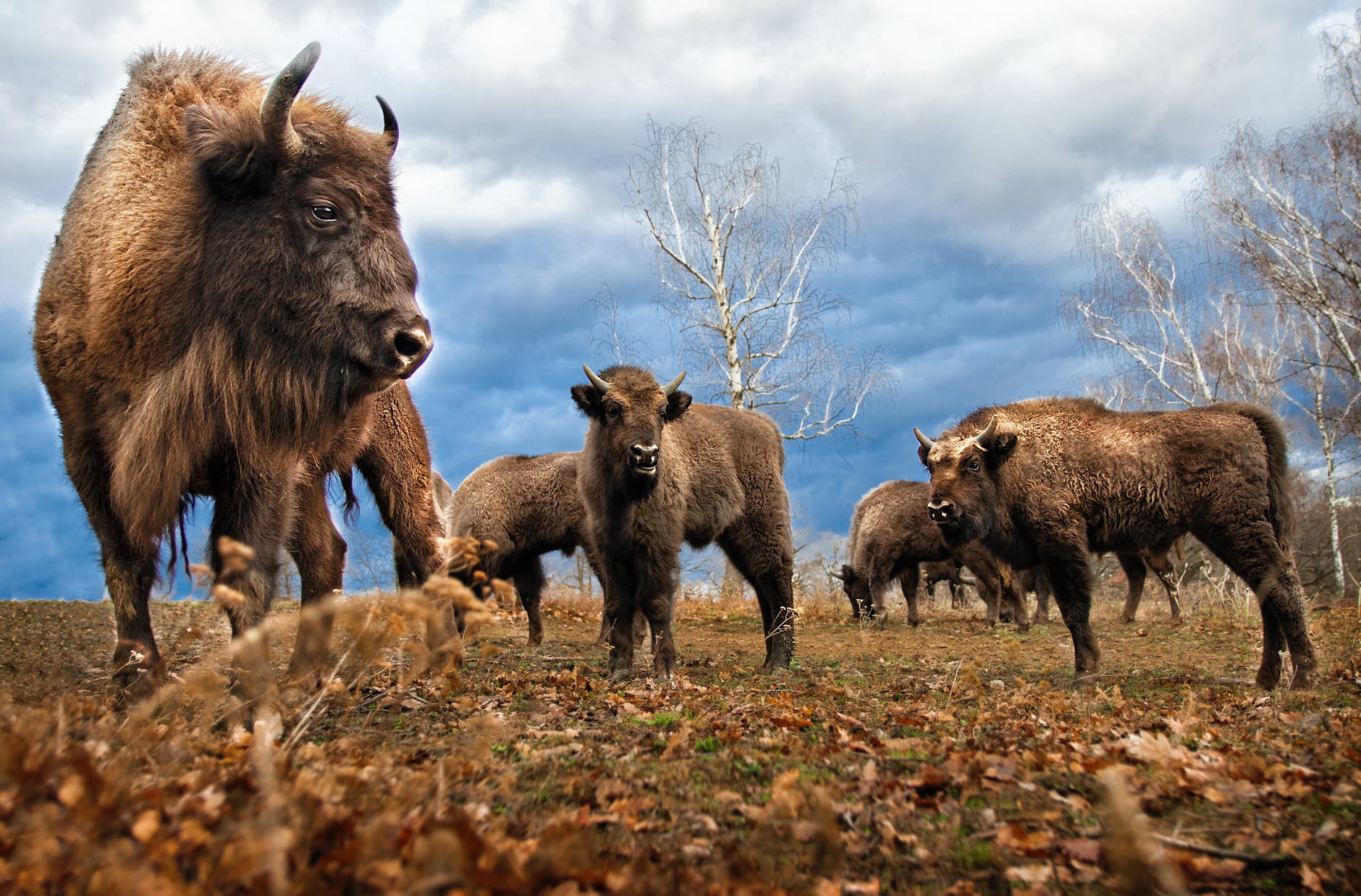
That entry ended with an epic explosion and fight with a bison tribe.

Photo by Juraj Valkovic on Pexels.com

In this book, Learoyd and Dusty, a magic-wielding pit bull who recently lost his father, venture into the wilds of earth to discover who is poisoning the animals and continue searching for a way to bring back the magic that continues to disappear from the world.

Dusty, though young, is no dummy and Learoyd isn’t quite what the animals were hoping he would be.

The great champion of legend- the hero we’d thought him to be- would have sallied forth just because it was the right thing to do. But this champion… I was learning that legends were a poor guide. He had reasons for all he did. His own reasons. Whether I understood or not…”

This graphic novel is surprising in its treatment of the themes of power, magic and betrayal. I like how the animals tell the story about how everything that happens one way, but the reality of what happens seems to be something else.

It is an interesting examination of the power of storytelling and the construction of legends. What is truth? How much is magic simply technology that isn’t understood yet?

Photo by Alexandra Holbea on Pexels.com

“This f-ing world. I thought it was a dream, at first. It comes off goofy, all badgers and warthogs in fancy robes and sh*t. Like a kids’ story. But there’s just as much sh*t here as there is anywhere, isn’t there?”

I didn’t particularly like how much Learoyd uses profanity, but it certainly gives him character.

This series is for adults. It contains adult themes, nudity, profanity and violence. And yet, I think it is worth the reading.

It asks big questions. It uses fantasy to explore strange worlds and the human condition. Recommended.

Thanks for reading!

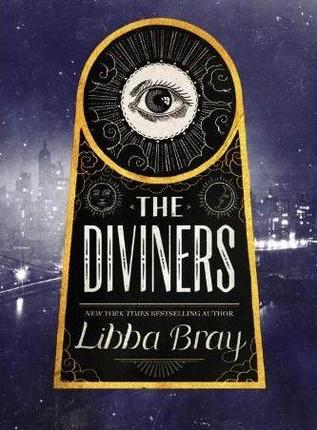
The Diviners (The Diviners, #1) by Libba Bray

The Diviners (The Diviners, #1) by Libba Bray

The Diviners is a surprisingly complex young adult novel about a returned evil, supernatural powers, secrets and mystery. It is set during the Prohibition Era in New York.

“A faint glow emanates from that dark, foul-smelling earthen tomb. Yes, something moves again in the shadows. A harbinger of much greater evil to come.” pg 10, ebook.

Photo by cottonbro on Pexels.com

Evie, the heroine of our tale, has the ability to read people, emotions and past events from objects. She is a diviner, a snappy dresser and one of the most delightful characters I’ve read about this year. And how!

After an unfortunate reading of an object from one of the most powerful families in her hometown, Evie is sent to be with her uncle Will in New York. He runs a museum of the occult and supernatural. Jericho, his ward, lives in the museum with Evie’s uncle. Jericho has a, you guessed it, secret past.

“Last but not least, here is the place where we spend most of our time: the library.” Jericho opened a set of mahogany pocket doors, and Evie let out a whistle. She’d never seen such a room. It was as if it had been transported here from some spooky fairy-tale castle.” pg 34, ebook.

Photo by Suzy Hazelwood on Pexels.com

Evie’s best friend, Mabel, has a major crush on Jericho. Evie attempts to play matchmaker, help her uncle’s museum succeed and help solve the occult-related murders that are occurring all over New York City.

Meanwhile, Memphis is a numbers runner for the top man in Harlem. He has a secret past as well and a nightmare that haunts him each night.

Theta, a showgirl for the Ziegfeld follies, is running away from her dark past and towards the bright lights of New York. Her roommate has, gasp, secrets too.

Photo by Bob Ward on Pexels.com

As the characters’ lives begin to intertwine, they race to stop a killer and, potentially, the end of the world.

Highly recommended for fans of young adult fantasy. The Diviners is a magical trip through the past and a world where ghosts and supernatural powers are real.